View from the Club

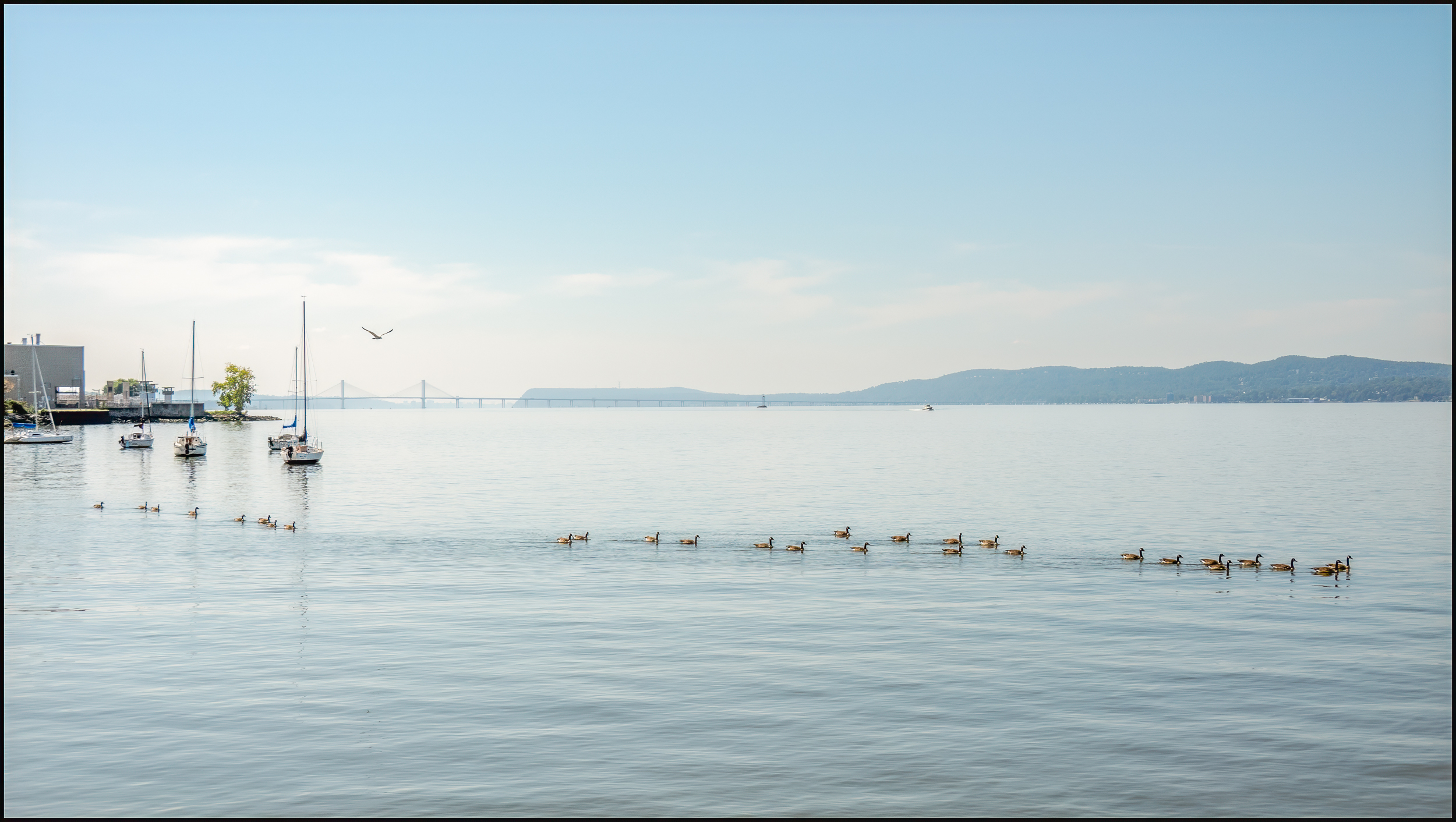
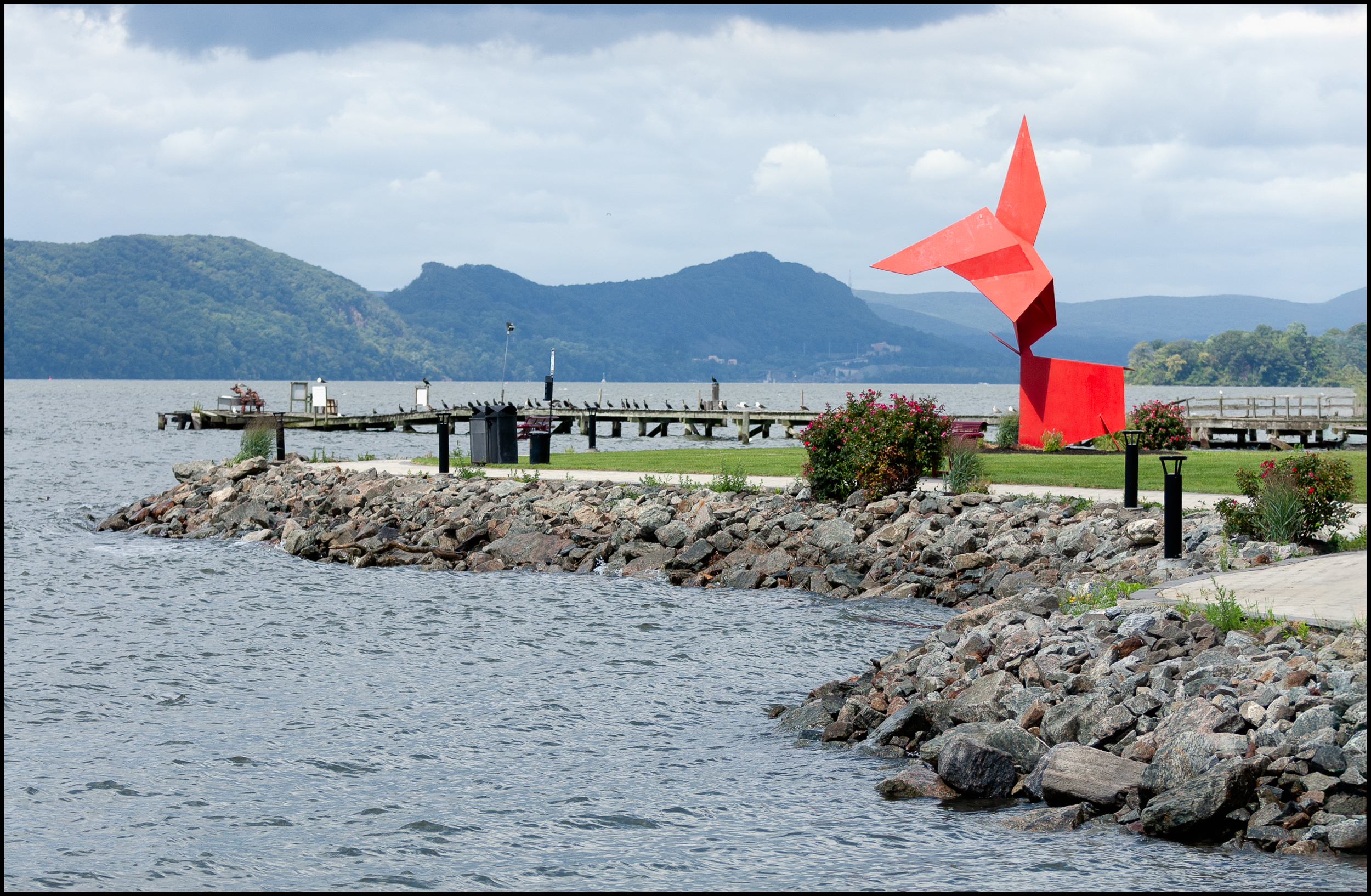
I recently went to an event at “The Club at Briarcliff Manor“, a nearby retirement community. The event was held at the very top of the building, which has the spectacular view out over the Hudson River seen in this picture. “The Club” is built on what once was the site of the Briarcliff Lodge (1902-2003 see below to see what it looked like). Many Lodge residents must have seen very much the same view.

The building in the center foreground was once Walter W. Law‘s mansion. Law was the founder of Briarcliff Manor. The mansion is currently for sale. It started off at over $4 million, and now it’s down to $2.9 million. A good-sized single-family house in Briarcliff Manor can easily go for $2 million so this would appear to be something of a steal – one wonders why.

Taken with a Sony RX100 VII

All that remains of Rockwood Hall

I recently went to Rockwood Hall (See: From the Rockefeller Preserve to Rockwood Hall – Overview and subsequent posts). For more on Rockwood Hall see: An early morning walk at Rockwood Hall

While there it occurred to me that Rockwood Hall might make a good subject for some infrared photography. I knew that the foliage and the grass would turn bright white and the foundations (all that remains of Rockwood Hall) would become dark. So, I returned with my primary infrared camera month or so later.


Taken with a Sony Nex 3 (converted to full spectrum Infrared) and Sony FE 28-70 f3.5 – f5.6

From the Rockefeller Preserve to Rockwood Hall – All that remains of Rockwood Hall

First went to Rockwood Hall in 2011 and I’ve been back many times.

According to Wikipedia:

Rockwood Hall was a Gilded Age mansion in Mount Pleasant, New York, on the Hudson River. It was best known as the home of William Rockefeller, brother of John D. Rockefeller. Both brothers were co-founders of the Standard Oil Company. Other owners of the house or property included Alexander Slidell MacKenzie, William Henry Aspinwall, and Lloyd Aspinwall. The property was once up to 1,000 acres (400 ha) in size; the mansion at its height had 204 rooms, making it the second-largest private house in the U.S. at the time, only behind the Biltmore mansion in North Carolina. The estate is currently an 88-acre (36 ha) section of the Rockefeller State Park Preserve.

Among the first people to live on the property was Alexander Slidell Mackenzie, who lived there from 1840 to 1848. Edwin Bartlett, a wealthy merchant, subsequently purchased the site and hired Gervase Wheeler to design a house on the property, which was constructed in 1849. By 1860, Bartlett sold the house to William Henry Aspinwall, who lived there until 1875; his son Lloyd lived at the house until 1886. William Rockefeller purchased the estate and likely extensively renovated the house and property, hiring the firm Carrère and Hastings for interior renovations. Rockefeller died there in 1922, and his heirs sold it to investors, who turned the house and property into Rockwood Hall Country Club. The club became bankrupt in 1936, after which it became the Washington Irving Country Club. By 1940, the property lay empty again, so its owner John D. Rockefeller Jr. had most of the property’s buildings razed, including the mansion. In late 1946, the Rockwood Hall property was proposed for the location of the United Nations headquarters. John Jr.’s son Laurance Rockefeller sold some of the property to IBM in 1970. IBM’s property was later bought by New York Life, followed by Regeneron Pharmaceuticals, the current owner. The remaining property was sold to New York State at a significantly reduced price to become parkland within Rockefeller State Park.

Once described as “The most magnificent residence on the Hudson” all that remains are a number of walking trails, some beautiful old trees, spectacular views of the Hudson River, and the impressive, but somehow sad stone foundations.


Taken with a Sony A77II and Minolta 35-105 f3.5-4.5.

From the Rockefeller Preserve to Rockwood Hall – To Rockwood Hall

Now I had a decision to make. I could either go straight on and try to walk home, or I could turn left and walk down to Rockwood Hall and try to get a ride home from there. Since I had been walking for some time, and my legs ached and my feet hurt, I chose the Rockwood Hall option.

Above: Looking back up the Old Croton Aqueduct trail from Rockwood Hall.

At first you continue walking through woodland.


But after a short walk you emerge from the woods to see some impressive views of the River Hudson.


There’s an interesting article on Rockwood Hall here.

Taken with a Sony A77II and Minolta 35-105 f3.5-4.5.

From the Rockefeller Preserve to Rockwood Hall – Along the Thirteen Bridges Loop

The Thirteen Bridges hike is a beautiful 2-mile horseshoe-shaped trail that brings hikers over thirteen old carriage road bridges that pass above Gory Brook. I approached it from the Pocantico River trail, where, after a short walk the trail descends from the ridge that parallels the lower part of the trail.

The bridges are nothing special, so much so in fact that I realized that I had never actually taken a picture of them (you can find a picture of one of them here). They are nowhere near as impressive as the stone bridges on the preserve.


Taken with a Sony A77II and Minolta 35-105 f3.5-4.5.