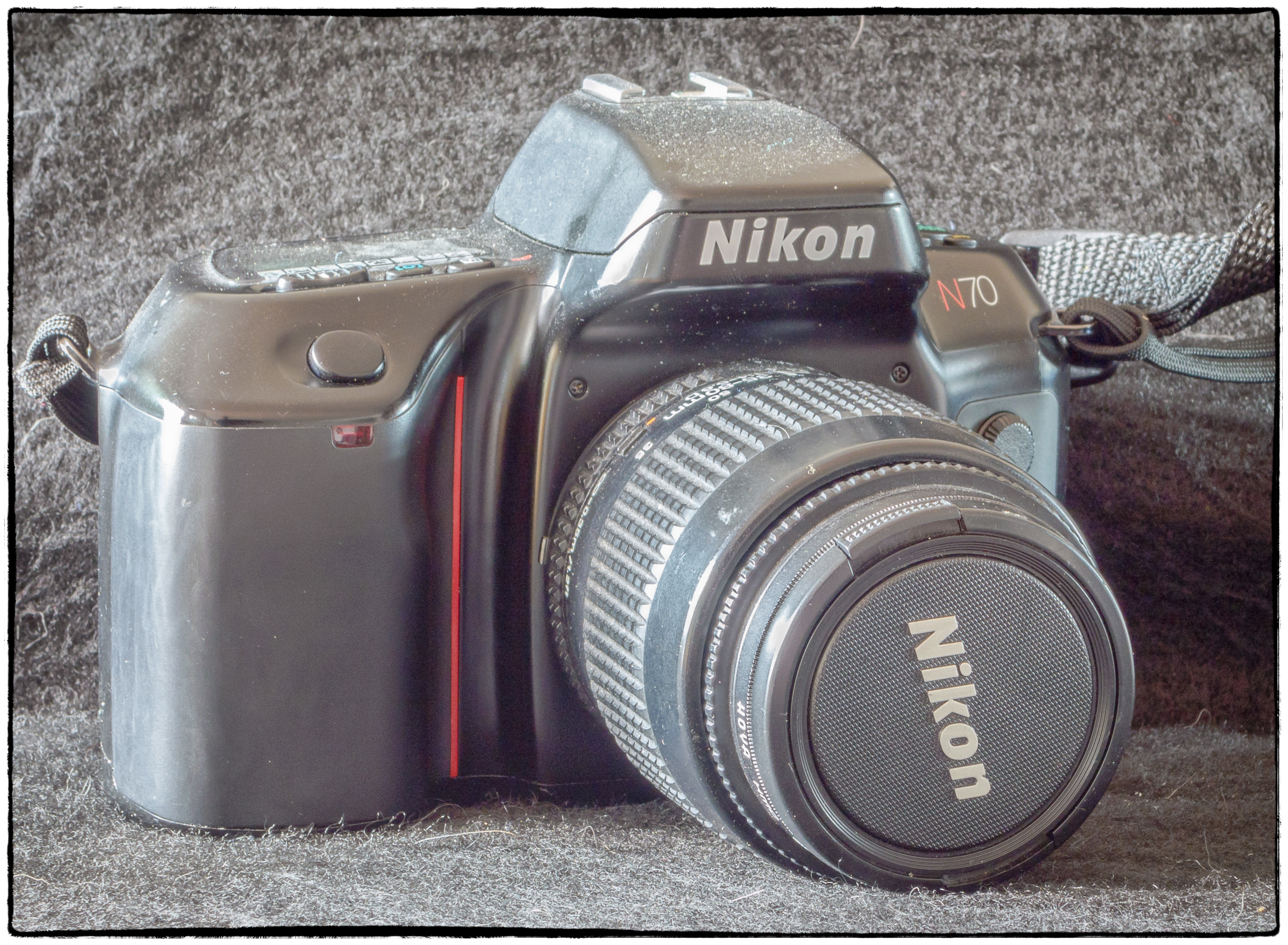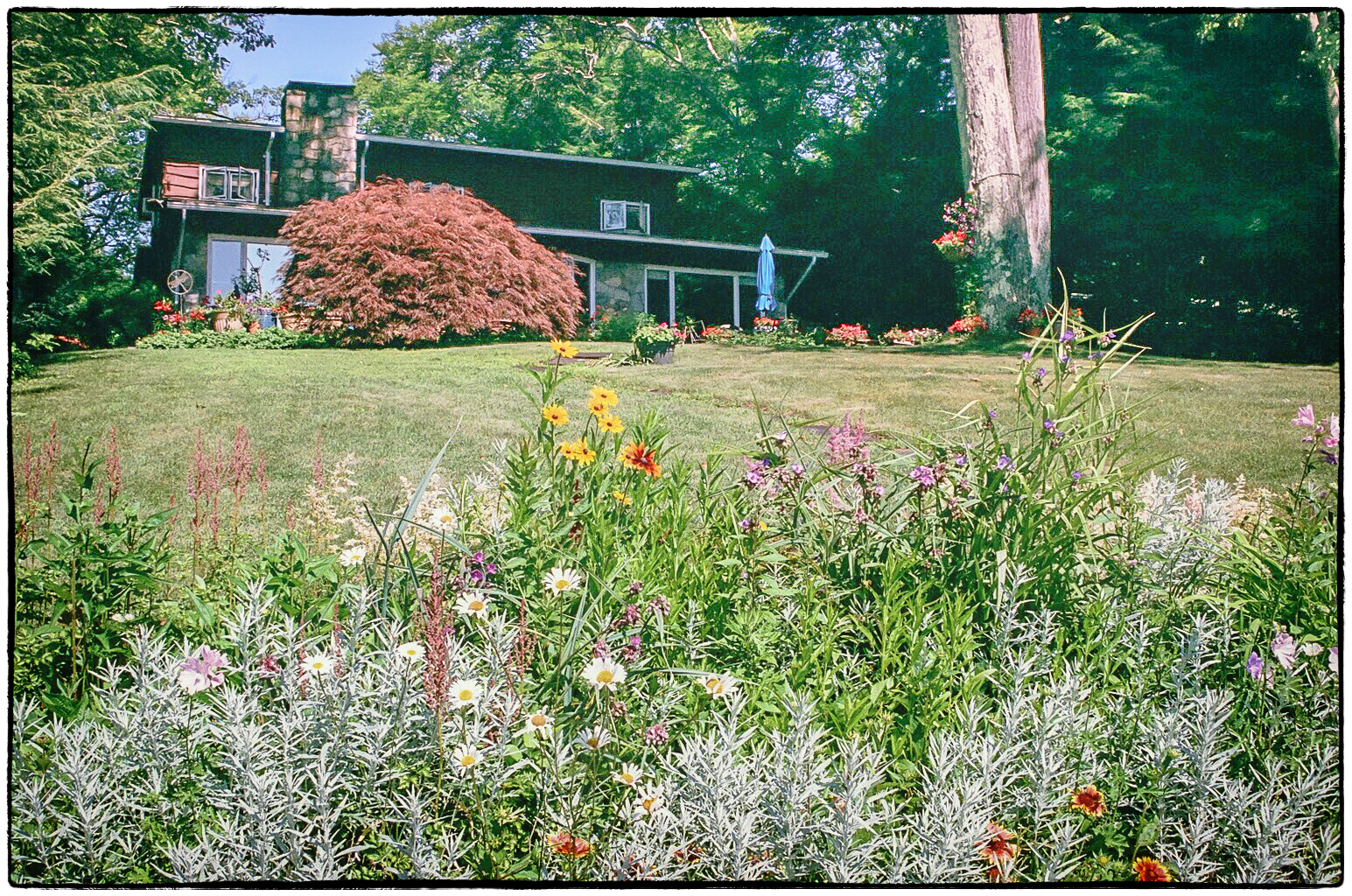
I didn’t especially want this camera. When I started collecting cameras I though I would stick to rangefinders, but somewhere along the line I got distracted towards SLRs. I bought a Yashica FX-3 in a thrift store because I found myself stuck without a camera and wanted to take pictures. I’d never owned a Nikon so I thought if I’m getting SLRs I might as well get a Nikon – that led to the acquisition of a Nikon F2 body. Then I needed a lens and I found the lens (a manual focus lens) I wanted attached to a Nikon N90s. I liked the N90s and realized that I’d never actually used an autofocus SLR – so I needed an AF lens. I found such a lens attached to this N70, which as I said, I didn’t especially want. I think I spent about $30 for the camera and lens so what did I have to lose. I put a roll of film in it to see if the body worked, put it away and never used it. The other day I remembered there was a film in it and decided to try it. Inevitably I took pictures of what was close to hand: flowers in our garden.
As I was only trying to see if the camera worked I can’t say that I tried it out very thoroughly. I put it into aperture priority and largely “pointed and shot”. I was using an old film and taking pictures at the worst time of day (around noon). All I can really say is that the camera felt comfortable enough in my hands and not too heavy around my neck. The rather strange fan-shaped interface is unique to this camera and I don’t think Nikon used it again – probably because of all the negative feedback. Nikon aficionado Thom Hogan had this to say (I don’t know when this was written):
The F70/N70’s gimmicky LCD interface met with a lot of derision. However, unlike the F60/N60 or F65/N65, the F70/N70 gives its user plenty of feedback on what’s been set and what the other options are. As such, it’s a good learning camera. The F70/N70’s specifications are mostly good (other than the 1/125 flash sync), and the camera is arguably a bargain at its current prices. The metering and autofocus systems are quite good for an amateur camera and the range of abilities of this camera are quite sophisticated. The built-in flash isn’t very powerful and large lenses get in the way of its coverage, so don’t count on not having to buy a Speedlight. Three things keep me from recommending it wholeheartedly to advanced amateurs or aspiring pros:
1. The lack of depth of field (DOF) preview is a serious omission.
2. That LCD interface really does demand that you take your eye from the viewfinder to make many setting changes, which is okay for learning, but frustrating when you need to work fast.
3. The F80/N80 that replaces it in the Nikon lineup is clearly a better camera and fixes nearly all the F70/N70’s shortcomings.
While I agree that the interface is rather “fiddly” I imagine that once you’re used to it it’s not that bad. Definitely a usable camera though. The pictures were very contrasty and the colors were a bit off (probably because of the old film) and so needed “tweaking” in post processing.