Old Paris and Changing New York

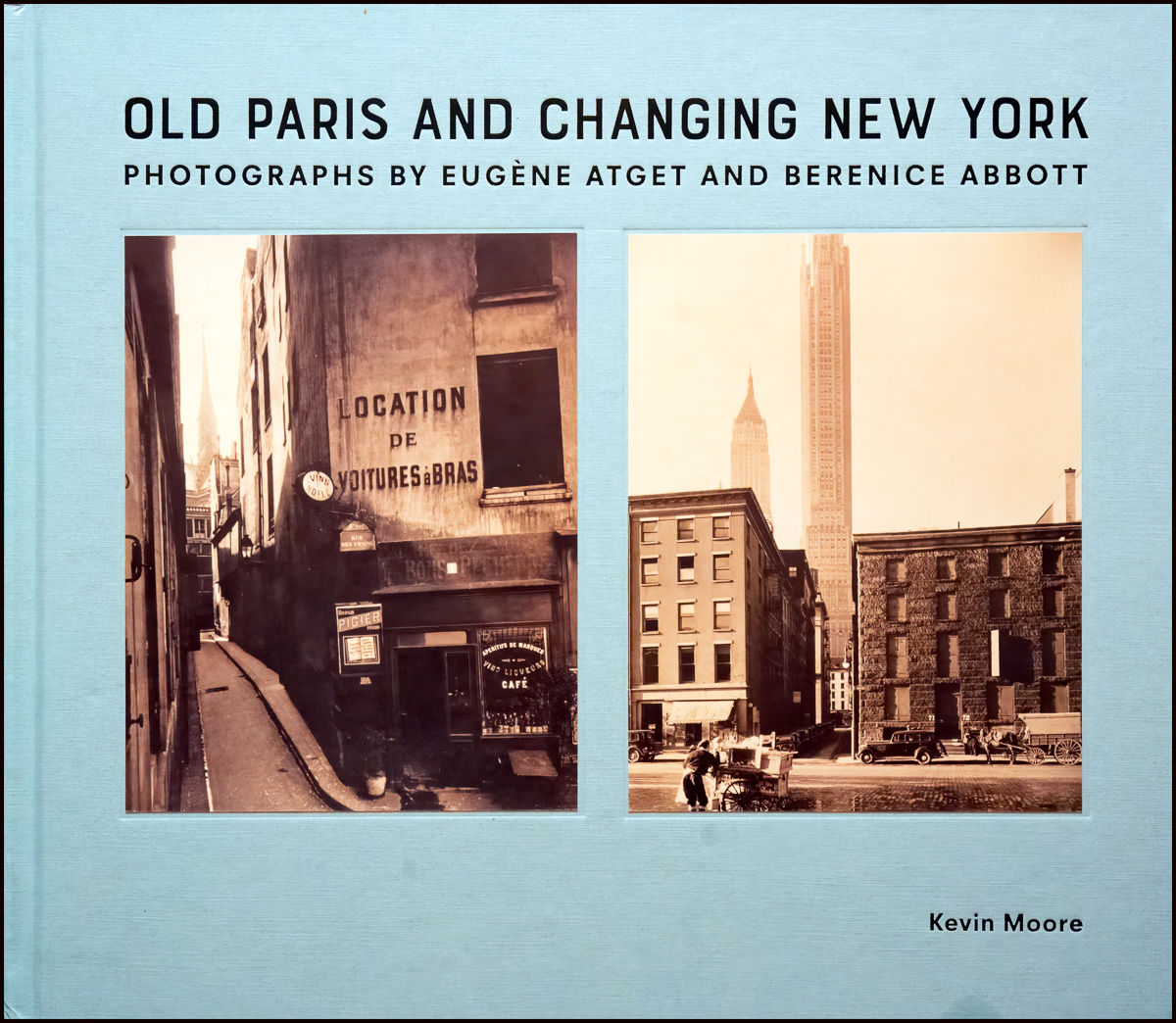
I came across this book in my local library and liked it so much that I got a copy for myself. It’s “Old Paris and Changing New York. Photographs by Eugène Atget and Berenice Abbott” by Kevin Moore.

I’m a long time fan of Atget and to a lesser extent of Abbott and found the content of the book to be particularly interesting. There’s a, too me, ideal mix of text and photographs. An 81 page essay by Moore including a number of photographs followed by 52 full page plates: photographs by both Atget and Abbott.

Photobooks are often large and heavy. I understand the need to present the photographs as well as possible. I have a number of such photobooks. The problem is that I find them too heavy and cumbersome to comfortably read so I rarely look at them. This book is not too large and not too heavy, but still presents its materials effectively.


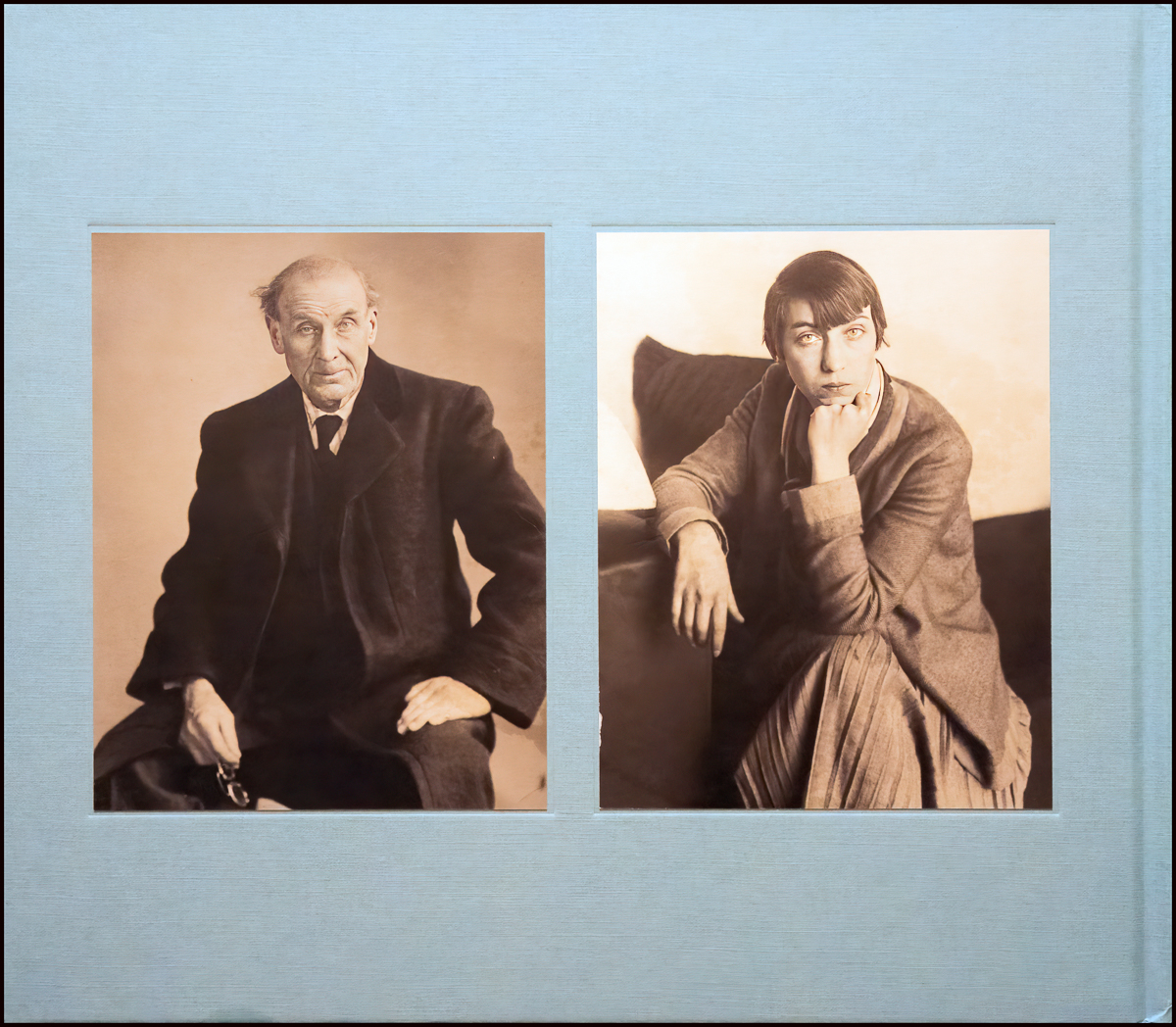
Atget to the left. Picture taken by Abbott. 1927. Abbott to the right. Self Portrait. 1928.

Taken with a Sony A7IV and Samyang 45mm f1.8

A visit to the Museum of Modern Art – Some Photographs

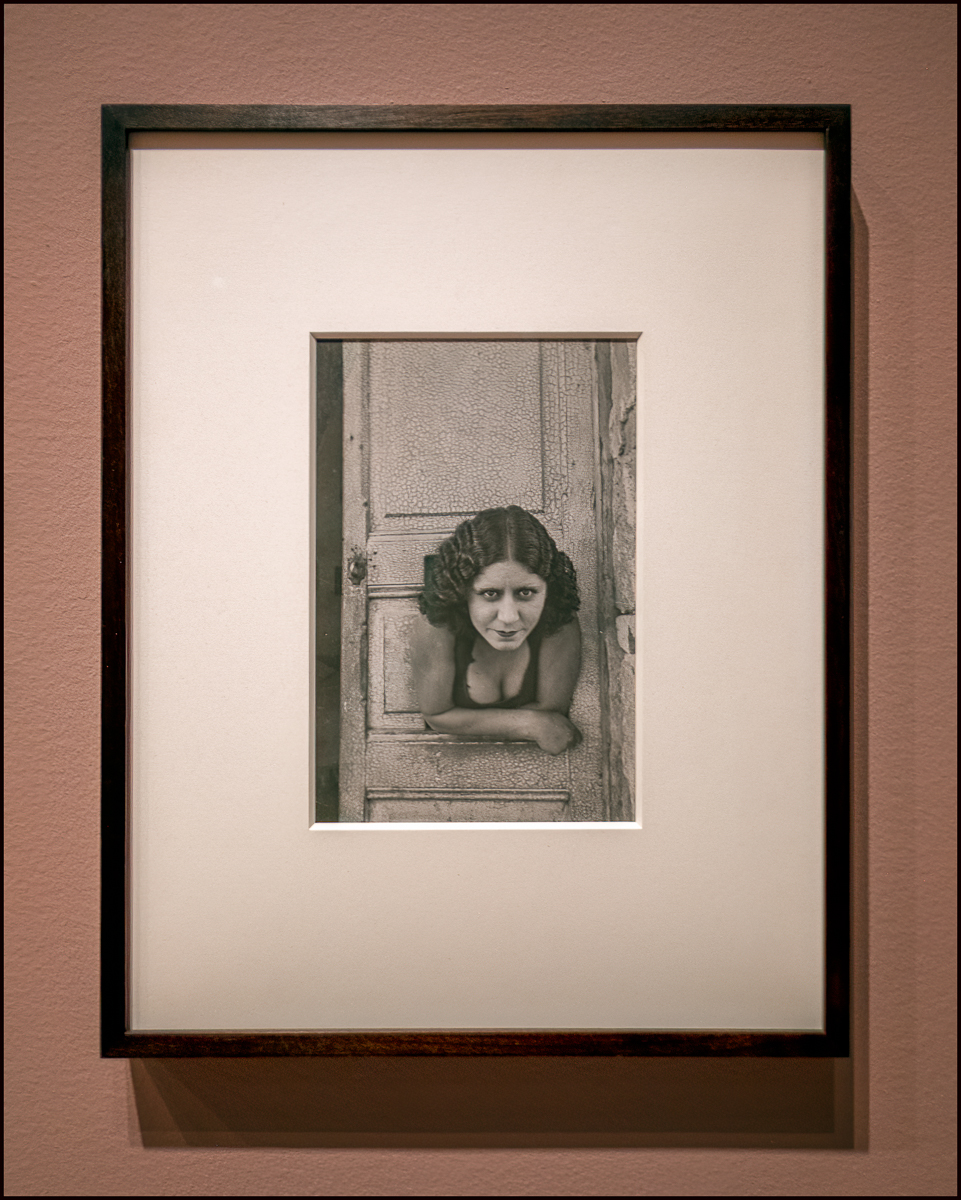
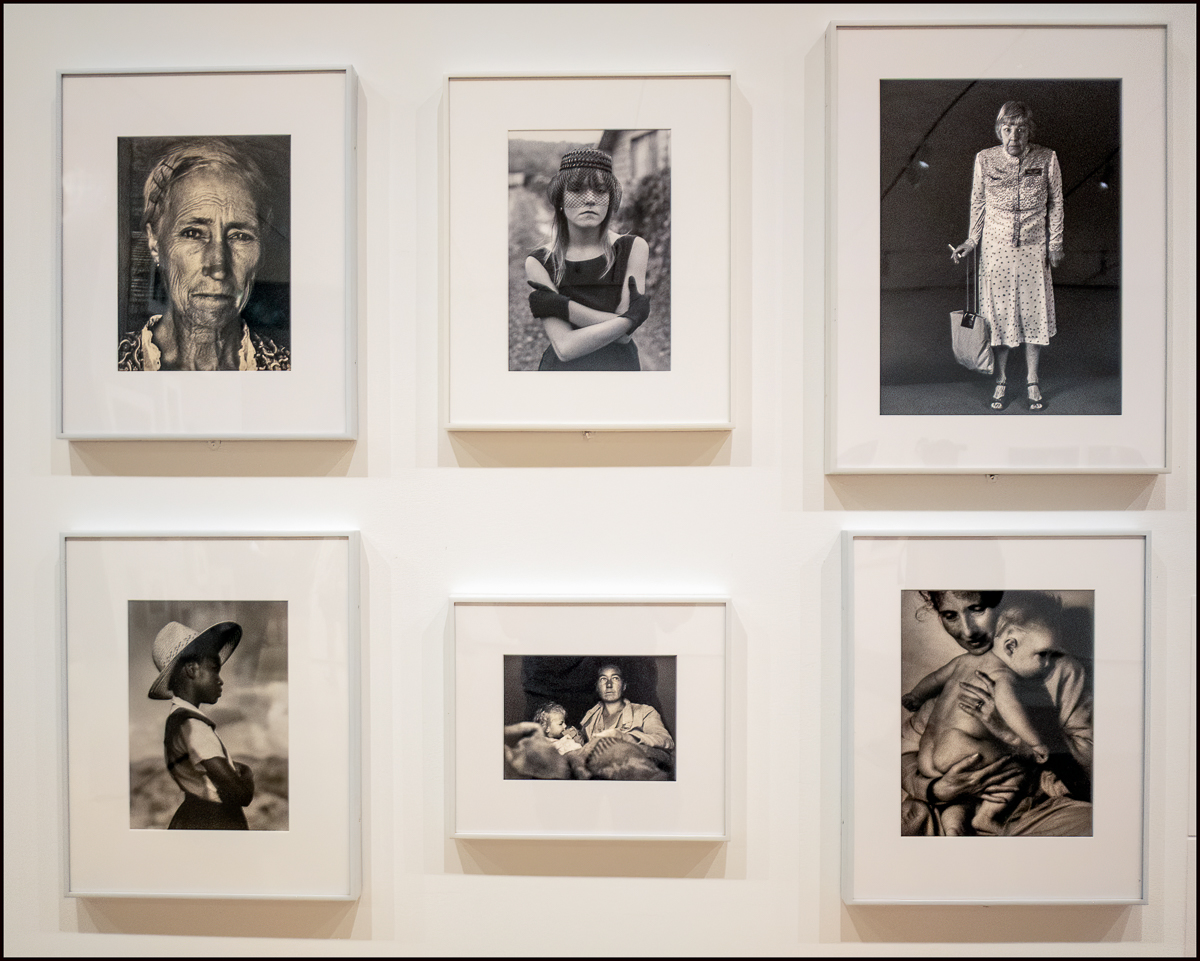
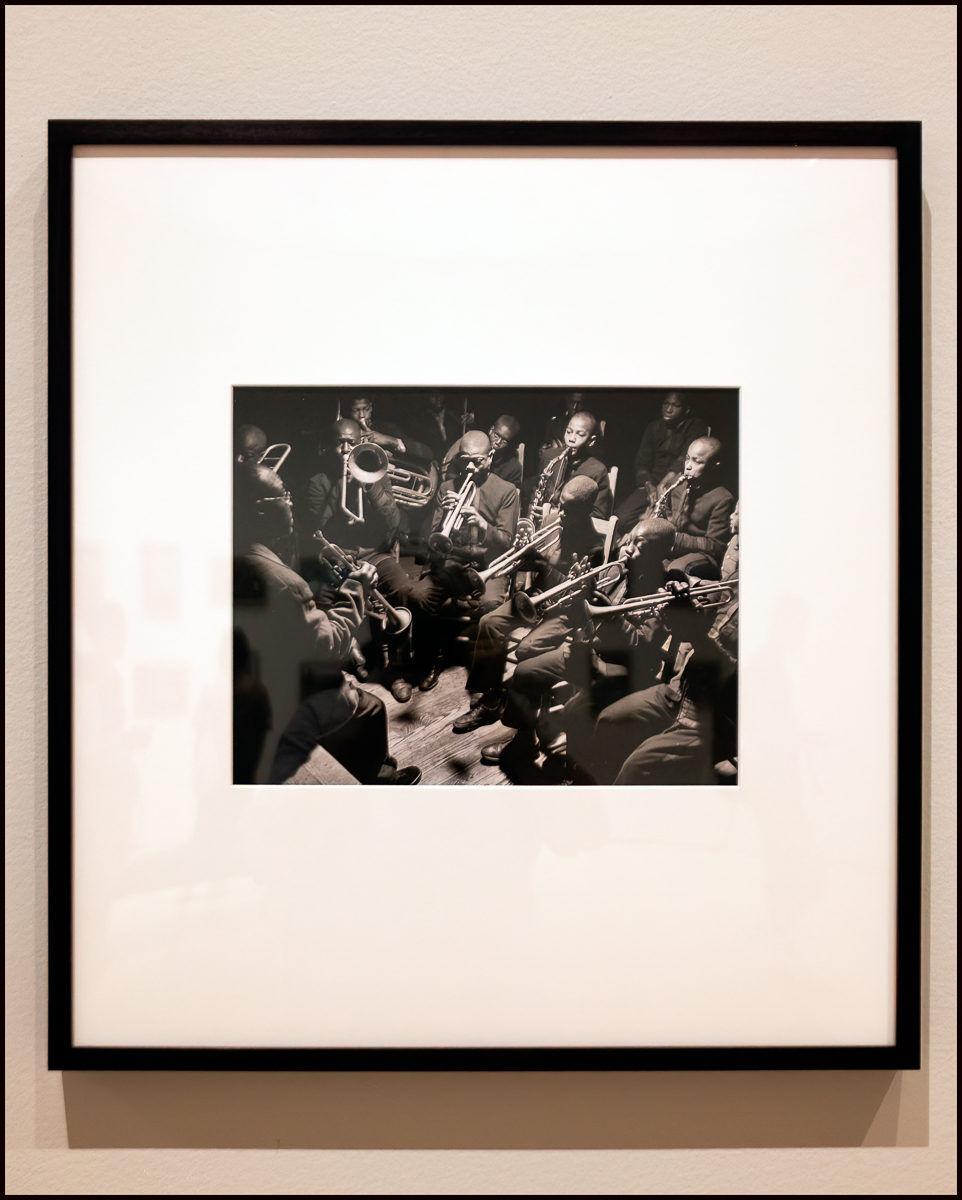
Of course the Museum of Modern Art doesn’t just have paintings, sculpture etc. I also has photographs. Here are a few including some from an exhibition entitled: “Ourselves. Photographs from Women Artists from Helen Kornblum” (Closing October 10).

I struggled to get pictures of these photographs as they were almost invariably in frames with glass surfaces. While I’m sure this protects the valuable photographs it also presents reflections, which spoil the picture being taken.


Taken with a Fuji X-E3 and Fuji XF 18mm f2 R

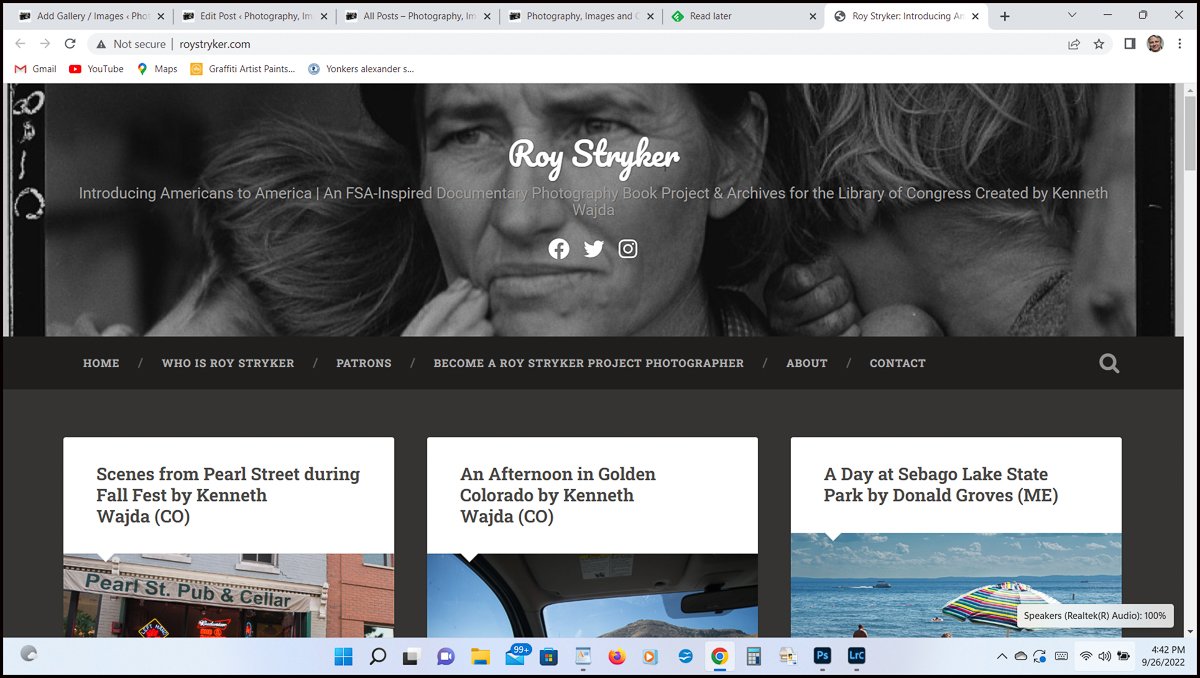
The Roy Stryker Photo Project

I was recently reading Kenneth Wadja’s interesting and articulate blog: 6×6 Portraits. Mr. Wadja is a professional photographer in Colorado who also has a commercial website; a site devoted to street photography; a site devoted to senior portraits; a YouTube Channel and the site which caught my attention for this post: The Roy Stryker Photo Project via a post on his blog: Roy Stryker is Back After A Summer Vacation.

The About page on the Roy Stryker Photo Project site reads:

Inspired by the drive and passion of Roy Stryker, and his belief in the power of the photograph to bring about social change, Kenneth Wajda, a professional documentary photographer in Boulder, Colorado, created this photo project.

Collecting black and white and color photographs from across the U.S., the project’s goal is to document the rural and urban lifestyle in the U.S. 80 years after the first FSA photography collection was started. And to publish a book of the images.

The original FSA collection was started during difficult times in the history of the U.S., and we are living in a similar tumultuous time, and the aim for this project is to document all of the aspects of American life that exist today.

In an internet age where more photographs are being taken than ever before in history, there is a great concern that this may be a digital dark age for photography, as more people make photographs but the number of images actually being stored, archived and printed is quite low.

Each photographer maintains the rights to their images in the collection and inclusion of images to the Library of Congress is solely up to the photographer.

This seems to me to be admirable goal and I considered contributing to the project until I read:

Here’s a list of some of the photos we need in the collection. We need people engaged in life mainly, and good caption info. See the examples on the site. We don’t need names necessarily, but we do need descriptions, date, and camera used.

It seems that the emphasis is on people, which pretty much rules me out as I rarely take pictures with people in them. Maybe I should?

In any case congratulations to Mr. Wadja for initiating such an interesting and important project. I wish you success and the project may inspire me to take more pictures of people so that I can contribute later.

Feelings in Photography

I read a lot of books related to photography. Nowadays they’re more about creativity than they are about technique. At some point these books always get around to two points: You should know why you are taking a particular photograph; and you should know what you’re feeling (the logic being that if you don’t know what you’re feeling how can you convey that to others in your photographs).

I generally know why I’m taking the photograph: I liked the subject; I liked the light; I liked the patterns; I liked the textures etc. But I struggle with the second point. I don’t generally know what I’m feeling. Maybe it’s because I’m British. Brits of my generation were not allowed to have feelings.

I am presently reading “Modern Instances. The Craft of Photography. A Memoir. by Stephen Shore.” In this he tells a story about famed photographer, Lee Friedlander.

…Lee Friedlander showed slides of his American Monument series in the Great Hall at Cooper Union. It was the first time he showed this work. He didn’t talk about his pictures and one could tell that the audience, largely students who are used to analyzing their work in class every week, were getting restless. Finally, someone raised their hand and asked, “What were you feeling when you took this picture?”. Friedlander replied, “As I recall, I was hungry”.

I love it.

Above: Lee Friedlander, Route 9W, New York State, 1969.

Interesting presentation by Stephen Shore

Interesting, if rather long (1 hour and 15 minutes) presentation by Stephen Shore.

In case anyone reading this doesn’t know who Mr. Shore is, Wikipedia describes him as follows:

Stephen Shore (born October 8, 1947) is an American photographer known for his images of banal scenes and objects, and for his pioneering use of color in art photography. His books include Uncommon Places (1982) and American Surfaces (1999), photographs that he took on cross-country road trips in the 1970s.

In 1975 Shore received a Guggenheim Fellowship. In 1971, he was the first living photographer to be exhibited at the Metropolitan Museum of Art in New York City, where he had a solo show of black and white photographs. He was selected to participate in the influential group exhibition “New Topographics: Photographs of a Man-Altered Landscape”, at the International Museum of Photography at the George Eastman House (Rochester, New York), in 1975-1976.

In 1976 he had a solo exhibition of color photographs at the Museum of Modern Art. In 2010 he received an Honorary Fellowship from the Royal Photographic Society.