New deal photography

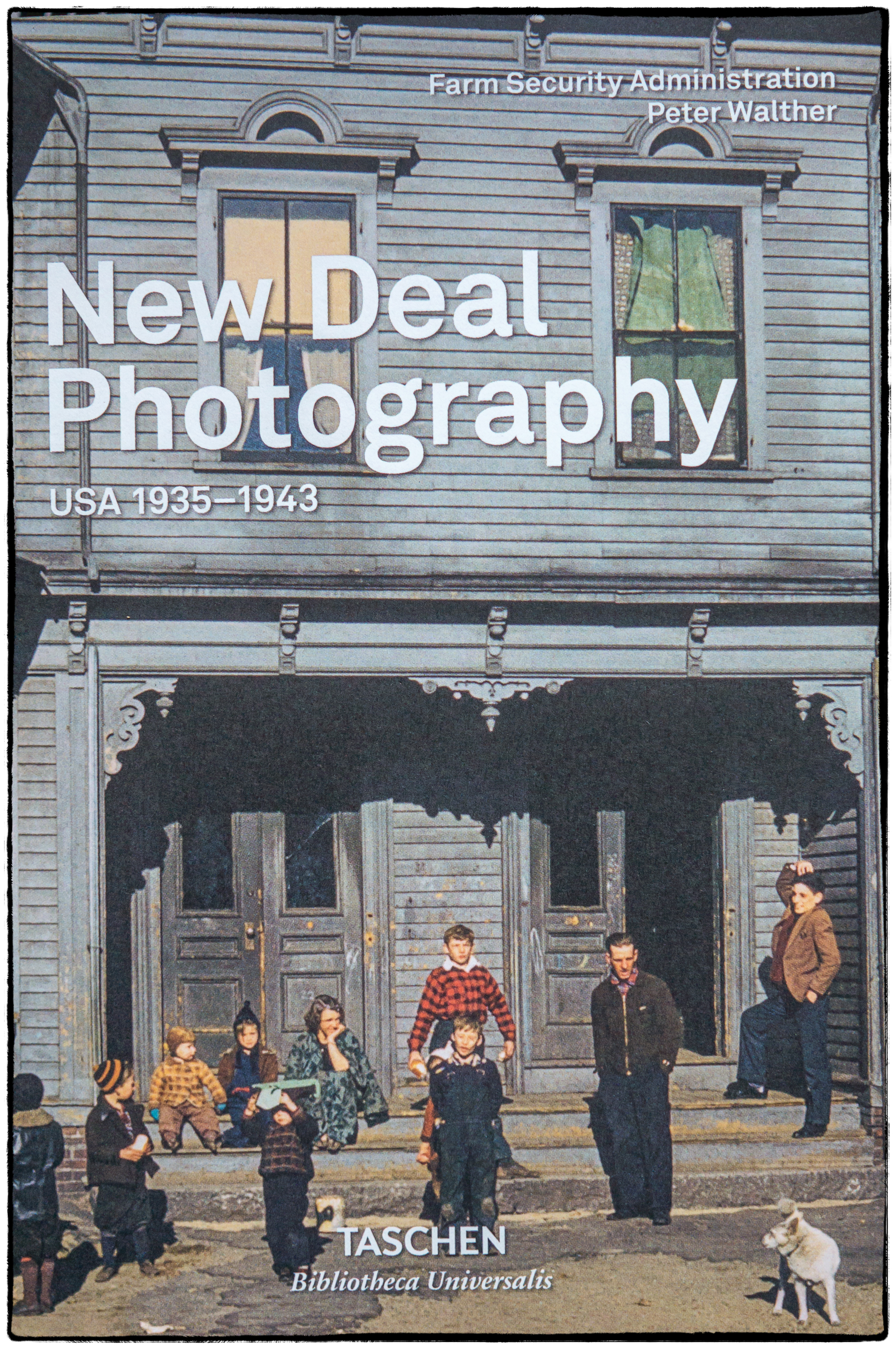
Not long ago I posted about some depression era kodachromes (Lovely Depression era Kodachromes). I recently came across, and acquired, a copy of a Taschen book (New Deal Photography. USA 1935-1943), which contains many more. It also has even more black and white photographs from the same era – more than 400 in all. An introduction describes the work of the Farm Security Administration and each section of the book covers a single geographical area: the Northeast; the Midwest; the West; The South. An appendix provides capsule summaries of the photographers: Esther Bubley; John Collier; Paul Carter; John Collier Jr.; Marjory Collins; Jack Delano; Walker Evans; Charles Fenno Jacobs; Theodor Jung; Dorothea Lange; Russell Lee; Carl Mydans; Alfred T. Palmer; Gordon Parks; Louise Rosskam; Edwin Rosskam; Arthur Rothstein; Ben Shahn; Roy Emerson Stryker; John Vachon; Marion Post Wolcott;

The text is “peppered” with comments/quotations from the photographers. Here’s an example I particularly liked:

There was one farmer, well he was alright, you could take his photograph all over the place, out in the field, and we’d been inside their house and then around almost all day. Russ had walked away down the field taking pictures of something else and I was talking to the man, and he said “What does he do?” And I said, “He takes pictures”. And he man said “You know, you’d think think a great big man like that, he’d get out and get himself a job”. Jean Lee (wife of Russell Lee).

There’s also a fairly long comment by Dorothea Lange describing how she came to take the famous “Migrant Mother” photograph.

Of course the photographs are rather small compared to the originals, but it’s a great overview of the work of the FSA. Well worth the <$20 I paid for it.

Lovely Depression era Kodachromes

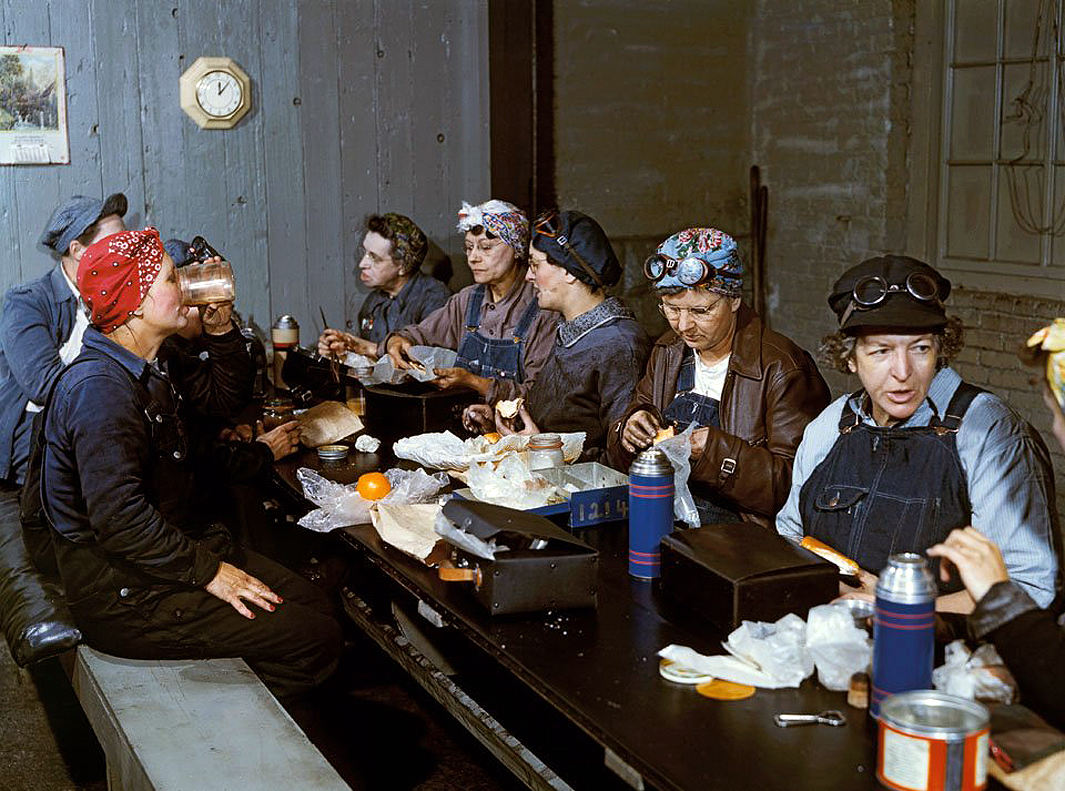
Female workers employed as wipers in the roundhouse having lunch in their break room, Chicago and Northwestern Railroad, Clinton, Iowa, April 1943. Source: FSA documentary color photos featured in New Deal Photography: USA 1935-1943 from Taschen.

When I think of the Great Depression I tend to think of photographs like “Migrant Mother” by Dorothea Lange and the movie “The Grapes of Wrath“. Lange’s photographs, and most of those by her colleagues photographing for the Farm Security Administration were shot in black and white so I tend to think of the Great Depression in black and white as was The Grapes of Wrath. It came as quite a revelation to me to come across these spectacular Depression era photographs in color. I guess I shouldn’t have been so surprised through. The Great Depression didn’t end until the late 1930s and Kodachrome came out in 1935 so it was likely that someone would have been shooting in color during that period.

They also reminded me that Kodachrome really was quite a remarkable film. It’s too bad that it’s now no longer available and even if it were couldn’t be processed.

French Photography in the 19th Century

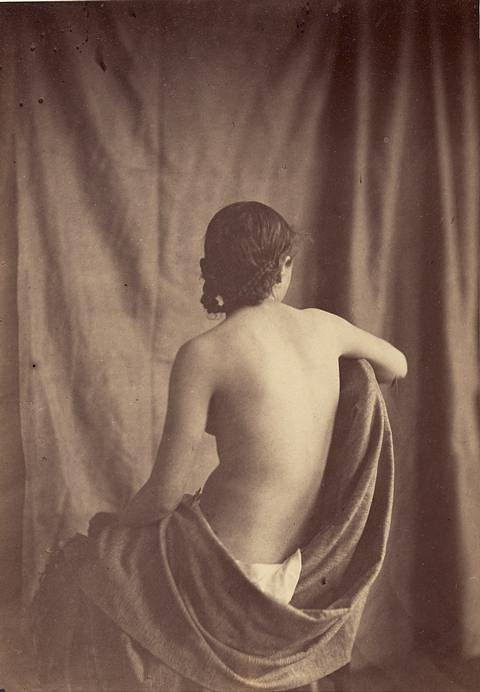
Jean-Louis-Marie-Eugène Durieu (French, 1800 – 1874) and Possibly with Eugène Delacroix (French, 1798 – 1863), Draped Model, about 1854, French, Albumen silver print, 18.6 × 13 cm (7 5/16 × 5 1/8 in.), 35.1 × 27 cm (13 13/16 × 10 5/8 in.), 85.XM.351.9, The J. Paul Getty Museum, Los Angeles

Not much text in this post (other than the extremely detailed captions), but some interesting early photographs.

France is one of the pioneers of photographic technology and advances — progressing it as art and as science. The works of French photographers Édouard Baldus, Gustave Le Gray, Henri Le Secq, and Charles Nègre helped the development of paper photography.

Opening on August 30, here are some of the photographs set to highlight in the upcoming exhibition “Real/Ideal: Photography in France, 1847-1860” at the Getty Museum.

Source: French Photography in the 19th Century · Lomography

Want to print more?

I’d like to print more and have in the past done a few photobooks (see “Print on Demand Books” below) and have generally been satisfied with the results. I’ve also printed and framed a number of my pictures, but have been a bit limited by 1) a lack of wall space; and 2) the cost involved (that’s true of the print on demand books too). So I was very pleased to come across this interesting and extremely useful series of articles on Andrew Molitor’s Photos and Stuff. In all there are five articles

Introduction
Wall-Mounting
Hand Made Books
Print on Demand Books
Why?

They offer practical, and usually low cost options for printing and displaying photographs.