Two Exhibitions of photographs by Joel Meyrowitz

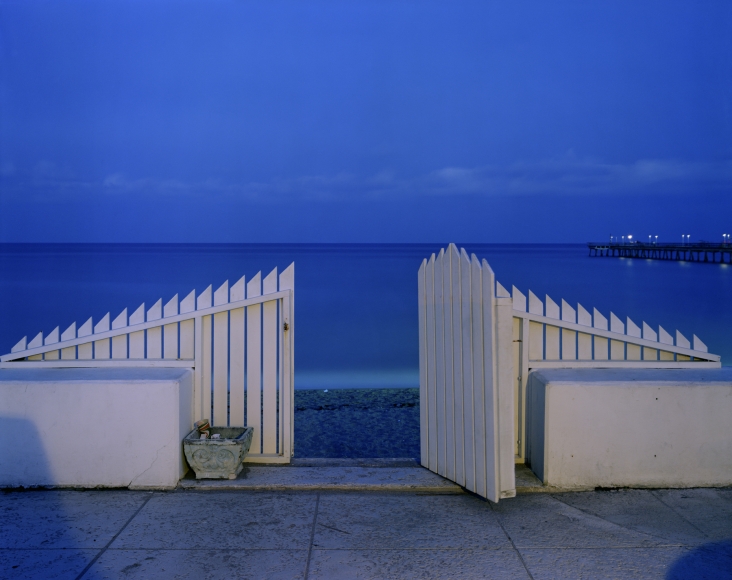
Fort Lauderdale Florida, 1977.  Archival Pigment Print printed 2017 29 1/4 x 37 inches.  From an edition of 10

Fort Lauderdale Florida, 1977. Archival Pigment Print printed 2017 29 1/4 x 37 inches. From an edition of 10. Source: Howard Greenberg Gallery.

According to a press release from the Howard Greenberg Gallery:

TWO EXHIBITONS BY JOEL MEYEROWITZ

BETWEEN THE DOG AND THE WOLF and MORANDI, CÉZANNE AND ME

HOWARD GREENBERG GALLERY
September 7 – October 21, 2017

NEW YORK – Two exhibitions of photographs by Joel Meyerowitz will be on view at Howard Greenberg Gallery from September 7 to October 21, 2017. Between the Dog and the Wolf presents images from the 1970s and 80s made in those mysterious moments around dusk. Many of the works will be on display for the first time. Morandi, Cézanne and Me surveys Meyerowitz’s recent still lifes of objects from Paul Cézanne’s studio in Aix-en-Provence and Giorgio Morandi’s in Bologna. The exhibitions will open with a reception on September 7, from 6 to 8 p.m.

Two new books of photographs by Meyerowitz are to be published: Joel Meyerowitz: Cézanne’s Objects (Damiani, October 2017) and Joel Meyerowitz: Where I Find Myself: A Lifetime Retrospective (Laurence King, January 2018).

The exhibition title Between the Dog and the Wolf is a translation of a common French expression “Entre chien et loup,” which refers to oncoming twilight. As Meyerowitz notes, “It seemed to me that the French liken the twilight to the notion of the tame and the savage, the known and the unknown, where that special moment of the fading of the light offers us an entrance into the place where our senses might fail us slightly, making us vulnerable to the vagaries of our imagination.”

The majority of the photographs in the exhibition are from a period when Meyerowitz was spending summers on Cape Cod and had just begun working with an 8×10 view camera. “My whole way of seeing was both challenged and refreshed. I found that time became a greater element in my work. The view camera demands longer exposures, and I began looking into the oncoming twilight and seeing things that the small cameras either couldn’t handle or didn’t present in significant enough quality,” Meyerowitz explains. “What seems of more value to me now, 30 years later, is how that devotion to the questions back then taught me to see in a new and simpler way.”

The exhibition features photographs taken concurrently with Meyerowitz’s iconic series Cape Light, widely recognized for his use of color and appreciation of light. A young woman is perched on a wall that overlooks the Cape Cod Bay in a 1984 print, with the last of the daylight fading into a pink haze. A 1977 view of a dark house with one lit window has a sandy front yard with a sagging badminton net, an abandoned tricycle, and a blue doghouse with peeling paint. In a nearly abstract image from 1984, the viewer can barely see lights from a house on the beach as night falls. Other locations show a view of a serene sky with St. Louis’ Gateway Arch from 1977 and a palm tree in fading blue light in Florida from 1979.

As Meyerowitz notes, “I am grateful that my experience has allowed me to work both as a street photographer and as a view-camera photographer, and that I’m comfortable with both vocabularies. I speak two languages, classical and jazz. Street photography is jazz. The view camera, being so much slower, is more classical, more meditative, it has a different way of showing its content. You can be a jazz musician and play classically, and you can be a classical musician and love the immediacy and improvisation of jazz.”

Morandi, Cézanne and Me reflects Meyerowitz’s fascination with everyday objects, which also served as inspiration to Paul Cézanne and Giorgio Morandi. He was granted permission to photograph in both artists’ studios in 2013 and 2015.

Meyerowitz was struck by the grey walls in Cézanne’s studio, and how every object in the studio seemed to be absorbed into the grey of the background. He photographed just about every object there – from vases, pitchers, and carafes to a skull and Cézanne’s hat. This project spurred him to visit Morandi’s studio to observe the objects that the master still life painter had used as inspiration for over 60 years. Meyerowitz was allowed access to all 275 of Morandi’s famous objects at his home and studio. He worked near the same window, sitting at Morandi’s table, photographing shells, pigment-filled bottles, funnels, watering cans, and other dusty aged objects against the same paper that Morandi had left on the wall, now brittle and yellow with age. Meyerowitz also began to look anew at items he found in Italian flea markets – a dented brass tube, a rusted tin flask, a capped container — and he photographed them placed in grey corners and against heavy canvas backdrops in his studio in Tuscany.

Says Meyerowitz, “My underlying motive – while, of course doing this for my own pleasure – was to provide a catalogue of the objects these painters used in the course of their lives, and show to scholars and other interested viewers, the actual, and for the most part humble, cast-offs and basic forms that these great painters drew their inspiration from.”

About Joel Meyerowitz

Joel Meyerowitz (born 1938) is an award-winning photographer whose work has appeared in over 350 exhibitions in museums and galleries throughout the world. After a chance encounter with Robert Frank, the New York native began photographing street scenes in color in 1962, and by the mid-1960s became an early advocate of color photography and was instrumental in the legitimization and growing acceptance of color film. His first book, Cape Light (1979) is considered a classic work of color photography and has sold more than 100,000 copies. He has authored 17 other books, including Legacy: The Preservation of Wilderness in New York City Parks (Aperture, 2009). As the only photographer given official access to Ground Zero in the wake of September 11th, he created the World Trade Center Archive, selections of which have toured around the world. Meyerowitz is a two-time Guggenheim fellow and a recipient of awards from both the NEA and NEH. He is a recent winner of the Royal Photographic Society’s Centenary Award, its highest honor. For his 50 years of work in 2012, he received the Lifetime Achievement Award at the Lucie Awards, an annual event honoring the greatest achievements in photography. This January, Meyerowitz was inducted into the Leica Hall of Fame for his contribution to the photographic genre. His work is held in the collections of many museums, including The Museum of Modern Art, New York; the Whitney Museum of American Art, New York; and the Museum of Fine Art, Boston. Meyerowitz lives and works in Tuscany and New York City.

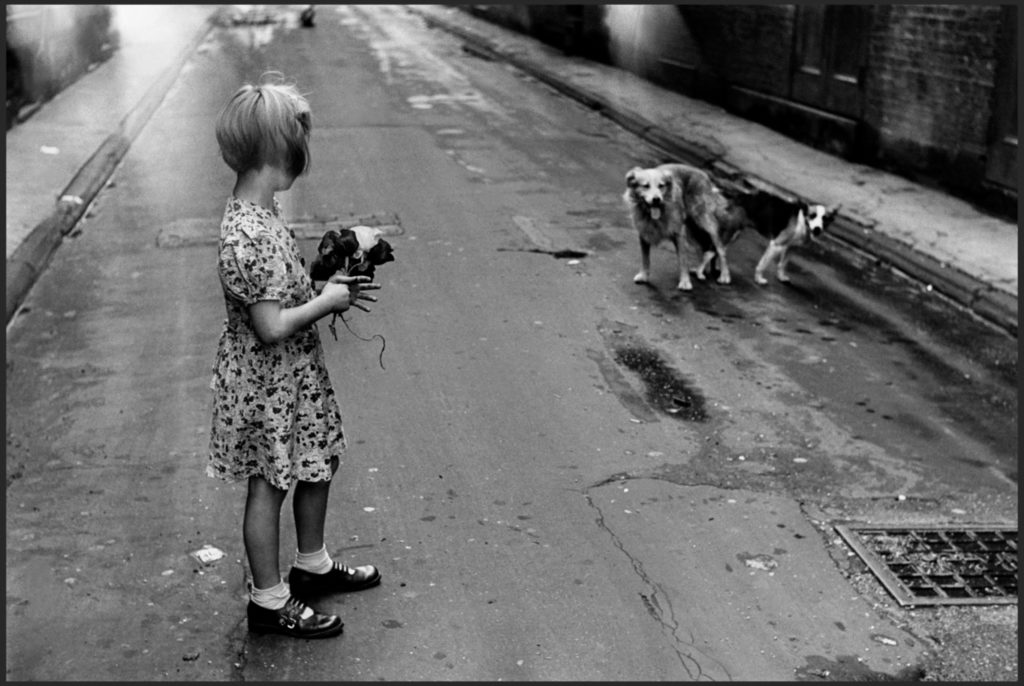
Pittsburgh 1950 by Elliot Erwitt

Unseen for decades, an early reportage in a quintessentially American postwar city reveals the making of Erwitt’s photographic style, released as a new book (Pittsburgh 1950) and introduced by National Geographic writer Vaughn Wallace

In September 1950, 22-year-old Elliott Erwitt stepped off a Greyhound bus in Pittsburgh and, new to the city, took a small, rented room at the YMCA downtown. The Paris-born Erwitt had traveled to Pittsburgh from New York at the invitation of Roy Stryker, the former head of the Information Division of the federal government’s Farm Security Administration. Controlling, magnanimous, often impossibly mission-driven, Stryker had furthered the careers of countless photojournalists, many of whom – Walker Evans, Ben Shahn, Dorothea Lange, Marion Post Wolcott, Gordon Parks and more – in later years would be recognized as pioneers whose visual stories helped define the first half of the 20th century.

Stanley Kubrick, Photographer

Source: 17-Year-Old Stanley Kubrick’s Photos Of 1940s New York Prove That He Was Born Genius

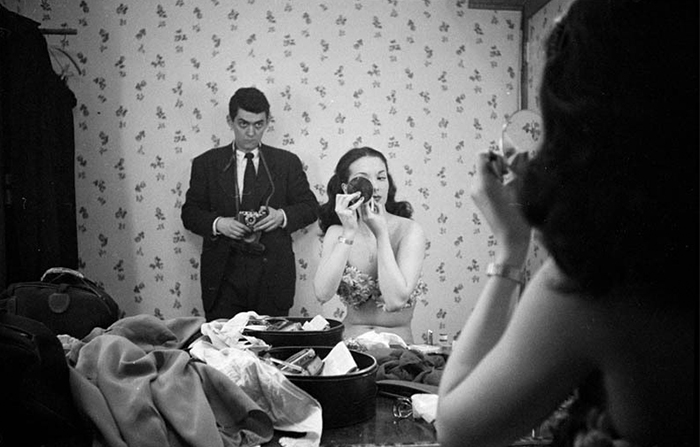
Self Portrait with showgirl Rosemary Williams, 1948. Source: 17-Year-Old Stanley Kubrick’s Photos Of 1940s New York Prove That He Was Born Genius

I’ve always been a fan of Stanley Kubrick’s films, particularly “Doctor Strangelove“. While I was aware that he was a still photographer before he turned to making movies, I had seen very few examples of his work. This article from Bored Panda presents about 70 of them. While for the most part they’re not masterpieces, they’re not bad for a 17 year old either.

Before Stanley Kubrick directed arguably some of the best movies ever made like “2001: Space Odyssey” or “The Shining,” he was a simple teenager in New York looking for a job. But even then, when the 17-year-old got his hands on a photo camera, he couldn’t hide the talent within.

Bored Panda has gathered a collection of his photos of New York from 1945 to 1950, when he was working in the Look magazine. During that time Stanley got many insights into what makes a photograph work: “I think aesthetically recording spontaneous action, rather than carefully posing a picture, is the most valid and expressive use of photography.”

He quickly made a name for himself by telling stories through photos, which eventually led him to moving pictures and his place in the filmmakers’ hall of fame.
Oh, and if you’re into street photography as well, let Stanley himself give you a tip: “Think up ideas for stories, go out and shoot them, and then send them into the magazines. I was lucky; I figured that out when I was young.”

Source: 17-Year-Old Stanley Kubrick’s Photos Of 1940s New York Prove That He Was Born Genius.

Interesting Article on the Dusseldorf School

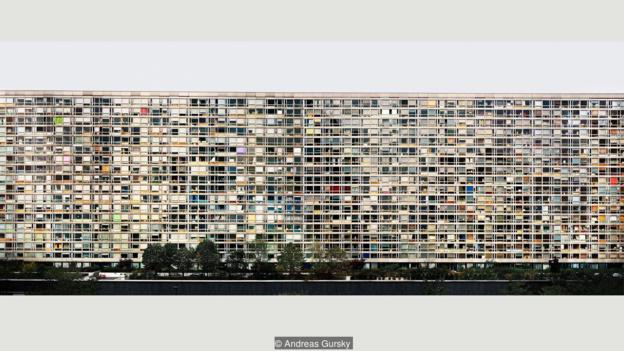
Andreas Gursky’s photograph of a Montparnasse tower block is a stunning mosaic of colour (Credit: Andreas Gursky)

Andreas Gursky’s photograph of a Montparnasse tower block is a stunning mosaic of colour (Credit: Andreas Gursky)

I just came across this article (The stunning photographs that are like paintings) on the BBC website. It deals ith the so-called “Dusseldorf School” and refers to an exhibition featuring their work at the Städel Museum in Frankfurt. In particular it draws attention to the influence of Bernd and Hilla Becher on the photographers (Andreas Gursky, Candida Höfer, Thomas Struth, Axel Hütte, Thomas Ruff, Jörg Sasse) belonging to the school.

At the heart of Engler’s exhibition is the following question: how important, as an influence upon this special generation, were their teachers in Düsseldorf, the German photographers Bernd and Hilla Becher? The answer, it transpires, is: extremely important. If you aren’t already familiar with the Bechers, then it’s time to become acquainted with two crucial figures in the history of photography.
Draconian and dispassionate.

It was 1976 when Bernd Becher (1931-2007), who had trained as a painter, was appointed professor of photography at the Academy of Art in Düsseldorf. His wife and artistic partner, Hilla (1934-2015), was never given a formal role at the institution, but she always worked closely with her husband, who often taught at home, and was an equally important influence upon his students until 1996, when Bernd left the faculty.

They had met as students, themselves, at Düsseldorf’s Kunstakademie in 1957, and began collaborating two years later, before getting married in 1961. During the 60s, they spent time in New York City, where they encountered avant-garde art, and mixed with Conceptual and Minimalist artists such as Carl Andre. “Their experience in New York totally changed the way they perceived photography,” Engler says.

A while back I went to an exhibition of Bernd and Hilla Becher at Dia, a nearby art museum. It featured a number of photographs of industrial buildings and structures and I quite liked them.

At first I didn’t much care much for the work of the other photographers, but it’s now starting to grow on me. I suspect that you really have to see the photographs in person to really “get” them. As the BBC article notes:

As an exhibition featuring their work at the Städel Museum in Frankfurt recently made plain, before the emergence of Gursky and his contemporaries, including Thomas Ruff and Thomas Struth, photography was typically seen as something small-scale and black-and-white. Its status as contemporary “art”, i.e. as work that could stand shoulder to shoulder with painting in museums and auction houses, was still a matter of debate.

During the 90s, though, curators and collectors started going wild for the sort of photography that Gursky and his peers were producing: massive, scintillating compositions, like Paris, Montparnasse, printed in full colour, and often presented, in the manner of serious paintings, in heavy wooden frames.

Just looking at tiny pictures on a computer/iphone/ipad just won’t do. Unfortunately, I’ve yet to find an opportunity to see them in their full glory.

New Book on W. Eugene Smith

Smoke pours from the chimneys of an Ohio steel mill in a 1949 picture for Life magazine. Photograph: W Eugene Smith/Life/Getty.

Smoke pours from the chimneys of an Ohio steel mill in a 1949 picture for Life magazine. Photograph: W Eugene Smith/Life/Getty. Source: W Eugene Smith, the photographer who wanted to record everything.

Interesting review in The Guardian. W Eugene Smith, the photographer who wanted to record everything of a new book on the above mentioned photographer: Gene Smith’s Sink: A Wide-Angle View.

A couple of extracts from the article:

Like many photographers, Smith was obsessive in the pursuit of his vision, but fuelled by alcohol and a long-term addiction to amphetamines, his compulsive behaviour had over the years become extreme. Among his archives were several boxes containing photocopies of all the letters he had ever written.

More startling still are the 1,740 reels of audio tape, which were made by Smith between 1957 and 1965 in his previous loft apartment in 6th Avenue near West 28th Street. They contain around 4,500 hours of mostly ambient recordings often caught clandestinely on microphones he draped on dangling leads throughout the loft and in its stairways. These tapes reveal Smith’s seeming desire to document everything going on around him – and not just through photographs. They include hundred of hours of recordings of the many jazz musicians who gravitated there after hours; the likes of Thelonious Monk, Roland Kirk, Sonny Clark and Chick Corea, but also the conversations of stellar visitors including Norman Mailer, Salvador Dali and Anaïs Nin, as well as visiting photographers such as Henri Cartier-Bresson, Diane Arbus and Robert Frank.

“For each famous person,” writes Sam Stephenson in his fascinating book, Gene Smith’s Sink: A Wide-Angle View, “there were dozens of obscure musicians, pimps, prostitutes, drug addicts and dealers, dropouts, hustlers and thieves, beat cops and buildings inspectors, photography students, frame makers, fire extinguisher technicians and countless other figures”.

Written on a desk customised from Smith’s darkroom sink, Stephenson’s evocative book is the result of 20 years of research into the life of an American documentary photographer who, having been revered in his lifetime, is now regarded in the digital age with a kind of respectful curiosity.

For all that, the wayward individual that emerges out of Stephenson’s ambitious “wide angle” approach remains essentially unknowable, a blur in an otherwise sharply defined portrait of a tougher time and a truly bohemian milieu that already seems impossibly distant. I wondered if Stephenson’s opinion of the object of his elusive devotion had altered over the course of his long labour of love. “Well, I rate him even more highly as a photographer now, particularly for his Pittsburgh work, in which he captured American industrial urbanism at its pinnacle. For me, it’s his crowning achievement. But the book is about the life more than the work and, for me, tapes were the way into that life. Put it this way, if he had not made those tapes, I would not have spent 20 years of my life researching the book. I would not have followed the leads and connections to the many extraordinary characters in that life. For me, the characters that were drawn to his loft are the truest reflection of who he was.”