The Art of Photography

What a fascinating site!. It has everything that interests me: information on cameras (particularly vintage cameras); articles on famous photographers; photography tutorials etc. And not just a few things. It’s packed with material on photography and cameras. It uses video extensively and I can spend large amounts of time just watching the various videos. As far as my interests are concerned this is arguably the best photography-related site I’ve come across. I’m glad I found it.

“The Art of Photography” is the creation of Ted Forbes who the ‘about’ section of the site describes as follows:

Ted Forbes is a photographer, media producer and film maker. He currently works as Media Producer at the Dallas Museum of Art. In addition he is also an adjunct faculty member at Brookhaven College.

Born in Dallas, TX, Ted began making photographs at an early age taking cues from his father, illustrator Bart Forbes, as well as other major influences who he came knew at an early age such as Greg Booth, Jack Unruh, Brad Holland, CF Payne and many others.

Having actually gone into music in high school, Ted attended the prestigious Booker T Washington High School for the Performing and Visual Arts followed by earning his music degree from the University of North Texas in 1997. Shortly after he took a media position at iSong in the height of the 90′s tech boom. This led to pursuits in multimedia and web based coding languages. Having gone back to briefly to “fill in some holes”, Forbes began freelancing as a media designer. Around this time, he also began to get serious again about his early passion of photography.

Ted started the Art of Photography in October of 2008 as an experiment that’s grown into one of the most popular podcasts on iTunes.

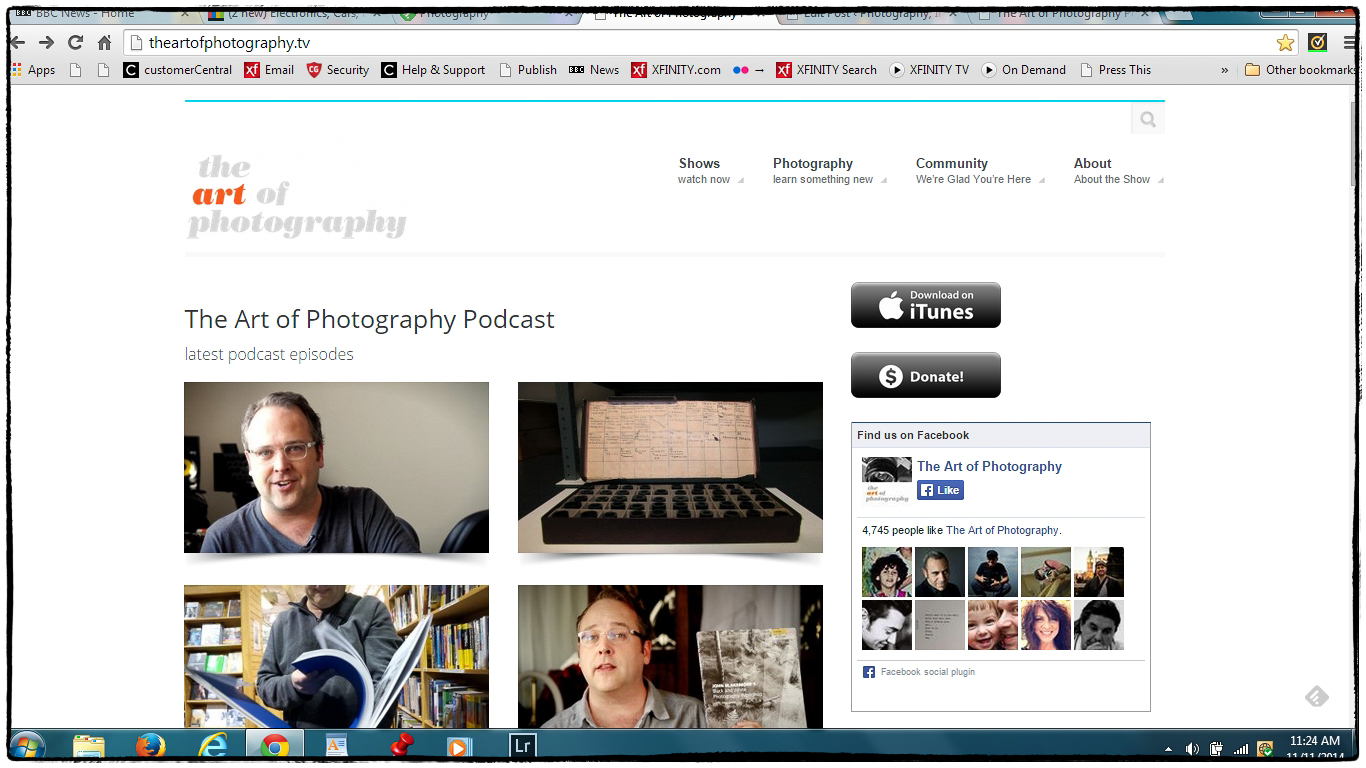
The Art of Photography
via The Art of Photography Podcast.

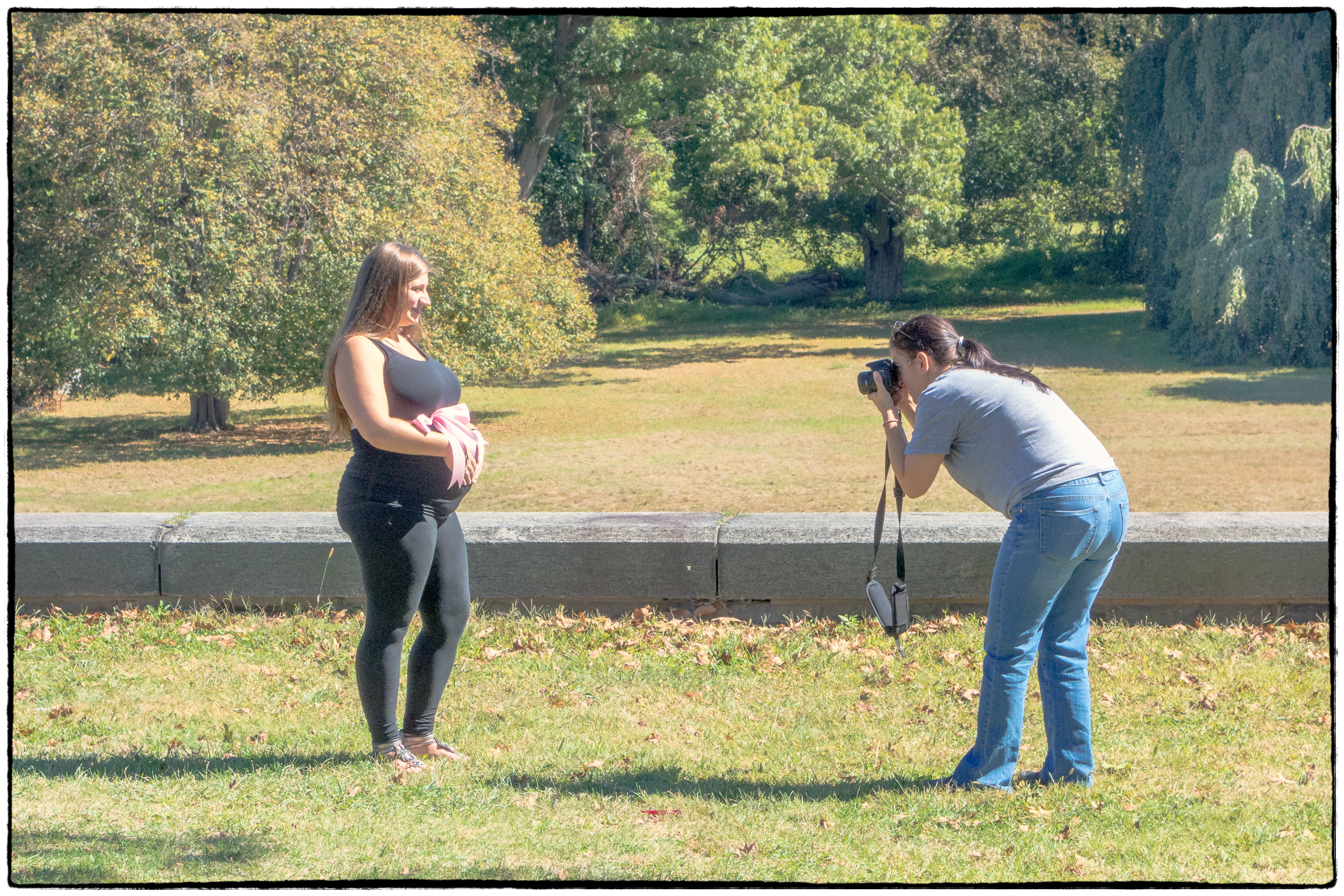
Photographing the Photographer

I came across these two young women taking pictures the other day. It wasn’t really the best time of day to be taking pictures – but then I too was taking pictures at that time. Sometimes it’s the only time you have available. Judging by the shadows the sun was directly over the photographers shoulder and straight into the face of the subject. It was quite bright at that time so I imagine the subject was squinting rather badly. Since the light was directly on the subject I doubt there was much modeling. There was lots of nice open shade around, which would have been nice for portraits. As I know all too well, however, when you’re caught up in the process of picture taking you tend not to think of these things. They always occur to me afterwards: I should have done this; I should have done that etc. Sometimes I learn and do better the next time. More often than none I repeat the same old mistakes. I have to learn more patience and to think a little more before I start taking pictures.

Photogrammar and the Farm Security Administration Photographic Archive

Walker Evans. Sharecropper’s family, Hale County, Alabama, 1935

Photogrammar is a web-based platform for organizing, searching, and visualizing the 170,000 photographs from 1935 to 1945 created by the United States Farm Security Administration and Office of War Information (FSA-OWI).

Start exploring »

via Photogrammar.


The Farm Security Administration—Office of War Information (FSA-OWI) produced some of the most iconic images of the Great Depression and World War II and included photographers such as Dorothea Lange, Walker Evans, and Arthur Rothstein who shaped the visual culture of the era both in its moment and in American memory. Unit photographers were sent across the country. The negatives were sent to Washington, DC. The growing collection came to be known as “The File.” With the United State’s entry into WWII, the unit moved into the Office of War Information and the collection became known as the FSA-OWI File.

Of the 170,000 photographs in the collection, approximately 88,000 were printed and placed in the filing cabinets of the FSA-OWI. 77,000 photographs were printed by Stryker’s division and 11,000 prints collected from other sources. Paul Vanderbilt joined the FSA-OWI in 1942 and created a new organizing system for the collection. He developed the Lot Number system and Classification Tags system, which users can search the collection by on Photogrammar. In addition, the collection grew and now includes six different collections.

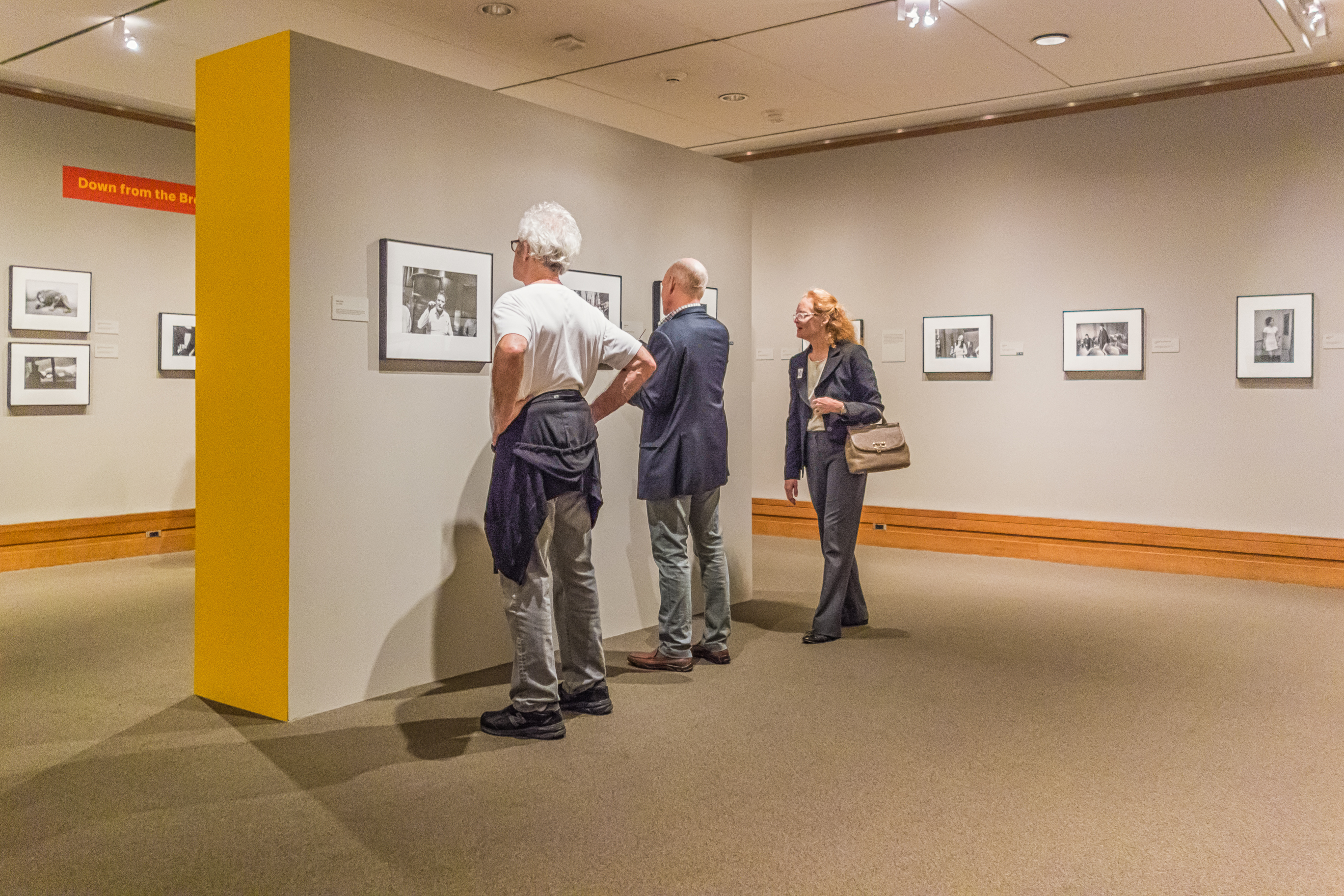
Garry Winogrand Exhibition at the Metropolitan Museum of Art

I’m not sure how I feel about Winogrand. Apparently he took large numbers of photographs. At his premature death he left behind about 2,500 rolls of undeveloped film, 6,500 rolls of developed but not reviewed exposures, and contact sheets made from about 3,000 rolls. The exhibition is careful to distinguish between those pictures proofed and reviewed by Winogrand himself and those chosen after his death by other editors.

I really like some of his pictures, but I’m lukewarm about many of the others. Many of them seem to be little more than snapshots. It almost seems as if he were a precursor to the age of digital photography – where it costs no more to shoot 10,000 images than it does to shoot ten. If you shoot enough maybe eventually you get a few good ones. According to a New York Times article even John Szarcowski, one of Winogrand’s biggest supporters had problems with Winogrand’s later work:

However, when he reviewed many contact sheets of this overabundance of late photos, Mr. Szarkowski became frustrated and angry. He included only a small sample of what he deemed “unfinished work,” plagued with “crippling mechanical flaws,” in Winogrand’s posthumous retrospective in 1988. He compared Winogrand’s late-life photographic frenzy to the sputtering that an overheated car engine continues to make after the ignition has been turned off.

Since I have mixed feelings about Winogrand’s work thought I’d get the exhibition book so that I could study his work more thoroughly. It contains all of the photographs from the exhibition plus a number of what seem to be very interesting essays. We’ll see if, as I become more knowledgeable, I’ll come to appreciate his work more.

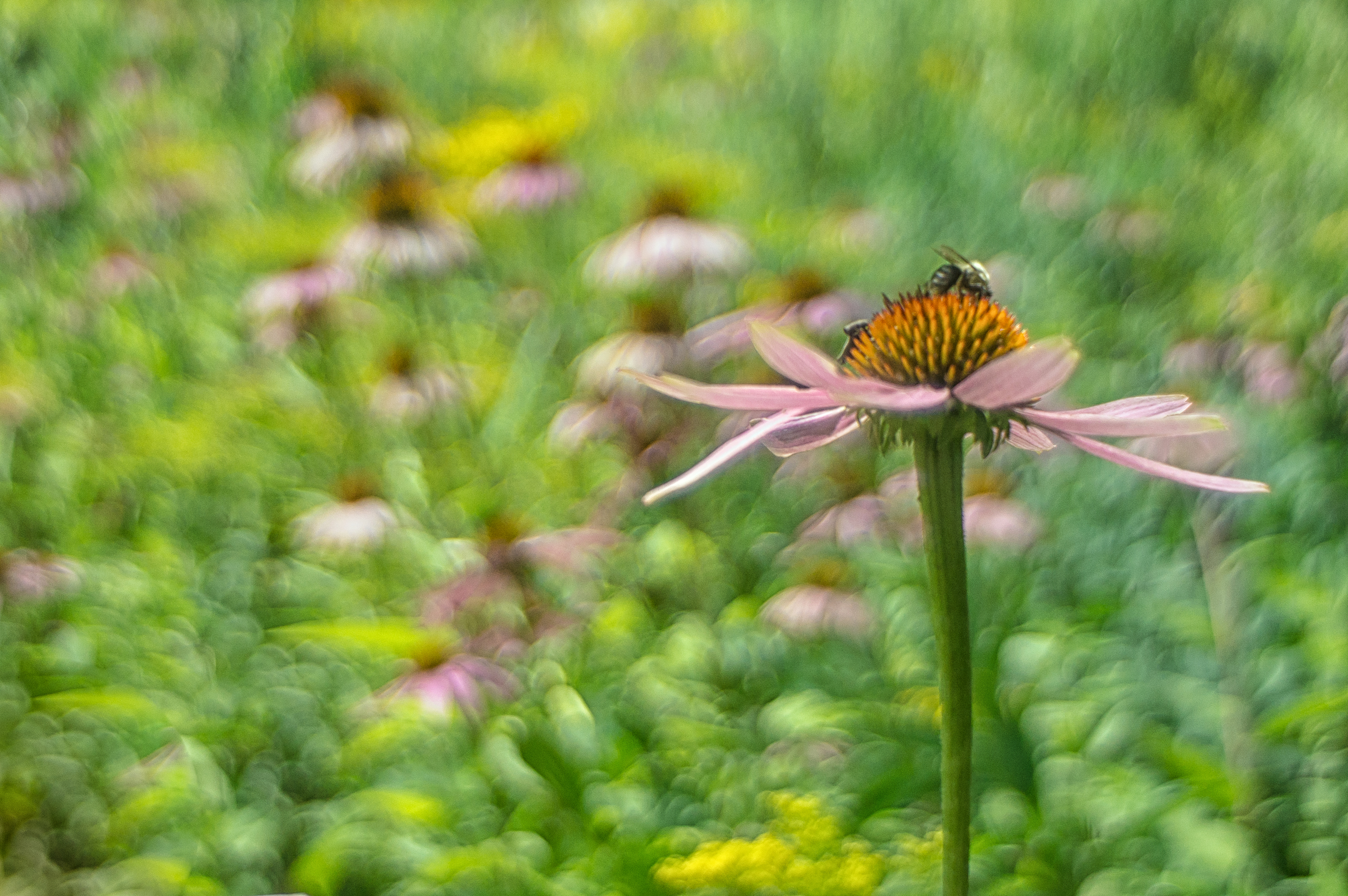
Look at that Bokeh

I completely missed the focus here, but I thought I’d include the picture because of the crazy, swirly bokeh – and from a 28mm lens too (Sears 28mm f2.8 in M42 mount. I have no idea who actually made it). The funny thing is that I’d recently seen a picture with similar bokeh and found it interesting. It was taken with a Helios 44-2. The Helios 44 seems to come in several version and I’ve been reading about them so as to make an educated decision as to which one to get. Imagine my surprise when my Sears lens ($7.99 with a nice case from Goodwill) managed to produce this. I might still get the Helios though.