Happy Anniversary!

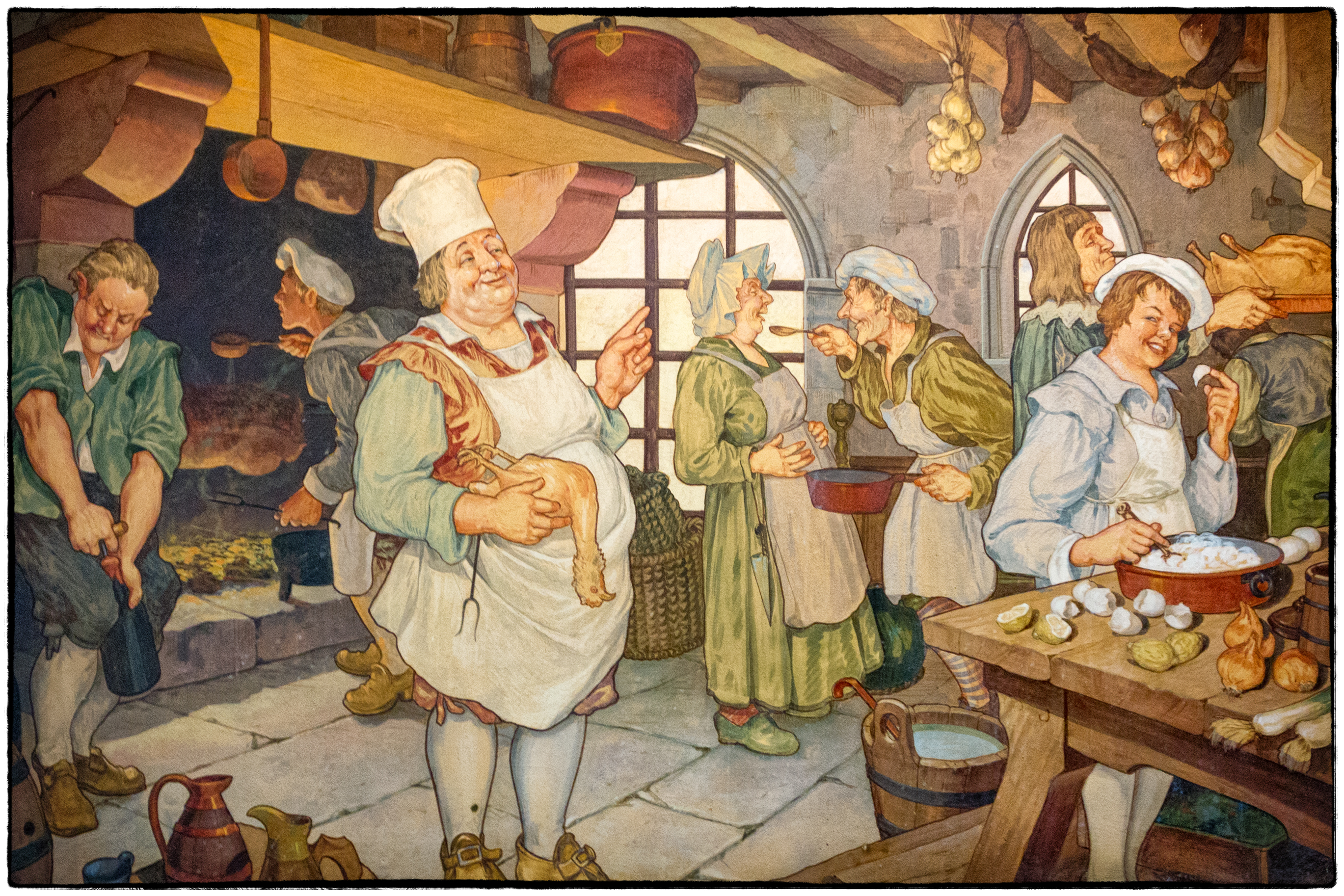
Mural by the entrance.

January 10 is our wedding anniversary and we decided to go to La Cremaillaire in Banksville. It’s a lovely place: although billed as a “French Country Restaurant” (which it certainly is) it also has many of the characteristics of a certain type of English Pub (low ceilings; wooden beams; lots of brass and numerous ceramic ornaments etc.), which I miss quite a bit. The setting is great (a former farm house dating back to 1750) and the food is wonderful. We had a terrific time.

It was pretty dark inside and I didn’t have high hopes for the pictures, but they didn’t turn out as badly as I thought they would.

One of the dining rooms.

Porcelain chickens on a mantel.

My wife with her Kir Royale.

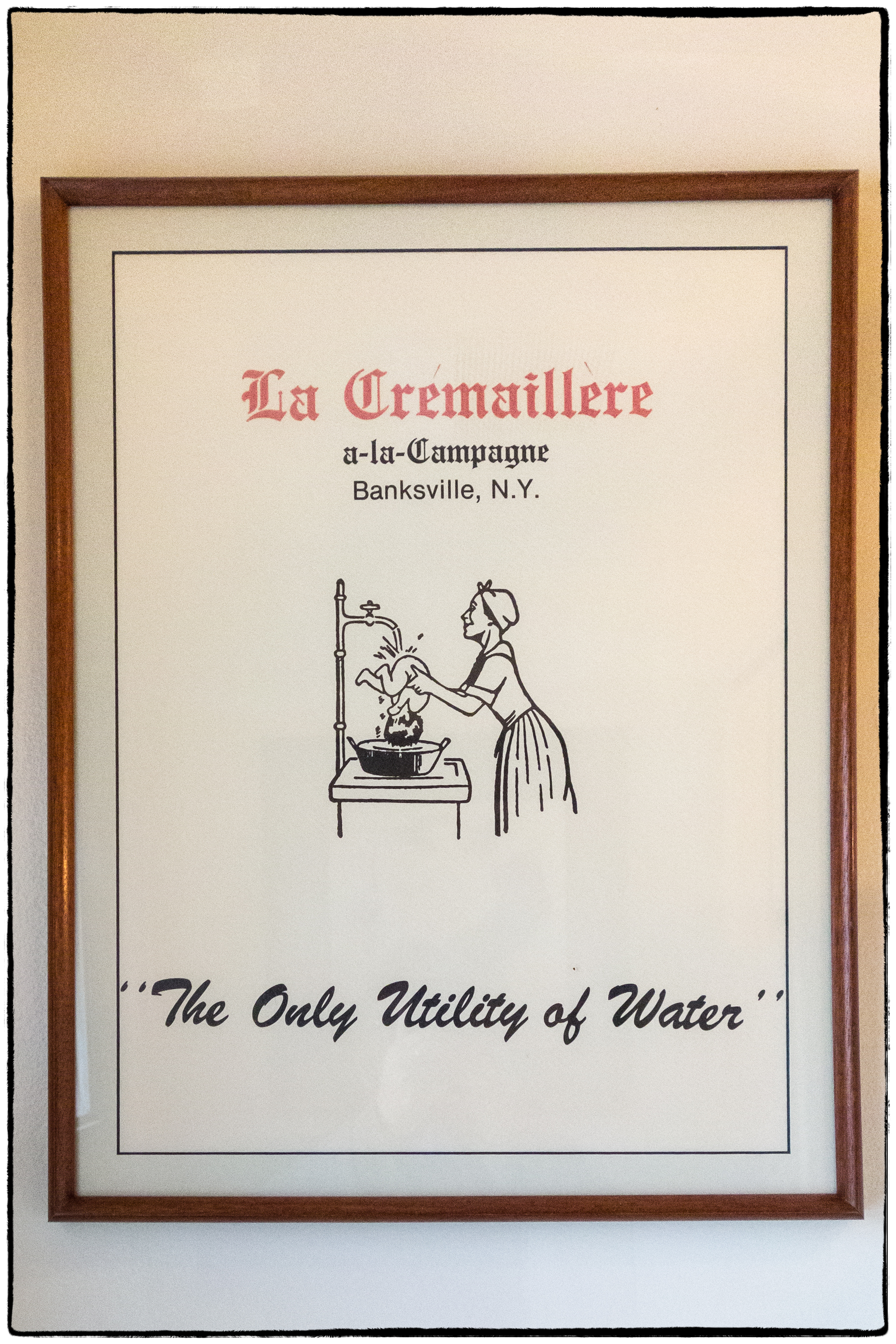
Sign in the bathroom. I had to include this because my wife worked for years in the water, sanitation and hygiene sector.

Frances Frith

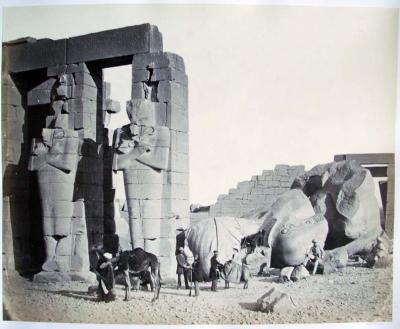
Francis Frith (1822-1898), Egypt, Sinai, and Jerusalem: a Series of Twenty Photographic Views;

Francis Frith collaborated with a lecturer and scholar of antiquities at the British Museum, Reginald Poole, and with Poole’s mother, Sophia, to produce this mammoth album of photographs. It is interesting that at the same time, Sophia’s brother Edward W. Lane (1801-1876), a scholar of Oriental linguistics, was working with Reginald on an illustrated edition of the Arabian Nights (The Thousand and One Nights, a new translation from the Arabic, with copious notes by Edward William Lane; illustrated … by William Harvey; edited by his nephew Edward Stanley Poole, 1859. Rare Books (Ex) 2263.2869).

Source: Egypt, Sinai, and Jerusalem – Graphic Arts

Interesting photographs from the late 1800s. It was photographs like these that first got me interested in exotic places and ruined buildings. I doubt, however, that they have the same impact nowadays that they had when they first saw the light of day. In those days only a privileged few would ever have viewed such sights.

Nowadays with relatively cheap air travel, the ubiquity of cameras, movies etc. pretty much everyone knows what these countries look like. This in turn raises the question: are these truly good photographs, or did their fame come largely from their novelty? Such photographs had such an influence on me when I was young that I am certainly biased and can’t give an objective opinion on this.

Give my regards to Broadway

Taken in March, 2010 at Duffy Square (between Broadway-7th Ave and 45-47th Street) in Manhattan, NY. In case anyone reading this is not familiar with New York City, Duffy Square makes up the northern part of the Times Square neighborhood. Statues: in the foreground George M. Cohan and in the background Father Francis P. Duffy.

Cohan is, of course, a famous singer, dancer, producer and all-around entertainer, considered by many to be the originator of the Broadway Musical. His life is commemorated in the movie: “Yankee Doodle Dandy” starring a singing/dancing James Cagney. If you only know Cagney from his gangster movies and impressionist takes (“You dirty rat…”) this seems odd, but he was originally a dancer. Wikipedia has this to say about Cohan:

Cohan began his career as a child, performing with his parents and sister in a vaudeville act known as “The Four Cohans.” Beginning with Little Johnny Jones in 1904, he wrote, composed, produced, and appeared in more than three dozen Broadway musicals. Cohan published more than 300 songs during his lifetime, including the standards “Over There”, “Give My Regards to Broadway”, “The Yankee Doodle Boy” and “You’re a Grand Old Flag”. As a composer, he was one of the early members of the American Society of Composers, Authors, and Publishers (ASCAP). He displayed remarkable theatrical longevity, appearing in films until the 1930s, and continuing to perform as a headline artist until 1940.

Known in the decade before World War I as “the man who owned Broadway”, he is considered the father of American musical comedy. His life and music were depicted in the Academy Award-winning film Yankee Doodle Dandy (1942) and the 1968 musical George M!.

Father Francis P. Duffy (after who the square is named) is perhaps lesser known. Wikipedia has this to say about him:

Francis Patrick Duffy (May 2, 1871 – June 27, 1932)[1] was a Canadian American soldier, Roman Catholic priest and military chaplain.

Duffy served as chaplain for the 69th Infantry Regiment (known as the “Fighting 69th”), a unit of the New York Army National Guard largely drawn from the city’s Irish-American and immigrant population.[2] He served in the Spanish–American War (1898), but it is his service on the Western Front in France during World War I (1917-1918) for which he is best known. Duffy, who typically was involved in combat and accompanied litter bearers into the thick of battle to recover wounded soldiers, became the most highly decorated cleric in the history of the United States Army.

Taken with a Panasonic Lumix ZS-3, a very small digital point and shoot camera with tiny sensor and a long zoom range. In poor light pictures taken with this camera can look a little like watercolor, but it good light it could produce great results and was very easy to carry around.

I think I’m in the wrong country

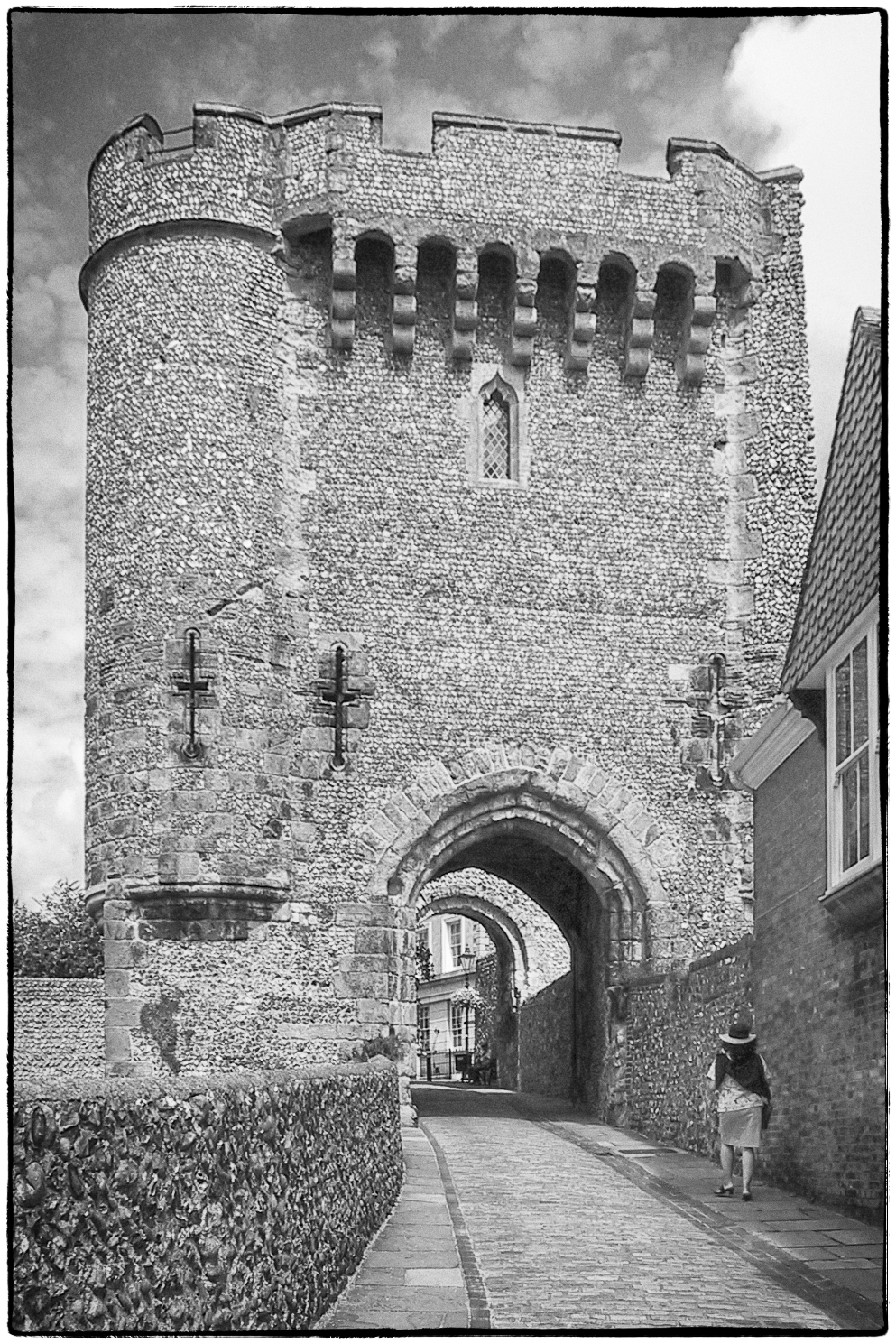
Recently I’ve been reading “The Plantagenets” by Dan Jones.  I’ve also been watching the TV series: Britains Bloodiest Dynasty.  The Plantagenets  narrated by Dan Brown.  In the TV version there are some wonderful scenes with ruined castles.  I love ruins and although there are many ruined buildings in the US very few of them have the ‘panache’ of a European castle.  Makes me wonder if I’m in the wrong country (at least for photography).

Above and below are pictures of one of these castles: Lewes Castle.  Lewis is a historically significant town, particularly for the battle that took place there in 1264. According to Wikipedia:

The Battle of Lewes was one of two main battles of the conflict known as the Second Barons’ War. It took place at Lewes in Sussex, on 14 May 1264. It marked the high point of the career of Simon de Montfort, 6th Earl of Leicester, and made him the “uncrowned King of England”. Henry III left the safety of Lewes Castle and St. Pancras Priory to engage the Barons in battle and was initially successful, his son Prince Edward routing part of the baronial army with a cavalry charge. However Edward pursued his quarry off the battlefield and left Henry’s men exposed. Henry was forced to launch an infantry attack up Offham Hill where he was defeated by the barons’ men, defending the hilltop. The royalists fled back to the castle and priory and the King was forced to sign the Mise of Lewes, ceding many of his powers to Montfort.

De Montfort ruled England for a year and called two parliaments. The first stripped the King of his powers and the second included ordinary citizens, making him one of the originators of modern parliamentary democracy. Ultimately de Montfort was defeated and killed at the Battle of Evesham in 1265.