Storm King Art Center Revisited

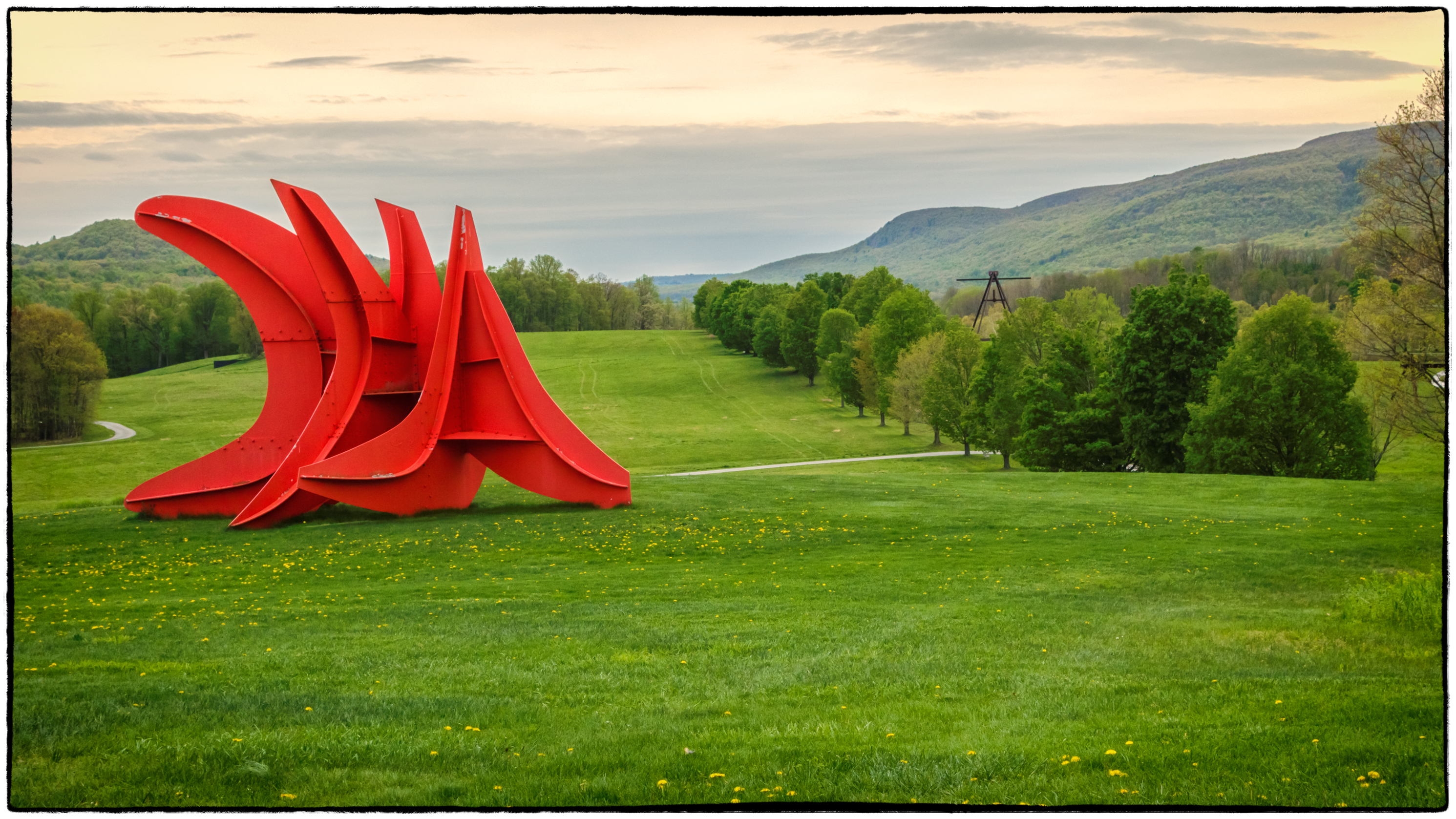
Five Swords, Alexander Calder and in the background Pyriamidian by Mark di Suvero.

I’ve posted a couple of times before on Storm King Art Center:

Something’s afoot at Storm King Art Center
Storm King Arts Center, New Windsor, NY

I find it a fascinating place and had the occasion to visit twice in rapid succession in the past few weeks: taking visiting friends. On the bus tour they mention that the best way to experience the center is to walk around it. I’d have to say that I agree with this. However, it’s a very large site so be prepared for a lot of walking. So far I’ve stuck to the bus tours and a little walking. I think I’ll go back early one morning and stay there all day. That way I can hop on and off the bus and also have time to walk around the various installations and see them in all of their glory.

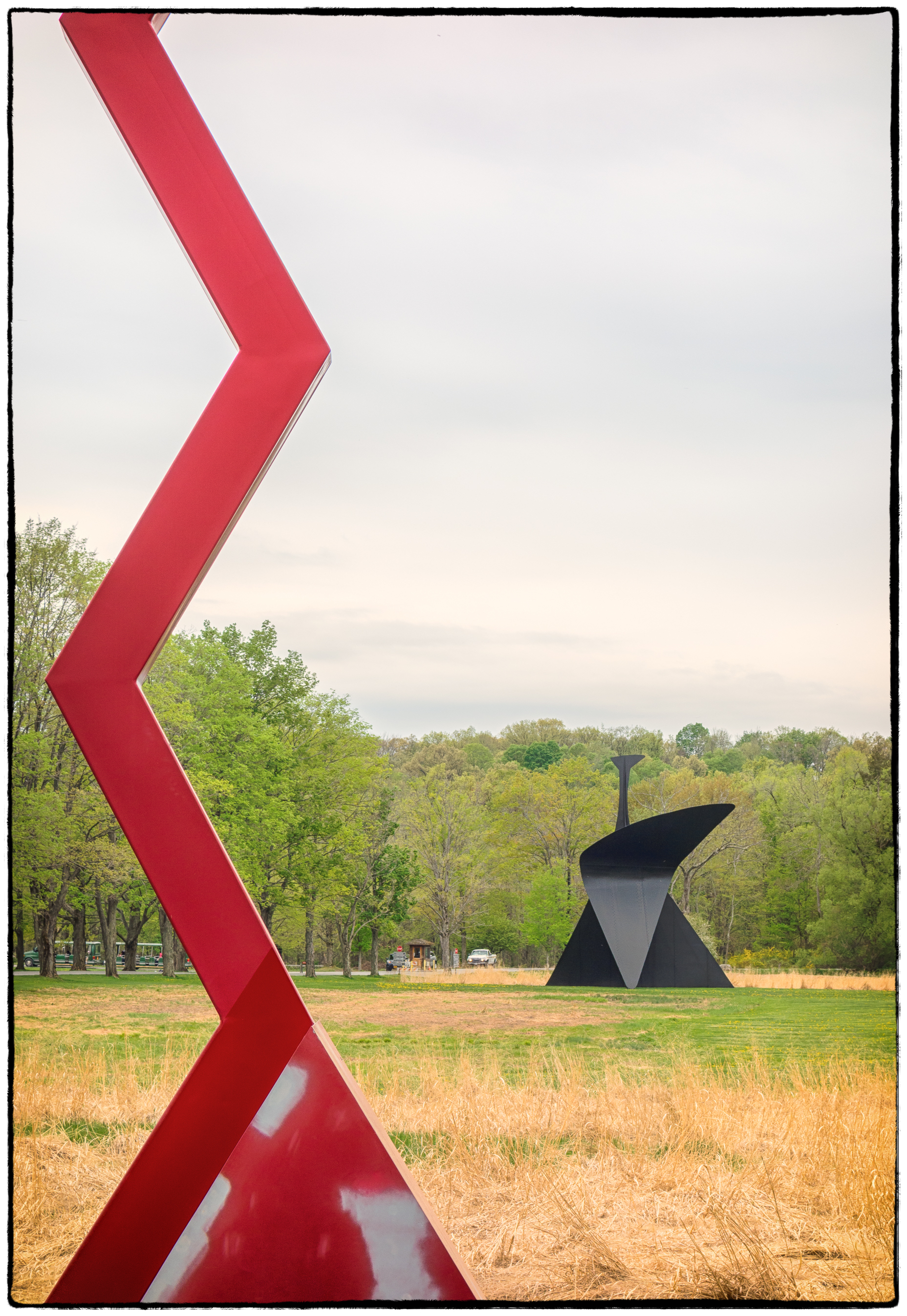
Endless Column, Tal Streeter and The Arch, Alexander Calder.

Crescendo and Double Fountain, Mother and Child, For Anand. Lynda Benglis. Part of the Water Sources installation.

Volton XX by David Smith.

Volton XX by David Smith.

Rye Playland

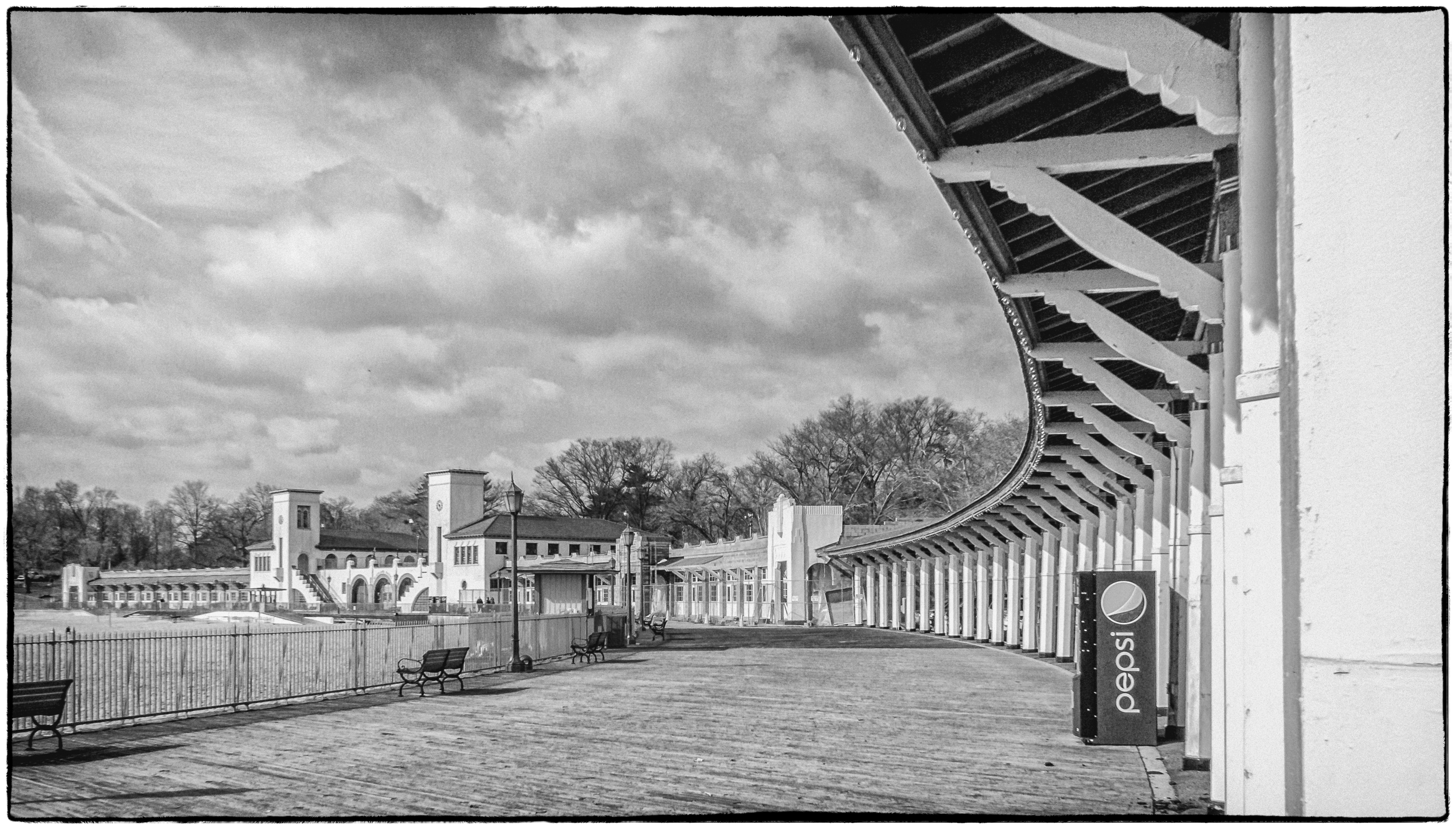
Rye Playland. Familiar to anyone who has seen the movie: “Big“. According to Wikipedia:

In the late 19th and early 20th centuries, Playland’s waterfront area of Westchester County, New York along the Long Island Sound was the site of a growing collection of recreational developments, including hotels, resorts, and “amusement areas”. Local residents concerned about what a County report described as “unsavory crowds” induced the Westchester County Park Association to purchase two existing theme parks, Rye Beach and Paradise Park, and planned a local-government-sponsored amusement park in their stead.

Frank Darling, a veteran park manager with experience at Coney Island and the British Empire Exhibition at Wembley, was hired to design and run the new park, called Playland. Construction commenced in September 1927 and was completed in six months. A design firm was commissioned to decorate the entire park in the Art Deco style.
The park began operation on May 26, 1928. The original design included a boardwalk, ice-skating rinks, a swimming pool, and two beaches, as well as amusement park rides, some of which are still in use.

The “Ice Casino”, built in 1929, originally contained a main ice rink as well as a full dance floor on the second floor that functioned as a dance hall through the 1940s and ’50s. It also had a full service fine-dining restaurant and an outdoor café. It had smaller dining rooms upstairs for upscale private dinners. A renovation in the 1970s added a kiddie rink as well as a mid-sized ice rink. A renovation to the main ice rink that included a new surface, boards and glass was completed in 2007 for the Empire State Games.

Playland is home to the “Grand Carousel,” a 1915 Mangels-Carmel carousel. It has four rows with 48 jumpers, 18 standers and three chariots. It was originally in New Haven, Connecticut, and moved to Playland when the park opened in 1927. The Grand Carousel has a rare band organ built by the Gavioli company in Italy. The organ enclosure features two male figures that strike bells in time to the music while the central female figure moves a baton. The Grand Carousel contains designs including those on the horses that are completely hand-carved and painted by Charles Carmel from Brooklyn, New York. The horses possess many unique traits that include elaborate “fish scale” blankets, inlaid gemstones, armor and lolling tongues on several.

Playland is also home to one of only three “Derby Racers” still in existence. The Derby Racer was built in 1927 for Playland by Prior & Church with horses carved by Marcus Charles Illions, a turn of the Century New York carousel horse carver. The Derby Racer rotates at 25 miles per hour (40 km/h) – three times the speed of a normal carousel. The horses move back and forth as well as up and down, simulating a true gallop as it races around the track. The other “Derby Racers” are located at Cedar Point, in Sandusky, Ohio; and Blackpool Pleasure Beach, in Blackpool, Lancashire, United Kingdom.

The Dragon Coaster, Playland Amusement Park’s iconic attraction, is a wooden roller coaster which was opened in 1929. Designed and built by amusement ride creator Frederick A. Church (also the co-inventor of the Derby Racer) the Dragon Coaster has approximately 3400 feet of track and is approximately 85 feet tall at its highest point. It has a tunnel along its span, a common feature of wooden roller coasters from the 1920s. The tunnel resembles the body of a dragon and the opening of the tunnel resembles a dragon’s mouth, it has eyes that light up and it blows steam from its nostrils. Playland Park removed the classic Prior and Church trains in 1989 and replaced them with Morgan trains because the P.T.C.s did not have up-to-date safety technology such as lap bars and other items. The Dragon Coaster is still in operation to this day and is classified as one of the park’s seven “classic” rides, along with The Whip, & Ye Olde Mill (an indoor dark boat ride involving gnomes.)

Playland is also home to the Kiddie Coaster, built in 1928. It is an ACE Coaster Classic.

In 1966, a fire claimed some of Rye Playland’s attractions, including the original Bumper Car ride, and the “Magic Carpet” Funhouse.

Playland was declared a National Historic Landmark in 1987.

Taken with a Fuji HS10, a camera I never quite warmed to.

Woodstock, NY

We went to Woodstock several years ago and stayed for a few days over Easter. We had a nice time exploring and eating in some of the restaurants. More recently my wife went to a spa there and while I waited for her I took a look around, initially at the Byrdcliffe Arts Colony and afterwards in the town itself.

I don’t quite know what to make of Woodstock. It’s a pleasant enough town with something of a buzz about it. When we were there recently it was full of people. There are a lot of quaint, brightly colored buildings and it’s pleasant to browse around the shops and eat in the restaurants. But it all feels a bit false, as if the town capitalizes on the reputation of the Woodstock Festival, which unfortunately didn’t take place in Woodstock at all, but rather in Bethel, almost 60 miles away. The brightly colored buildings, the preponderance of businesses specializing in yoga, meditation, Tibetan artifacts etc. add to this impression, not to mention all the aging hippies with their long, now grey, beards; psychedelic colored garb and beads. I suppose it’s as good a place as any to explore the picturesque Catskill mountains in which Woodstock is situated.

One of the many “On this site once stood…” signs. There seems to be little of historic significance still standing. I liked the message though.

The Old Forge House. A plaque nearby reads:

The Old Forge House. Few historic buildings in Woodstock boast such a variety of purpose and have been subject to so many changes. Originally the site of Grist Mill and Farm deeded to Isaac Davis by Chancellor Robert R. Livinstone of Clermont in 1789; it later became a Saw Mill. Later around the end of the Civil War the Village Smithy was built and operated by John Wigram Davis, then it was enlarged as a barn for wagons and carriages. Hym Bouee then stored his hearse and caskets here for his undertaking business. Later, owner Peter Longendyke operated a boarding house, and it was here that State Police sargent Cunningham, long the mainstay of law and order in Woodstock, maintained his headquarters.

In 1935 owner Lamonte Simpkins remoddeled it as “The Art Shop”. Upstairs Mr. Simpkins sold cloths, shoes and drygoods, while downstairs the art shop and Tannery Brook Garden Flourished. The summer house and garden were popular with teenagers of the time, with John O’Brien behind the soda fountain. Later the Art Student League occupied the second floor, followed by the American Legion.

Later yet, the building became the offices of the Woodstock Insurance Company and the Woodstock Press, at which time a cement block structure was added to the rear, to house, the printing presses. The upstairs during this period was an art gallery where many well known Woodstock artists exhibited.

Originally known as the “Tannery Brook House” it was christened the Old Forge House by J.G. Van Rym in honor of its original use, and is dedicated as a landmark to the arts, crafts and history of Woodstock.

Crocuses. When this was taken (March 29) there was still snow on the ground and at first I thought they were false. I bent down to check and, sure enough, they were real!

Woodstock Town Hall. The building to the rear on the left is the Police Station.

Paving.

Grand Canal, Venice

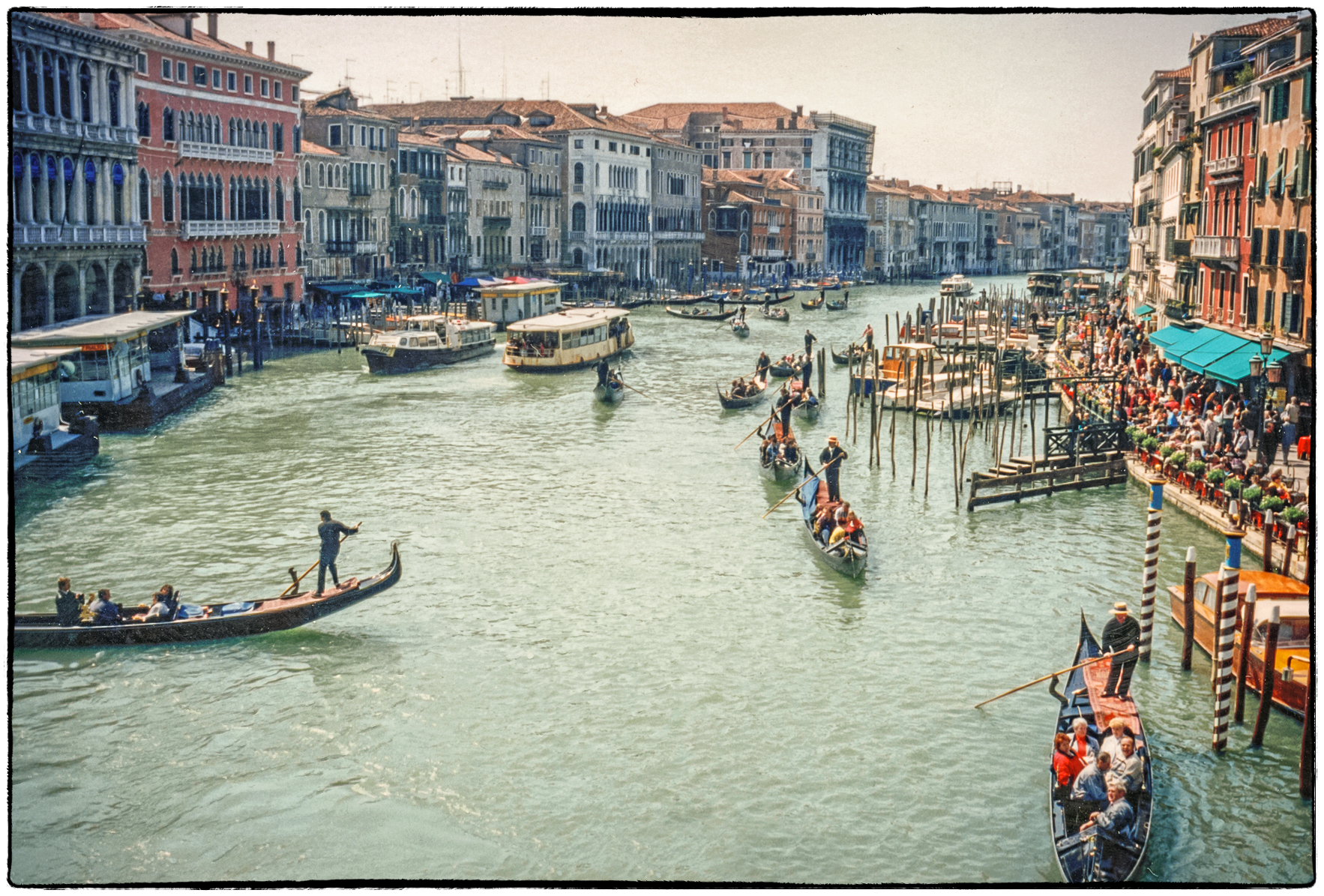
The scanning project continues. This “postcard” shot is a scan of a 4×6 print of the Grand Canal, Venice taken sometime in the 1990s. The view is from the Rialto Bridge and the camera is either a Canon AE-1 or a Minolta Hi-Matic 7sii, the only cameras I had at the time. Unfortunately I can’t recall which one. I vaguely remember sitting in a restaurant eating and then deciding to go up onto the bridge to take the picture. If that memory is correct then my wife is probably sitting in one of the restaurants on the left side of the picture.

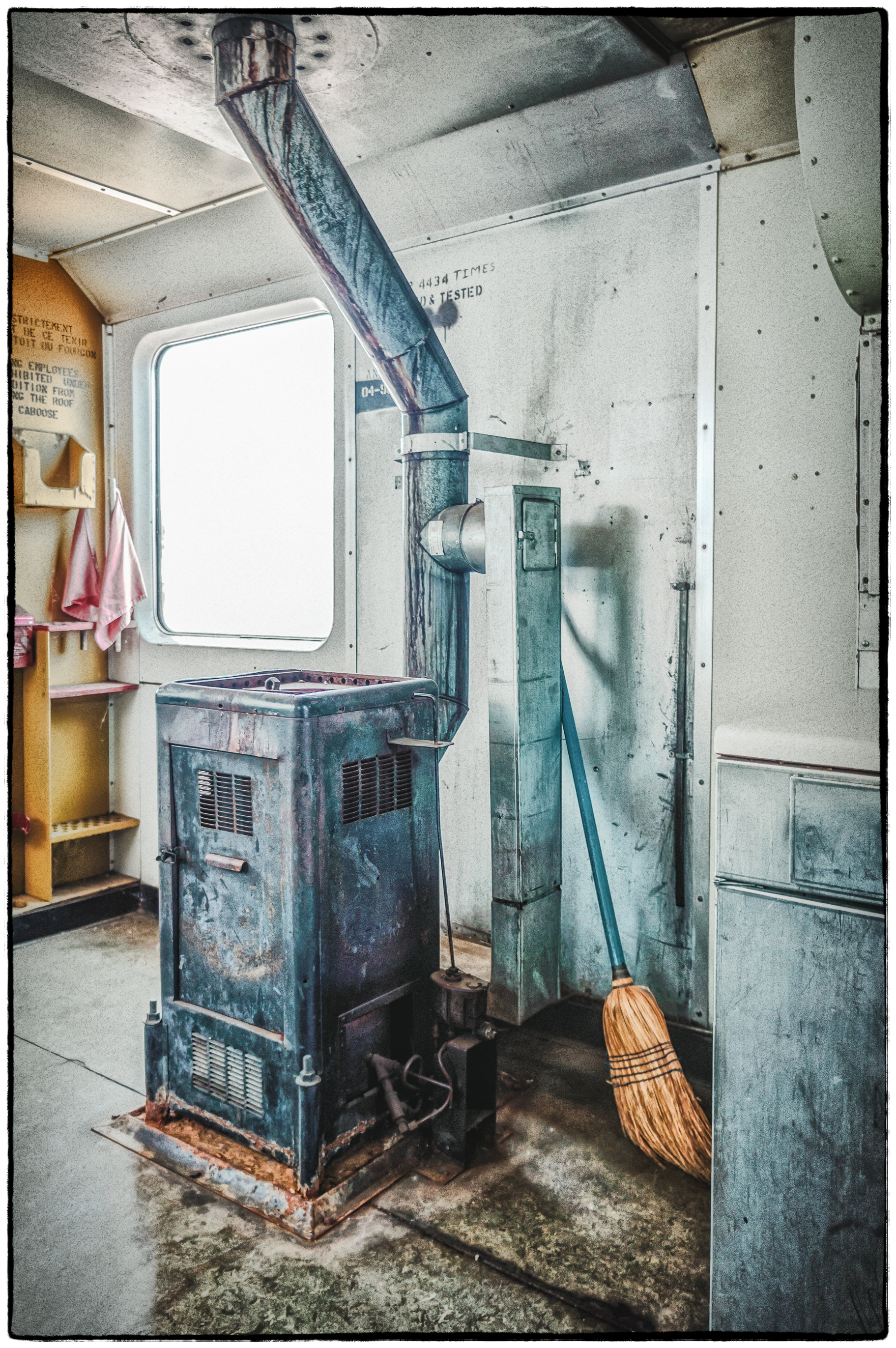
Railway Carriage Interiors

Taken at the Danbury Railway Museum in June, 2013 with a Sony NEX5n and the 18-55mm f3.5-5.6 OSS kit lens. An earlier post can be found at: Danbury Railway Museum

In the image above I like the color contrasts and the converging lines.

I hadn’t been expecting to find a kitchen. Liked the reflections and the smooth metal appliances. Also the slightly dirty, grungy look.

Some kind of mail sorting car? Nice colors.

Got the depth of field wrong but still kind of like it.

Too much dynamic range in this picture. I didn’t think I could do much with it so I tried some (for me) fairly extreme processing. I’m still not sure I like this kind of processing, but the results are not awful.