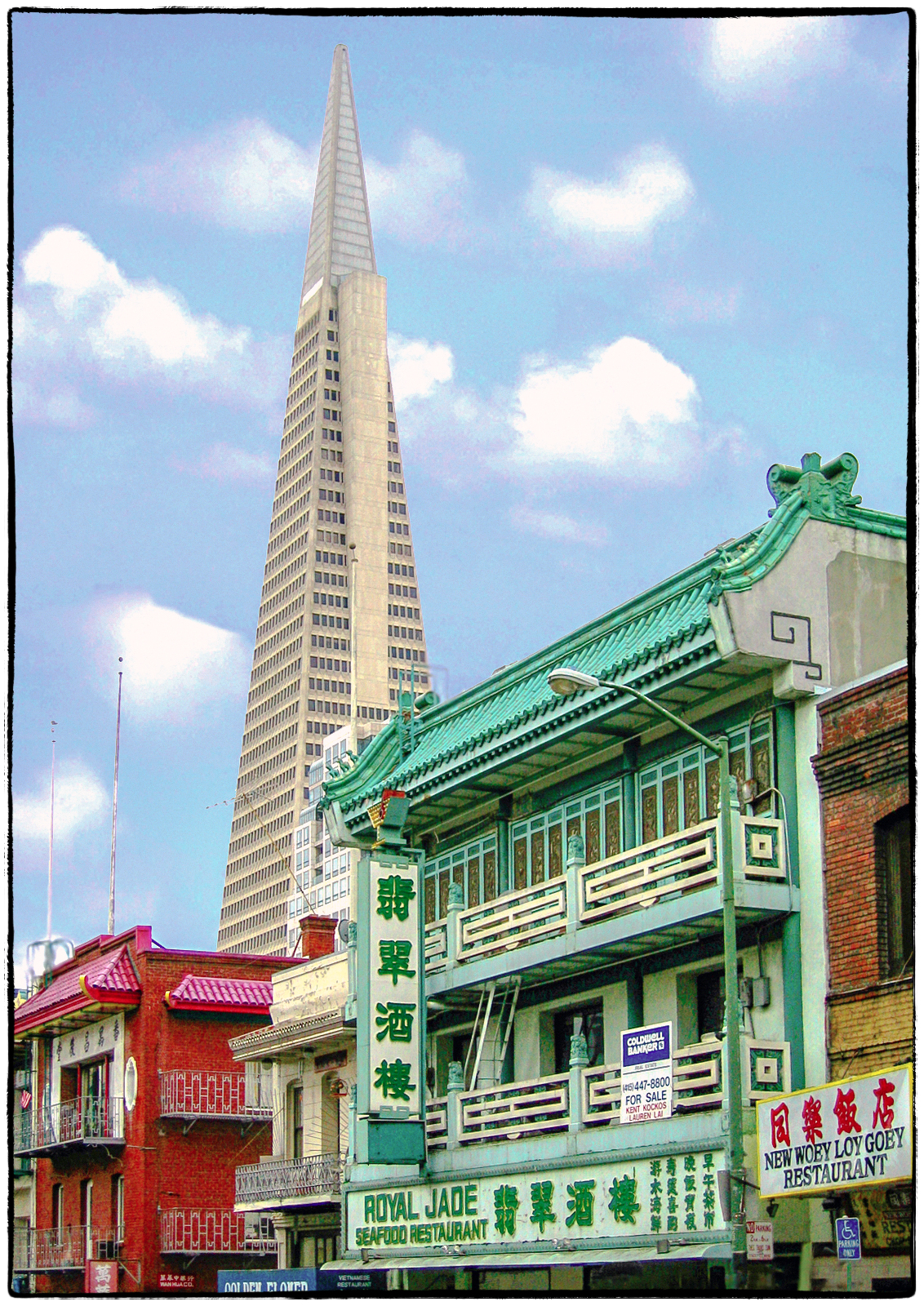
San Francisco, 2003

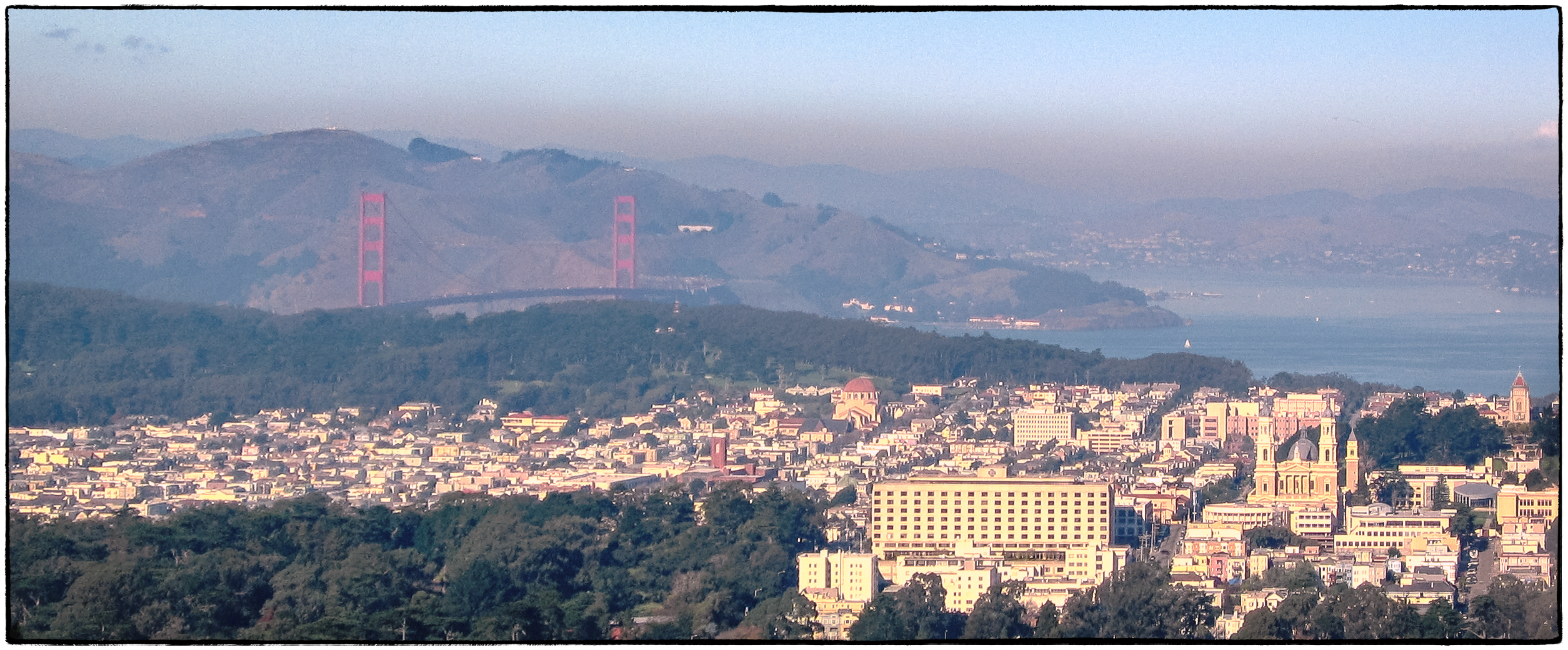
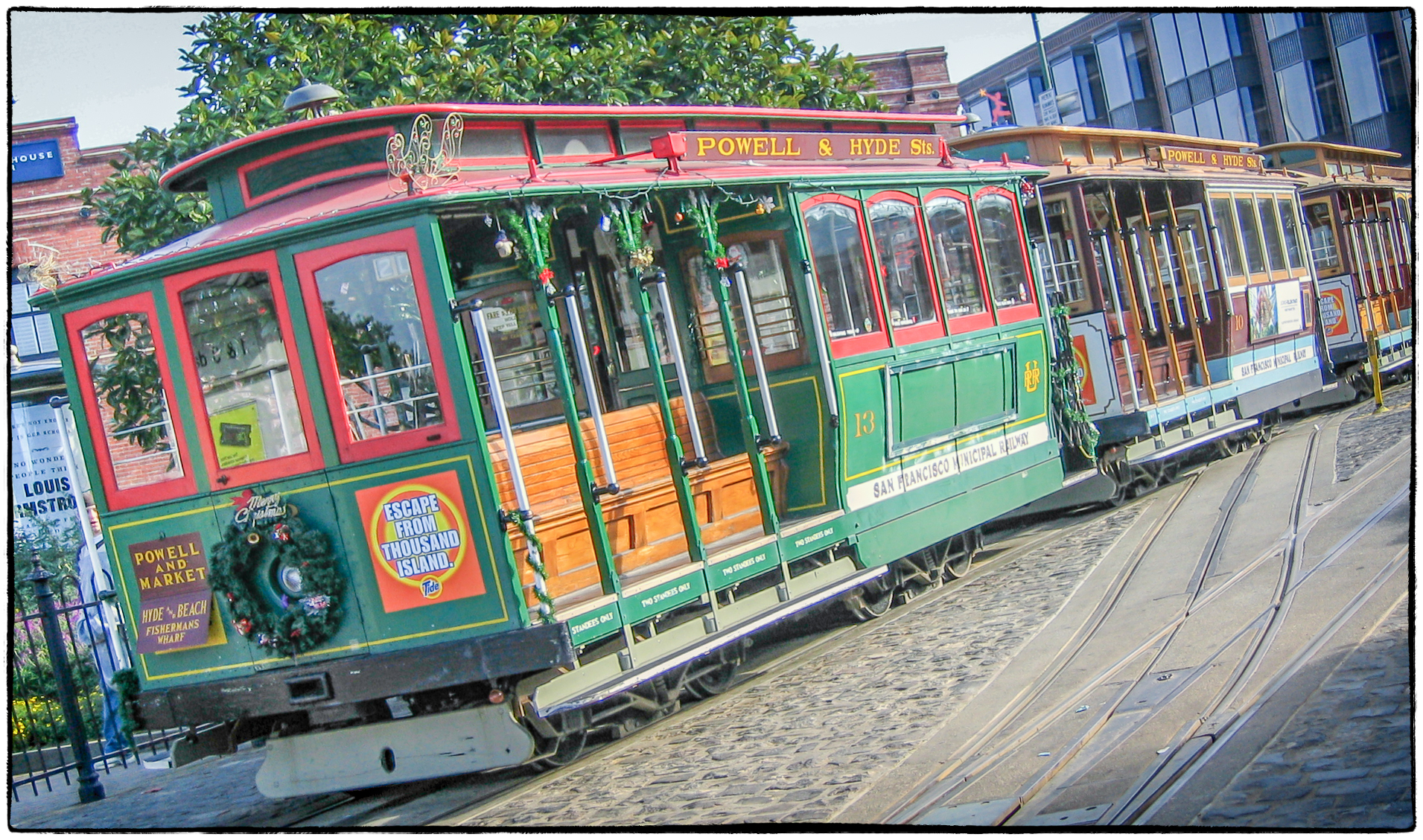
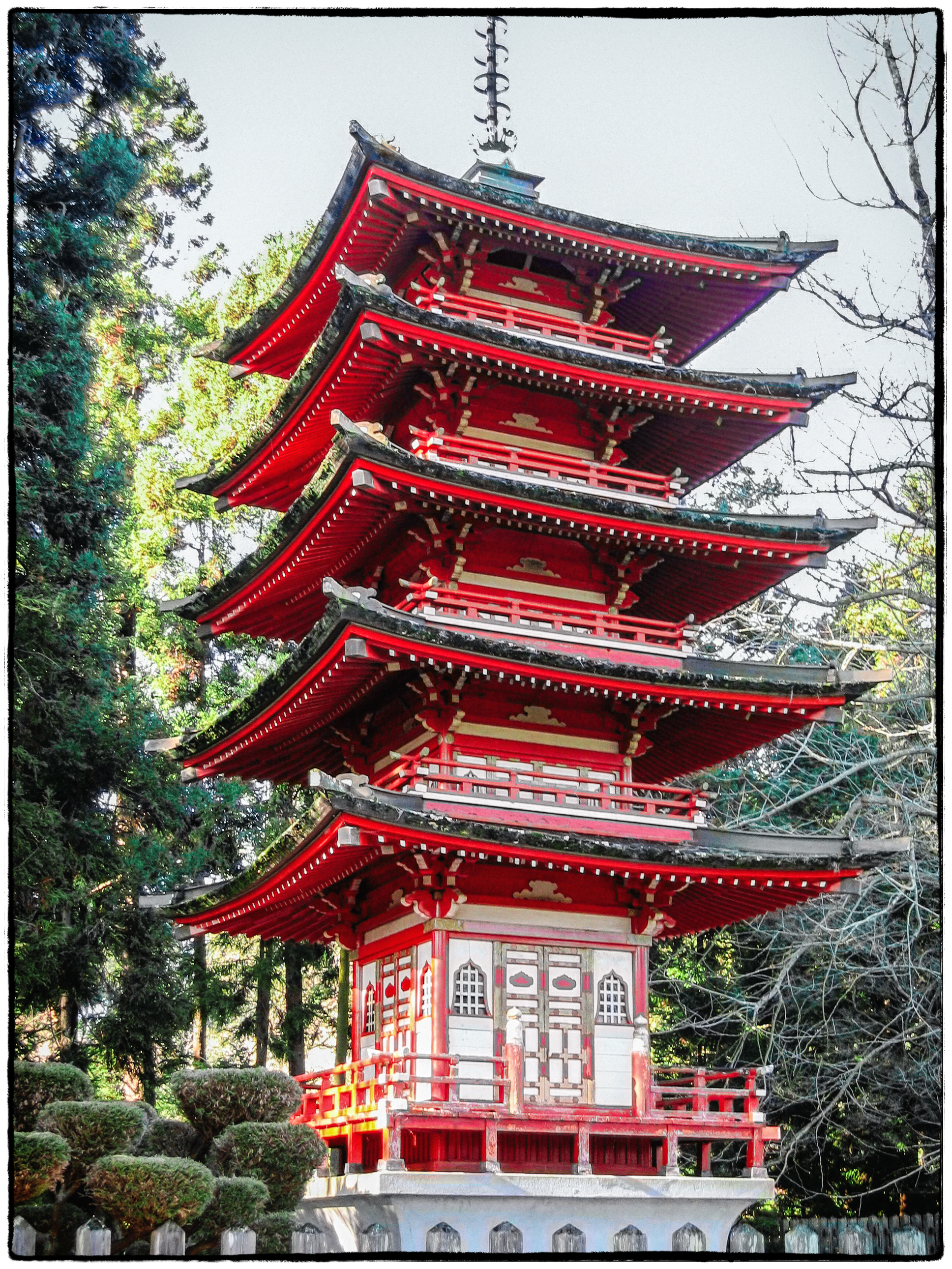
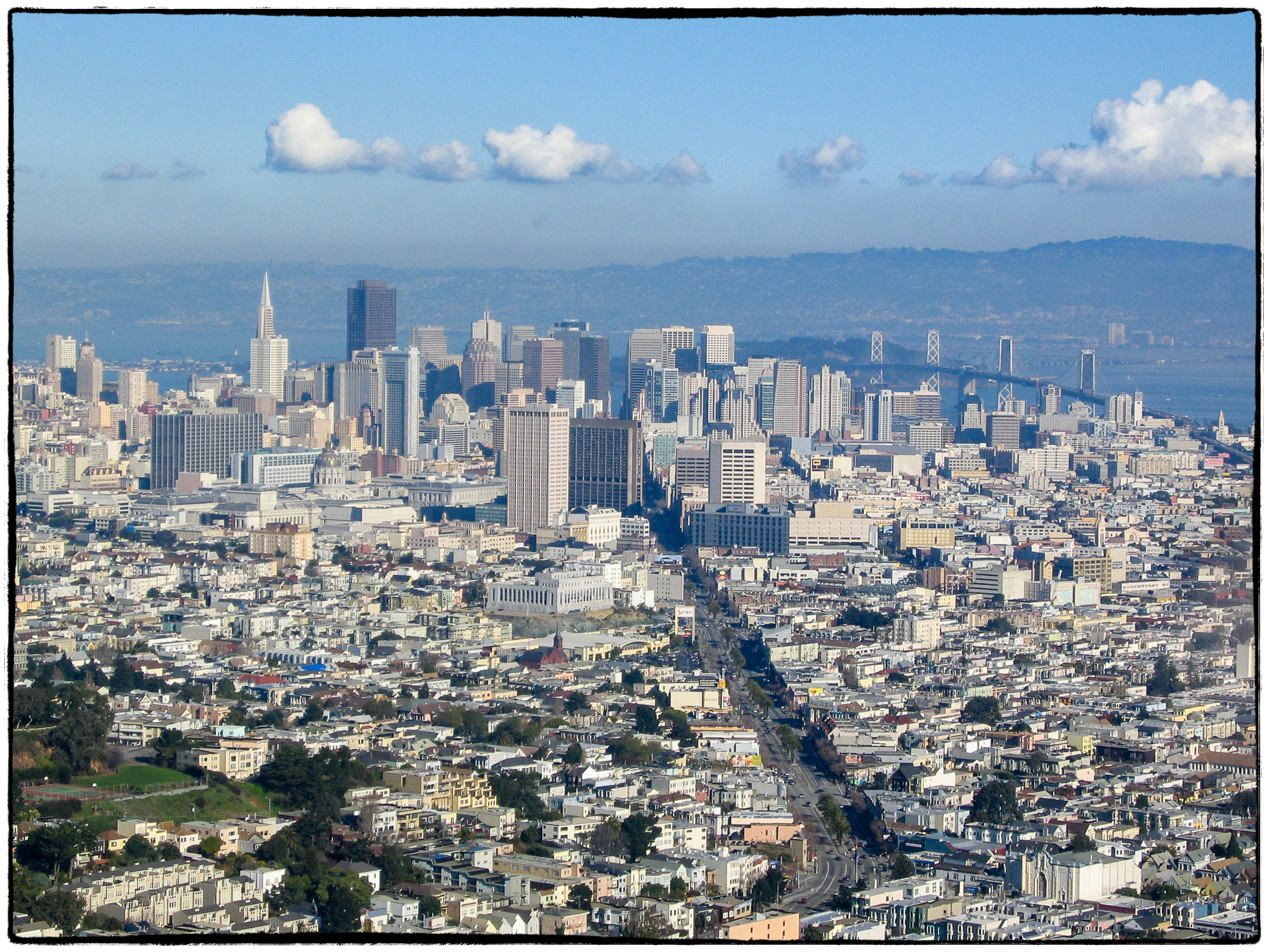
In 2003 we went to visit my wife’s family in San Francisco. My brother-in-law Roy drove us up to San Francisco. We took the inland route going there and the extremely scenic coastal road on the way back. I remember that I had a bad cold/flu and spent most of the time in San Francisco in bed in the hotel. I eventually recovered and was able to take these photos.

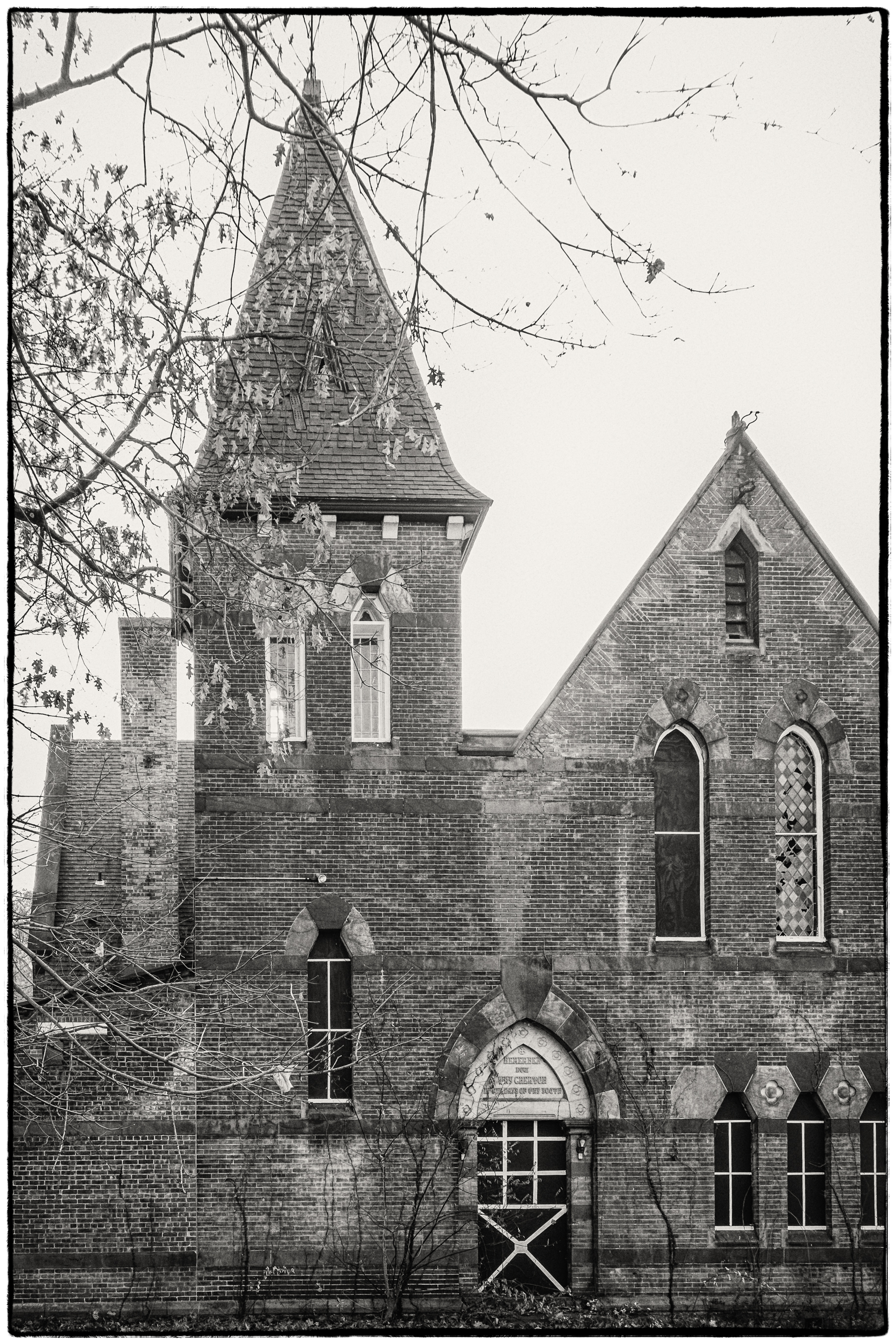
Tioronda School, Beacon, NY

When I turned around to take a look at the Craig House (designed as it turned out by the same architect as this building) I turned down a street heading towards Fishkill Creek. Part of the way down I came across this abandoned building. I thought at first that it was a church, but then noticed a plaque on one of the walls, which read: “Tioronda School”.

In Historic Beacon Robert J. Murphy and Denise Doring Van Buren write:

Miles apart from all other early schools in our history stands the former Tioronda School. Designed by renowned architect Frederick Clarke Withers the building is unexpectedly churchly in appearance – and, in fact, it was once used as a chapel. Built in 1865, it is our oldest schoolhouse extant. Its long history even includes hospital duty: during the Great Flu Epidemic of 1918 the Red Cross used the school as an emergency hospital to treat the overflow of Beacon’s sick.

They also include a couple of old photographs of the school, one of which is of the building itself and the other a group picture of students with the headmaster, Professor Eugene Haight. Accompanying the latter is the following description:

Professor Eugene Haight’s career profile was that of any archetypal dedicated teacher. he was the principal of Tioronda School from 1886 to 1916, a record of longevity in one place unmatched by any educator. When the school board forced him to retire, so they could hire a woman at a lesser salary, two generations of his students – including 12 who were now teachers – professed their admiration for him. Haight resigned quietly with a $50-a-month pension.

If you follow the road further you come to a dead end at Fishkill Creek. The road continues on the other side but the bridge, which used to connect the two sides had gone. When I was there I noticed surveyors were also there. Maybe they plan to rebuild the bridge?

On the other side of the creeks was a place I’d already visited although I didn’t at first recognize it. It’s the old Tioronda Hat Factory.

Large tree next to the road.

Old tree with outbuilding.

Closer view of the outbuilding.

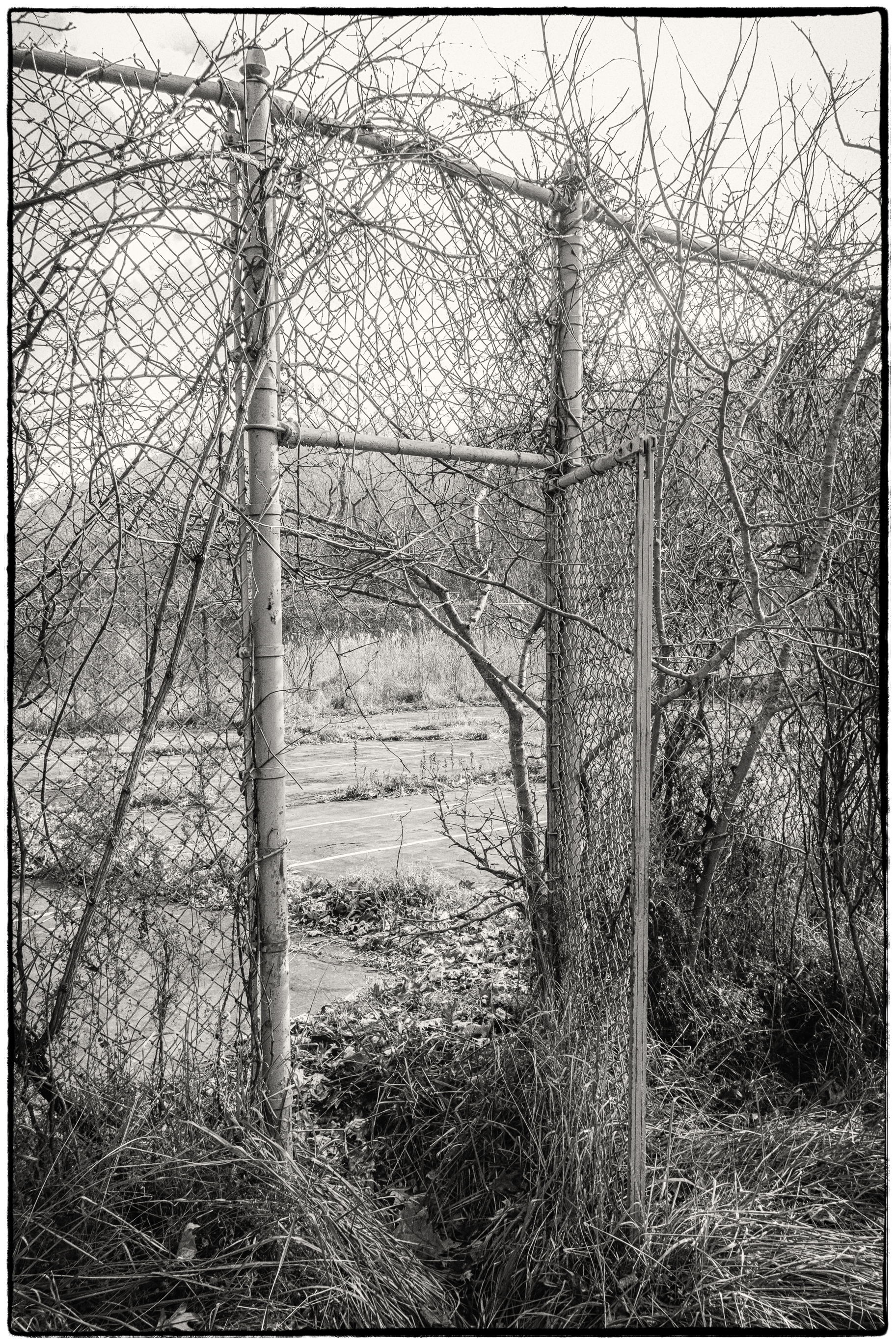
Abandoned tennis court. Feels like something out of “Sunset Boulevard”.

Plaque with school name.

Cold Spring Cemetery

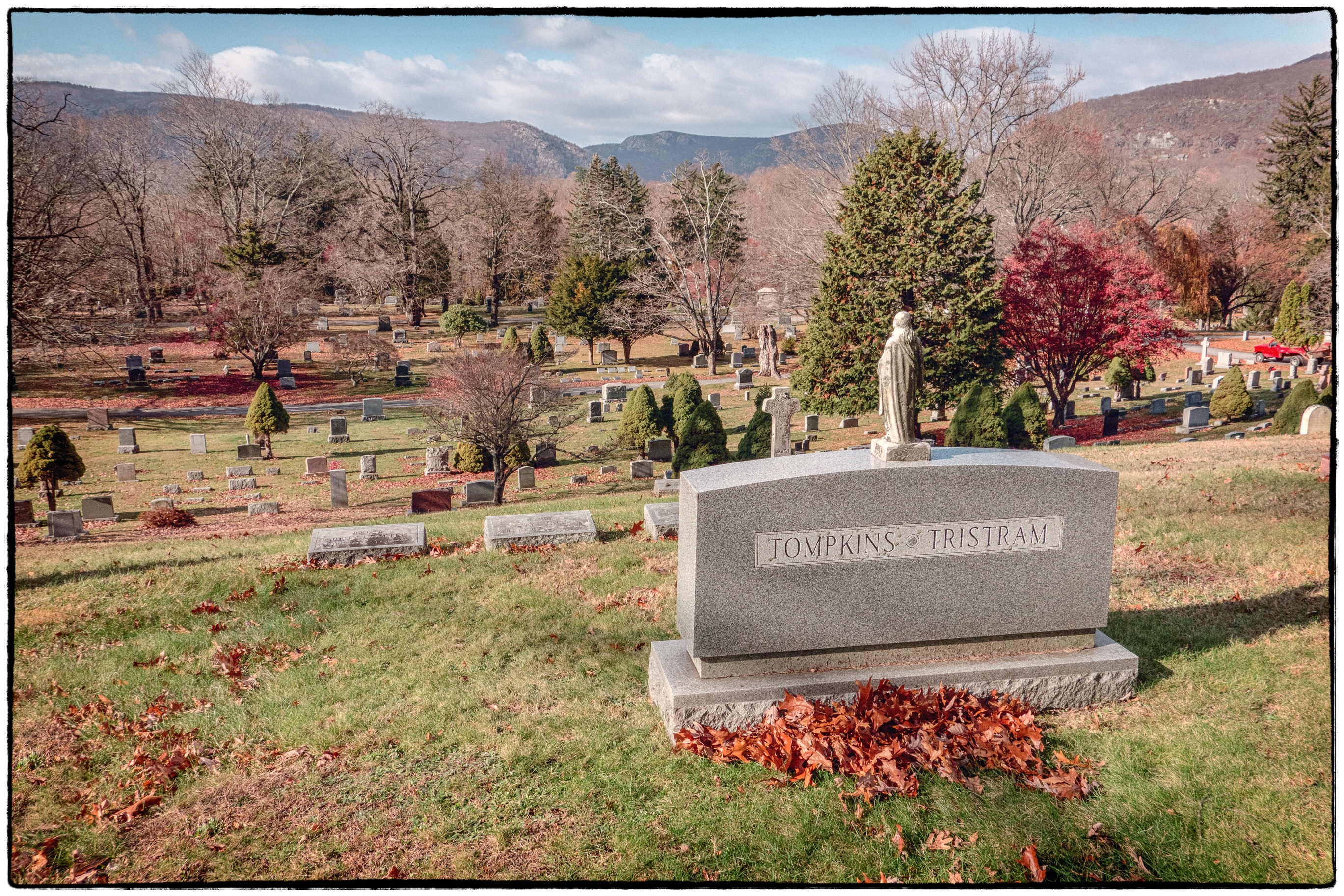
Cold Spring is one of my favorite places, but I had previously not come across the Spring Cemetery. It’s off a road that I don’t normally use and far enough away from the downtown area that I hadn’t walked there. I’m fond of cemeteries. Not because I have a fascination with death, but because I find them to be peaceful places, often with interesting buildings, statues, trees and plants. This one is particularly pleasant in that when you go up to the higher regions you can find views out over the cemetery itself and across the Hudson towards the mountains on the other side.

Wikipedia describes it as follows:

The Cold Spring Rural Cemetery Association bought a 30-acre (12 ha) parcel in Nelsonville shortly after its formation in 1862. New York City architects Mead and Woodward were hired to design the grounds while Woodward’s frequent collaborator George Harvey worked on the gatehouse, which closely resembles one in Woodward’s pattern book, Woodward’s Country Homes. It was finished by 1865 in time for its photograph to be used in the association’s bylaws pamphlet.

Apparently the gatehouse is of special significance architecturally. I wish I’d know that. I’d have taken a picture of it.

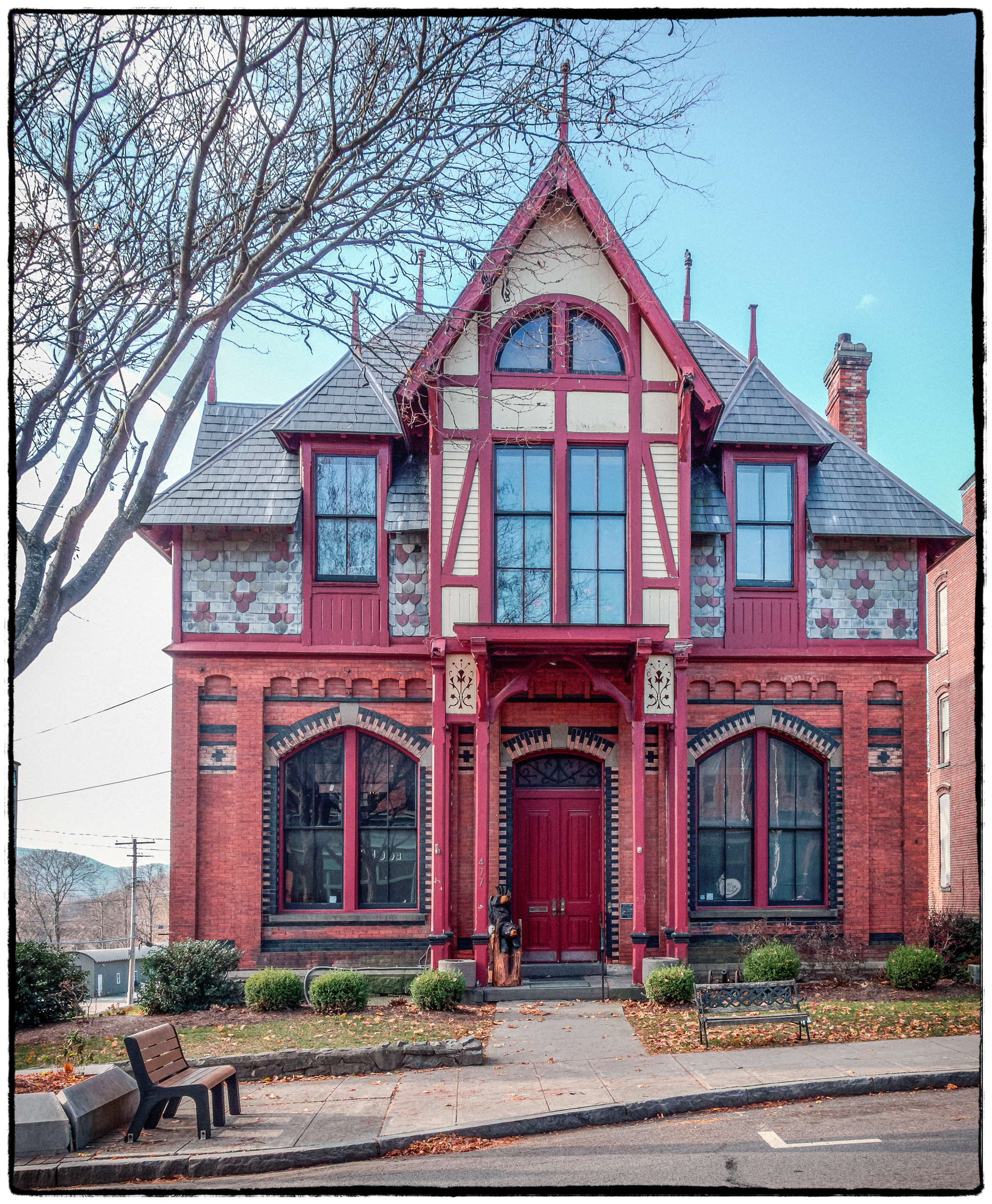
Howland Cultural Center

A very attractive building. According to Wikipedia the Howland Cultural Center:

…formerly known as Howland Library, is located on Main Street (New York State Route 52 Business) in Beacon, New York, United States. It is an ornate brick building designed by Richard Morris Hunt in the 1870s. In 1973 it was listed on the National Register of Historic Places.

Hunt was commissioned by his brother-in-law, Joseph Howland, to design a home for a subscription library he donated to the city. The completed building has much in common with the Stick style summer homes in Newport, Rhode Island, that Hunt designed at this early stage of his career. Some of its design elements have been compared to Norwegian vernacular architecture. The interior was not complete in its current form until almost the end of the century. Except for some upgrades to its utilities, it has remained largely intact since then.

Throughout the 1920s it was one of only two remaining public subscription libraries in the state. In response to a donor’s bequest, the library became free at the end of that decade. Almost 50 years later, the library moved out when it outgrew the building. Since then it has been used as a cultural center, hosting various visual and performing arts events.

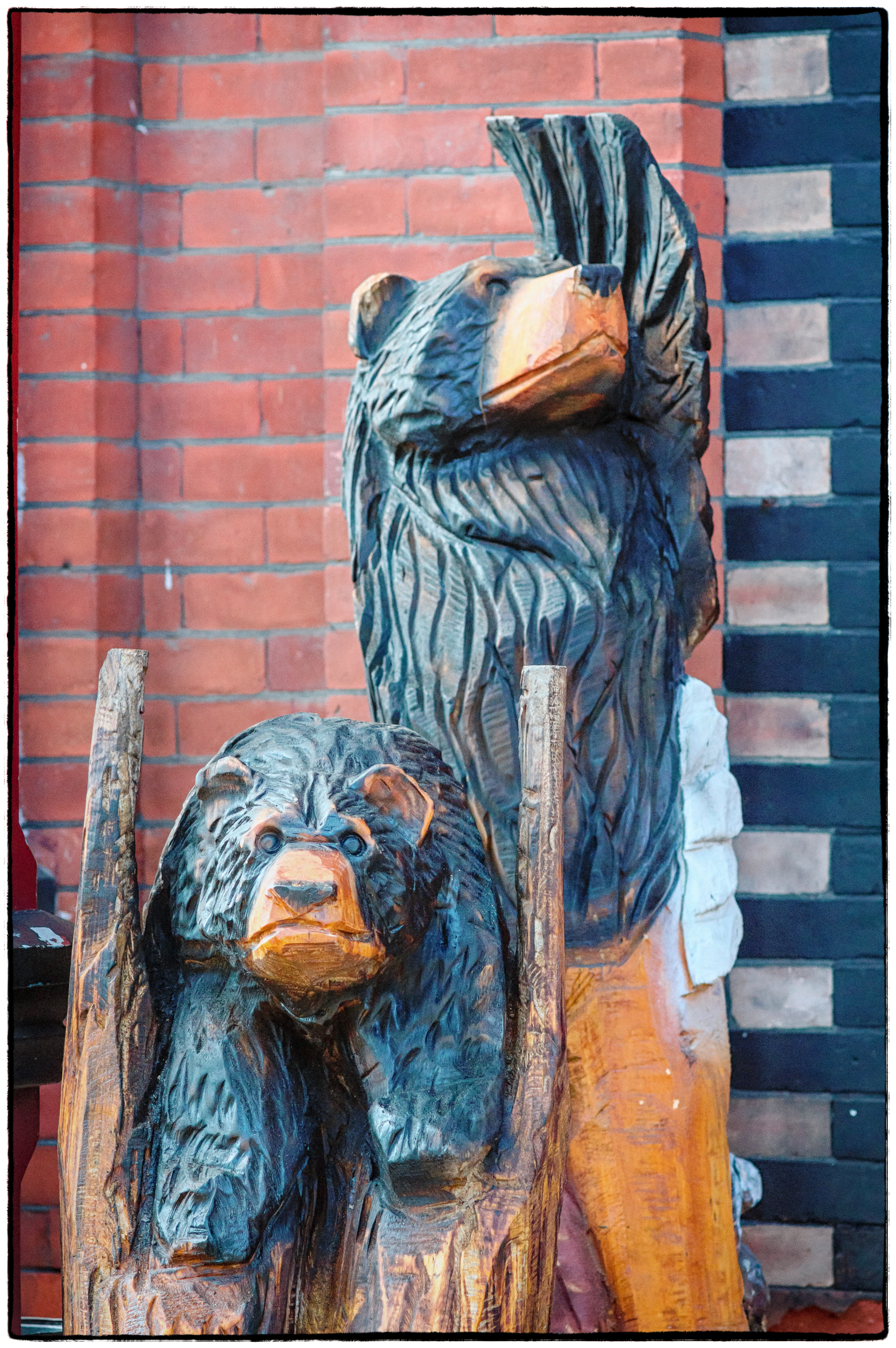
Bears stand guard over the entrance.

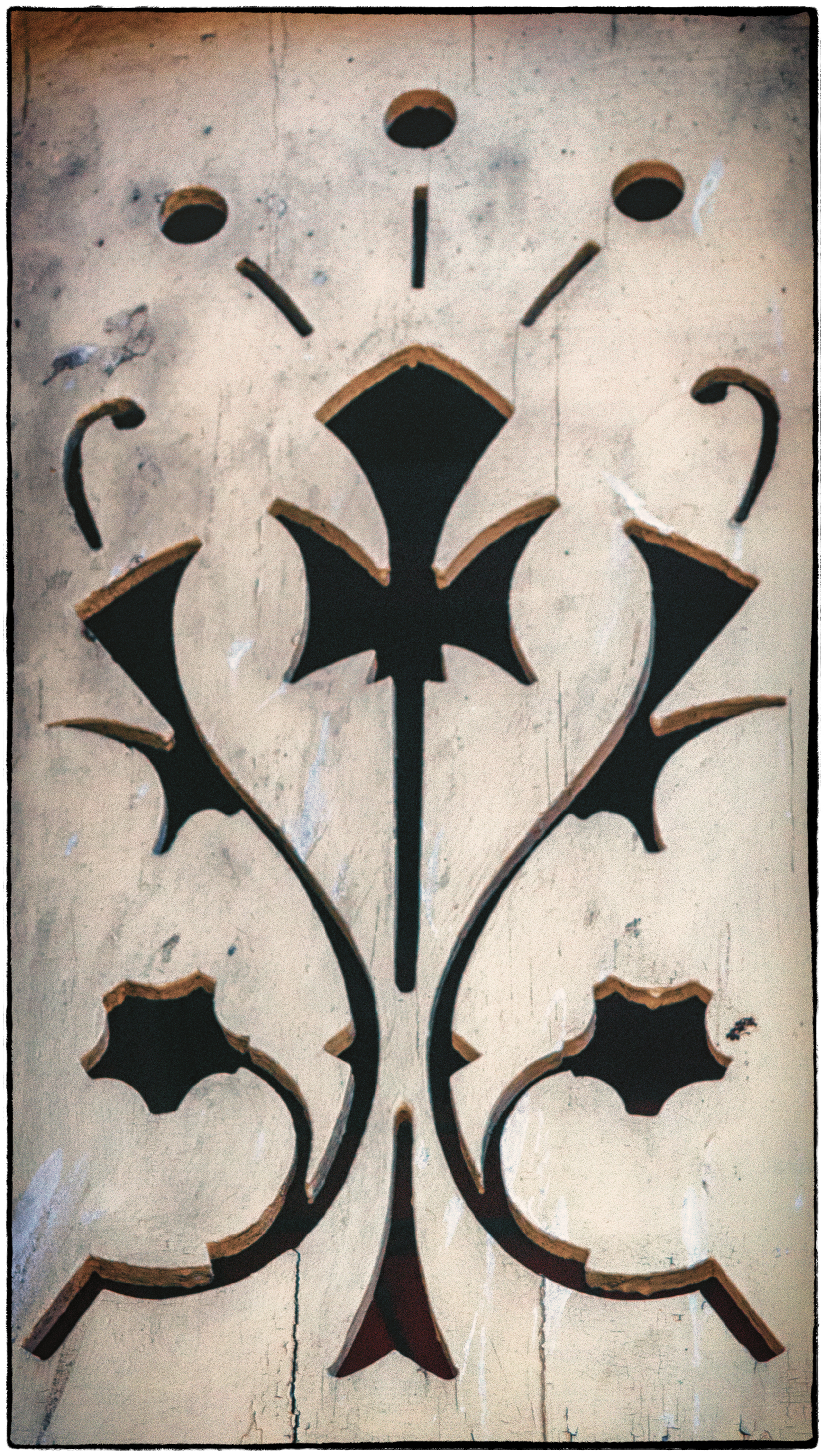
Detail of the facade.

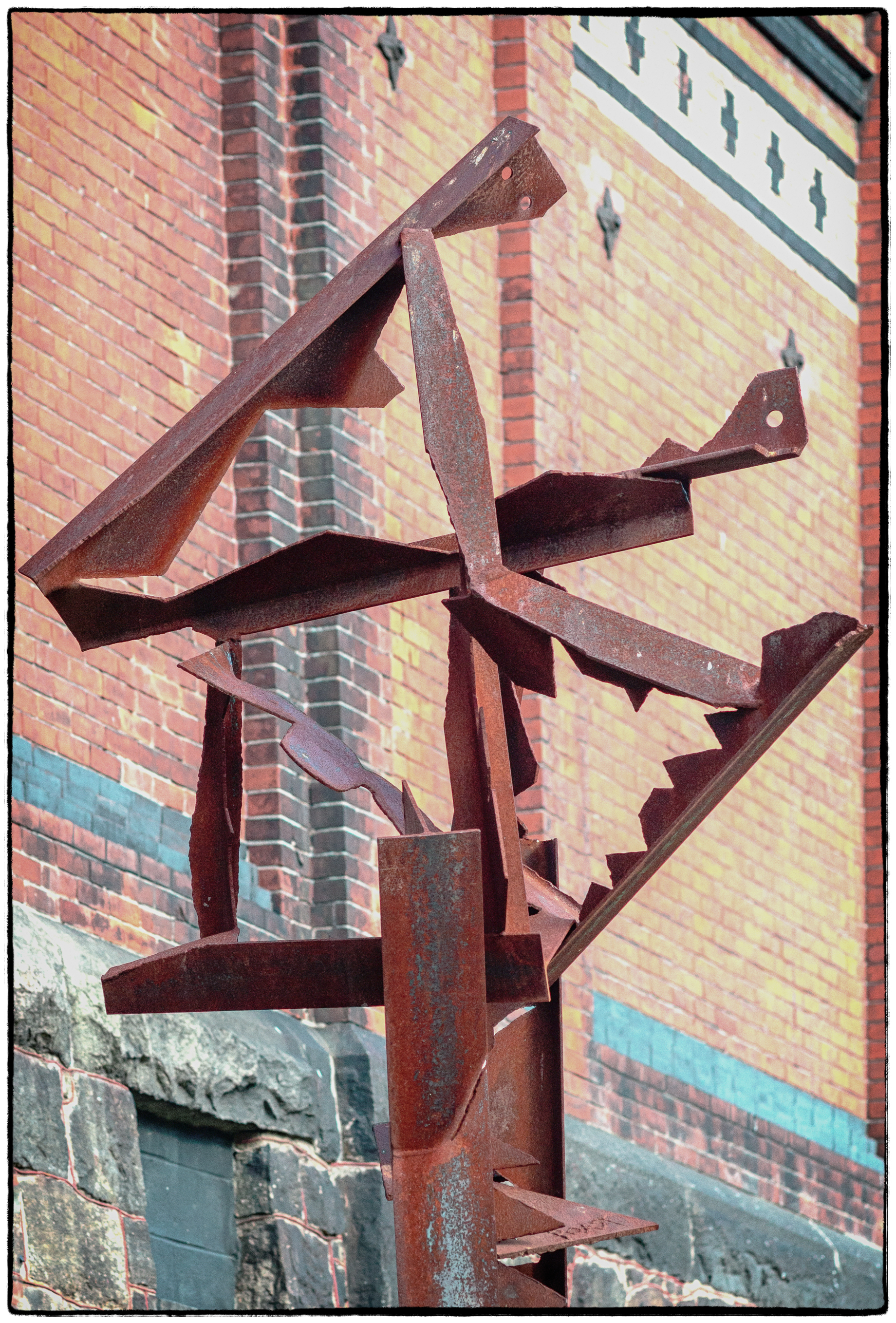
Statue outside the Howland Cultural Center.