Happy Birthday Henri

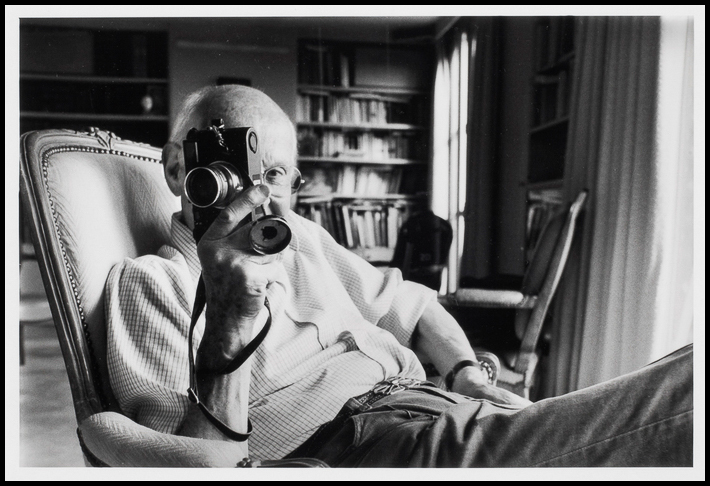
Today marks the 110th Anniversary of one of the greatest of all photographers (and a personal favorite of mine): Henri Cartier-Bresson.

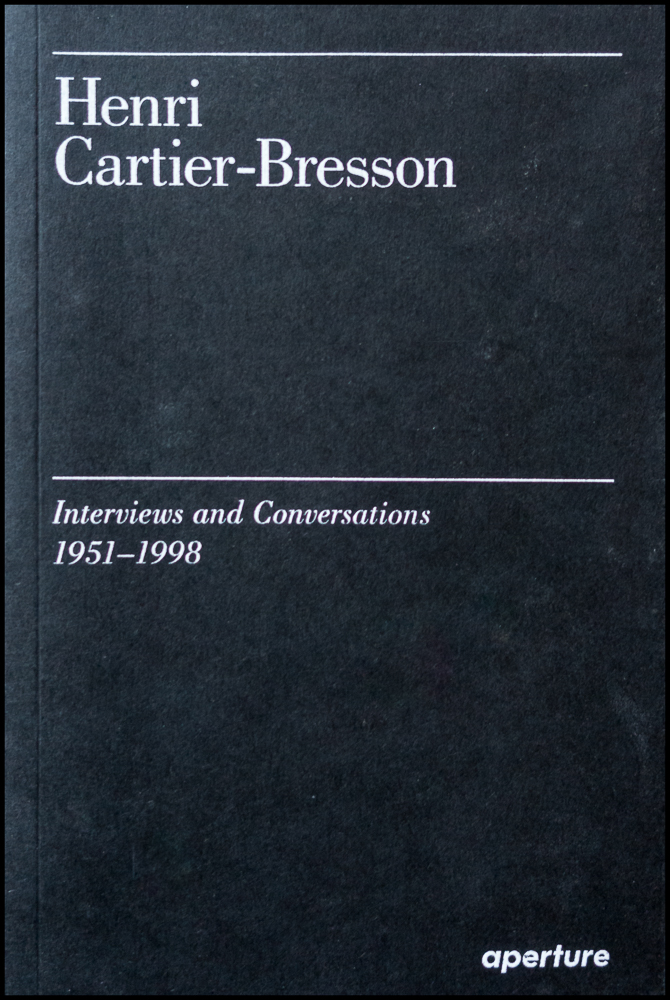
It also gives me the opportunity to highlight a publication I picked up a couple of months ago at the International Center of Photography: Henri Cartier-Bresson. Interviews and Conversations 1951-1998. It contains 12 interviews with the Master. As the foreword says:

Henri Cartier-Bresson often defined himself as a visual person. “I watch, watch, watch. I understand things through my eyes.” he wrote in 1963. Throughout his life, his preferred language was the image. He did take a lot of notes during his reporting and kept a constant correspondence with his family, but in the end he wrote little about his own photographic practice…it is in fact in his interviews that Cartier-Bresson’s liveliest thinking can be found. It is the one place where the photographer has indeed not been sparing with his words.

Most of these talks have not been reissued since their publication and are therefore difficult to find. They reveal a fascinating and passionate Cartier-Bresson, who talks about his photography, comments on the state of the world, and reflects on his path. Spread over nearly half a century, his word make it possible to perceive the evolution of the photographer’s thinking: he backs down from his comments, changes his mind, sometimes contradicts himself. The image that the interviews give of Cartier-Bresson is not frozen in legend, but on the contrary, alive and kicking.

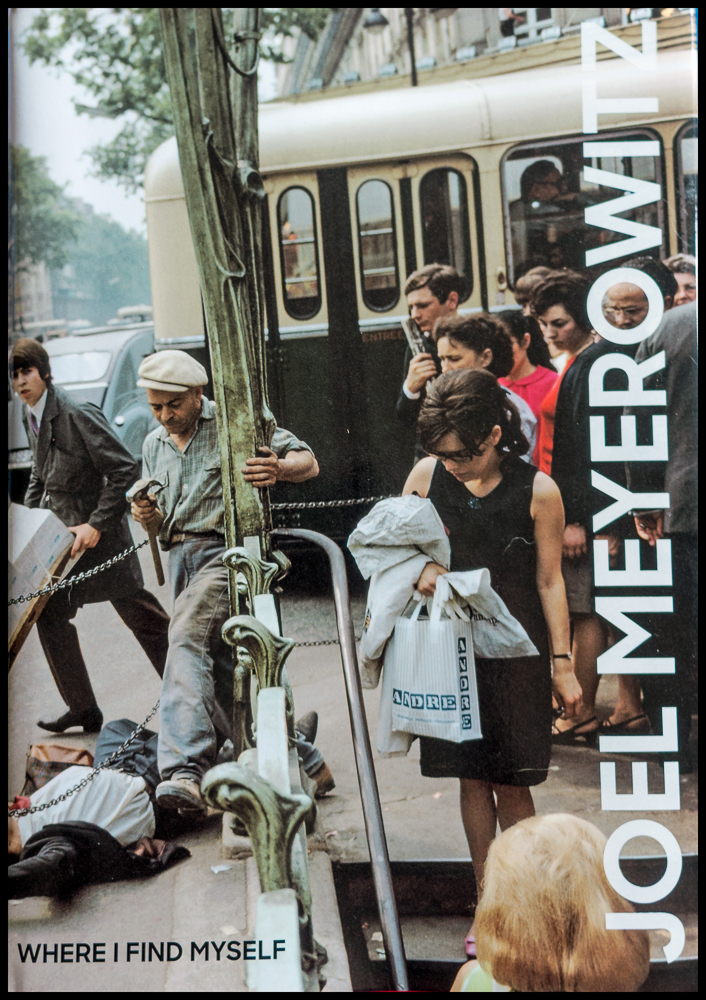
Joel Meyerowitz: Where I find myself. A lifetime retrospective

I just got my hands on a copy of this marvelous book. I won’t go into detail because there are many excellent reviews available online including:

It”s a large and heavy book that I found I either had to place on a table, or even better on a book stand. I found the quality of the reproductions to be excellent. I believe that Mr. Meyerowitz was heavily involved in the production of the book and the selection of images.

The choice of starting with the most recent work first and then working backwards (rather than the more usual starting with the oldest and working forward) was interesting, but after going through the book I found that I wanted to start at the end (i.e. with the oldest work) and read backwards towards the beginning. I found that this helped my understand how his work had evolved over time.

An evolved it certainly has. I find this one of the most impressive things about Mr. Meyerowitz: the way he has frequently re-invented himself. Many photographers find their niche and then stick with it for the rest of their careers. Not Mr. Meyerowitz. He started off in black and white and then became an early advocate of color. He began as a street photographer, but then moved into other genres including landscapes, portraits, still life. He started out using a 35mm camera, but later espoused large format. His reasoning for these changes is nicely explained in the book.

I was particularly impressed with his most recent work: a series of still life photographs. I’ve always liked still lifes, but have taken surprisingly few. The book has inspired me to try to do more.

There’s also an interesting Interview with Joel Meyerowitz: Where I find myself on Lenscratch.

A great book. I thoroughly enjoyed it!

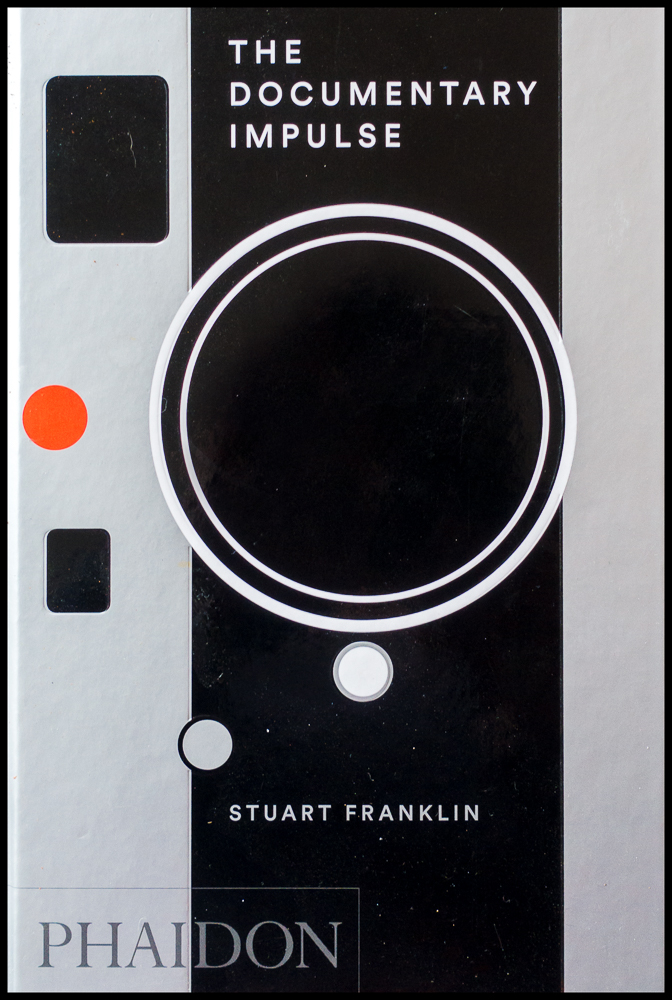
The Documentary Impulse

I consider myself a documentary photographer so when I saw this book it didn’t take me long to decide that I had to have a copy.

In a review entitled “The Documentary Impulse” in the New York Journal of Books, Richard Rivera notes:

Stuart Franklin’s The Documentary Impulse begins by questioning “What is documentary?” and draws distinctions between a “moral truth” and a “material truth,” and how at times a more powerful and visceral impact depends on intimacy rather than actuality. One example given is the staged walrus hunt in filmmaker Robert J. Flaherty’s Nanook of the North (1922), and how it leads us to draw conclusions as to what actually occurred.

The author also examines why photographers document the vestiges of vanishing cultures, as in the work of Edward S. Curtis with native Americans (from 1906 to 1930), and tackles how preconceived ideas of cultural mythos can cloud the process of objective documentation, the false premise of documenting cultures from an inherently racist point of view, and the challenges of documenting war and famine within the context of photojournalism.

Franklin adeptly explores the cumulative impact of staging and manipulative photography through references to Leni Riefenstahl’s film The Triumph of Will; Robert Capa’s Falling Soldier, 1936; Werner Herzog’s manifesto, “Minnesota Declaration: Truth and Fact in Documentary Cinema”; as well as TIME magazine’s founder, Henry Luce, and his philosophy of “fakery in allegiance to the truth.”

Stuart Franklin’s in-depth discourse on the role of photographers in society, and the needs that can only be addressed or spotlighted through photography, can be summed up in Lewis Hine’s life mission, “I wanted to show the things that had to be corrected. I wanted to show the things that had to be appreciated.”

The Documentary Impulse is a wide-ranging passionate exploration that covers many periods of photography and delves into the why and how we are driven to document the world around us.

The images are printed on high quality medium-weight matte paper, in color or black and white as originally intended.

Stuart Franklin is a photojournalist with an outstanding body of work, and his opening statement, “Photography (and journalism) practiced respectfully has the power to educate us all towards the greater understanding of, and empathy with, others,” is fully borne out by the book.

The Documentary Impulse is a remarkably insightful book—a wonderful, small format gem bursting with illuminating concepts and images.

So across this broad spectrum of types of documentary photography where do I see myself fitting. I certainly don’t document colonialism; nor am I a war photographer. I’m not trying to change the world. I could perhaps fit into the “(Re)interpreting everyday life”. I feel some affinity with Martin Parr and Lee Friedlander who both feature in this chapter. Perhaps the best fit is with what Franklin refers to as “On Visual Poetry and ambiguity”. This chapter features Eugène Atget, Henri Cartier-Bresson, Garry Winogrand and other photographers I’m not too familiar with: Helen Levitt, Sergio Larrain, Guy Tillim
.
I could quibble about the way that some of the photographers have been categorized. Why, for example is Josef Sudek (one of my favorite photographers) included under “Photography’s bid for a better world”? I was also surprised to find that even though Walker Evans is mentioned a number of times in the text, none of his photographs are presented. Of course these comments reflect my own, subjective views.

I differ from almost all (perhaps with the exception of Atget) of the above photographers in that my photographs rarely show people. And, of course, they are all so much more accomplished than I. Their work is what I aspire to, but will probably never come close to. It does, however, give me something to aim for.

I very much enjoyed this book.

Taken with a Sony RX-100 M3.

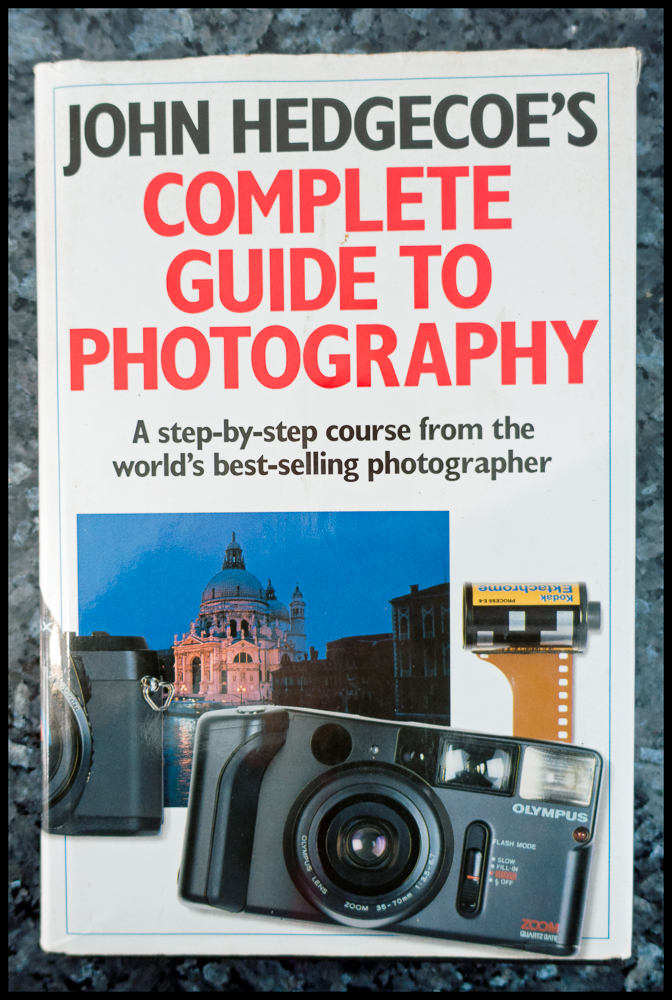
John Hedgecoe’s Complete Guide to Photography

I was going through some boxes when I came across this book. I loved the sub-title: “A step-by-step course from the world’s best-selling photographer”. ‘Best-Selling’ in terms of what I wondered. Presumably in terms of photography ‘how to’ books.

I’m not trying to demean this book. Quite the contrary. I remember loving it at the time. It was first published in 1990 and consists of three main sections.

The first covers basics: How the camera works; Choosing a camera; Camera automation; Choosing and using lenses; Choosing the Aperture; Choosing the Shutter Speed; Colour Film; Black and White Film; Camera Flash; Colour through the day.

The third and final section is called “Broadening your Scope” and covers such topics as Choosing the Right Equipment; Using Camera Filters; The Home Studio; The Home Darkroom; Photographic Montage; Mounting and Presentation; and Fault Finding.

There’s also a glossary, but the ‘meat’ of the book is contained in the second section entitled ‘The Projects’ where the author presents a series of 71 projects covering such areas as The Essential Elements (e.g. shape, form, texture, pattern, colour, tone, perspective etc.); People; Places; Still Life; The Natural World; and Action. It was these projects that interested me most when I bought the book. I tend to be all over the place and these projects gave some much needed structure. Another thing I liked was that each project was lavishly illustrated with related photographs.

The funny thing is that I remember loaning this book to a neighbor that I later lost touch with. It always annoyed me that he had not returned it and from time to time I’d “curse” him under my breath. It seems it was wrong though. Since I have the book I guess he must have returned it. My apologies Artie wherever you are.

A photographically interesting couple of hours in Pleasantville, NY

A few days before Christmas my wife was going to lunch with a friend in Pleasantville, NY. I needed to get out of the house so I decided to go along with her. I knew that there was a small bookstore in Pleasantville and I thought that I would “check it out” and then grab a bite to eat.

I set off walking in the direction of the bookstore when I spotted this photo store: Photoworks. I’d noticed it before, but it always seemed to be closed when I went by. Assuming that it was largely devoted to photofinishing, scanning etc. I was about to walk by when, looking through the window, I noticed a glass case inside – full of vintage cameras. I went in and asked the women if the cameras were for sale or just for display. She called her husband, George who emerged from the back somewhere and we had a long conversation about vintage cameras. Inside the case were two Nikon Fs (see above). I’d wanted one of these for a while, the price was right and the prospect of actually having a human being I could bring the camera back to in case of problems was appealing. I told him I would consult with my wife and return later.
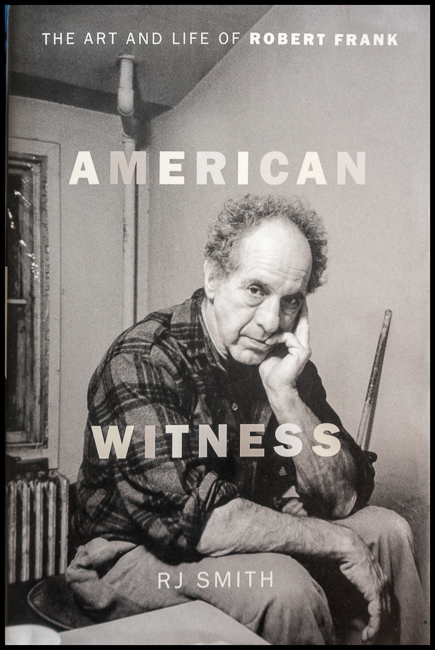
I continued on to the bookstore: The Village Bookstore, a very pleasant establishment, small but well stocked and with a nice atmosphere. Among the shelves I came across (and purchased) this recently published biography of Robert Frank: American Witness. The Art and Life of Robert Frank.

Time to start looking for somewhere to eat. Then I spotted this building. On the front it said “The Gordon Parks Foundation“, so I went inside to take a look. I didn’t even realize that such an institution existed in Pleasantville. Inside they had a small selection of books by/on Gordon Parks but the bulk of the space was taken up by an exhibition: Element: Gordon Parks and Kendric Lamar. According to the Foundation’s website:

The Gordon Parks Foundation announced the opening of ELEMENT – a new exhibition on view at the Foundation’s exhibition space from December 1—February 10 showcasing Gordon Parks photographs that inspired rapper Kendrick Lamar’s music video ELEMENT from his album, DAMN. Lamar, known for using powerful images in his music videos, directly references and revives a number of Parks’ images that explore the lives of Black Americans, including the 1963 photo Boy With Junebug, Untitled, the 1956 photo from Parks’ “Segregation Stories” series, Ethel Sharrieff, a 1963 photo from his “The White Man’s Day Is Almost Over” photo essay about Black Muslims, as well as photos form Parks’ 1948 “Harlem Gang Leader” series.

“Gordon Parks’ work is continuing to have a great impact on young people – and particularly on artists like Kendrick who, use the power of imagery to examine issues related to social justice and race in our country,” said Peter W. Kunhardt, Jr., Executive Director of The Gordon Parks Foundation. “With ELEMENT the music video, Kendrick has helped to call attention to one of the most important artists of our time.”

Long-time friend and supporter of The Gordon Parks Foundation, Kasseem Dean (aka, Swizz Beatz) noted, “I’m so inspired that my friend Kendrick Lamar chose the iconic imagery of the legendary Gordon Parks in his video for ELEMENT. It’s a prime example of how contemporary change makers – artists, musicians, filmmakers, designers – can borrow from the greats of the past who were also working towards social change.”

At the foundation of ELEMENT. are Parks’ photo essays exploring issues related to poverty and social justice which established him as one of the most significant story tellers of American society. “Harlem Gang Leader,” the photo essay published in LIFE magazine, is credited with introducing Parks to America. The photos explored the world of Leonard “Red” Jackson, the leader of a gang in Harlem. Soon after, Parks was offered a position as staff photographer for the magazine, making him the first, and for a long time the only, African American photographer at the magazine. Also published in LIFE, Parks documented the daily life of an extended African American family living under Jim Crow segregation in the rural South entitled “The Restraints: Open and Hidden.”

The Guardian has also published an interesting article on this exhibition: The story behind Kendrick Lamar’s Gordon Parks exhibition

After that I decided that I didn’t have enough time to eat before meeting my wife so I adjourned to a nearby bar
Foley’s Club Lounge for a couple of beers.

According to Mount Pleasant by George Waterbury, Claudine Waterbury, Bert Ruiz:

Harry Foley was a Pleasantville High School Basketball legend. He was also a Niagara University Hall of Fame and Westchester County Hall of Fame athlete. He bought Gorman’s Club Lounge on Bedford Road in 1950 and maintained the establishment until the 1970s. Foley’s Club Lounge has been a traditional watering hole for generations of Pace University students for nearly a half century.

When my wife finished her lunch we met up and I asked her if she’d like to buy me a Christmas present. She said yes so it was off back to the photo store to pick up the Nikon F with Photomic Ftn finder.

All in all a photographically speaking an interesting day, if rather unexpected.