Karsh. A Biography in Images

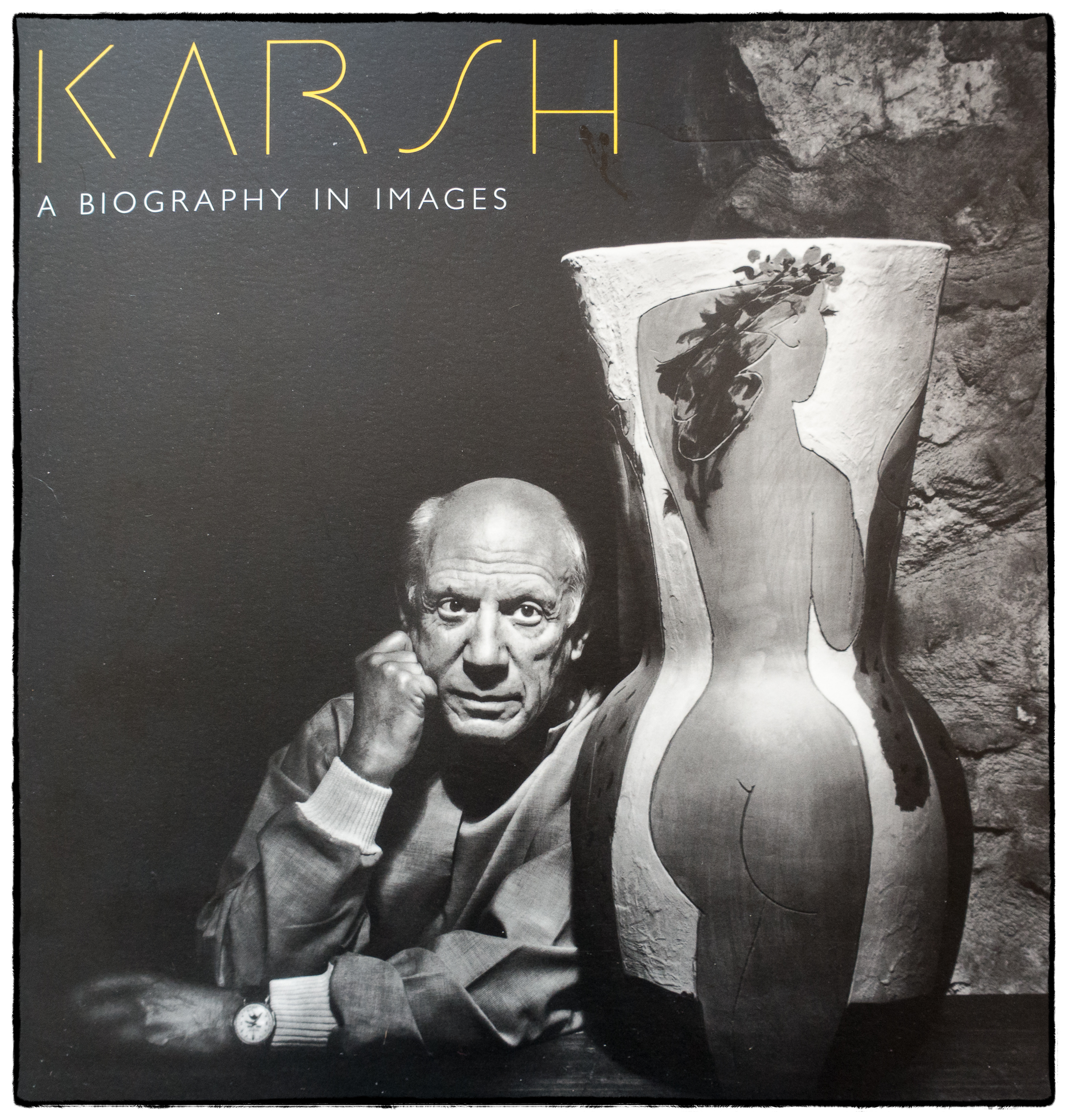
I recently purchased this book: Karsh. A Biography in Images. Of course I was familiar with his famous picture of Winston Churchill, but other than than I really didn’t know much about Yousuf Karsh’s work.

Now I do, and I’m really impressed. I’m somewhat in awe of the great portrait photographers. They make it look so easy, when in reality it isn’t at all. And I suspect that Karsh may well have been the best of them. He seems to have the knack for getting inside his subjects and understanding them very well indeed.

The book is titled: “a biography” and indeed there’s a foreword by Malcolm Rogers (Ann and Graham Gund, Director, Museum of Fine Arts, Boston) and a commentary by Jerry Fiedler (Yousuf Karsh curator), which takes the form of a short introduction to each of the three major sections: The Early Years; On Assignment; and Portraits. Other than that everything is by Karsh. There’s a 16 page introductory section entitled “Reminiscences” written by Karsh himself, and each of the photographs has a, sometimes lengthy, caption – also written by Karsh. As an example this is what he had to say about the Picasso portrait above:

Pablo Picasso. 1954. The maestro’s villa was a photographer’s nightmare, with his boisterous children bicycling through vast rooms already crowded with canvases. I eagerly accepted Picasso’s alternate suggestion to meet later in Vallauris at his ceramic gallery. “He will never be here”, the gallery owner commented, when my assistant and two hundred pounds of equipment arrived. “He says the same thing to every photographer”. To everyone’s amazement, the “old lion” not only kept his photographic appointment with me but was prompt and wore a new shirt. He could partially view himself in my large format lens and intuitively moved to complete the composition.

With so much written by Karsh himself, it feels much more like an autobiography than a biography.

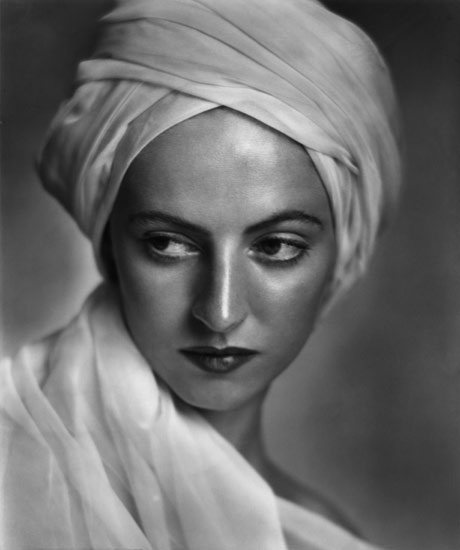
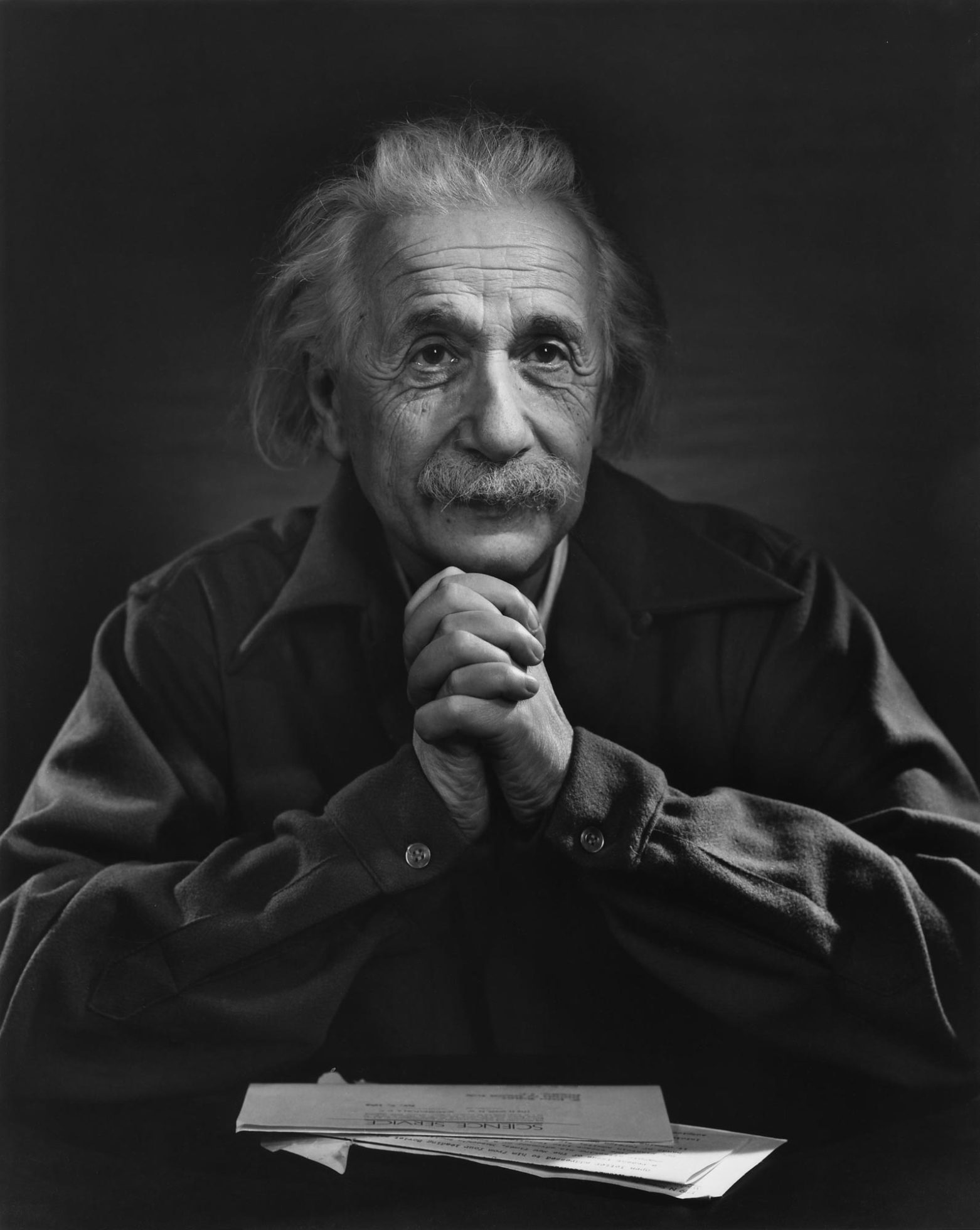
And then there are the photographs: more than 100 of them. Amazing! Apart from the Churchill and Picasso pictures my personal favorites are Turban (Betty Low); Fidel Castro; Audrey Hepburn; George Bernard Shaw; Ernest Hemingway; and Albert Einstein.

Best money I’ve spent in some time. Now if only I could take portraits like these.

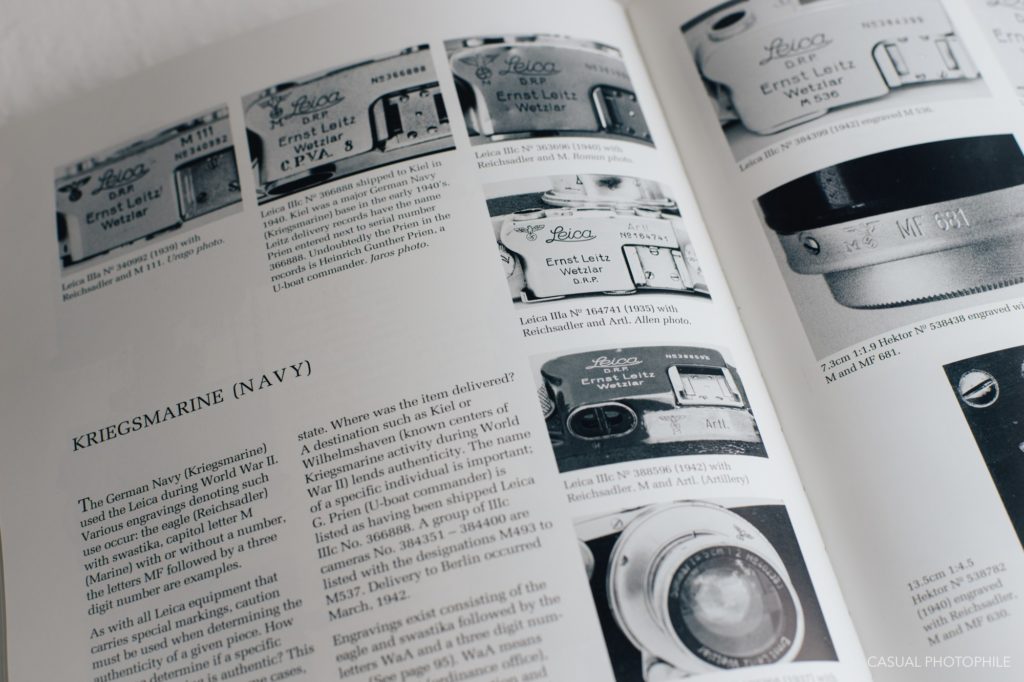
Leica An Illustrated History by James Lager

I just came across this post by James Tocchio on the Casual Photofhile site.

In his first paragraph the author writes:

There are lots of books covering the famous red dot from Germany, and most Leica fans are dedicated enough that their shelves hold more than a few of these, but there’s just one set that every real Leicaphile (and any true photo geek) needs to own. It’s James Lager’s three-volume Leica An Illustrated History, and the collected volumes are without a doubt the prettiest, most exhaustive, and best-researched books on Leica you can buy today.

It consists of three volumes: Vol 1: The Cameras; Vol 2: The Lenses; Vol 3: The Accessories.

From the pictures and description in the post it certainly seems impressive. Unfortunately the price is similarly impressive: after a quick look on Amazon.com I’ve discovered that each volume seems to fetch about around $125 and up – too much for me I’m afraid. But then I can’t afford to buy modern Leica cameras either. I imagine that if you have the money to buy a typical Leica a few hundred dollars is peanuts.

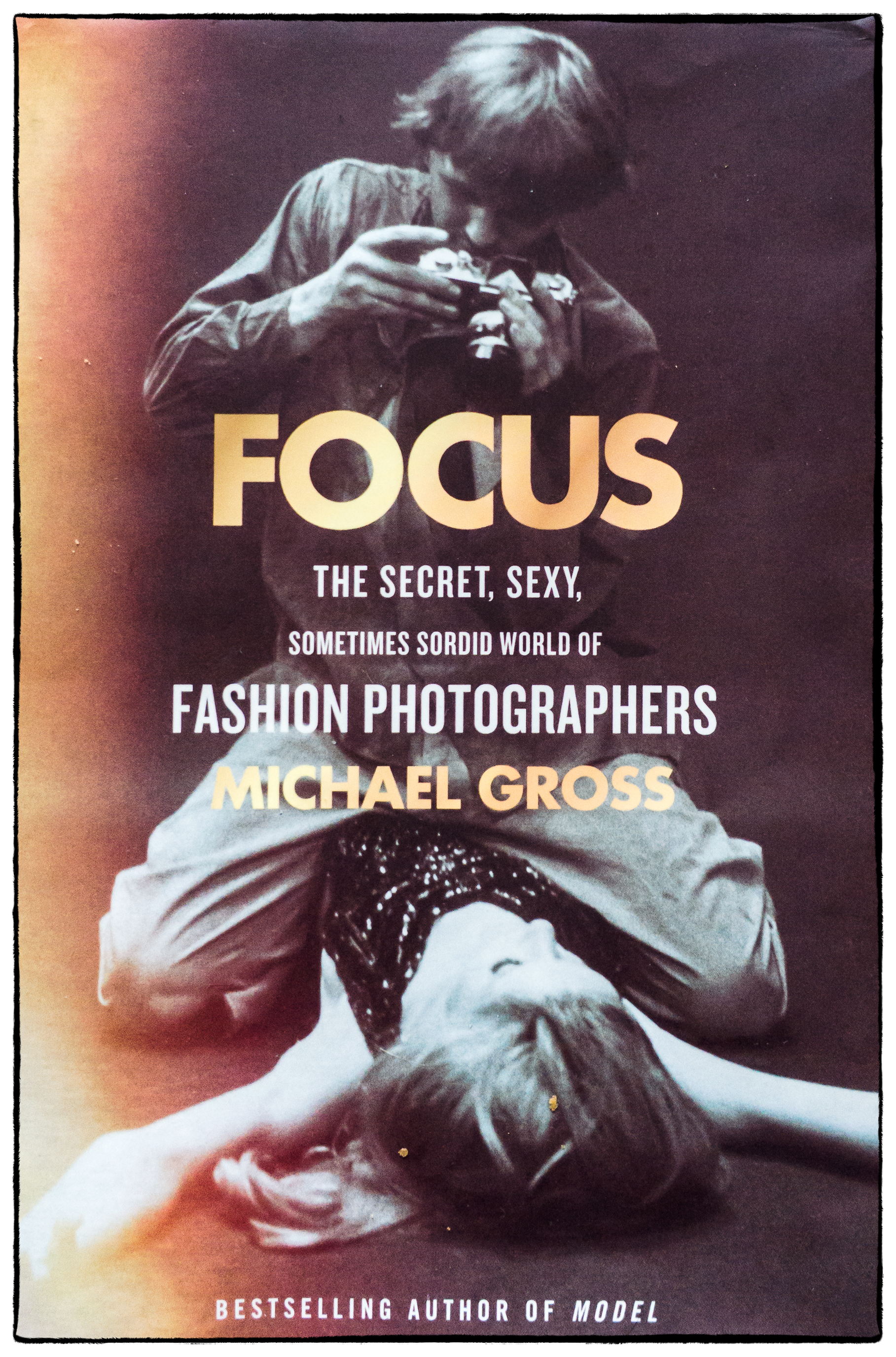
Focus

Although I do most of my reading on my Amazon Kindle, I tend to prefer reading photography books in hard copy. I feel that the Kindle does not do justice to the photographs. I was in Barnes and Noble one day and felt like reading something photography related. They didn’t have very much and most of what little they had I had already read.

I’d looked at this book in the past, but since I’m not much interested in fashion photography I hadn’t bought it. I think the cover image and the title: Focus. The secret, sexy, sometimes sordid world of fashion photographers had put me off it a bit too.

But I really wanted to read something photography related, and this was the only option available, so I bought it. I didn’t expect to like it very much and was pleasantly surprised when I did.

Of course I was already familiar with some of the names: Richard Avedon (although I hadn’t realized that he was such a colossus in photography), Irving Penn (who of all the people in the book I was most familiar with), Terry Richardson (whose name I’d heard because of the controversies but whose work I was not familiar with), Helmut Newton, maybe David Bailey but most of the other names (e.g. Melvin Sokolsky, Jerry Schatzberg, Terence Donovan, Brian Duffy, Bert Stern, Bill King, Patrick Demarchelier, Pierre Houlès, Gilles Bensimon, Mike Reinhardt, Arthur Elgort, Steven Meisel, Bruce Weber, Bob Richardson) I’d barely heard of.

Of course the “sexy”, “sordid” aspects of the field come through (e.g. the author mentions the apparently enormous size of Gilles Bensimon’s penis several times). And I found the rather sad lives of some of the photographers (e.g. Ben Stern, Bill King, Bob Richardson) to be rather touching.

For the first time I know a bit about Vogue, Harpers Bazaar (e.g. did you know that until 1929 the magazine was called ‘Harpers Bazar’?), Elle etc. I know who Diana Vreeland and Anna Wintour are/were. And I’m more aware of the important role of the Art Director (e.g. Alexey Brodovitch, Alexander Liberman). I’m also rather more familiar with how fashion magazines have evolved over the years.

An interview with the author can be found at: Michael Gross Discusses His Provocative New Book on Legendary Fashion Photographers.

I thoroughly enjoyed this book.

The UniveX Story

The acquisition of my Mercury II (see: New Acquisition – Universal Mercury II CX) led to a desire to know more about the Universal Camera Corporation. Browsing around I quickly came across this book: The UniveX Story by Cynthia A. Repinski. I ordered a copy, little knowing that I would be getting it from the author herself, and with an autograph no less.

It’s a very thorough book. She clearly did a lot of research and I thoroughly enjoyed reading it. I thought the section relating to binoculars would be a bit boring (I’m not really into binoculars) but, surprisingly, it wasn’t. I came across this review on Amazon.com which pretty much sums up my views:

I have owned this book for about ten years. I am an avid camera collector, and I (like the author) have been enamoured of UniveX cameras since I first got one as a child. For those who are interested in the origin and history of items they collect, this type of reference work is a godsend. Most people have no idea of the Universal Camera Company’s impact on amateur photography in the U.S. This book helps to remedy that situation.

Ms. Repinski has addressed the primary topics that interest most collectors. First, she presents a very comprehensive history of the company. Second, she describes the various products of the company, providing chronology, original pricing (in some instances), competitive circumstances, and actual photos from her extensive collection. Third, and especially interesting for a book of this type, she makes use of the extensive papers of the company’s Chief Engineer to describe the manufacturing processes and challenges involved in designing the products, compiling and listing all the patents awarded to Universal throughout its existence. Fourth, she describes the business in detail, showing yearly income statements, and more importantly, describing the strategic decisions that were made by the company’s management that ultimately led to its demise. Fifth, she addresses the needs of the collector, rating all the products according to relative scarcity, defining the differences between various models and versions of each product. Although the competitive and marketing aspects of the company’s history are sometimes given short shrift, this volume will likely stand as the definitive study of a very interesting and influential company.

The Genius of Photography

Jacques Henri Lartigue,

Jacques Henri Lartigue, “Bichonnade”, 40, rue Cortambert, Paris, 1905. Tirage gélatino-argentique. (MINISTERE DE LA CULTURE-FRANCE/AAJHL)

Our eldest granddaughter recently received a reading list for her future studies. One section related to “Art and Photography”. It contained the following items:

  • Steve McCurry, The Iconic Photographs
  • Don McCullin, The Impossible Peace: From War Photographs to Landscapes
  • Tim Walker, Pictures
  • Wells, L, Photography: A Critical Introduction
  • Badger, G, The Genius of Photography
  • Clarke, G, The Photograph: A Visual and Cultural History
  • Jeffery, I, Photography: A Concise History

I pondered the choice of photographers for a while. Three living photographers: a photojournalist (McMullin); a not universally liked and recently criticized photojournalist cum travel photographer (McCurry); and a fashion photographer (Walker). Why, I wondered this particular choice? Unfortunately, the list did not provide enough information for me to reach any conclusion.

Then I noticed The Genius of Photography by Gerry Badger. It turns out that it’s a companion book to a BBC TV series. I further discovered that the entire series is available online here (I believe it’s also available on YouTube).

According to Docuwiki:

In the most comprehensive look at the most influential art form in the world, the series explores every aspect of photography – from daguerreotype to digital, portraits to photo-journalism, art to advertising; in the UK, America, China, Japan, Africa and beyond. It includes interviews and encounters with some of the world’s greatest living photographers including William Eggleston, Nan Goldin, William Klein, Martin Parr, Sally Mann, Robert Adams, Juergen Teller, Andreas Gursky, Jeff Wall and many others. But as well as telling the stories behind the world’s greatest photographs and the photographers who took them, the series examines the ‘genius’ of photography itself, this magical, unpredictable and democratic medium that has transformed the way we see ourselves and our world.

The series culminates in an examination of the impact of the digital post-production techniques that make anything possible, and looks at the rediscovery of techniques which are taking photography back to the 19th century.
With contributions from Jeff Wall, Andreas Gursky, Gregory Crewdson and one of China’s leading photographer Wang Qingsong.

The series consists of six episodes, each about one hour long (the docuwiki page mentioned above provides longer descriptions of each episode):

  1. 1800-1914: Fixing the Shadows. A look at how the problem of ‘fixing the shadows’ was solved by two rival methods.
  2. 1918-1945: Documents for Artists. How, in the decades following the First World War, photography was the central medium.
  3. Right Place, Right Time. How photographers dealt with the dramatic events like D-Day, The Holocaust and Hiroshima.
  4. Paper Movies. A look at the golden age of photographic journeys from the 1950s to the 1970s.
  5. We are Family. How the medium translates personal relationships into photographic ones.
  6. Snap Judgements. A look at the current state of the art, from phone cameras to digital post production.

I’ve just watched all six episodes and I must say that I enjoyed it. Of course I have a few quibbles:

First. I think there was a definite bias towards documentary photography/photojournalism and against “art” photography. “Art” photography barely appears until the last episode, where it’s seen rather negatively as being driven by the market (a point, which I agree with) i.e. what sells, rather than what has artistic merit. The references to “pictorialism” are particularly negative.

Second. While I recognize that you have to make choices when making a documentary of this type, I feel that the passing mention of Alfred Stieglitz, Ansel Adams, Edward Weston (and I don’t think Paul Strand was even mentioned) doesn’t do justice to their contribution to photography. I was pleased to see that my idol, Eugene Atget was given the attention he deserves. Joel Meyerowitz referred to him as being to photography what Mozart was to music – head and shoulders above everyone else.

Third. If space was needed to incorporate some of these seminal figures, maybe a bit less time could have been devoted to the “intimate” photography (e.g. Larry Clark, Nan Goldin, Araki etc.) in episode 5. I’m probably showing my own bias here. I’m not fond of this type of photography. It does, however, provide a hint as to the the type of photography that the creators of this series seem to think of as the best: a kind of a super amateur snapshot taken by a photographer with a kind of innate creativity and very basic equipment.

There were some great moments though. An interview with a wealthy family who had hired Diane Arbus to do some family pictures. I loved a line from the lady of the house, referring to some of the pictures as “Standard ones. The family under the Monet”. There’s also an interview with the boy (now grown up) in the famous “Child with Toy Hand Grenade in Central Park, N.Y.C. 1962” (also by Arbus). There was also an interesting piece in episode 6 about how the late Phlip Jones Griffiths (obviously a strong Cartier-Bresson disciple) had tried (unsuccessfully) to block Martin Parr‘s Magnum membership. And much more…