A couple of photobooks

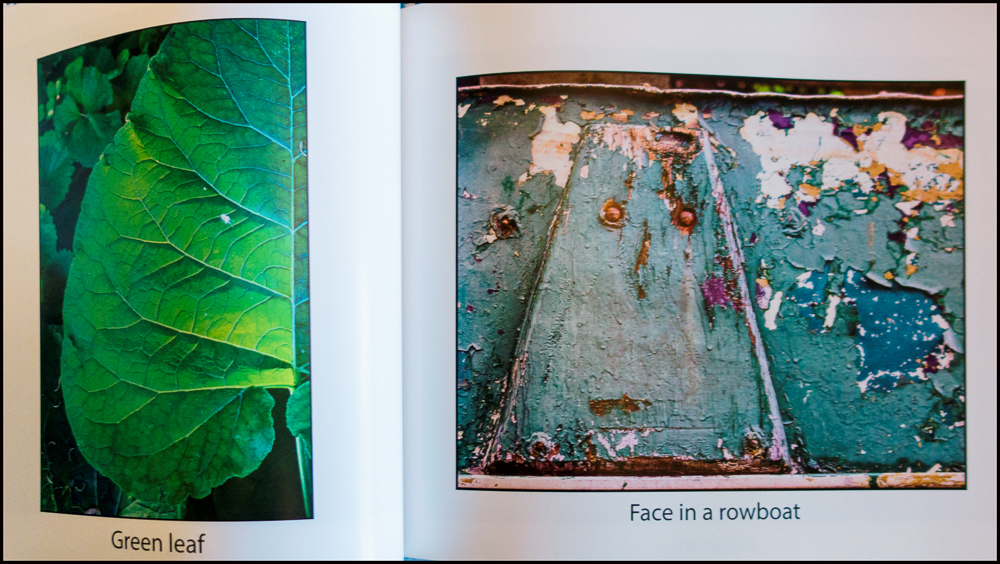
Its fine to view pictures on Facebook, Instagram etc. But having some in your hand that you can browse through is an entirely different, and perhaps more pleasant experience. So I decided to have a go at producing a couple of photobooks.

I’d consider these initial attempts to be more of an experiment than anything else. The point of the exercise was more to gain some experience in using Lightroom and Blurb than anything else.

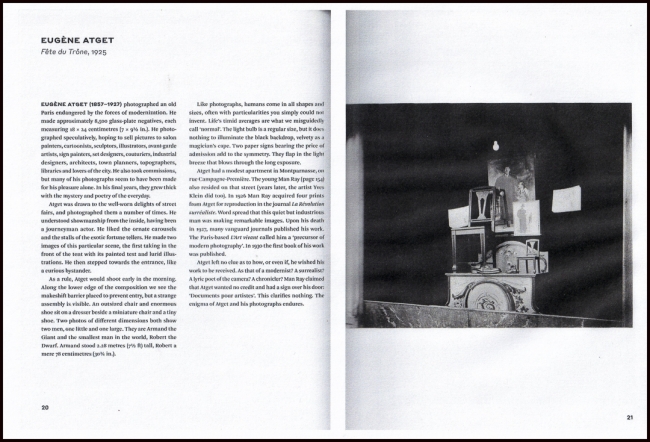
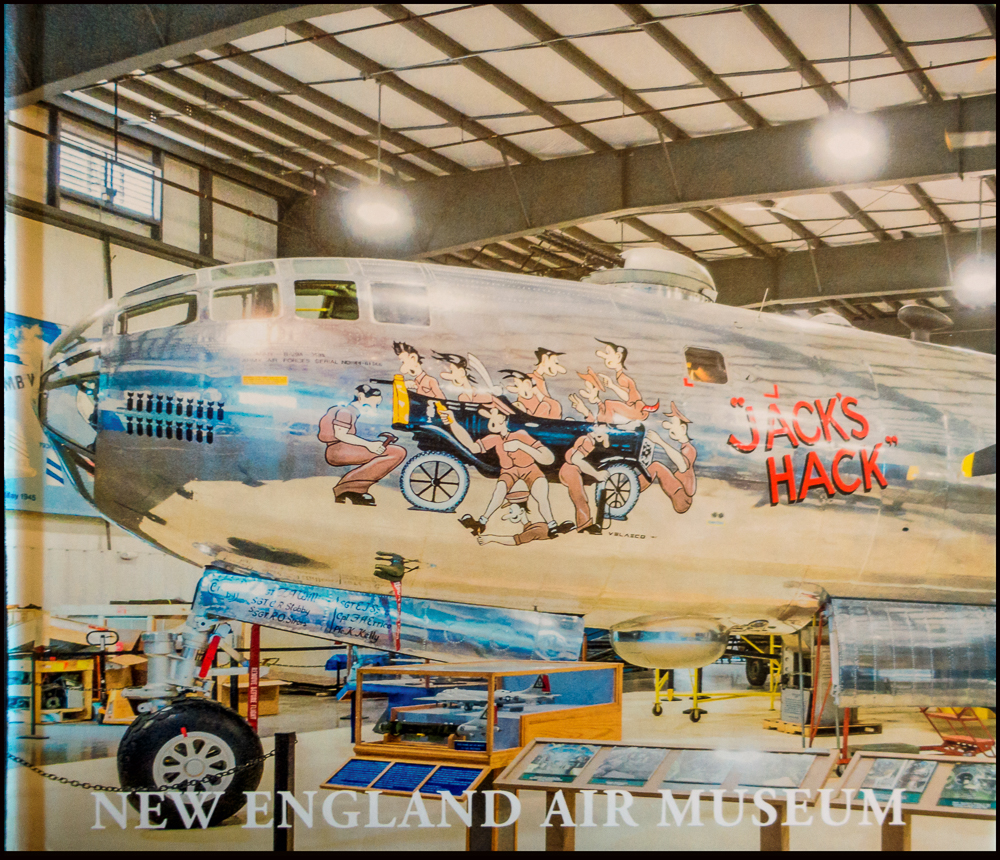
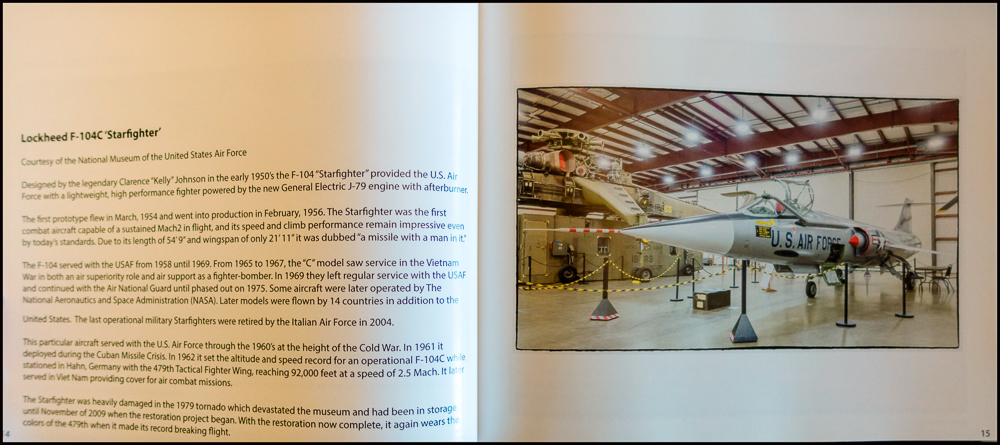
The first book originated in a visit to the New England Air Museum organized by my friend Ken. Usually when I visit a museum such as this I look for a book describing it and its various exhibits. This time I looked in vain. They just didn’t have a such a book. So I decided to do my own. This particular book is a mixture of text and images. I dedicated it to my friend Ken and gave him a copy.

The second book is, apart from a brief introduction, all pictures – taken around the lake where we have a house.


I’m quite pleased with the results, and encouraged to make some more.

Taken over time with a variety of cameras.

Drive-By Shootings

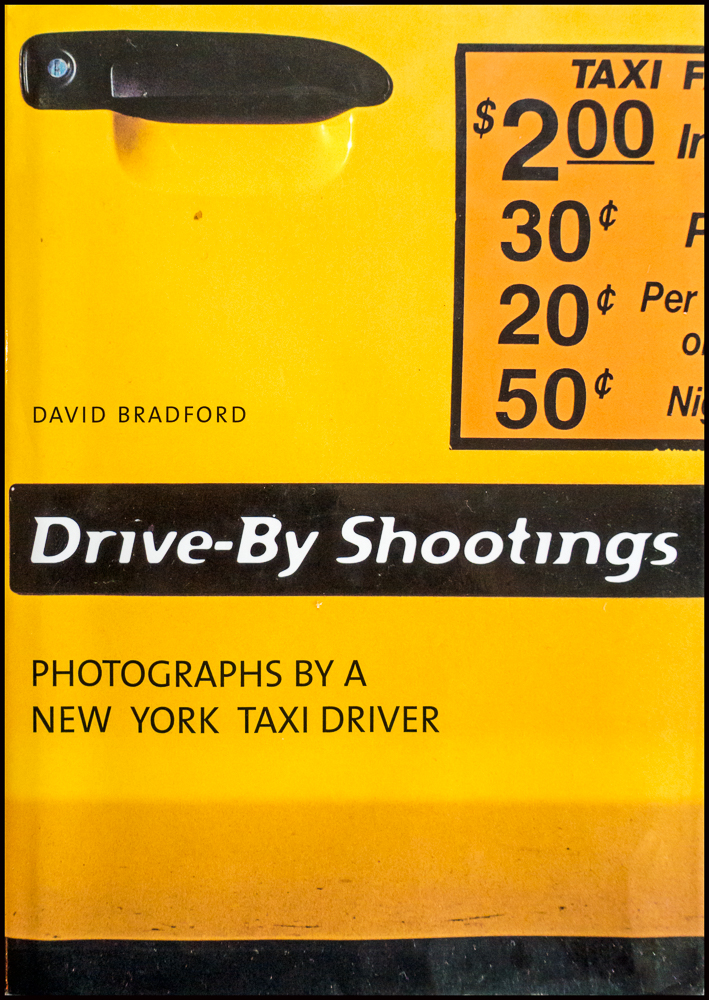
I recently came across this book: Drive-By Shootings. Photographs by a New York Taxi Driver by David Bradford.

It’s an interesting concept: an Art Director at Saks Fifth Avenue quits his job and takes up driving a taxi. While driving the taxi he takes the opportunity to take pictures of all and sundry: passengers, people in the street, buildings etc.

The book itself consists of a very large number of black and white images divided into five sections: A Day; At Night; Another Day; A Rainy Night and Day; Snow, Day and Night. Interspersed within the pictures are short pieces of text generally talking about the life of a New York City Taxi Driver.

To be honest I have not always been a fan of Street Photography. Most of the examples I see seem to be very ordinary pictures of people going about their lives. However, after looking more closely at the work of Gary Winogrand, Lee Friedlander, Joel Meyrowitz, Henri Cartier Bresson, André Kertész, Brassi, Doisneau and, of course, Robert Frank I’ve come to appreciate it more.

Unfortunately, I find most of the pictures in this book to be quite ordinary. At first it was fun to browse through them but after a while it became tiring. And there are way too many of them. One of the most impressive photobooks of the 20th Century is, of course, Frank’s “The Americans”. I gather that in the course of his road trip Frank took approx. 27,000 images and then condensed them into 83 in the final work. The present book could benefit from similar discipline.

So to me it’s a moderately interesting book, with too many fairly ordinary photographs. It was fun to browse through, but I wouldn’t pay the $45 that Amazon.com is asking for it.

Do you like old cameras?

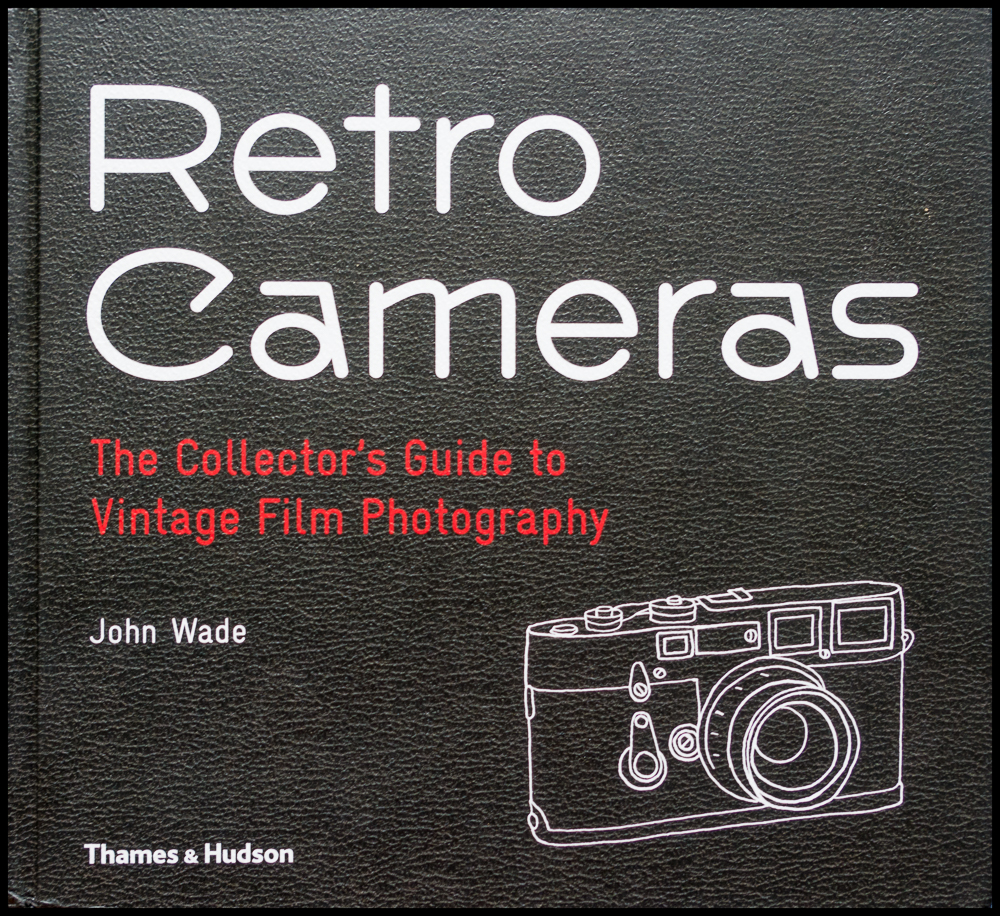
If so then this might be a book for you. It tells the story behind 100 vintage film cameras.

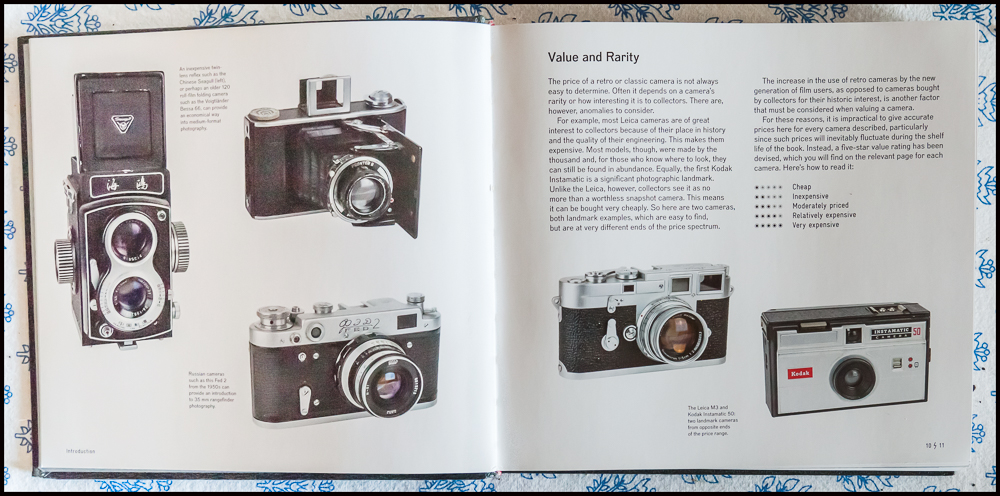
An introduction touches on issues of value and rarity and then goes on to explain the purpose and structure of the book:

After discussing some of the often forgotten basics, each section deals with a type of camera and how to use it, aiming at the photographer contemplating using a manual or semi-automatic film camera for the first time. The cameras listed are all practical propositions for a retro photographer with a reasonable budget. Each one has been carefully chosen as a typical example of a camera from its era. A comprehensive glossary at the end of the book gives definitions of terms that might be unfamiliar to photographers in the digital age.

This is followed by a section on each type of camera:

  • 35mm single-lens reflex
  • 35mm rangefinder cameras
  • 35mm viewfinder cameras
  • Roll-film single lens reflex
  • Sheet and roll-film folding cameras
  • Twin-lens reflex
  • Instamatic cartridge cameras
  • Stereo cameras
  • Panoramic and wide-angle cameras
  • Miniature cameras
  • Instant picture cameras

The book concludes with a section on retro accessories (exposure meters; rangefinders; flashguns, tripods, filters, close-up attachments, focal-length adapters, stereo accessories.

The book is nicely made with a good, solid cover and glossy pages. It’s also lavishly illustrated.

While the selection seems a little idiosyncratic I doubt that you’ll ever one that all retro camera aficionados will agree on.

There’s a useful review of the book on Cameralabs. It concludes as follows:

There’s no shortage of camera history books around, but few that look this good. Of those that do, Retro Cameras stands out for Wade’s curation, compiling a compelling collection of well-known and unusual models with great-looking product photography throughout and just the right amount of text to inform without becoming a dry reference volume. Recommended whether you’re a collector, historian, camera geek or lover of a good coffee table book. Suffice it to say, it’s a great gift for photographers who love older cameras.

I couldn’t agree more.

Peekskill Summer Sounds

We were hungry so we went for a meal first – outside at 12 Peekskill Lounge on Division Street, which was closed for the event. We were just around the corner from where the music was so we could hear, but not see the bands.

After we’d finished our meal we went around the corner and took a seat with the assembled multitudes (see below) to listen to the headline act: a Billy Joel Tribute Band called “River of Dreams”.

There’s a very nice bookstore (Bruised Apple Books, the last store on the left in the second picture) in the same location. These pictures were taken around 9:30pm so I didn’t expect it to be open, but to my surprise it was. I took a look around and came out with “Die Schöpfung” (The Creation) by Ernst Haas in the original German (which luckily I can still just about read).


Broader view of the people watching “River of Dreams”

Taken with a Sony RX-100 M3.

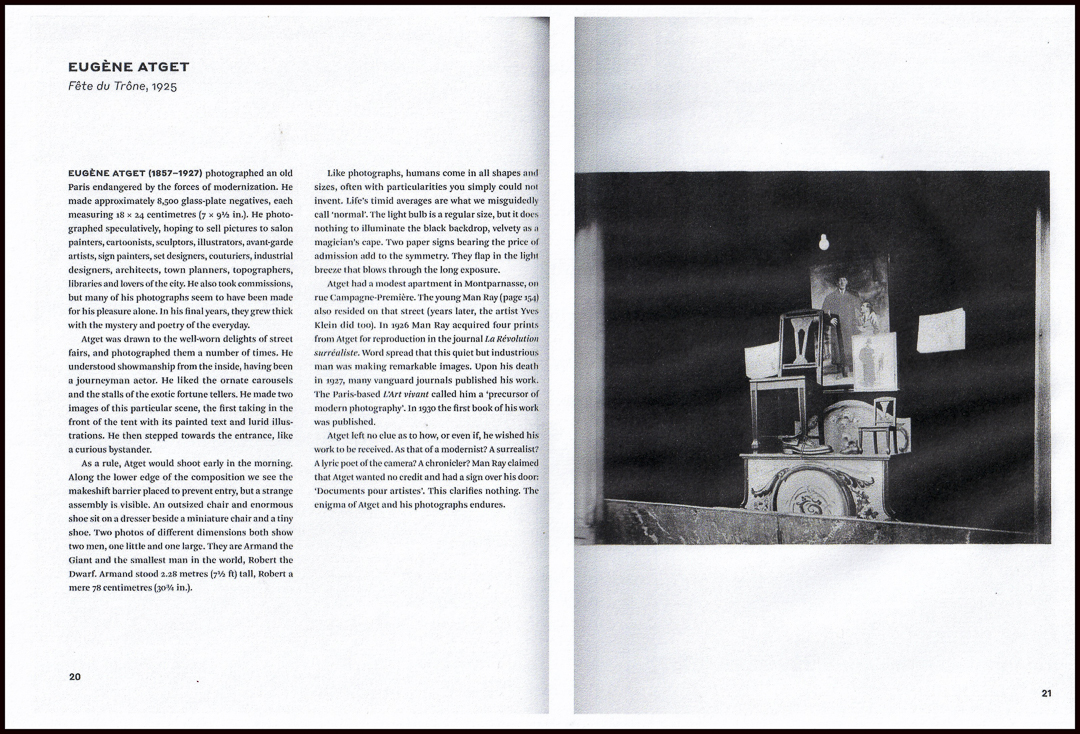
Eugène Atget and Berenice Abbott

Berenice Abbott (American, 1898-1991), Eugene Atget, 1927.
Gelatin silver print. Courtesy of the Philadelphia Museum of Art:
Gift of Mr. and Mrs. Carl Zigrosser, 1968, 1968-162-38

Interesting article (From Paris to New York: The Story of Eugène Atget and Berenice Abbott) on the occasion of the publication of a new book by Kevin Moore: Old Paris and Changing New York: Photographs by Eugène Atget and Berenice Abbott (Yale University Press).

According to Yale University Press:

An insightful new look at two renowned photographers, their interconnected legacies, and the vital documents of urban transformation that they created

In this comprehensive study, Kevin Moore examines the relationship between Eugène Atget (1857–1927) and Berenice Abbott (1898–1991) and the nuances of their individual photographic projects. Abbott and Atget met in Man Ray’s Paris studio in the early 1920s. Atget, then in his sixties, was obsessively recording the streets, gardens, and courtyards of the 19th-century city—old Paris—as modernization transformed it. Abbott acquired much of Atget’s work after his death and was a tireless advocate for its value. She later relocated to New York and emulated Atget in her systematic documentation of that city, culminating in the publication of the project Changing New York.

This engaging publication discusses how, during the 1930s and 1940s, Abbott paid further tribute to Atget by publishing and exhibiting his work and by printing hundreds of images from his negatives, using the gelatin silver process. Through Abbott’s efforts, Atget became known to an audience of photographers and writers who found diverse inspiration in his photographs. Abbott herself is remembered as one of the most independent, determined, and respected photographers of the 20th century.

Kevin Moore is an independent curator and writer and is artistic director and curator of FotoFocus, Cincinnati. He is the author of Starburst: Color Photography in America 1970-1980 and Jacques Henri Lartigue: The Invention of an Artist.