Bannerman’s Island

I’ve taken pictures of Bannerman’s Island from afar – from both the west shore and the east shore of the Hudson. I finally decided to see it up close and took the tour – the island is about a 25 minute boat ride from Beacon, NY and the tour leaves from right next to the Beacon Metro-North station. Although there’s not a lot to see on the island, what there is is interesting and you won’t find anything like it anywhere else in the lower hudson valley. So to me the tour was worth it. The guides give lengthy descriptions of the history of the island, of Francis Bannerman and over the castle like buildings (actually they are arsenals). I’m sure I would have been more interested in the descriptions had I not recently attended a presentation on Bannerman’s Island at the Briarcliff Manor Historical Society
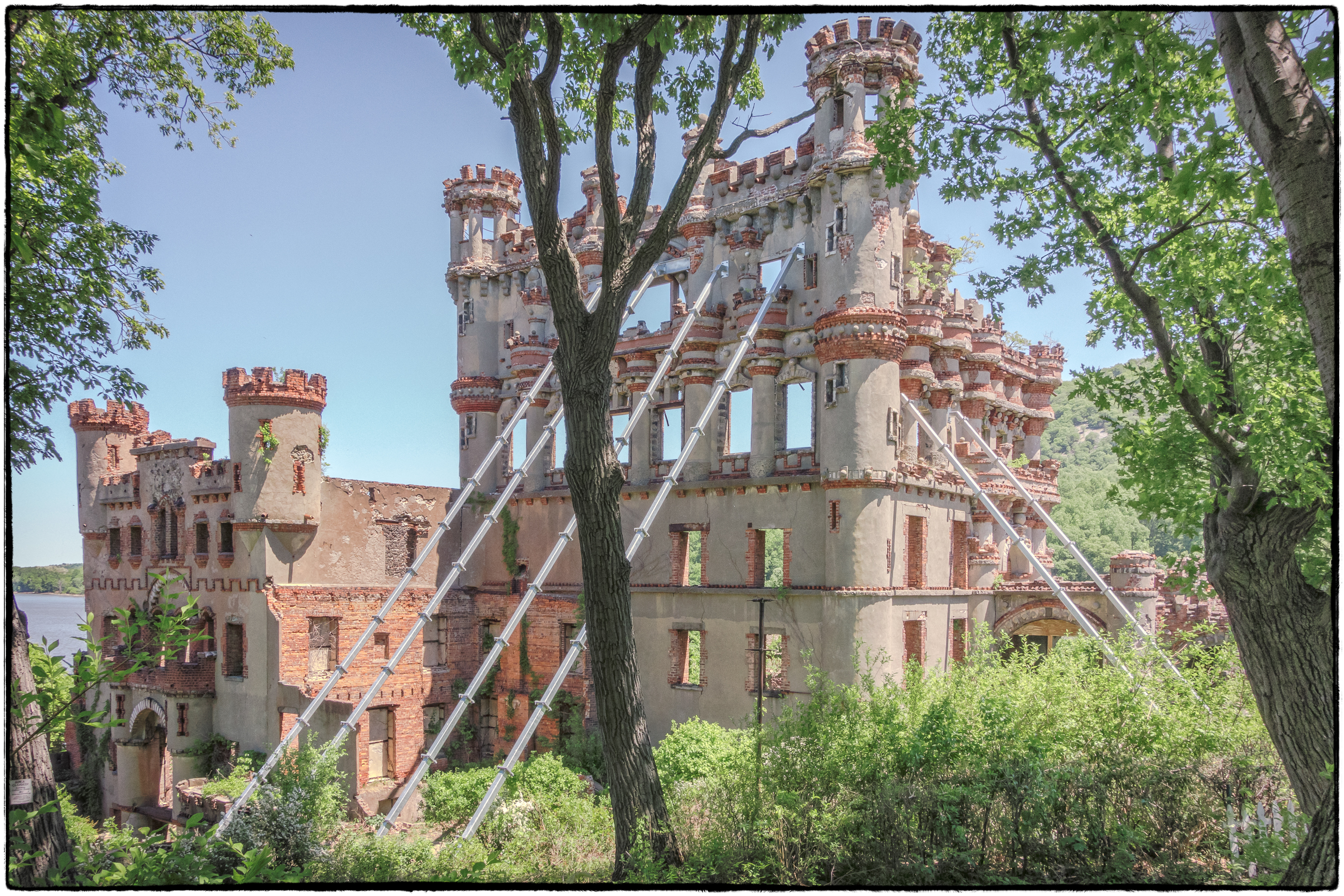
Crumbling arsenal buildings. Note the metal buttresses. About 40-50 percent of the arsenal buildings have collapsed in recent years.

According to “Scots and Scots Descendant in America. D. MacDougall. New York, April 10, 1917. Part V – Biographies“:

FRANCIS BANNERMAN, the noted merchant and authority on war weapons, is the sixth Frank from the first Frank Bannerman, standard-bearer of the Glencoe MacDonalds, who escaped the massacre of 1692 by sailing to the Irish coast. His descendants remained in Antrim for 150 years, intermarrying with Scottish settlers. In 1845, Mr. Bannerman’s father removed to Dundee, Scotland, where Francis VI was born, March 24, 1851. He came with his parents to the United States in 1854 and has resided in Brooklyn since 1856. The eldest son in each generation is always named Frank. The surname originated at Bannockburn, where an ancestor rescued the clan pennant, whereupon Bruce cut off the streamer from the Royal ensign and conferred upon him the honour of “bannerman.”

Young Francis left school at ten, when in 1861 his father went to the war. He secured employment in a lawyer’s office at two dollars a week, each morning, before going to the law-office, supplying with newspapers the officers of the warships anchored off the Brooklyn Navy Yard, near his home. Summer evenings, after work hours, he dragged the river with a grapple for bits of chain and rope, which he sold to junkmen. When his father returned disabled, he became a dealer in the material the boy collected, with a storehouse at 18 Little Street, also attending the Navy auctions, and later established a ship-chandlery business at 14 Atlantic Avenue. Frank went back to school for a time and won the scholarship for Cornell University, but could not accept owing to his father’s war disability requiring his assistance in carrying on the business.
Read More

Northgate Revisited

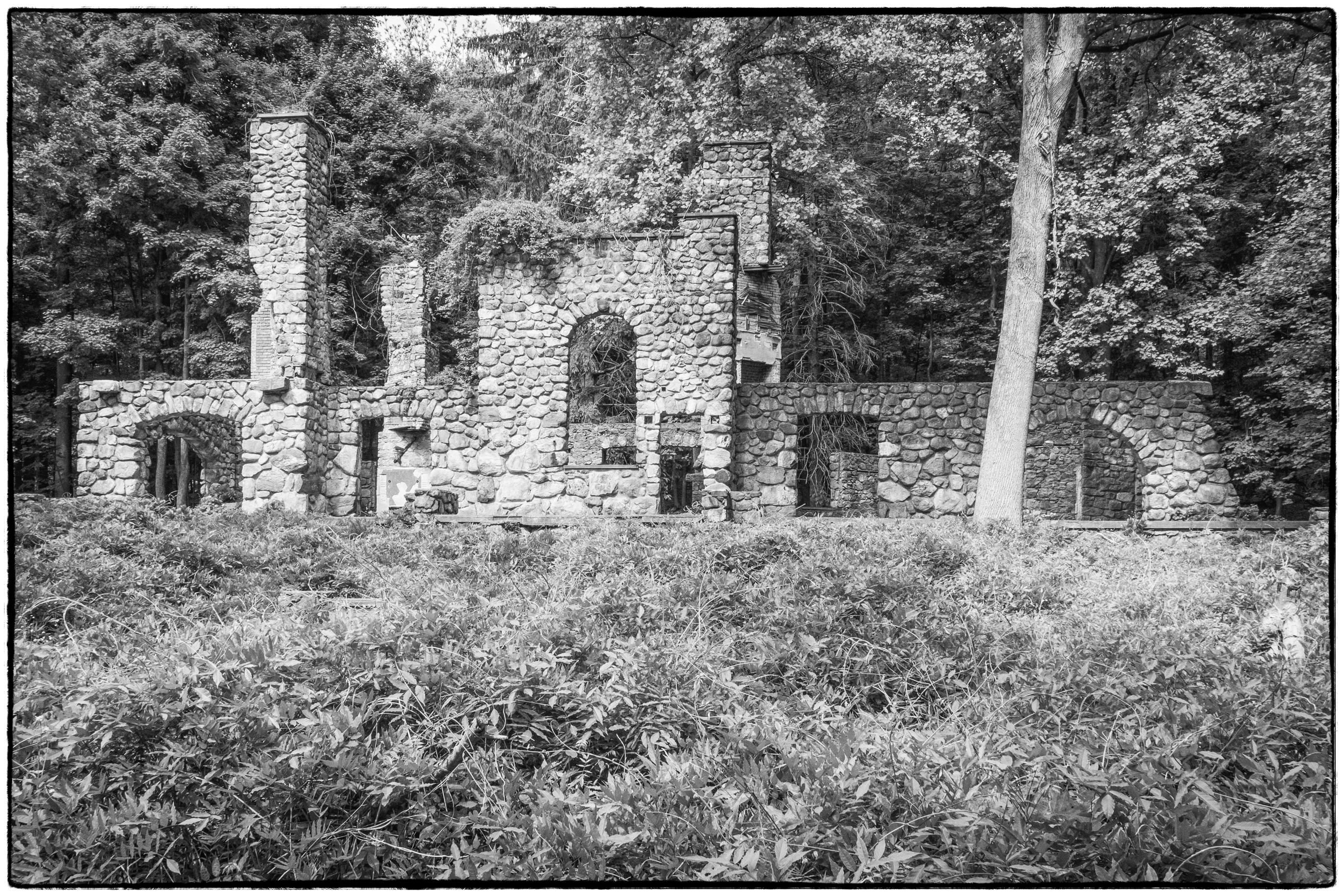
Front Facade.

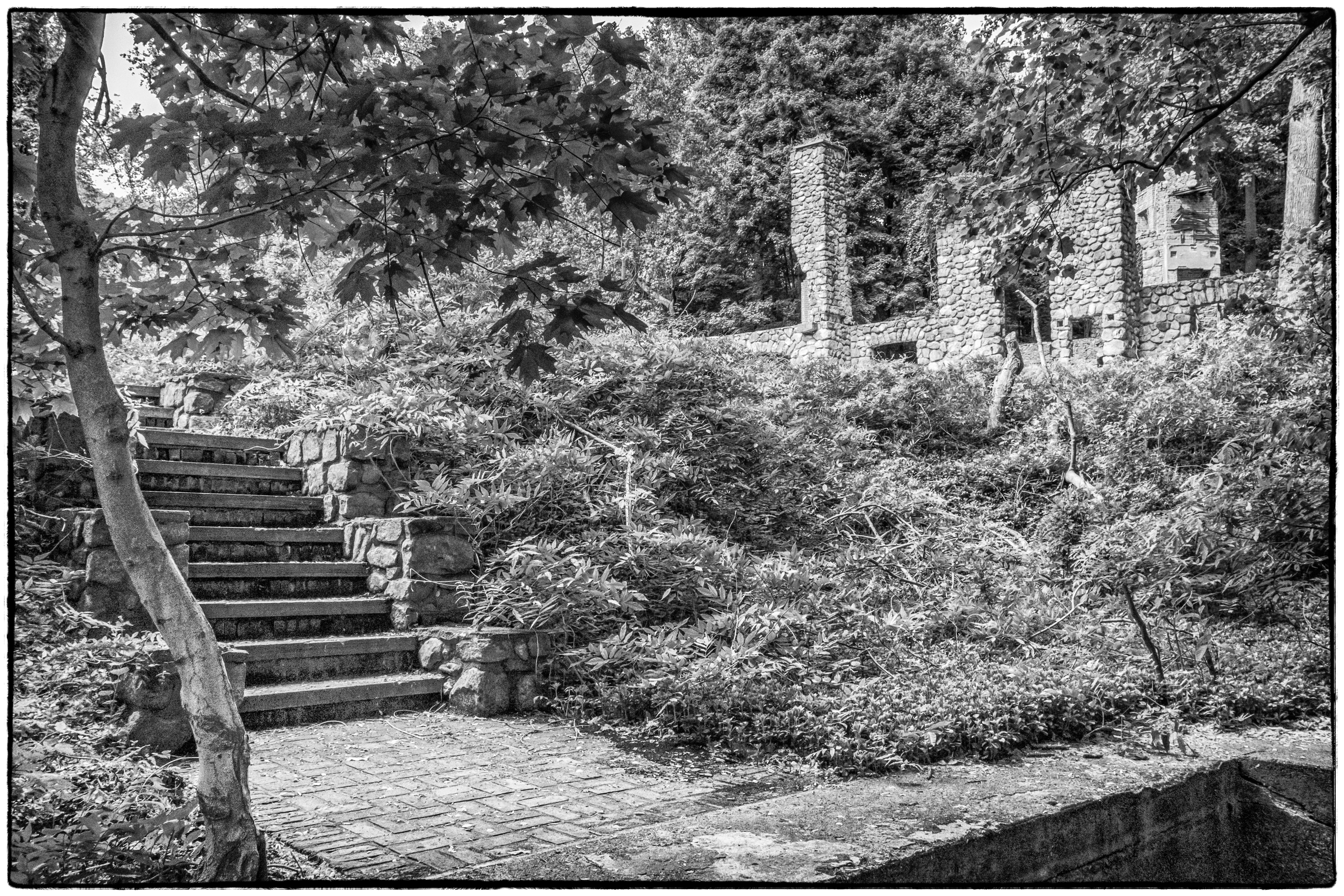
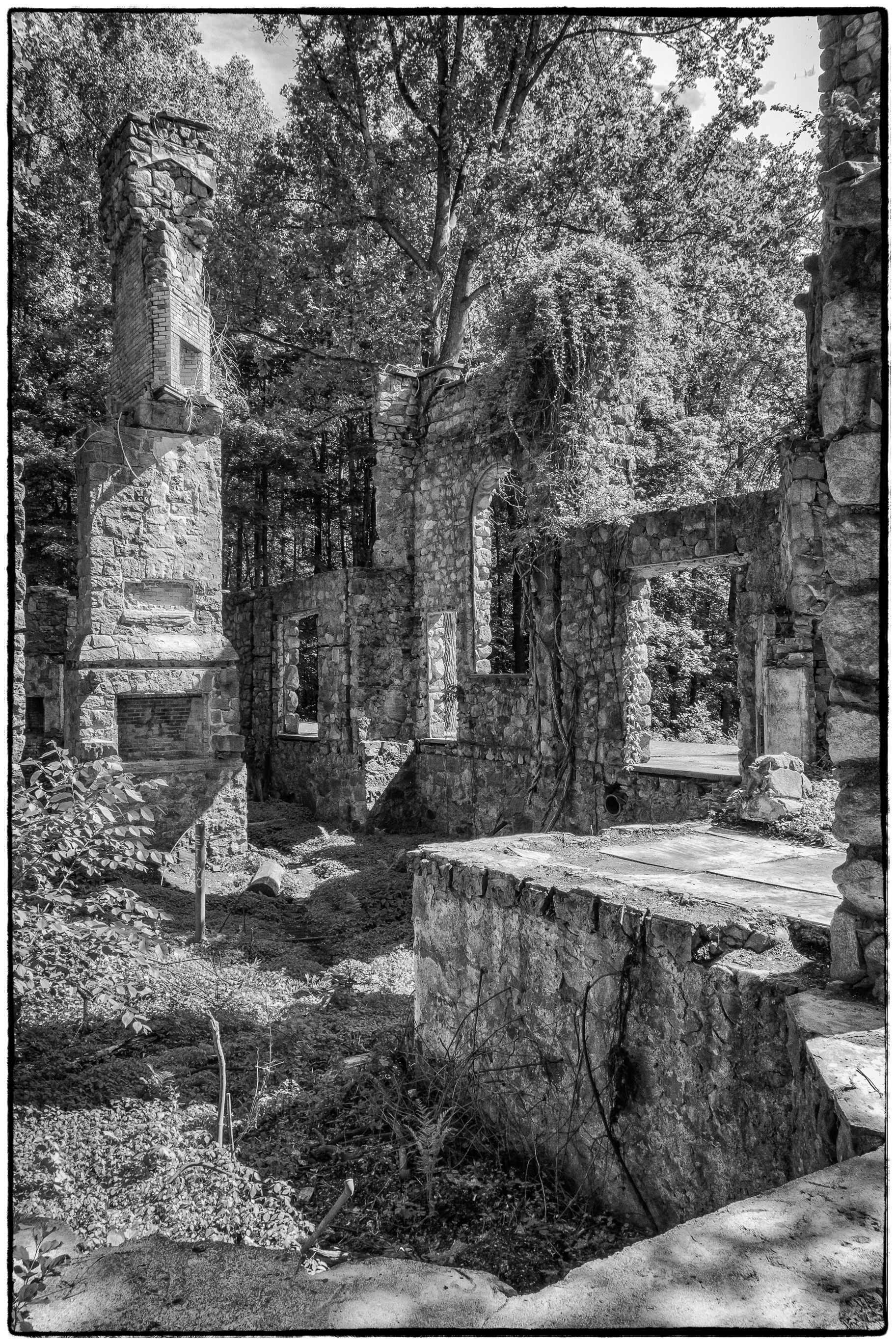
I’ve posted about Northgate before in Former Stern/Cornish Mansion: Northgate , a ruined mansion just north of Cold Spring, NY. Although the ruin was essentially unchanged other things were different: Different time of year (May rather than December); Different Season (Spring rather than Winter) and perhaps most importantly a different camera/lens combination. The last time I was there I had my Nex 5N with a Nikon 50mm f1.8. While this is a decent combination it wasn’t entirely the right one in this case. The 50mm lens is equivalent to 75mm on my Nex. Unfortunately the woods came close to the ruins so it was hard to get a wide enough view of the mansion without going into the trees and having them obscure your view and clutter up the picture. This time I had the RX100 with its 28mm-100mm lens. This was fine for the wide angle shots.

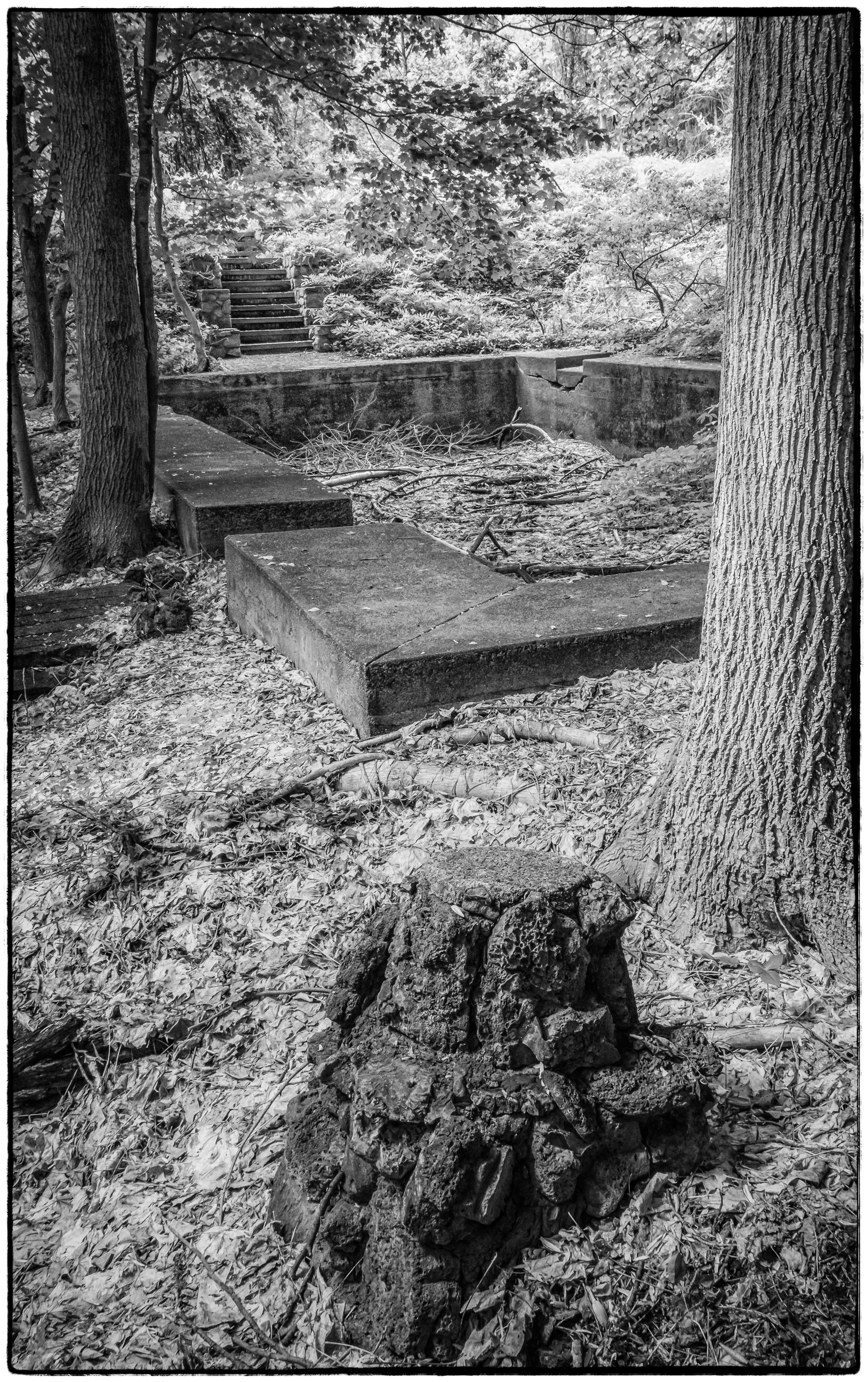
In addition to the wider views I tried to find some new viewpoints and even some areas of the ruins that I had missed (e.g. the swimming pool) before.

The old swimming pool.

Ruined Mansion from the Swimming Pool

Steps to the Front Facade.

Interior.

The lure of crumbling old builings

Abandoned New York City

Chances are, when you think of New York City, you imagine the large crowds of people, bright city lights, and the familiar humming and buzzing sound of big city life. Even in the subway, the city’s underbelly, New York City still pulses with life. You don’t think about all the desolate warehouses, decaying classrooms, or crumbling psychiatric wards that are sporadically speckled around the city’s five boroughs.

On a whim, and perhaps encouraged by an insatiable curiosity, photographer Will Ellis stepped into one of these abandoned repositories one afternoon. At the time, Ellis was reading a lot of gothic horror books (think Edgar Allan Poe, H.P. Lovecraft, etc…), and was drawn to the eerie atmosphere those books were frequently set in. After experiencing that same kind of atmosphere outside the realm of a novel for the first time, Ellis was hooked.

via Explore Crumbling Relics Of Time In Intriguing Photo Series Featuring Abandoned New York City – DIY Photography.

I must admit to being fascinated by old buildings so this post quickly caught my interest. I would disagree with one of the author’s comments however:

It’s interesting to see that, just in the past few years, the internet has become saturated with images of abandoned buildings, leading to the term “ruin porn.” But the pleasure of ruins goes back thousands of years. It plays into this morbid curiosity that is within all of us — a fascination with death and decay that’s just a part of what makes us human.

Yes I’m interested in crumbling old buildings. I also like cemeteries. However, this is not because of a fascination with death and decay. I find crumbling old buildings somewhat romantic. I grew up in the UK and always loved the old castles. I also liked the old Tarzan and Jungle Book movies, which often featured vine encrusted old temples and the like abandoned in the jungle. I like cemeteries because they are usually quiet and peaceful (at least in the rural areas where I live); they have interesting trees, shrubs and plants; I also like the statues and the gravestones with their inscriptions. And the stained glass. I just find them to be beautiful places and it only rarely occurs to me that there are dead people there.