Halcyon Hall

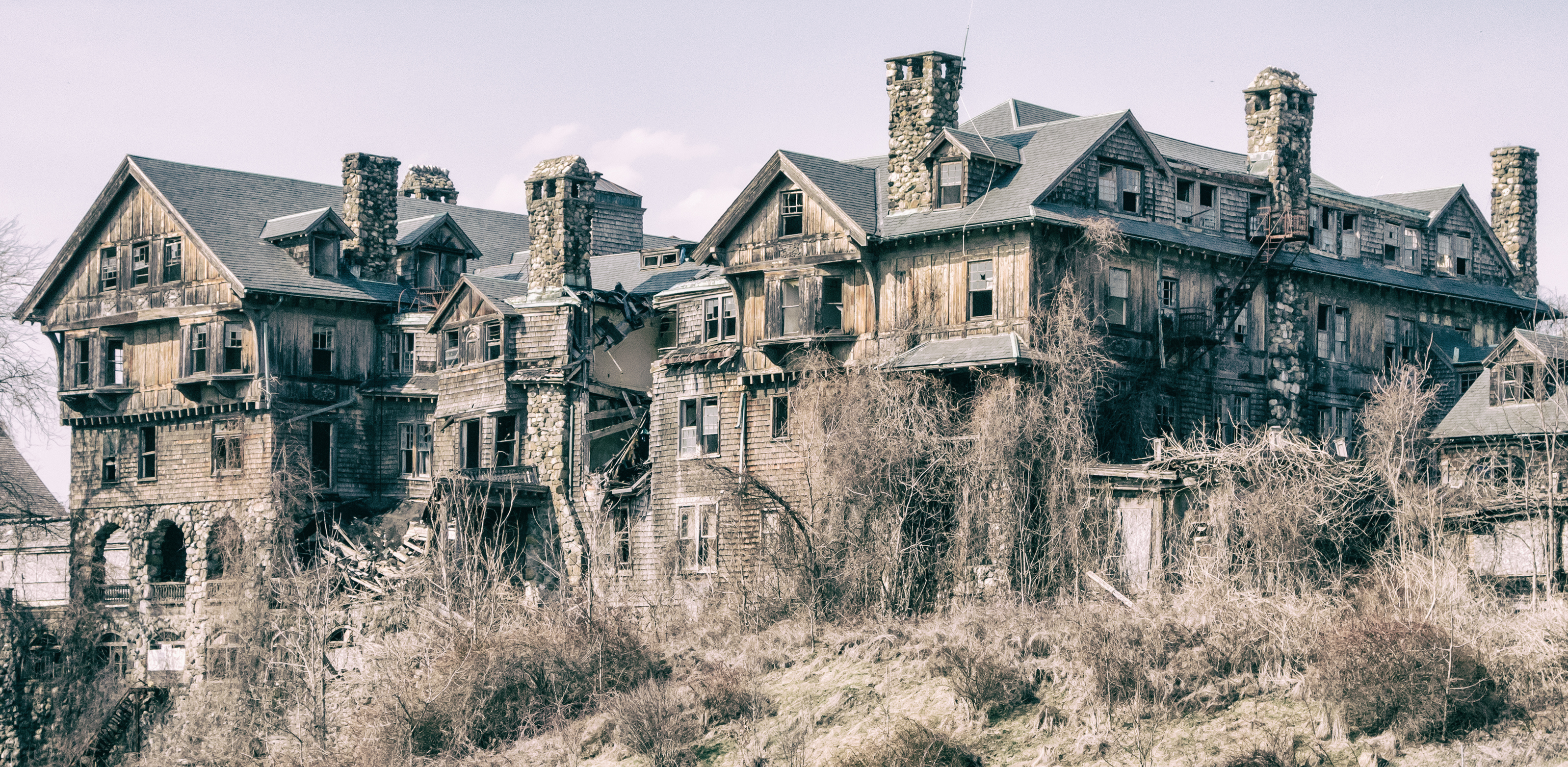
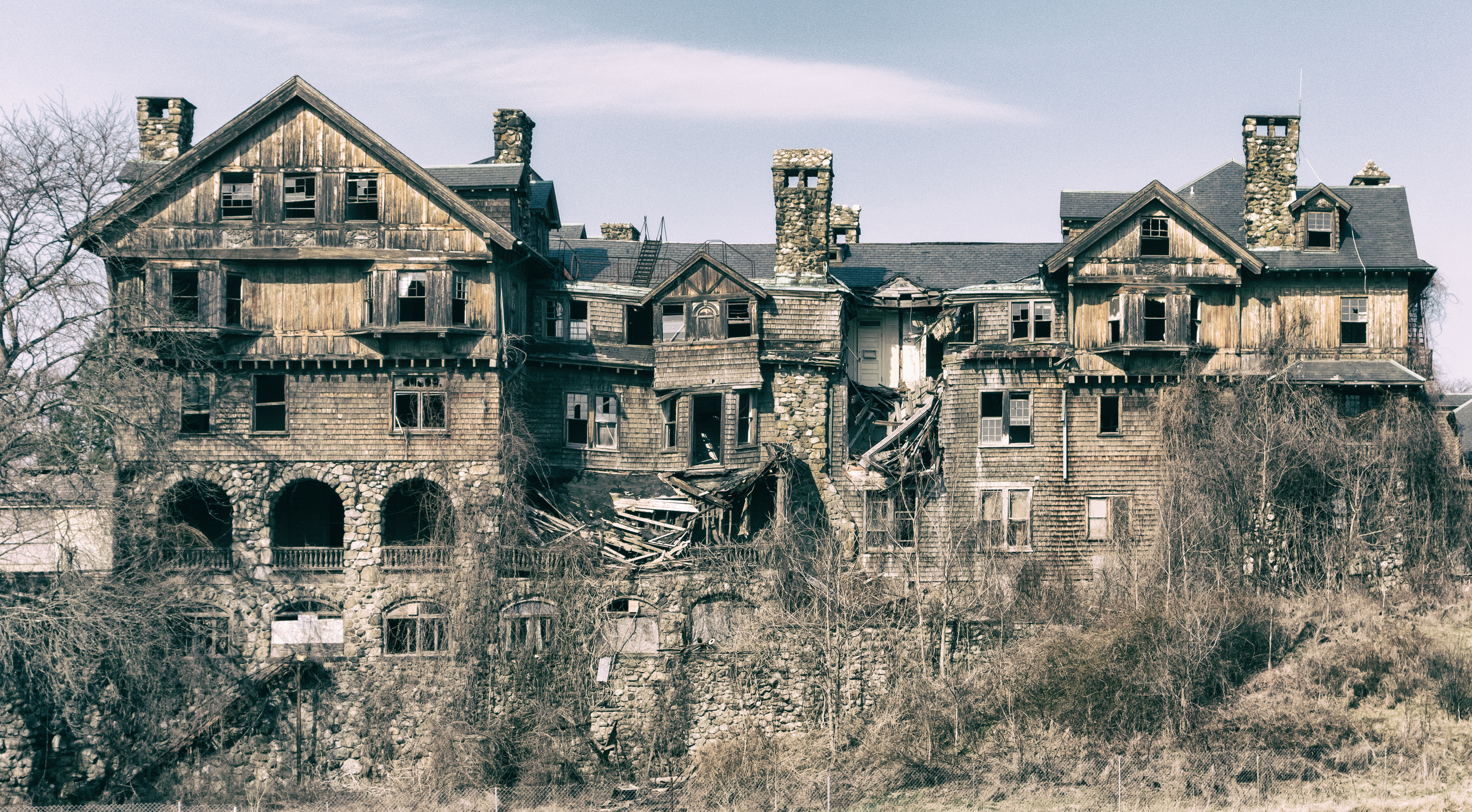
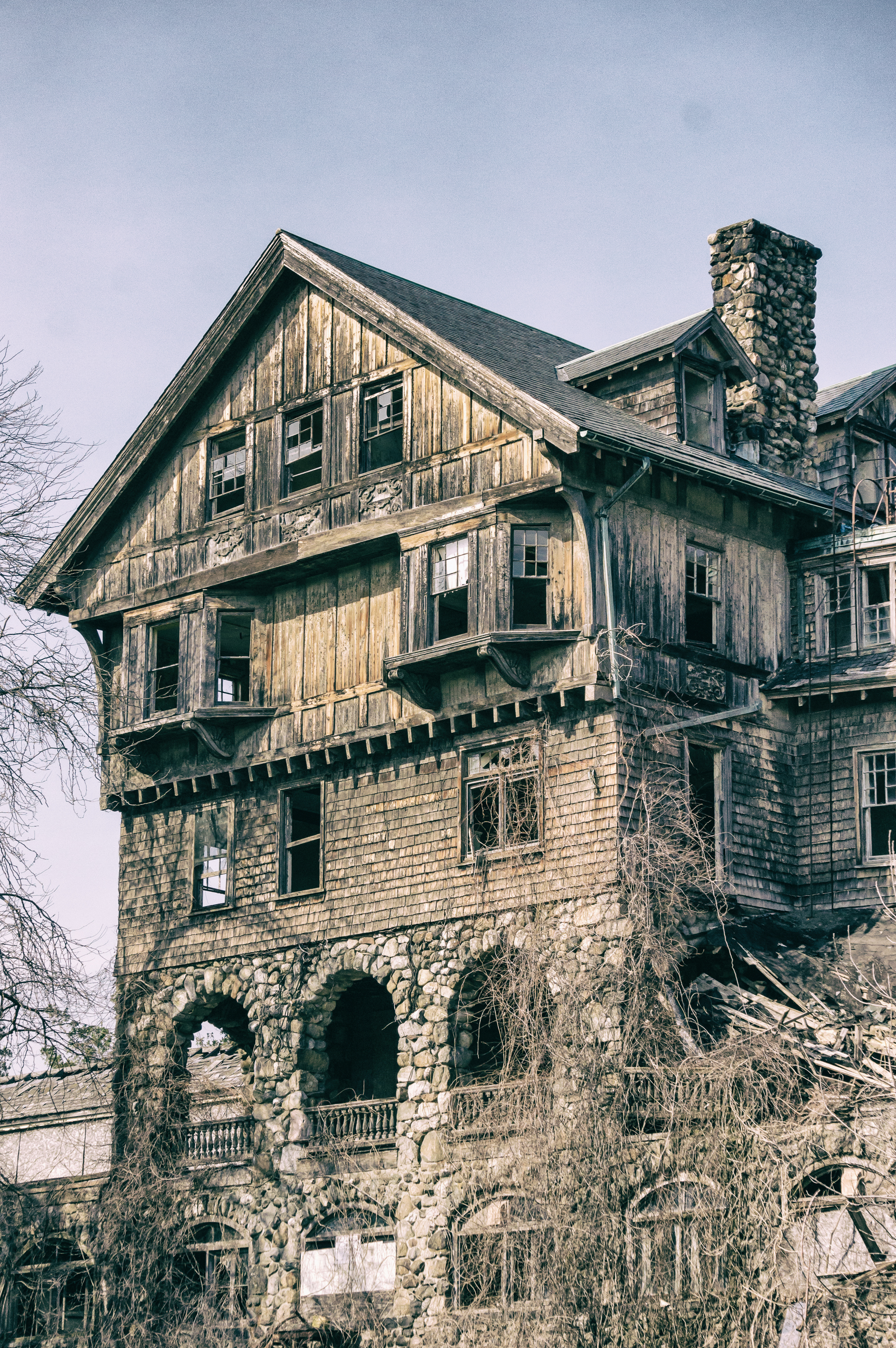
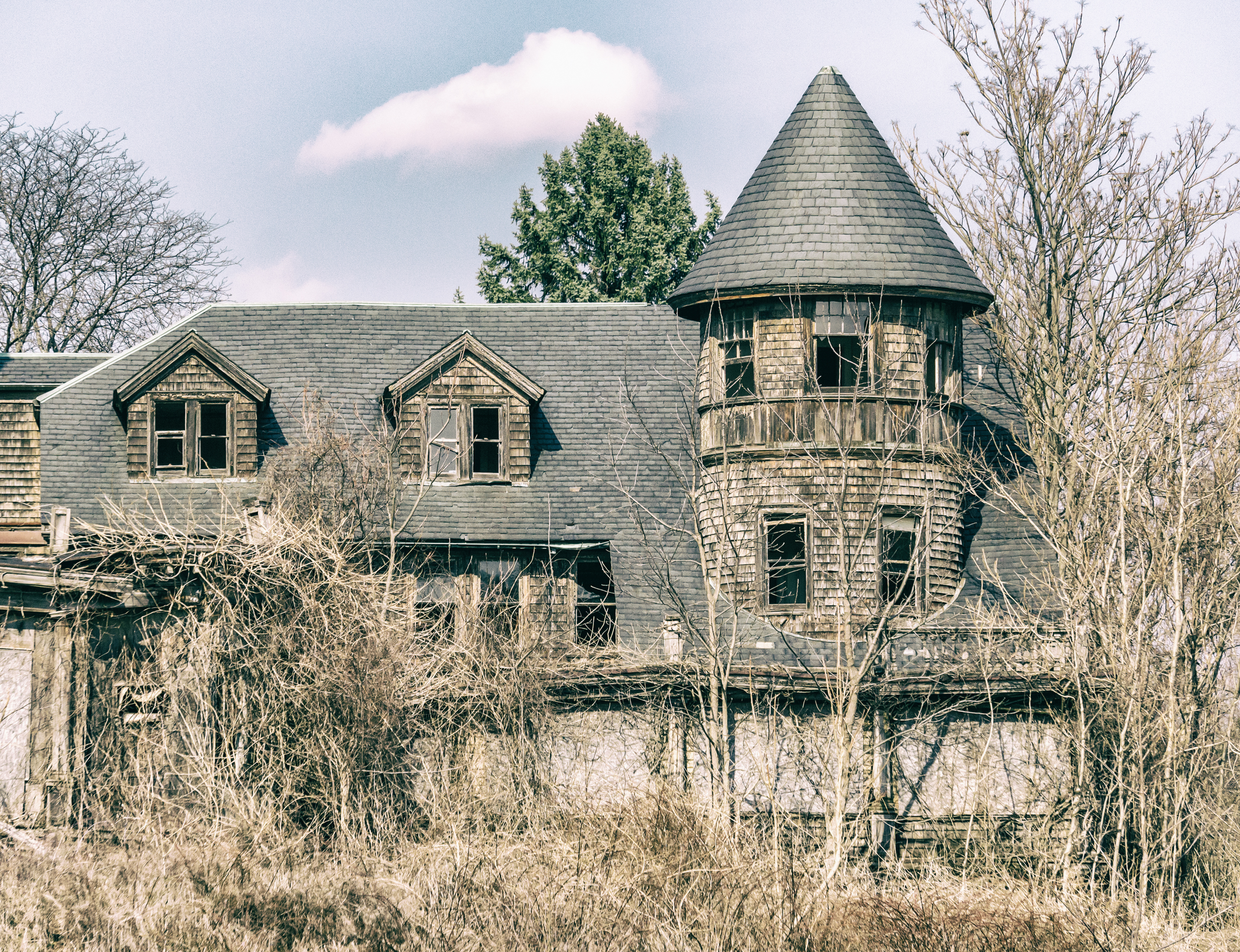
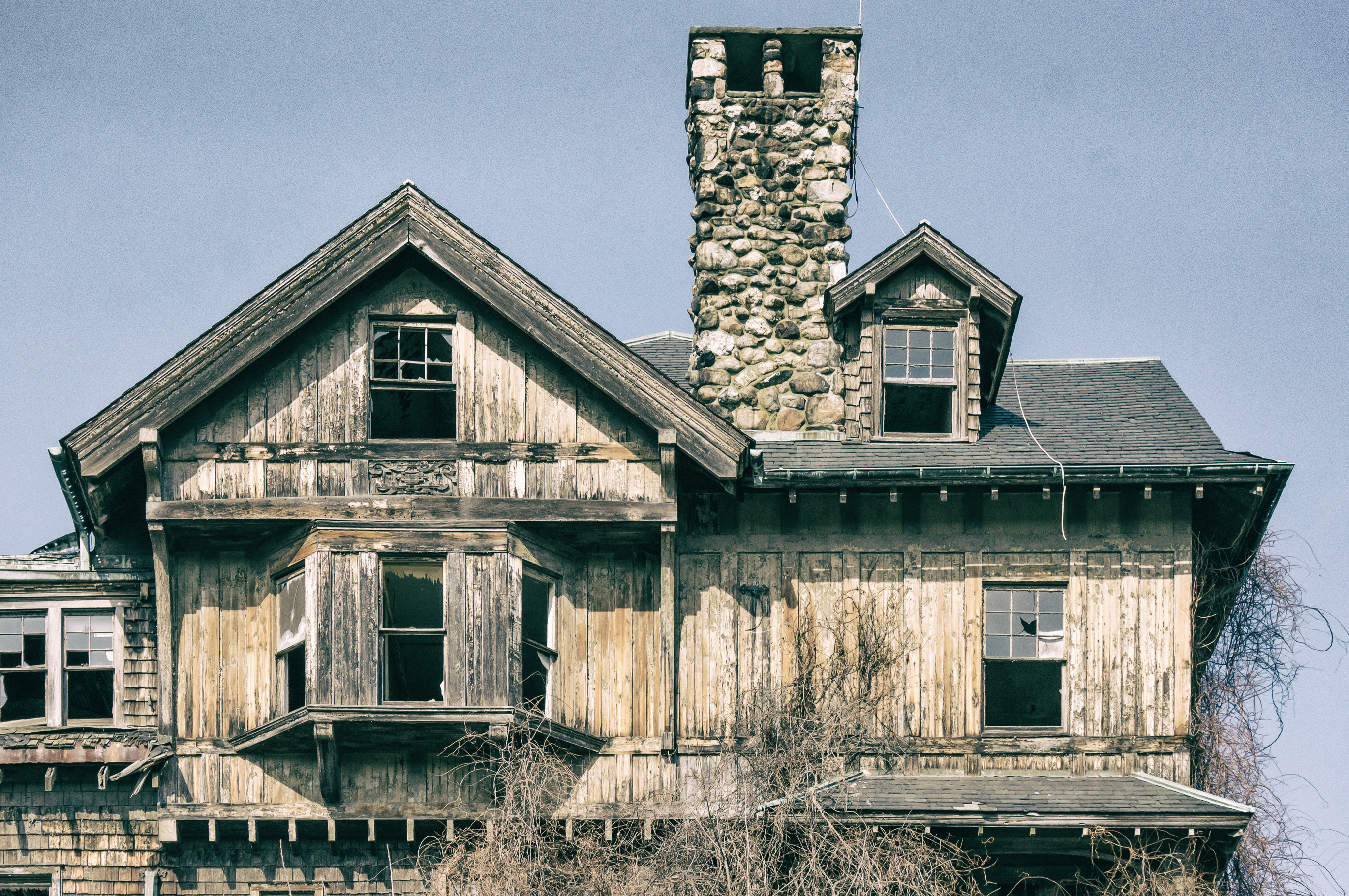
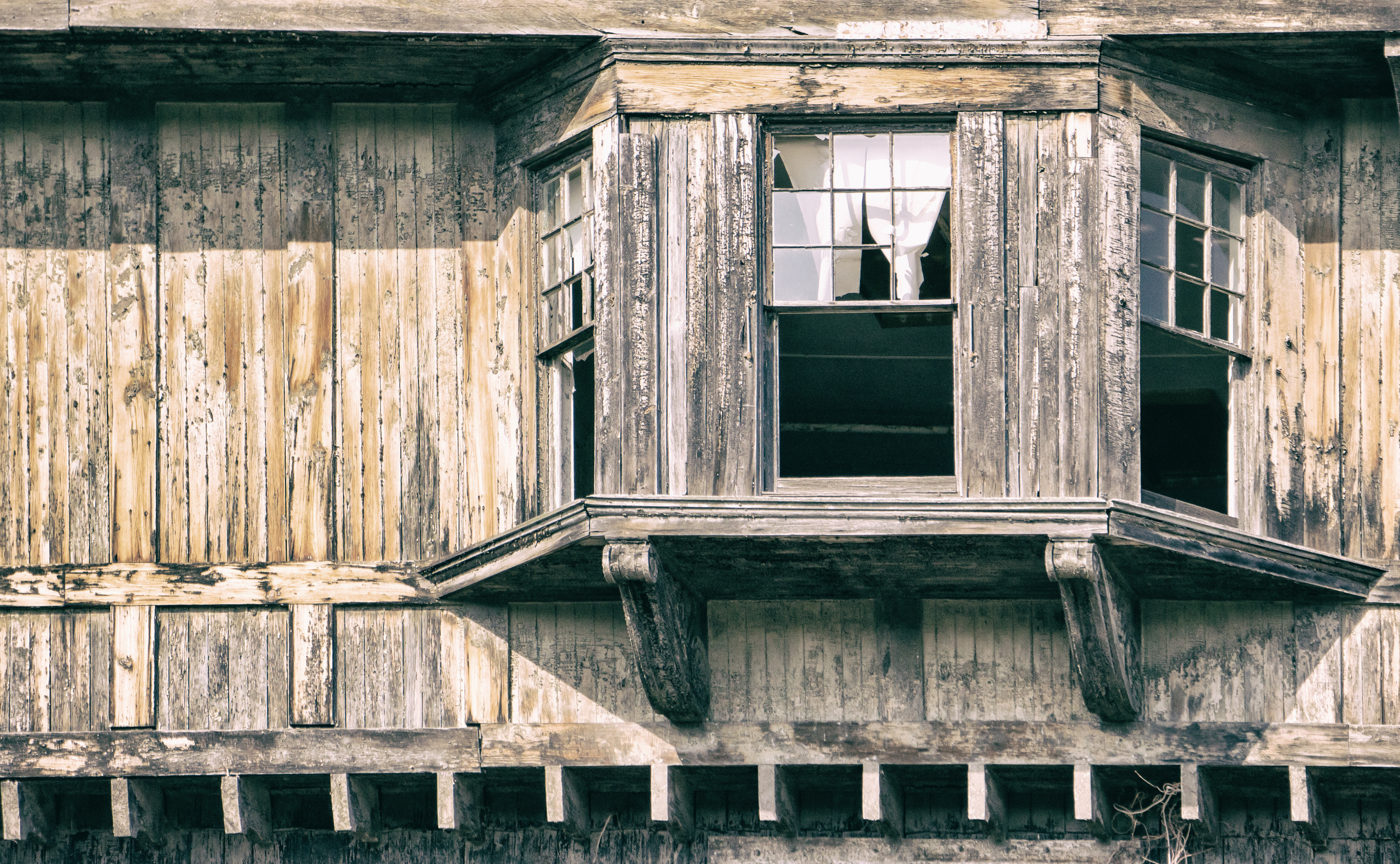
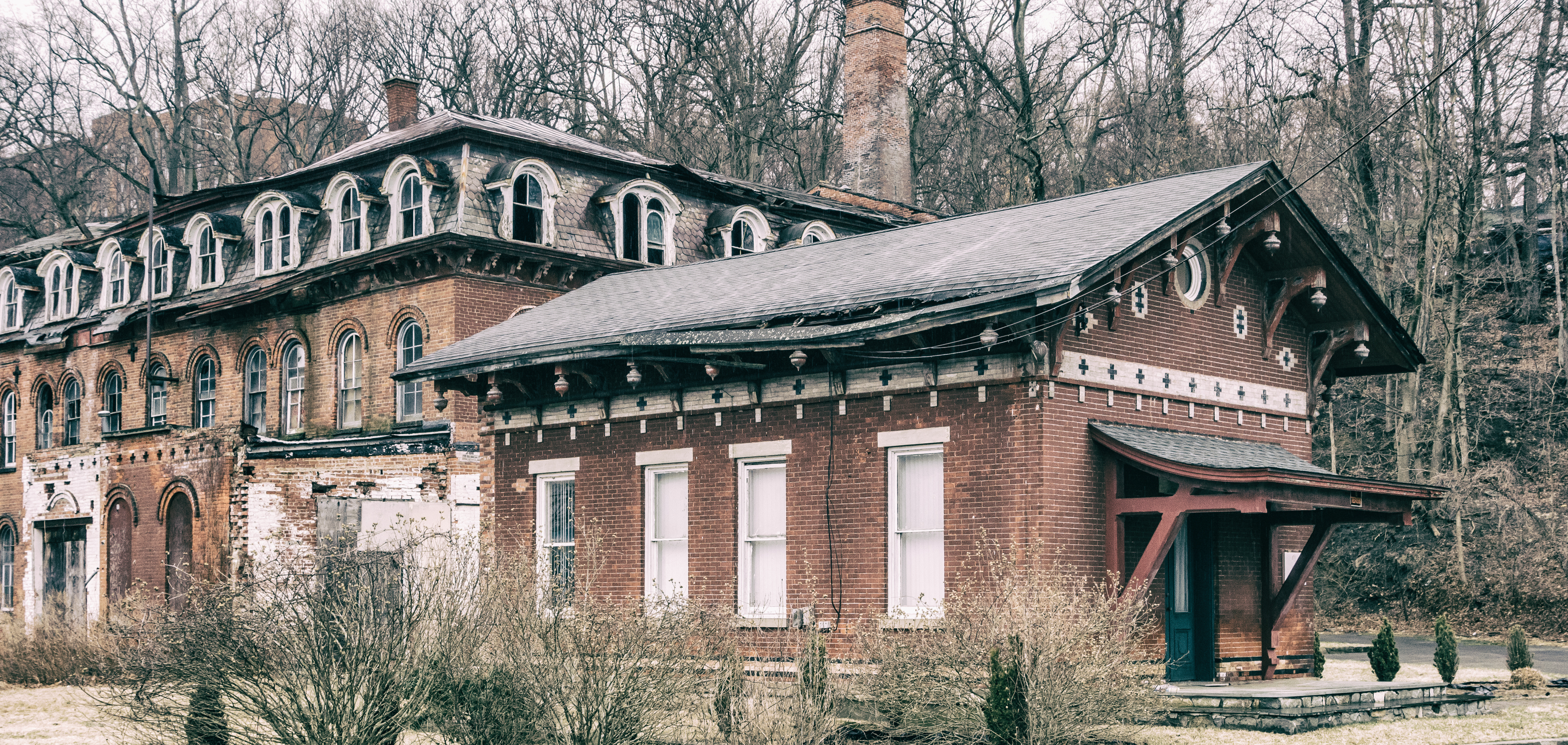
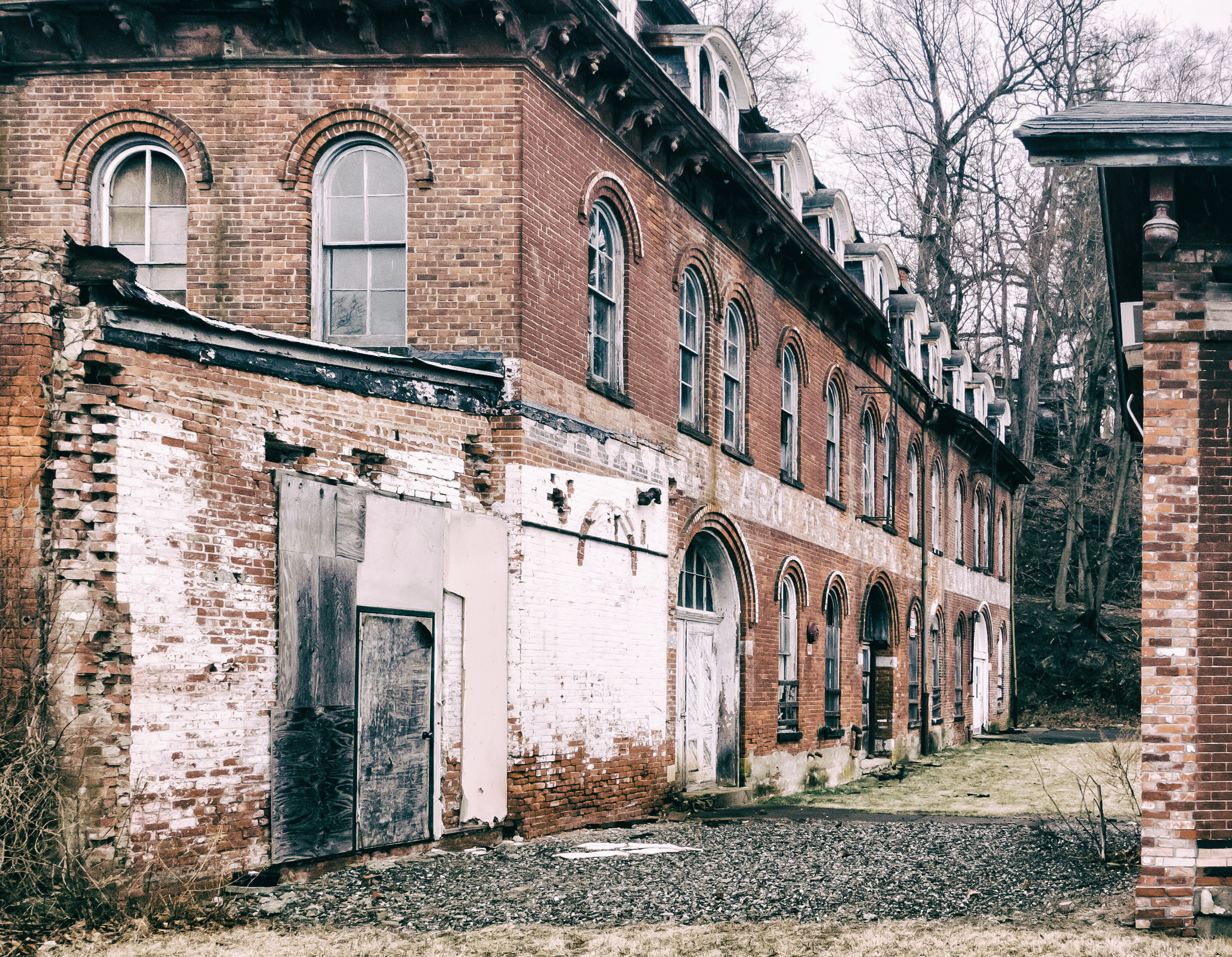
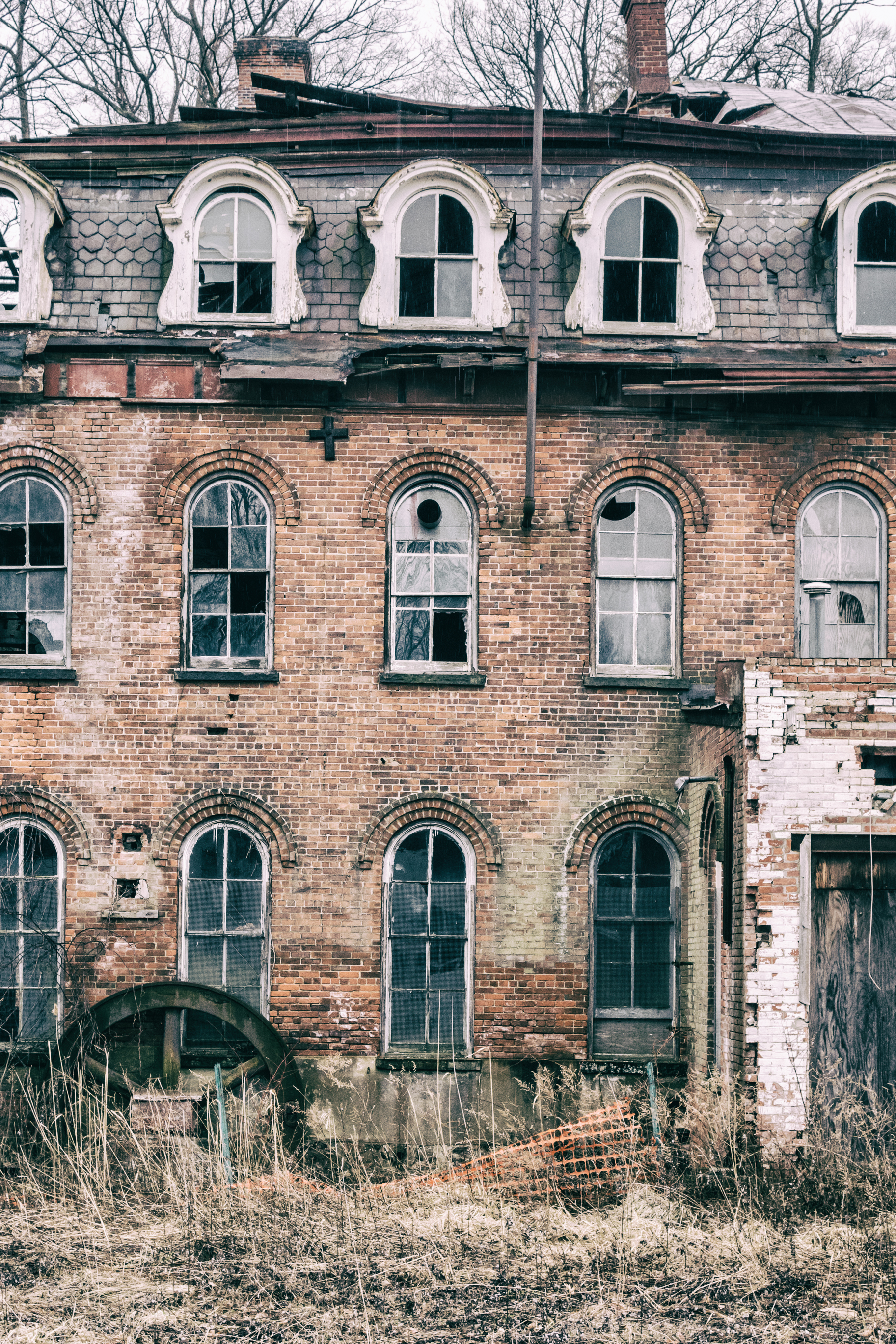
This magnificent edifice looms over the intersection of routes 343 and 82 in the town of Millbrook, Dutchess County, New York. It’s Halcyon Hall, the main building of what was once a 200 room luxury hotel when it was built in 1893. In 1907 the Bennett School for Girls relocated here from farther south in Irvington, NY and so things remained until expensive updates and a shift towards co-educational schools caused the school to finally close down in 1978. It’s been abandoned since then. It’s reputed to be haunted by the ghosts of girls who committed suicide there and who still roam the halls. If it’s not a true story it should be.

It amazes me that a splendid building such as this can be allowed to decay and fall apart. I imagine it’s past renovation now, but once upon a time it wasn’t. I suppose that the economics were against it. After all what would you use a building such as this for in Milbrook, NY. I’ll let Wikipedia have the final word:

Halcyon Hall was never reopened and quickly fell into ruin. When the heat was turned off, water pipes burst, causing major water damage throughout the building. Large portions of the roof have collapsed and trees can be seen growing through parts of the building. Halcyon Hall remains in this state as of 2014. Halcyon Hall is a popular area for Urban Explorers, and Photographers, due to its structure and decay. Several attempts were made in the 1980s to develop the property but all failed and the title was taken over by Mechanics and Farmers Savings Bank.[3] The bank failed in 1991[4] and its assets were seized by the Federal Deposit Insurance Corporation. Halcyon Hall was scheduled to be demolished in 2012.

In April, 2014 it’s still there. I imagine that eventually it will fall apart by itself. Or some kids will break in and be injured or killed and then they’ll decide to demolish it.


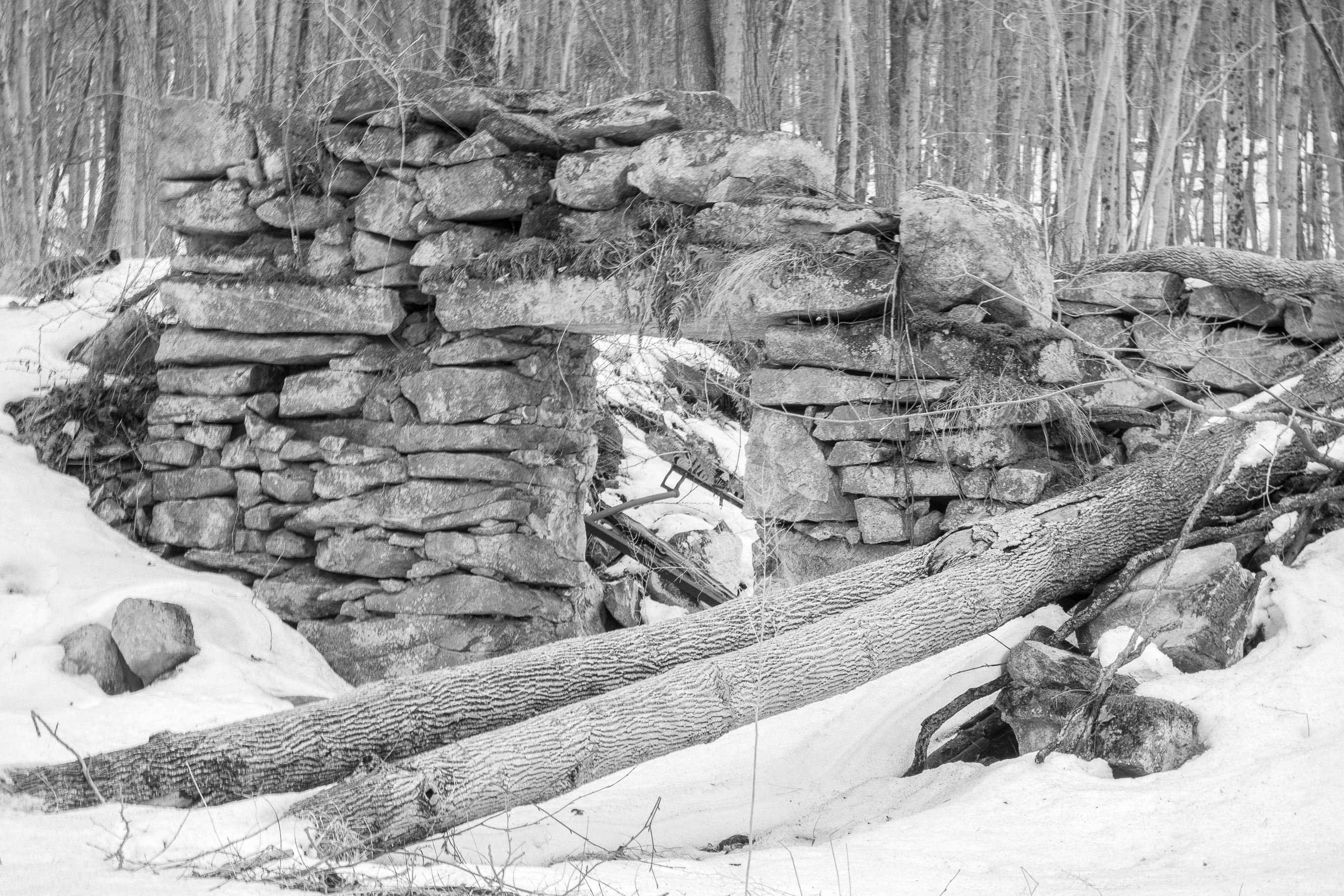
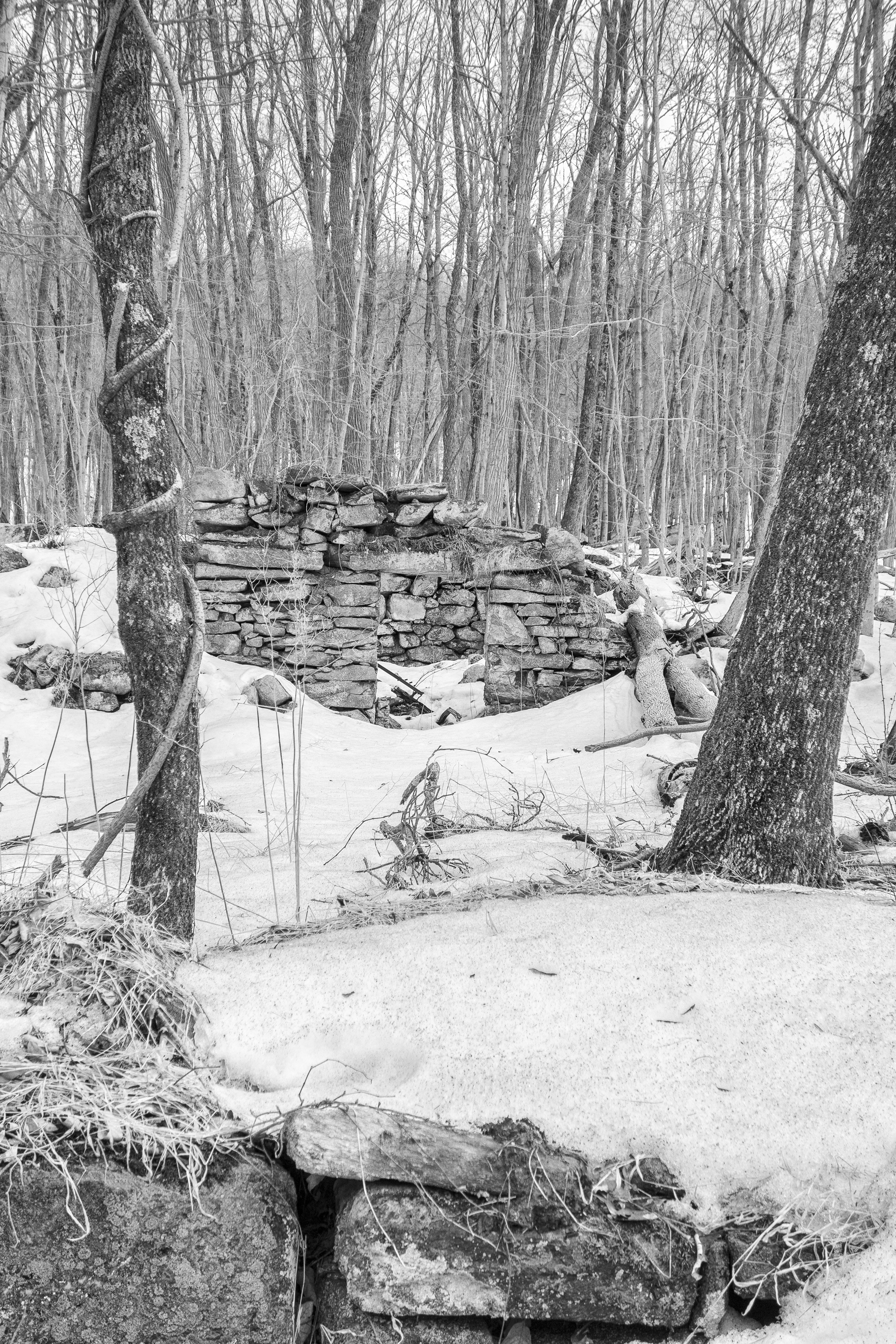
The Old West Point Foundry

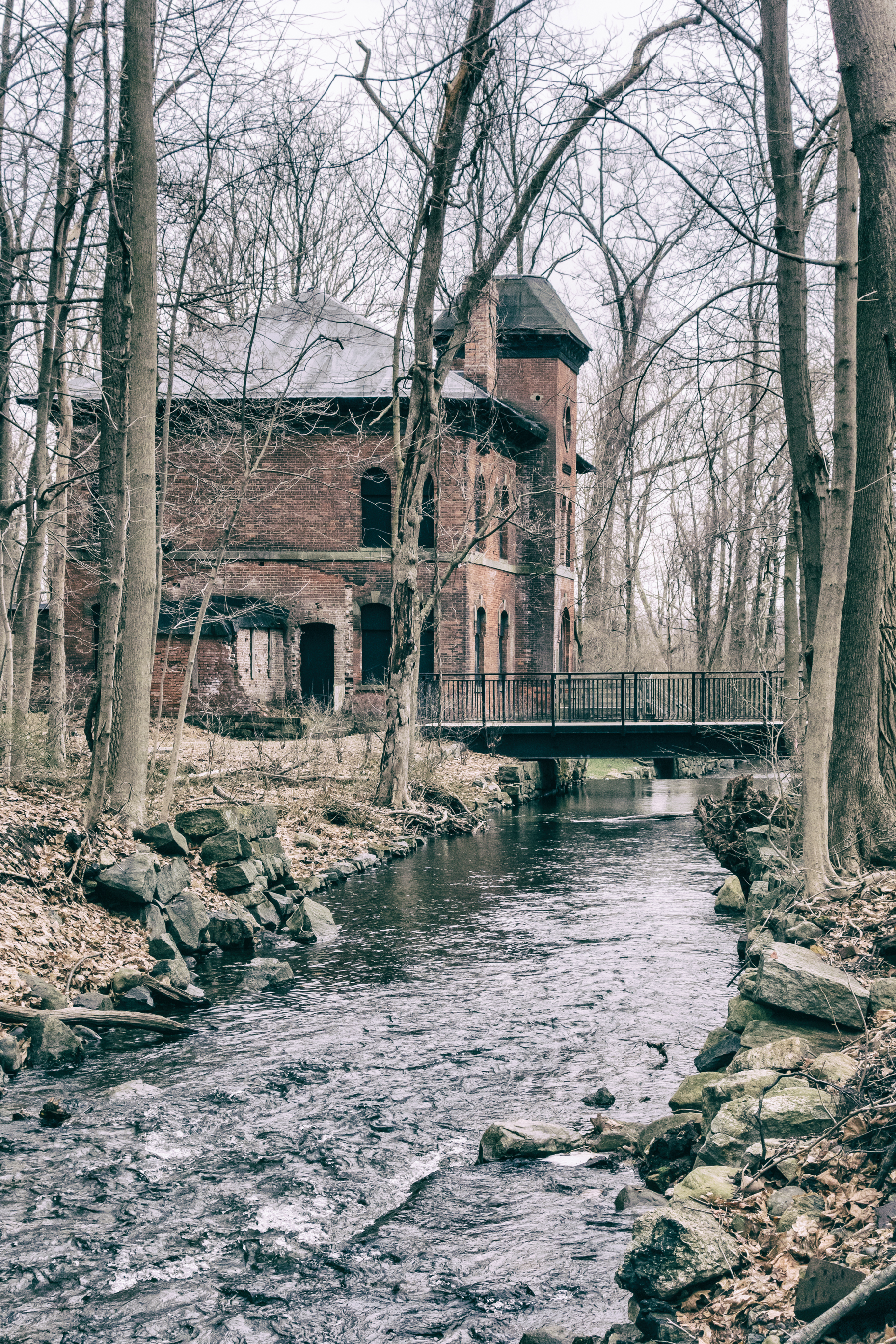
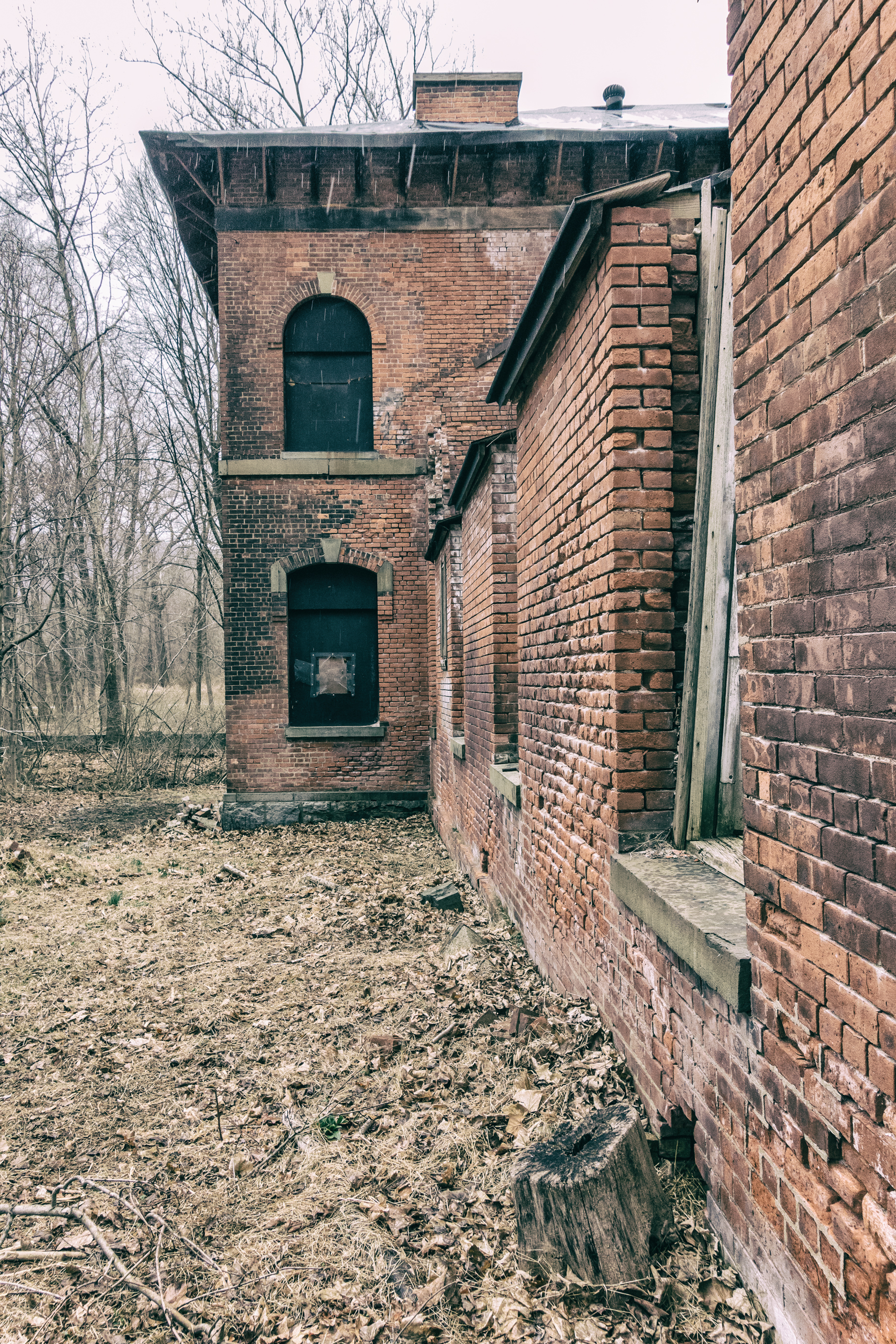
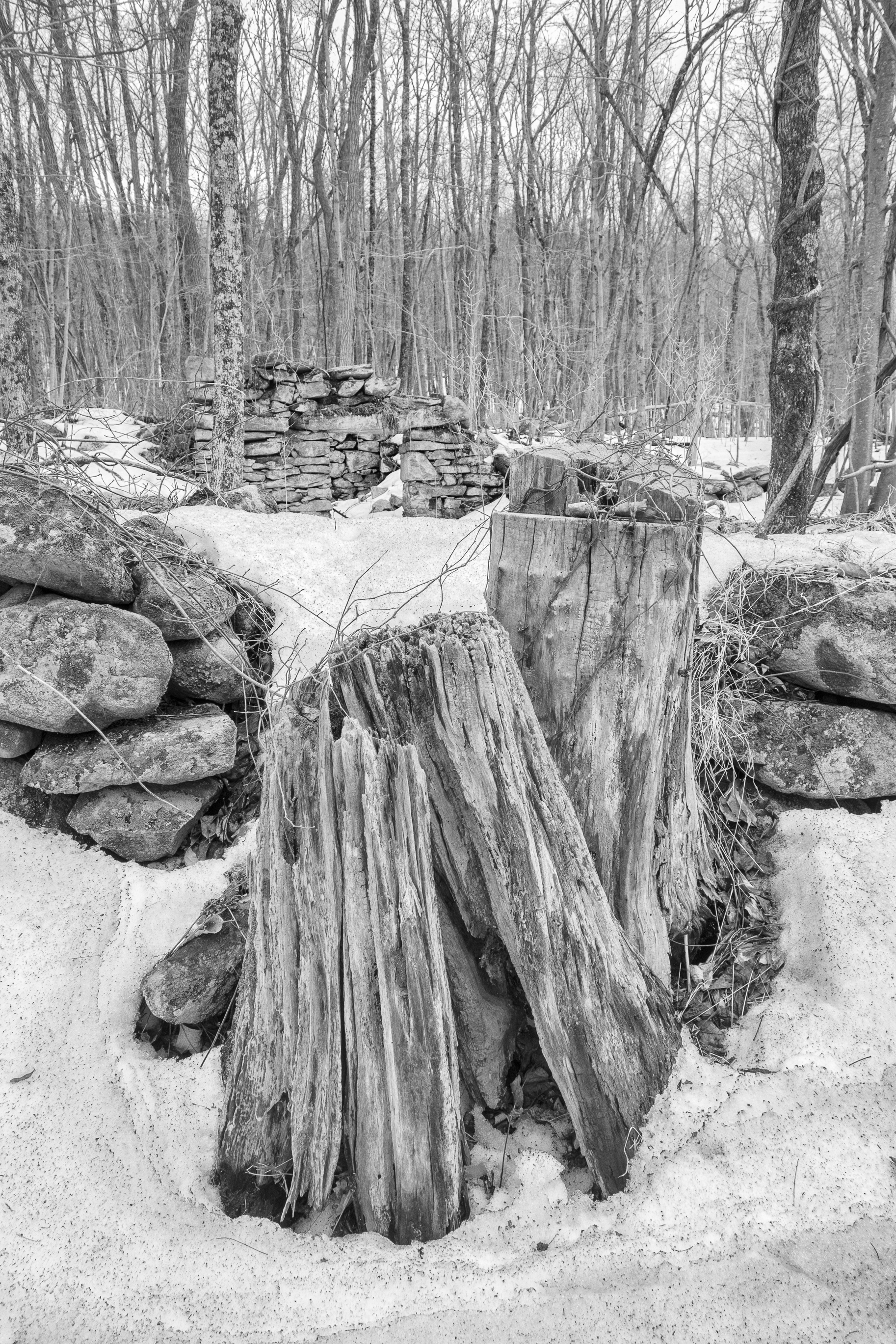
The Old West Point Foundry. It was a wet day – not raining hard, but a constant drizzle. The kind that gets you wet. I almost didn’t go. It was about 3:30 by the time I was finished doing other essential things and the weather was grey and gloomy, but not yet raining. The dog needed his walk, so I thought – what else am I going to do? So off we went. Saw (and heard) some red headed woodpeckers. Jackson caught the scent of something in the ruins and I heard something moving. Sounded quite big – maybe a raccoon. On the way out we had an encounter with four deer. They didn’t rapidly disappear into the undergrowth as they usually do. Instead they would run away about fifteen feet and stop. We’d approach and they’d run away about 15 feet again. Of course Jackson liked this as they stayed around for quite a while. I tried to take a picture of them, but it was impossible while holding Jackson on the leash. He was running and jumping all over the place. I couldn’t hold the camera steady. I stopped in at ‘The Depot’ in Cold Spring for a pint afterwards and then we went home.

The Foundry Preserve as interesting. Wikipedia states:

The West Point Foundry was an early ironworks in Cold Spring, New York that operated from 1817 to 1911. Set up to remedy deficiencies in national armaments production after the War of 1812, it became most famous for its production of Parrott rifles and other munitions during the Civil War, although it also manufactured a variety of iron products for civilian use. The rise of steel making and declining demand for cast iron after the Civil War caused it to gradually sink into bankruptcy and cease operations in the early 20th Century.

It was large and most of the population of Cold Spring must have been employed there. After the Foundry closed the town almost died until it re-invented itself a picturesque riverside tourist destination.

Most of the pictures are of the old administration building, the only fairly intact structure still standing. There are bricks everywhere though showing how extensive the Foundry was in its heyday.


Old Brandreth Pill Factory, Ossining NY


This is the former Brandreth Pill Factory in Ossining, NY. According to Wikipedia:

The former Brandreth Pill Factory is a historic industrial complex located on Water Street in Ossining, New York, United States. It consists of several brick buildings from the 19th century, in a variety of contemporary architectural styles. In 1980 it was listed on the National Register of Historic Places.

Most of the original buildings succumbed to fire in the 1870s, but the oldest, a Greek Revival building possibly designed by Calvin Pollard in the 1830s, remains. Nearby is a corrugated iron structure that may be the earliest use of that material in Westchester County.The main building itself was one of the first to have Otis elevators installed.

Benjamin Brandreth made his family’s popular medicine, said to treat blood impurities, at the factory, starting in the 1830s. The factory’s construction was the beginning of the industrial development of the Ossining waterfront. It continued to be used for manufacturing until the 1940s. Some of the smaller buildings remain in use today, although the former main building is vacant. The village is considering a proposal to convert it to green housing.

An article by former Ossining Mayor Miguel Hernandez paints a bleak picture. In it he says:

One of the major concerns of the neighbors is that it appears that Plateau Associates has engaged in the practice of “Demolition By Neglect” by failing over the years to protect the building from unchecked ruin. Apparently, they made no efforts to fix the leaking roof, the broken windows and other apertures that let damaging weather elements, animals and unauthorized persons into the structure. In this way, they could later make a claim that it is not economically feasible to adaptively reuse the historic factory for housing, as they originally stated several years ago. Demolition by neglect occurs when an owner, with malicious intent, lets a building deteriorate until it becomes a structural hazard and then turns around and asserts the building’s advanced state of deterioration as a reason to justify its demolition.

Beltzhoover Teahouse on Halsey Pond


A plaque at the site reads:

Beltzhoover Teahouse on Halsey Pond. Largest remaining structure of “Rochroanne”, the 200 acre Belzhoover Estate built in 1905. Melchior Belzhoover was “President” of Irvington from 1904 to 1916. The Halsey family owned a portion of the property from 1927-1976. The pond area became Village land in 1980. From 1994 to 1997 many citizens volunteered their time, expertise, and craftsmanship to save the structure. Preservation of the Teahouse was financed equally by private donations and Village funds. Irvington Landmark Preservation, Inc. 1997.

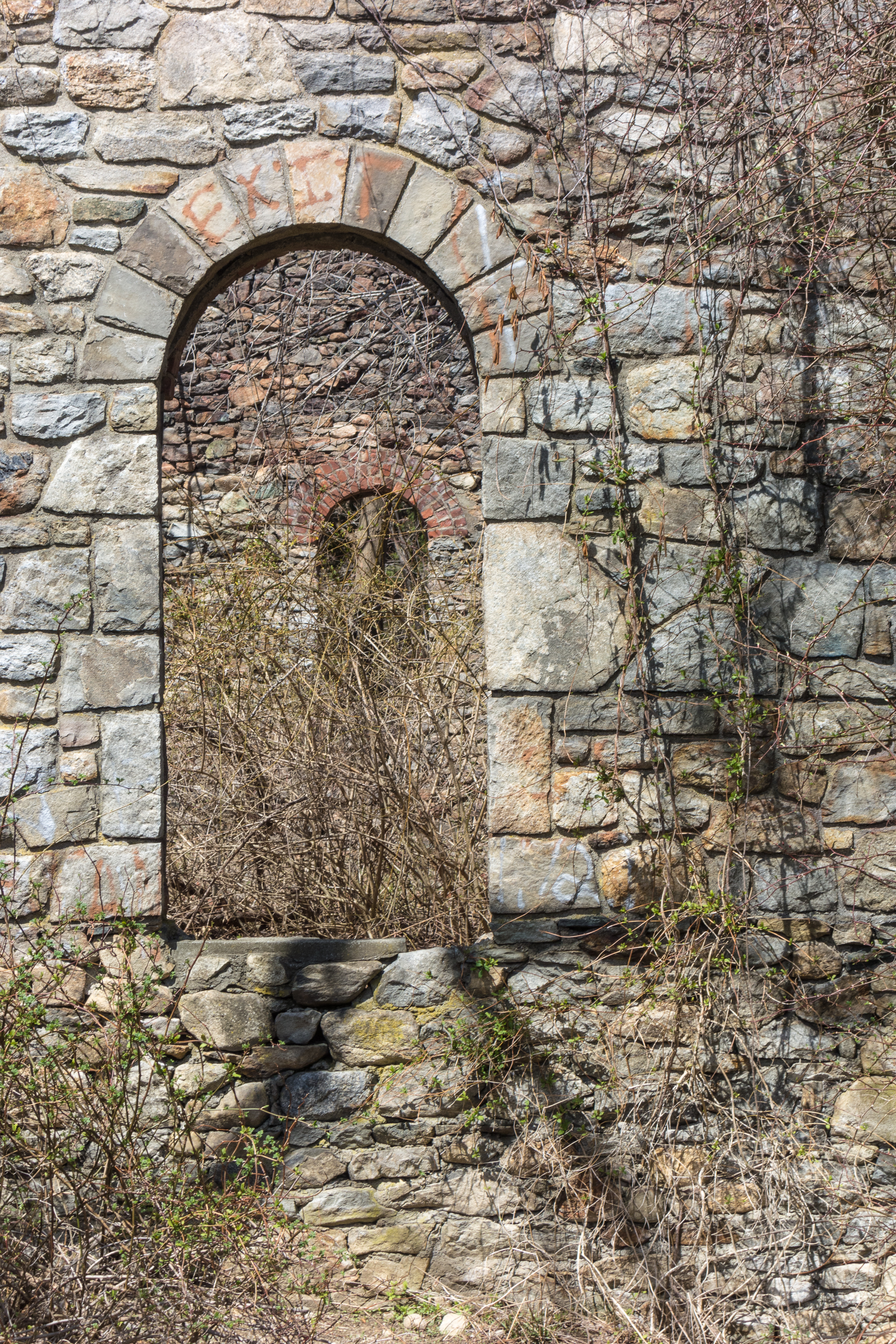
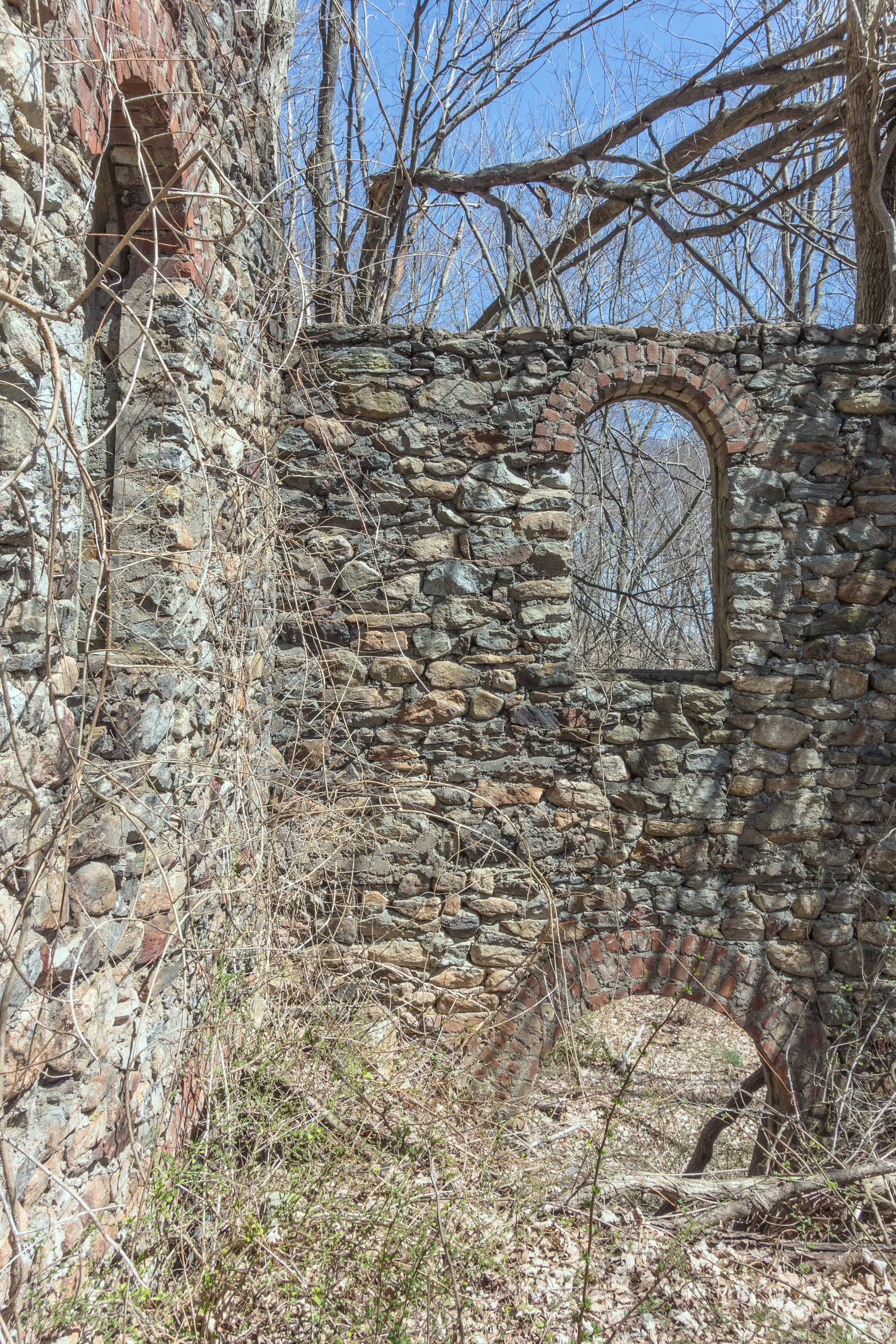
The structure is right next to a pond and consists of a tower with a flat platform in front of it. You can go into the tower and walk across the platform. Underneath the platform is another room, which is barred and inaccessible.


Entrance

Interior

Looking back towards the tower

View of the interior from the entrance

Tower

Pond, bridge and tree. I loved the reflection of the tree

Rob Yasinsac and Tom Rinaldi’s interesting site: “Hudson Valley Ruins” shows how the original mansion looked:

Beltzhoover Teahouse at Halsey Pond


And provides additional information:

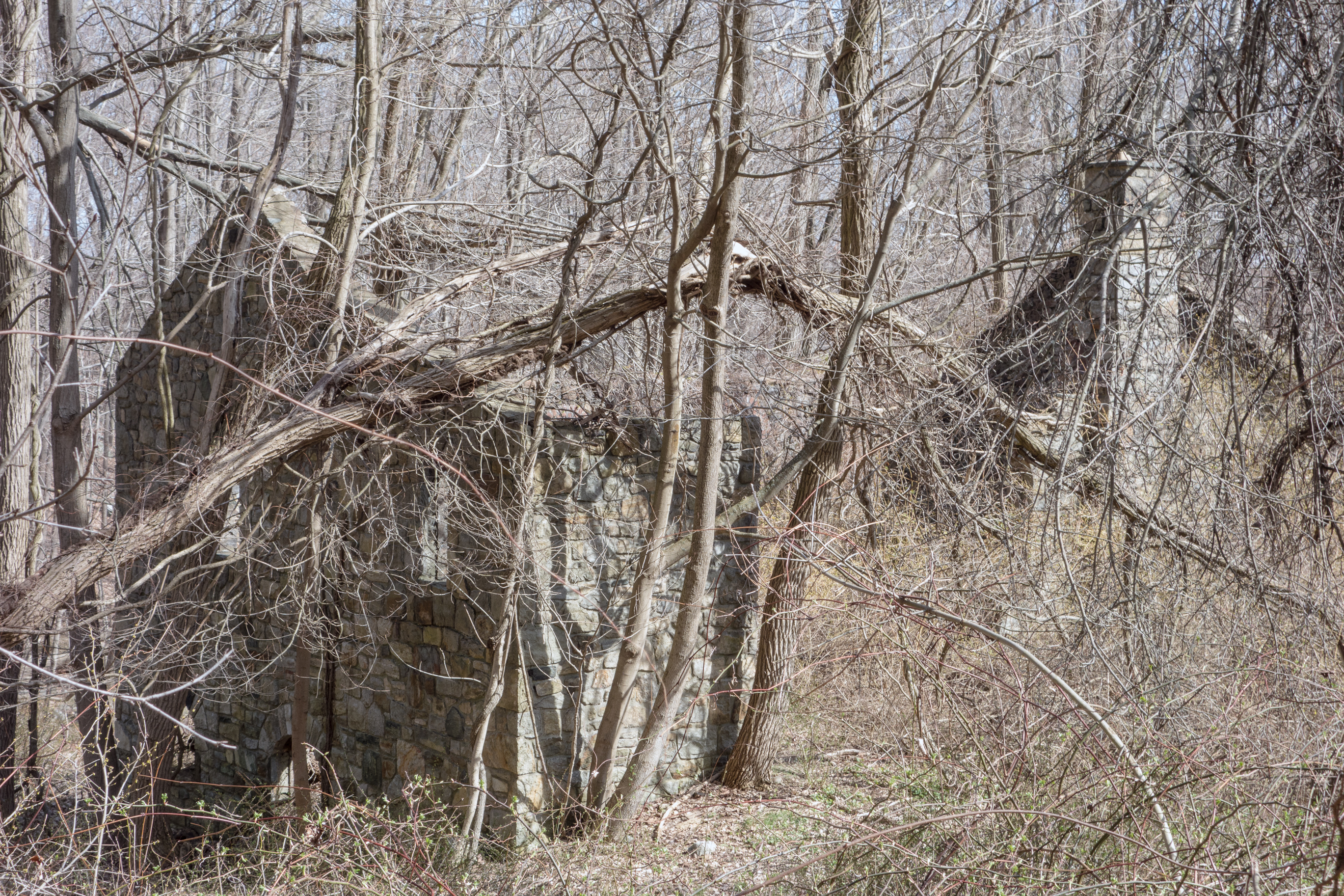
Tucked away in the back part of Irvington is the remains of a once-grand estate. The centerpiece was a stone castle-like mansion known as Rochroane. Designed by local resident A.J. Manning for village president Melchior Beltzhoover in 1905, the house has been called a “Rhine Castle,” as it was said to be a replica of a German Castle. (I’ve yet to see a photo of such to validate this, but just about any castle in the Hudson Valley is said to be a replica of some European edifice.) The estate was acquired by Benjamin Halsey in 1927, who renamed it Grey Towers. The pond now goes by the name Halsey Pond.

The property was donated by Mrs. Halsey to the local Roman Catholic Church in the mid 1970s. Promptly enough, the house burned due to fire of unknown origin. Rochroane/Grey Towers was demolished soon thereafter. The local Catholic Church has a record of losing old structures, as the Old Immaculate Conception Church itself suffered a similar fate. Anyhow, we have now lost both buildings – the church was demolished in 1996 after standing for many years in ruin. The church was probably just after the money, as the property was sold to a developer, who gave the pond to the village in exchange for being allowed to develop the rest of the estate. The same developer now wants to build on land surrounding the pond that did not get covered over the first time around.