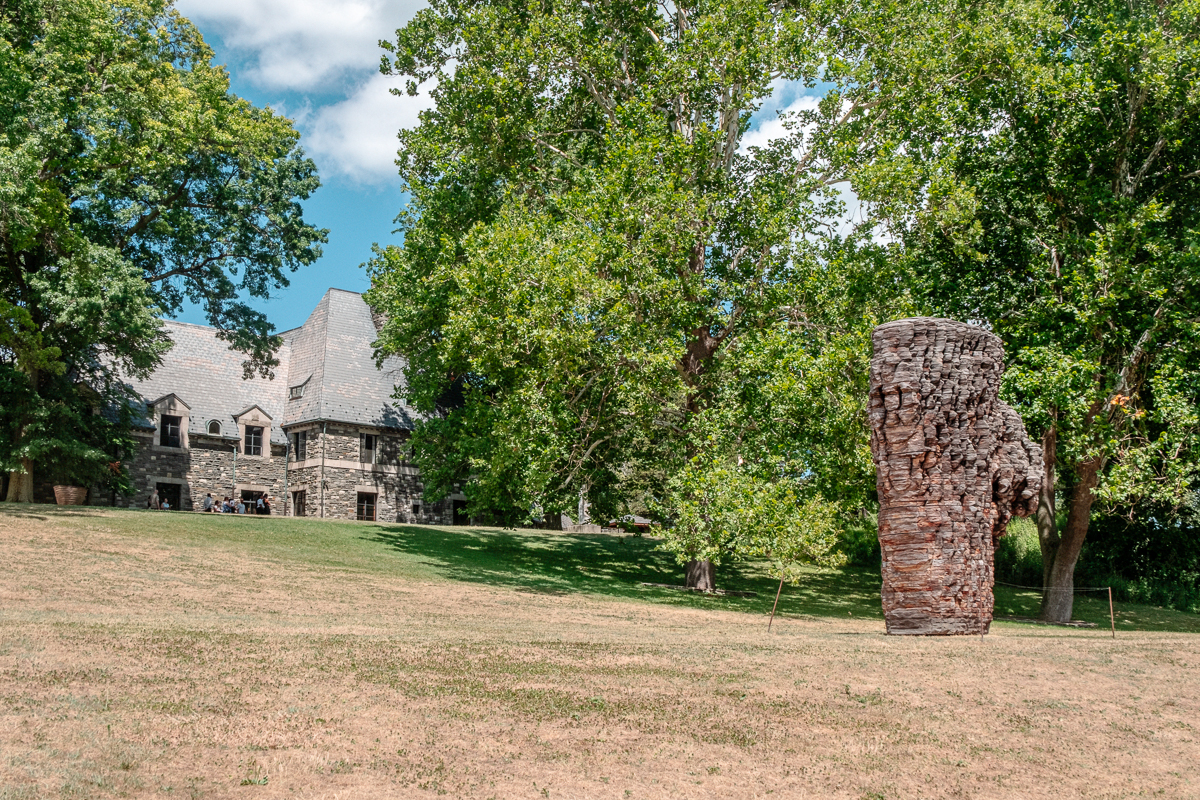
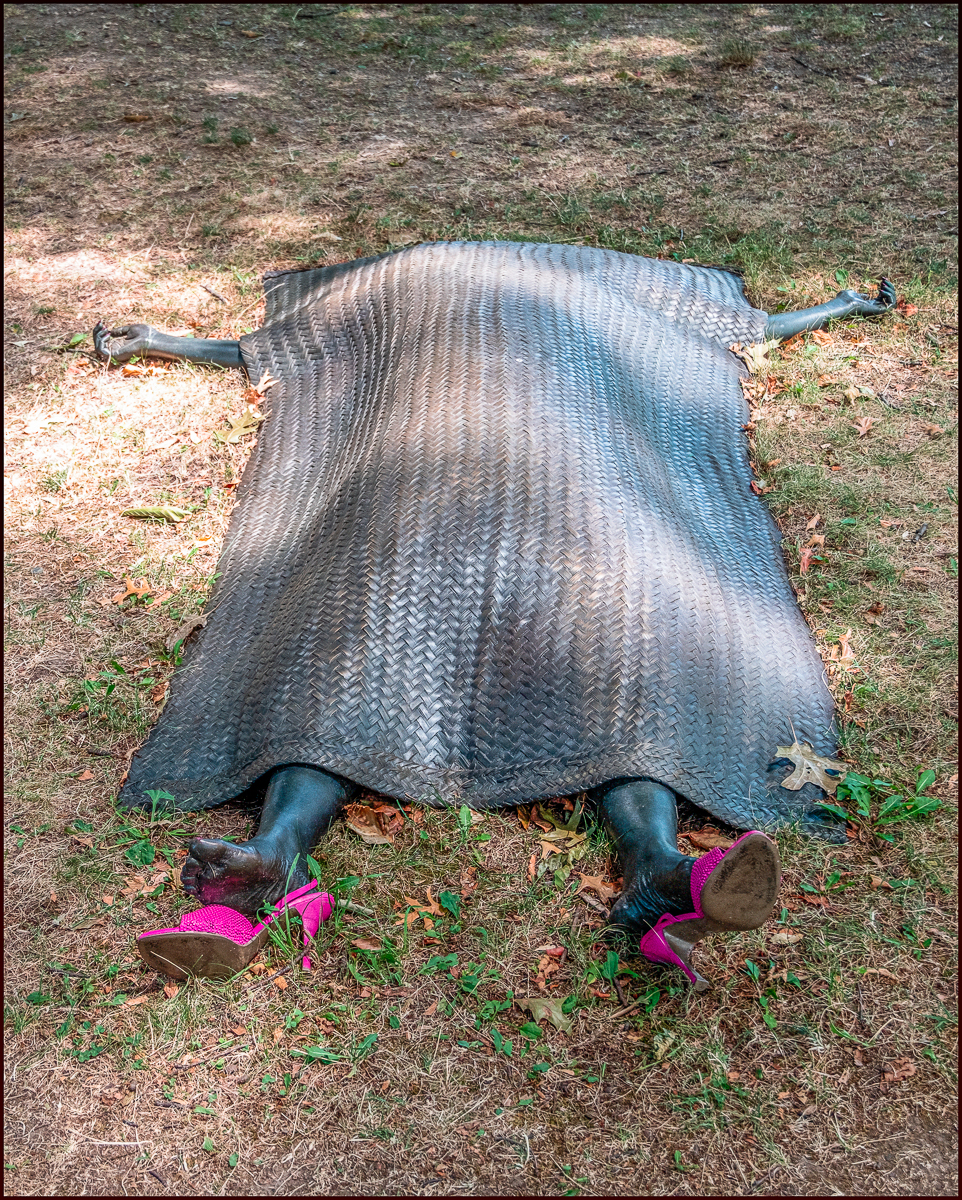
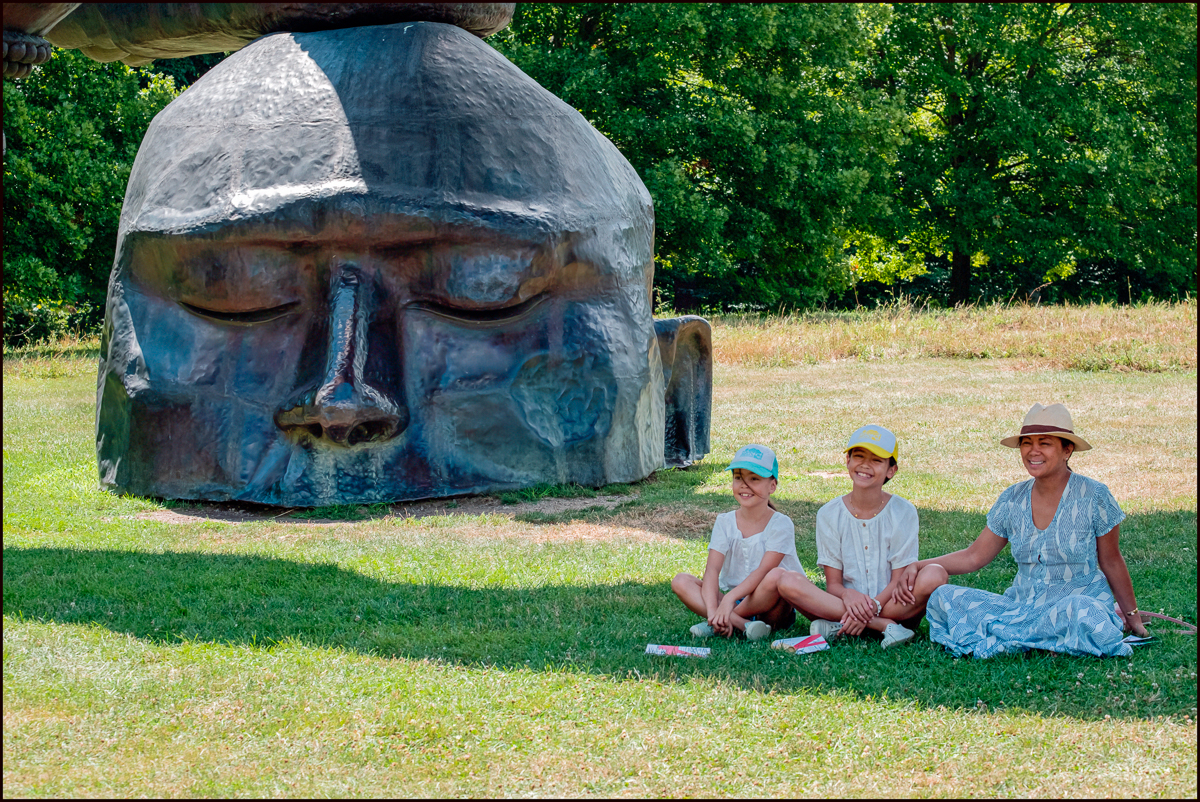
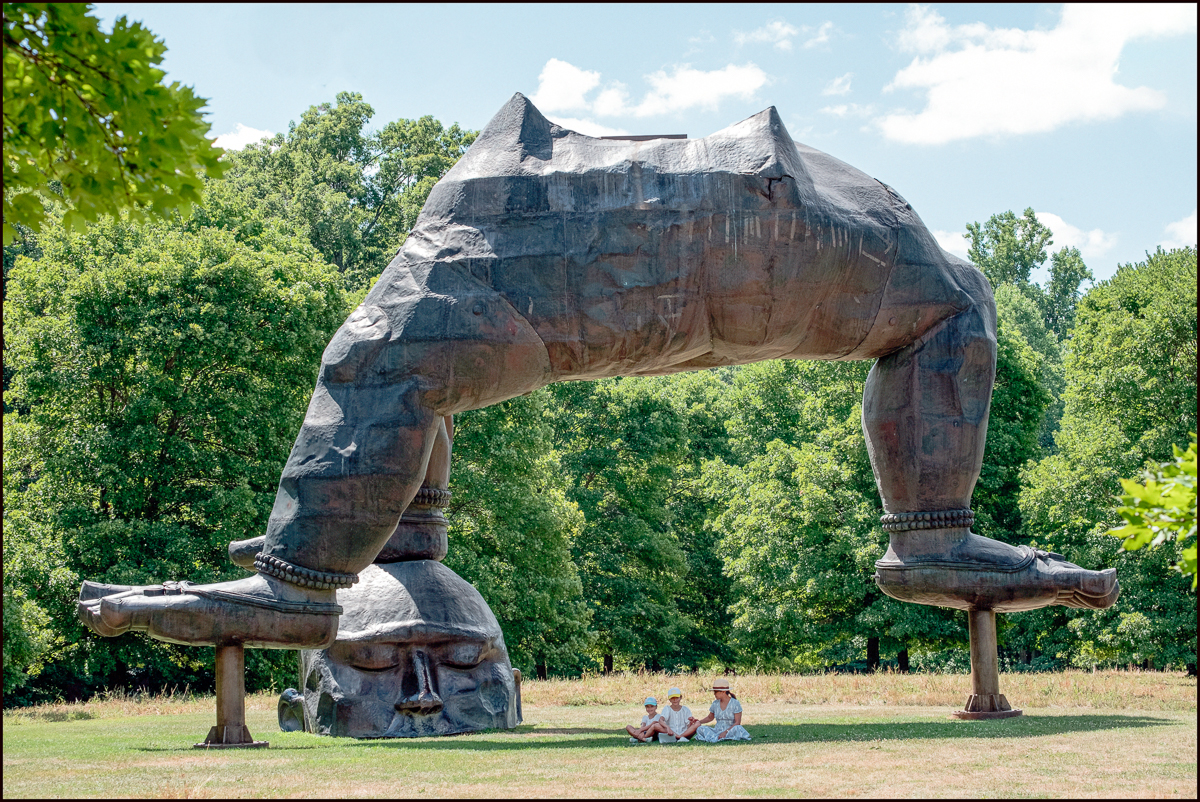
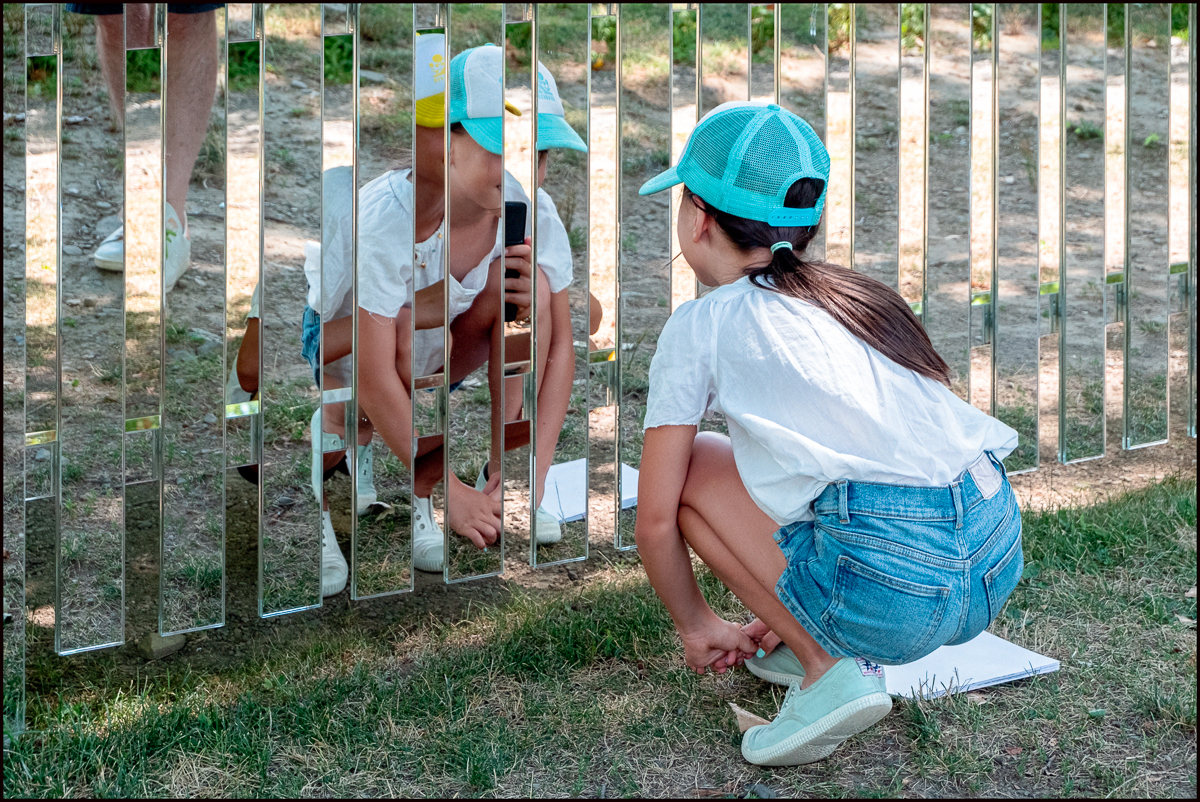
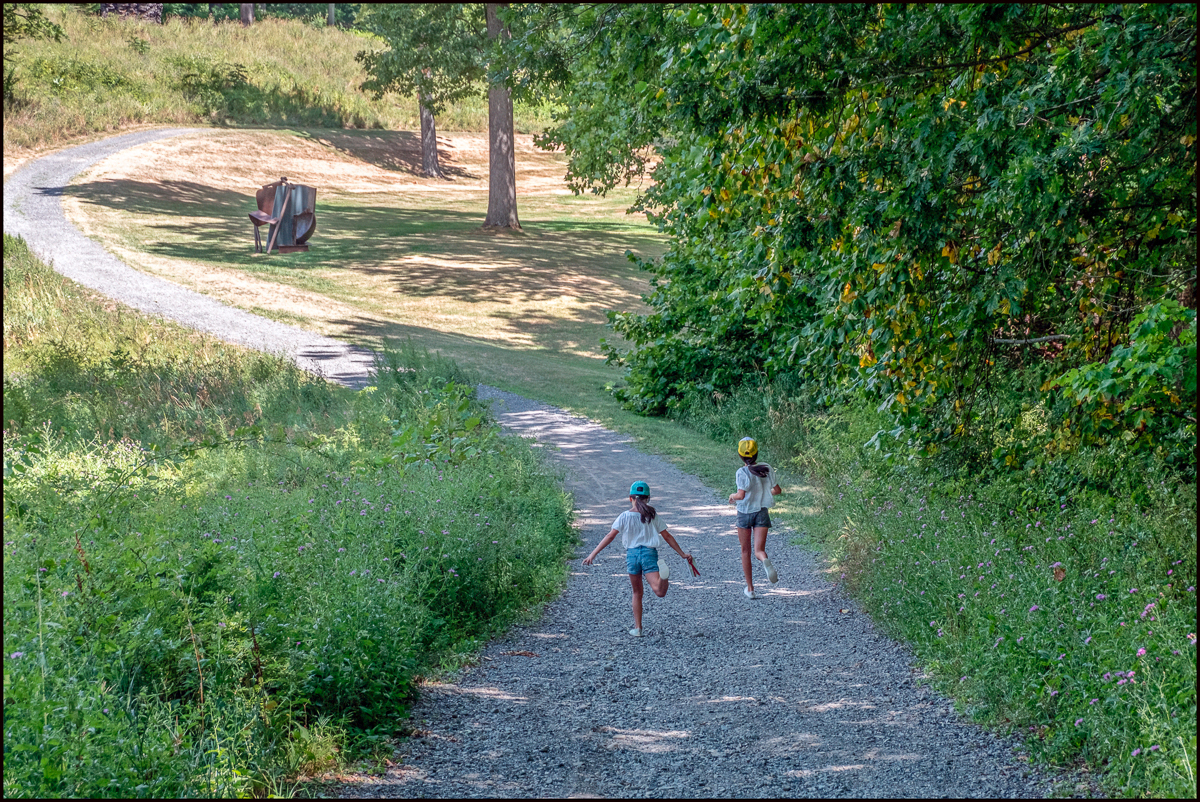
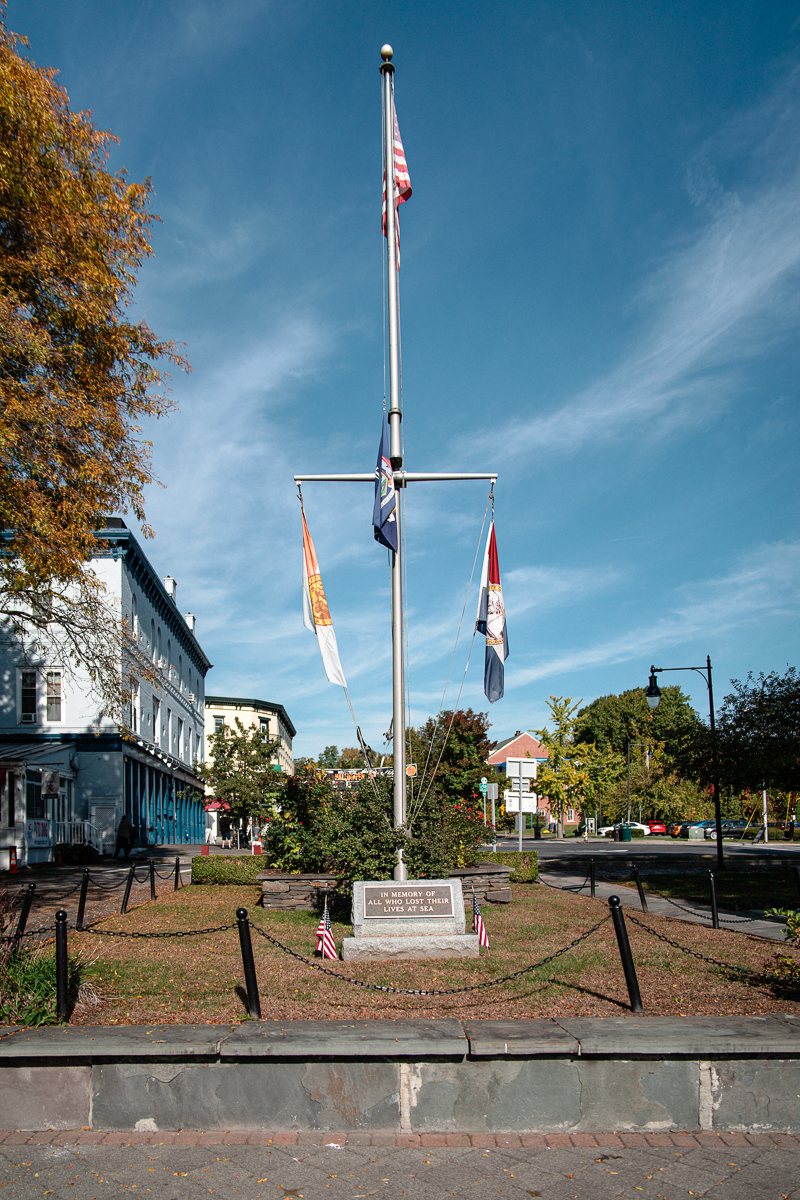
These pictures were taken around the Mansion. Above: The Mansion and For Paul by Ursula von Rydingsvard.
The nonprofit Storm King Art Center was founded and opened to the public in 1960, thanks to the efforts of the late Ralph E. Ogden and H. Peter Stern, co-owners of the Star Expansion Company, based in Mountainville, New York.
The initial gift of what is today the Museum Building and its surrounding property was made by the Ralph E. Ogden Foundation, Inc. Over time, Star Expansion Company donated 300 contiguous acres, as well as 2,100 acres of Schunnemunk Mountain (now owned by the State of New York and designated Schunnemunk Mountain State Park) that preserve Storm King Art Center’s viewshed.
Although Storm King was originally envisioned as a museum devoted to Hudson River School painting, by 1961 its founders had become committed to modern sculpture. Early purchases were sited directly outside the Museum Building as part of a formal garden scheme. However, with the 1967 purchase of thirteen works from the estate of sculptor David Smith (1906–1965), Storm King began to place sculpture directly in the landscape. Since then, every work has been sited with consideration of both its immediate surroundings and distant views.
After more than 60 years, Storm King continues to grow and evolve, and is among the world’s leading sculpture parks.(Storm King Art Center Website)
In early 1958, after retiring from a successful career in his family’s business, Star Expansion Company, Ralph E. Ogden purchased what would soon become Storm King Art Center—a 180-acre estate in Mountainville, New York.[1] In 1960, he opened his land to the public and began the collection with a number of small sculptures he had acquired in Europe. In 1967, with the purchase of thirteen pieces from sculptor David Smith, the collection was firmly established.
The center’s first sculptures were exhibited around its main building, but as time passed, the collection expanded out into the landscape, of which the sculptures became an integral part. The landscape and the main house were redesigned and molded early on by landscape architect William Rutherford and his wife Joyce Rutherford, and later by Ogden’s previous business partner, Peter Stern, who had become the center’s chairman and president, and by David Collins, the center’s director. Stern continued to run the center after Ogden’s death in 1974, and added many of its most well-known pieces.
In 1975, five monumental works by Mark di Suvero were saved from being dismantled and packed away when Peter Stern asked the artist if the sculptures could be displayed at Storm King after they were exhibited at the Whitney Museum of American Art. The pieces are now part of the center’s core collection, and are prominently displayed in its South Fields.
The center continued to grow throughout the latter part of the 20th century, as sculptures were added to its permanent collection and the center exhibited works in circulation from other museums. For example, the Museum of Modern Art loaned four sculptures to the center for a year-long exhibition when its sculpture garden underwent construction in 1982.
The original 250 acres of land were expanded in 1985, when the Star Expansion Company donated two tracts of land for the center’s 25th anniversary. The largest donated parcel of land was composed of 2,300 acres on the nearby Schunnemunk Mountain, which is the backdrop for many of the center’s monumental sculptures, and is an important component of the character of the center and its landscape. Another gift was a one hundred-acre piece of farmland directly adjacent to the center, which has been used to house new additions to the collection. (Wikipedia).
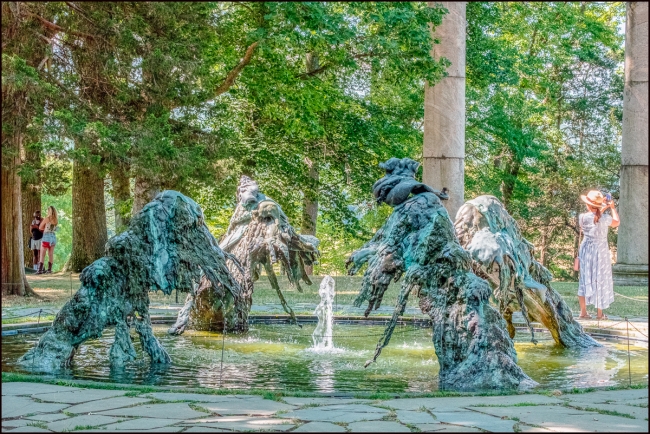
North South East West by Lynda Beglis.
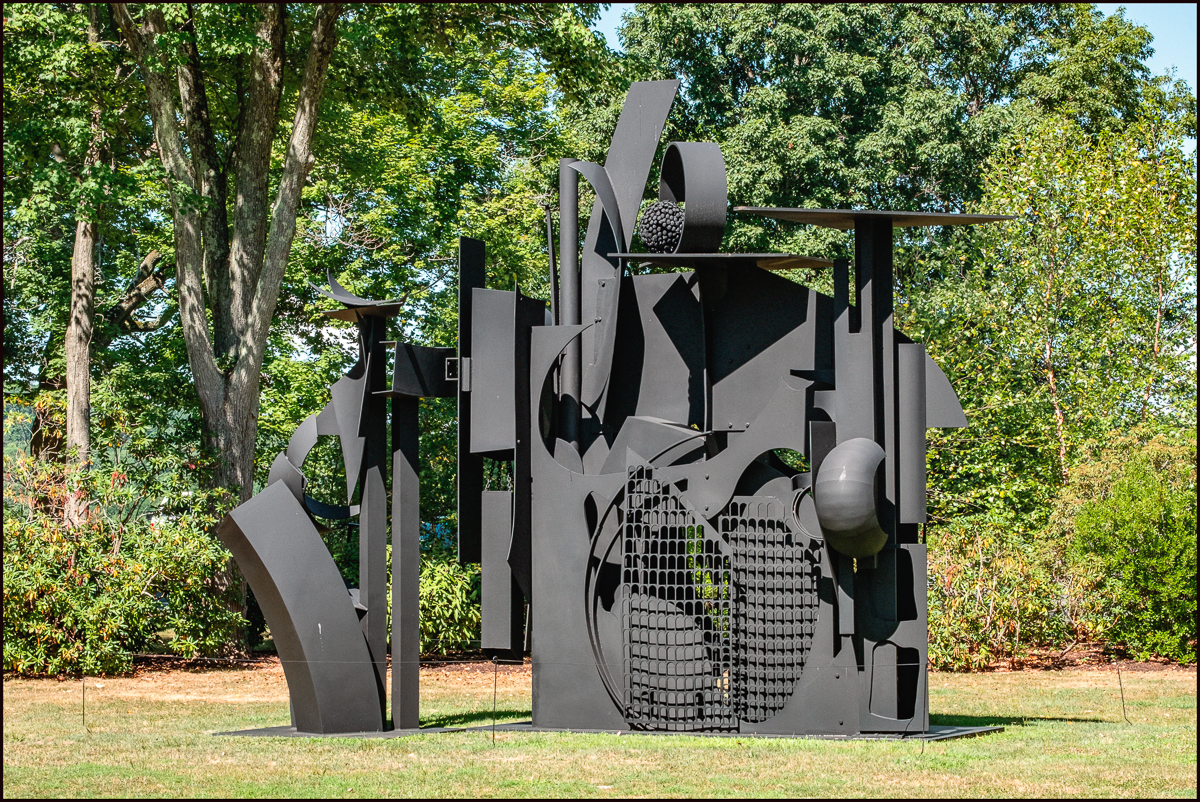
City on the High Mountain by Louise Nevelson.
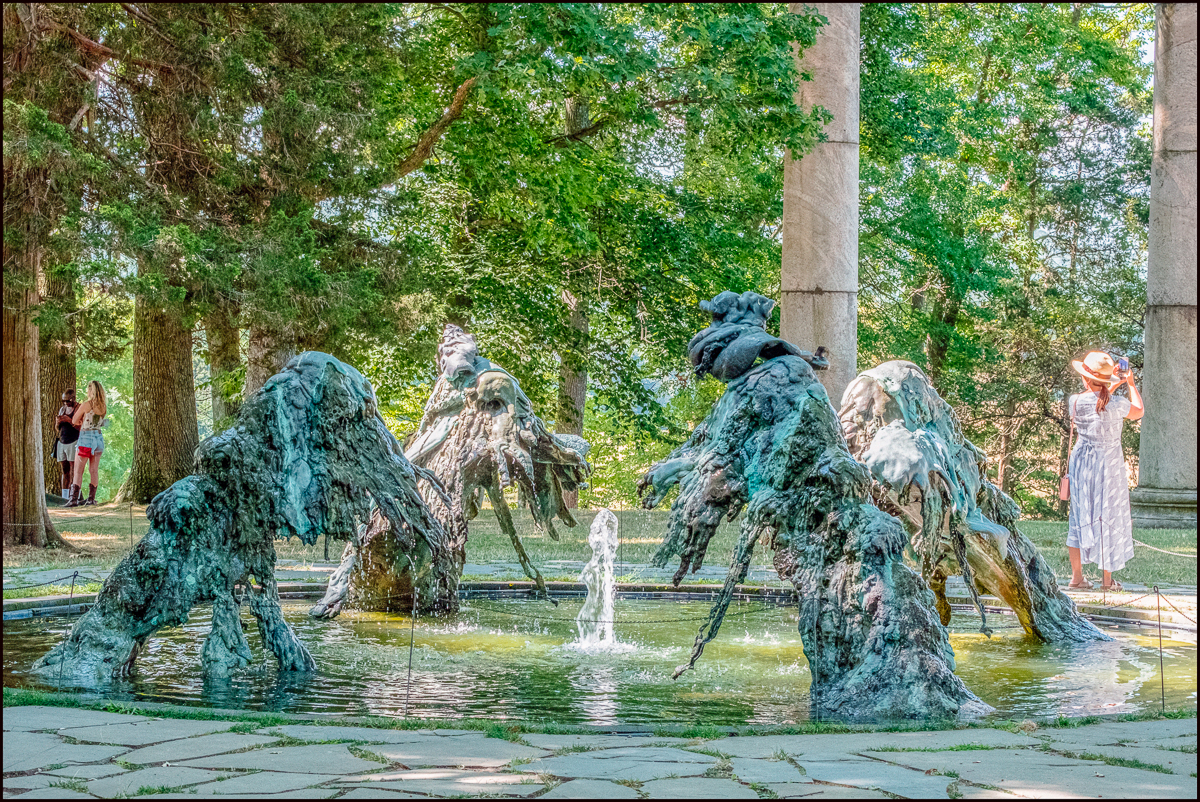
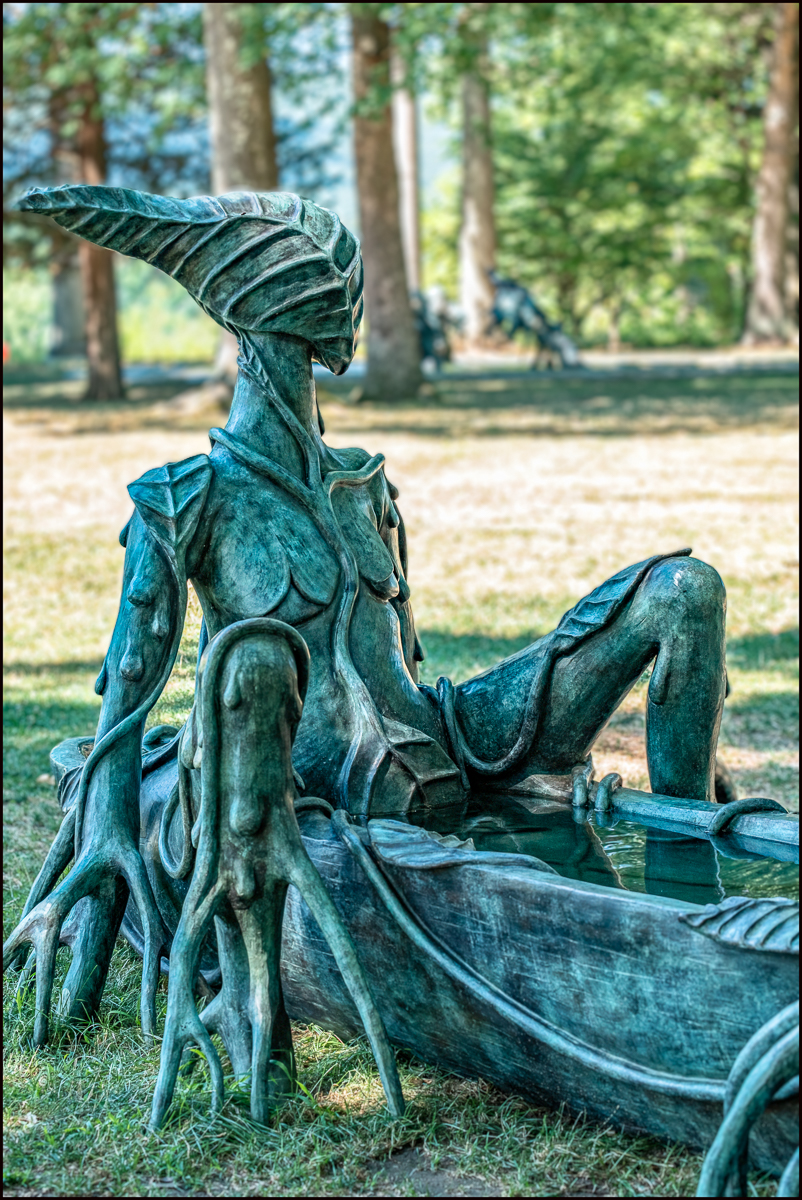
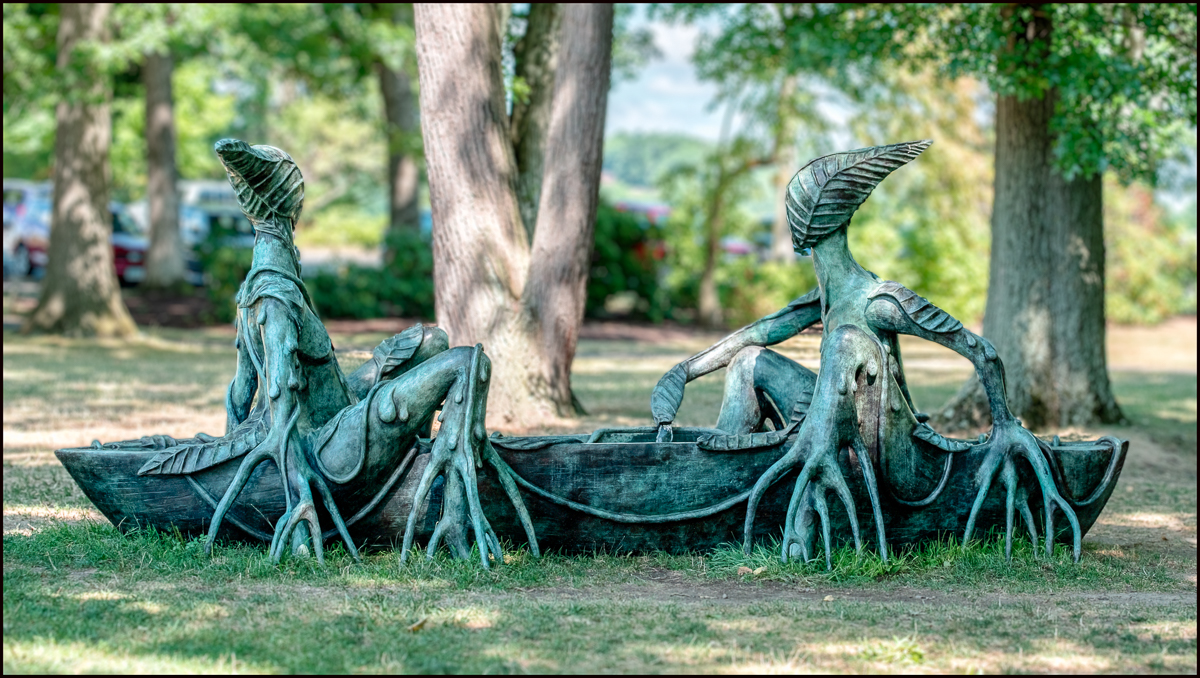
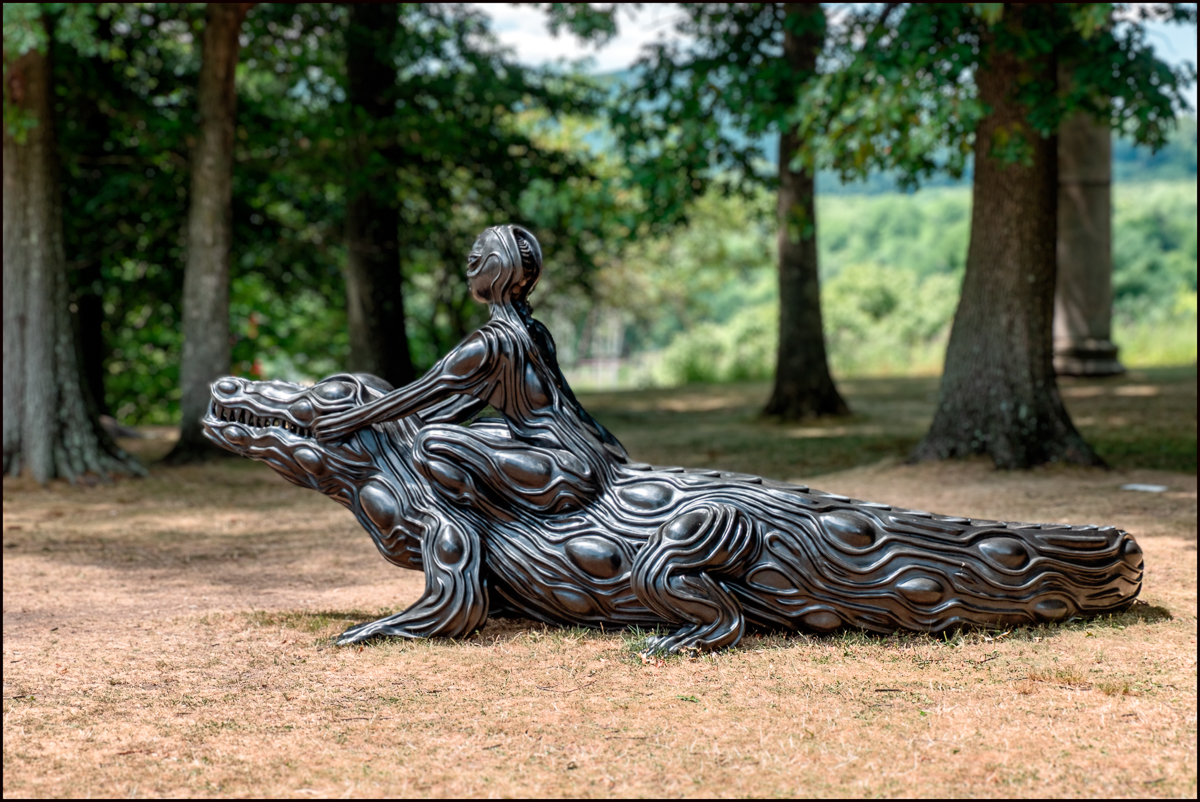
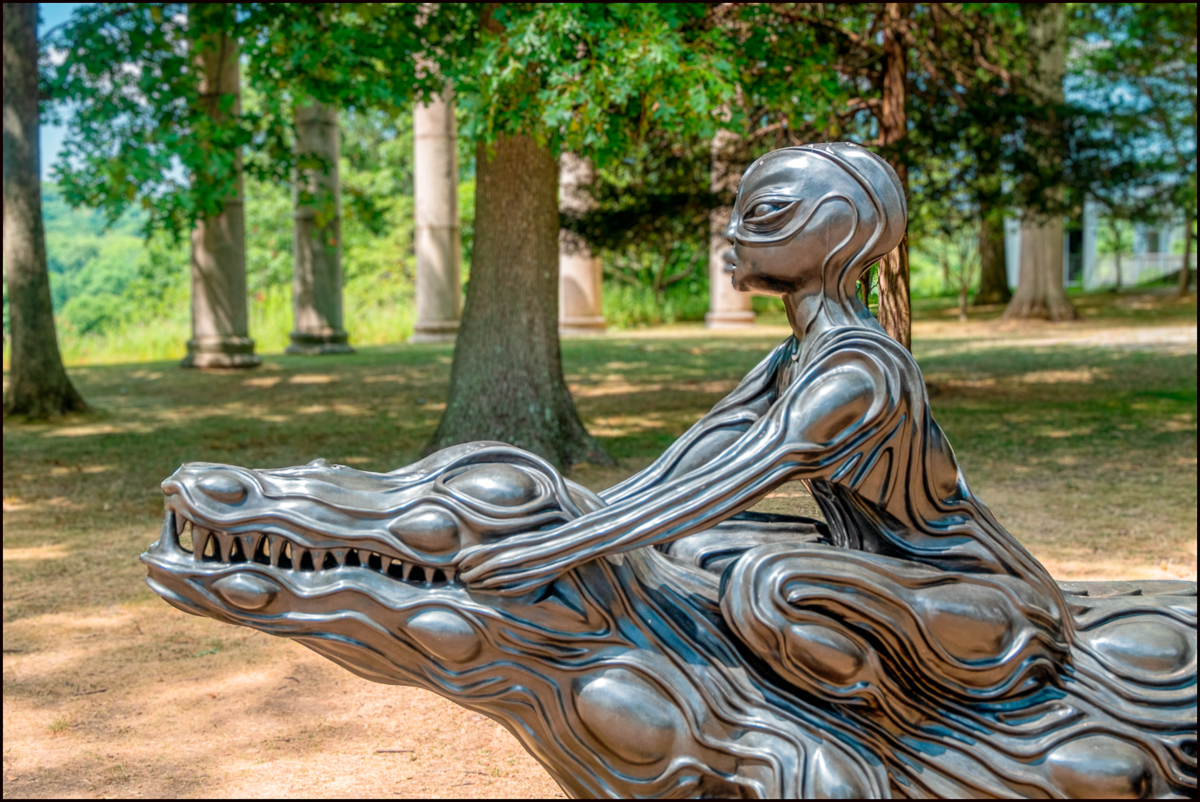
Unable to identify.
Unable to Identify.
Unable to Identify.
Unable to Identify.
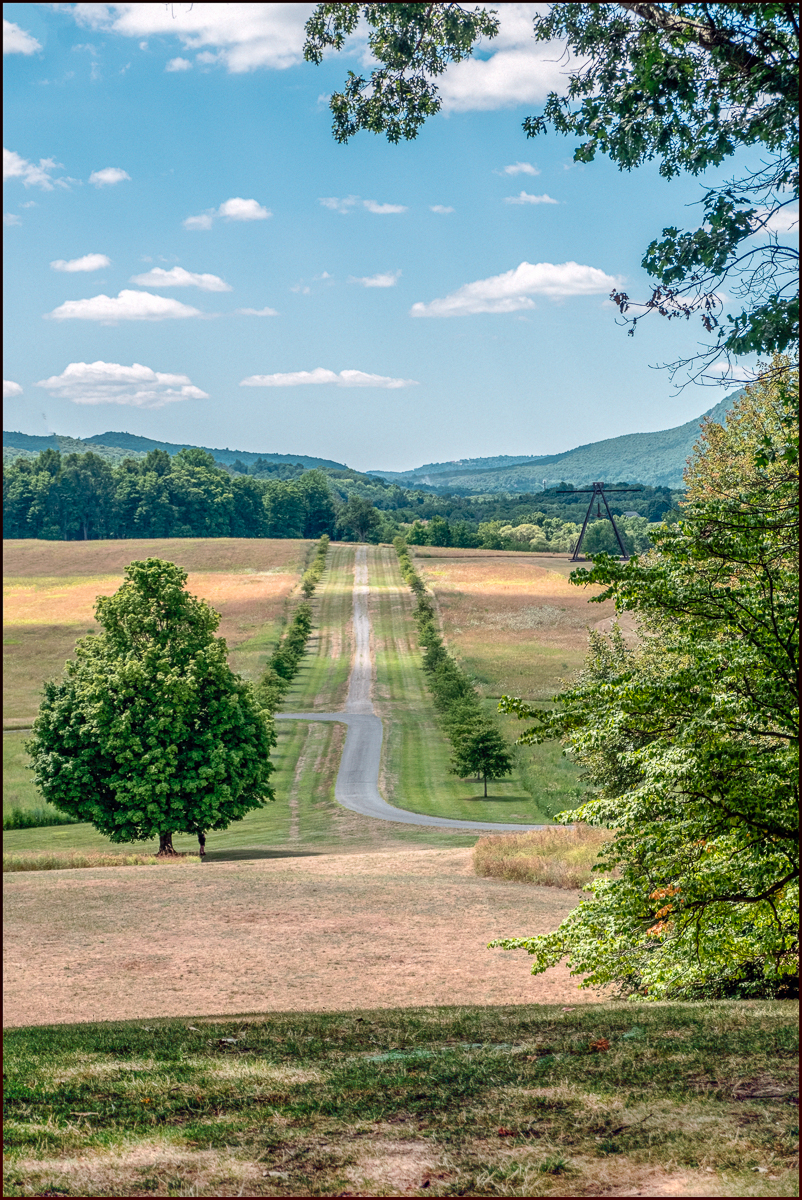
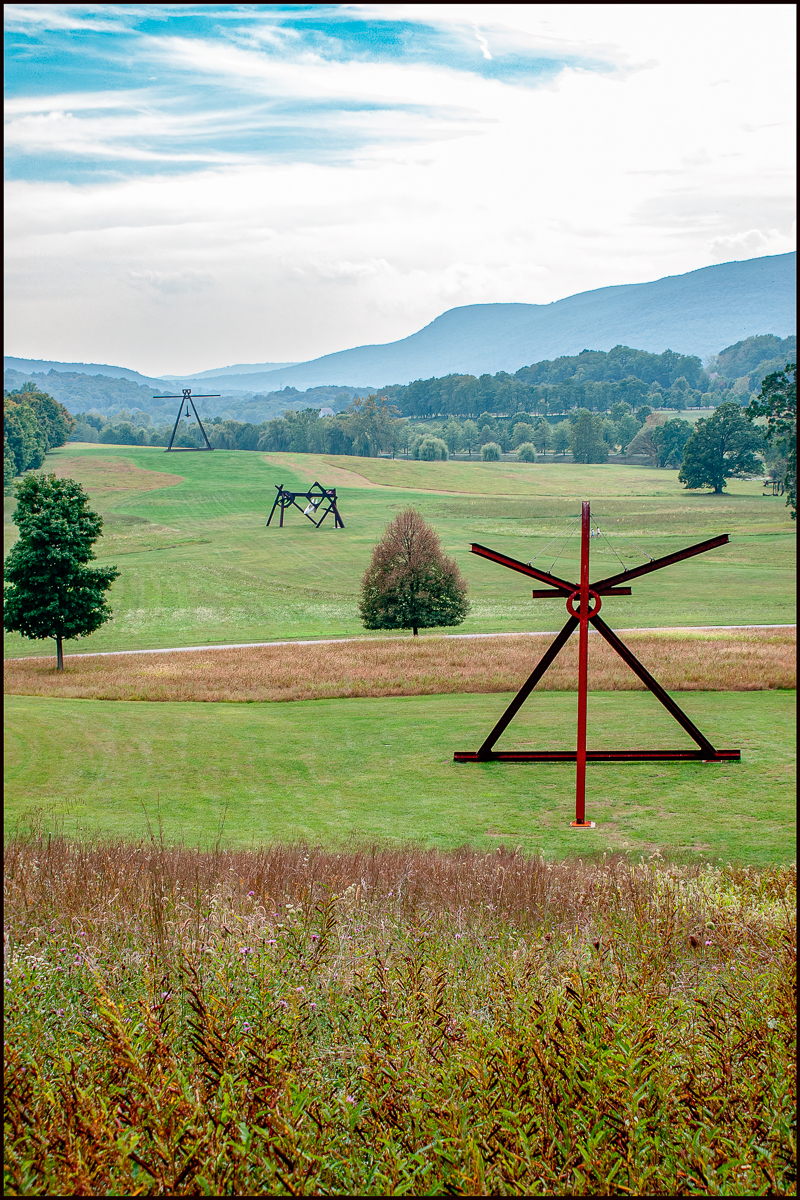
View of the South Fields from near the Mansion.
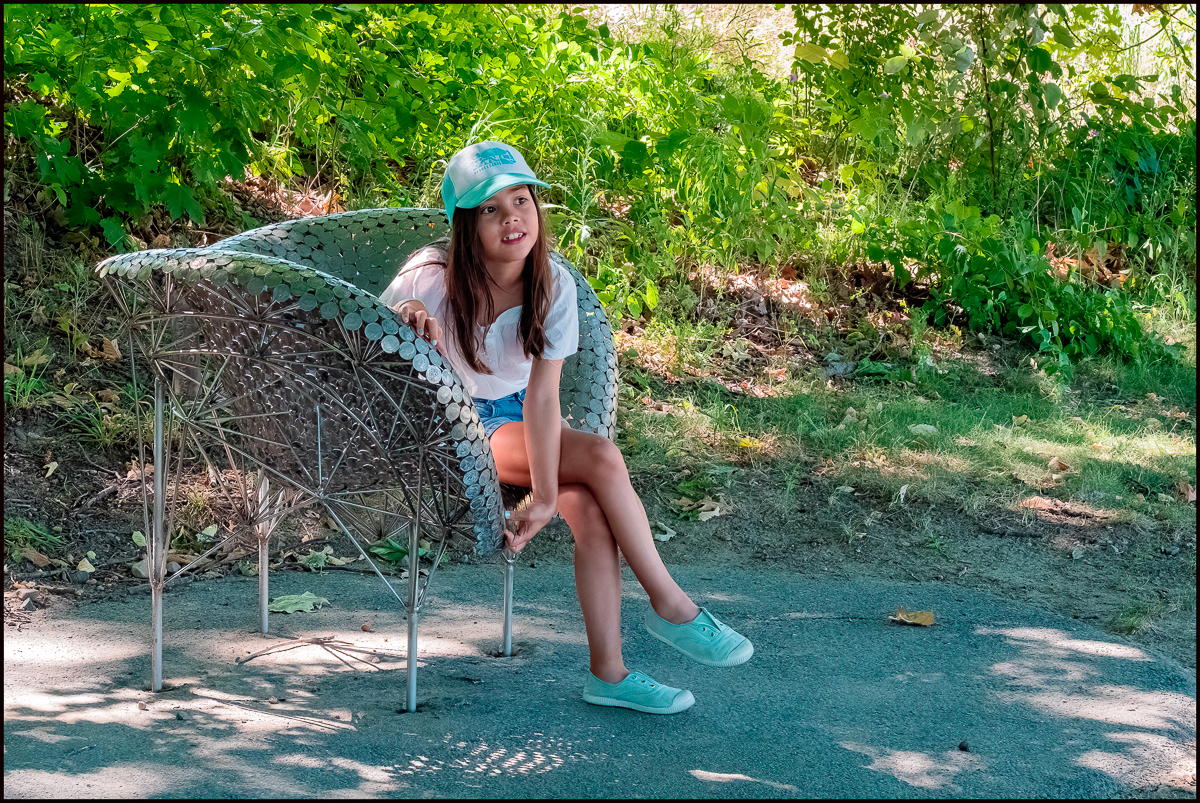
unable to identify.
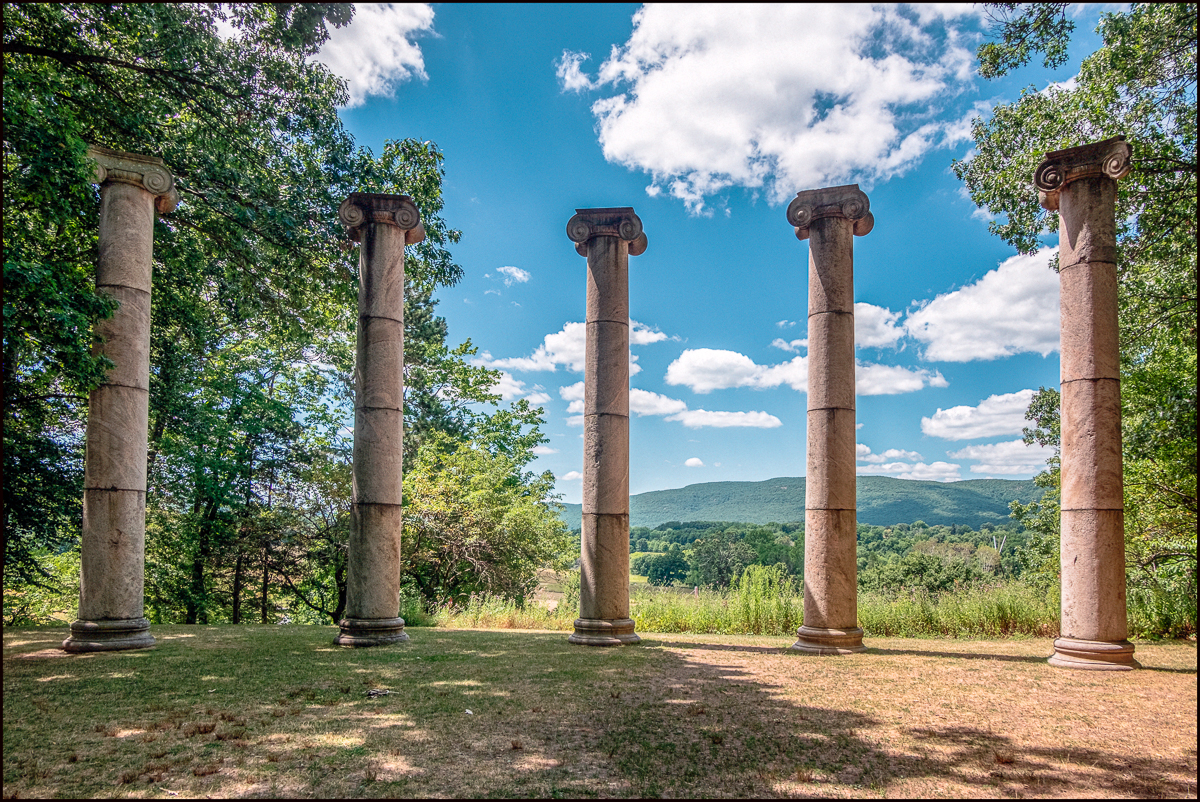
Five columns that were once part of the veranda of
Danskammer, Edward Armstrong’s 1834 mansion which stood above the Hudson River north of Newburgh.
South Fields with (from left to right)
Pyramidian; Beethoven’s Quartet; and
Mon Père, Mon Père;
Taken with a Fuji X-E3 and a variety of Fuji lenses.