A visit to Dia Beacon – Mario Merz

Another artist I liked was Mario Merz who The Guggenheim describes as follows:

Mario Merz was born in Milan. He grew up in Turin and attended medical school for two years at the Università degli Studi di Torino. During World War II he joined the anti-Fascist group Giustizia e Libertà and was arrested in 1945 and confined to jail, where he drew incessantly on whatever material he could find. In 1950 he began to paint with oil on canvas. His first solo exhibition, held at Galleria La Bussola, Turin, in 1954, included paintings whose organic imagery Merz considered representative of ecological systems. By 1966 he began to pierce canvases and objects, such as bottles, umbrellas, and raincoats with neon tubes, altering the materials by symbolically infusing them with energy.

In 1967 he embarked on an association with several artists, including Giovanni Anselmo, Alighiero Boetti, Luciano Fabro, Jannis Kounellis, Giulio Paolini, Giuseppe Penone, Michelangelo Pistoletto, and Gilberto Zorio, which became a loosely defined art movement labeled Arte Povera by critic and curator Germano Celant. This movement was marked by an antielitist aesthetic, incorporating materials drawn from everyday life and the organic world in protest of the dehumanizing nature of industrialization and consumer capitalism.

In 1968 Merz adopted one of his signature motifs, the igloo. It was constructed with a metal skeleton and covered with fragments of clay, wax, mud, glass, burlap, bundles of branches, and often political or literary phrases in neon tubing. He participated in significant international exhibitions of Conceptual, Process, and Minimalist Art, such as Arte povera + azioni povera at the Arsenali dell’Antica Repubblica, Amalfi, and Live in Your Head: When Attitudes Become Form at the Kunsthalle Bern in 1968; the latter exhibition traveled to Krefeld, Germany, and to London. In 1970 Merz began to utilize the Fibonacci formula of mathematical progression within his works, transmitting the concept visually through the use of the numerals and the figure of a spiral. By the time of his first solo museum exhibition in the United States, at the Walker Art Center, Minneapolis, in 1972, Merz had also added stacked newspapers, archetypal animals, and motorcycles to his iconography, to be joined later by the table, symbolizing a locus of the human need for fulfillment and interaction. Merz often responds to the specific environment of his exhibitions by incorporating materials indigenous to the area as well as adjusting the scale of the work to the site. His first solo European museum exhibition took place at the Kunsthalle Basel in 1975, and a major retrospective was organized by the Solomon R. Guggenheim Museum, New York, in 1989. Merz was married to artist Marisa Merz. He died at his home in Milan on November 9, 2003.

For more information see here on the Dia Beacon website.

I’m not entirely sure why I like his work. Maybe its because it’s full of light and energy. I also like the way he mixes organic forms (e.g. piles of sticks, apples etc.) with artificial.


Taken with a Sony A7IV and Samyang 45mm f1.8
A walk around Hastings-on-Hudson. Newington Cropsey Foundation

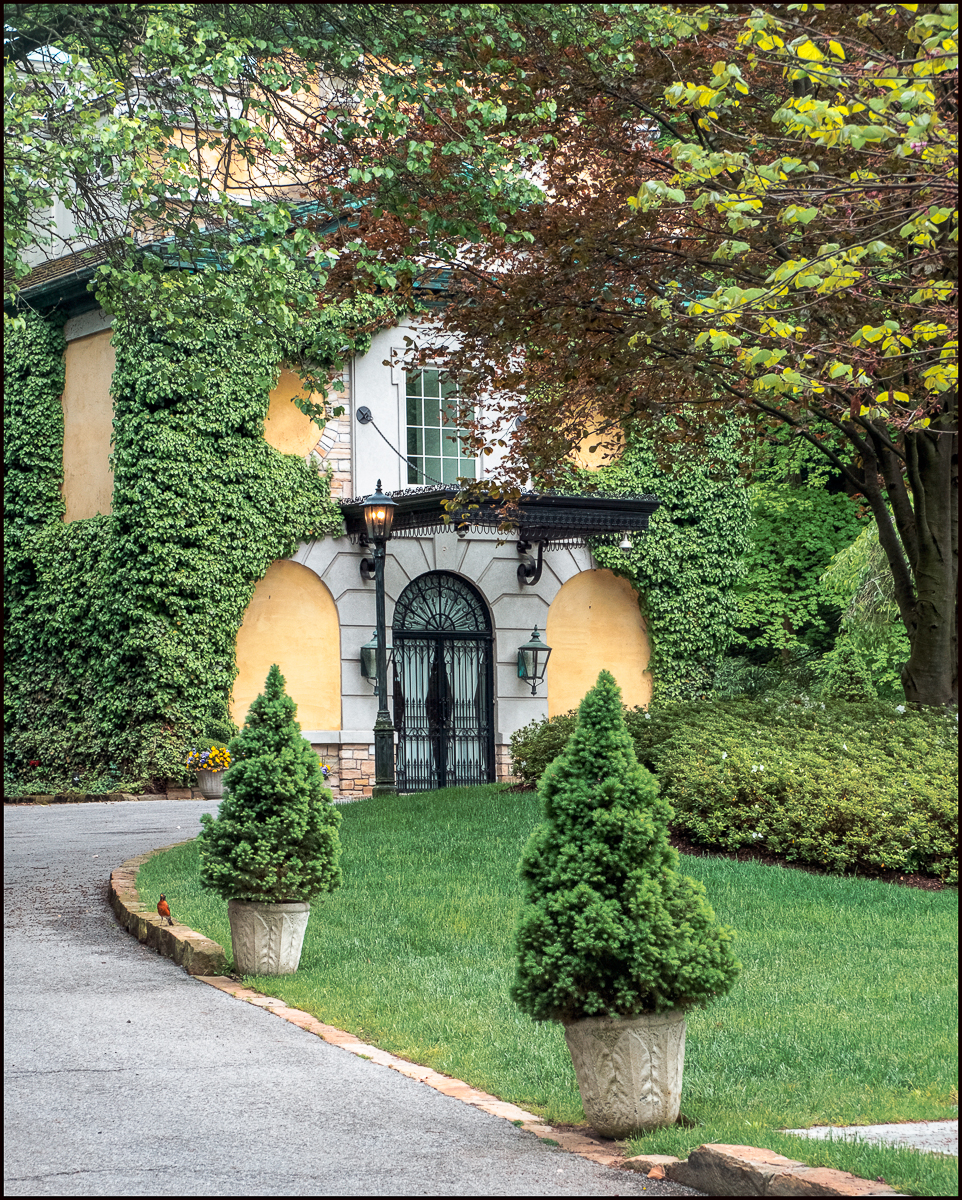
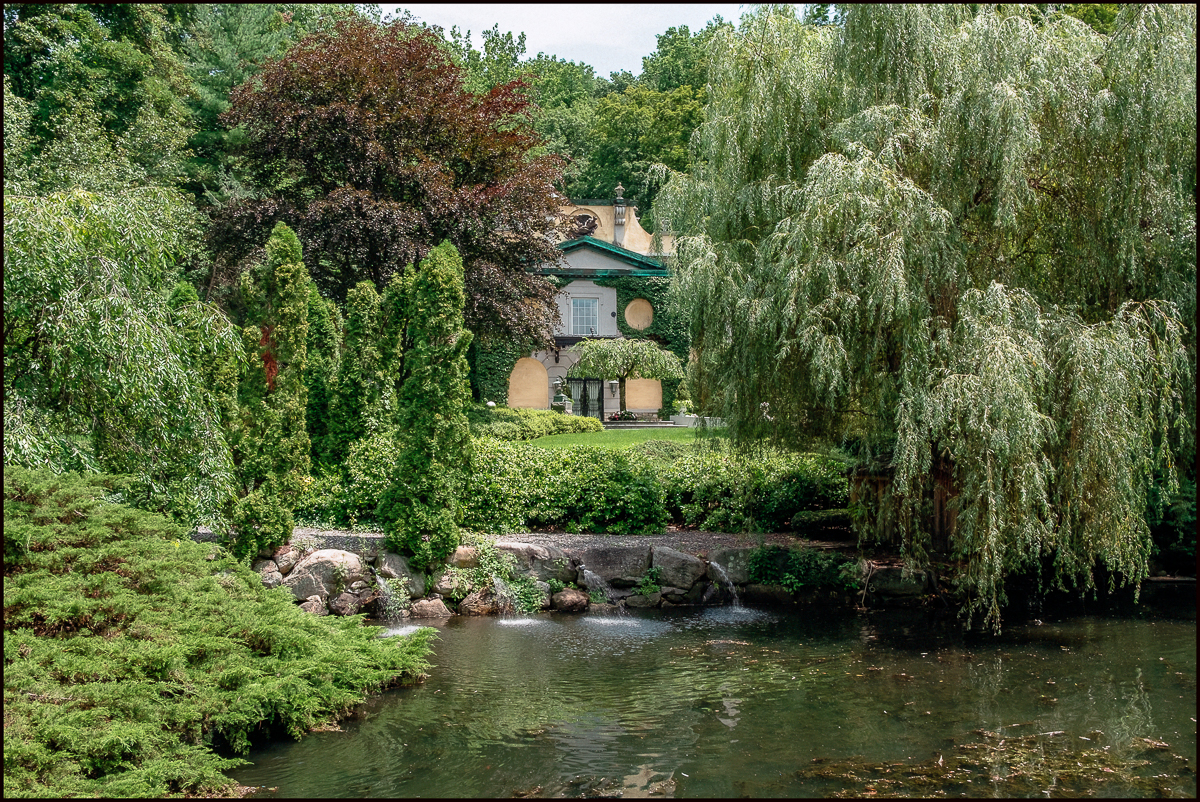
The Newington-Cropsey Foundation was founded in 1977 for the purpose of preserving and displaying the home and paintings of Jasper F. Cropsey (1823-1900), Hudson River School artist. The Cropsey home, Ever Rest, has been on the National Register of Historic Homes since the early 1970’s.

In the mid 1830’s William Saunders, a local industrialist, built the carpenter gothic style home on two acres of land at 49 Washington Avenue in Hastings Upon Hudson, New York. Jasper and Maria Cropsey moved to the village, by then renamed as Hastings-on-Hudson, in 1885 and by 1886 had purchased Mr. Saunders’ former home. Jasper named the home “Ever Rest,” probably reflecting his view of the property as a restful, peaceful place where he and Maria could spend their twilight years together.

Ever Rest is partially furnished with selections of furniture from the Cropseys’ former home, Aladdin, in Warwick, NY. The dining room set, including table, chairs, and breakfront were designed by Cropsey and built by furniture makers in New York City. Even some of the drapery had been custom made for Aladdin and later altered for use at Ever Rest. Many European and Asian pieces purchased in New York City and Europe accent the decor.

In his early 60’s, Jasper was still a very active artist, and having been a trained architect, set out to design and build a painting studio at Ever Rest. It was completed in about 1887 and Jasper painted there for the rest of his career. The studio includes a large windowed cupola and full length window facing north, both designed to give the artist as much natural light as possible. In addition to being a working studio, the very large space also served as a family room of sorts, as well as a place to entertain guests. It also features an inglenook fireplace, piano, and various chairs and settees.

Ever Rest remained in the Cropsey family after Maria passed away in 1906. Any remaining paintings at Ever Rest were sold at Silo Art Galleries (Cropsey Estate Auction) in New York to settle the Cropsey estate. The Cropsey’s granddaughter Isabel grew up in the house and lived the rest of her life there. Her husband, William Steinschneider, was the last family member to live at Ever Rest, passing away in 1970. The home was placed on the National Register of Historic Houses in the early 1970’s, and became part of the Newington-Cropsey Foundation in 1977. The paintings on display at Ever Rest are part of the Foundation’s permanent collection, collected through the years by John and Barbara Newington, Cropsey’s great-granddaughter, and the Newington-Cropsey Foundation.

Having been cared for by the Cropsey family and then the Foundation, great care has been taken through the years to maintain the home as it was in Jasper and Maria’s time.

In 1994, the Gallery of Art was completed, enabling the foundation to display more of the permanent collection of Cropsey’s paintings, in addition to providing exhibition space for temporary and traveling exhibits. The new building also houses the archives of Cropsey’s writings and papers as well as a small research library.

The Foundation’s years of research into Cropsey’s paintings had culminated in the publication of the first volume of the Catalogue Raisonné.


It’s quite hard to figure when the foundation is actually open and when I passed by it wasn’t so I had to take most of these pictures through the bars of a fence. It looks like an interesting place. I’ll have to go back sometime and see if I can get past the bars.

Taken with a Sony RX100 M3 and Fuji X-E3 with Fuji XC 16-50mm f3.5-5.6 OSS II

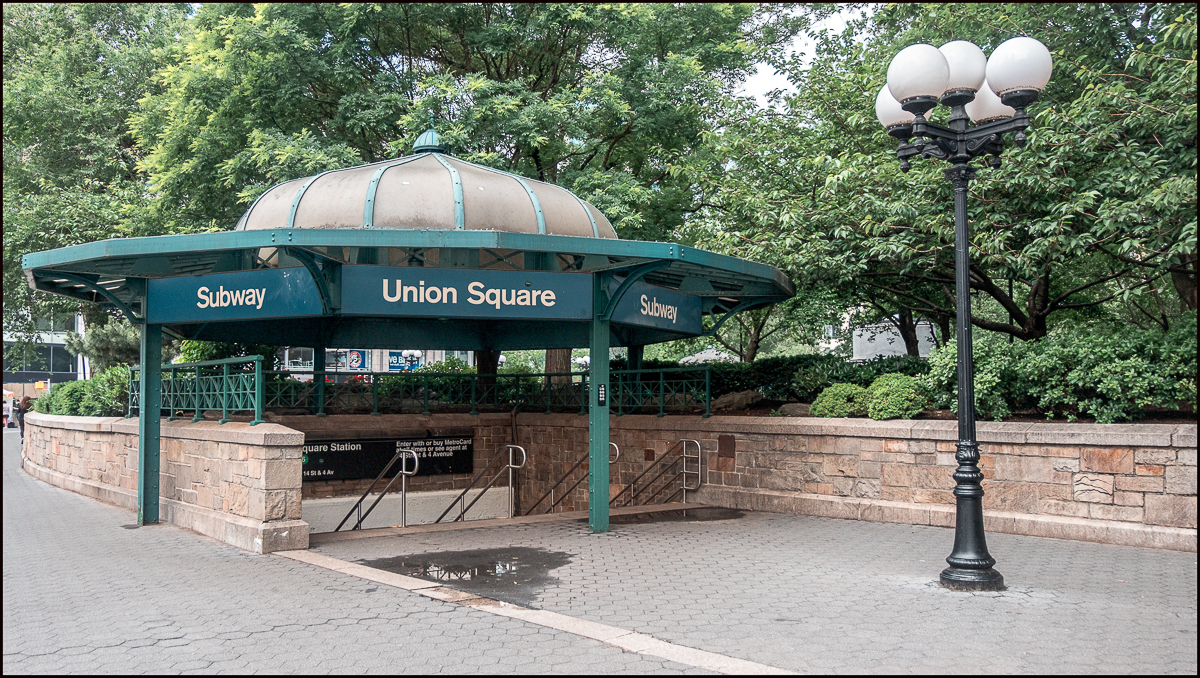
In Manhattan. Union Square Subway Station

According to Wikipedia:

The 14th Street–Union Square station is a New York City Subway station complex shared by the BMT Broadway Line, the BMT Canarsie Line and the IRT Lexington Avenue Line. It is located at the intersection of Fourth Avenue and 14th Street, underneath Union Square in Manhattan. The complex sits on the border of several neighborhoods, including the East Village to the southeast, Greenwich Village to the south and southwest, Chelsea to the northwest, and both the Flatiron District and Gramercy Park to the north and northeast. The 14th Street–Union Square station is served by the 4, 6, L, N, and Q trains at all times; the 5 and R trains at all times except late nights; the W train on weekdays; and ⟨6⟩ train weekdays in the peak direction.

The Lexington Avenue Line platforms were built for the Interborough Rapid Transit Company (IRT) as an express station on the city’s first subway line, which was approved in 1900. The station opened on October 27, 1904, as one of the original 28 stations of the New York City Subway. As part of the Dual Contracts, the Broadway Line platforms opened in 1917 and the Canarsie Line platform opened in 1924. Several modifications have been made to the stations over the years, and they were combined on July 1, 1948. The complex was renovated in the 1990s and was placed on the National Register of Historic Places in 2005.

The Lexington Avenue Line station has two abandoned side platforms, two island platforms, and four tracks, while the parallel Broadway Line station has two island platforms and four tracks. The Canarsie Line station, crossing under both of the other stations, has one island platform and two tracks. Numerous elevators make most of the complex compliant with the Americans with Disabilities Act of 1990 (ADA). The Lexington Avenue Line station, serving the 4, ​5, ​6, and <6> trains, is not ADA-accessible. In 2016, over 34 million passengers entered this station, making it the fourth-busiest station in the system

I didn’t know any of this. I just liked the way it looked, a bit like the Art Nouveau stations of the Paris Métro, and certainly a cut above the usual utilitarian look of other NY subway stations.

Taken with a Fuji X-E3 and Fuji XC 16-50mm f3.5-5.6 OSS II

A curious sight

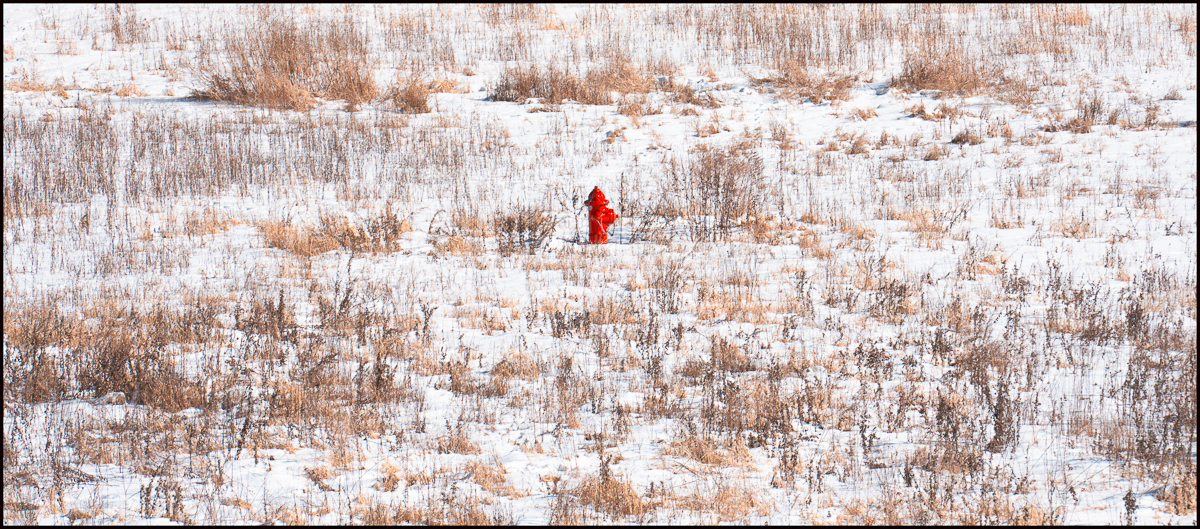
I’ve posted about this hydrant before (See: Around the Neighborhood – Red hydrants). I think it fascinates me so much because it’s out in the middle of a field with no buildings anywhere near it and I don’t know why. This area once once the site of a magnificent old resort hotel (See: Around the Neighborhood – The Club) so I guess it’s probably something to do with that. In this picture I particularly like the contrast between the bright white of the snow and the vibrant red of the hydrant, highlighting the separation of the hydrant from its surroundings.

Taken with a Sony A7IV and Tamron Di III VXD A056SF 70-180mm f2.8.