Geneva – Mont Salève, An international traveller

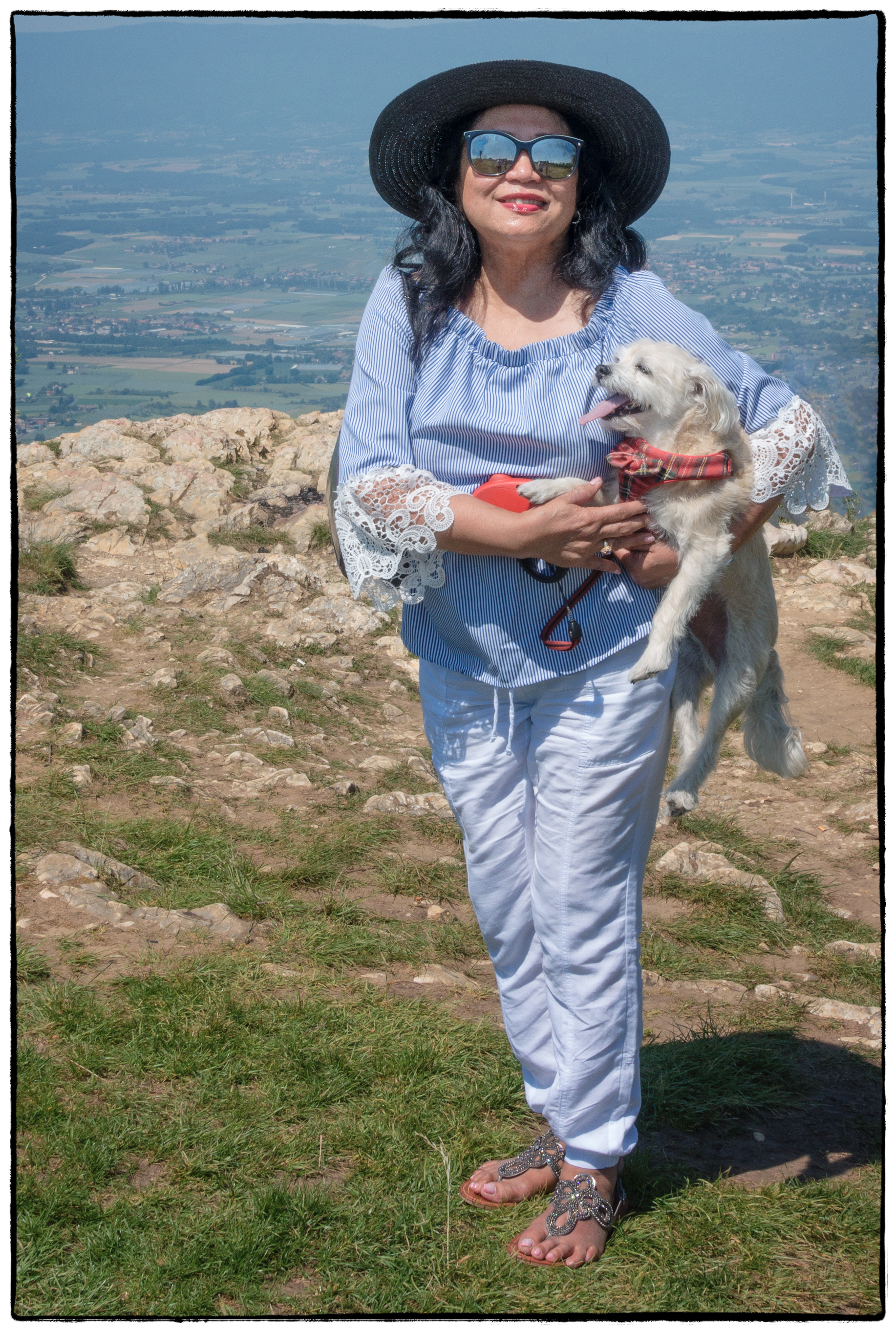
I’m not referring to my wife (who’s been an international traveller for a good number of years), but instead to our dog Harley seen here (with my wife) on top of Mont Salève. He’s now on his third country: the US (his birth place, or at least I assume it is. He was found as a stray and we adopted him. For all I know he might actually have been born in Uzbekistan); Switzerland; and now France.

Taken with a Sony RX100 M3.

Roaring Brook Lake Monster?

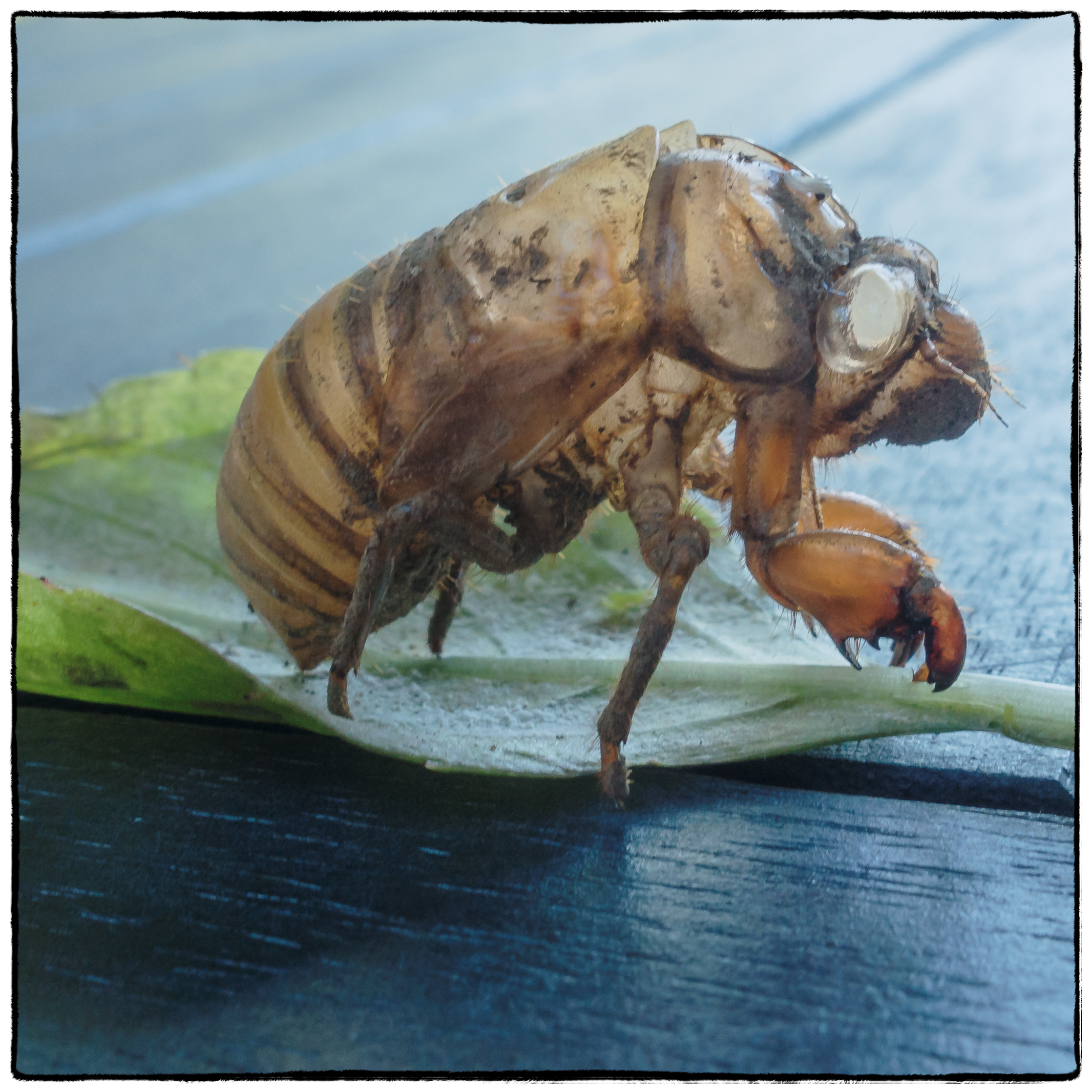
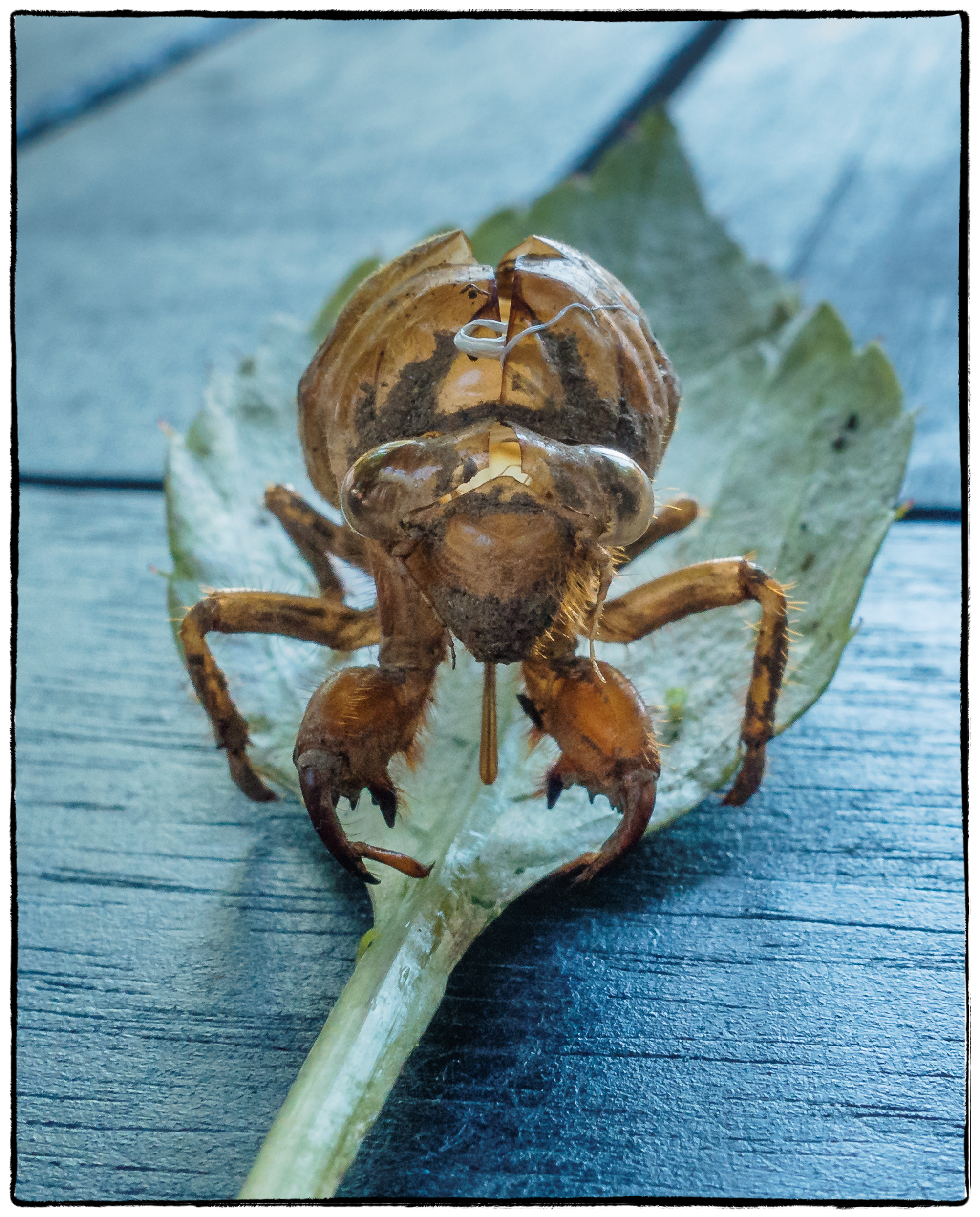
My wife recently came across this scary looking creature in our garden. It’s a bit over one inch long and is actually just an empty shell, the top of which has split and something has emerged (think Alien). After some advice seeking and research I’ve concluded that it’s the nymph form of a cicada.

According to Wikipedia:

In some species of cicada, the males remain in one location and call to attract females. Sometimes several males aggregate and call in chorus. In other species, the males move from place to place, usually with quieter calls while searching for females. The Tettigarctidae differ from other cicadas in producing vibrations in the substrate rather than audible sounds. After mating, the female cuts slits into the bark of a twig where she deposits her eggs.

When the eggs hatch, the newly hatched nymphs drop to the ground and burrow. Cicadas live underground as nymphs for most of their lives at depths down to about 2.5 metres (8 ft). Nymphs have strong front legs for digging and excavating chambers in close proximity to roots where they feed on xylem sap. In the process, their bodies and interior of the burrow become coated in anal fluids. In wet habitats, larger species construct mud towers above ground in order to aerate their burrows. In the final nymphal instar, they construct an exit tunnel to the surface and emerge. They then moult (shed their skins) on a nearby plant for the last time, and emerge as adults. The exuviae or abandoned exoskeletons remain, still clinging to the bark of the tree.

Cicada exuvia. Most cicadas go through a life cycle that lasts from two to five years. Some species have much longer life cycles, such as the North American genus, Magicicada, which has a number of distinct “broods” that go through either a 17-year or, in some parts of the world, a 13-year life cycle. The long life cycles may have developed as a response to predators, such as the cicada killer wasp and praying mantis. A specialist predator with a shorter life cycle of at least two years could not reliably prey upon the cicadas.

We’ve also seen the adult in our garden (see: Large bug: Cicada?)

Taken with a Sony RX100 M3.

Green Heron

We have some frogs at our house in Briarcliff Manor. Our friends are staying there at present and have (or at least one of them has) developed a strange attraction to them. Yesterday he sent me a message with an attached picture saying that a “large” bird had turned up and that the frogs had disappeared. He suspected that it had been eating them. It didn’t want to leave, but did eventually after he threw stones at it.

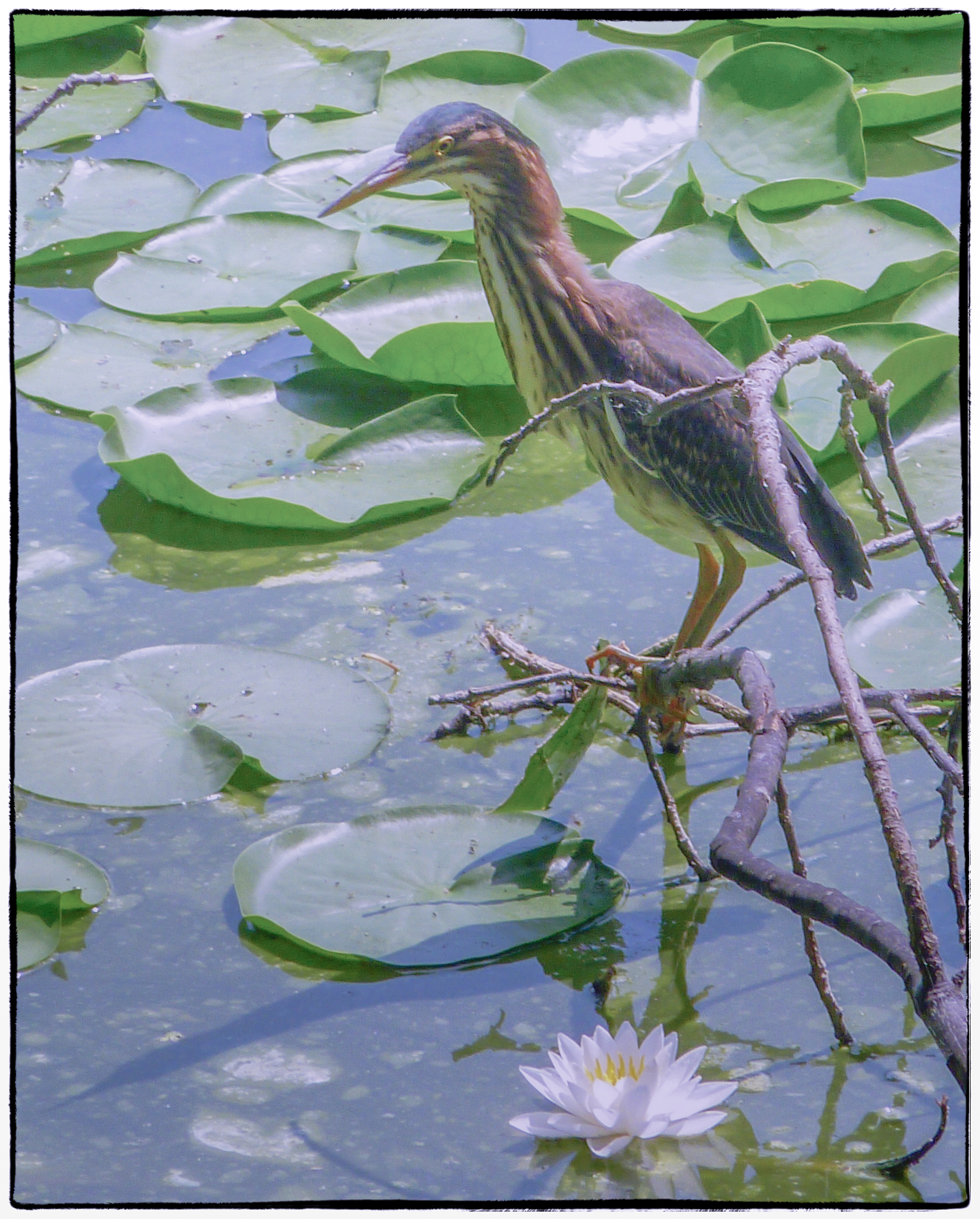
The picture was a bit blurred and the bird was somewhat distant and consequently small in the frame. However, it looked to me as if it was a Green Heron. I’d taken a picture (see above) of this bird at Teatown Preservation so I sent it to him and he confirmed that it was the bird in question.

I don’t know about it being “large” though. Green Heron’s are only about 17 inches tall. Bigger than, for example, a sparrow I suppose, but much much smaller than the Great Grey Heron’s we have at the lake (but which I unfortunately have been unable to get a picture of so far). They’re magnificent birds, over three feet tall. I once saw one chase off a number of much smaller Egrets from its piece of the lake.

Oh, and yes Green Herons do eat frogs!

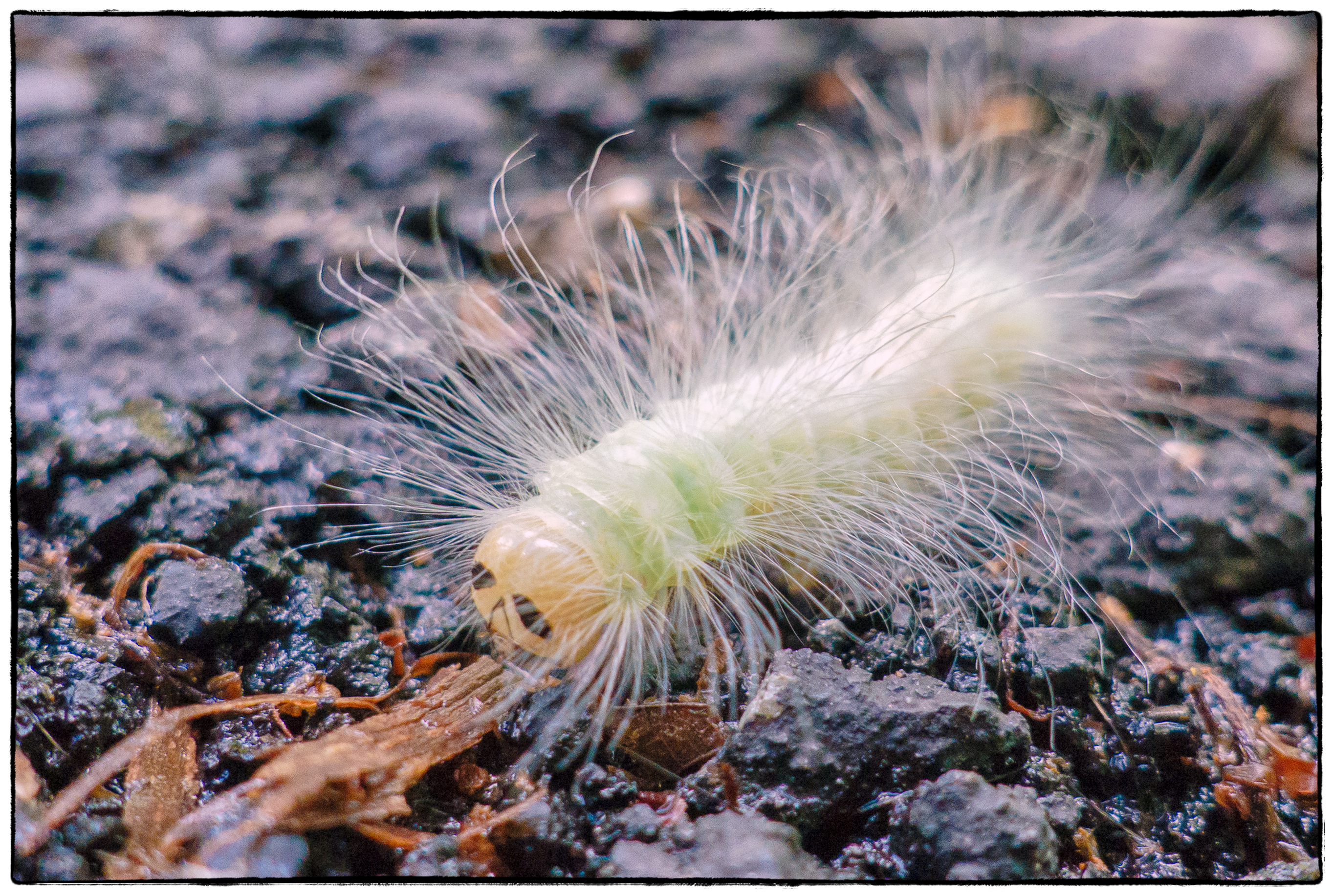
Hairy White Caterpillar

I was walking the dog around Lake Shore Road, when I noticed some movement around my feet. Looking down I saw this fluffy looking creature. I’m not entirely sure what it is, but I suspect it’s the caterpillar stage of Cycnia tenera or the dogbane tiger moth.

The markings on the head gave the impression of a sad little face (I’m pretty sure it’s not. I don’t think caterpillars have such large eyes. I imagine that they’re probably markings to deter predators).

Whatever it is I had no intention of touching it as I’ve read that some of these fuzzy/hairy caterpillars are quite toxic.

Apparently bats won’t eat the adult moths, as the moths emit clicking noises, which upset the bat’s sonar. Fascinating stuff.

Geneva – Carouge, Place du Temple

The Place du Temple is smaller, and less busy than the Place du Marche and I tend to prefer it as a place to hang out. Most places are closed on Sunday in Geneva, and when we lived there we would often pick up a newspaper and go somewhere to sit, have breakfast and watch the world go by. This is exactly what we did during our recent visit. I took a book and we were able to find a newsagents open where we picked up a copy of the London Times. We then went to Wolfisberg and ordered coffee and sandwiches.

The Place has a lovely, Gothic looking fountain (See: Geneva – Carouge, Basilisk Fountain for a close up) and a bust of one of Geneva’s luminaries: Adolphe Fontanel.

According to the Republic and Canton of Geneva website (translated from the original French):

The Fontanel family is of Savoy origin. It is mentioned as early as 1420 in the registers of the State of Geneva.

Two doctors in particular stand out: Doctor Adolphe Fontanel and Doctor Johannes Fontanel, son of the former.

Adolphe Fontanel (1818 – 1879) was born in Carouge, third of a family of seven children. He is the son of Pierre-Marie, notary, and Mélanie Plagnat. After studying at the Collège communal and the Academy, he obtained his Bachelor of Science degree in Lyon. On the advice of Carouge doctor, Louis-Appollonie de Montfalcon, his father sent him to pursue his medical studies in Paris, where he gained his doctorate in 1846.

He then opened his office at the Rue Saint-Victor, but at the same time this convinced liberal developed a passion for political reform. James Fazy solicited his invaluable support to the rising radicalism of the time. Adolphe Fontanel was elected a member of the Provisional Government of 1846.

He was elected to the Grand Council, where he served 16 years, assuming the presidency of the legislature in 1870 and 1871. He was elected Geneva State Counselor in the 1855-57-59 and 1861 elections, and became Federal States Counselor in 1853. Mayor of Carouge five times between 1847 and 1875, this active and indefatigable fellow citizen remained a medical doctor in a battalion of militia, a founding member of the Geneva National Institute, a member of the Geneva medical society and numerous Geneva and Carouge companies, including the carabinieri society.

A Freemason, who maintained the most cordial relations with the Catholic parish priest Gaspard Greffier and Pastor Henry, Adolphe Fontanel was an example of an eminent man entirely devoted to the service of his neighbor.

He was a fazist activist who actively participated in the unrest of August 22, 1864, following the electoral defeat of James Fazy.

He was arrested by federal investigators and then acquitted with the other defendants at the Federal Assizes in December 1864.

My wife sitting with our internationally travelling dog, Harley outside Wolfisberg on the Place du Temple. Harley’s somewhat strange posture is because he’d just spotted another dog across the plaza.

Taken with my Son-in-Law’s Nikon, D80 and Sigma 18-200mm f3.5-f6.3 lens.