A Day in New York City – A pair of mallards

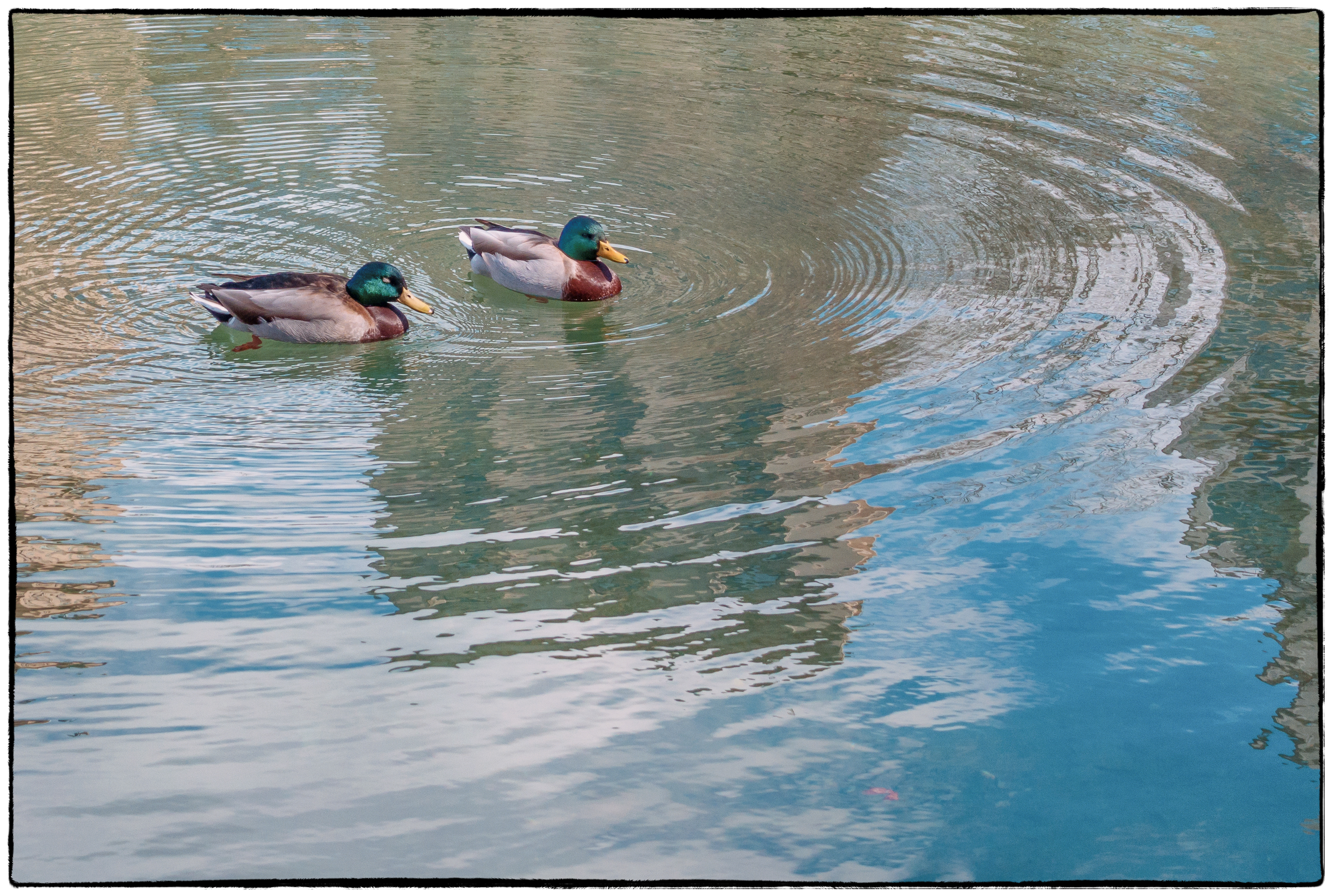
Two mallards swimming on Conservatory Water in Central Park, New York City. I’ve always loved the brightly colored mallards, and I also liked the ripples.

Formally a naturally landscaped water lily pond, Conservatory Water was subsequently converted into a model boat pond. When we arrived there were a few boats, but when I took this picture after finishing lunch the pond was devoid of maritime traffic (i.e. there were no boats on it).

Taken with a Sony RX-100 M3

First day of spring

In previous years I’ve done posts on the first day of Spring with pictures of a snow storm. Today it’s a glorious sunny day with nary a cloud in sight. True, we still have about five inches of snow on our patio, but it’s melting fast and a week ago it was 15 inches.

I’ve made a path through the snow to the dock and I’m going to get myself a ‘nice cuppa’ tea and go down there to drink it.

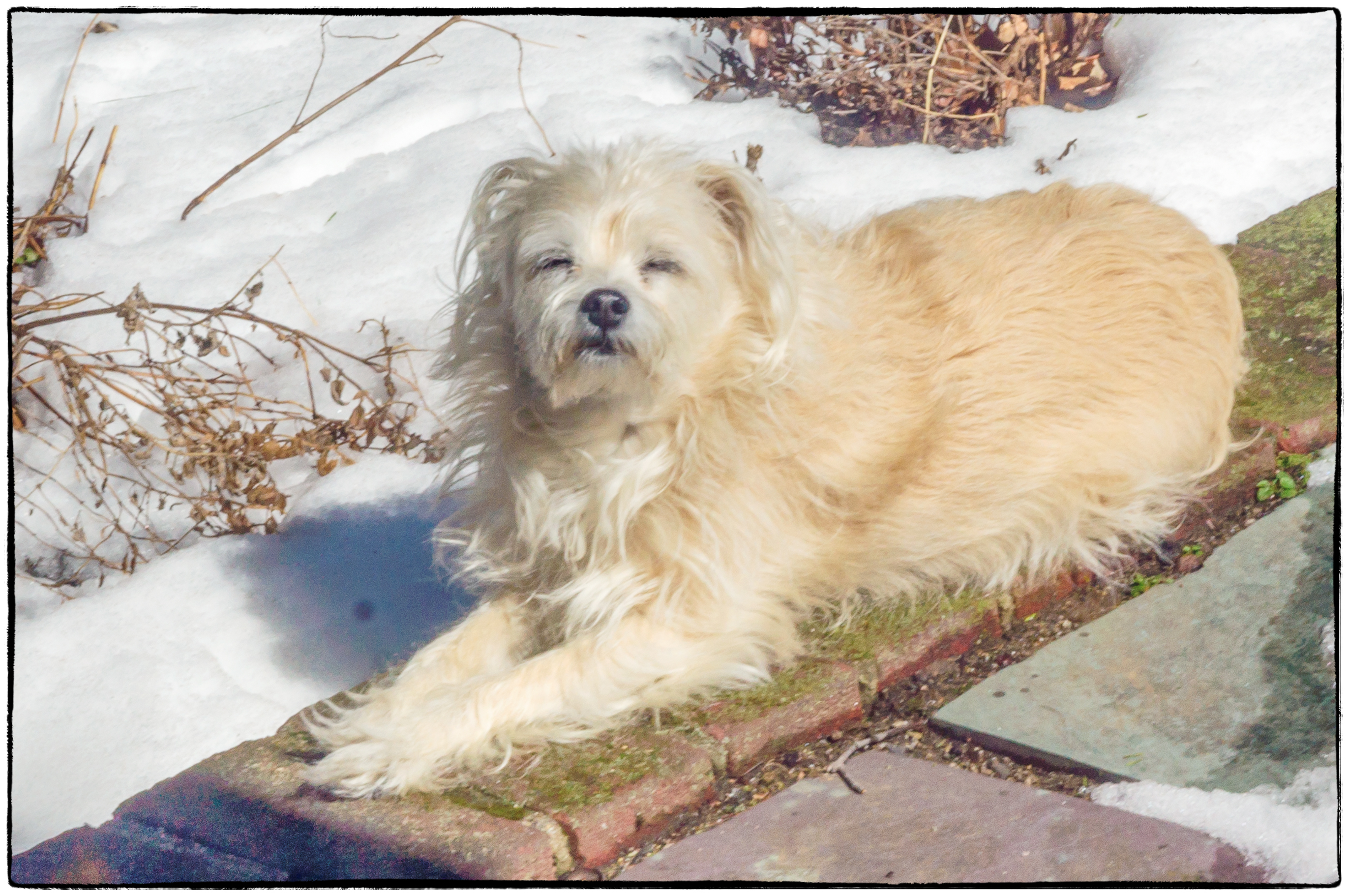
Meanwhile Harley has been enjoying sitting outside in the sun. Picture taken rather hastily (before his expression changed) through our front window – with a Sony NEX 5N and a recently acquired Carl Zeiss Jena 50mm, f3.5 Tessar T. The picture’s a bit soft, but I just love the expression. He could barely keep his eyes open. The lens is actually quite sharp but for some inexplicable reason I chose to set the aperture at f22, which caused the camera to set a shake inducing low shutter speed.

Now off to the dock!

Ladybugs

I was sitting in the kitchen of our house in Briarcliff Manor yesterday when I noticed a number of ladybugs. Many of them had gone to that great ladybug home in the sky, but a couple of them were still ambling around.

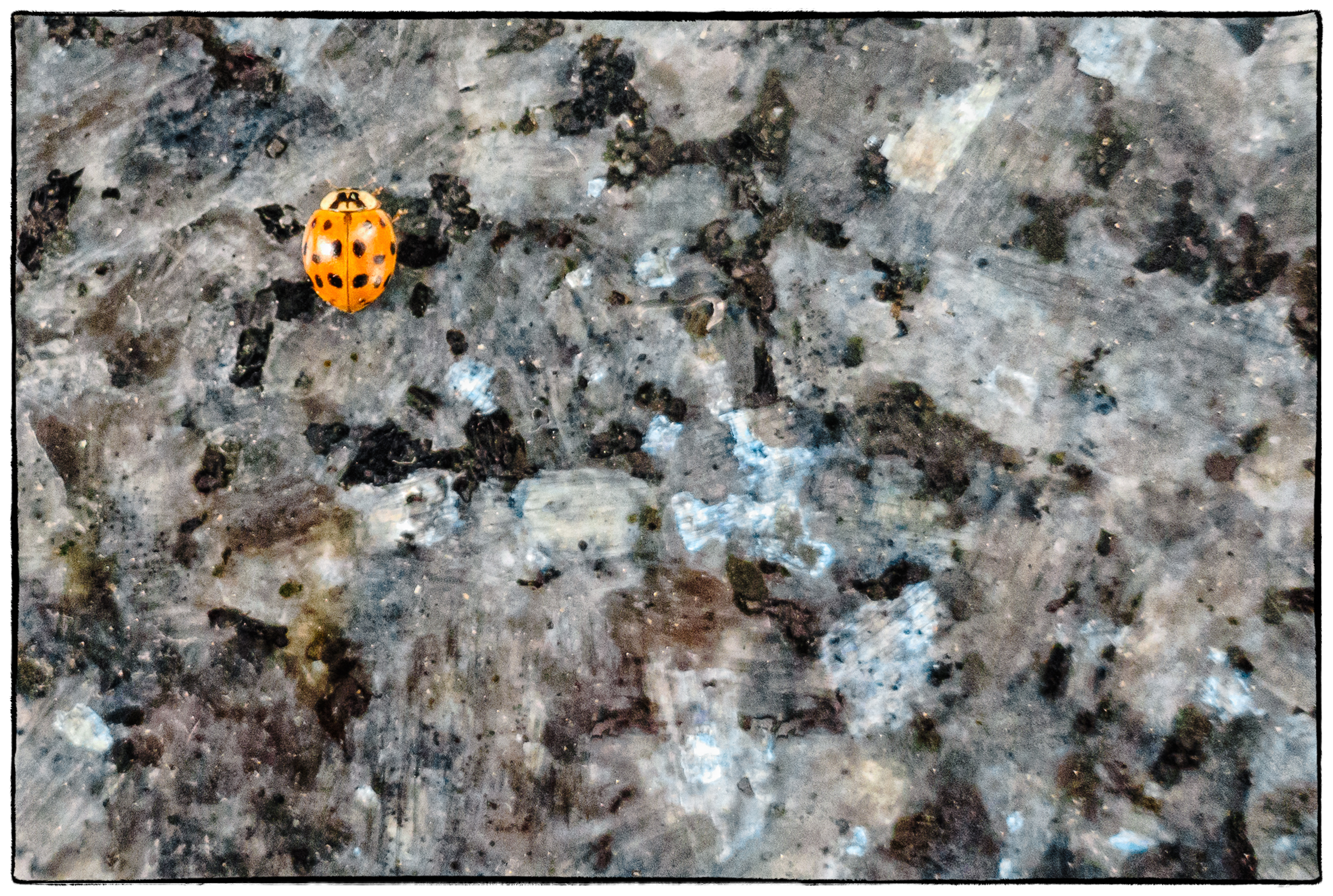
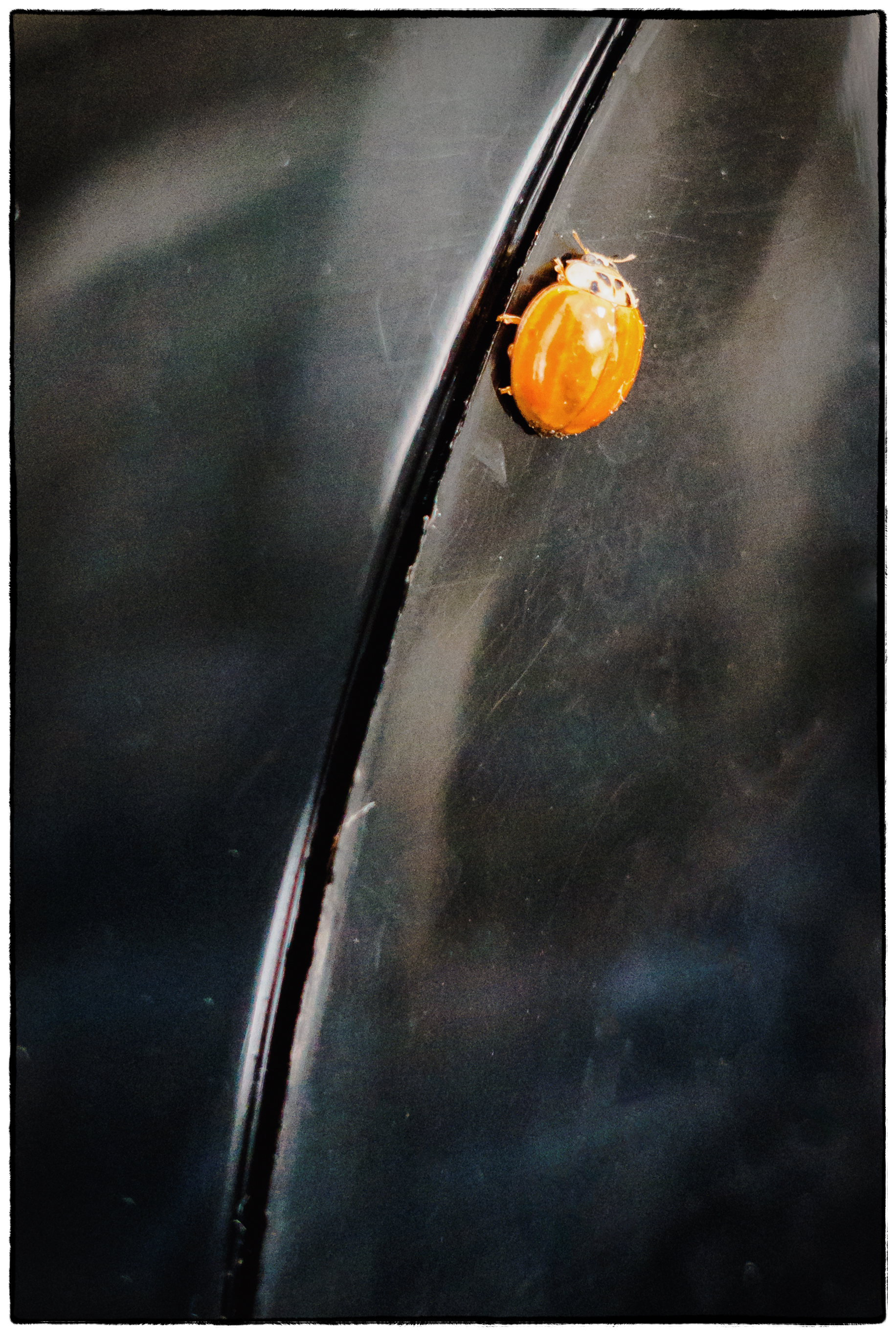
The one above was walking along our counter top. The one below was climbing up our electric kettle. Unfortunately I was using it to make my ‘nice cup of tea’ as the British almost invariably say it (I’ve never heard anyone say ‘how about a truly horrible cup of tea?’ although such a statement would have been true in the case of tea made by my father – it really was the worst I’ve ever tasted). I guess as the kettle warmed up the ladybug began to feel uncomfortable as he/she/it flew of to a window sill.

Apparently the name is incorrect though. According to wikipedia: “Coccinellids are known as ladybugs in North America, and ladybirds in other areas (Note: that’s what we call them in the UK). Entomologists widely prefer the names ladybird beetles or lady beetles as these insects are not classified as true bugs.” There’s a common myth (apparently untrue) that the number of spots indicates the ladybug’s age. If it were true then the one in the bottom picture would be in trouble as it doesn’t seem to have any spots at all.

Although they look very cute they’re said to be voracious aphid and scale insect eaters, primarily carnivorous but also known to eat honeydew, pollen, plant sap, nectar, and various fungi.

Neighborhood dogs

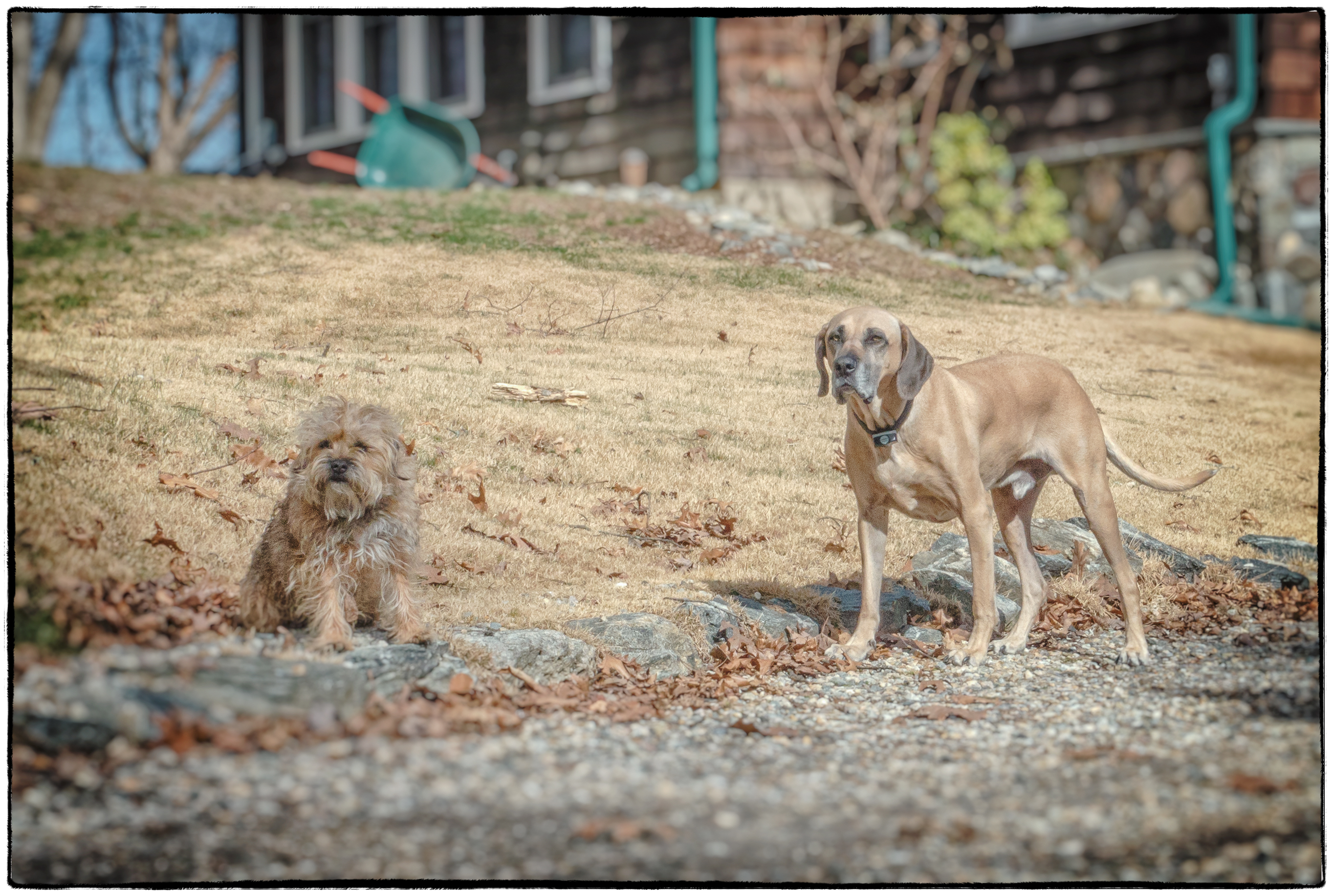
These two dogs belong to one of our neighbors. You’ll see from the box on the large one’s collar that they are subject to an invisible fence and consequently never come any further than where they are in the picture. They’re looking at our dog, Harley who’s out of the picture on the left, probably a little frustrated because they won’t come out to him and I won’t take him up the driveway to them.

They also appear in another one of my posts (see: Dogs on a Boat).

Taken with a Sony RX100 M3

Eel

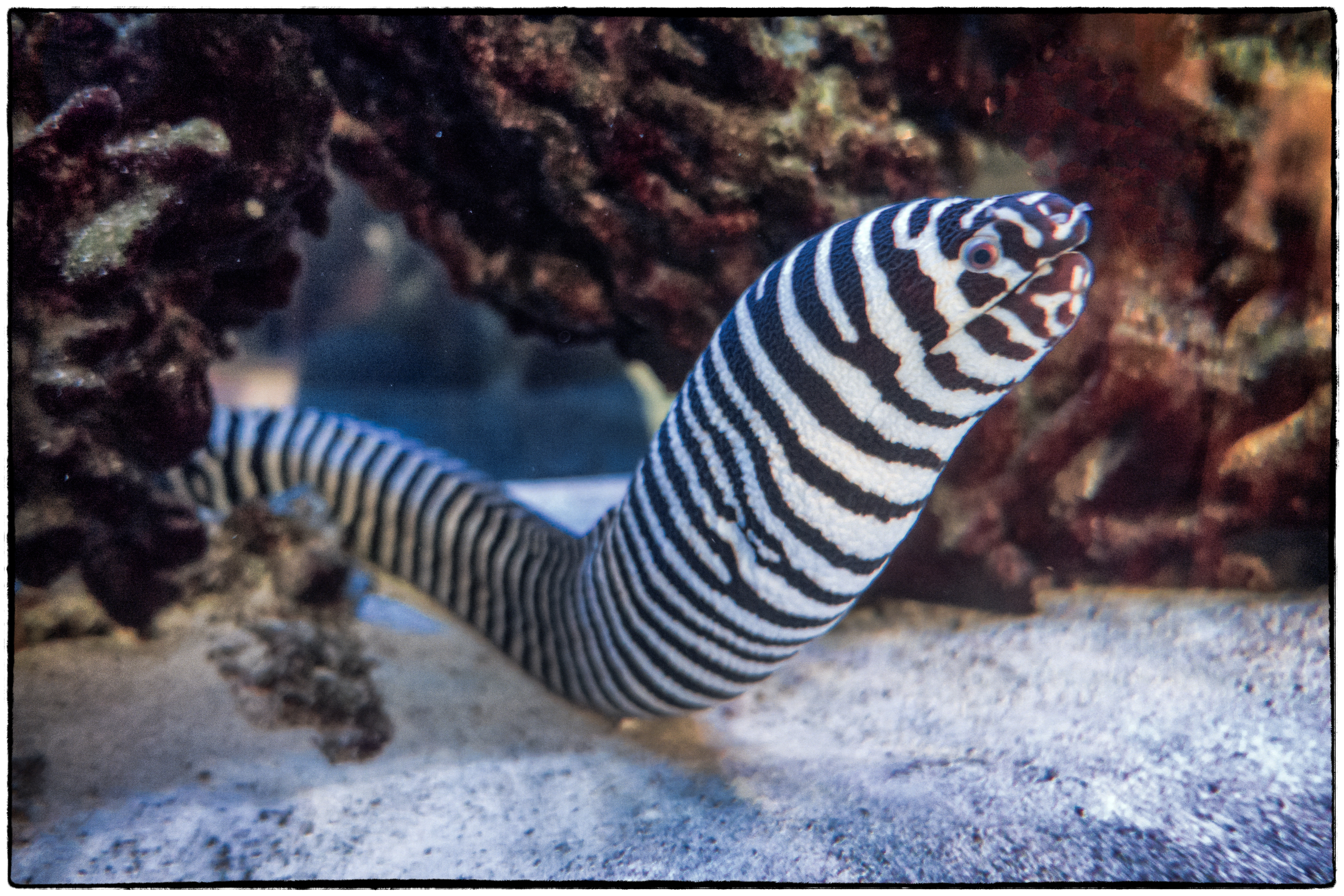
We took the dog in for his annual checkup today and while we were waiting decided to have lunch at a nearby restaurant (Wild Fusion). As we were leaving I noticed an aquarium right by the exit, and inside, along with the usual brightly colored fish, was this spectacular creature. I’d never seen anything like it before. The white bands had what must be scales, but looked almost like fur. At first it appeared to be suspicious of the camera and retreated backwards. Curiosity seemed to take over and it quickly started to move towards the camera – no doubt checking out what it was.

When I got home I browsed around a bit on the internet to see if I could find what it is. The nearest thing to it that I could find was a Zebra Moray Eel. FactZoo.com describes it as follows:

The zebra moray eel is a mid-sized species of moray eel that has become known for its black and white striped appearance. The striped eel commonly has a length of up to 4.9 feet (1.5 meters), but many specimens found are much smaller. They are found in their habitat primarily in the reefs of the Indo-Pacific region and the eastern Pacific region; including California (United States), Mexico, Columbia, the Galapagos Islands, and of course the make a handsome appearance in people’s aquariums worldwide.

The zebra moray eel has become known as a danger to humans. The truth though is, that the eels only attack in self defense, and most bites on humans are the result of mistaken identity or attempts by humans to hand feed them – don’t try it! Like all morays, its bite has a weak release mechanism and therefore its jaw must be pried off (even in death during cases of human bites). Contrary to popular belief, their bite is not poisonous naturally, but may cause infections because of the toxic bacteria-laden algae that they eat.

The zebra morays have also become known for their practice of hunting in cooperation with groupers; the only cooperative hunting that has ever been observed to go on among fish. Morays are recruited by groupers in order to use their ability to enter small crevices to flush out prey such as crustaceans, sea urchins, and mollusks; which are pretty much the only prey that zebra morays feed on. The “bounty” from these hunts is then shared between species.

As we stated before, morays have primitive biting system, but that’s based sheerly on their first set of jaws, but they also have second set, known as pharyngeal jaws, that rest deeper in their bodies and are shot out into their main jaws when trapping prey.
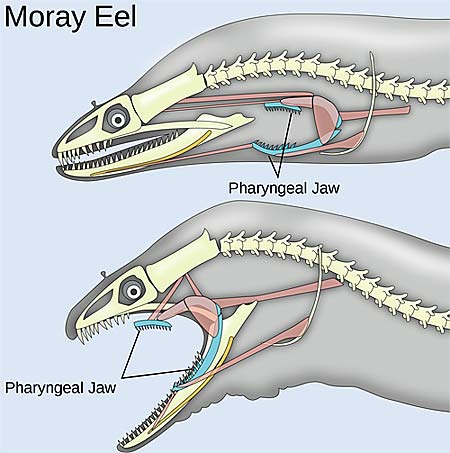
Moray Eel – pharyngeal jaws

It’s not much of a picture, but after all it was dark and I was shooting through glass and water so I’m pretty much satisfied that I was at least able to capture this remarkable creature.