According to the Village of Ossining Significant Sites & Structures Guide (Page 177):
Property Name: Vireum Schoolhouse
Street Address: 1 Snowden Avenue
Section, Block, and Lot: Section 89.19, Block 1, Lot 7
Architect/Builder:Unknown
Date of Construction: 1870, Renovation into condominiums: 1988
Architectural Style:Second Empire (1860s-1880s).
Second Empire-style architecture was a style that originated in France and was named for Napoleon III’s campaign to modernize Paris in the mid 19th Century. This style, which is similar to the Italianate style, utilizes elements such as tall, arched window openings, columns flanking the main entryway, and cornices below the roofline. The primary distinguishing characteristic is the Mansard roof, a configuration in which the roof has a steep pitch on the lower section and a shallower pitch on the upper portion. This style of roof was initially designed to provide extra space while not subjecting the owner to additional taxation under French law, as the rooms located inside the roofline were not considered a full additional floor.
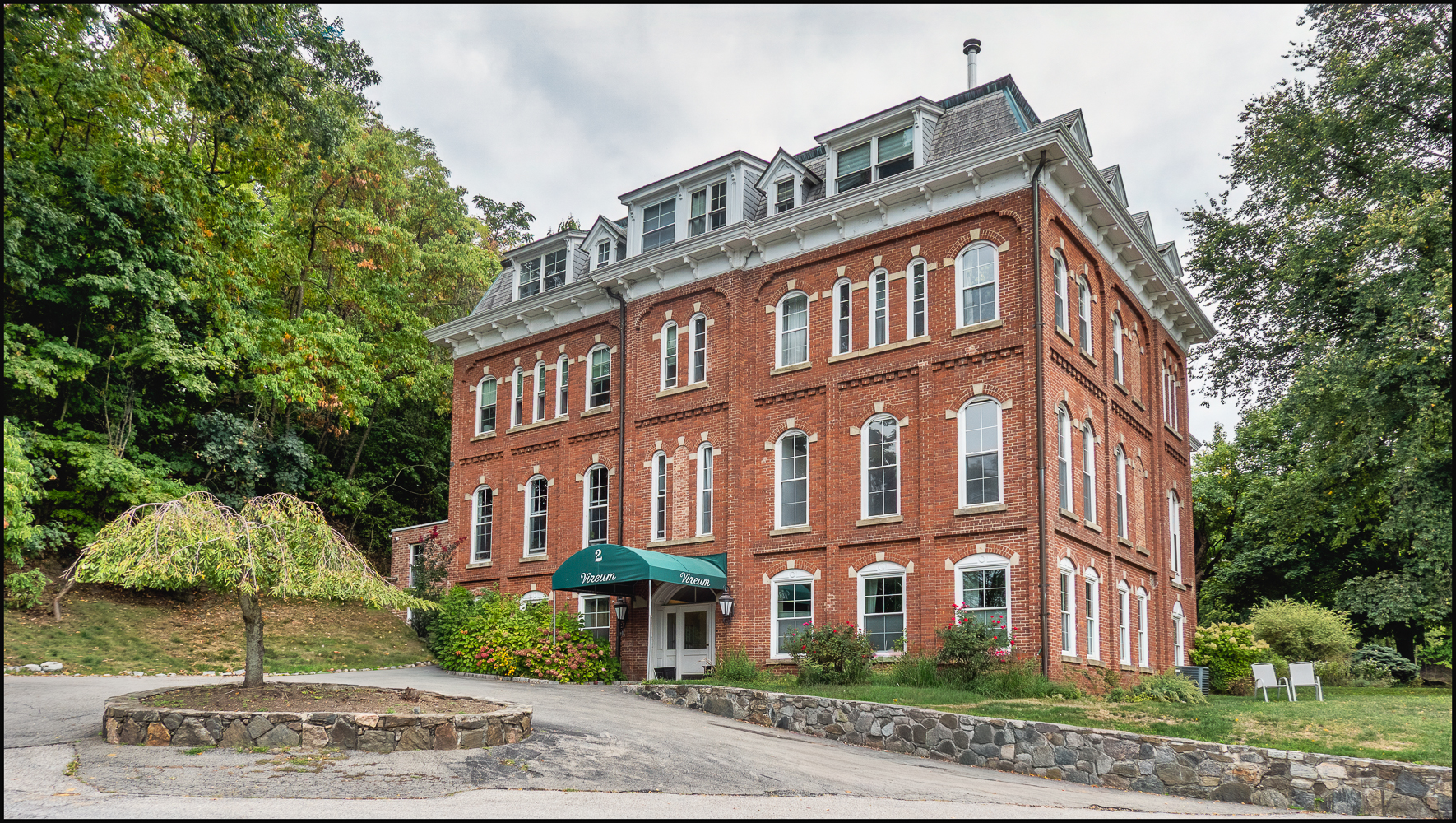
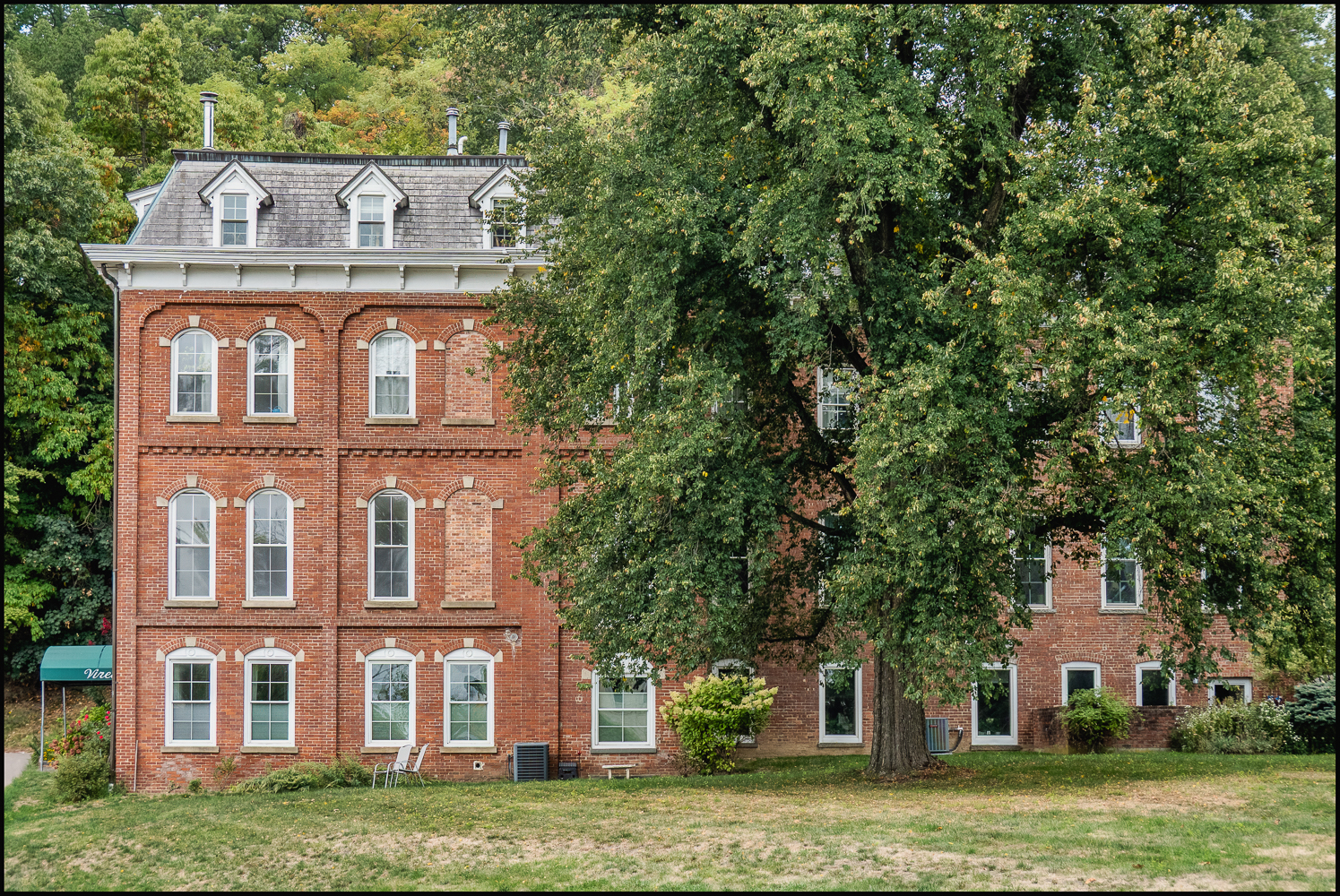
The Vireum Schoolhouse, built in the Second Empire style, is three- and one-half stories in height, with a T shaped plan; the larger west wing is seven bays wide and three bays deep, while the east wing is slightly smaller in its dimensions. The left and right sides of the main façade feature sets of four over four double hung windows with arched openings, with a set of three, two over two windows on the center bay of each side of the third floor. All of the window openings on the main façades and side elevations are arched, featuring limestone keystones and springers on each arch. The first-floor windows openings on the main façade and side elevations contain a curved decorative motif below each arch. Bands of projecting brick surround the window bays on the main façade and side elevations, with a dentil cornice above the second story windows.
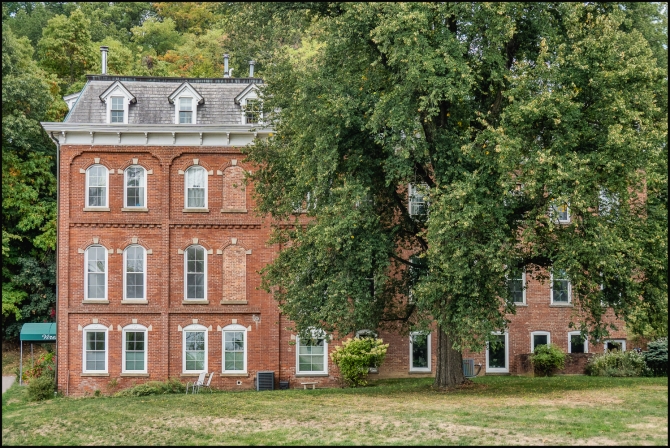
The structure’s east wing features slightly different architectural detailing on elevations, lacking the raised brick and around the window bays and containing a slightly different arch profile around the window openings. The mansard roof is punctuated by a mix of gabled and shed dormers on the main façade and gabled dormers on the side elevations of the west wing and the entire roofline of the east wing.
Significance:
Architectural and Cultural the Vireum Schoolhouse is architecturally significant as a well preserved example of the Second Empire architectural style used in an institutional context. It is also culturally significant for its association with the Brandreth family, descendants of the eminent Sing Sing-based entrepreneur Benjamin Brandreth.
Narrative:
The Vireum School for Boys was founded in 1870 by Major Henry C. Symonds, a former West Point English professor who was married to Beatrice Brandreth, a daughter of Benjamin Brandreth, builder of the Brandreth Pill Factory (see entry). Symonds later served as president of the village for several years during the late 1870’s and early 1880’s. The original name of the school, Vireun, was a combination of Virginia and Eunice, the names of Symonds’ daughters. At some point in time the name of the school and building were changed to reflect the common mispronunciation of its name, Vireum. It was established as a college preparatory school and was geared toward preparing school-aged young men for entrance into military academies, whose standards for enrollment had become more rigorous following the end of the US Civil War. The school sent several hundred graduates on to schools such as West Point and Annapolis during its years of operation. After the closing of the school in the early 20th century, the structure served as a factory for a time until lying abandoned for many years. It was restored in 1988 and was adapted for residential use, which continues today.
Taken with a Sony RX100 MVII.