Kensico Dam – Temples on top?

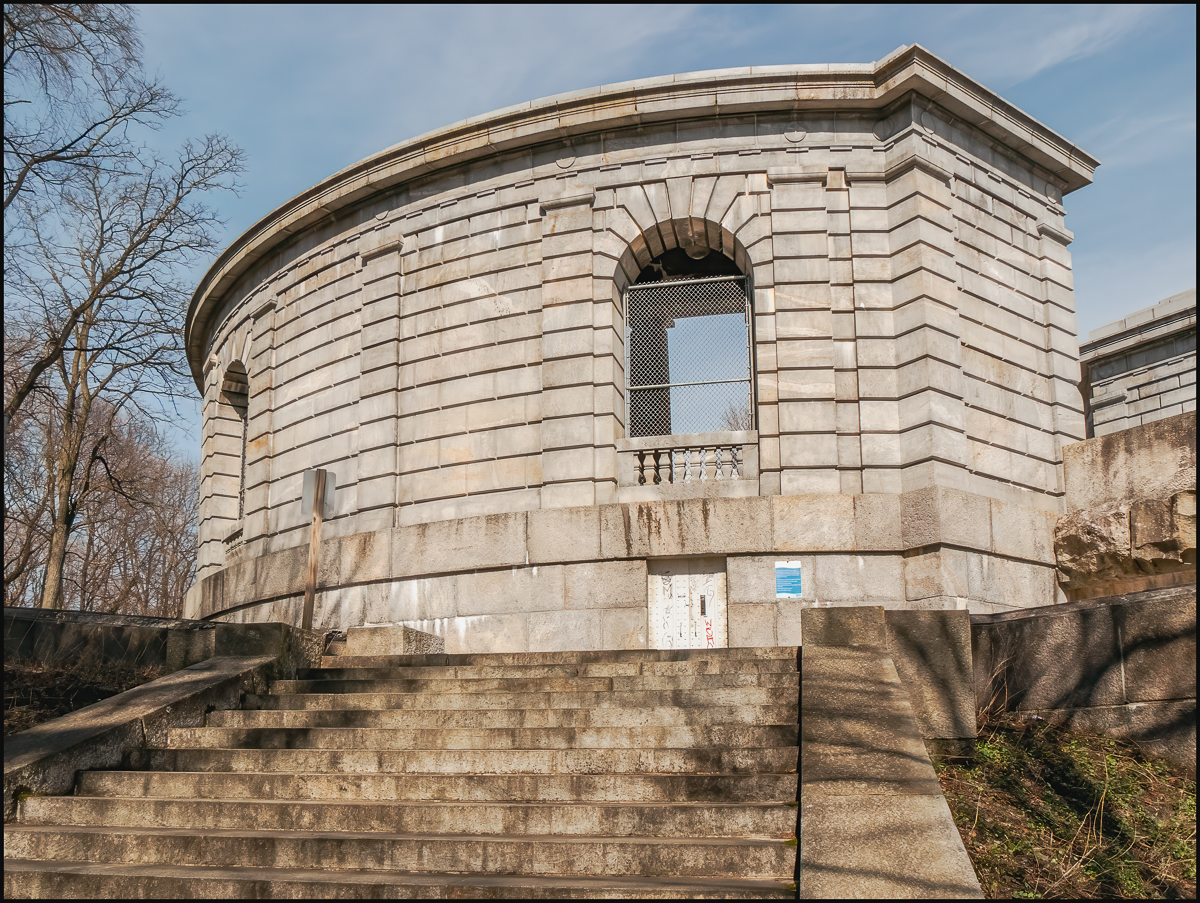
This was what greeted my when I got to the end of the steps. It seemed as if I had been transported to Ancient Greece. Pretty Impressive. The Architect was Frank Windsor.

Frank Edward Winsor (1870-1939) was the chief engineer for the Boston Metropolitan District Water Supply Commission, now the Massachusetts Water Resources Authority, from 1926 until his death in 1939 and was closely involved in the design and construction of Winsor Dam and Goodnough Dike which were built by the Commission to create the Quabbin Reservoir in Massachusetts. Winsor Dam was named for him. He was born November 16, 1870, in Providence, Rhode Island and died on January 30, 1939, a resident of West Newton, Massachusetts, where he had lived for many years at 189 Mt. Vernon Street. He received a Ph.B in 1892, an A.M. in 1896 an Sc.D. in 1929, all from Brown University. He later sat on Brown’s Board of Trustees. He was licensed as a Civil Engineer in 1892. On October 25, 1893, Frank E. Winsor married Catherine Holbrook Burton, who later taught at Brown. They had two daughters and a son. Their oldest child, Lucy, (April 16, 1897 – October 9, 1989), was a professor of economics at Wellesley College. She was married to Hugh B. Killough, (December 30, 1892 – December 13, 1976) who was a professor of economics at Brown. Together they wrote many books on business, economics and industry. His early work was on water and sewer projects for Boston. He was one of the engineers on the design and building of the Wachusett Dam. He also did work for the Charles River Basin Commission. From 1903-1915 he worked on projects for New York City including being in charge of the construction of the Kensico and Hillview reservoirs and 32 miles of Catskill Aqueduct. Frank E. Winsor was a Fellow of the American Academy of Arts and Sciences and a director and vice president of the American Society of Civil Engineers. From 1915-1926, he was chief engineer for the new water supply project for Providence, which involved the design and construction of the Scituate Reservoir and the earthen dam necessary to create it and the building of a water treatment plant. Like Quabbin Reservoir in Massachusetts, Scituate Reservoir is the largest body of water in its state. At the completion ceremonies for the project on September 30, 1926, Providence Mayor Joseph H. Gainer called Winsor “[T]he man to whom most of the credit for this undertaking belongs.” The dam is known today as the Gainer Memorial Dam in honor of the mayor. He left his successful work on the Scituate Reservoir for Providence to go on to greater work as chief engineer for the Metropolitan District Water Supply Commission in Massachusetts. His greatest accomplishment was the design and construction of Quabbin Reservoir and the Winsor Dam and Goodnough Dike which were built to dam the waters of the Swift River to create the reservoir. The dams were finished shortly after his death in 1939, but the Quabbin Reservoir did not fill to its maximum holding capacity until 1946. (Adapted from Wikipedia)

A pavilion is located at either end of the dam. It’s split into a north side and a south side, with the road passing through the middle. I guess he must have liked neo-classical architecture.
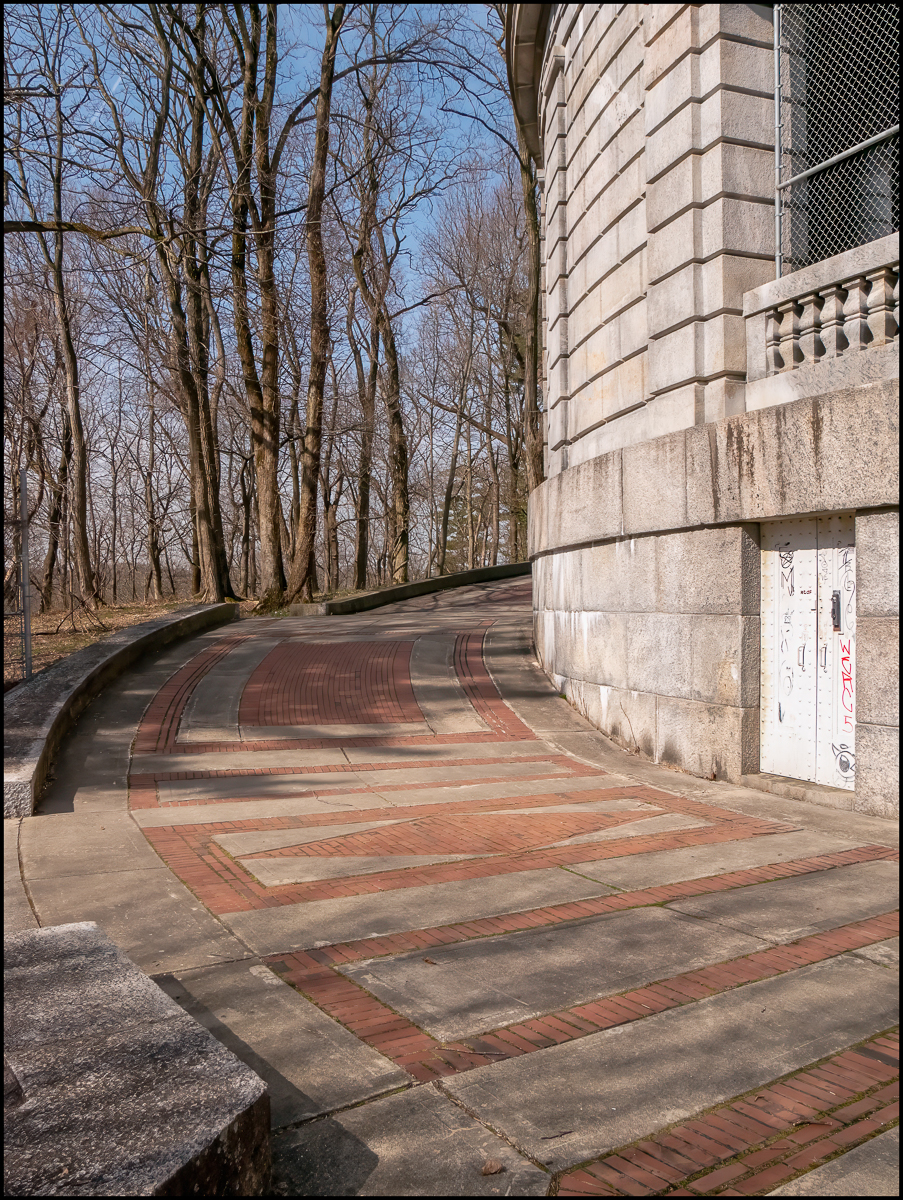
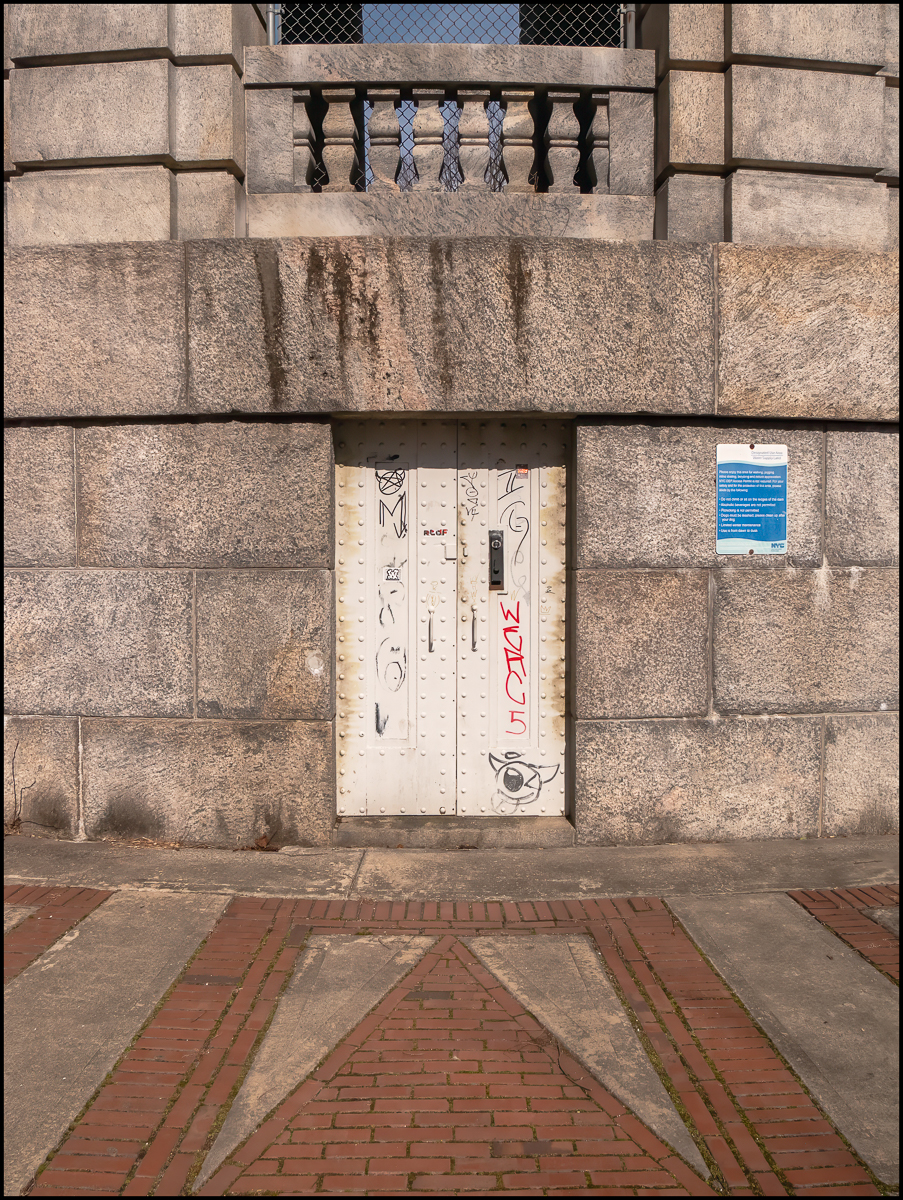
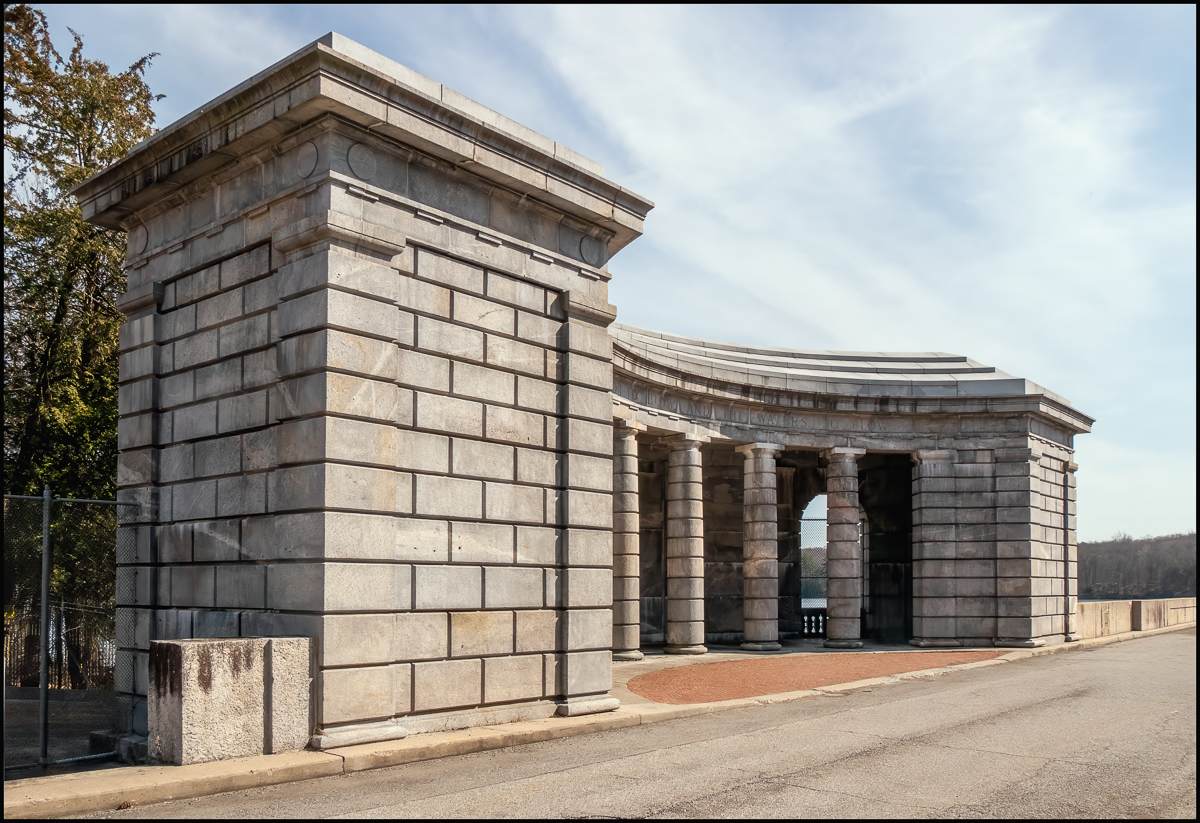
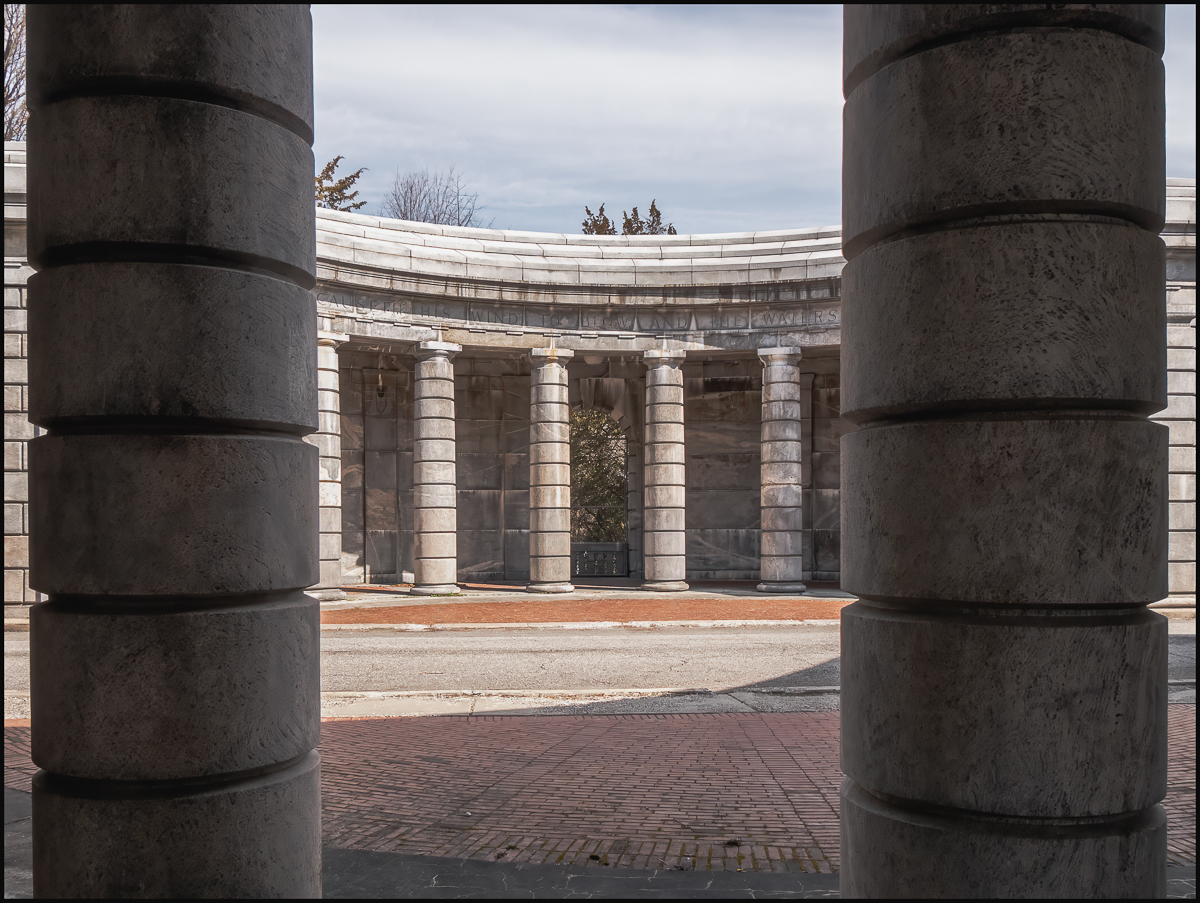
Interior view of the north side of the Kensico Dam West Pavilion. There’s lettering over the columns but I didn’t spot it at the time and so didn’t record what it said. From the pictures I think it’s from Psalm 146:18, which reads: “He sendeth out his word, and melteth them: he causeth his wind to blow, and the waters flow.” I think the lettering of on the north side of the west pavilion (seen in this photograph) has the second part (“He causeth his wind to blow, and the waters flow.” I’m guessing that the inscription on the south side probably contains the first part (“He sendeth out his word, and melteth them”). Once upon a time you could have looked through the arches towards the reservoir. You still can, but the view is somewhat obstructed by the mesh put there, presumably to stop people from jumping.
The North Castle Historical Society has an interesting video entitled: “The Lost Village of Kensico and the building of the Kensico Dam

A site called Building the Kensico Dam and Reservoir has a fascinating series of Annual Reports covering the period 1906-1920. They’re full of interesting facts, old photographs, and diagrams showing the structure of the dam.

Taken with a Panasonic Lumix GX85 and Lumix G Vario 14-140 f3.5-5.6
Kensico Dam – Up the steps to the top

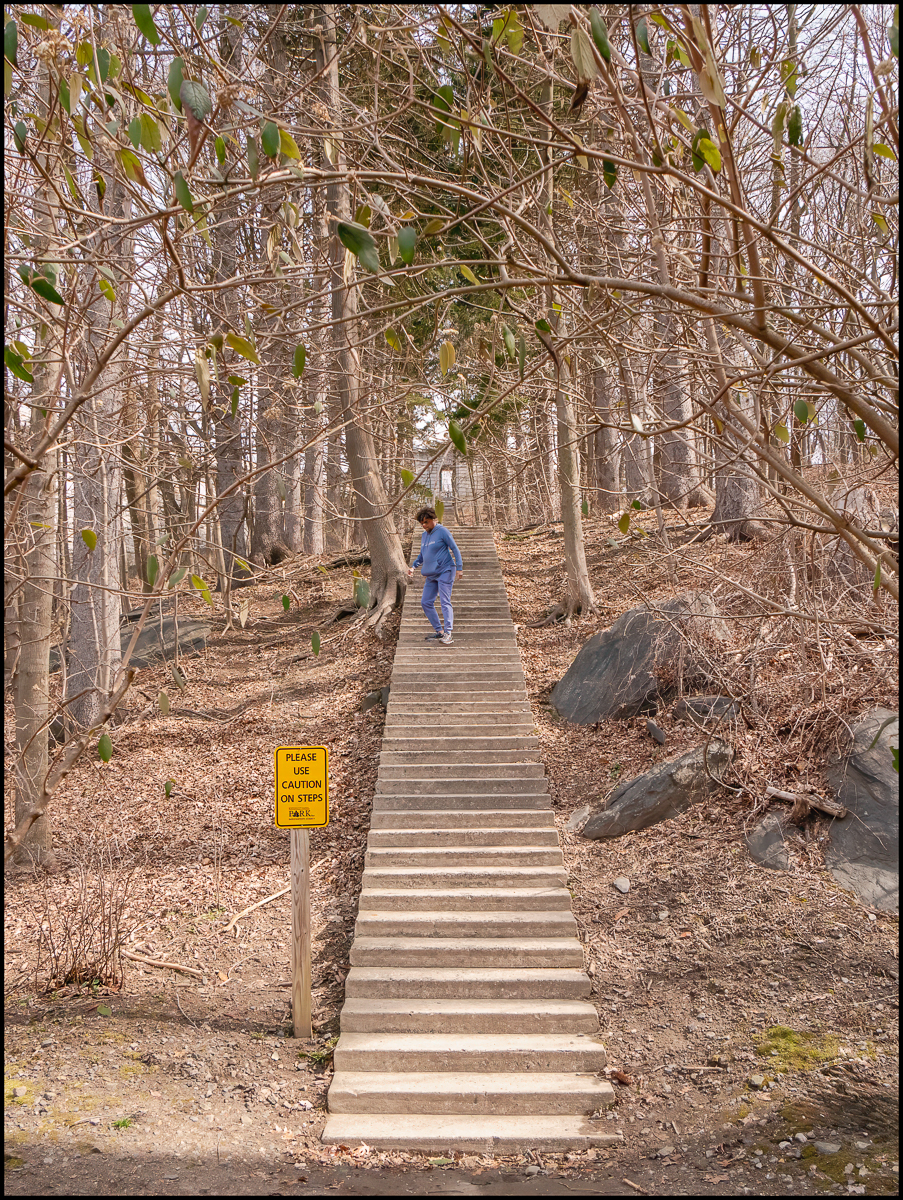
I decided to start my visit at the top of the dam. So how to get there? Well, there are steps at either end of dam so I walked up one side, then walked across the dam and then down the other side. I counted the number of steps: there were 205 of them (that’s one way)! My stamina and stability are not what they once were, so I was surprised that I made it up. Going down was much easier. But I managed it. I must be fitter than I thought. I used to be a lot heavier than I am now. In those days I don’t think I would have been able to do it. I would have been gasping for breath after a short time.

Note the yellow sign at the base of these steps. It reads: “Please use caution on the steps”.

I spoke to the woman in the picture. The picture gives the impression that she was struggling on the steps. That was far from being the case. She ran up the step to about where she is in the picture and then walked back down. She explained that she is a frequent visitor to the park and usually runs up the steps on one side, across the top, and then down the other side. The only reason she wasn’t doing that today was for lack of time. There was somewhere she had to be. She appeared to be extremely fit, and I saw her later running around the plaza at the base of the dam.

Taken with a Panasonic Lumix GX85 and Lumix G Vario 14-140 f3.5-5.6
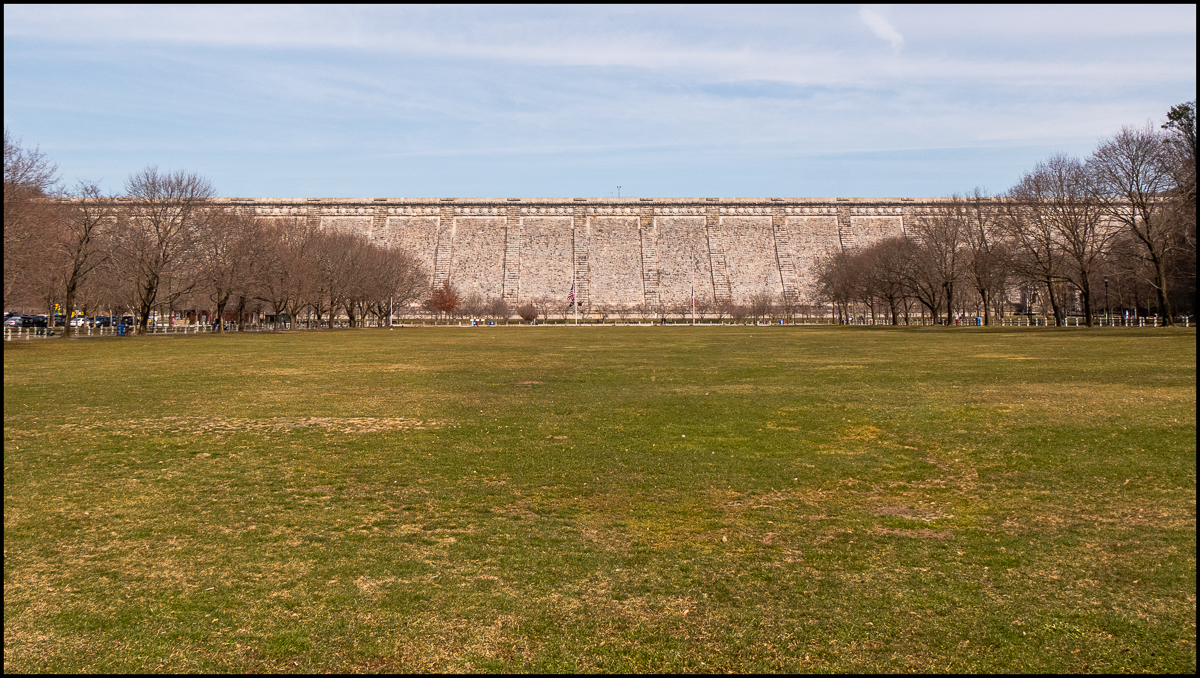
Kensico Dam – Overview

I’ve often driven past the Kensico Dam. It’s set back quite a bit from the road and from a distance it doesn’t look all that interesting. Still from time to time it occurred to me to get closer and take some pictures. But I kept putting it off. The other day I decided to go so an Uber, a short train ride, and a short walk and there I was.

The Official Website for Westchester County Government describes it as follows:

The Kensico Dam was built under the old dam that formed Lake Kensico, using stone taken from the adjacent Cranberry Lake Park. More electric power was applied for its creation than any other construction work for the Catskill water supply. The crushing plant at the quarry was the largest ever placed on contract work, and a railroad was built solely for the purpose of carrying debris from the construction site to landfills. At the quarry village, a school operated for the children, sewing classes for the women, and English language classes for the predominately Italian male workers.

The dam was completed in 1917. It is 307 feet high and 1,843 feet long, and forms the Kensico reservoir. It was acquired as parkland in 1963 from the New York City Watershed Commission and remains the property of the New York City Department of Environmental Protection. It is listed on the National Register of Historic Places as part of the Bronx River Parkway Reservation.

The park provides a unique setting for a wide variety of activities including cultural heritage celebrations and concerts, fitness classes and a fitness course, as well as areas for picnicking, in-line skating, walking and nature study.

During the holiday months of November and December, thanks to the Westchester Parks Foundation and its sponsors, the Kensico Dam Plaza is transformed into a winter wonderland full of sparkling lights and splendor. The annual Westchester’s Winter Wonderland Drive-thru Holiday Light Extravaganza.

Wikipedia provides significantly more information.

Taken with a Panasonic Lumix GX85 and Lumix G Vario 14-140 f3.5-5.6

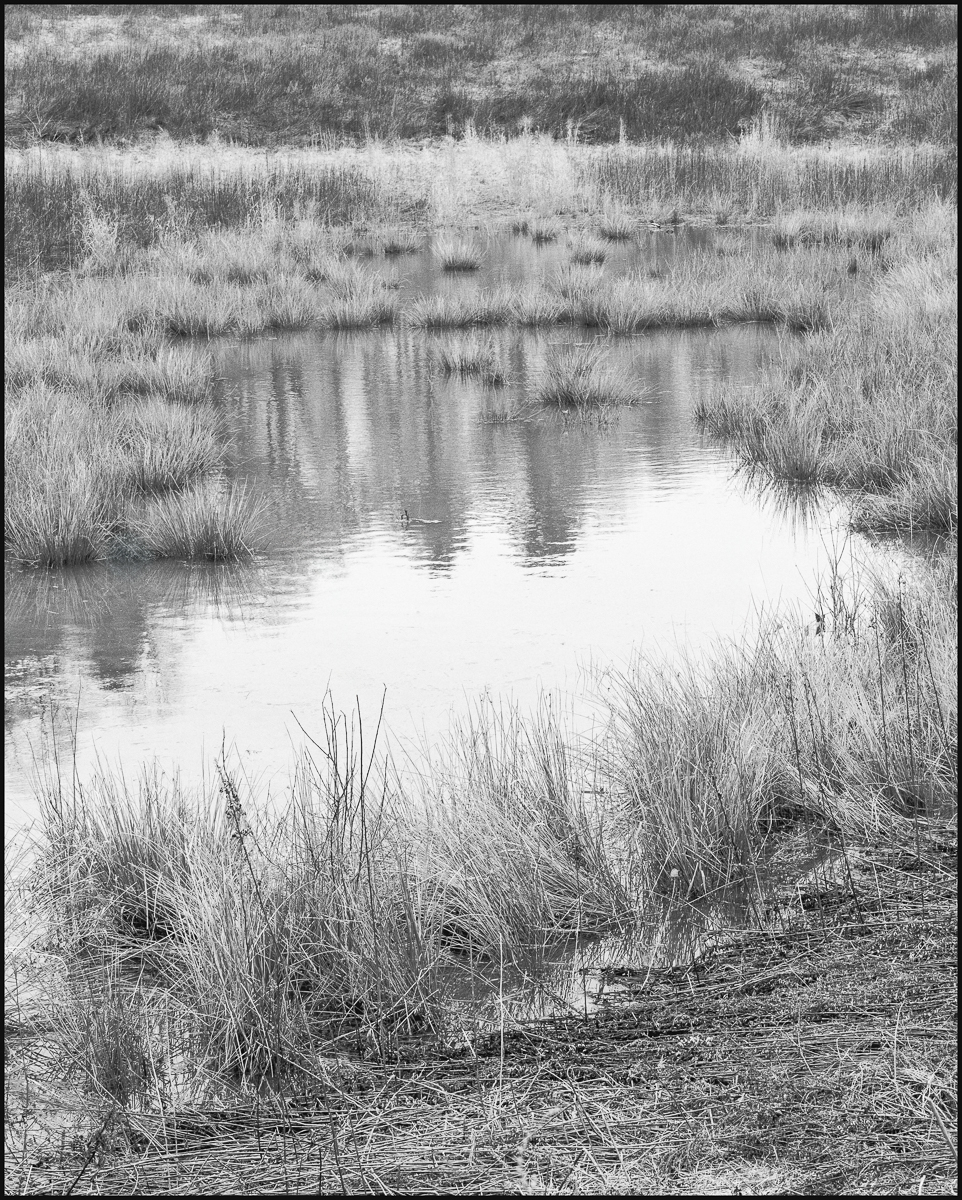
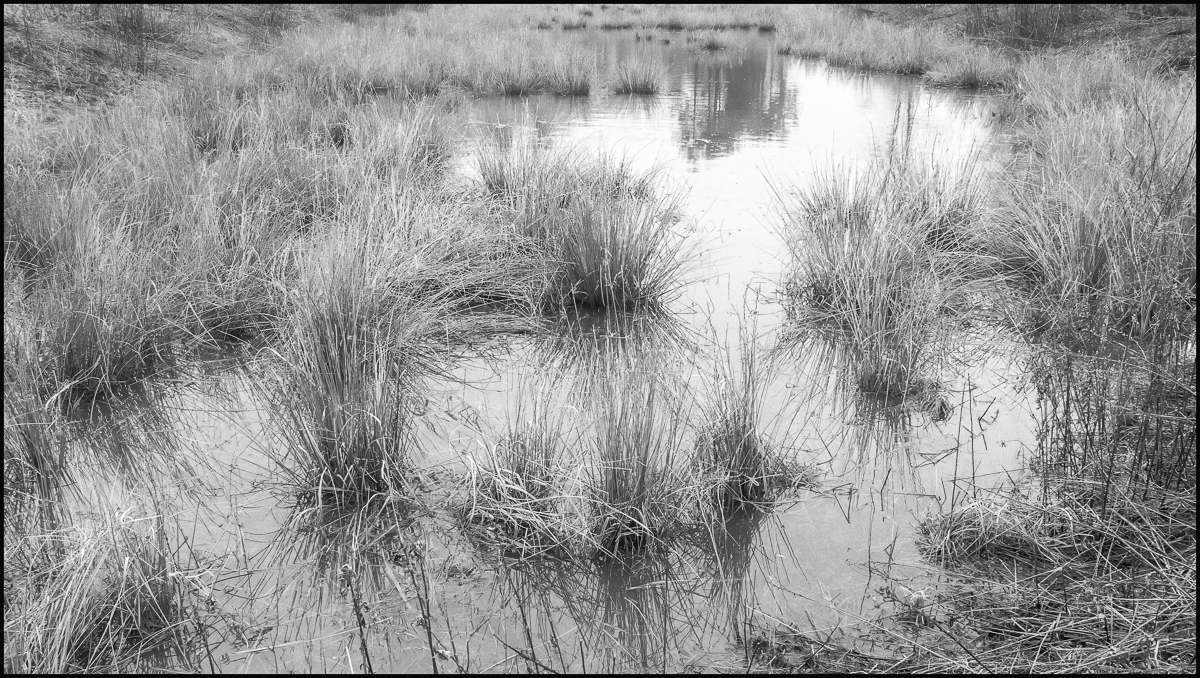
Grasses in a pond

For some reason I went out the other day intending to take some pictures of water. As I walked around, I came across this pond. I’ve seen it before, and it seems to come and go. Sometimes (as with today) there’s quite a lot of water; and sometimes it appears to be completely dry.

I think it’s a vernal pond:

Vernal pools, also called vernal ponds or ephemeral pools, are seasonal pools of water that provide habitat for distinctive plants and animals. They are considered to be a distinctive type of wetland usually devoid of fish, and thus allow the safe development of natal amphibian and insect species unable to withstand competition or predation by fish. Certain tropical fish lineages (such as killifishes) have however adapted to this habitat specifically.

Vernal pools are a type of wetland. They can be surrounded by many communities/species including deciduous forest, grassland, lodgepole pine forest, blue oak woodland, sagebrush steppe, succulent coastal scrub and prairie. These pools are characteristic of Mediterranean climates, but occur in many other ecosystems.

An inundated rock vernal pool on Enchanted Rock. Note the one inhabited by cacti in the background.
During most years, a vernal pool basin will experience inundation from rain/precipitation, followed by desiccation from evapotranspiration. These conditions are commonly associated with Mediterranean climate such as the Central Valley of California.[1] Vernal pool basins are often characteristics of Mediterranean climates, but occur in many other ecosystems, such as forested areas of the Canadian Shield, where they are difficult to identify because of the forest canopy.[2] Most pools are dry for at least part of the year, and fill with the winter rains, spring snowmelts and rising water tables. Some pools may remain at least partially filled with water over the course of a year or more, but all vernal pools dry up periodically. Typically, though, a vernal pool has three phases each year: it is inundated in the winter (inundated phase) with the vernal pool holding onto the water from 10–65 days, it dries slowly during the spring (flowering phase), and it dries completely during the summer (dry phase). Vernal pools favor native species because many non-native species cannot tolerate the extreme seasonal changes in environmental conditions. (Wikipedia)

Whatever it is I thought it would make a worthwhile subject


Taken with a Panasonic Lumix GX85 and Lumix G Vario 14-140 f3.5-5.6
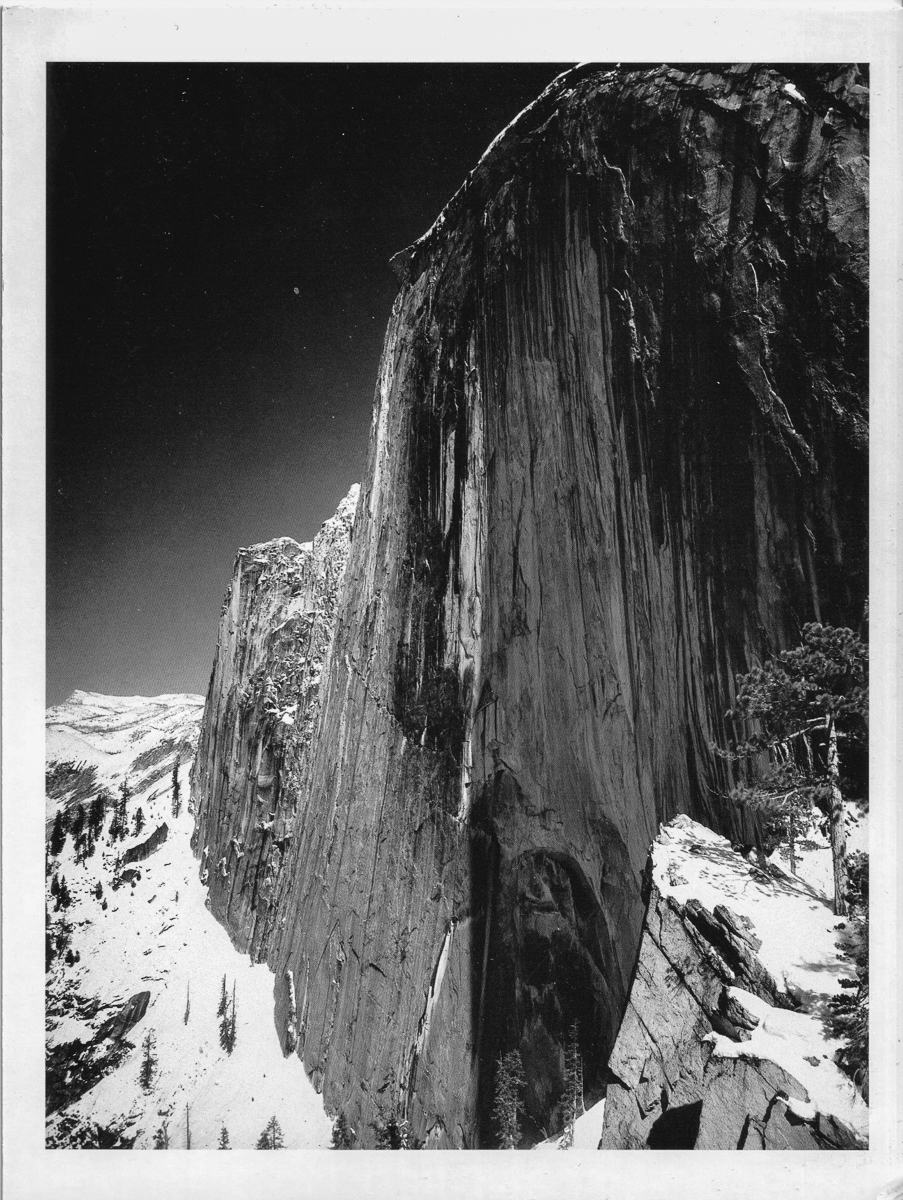
What’s with this stuff about pre-visualization?

I believe that this originates from Ansel Adams who said:

“In my mind’s eye, I visualize how a particular… sight and feeling will appear on a print. If it excites me, there is a good chance it will make a good photograph. It is an intuitive sense, an ability that comes from a lot of practice.”

I get that. That’s pretty much what I try to do with my photography. When I see something that interests me, I have a sense of how the final photograph should look. In effect, I visualize how the final image will look and do all I can to get it to look the way I visualized it.

What I don’t get is where the “pre” comes from. The prefix “pre” means something that comes before something else e.g. “The tree was almost certainly planted pre-1700.” or “She attended a pre-adolescent dance class.”

So “pre-visualize” would suggest something that you do before you “visualize”. What is that? Am I missing something?

I quickly browsed around the internet and couldn’t find a quotation where Adams uses “pre-visualize”, although I did find examples (such as the one above) where he does use “visualize”.

Admittedly, I didn’t spend much time looking so I might well have missed something. It was just a passing thought that I don’t really want to spend more effort on.