A Visit to Boston – Day Three – Old South Church

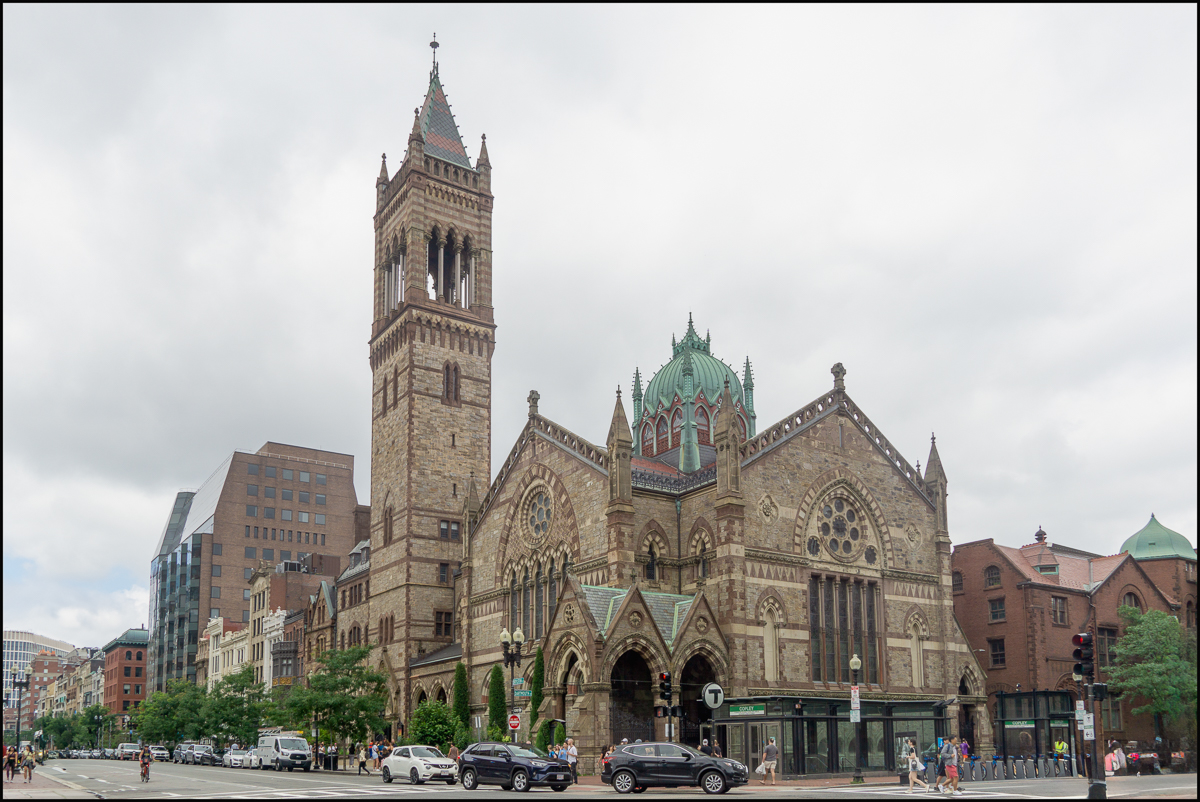
“Old South Church in Boston, Massachusetts, also known as New Old South Church or Third Church, is a historic United Church of Christ congregation first organized in 1669. Its present building was designed in the Gothic Revival style by Charles Amos Cummings and Willard T. Sears, completed in 1873, and amplified by the architects Allen & Collens between 1935–1937. The church, which was built on newly filled land in the Back Bay section of Boston, is located at 645 Boylston Street on Copley Square. It was designated a National Historic Landmark in 1970 for its architectural significance as one of the finest High Victorian Gothic churches in New England.[3] It is home to one of the oldest religious communities in the United States.” (Wikipedia, which also provides much more information)

Additional information on the history of the church can also be found on the church’s website.

Again, I would have liked to explore the interior, but didn’t have the time.

Taken with a Sony A6000 and 18-135mm f3.5-5.6 OSS

A Visit to Boston – Day Three – Boston Public Library

As I arrived in Copley Square this was the first building I encountered: The wonderful Boston Public Library.

The library’s website provides the following information:

Established in 1848 by an act of the General Court of Massachusetts, the Boston Public Library (BPL) was the first large free municipal library in the United States. In 1839, French ventriloquist M. Nicholas Marie Alexandre Vattemare became the original advocate for a public library in Boston when he proposed the idea of a book and prints exchange between American and French libraries. The Mayor of the City of Boston, Josiah Quincy, Jr., first president of the Board of Trustees, Edward Everett, and his successor, George Ticknor, were also at the forefront of the library’s establishment.

Boston Public Library’s first building of its own was a former schoolhouse located on Mason Street that opened to the public on March 20, 1854. However, it was obvious from opening day that the quarters were inadequate for the library’s collection of sixteen thousand volumes. In December 1854, library commissioners were authorized to locate a new building on a lot on Boylston Street, which opened in 1858 at 55 Boylston Street with seventy thousand volumes. Twenty years later, as the library outgrew that space, the Trustees asked the state legislature for a plot in the newly filled Back Bay. On April 22, 1880, the state granted the City of Boston a lot at the corner of Dartmouth and Boylston Streets.

Charles Follen McKim of McKim, Meade, and White was appointed the principal architect in 1887 for the new building. The present Central Library in Copley Square has been home to the library and has served as its headquarters since 1895, when Charles Follen McKim completed his “palace for the people.”

In 1986, the National Park Service designated the McKim building a National Historic Landmark, citing it as “the first outstanding example of Renaissance Beaux-Arts Classicism in America.” Within the McKim Building are exquisite murals series by John Singer Sargent, Edwin Austin Abbey, and Pierre Puvis de Chavannes, a peaceful inner courtyard, and additional works of famed sculptors and painters that can be viewed via the library’s daily art and architecture tours. Bates Hall, the iconic reading room located on the second floor of the McKim building, is named in honor of Joshua Bates, a London merchant banker born in Weymouth, MA, who in 1852 donated $50,000 for the library’s establishment and another $50,000 for the purchase of books. He was the first major benefactor of the BPL and initiated that its services be “free to all.”

The McKim building restoration and renovation project began in 1980 with a planning grant from the Massachusetts Historical Commission that enabled the Trustees of the Boston Public Library to undertake an initial feasibility study, and Mayoral and City Council approval was received by 1983. The multiphase project began in 1991 and was completed in 2002 and included renovation of several public services spaces, mechanical, electrical, and telecommunication systems, and historic restoration work including the courtyard. (BPL History)

For much more information see the Wikipedia page on the Boston Public Library.

These two, seated allegorical female figures (two views of each) below represent Science (the first, holding a sphere) and Art (the second, holding a palette and a paintbrush) stand by the entrance to the library. The sculptures were created by Bela Lyon Pratt after his mentor Augustus Saint-Gaudens died, leaving his design for the library incomplete.


Below, a scary looking, spiked light fixture.

Six bronze doors lead from the vestibule to the spectacular lobby and grand staircase (see below. They were designed by Daniel Chester French. Each of the doors weighs 1500 pounds. This one is called “The allegories of truth and romance”.

Each door bears the low-relief image of an allegorical figure holding her attributes along with a quote. The left door quote reads: “Truth is the strength and the kingdom and the power and the majesty of all ages”, and the right: “A romance to rede and to drive the night away for me thought it better play than either at cheese or tables. (I have no idea what these means)”.


Below, Statue of Sir Henry Vane. The plaque reads:

Sir Henry Vane. Governor of the Colony of Massachusetts Bay 1636. Born 1612. Beheaded 1662. An ardent defender of civil liberty and advocate of free thought in religion. He maintained that God’s law and parliament are superior to the king. This statue was placed here at the request of James Freeman Clarke, D.D. an honored citizen of Bost who nobly labored for the abolition of slavery in America.

It appears that, after serving as governor of the Massachusetts Bay Colony at the age of 23 in 1636, Vane later returned to England to be tried for sedition against King Charles I and was beheaded. The royal charge was treason against the crown, but the charge was not made specific.

It seems the the library isn’t just used for reading.


I would have liked to explore the interior, but didn’t have the time.

Taken with a Sony A6000 and 18-135mm f3.5-5.6 OSS
A Visit to Boston – Day Three – Horses (and more) on Copley Place

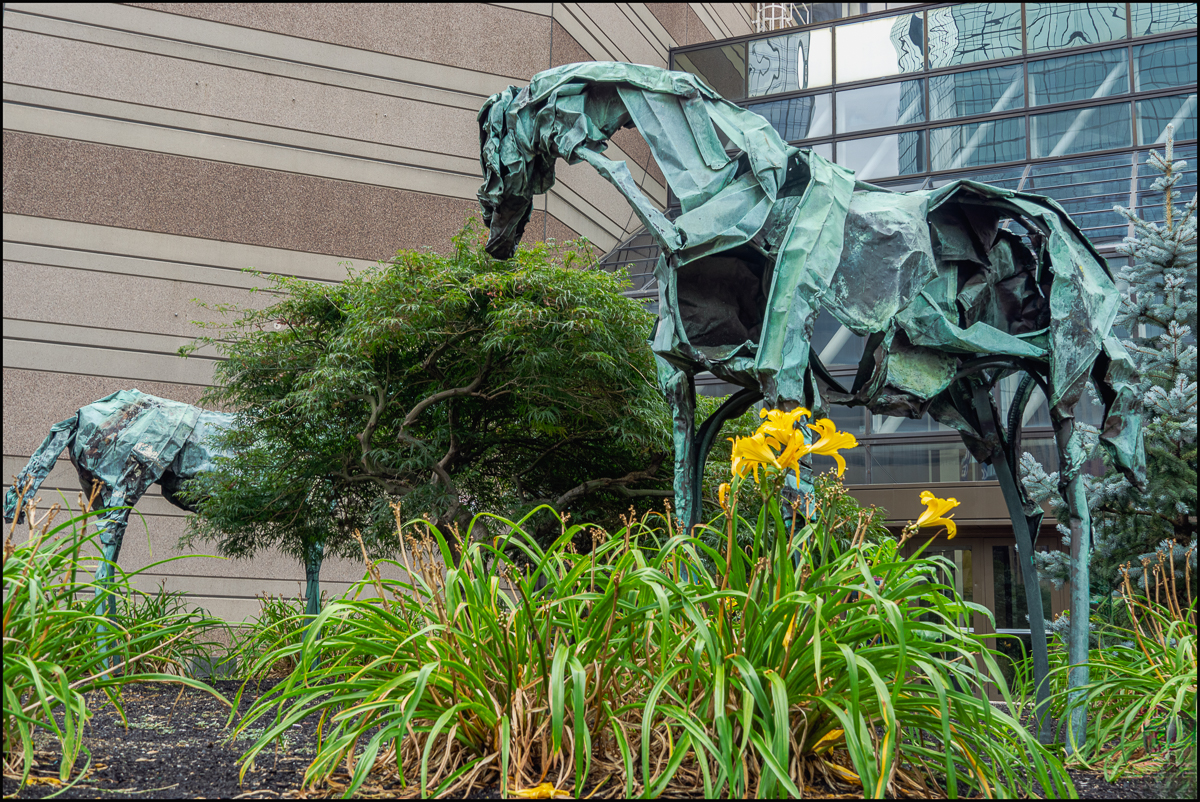
As I walked down to Copley Square, not far from Back Bay Station, I came across these two horses in a shopping area called “Copley Place“. According to the Next Phase Blog:

Like many other cities, Boston has statues of horses and, like other cities, they mostly serve as mounts for famous men, like George Washington and Paul Revere. But two horses called Paint and Henry graze in a garden outside the Copley Place mall, minus rider or tack. and Henry and they have a history that’s more retail than martial.

Like many other cities, Boston has statues of horses and, like other cities, they mostly serve as mounts for famous men, like George Washington and Paul Revere. But two horses graze in a garden outside the Copley Place mall, minus rider or tack. They are called Paint and Henry and they have a history more retail than martial.

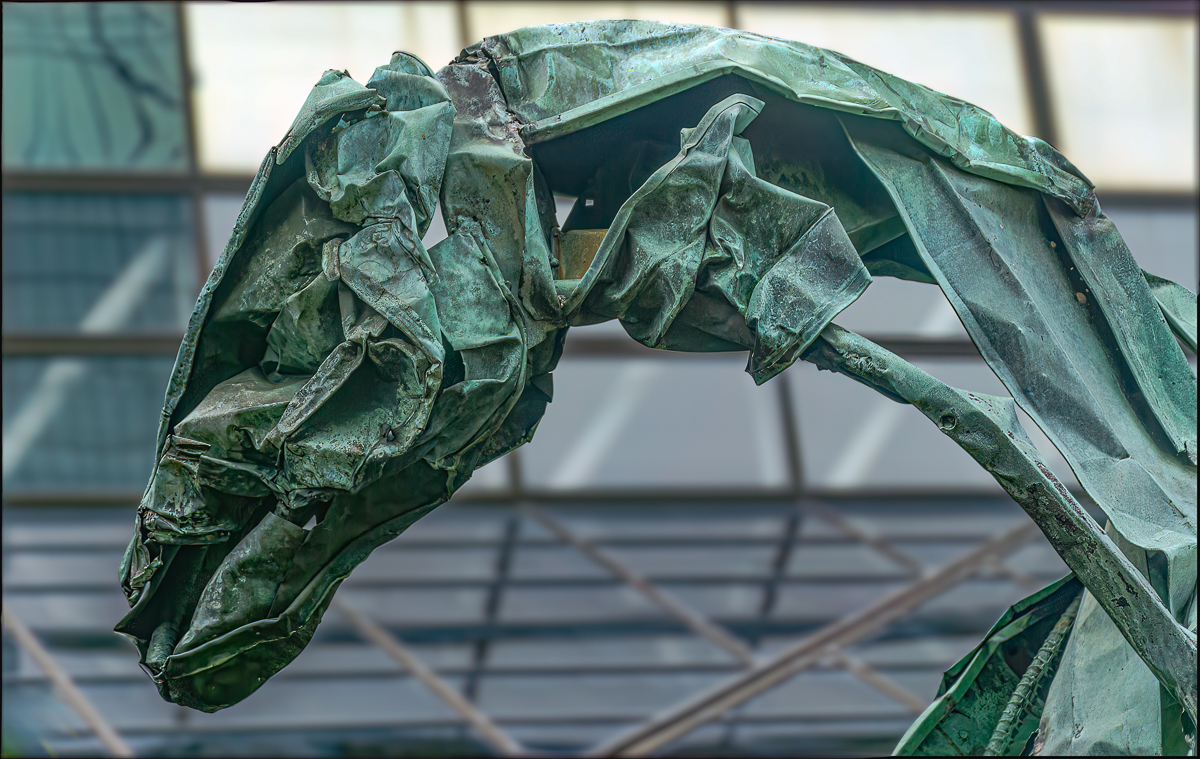
Sculpted by Deborah Butterfield, these two “semi-abstract” sculptures are a visual allegory for the establishment of the Neiman Marcus store behind them. They are made of cast bronze from an armature of bronze and copper using the “lost wax” process. Unlike their more heroic counterparts elsewhere in the city, they are not realistic representations of horses or even solid. (Boston’s Horses: Paint and Henry, which contains additional information)

. I’m afraid I don’t know which is Paint and which is Henry.

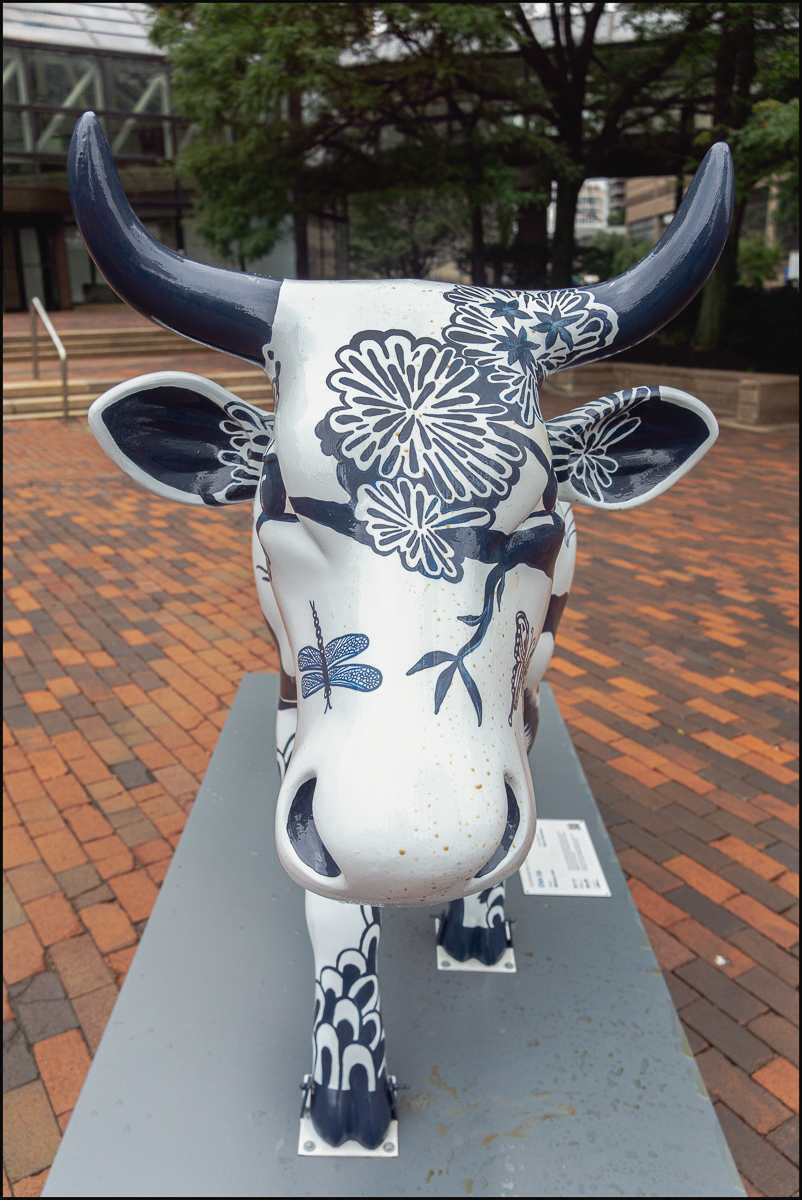
And of course, there was the inevitable cow. I told you earlier that there would be more of them.

Taken with a Sony A6000 and 18-135mm f3.5-5.6 OSS

A Visit to Boston – Day Three – Back Bay Station

Whenever I’m going somewhere I tend to get to the airport/station very early. As long as I can find somewhere to sit comfortably, read a book and maybe have a beer, I’m happy. When I left New York, the spanking new Monynihan Train Hall (See:In New York City – The Moynihan Train Hall) was a great experience: I had purchased a first-class round trip so I was escorted to the first-class lounge, where I had breakfast (I could have had drinks too, but it was far too early). Contented, I sat there reading my book until it was time to leave when I was escorted down to the train. I guess I expected something similar in Boston and so went early again.

I was wrong! Back Bay Station is a bit of a dump. Something like an old-style bus station: cramped; a bit seedy; nowhere comfortable to sit; virtually no refreshments. I couldn’t see sitting there for a couple of hours, so I checked my maps app to see where I was and realized that I was a short walk from Copley Square. We’d passed it on our bus tour, but we went through so quickly that I wasn’t able to take it in. It was time to go and take a closer look.

Incidentally the statue (about the only thing of interest in Back Bay Station) is of A. Philip Randolph. The New England Historical Society describes him as follows:

Randolph was both a great labor leader and a great civil rights leader, not coincidental when you consider racial justice means nothing without economic justice. At least that’s what Randolph – and his protégé Martin Luther King, Jr., thought. The 1963 March on Washington was, after all, the March for Jobs and Freedom.

Leaders of the 1963 March on Washington for Jobs and Freedom. A. Philip Randolph is seated in the center; John Lewis is second from right. Photo courtesy National Archives.
King called Randolph the “truly the dean of the Negro leaders.”

Randolph is credited with pushing President Franklin Roosevelt to ban discrimination in the defense industry and President Harry Truman to integrate the military. Considered the most important black leader in the 1930s and 1940s, he helped bring thousands of railroad sleeping car porters into the middle class.

Though Randolph grew up in Jacksonville, lived in New York City and made his mark on Washington, he also had an impact in Boston’s African-American community. Even today, his nine-foot sculpture in the train station may inspire commuters who take the time to read his words at the base: “Freedom is never granted; It is won. Justice is never given; it is exacted.” New England Historical Society Article: A. Philip Randolph heads the 1963 March on Washington, which contains much more information, including a video.

To be fair to Back Bay Station, I was told that there was a lounge, but that it was in the Terminal at South Station. I checked out South Station and discovered that it’s much more interesting, with more facilities than Back Bay. More like the Moynihan Station in New York, in fact. In my ignorance I had chosen the wrong station to leave from. I’ll know better next time. My apologies to Back Bay.

Taken with a Sony A6000 and 18-135mm f3.5-5.6 OSS

A Visit to Boston – Day Three – Sullivan’s Tap

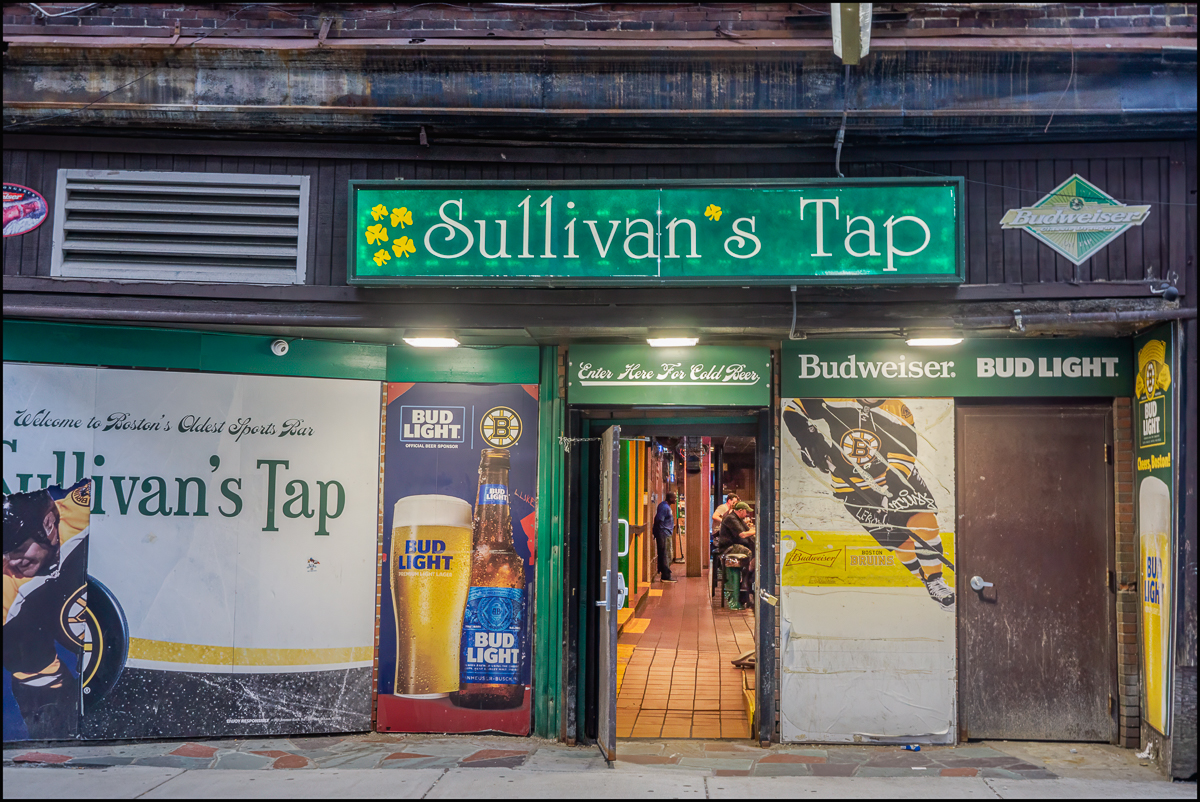
I got my stuff together and prepared to leave. But before actually leaving we planned to have breakfast, where had a long chat. After picking up my luggage from the hotel I took a picture of the bar across the road from he hotel entrance. It’s called “Sullivan’s Tap” and it bills itself as “… Boston’s Oldest Sports Bar! First opened in 1933”. Then I made my way to Back Bay to take my train back to New York.

Taken with a Sony A6000 and 18-135mm f3.5-5.6 OSS