A Visit to Boston – Day Two – Dinner at Filippos

Walking back to the Hotel at the end of the first day we bumped into an interesting looking restaurant and decided that, since we’d already had dinner we’d have dessert there (that’s when the first picture was taken). At the end of the second day, we decided to have dinner there (unfortunately we didn’t take a picture). The restaurant is called Filippo Restaurant Boston. We had a decent meal and then set of back to the hotel…and walked into a huge storm. It was raining buckets, so much so that it was impossible to cross and intersection without wading through a couple of inches of water. Thunder and Lightning all over.

Luckily the hotel was only about five blocks away, but still we were thoroughly drenched by the time we got there.

Taken with a Sony A6000 and 18-135mm f3.5-5.6 OSS

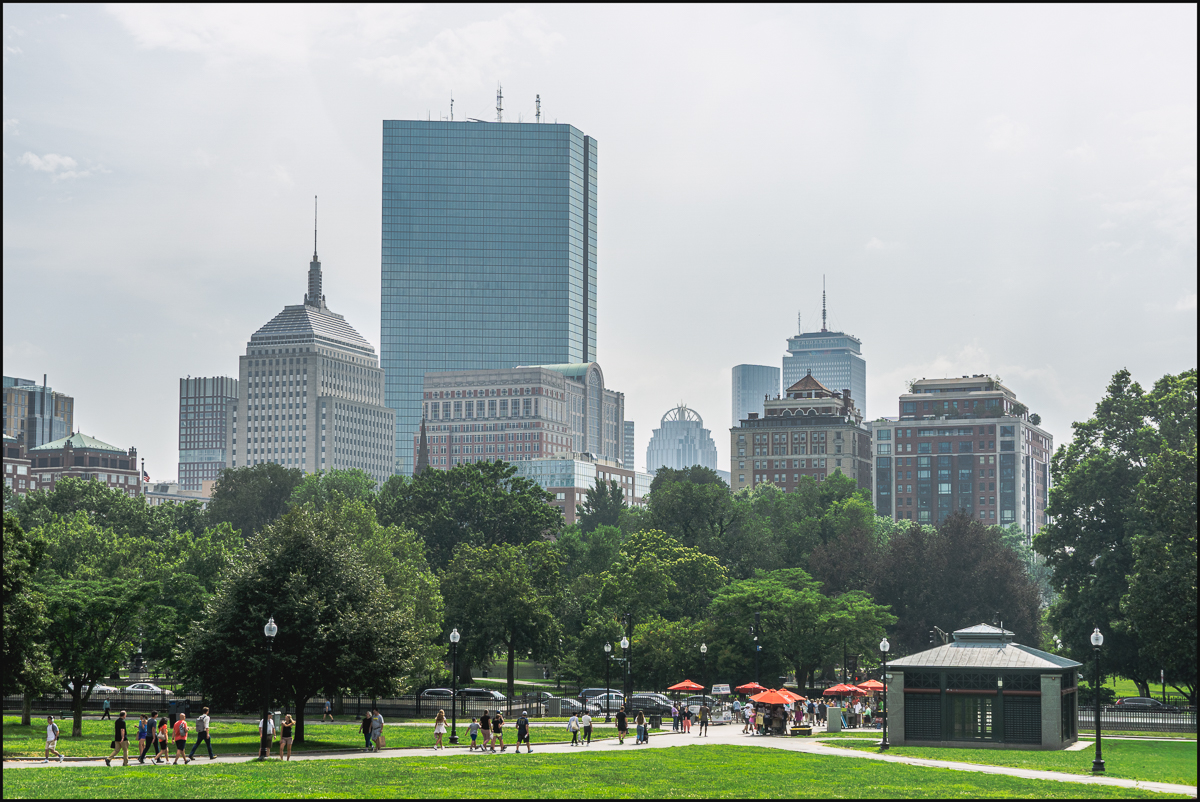
A Visit to Boston – Day Two – Across Boston Common

“Hear the echoes of 350 years of the most extraordinary history of America’s oldest park. Founded in 1634.

Here the Colonial militia mustered for the Revolution. In 1768, the hated British Redcoats began an eight-year encampment. George Washington, John Adams and General Lafayette came here to celebrate our nation’s independence. The 1860s saw Civil War recruitment and anti-slavery meetings. During World War I, victory gardens sprouted. For World War II, the Common gave most of its iron fencing away for scrape metal.

Boston Common continues to be a stage for free speech and public assembly. Here, during the 20th century, Charles Lindbergh promoted commercial aviation. Anti-Vietnam War and civil right rallies were held, including one led by Martin Luther King, Jr. In 1979, Pope John Paul II celebrated Mass.

Frederick Law Olmsted never touched Boston Common, but his sons did. About 1913, their firm supervised the paving of walkways, the replenishment of the soil, and the moving of 15-ton trees.

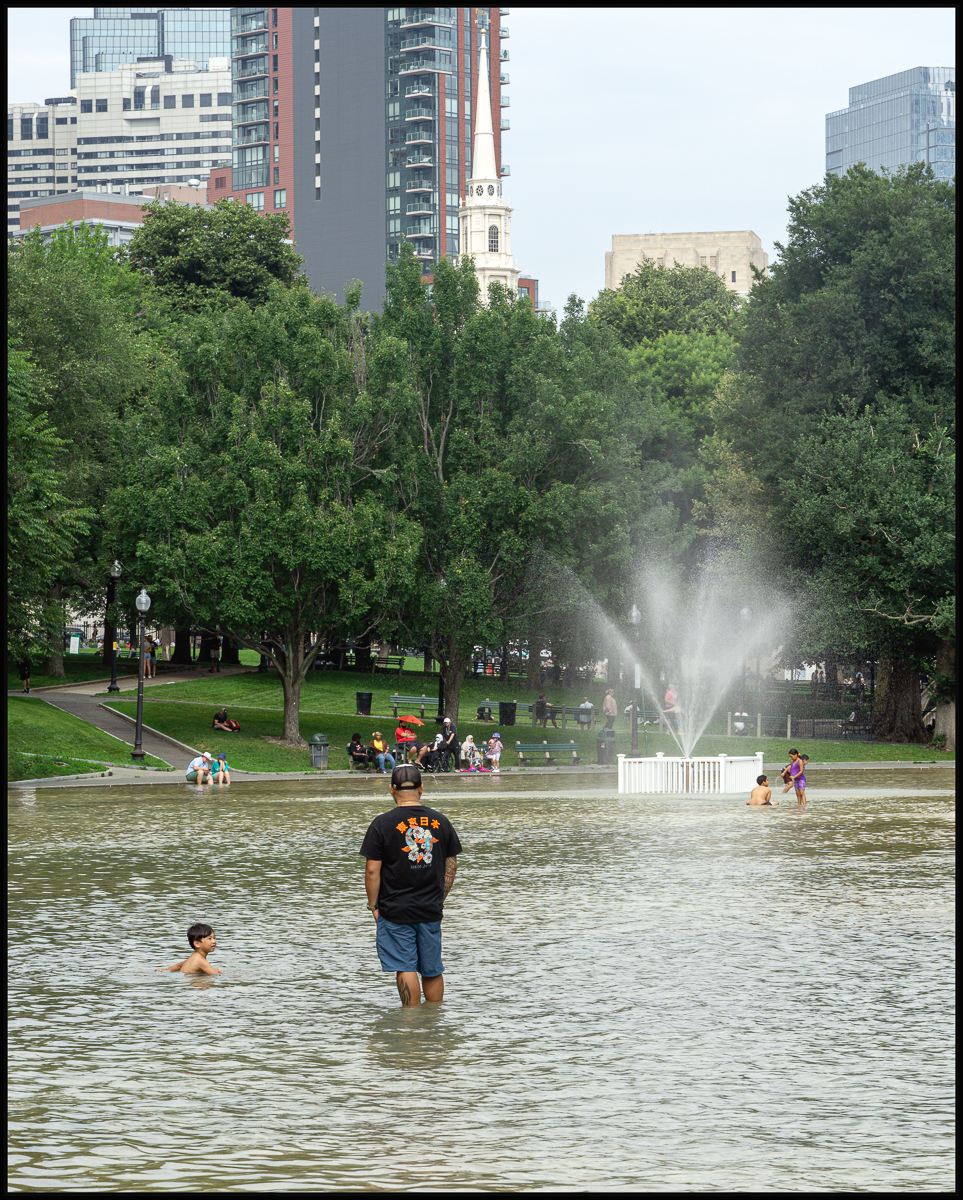
From a utilitarian common ground for activities like grazing, militia formations and public hangings, the Common evolved. Its peaks were leveled cows were banned and 19th Century Bostonians added trees, fountains and statuary. The Common became the park-like greenspace we know today. The park includes ballfields, a tot lot and the Frog Pond, which provides skating in winter and a spray pool for children in the summer.” (City of Boston Website)


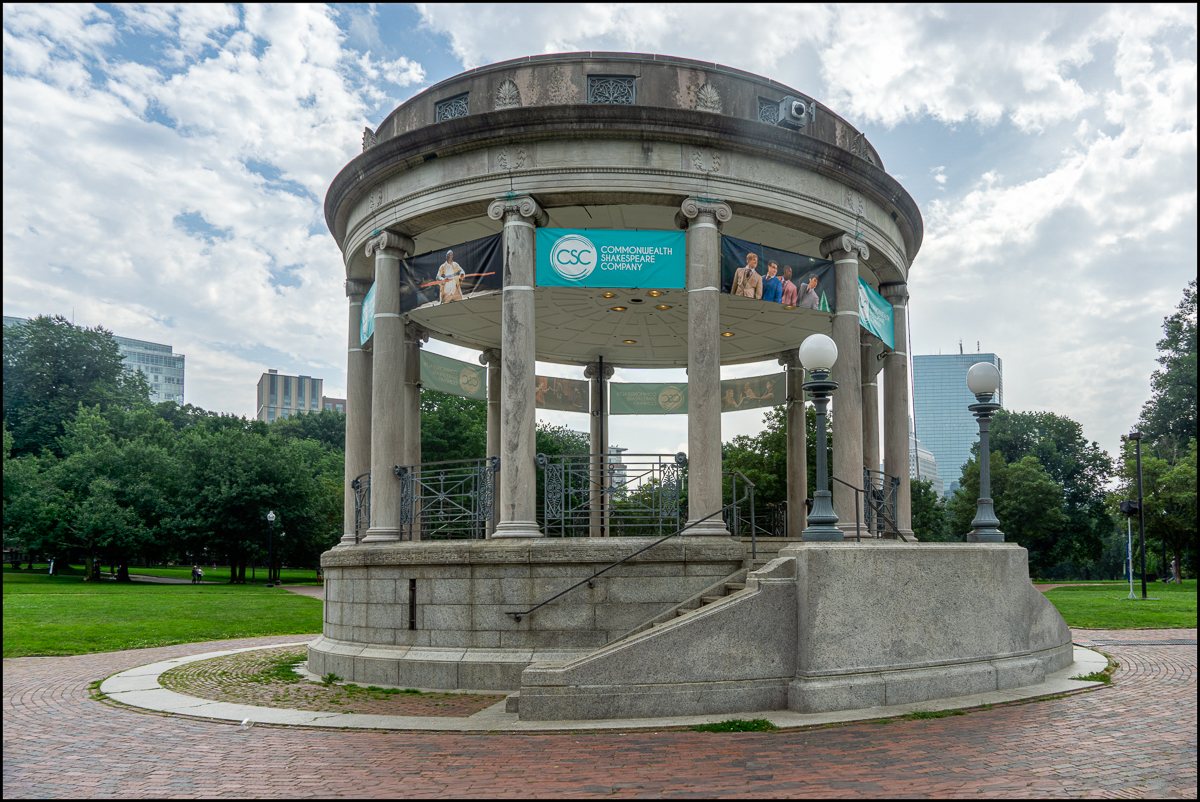
Parkman Bandstand


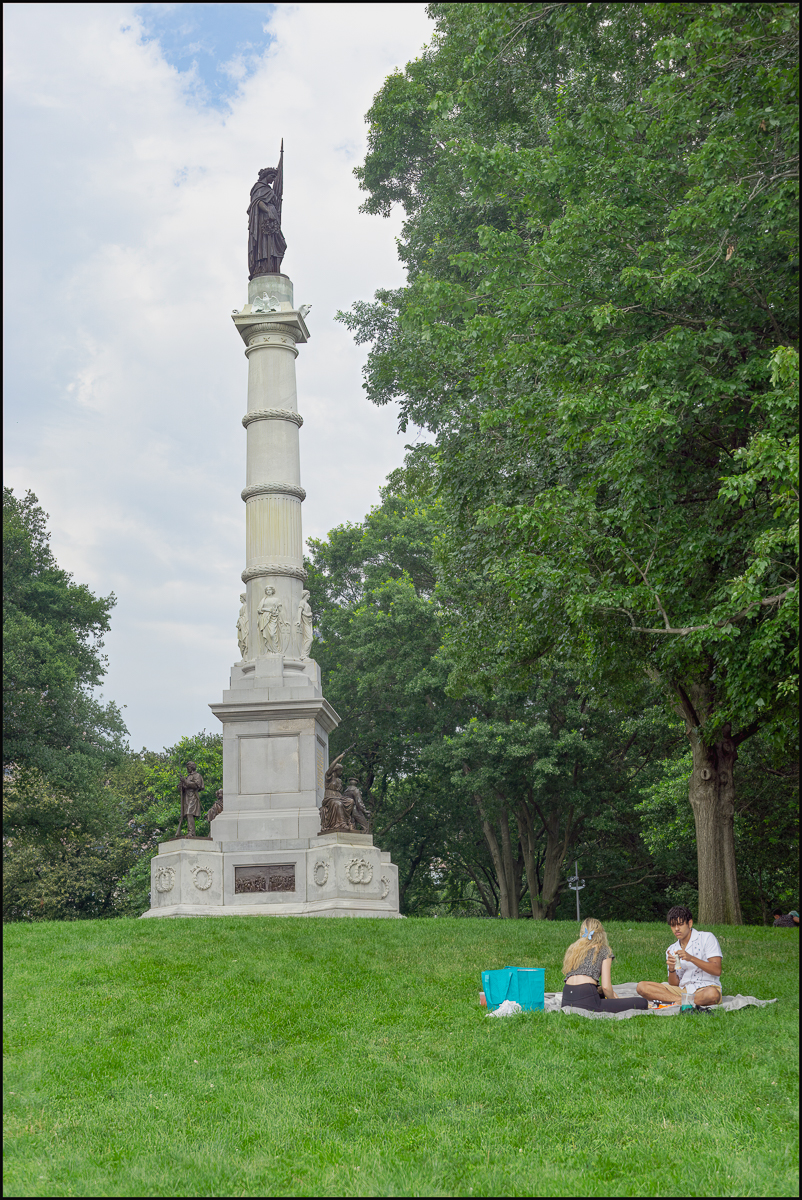
Boston Soldiers and Sailors Monument


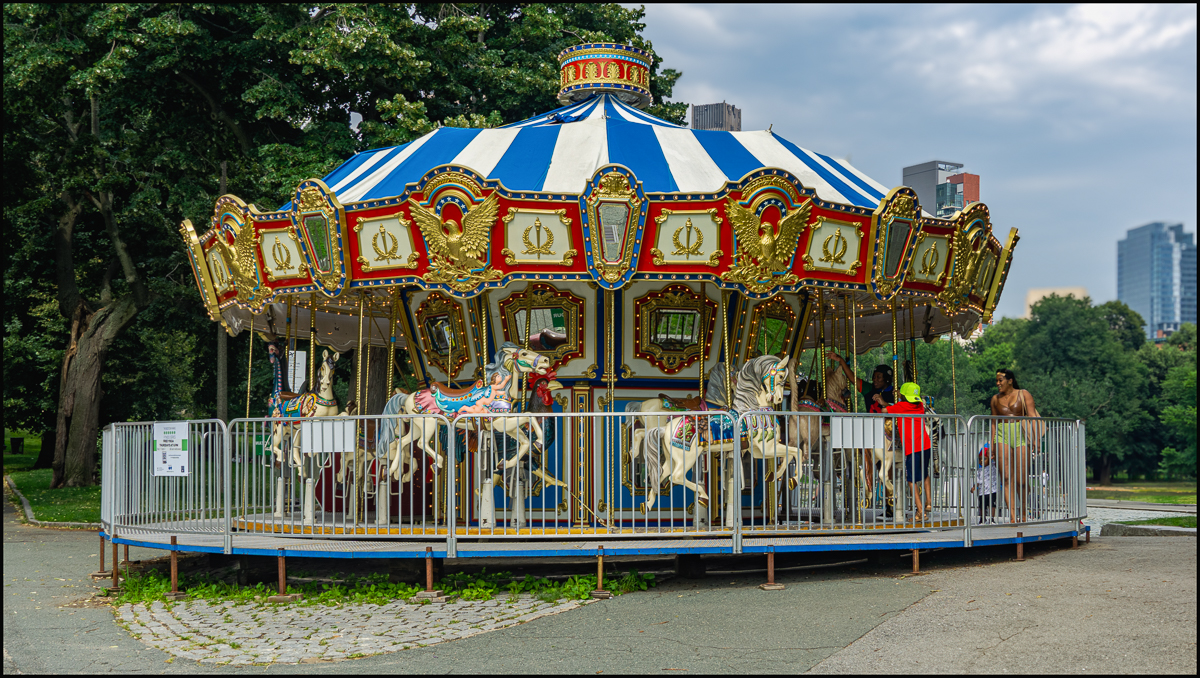
Carousel


Frogpond


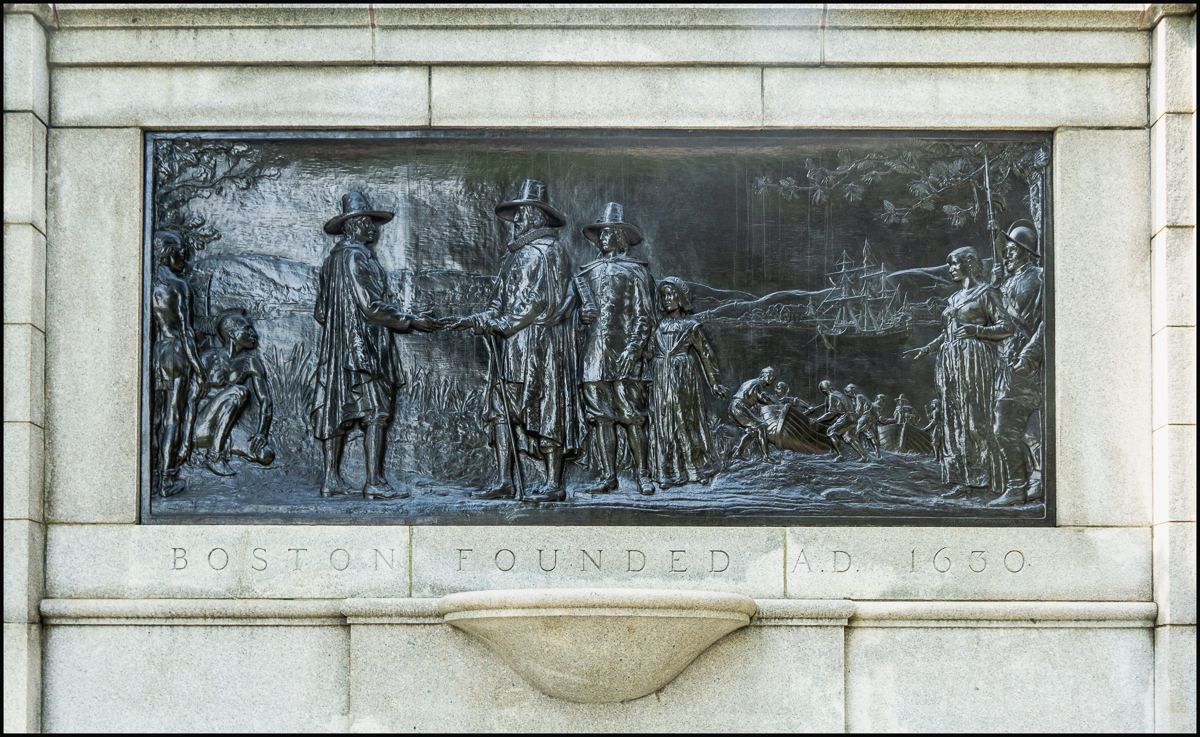
Plaque depicting the founding of Boston

Taken with a Sony A6000 and 18-135mm f3.5-5.6 OSS

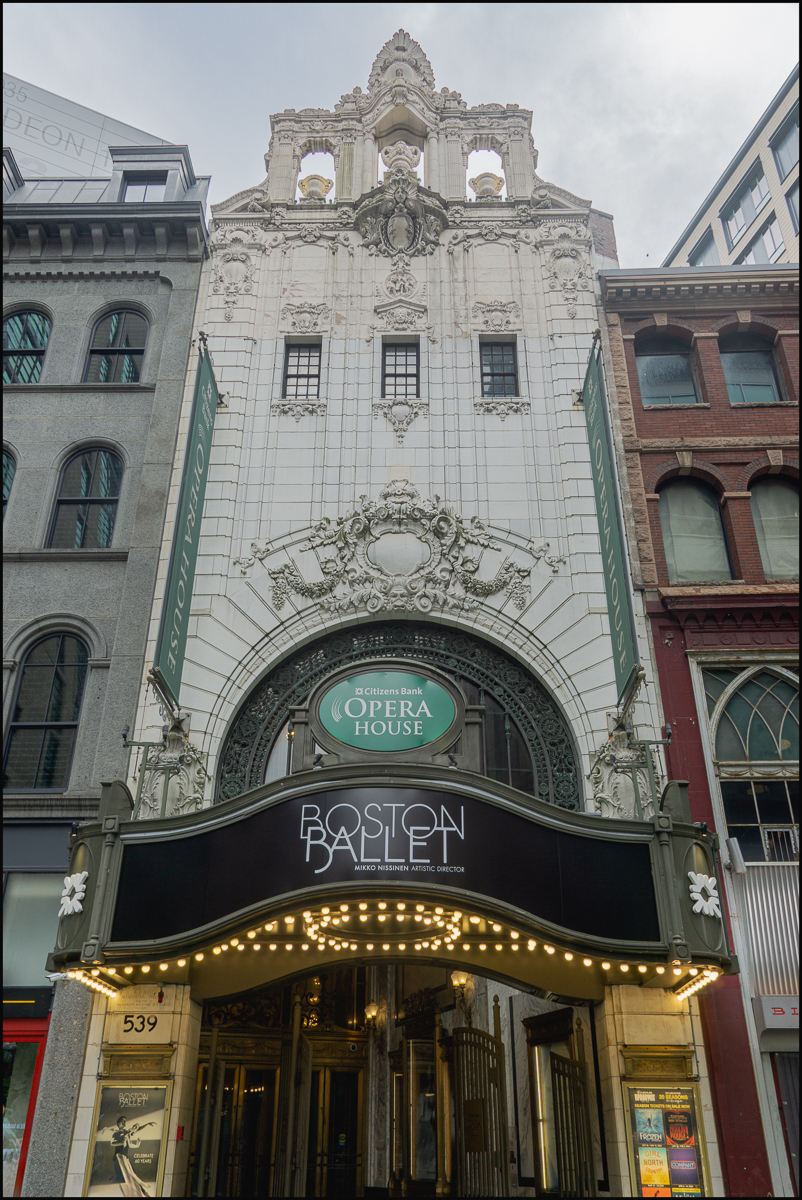
A Visit to Boston – Day Two – Citizens Bank Opera House

The History section of the Opera House website says:

A Historic Theatrical Masterpiece Restored to its Original Beauty.

The Citizens Bank Opera House is one of the finest examples of the vaudeville circuit palace at the pinnacle of its development. Designed in a combination of French and Italian styles by Thomas White Lamb, one of the foremost theatre architects of his day, it was erected under the close personal supervision of Edward Franklin Albee to memorialize his late partner, Benjamin Franklin Keith. Because it was constructed as a memorial and tribute to vaudeville’s greatest impresario, it was built with a degree of luxury in its appointments that is almost unrivaled.

Wikipedia has this (and much more, especially on its history) to say:

The Boston Opera House, also known as the Citizens Bank Opera House, is a performing arts and esports venue located at 539 Washington St. in Boston, Massachusetts. It was originally built as the B.F. Keith Memorial Theatre, a movie palace in the Keith-Albee chain. The chain became part of RKO when it was established just before the theater opened on October 29, 1928, and it was also known as the RKO Keith’s Theater. After operating for more than 50 years as a movie theater, it was rededicated in 1980 as a home for the Opera Company of Boston, which performed there until the opera company closed down in 1990 due to financial problems. The theater was reopened in 2004 after a major restoration, and it currently serves as the home of the Boston Ballet and also hosts touring Broadway shows.

Taken with a Sony A6000 and 18-135mm f3.5-5.6 OSS

A Visit to Boston – Day Two – The Paramount

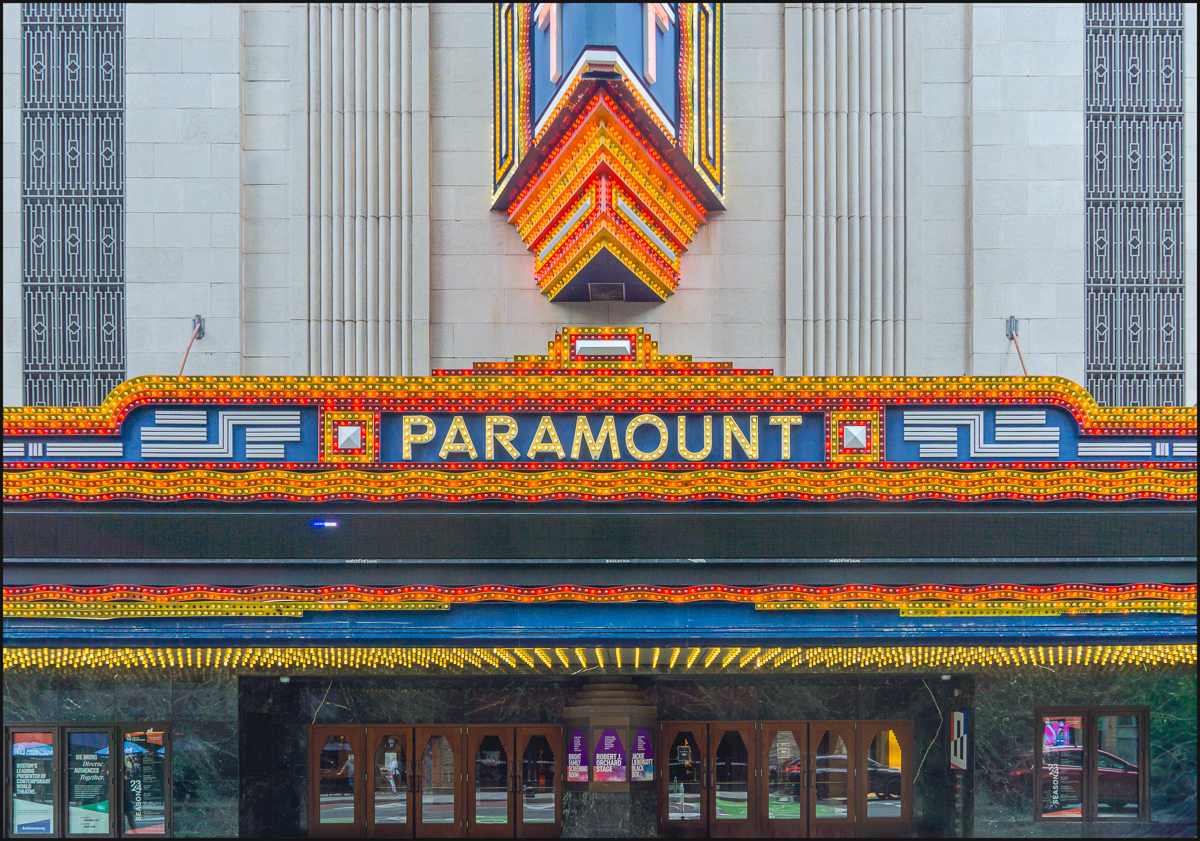
Eventually we ended up on Washington Street where my friend wanted to do a little shopping. I took this picture of The Paramount Theater.

“The Paramount opened in 1932 as a 1,700-seat, single-screen movie theatre. It was one of the first movie houses in Boston to play talking motion pictures. The theatre was named after its original owner, Paramount Pictures. It closed in 1976 and most of the Art Deco interior decoration was destroyed in the 1980s during the removal of asbestos.[2] In 1984, the building was designated a Boston Landmark by the Boston Landmarks Commission.

In 2002, Millennium Partners agreed to restore the Paramount’s facade, marquee, and vertical sign in exchange for city approval of their adjacent Ritz-Carlton Towers project. The city occasionally lighted the sign at night. The city’s hopes that the site would be developed by the Cambridge-based American Repertory Theater were not fulfilled.

In April 2005, Emerson College announced plans to renovate the Paramount Theatre and build a performing arts facility in and around the original building. The $77 million project involved the renovation of the building and adjacent parcels of land into a complex containing a 550-seat theater, a Performance Development Center, a student residence hall, a 125-seat black box theater, a 170-seat film screening room, eight rehearsal studios ranging from 700 square feet (65 m2) to 1,900 square feet (180 m2), six practice rooms for individuals and small groups, a sound stage for film production classes, a scene shop, several classrooms, a restaurant, and up to a dozen offices for faculty and staff. Design was by Elkus Manfredi Architects, Boston.[3] Acentech Incorporated consulted on the acoustical design of the facility, providing guidance on room acoustics, sound isolation between the stacked spaces on the tight urban site, and mechanical system noise control in the historic building.

The project was completed in early 2010. On March 18, 2010, Emerson College celebrated the grand re-opening of the Paramount Theater with Mayor Thomas Menino.” (Wikipedia).

Taken with a Sony A6000 and 18-135mm f3.5-5.6 OSS

A Visit to Boston – Day Two – Cows

In the background of the preceding post, you’ll see a blue cow statue. Here are a couple of closer views.

Apparently, this is only one of many. They’re part of CowParade New England 2023.

CowParade New England presented by Herb Chambers will bring 75 life-size cows, designed by a range of artists throughout New England, to high trafficked landmarks throughout Greater Boston to celebrate 75 years of progress and impact made possible by the Jimmy Fund community. All proceeds directly benefit Dana-Farber Cancer Institute’s efforts to defy cancer.

Stay tuned for our pasture map outlining where to visit the cows this summer and for more information on our virtual auction which will launch in August!

This in turn, is part of a larger effort called simply Cow Parade, which describes itself as follows:

The World’s Largest Public Art Event

CowParade is the largest and most successful public art event in the world. CowParade events have been staged in 80+ worldwide since 1999 including Chicago (1999), New York City (2000), London (2002), Tokyo (2003), and Brussels (2003). Dublin (2003), Prague (2004), and Stockholm (2004), Mexico City (2005), Sao Paulo (2005), Buenos Aires (2006), Boston (2006) Paris (2006), Milan (2007, Istanbul (2007), Taipei (2009), Rio (2011), North Carolina (2013), Hong Kong (2013) and more…

Fun Facts

Over 250 million people around the world have seen one our famous cows.
Over $30 million have been raised through worldwide charitable organizations through the auction of the cows, which take place at the conclusion of each event.
Over 10,000 artists worldwide have participated in CowParade – professional and amateur, famous and emerging, young and old.
Over 5,000 cows have been created!

The cows are all over Boston. You’ll see a couple more in upcoming posts.

Taken with a Sony A6000 and 18-135mm f3.5-5.6 OSS