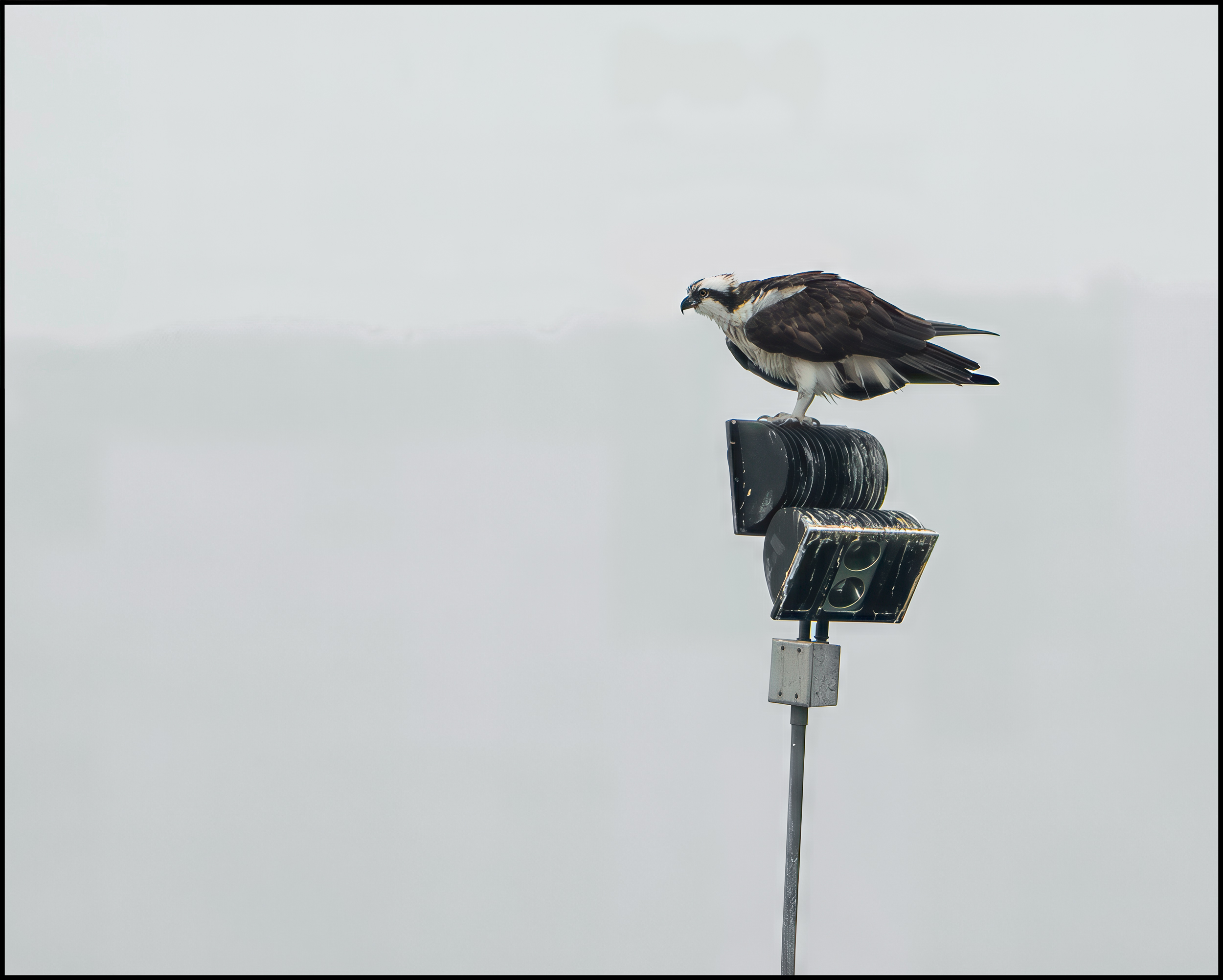
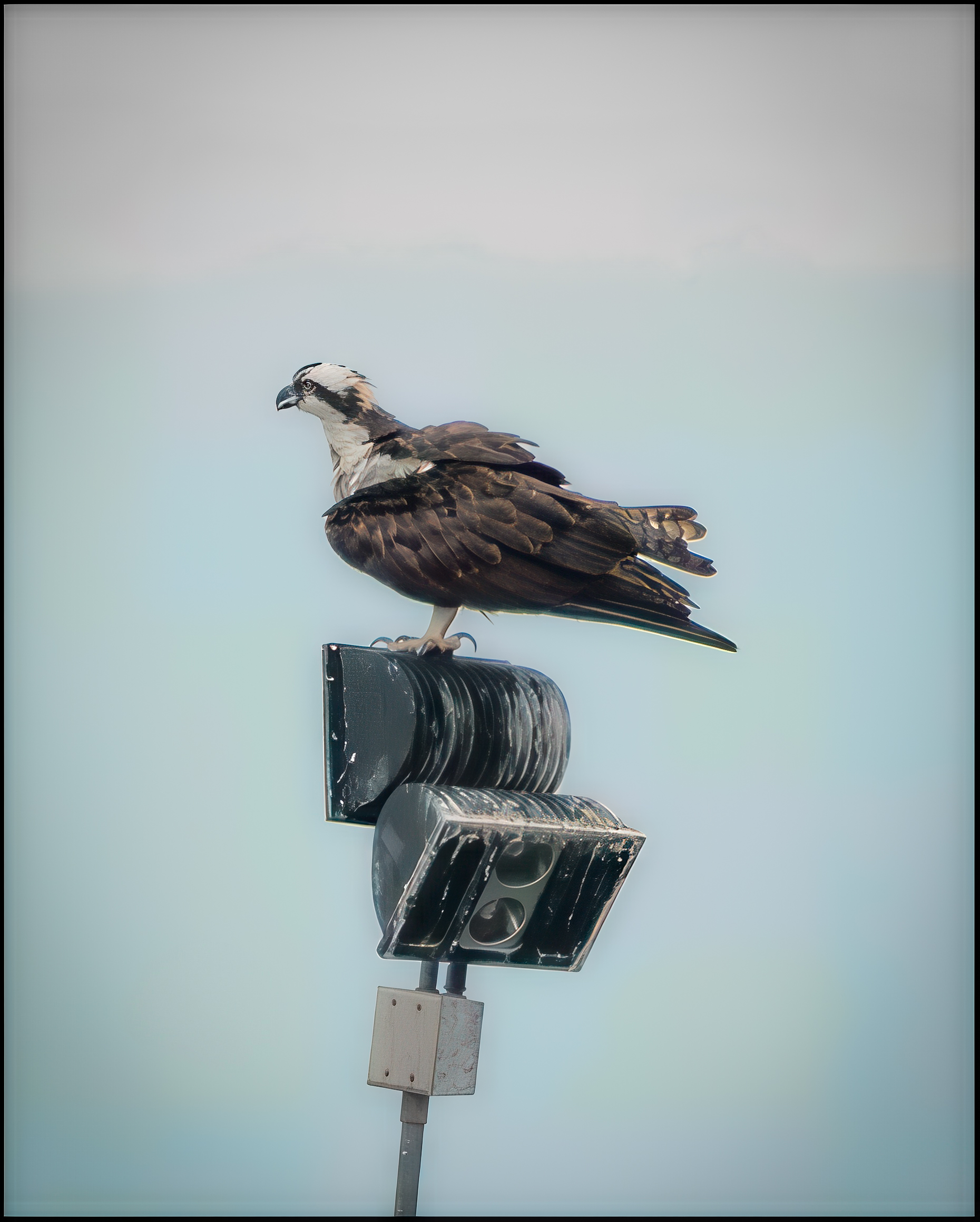
When I’m down by the Hudson River I see lots of birds. They’re generally the usual suspects: Canada Geese, Mallards, Gulls, Cormorants, Pigeons and the occasional crow. Today was different, however. A long way away I spotted some kind of bird on top of a distant light pole. I couldn’t at first figure out what it was and at first thought it was some kind of gull.
I kept watching and after a while it moved and I could make out what it was: An Osprey.
“Historically known as sea hawk, river hawk, and fish hawk, is a diurnal, fish-eating bird of prey with a cosmopolitan range. It is a large raptor, reaching more than 60 cm (24 in) in length and a wingspan of 180 cm (71 in). It is brown on the upperparts and predominantly greyish on the head and underparts. The osprey tolerates a wide variety of habitats, nesting in any location near a body of water providing an adequate food supply. It is found on all continents except Antarctica, although in South America it occurs only as a non-breeding migrant. As its other common names suggest, the osprey’s diet consists almost exclusively of fish. It possesses specialized physical characteristics and unique behavior in hunting its prey: reversible outer toes, sharp spicules on the underside of the toes, closable nostrils to keep out water during dives, backward-facing scales on the talons which act as barbs to help hold its catch and dense plumage which is oily and prevents its feathers from getting waterlogged. Because of these unique characteristics it is classified in its own taxonomic genus, Pandion, and family, Pandionidae.” (Adapted from Wikipedia)
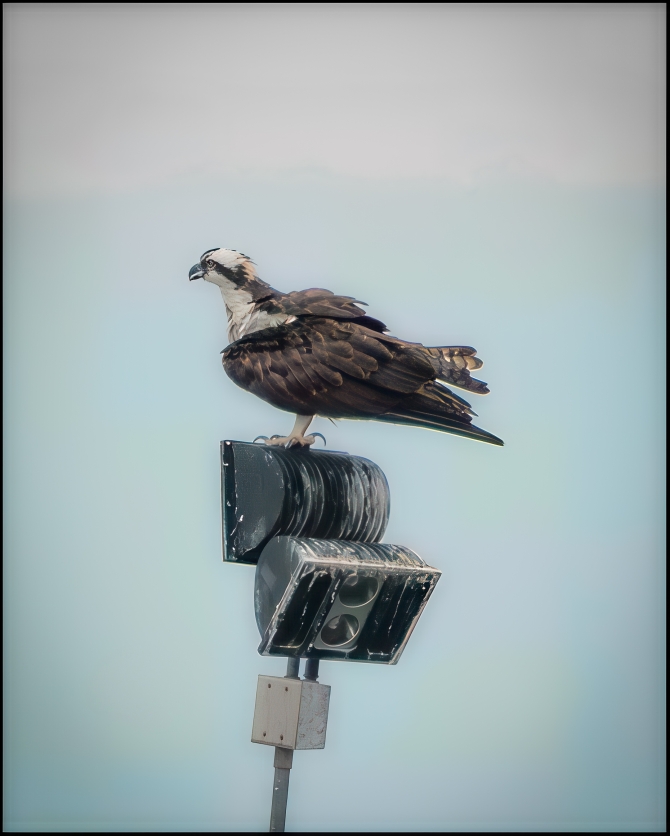
Taken with a Sony RX100 VII.