“In 1820 Dobbs Ferry consisted of a small number of farmhouses on one of two main roads; The Albany Post Road (now Broadway) and Ashford Avenue, the original Indian path leading east from the Hudson River. The most conspicuous landmark was the mansion of Peter Van Brugh Livingston at the Southern end of town. There were no churches in Dobbs Ferry, so for several years a small group of inhabitants met in the barn belonging to Mr. Livingston, led by a travelling preacher who was either Presbyterian or Methodist. In 1823, this little congregation wishing to register its permanence incorporated as the South Presbyterian Church in Greenburgh to distinguish itself from the North Presbyterian Church in Halls Corners.
In August 1823, six members of this group bought one acre triangular piece of land next to the free burial ground on the corner of Storm Street and Ashford Road. They paid Martin Lefurgy and “Rebeccah his Wife” thirty five dollars for it. With that commitment, the first house of worship was erected in Dobbs Ferry. Building of the little church was done mostly by personal labor. Made from timbers hewn out of trees cut in the swampland by the Saw Mill River, with a roof and walls covered with hand-split shingles and painted white in the manner of New England churches, the church became known as the Little White Church. Although the building no longer stands, the Little White Cemetery is there, still owned by the church. The Lutheran Church now occupies that property beside the cemetery.
For two years, the church was Presbyterian in name only, but in 1825 the church was received by the Presbytery of New York, and was officially organized in April of that year. In 1831 a disagreement shook the church when Van Brugh Livingston who militantly opposed liquor, convinced some of the congregation to pass a resolution that anyone wishing to join the church must sign a pledge of total abstinence from distilled spirits. A difference of opinion developed over this issue, which was censured by the Presbytery, and eventually led to Livingston’s resignation as elder.
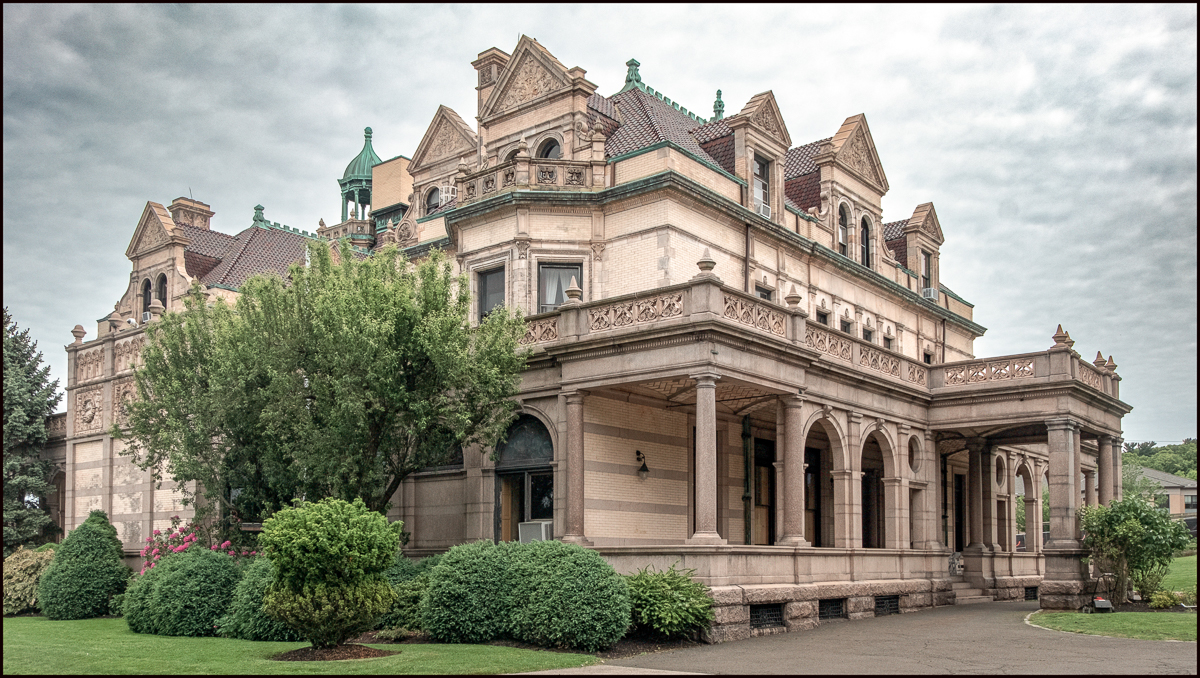
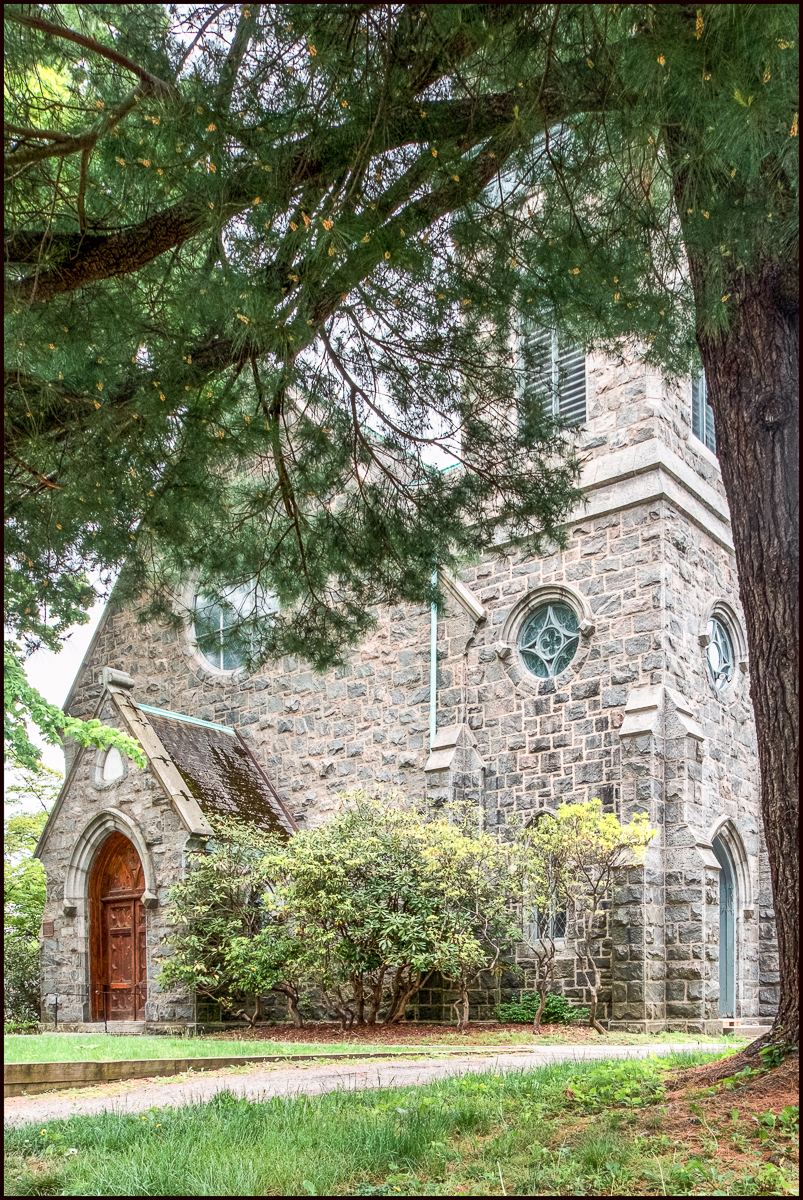
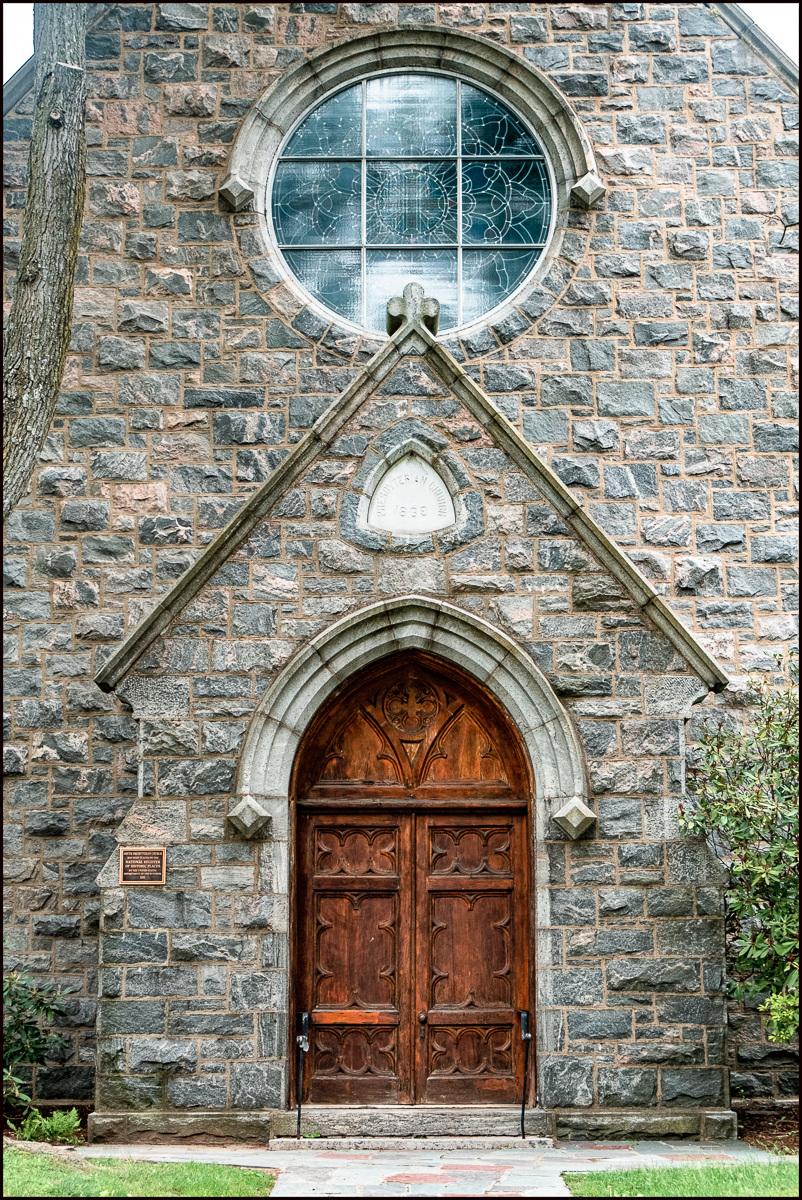
For nearly 40 years, the little white church served the needs of the congregation, which now had about 140 members. As Dobbs Ferry began to grow, a plan for a new building closer to the center of the village was proposed in 1864. James Wilde, Jr., a member of the congregation, negotiated the purchase of the land and acquired the adjoining piece of property to the west for his own use. Plans for the church were drawn up by Julius Munckowitz, who later became Supervising Architect of the New York City Department of Public Parks. Building of this new church on the hill became a matter of tremendous local importance. The granite was cut at the quarry said to be on Ashford Avenue, belonging to congregation member George Schmidt. Calder and Banta of Irvington did the carpentry and James Gaisford, the masonry. Workmen from Dobbs Ferry and all the surrounding villages were called to the job. Church members helped by contributing either money or their labor to the effort. The new church had all the modern conveniences of the day, including gaslights. The cornerstone for the new building was laid on June 8, 1868, in the presence of a large crowd including Rev. Thornton M. Niven, the new pastor. On the last Sunday of 1869 the new building, our present building, was dedicated and the congregation left the old white church never to return. Construction on the Manse to the east of the church, was started in 1869. When it was finished the following year, Rev. Niven and his wife moved in. During the 1870’s James Wilde, Jr. built himself a retirement home on the corner of Broadway and Oak street next to the church. Upon it’s completion, he decided not to occupy it, but instead turned it over to the Misses Masters who had come to Dobbs Ferry to open a school. In 1916 the church acquired Wilde House, which now houses Days of Wonder Day Care.
In 1916 when John M. Trout was minister, electric fixtures replaced the gaslights, and new stained glass memorial windows were put in place. The windows were designed and made by J. Gordon Guthrie, a member of the church who for several years worked for Louis Comfort Tiffany. Mr. Gutherie used Emma Losee, Jean Judson and Ethel Wilde, members of the congregation as models for the rose window.
In 1928, the original hand-pumped organ started wheezing. A committee headed by Sarah Masters and the organist, Frederick Carter, established a fund raising goal of $10,000 for a new organ. In the first month, they raised $16,000. With this money, the balcony was rebuilt and our beloved organ was installed in 1928. Originally built in 1898 and formerly installed in Central Presbyterian Church in Manhattan, it is the organ, which today contributes to the vitality of our worship services here at South Church. Click here for more information concerning the South Church pipe organ. The church bell we ring is dated 1876, made by a major bell founder in this country, Meneely & Kimberly of Troy, New York.
Construction of the church building has been an on-going project. Stained glass windows were added in the nave and vestibule, as memorials to members of the congregation in 1964. They were designed by J.M. Baransky in Yonkers.
From the very beginning when a small group of people decided to begin this church, they never sidestepped controversy, hard work or social justice. From Van Brugh Livingston’s stance on no liquor (though medicinal use was accepted), to money to help Civil War reconstruction in the South and for “freedmen”, up to the present on the streets of New York with the homeless poor, to Nicaragua and Malawi, to our commitment to sexual justice, our historical roots continue to guide us.” (Jacque Jennett on the South Church website)
Taken with a Fuji X-E3 and Fuji XC 16-50mm f3.5-5.6 OSS II