An Excursion to the Dutchess County Fair – Man in a hat

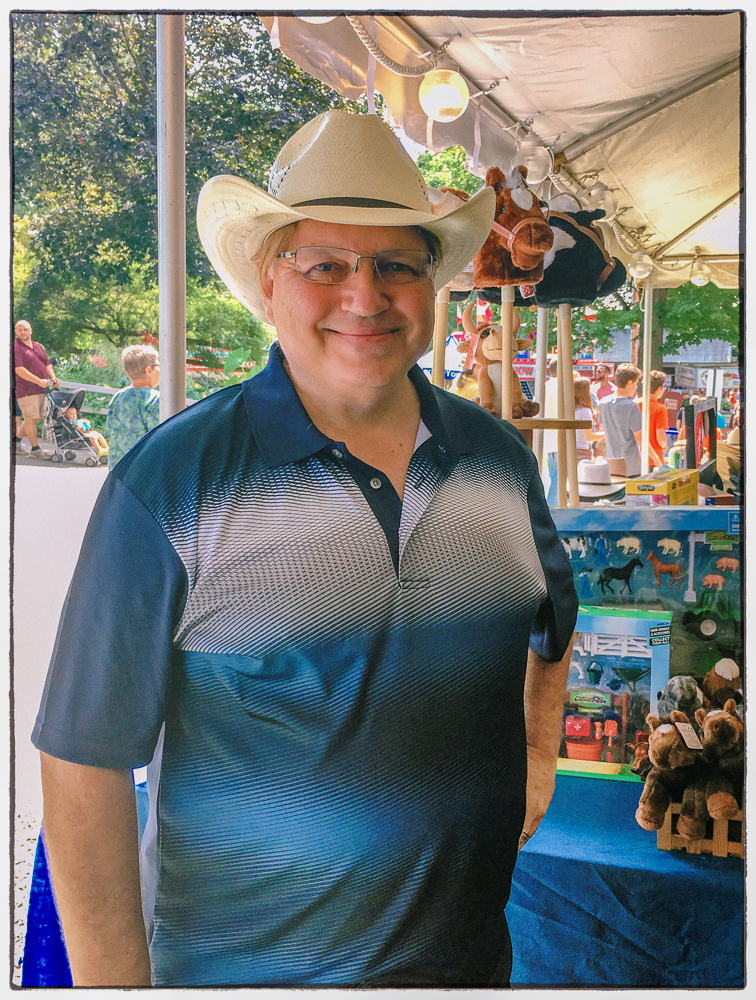
Howdy Pardner!

Since I didn’t take this picture I wasn’t going to post it. However, I appear in very few pictures and the ones I am in don’t exactly flatter me. I quite like this one so I decided that on further reflection I’d include it.

It was a very hot day so I decided I needed a hat too. This is what I ended up with.

Picture courtesy of my wife. Taken with her trusty iphone 6s, the camera that launched a thousand Facebook posts.

An Excursion to the Dutchess County Fair – Woman in a hat

My wife almost always wears hats. As we were approaching the fair I noticed that she (and our friends) were ‘tittering’ about something. It took me a while to figure out what it was. Sometime during out time in Rhinebeck, and unknown to me, my wife had picked up a new hat and replaced the one she had been wearing with it…and I hadn’t noticed. Everyone seemed to feel that this was quite amusing. Anyway here’s the new hat.

Taken with a Sony RX-100 M3.

An Excursion to the Dutchess County Fair – Foster’s Coach House Tavern

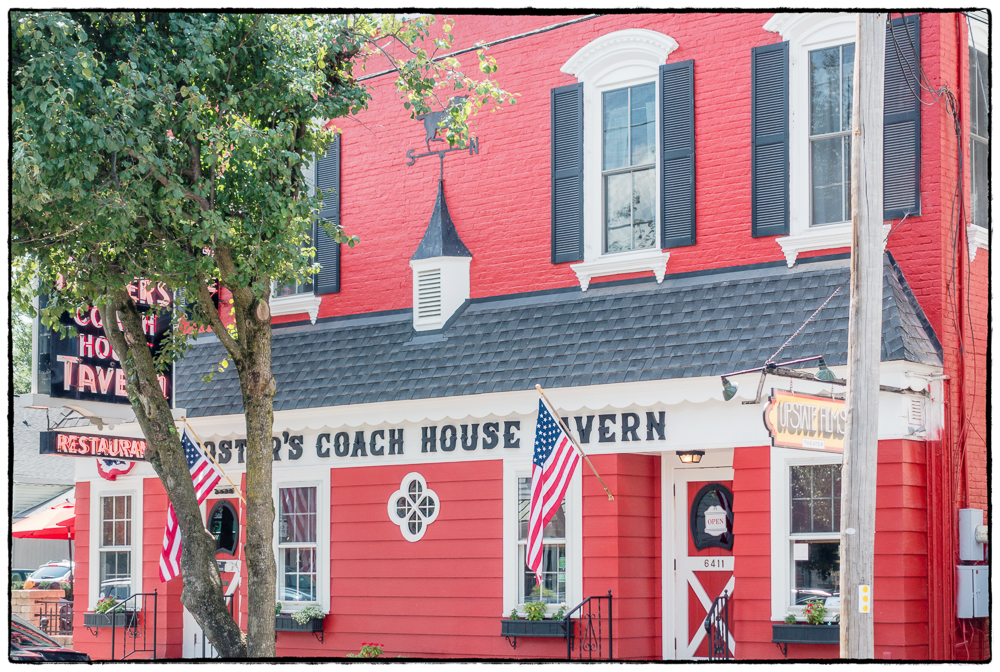
It’s just so red! According to the Tavern’s website:

The Village Tavern was originally built in 1890 by Walter Decker and served as the local gathering spot “for the consumption of alcoholic beverages”. The convenient location at the “four corners” of Rhinebeck’s commercial district made the Tavern a success. A regular customer of the Tavern was Col. Jacob Ruppert, owner of the New York Yankees from 1915-1939. In 1941, Wally Foster bought the Tavern and christened it Foster’s Coach House. Mr. Foster was the driving force behind the revival of horse shows at the Dutchess County Fair and amassed a large collection of horse-related and racing memorabilia. Extensive remodeling during the 1950’s provided the blueprint for the existing interior. The horse country theme employed by Wally Foster is marked by stalls, a tack room, racing prints and iconography, and a coach originally owned by Levi P. Morton, Vice President of the United States under Benjamin Harrison as well as Governor of New York in the late 1800’s. Today the coach can be seen in the front dining room.

Foster’s Coach House was purchased in 1965 by Bob and Karen Kirwood. Bob and Karen shaped Foster’s through their own determination and good nature, and made the landmark a household name throughout the Hudson Valley. Bob created the core menu for Foster’s that is still mostly intact today. Further, he operated the Fairgrounds Restaurant at the Dutchess County Fair. Bob sadly passed away in 2009.

In 2016, Foster’s was purchased by the Bender Family, with deep ties to Foster’s Coach House, and the family has gone to great pains to restore Foster’s to its roots, with the booths reinstalled, all the original artworks back in place and Foster’s original menu bringing back great memories and good times for all.

Taken with a Sony RX-100 M3.

An Excursion to the Dutchess County Fair – The Delamater House

According to the Poughkeepsie Journal (In “Dateline: Delamater Inn the ultimate American Gothic cottage“):

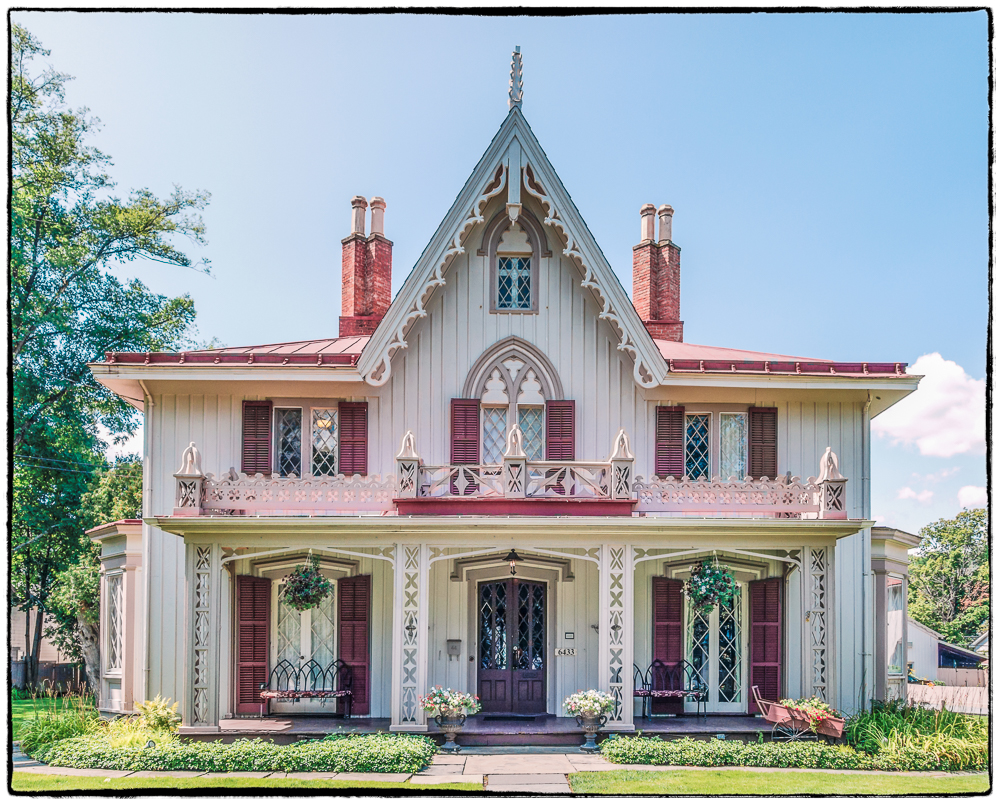
Located at 44 Montgomery St. (Route 9) in the Village of Rhinebeck, the Delamater Inn provides lodging in its namesake historic home, as well as in seven guest houses that occupy its property. The main house was built in 1844 as the home of Henry Delamater, founding president of the First National Bank of Rhinebeck.

The Gothic Revival-style house was designed by renowned architect Alexander Jackson Davis. It features a three-bay by two-bay configuration that is distinctive with its hip-roof block, which is bisected by a prominent steeply sloped pointed gable.

The front (east) side of the house features an ornamental veranda that boasts elegant carvings on each of its flat posts and on the parapet, which outlines the veranda roof. The two windows that flank the front door of the house include casement sashes, which open down to the floor.

Crafted with a unique design, the casements allow for one half of the window to open outward while the other half opens inward. When it was completed, the house was considered to be the “supreme example of the American Gothic cottage.”

The house was built on two acres on the west side of the village’s main thoroughfare, just north of its primary intersection. It served to physically separate the village’s commercial district from the more residential area to its immediate north.

In addition to founding and overseeing the Rhinebeck bank, Delamater was also the president of the village board and in 1846 was the Democratic Party’s candidate for Congress. He was viewed throughout his lifetime as one of Rhinebeck most influential and entrepreneurial figures and one that held significant influence in village matters.

Following Delamater’s death, the property was acquired by Raymond Rikert, who in 1900 founded the Dutchess Light, Heat and Power Company in the area of Rhinebeck known as Hog’s Bridge (today occupied by Northern Dutchess Hospital). The company was acquired by Central Hudson Gas & Electric Corp. in 1926.

The house was later owned by Gen. Ross Delafield, whose primary residence was Montgomery Place, the country estate established by Janet Livingston in 1802 and originally named Chateau de Montgomery in honor of her late husband Gen. Richard Montgomery. Montgomery was the first Continental Army officer killed in battle in 1775.

Coincidentally, Alexander Jackson Davis was also the architect of the manor house that Livingston erected on her estate.

In 1973, during Maj. John Delafield’s ownership, the Delamater House was placed on the National Register of Historic Places. Just five years earlier, the New York Chapter of the Society of Architectural Historians named the house “incomparably the best American Gothic cottage anywhere in the country.”

In 1979, Charles LaForge, then owner of the Beekman Arms, America’s oldest continuously operating inn, and his partner Timothy Toronto purchased the Delamater House for $90,000.

“We originally bought the house to fix up and flip it but during the late 1970s and early 1980s country inns were starting to become real popular so we decided to keep it and run it as an inn,” Toronto said.

The historic structure underwent an extensive renovation that included the installation of seven bathrooms, a revamping of the heating and plumbing and the repainting of the house’s exterior. The house was refashioned to feature eight bedrooms and over time other lodging buildings were added to the property.

The former Germond family house, which stood next to the bank across the street and was slated for demolition, was subsequently acquired by the partners. After relocating it to the Delamater property, it was reconfigured for additional lodging.

“We’d already converted the Delamater carriage house to four suites and added other buildings through the years to increase accommodations,” LaForge said. “Having the Delamater property opened more opportunities for us to accommodate groups and small conferences.”

LaForge has the distinction of being the longest owner of the landmark Beekman Arms, from 1958 through his retirement in 2002.

Taken with a Sony RX-100 M.

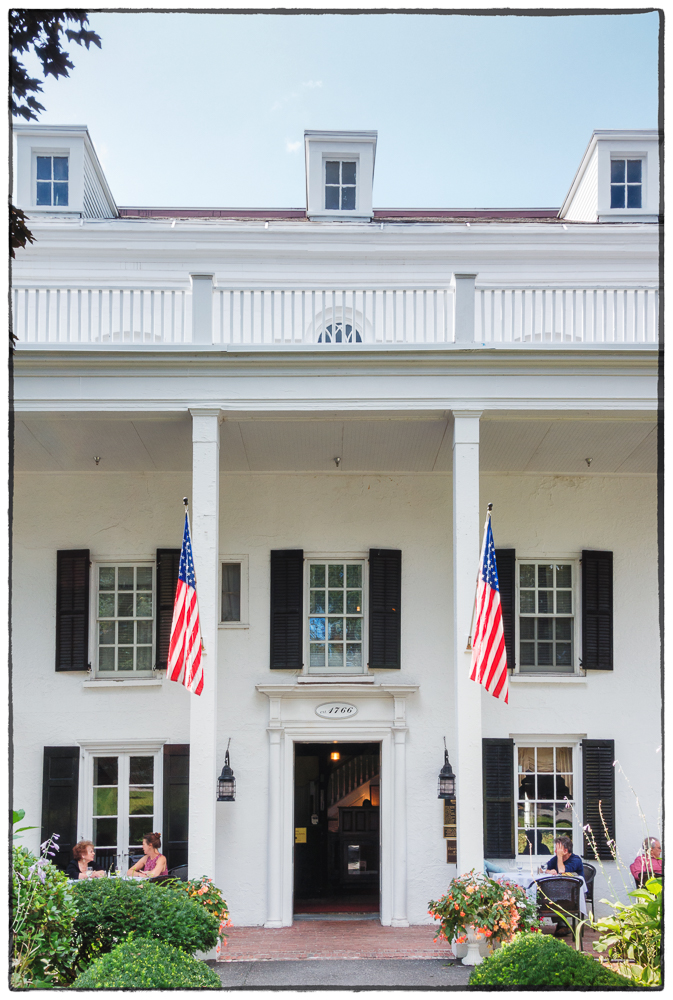
An Excursion to the Dutchess County Fair – The Beekman Arms

The Beekman Arms bills itself as “The Oldest Inn in America”. Wikipedia elaborates a little when it states: “The inn claims to be America’s oldest continuously operated hotel”. Note that the ’76 House in Tappan refers to itself as “New York’s Oldest Tavern”. I think this apparent contradiction can be explained by the fact that the ’76 House is an older building, but it hasn’t always been an inn.

The Wikipedia article sheds more light on the history of the inn:

In the early 1700s, William Traphagen, an early settler of Rhinebeck (then a village known as Ryn Beck) established a traveler’s inn called Traphagen Tavern in the village. In 1766, Arent Traphagen, the son of William Traphagen, relocated the tavern to its present location, where the King’s Highway intersected the Sepasco Trail. It has remained in operation as a hotel ever since.

During the last third of the 18th century, the inn, then known as Bogardus Tavern, was host to many leaders of the American Revolution, including George Washington, Philip Schuyler, Benedict Arnold and Alexander Hamilton. In 1775, the 4th Regiment of the Continental Army drilled on its front lawn before the war.

By 1785, the King’s Highway was now the country’s Post Road, and in 1788, after independence, the village continued to grow. The Town of Rhinebeck, which contains the village, was organized. The current Dutch Reformed Church was built in 1802, making it the oldest church in the village. The current route of East Market Street was laid out the same year during construction of the Ulster-Saulsbury Turnpike, later to become Route 308.

In 1802, Asa Potter bought the inn from Everardus Bogardus, a descendant of the Reverend Everardus Bogardus. In 1804, during the race for Governor of New York State, both candidates had headquarters in Rhinebeck. Gen. Morgan Lewis had his at the inn, then known as Potter’s Tavern, and Vice President Aaron Burr had his down the street at the Kip Tavern. In July of the same year, Burr had killed Alexander Hamilton, a friend of Lewis’s, in a duel some say began in the inn itself.

In 1918, under the ownership of Tracy Dows, the inn was extensively renovated, with a ballroom being added. Dows’s son Olin Dows, a United States Army artist who would serve in the European Theater of Operations during World War II, was commissioned to paint a mural in the Rhinebeck post office[11] depicting the town’s beginnings. Olin’s Harvard classmate and close friend Thomas Wolfe visited the inn frequently, and his five years of prolonged stays at the inn have been said to have been the basis for what became his 1935 novel Of Time and the River.

In 1957, the inn was host to New York Governor W. Averell Harriman upon the dedication of the Kingston–Rhinecliff Bridge.

In the 1980s, a greenhouse room was added to the front of the ballroom. In 1987, the inn was owned by Charles LaForge Jr.

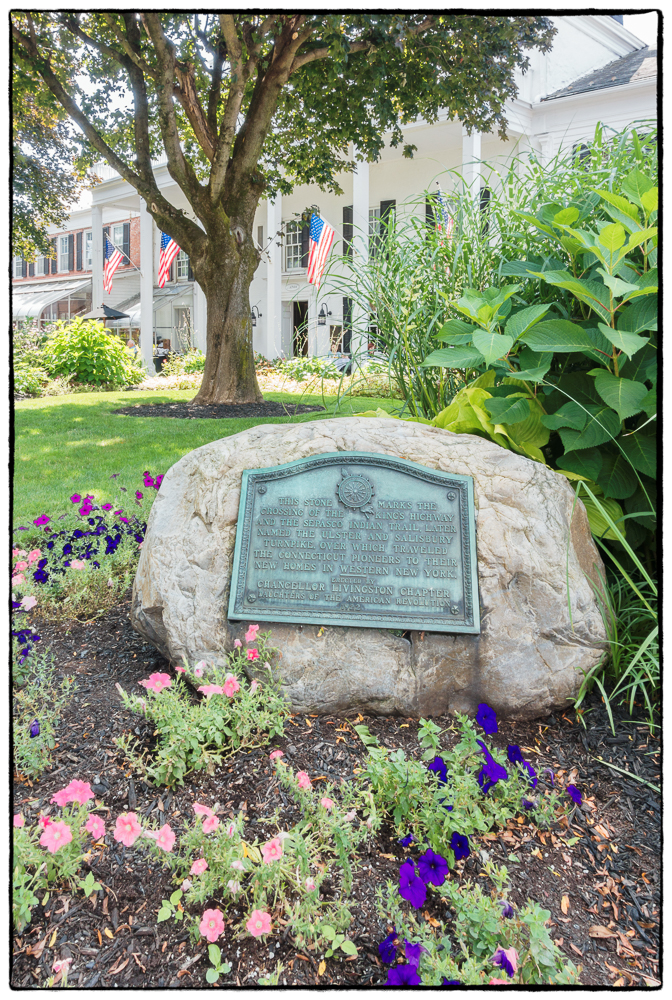
The plaque in the first picture above reads:

This stone marks the crossing of the King’s Highway and the Sepasco Indian trail, later named the Ulster and Salisbury Turnpike, over which traveled the Connecticut pioneers to their new homes in western New York.

Erected by Chancellor Livingston Chapter, Daughters of the American Revolution, 1922.

Taken with a Sony RX-100 M3.