Barton Orchards


My younger daughter, her husband and my granddaughter (they’re in the hayride picture below) are visiting from Geneva. Searching around for things for them to do my wife came across Barton Orchards. Only 20 minutes away from us in Poughquag, Dutchess County, NY this is a great place for both kids and adults. You can pick vegetables (tomatoes, eggplant, peppers etc.) as well as apples. You can also pick pumpkins – particularly relevant at this time of year. We came back with two of them – and very heavy they are too (luckily I didn’t have to carry them). The place is not just about picking fresh fruits and vegetables. They have lots of things for the kids to do. A petting zoo with goats, ponies etc.; a corn maze; a haunted house; a bouncy castle and other rides; hayrides etc. We came fairly late in the day, but I imagine that if we’d come earlier we could easily have spent most of the day there. They have food for sale so no problem there. And they also have a farm market with lots of good looking jams, jellys, butters, preserves, pickles etc. A great time was had by all!


Pumpkin patch


Goats. You can feed them as I did, but watch out. Most of them are pretty docile but one tried to bite me.


Guitarist in one of the two bands providing entertainment
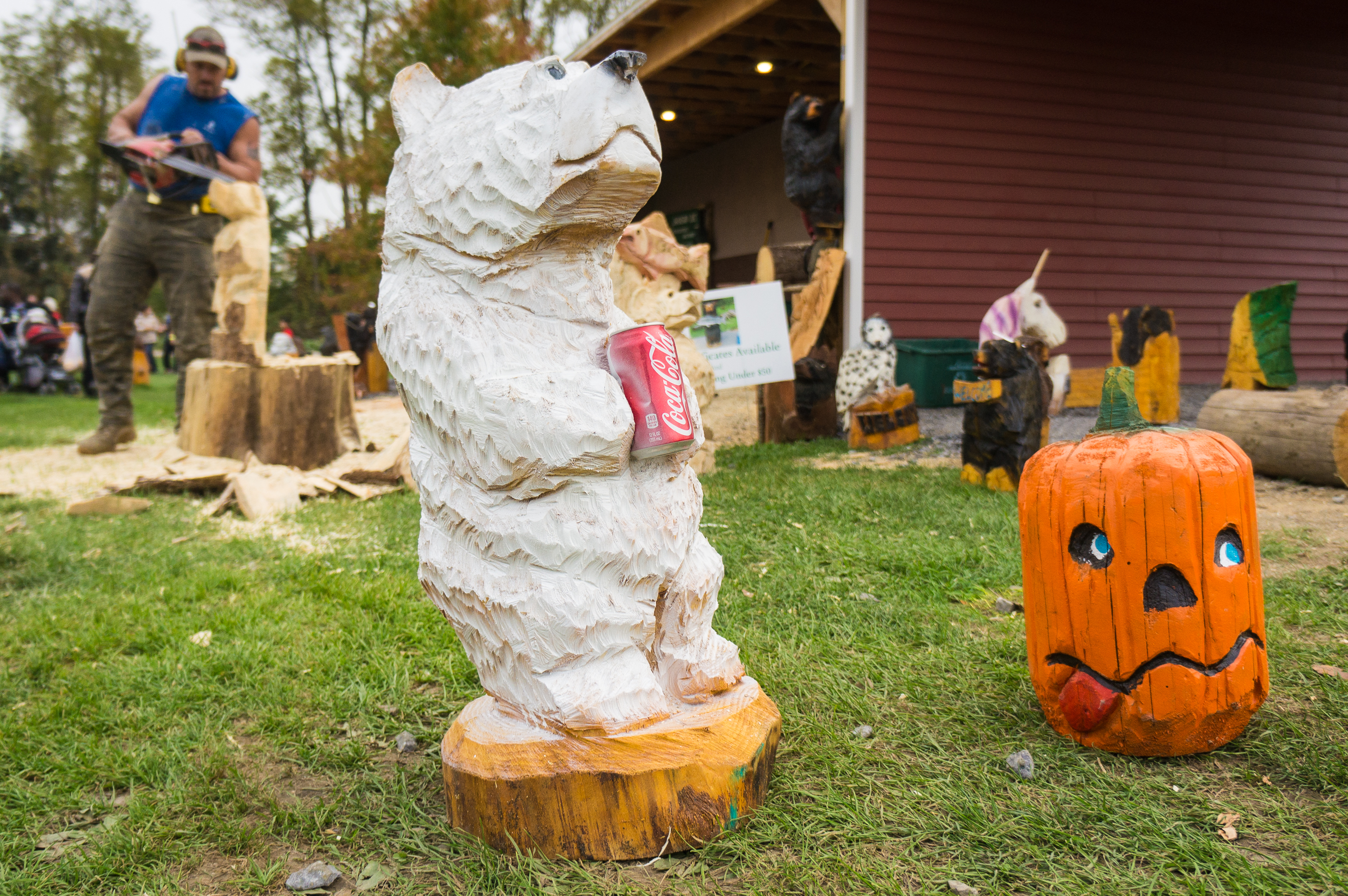

Woodcarver at work. The only tool he seems to use is a chainsaw.
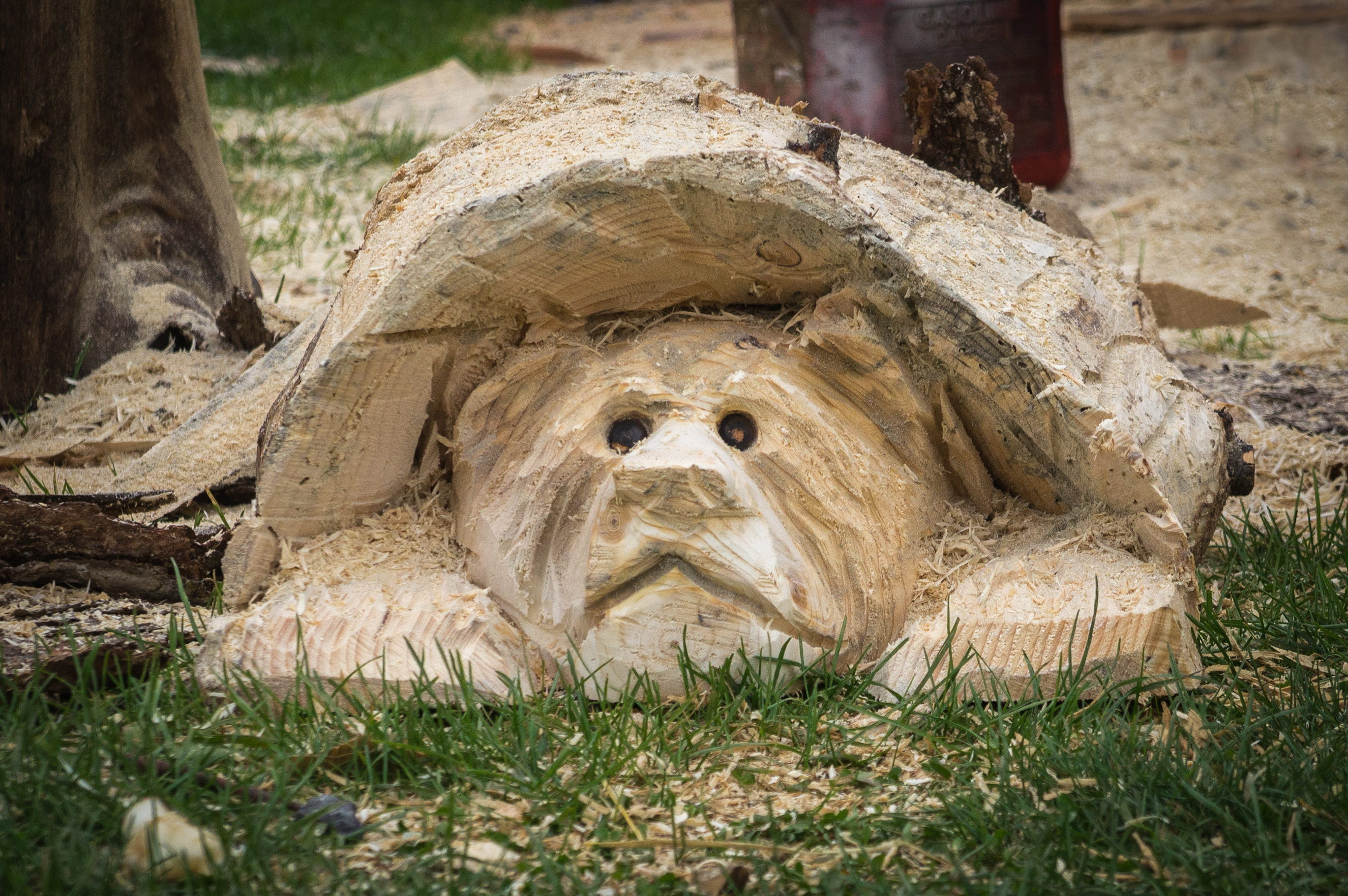

Another one of his creations
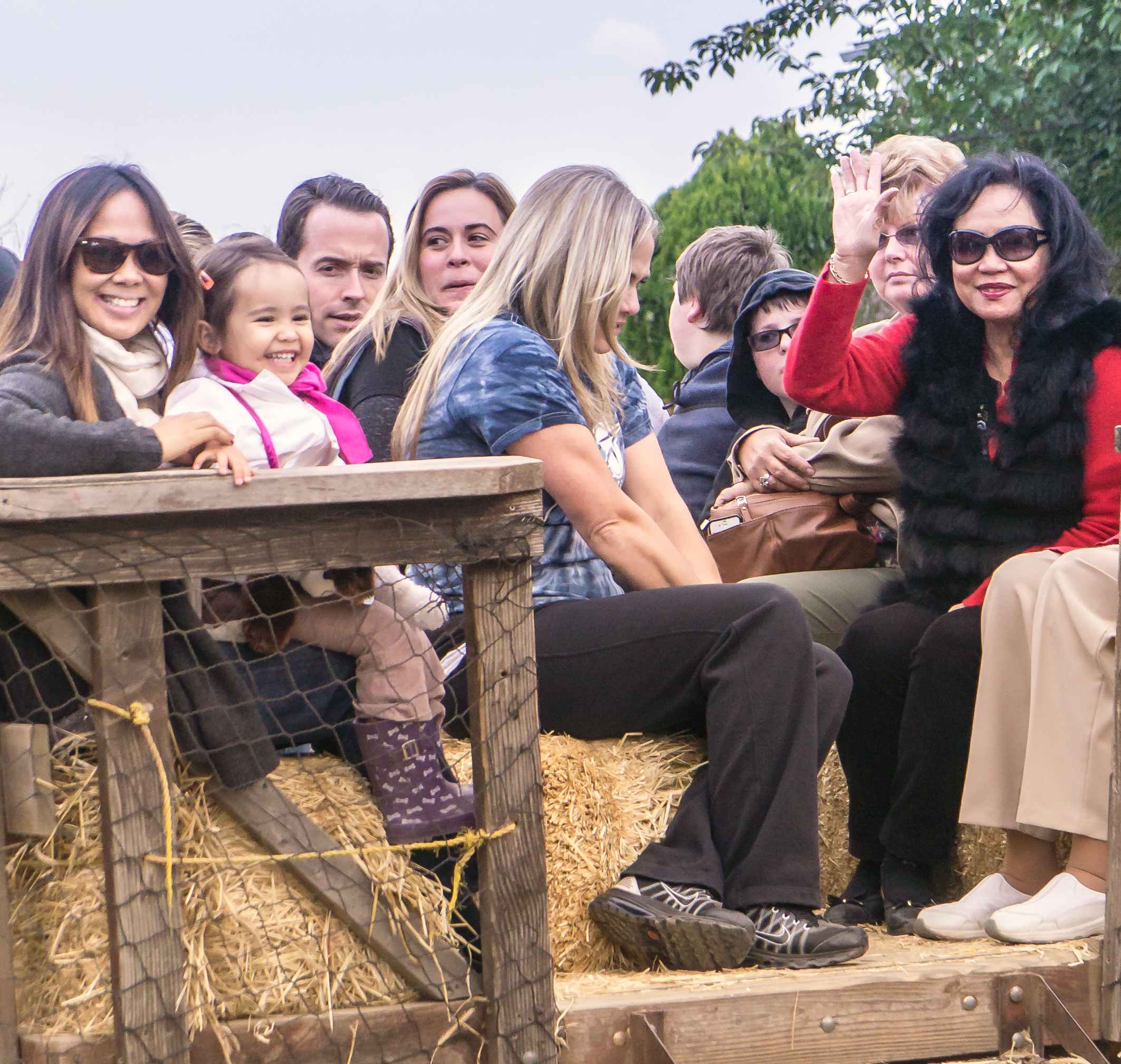

Hayride. On the far left my daughter and granddaughter. To their right, looking suspicious, my son-in-law and on the far right, waving my wife.


Drummer in the second band


Evil pumpkin man


Fields of vegetables
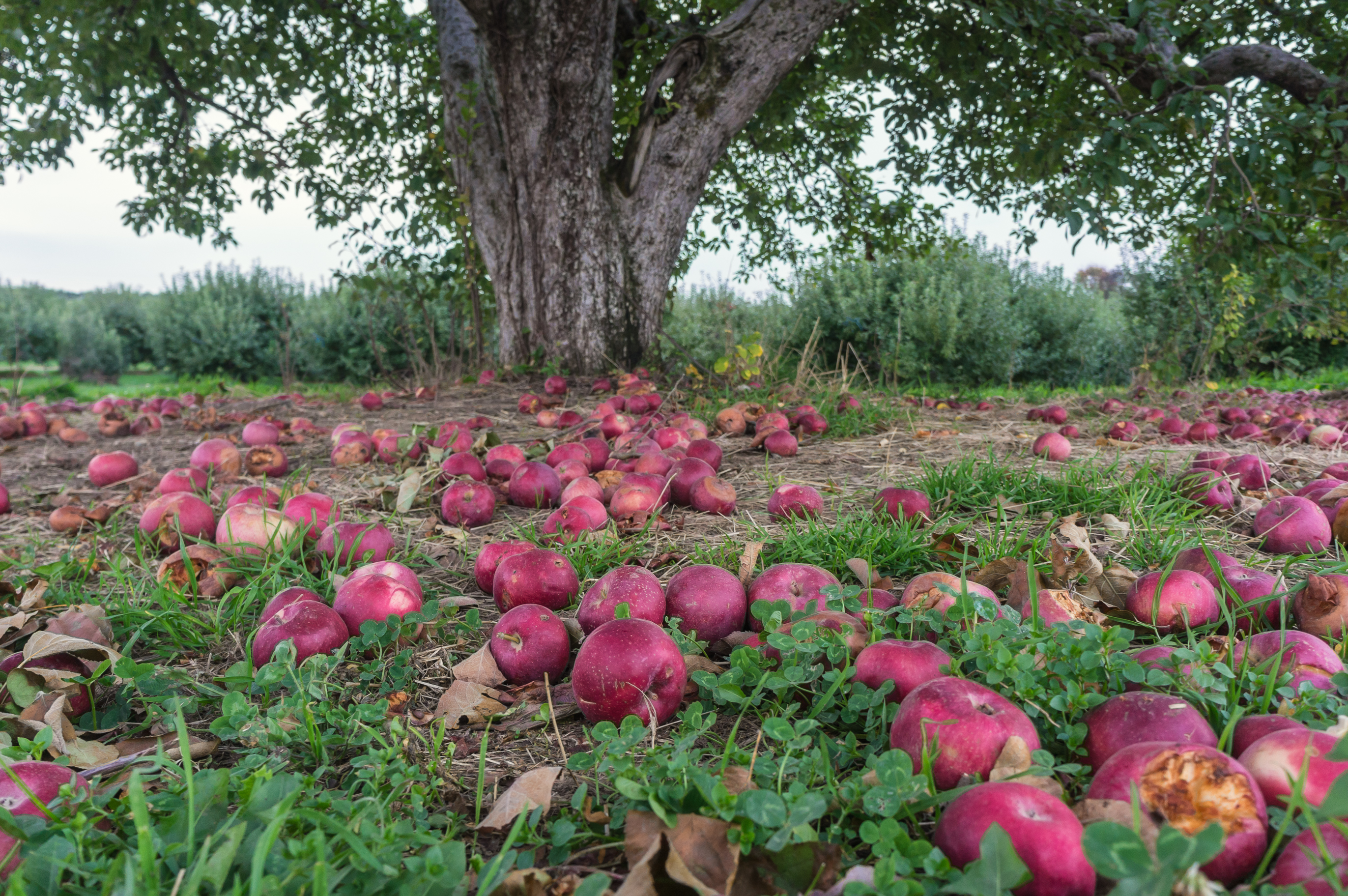

Apple tree.
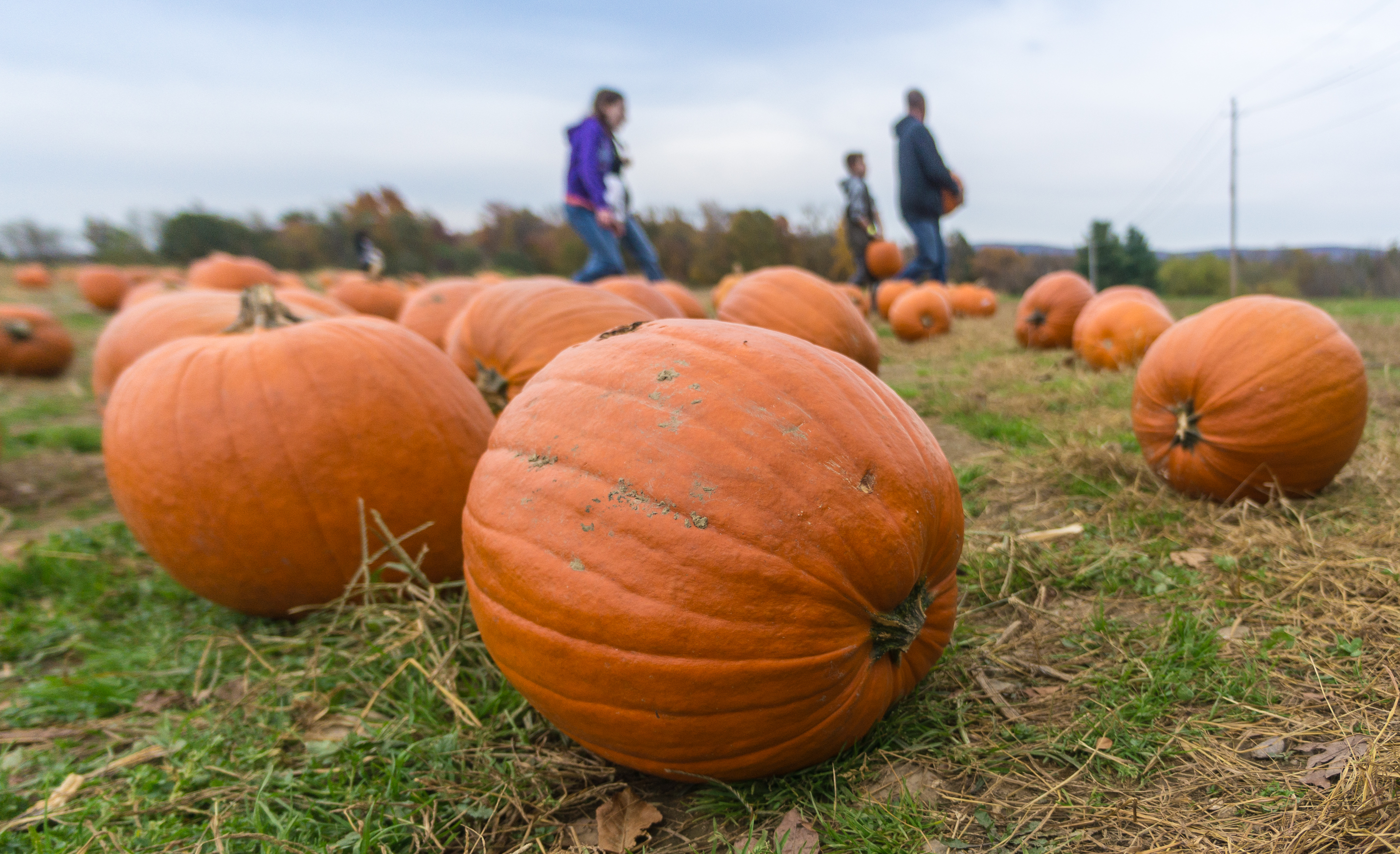

And since it’s almost Hallowe’en another view of the pumpkin patch.

New York 9/11 memorial


After Trinity Church, lunch and the Federal Hall National Memorial my last stop before going off to meet another friend for drinks was the 9/11 memorial. I had not been to this area since the 9/11 attacks and was keen to see the memorial. I was a little disappointed. After 12 years I had thought that it would have been more advanced. As it is it’s still very much a work in progress. There were lines to get in, but they weren’t particularly long. Security was tough (like being at the airport even down to having to take your belt off) but I suppose that’s necessary. Approaching the memorial is like walking through a building site. So much construction is still ongoing. Once you get there the pools (which stand in the footprints of the twin towers) are really very spectacular. The twin towers were nearing completion when I first came to New York in the early 1970s. I can remember seeing them for the first time from the Staten Island ferry (I was staying on Staten Island at the time). It’s still hard for me to believe that they’ve gone. Other than the pools there’s not much to see. A lot of trees, still quite small (as they’re new of course they would be) and an unfinished museum. The glass in the museum windows is quite reflective and it was a bright, sunny day when I was there. If you try hard you can peer through the glass and see a couple of the huge tridents, which remain from old twin towers. I’m sure they’ll be quite spectacular when the museum is finished and open to the public. The only other thing of interest was the survivor tree: a tree, which although damaged survived the fall of the twin towers. It was moved to a park where it was uprooted in a storm. It survived that too. Finally it was moved back to the 9/11 memorial where it appears to be in good shape – maybe a symbol of the resilience of New York, and of New Yorkers. The intent is that this will become a site of rest, remembrance and introspection. I’m sure it will get there at some point in the future. It isn’t quite there yet though.


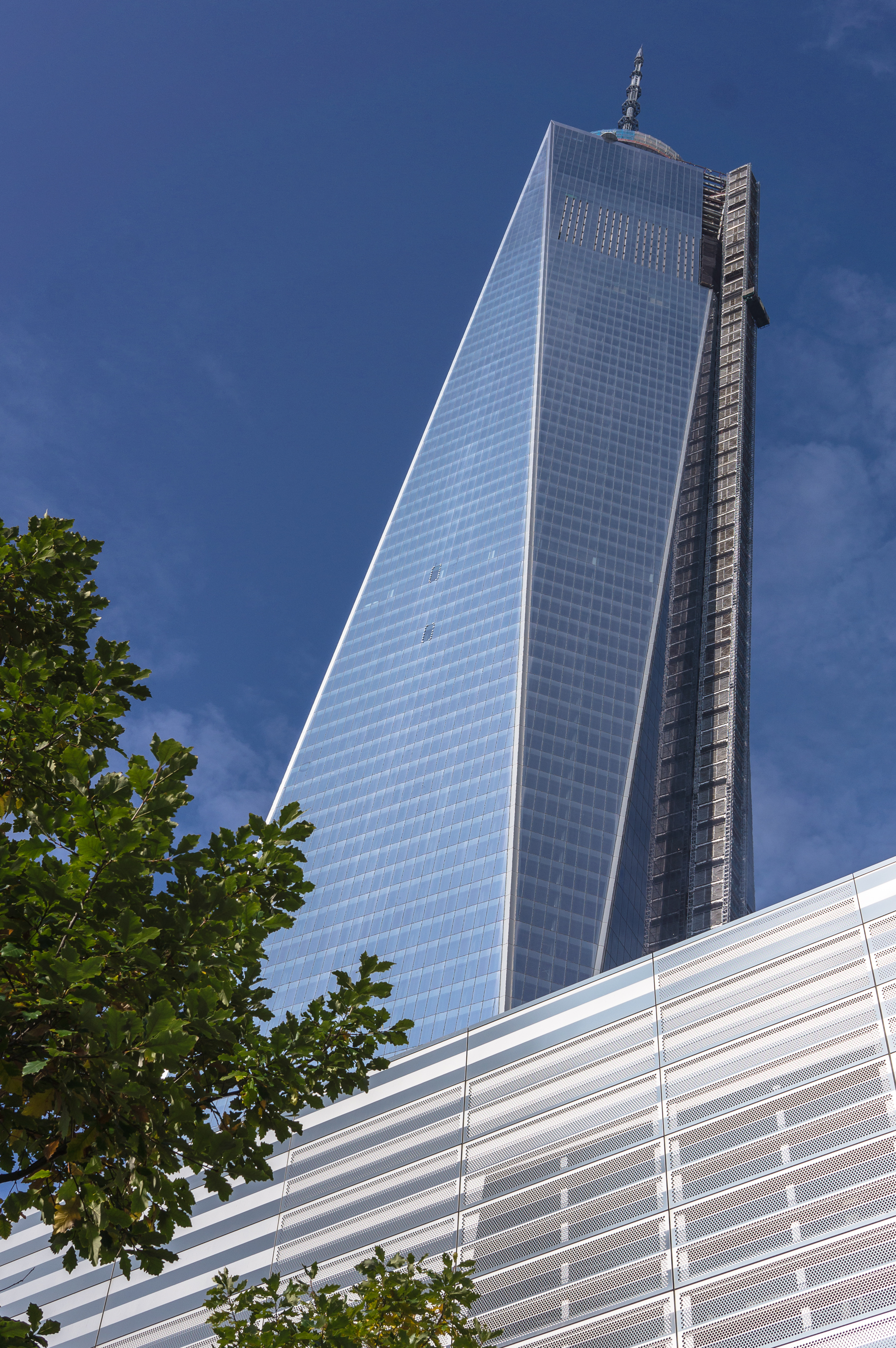
One World Trade Center as seen from the line waiting to get into the 9/11 memorial


The South Pool


The South Pool showing names of 9/11 victims


Another view of the South Pool


One World Trade Center towering above the as yet unfinished museum


Flowers are left on the victim names

Federal Hall National Memorial

After Trinity Church and lunch I went to the Federal Hall National Memorial. Their site says the following:

Here on Wall Street, George Washington took the oath of office as our first President, and this site was home to the first Congress, Supreme Court, and Executive Branch offices. The current structure, a Customs House, later served as part of the US Sub-Treasury. Now, the building serves as a museum and memorial to our first President and the beginnings of the United States of America.


Looking down Nassau Street toward Wall Street.


The main hall has an impressive dome.


Detail of Vault door in the Customs House.


Model


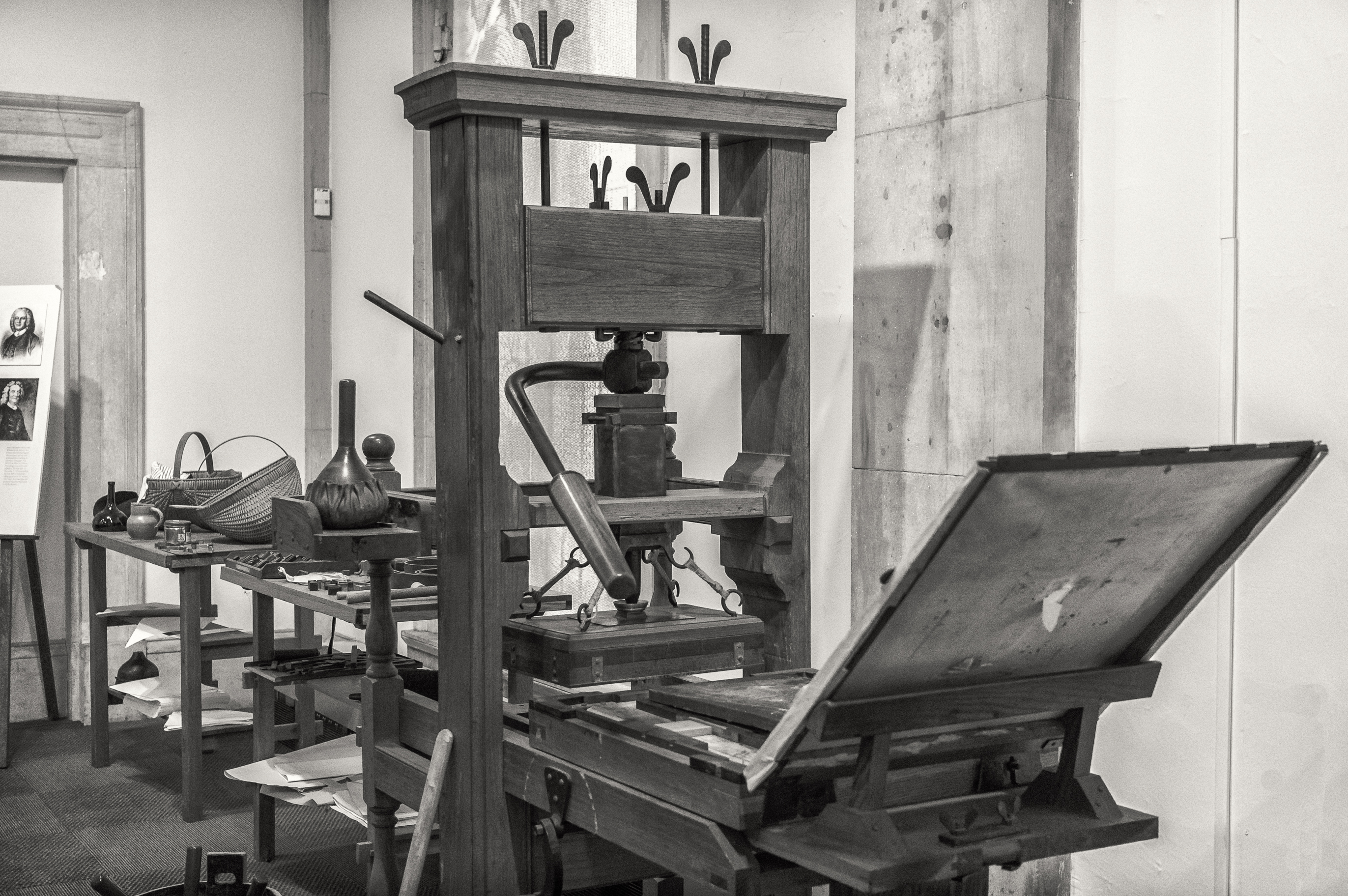
An old printing press – part of the “Freedom of the Press” exhibit.

Trinity Church


I was having lunch with an old friend and former colleague. He lives in Brooklyn so we agreed to meet in the lower part of Manhattan. Despite living in New York for over thirty years, I hadn’t been to this area for many years, maybe even decades. So I thought I’d get there early and walk about a bit.

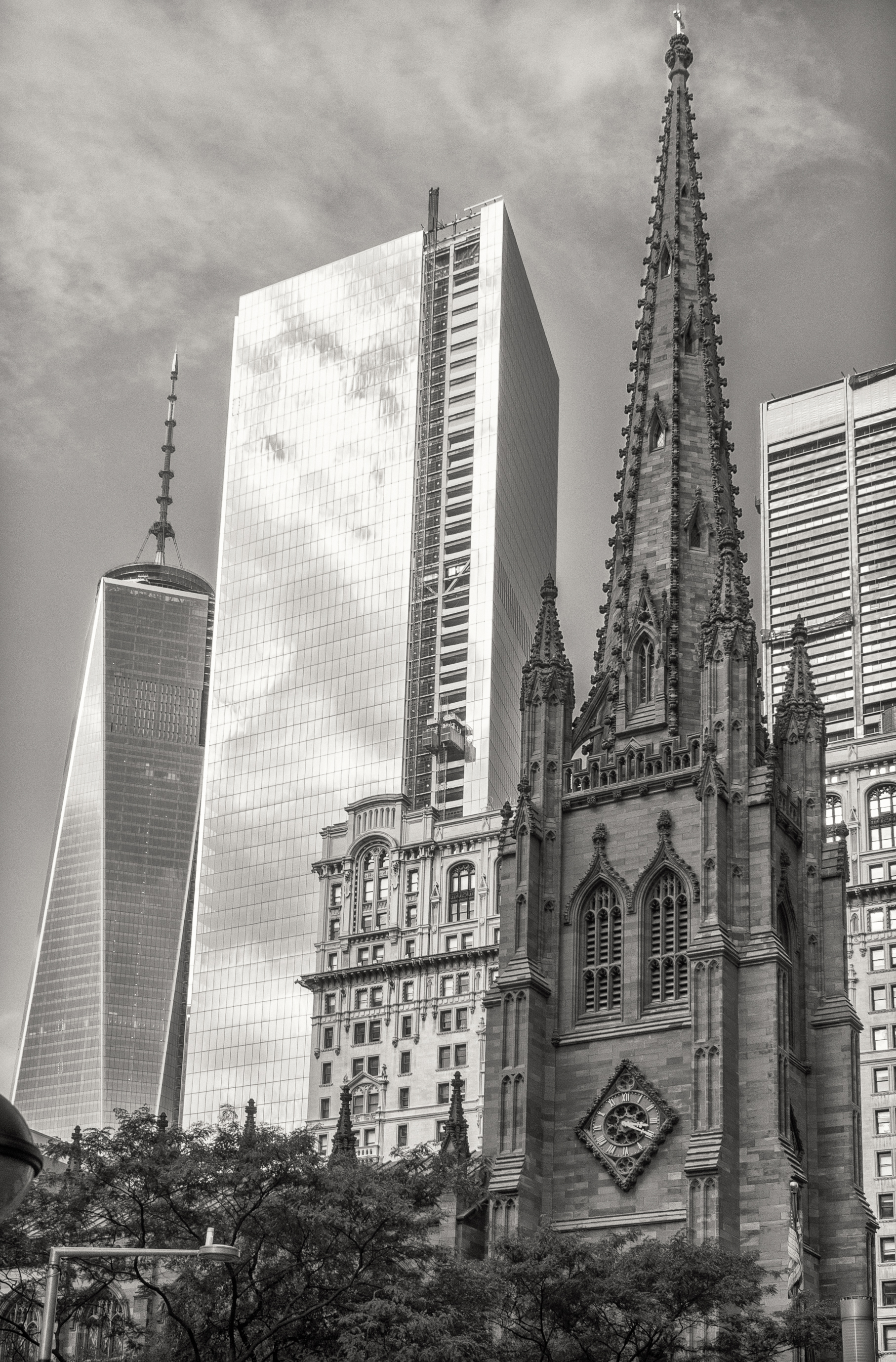
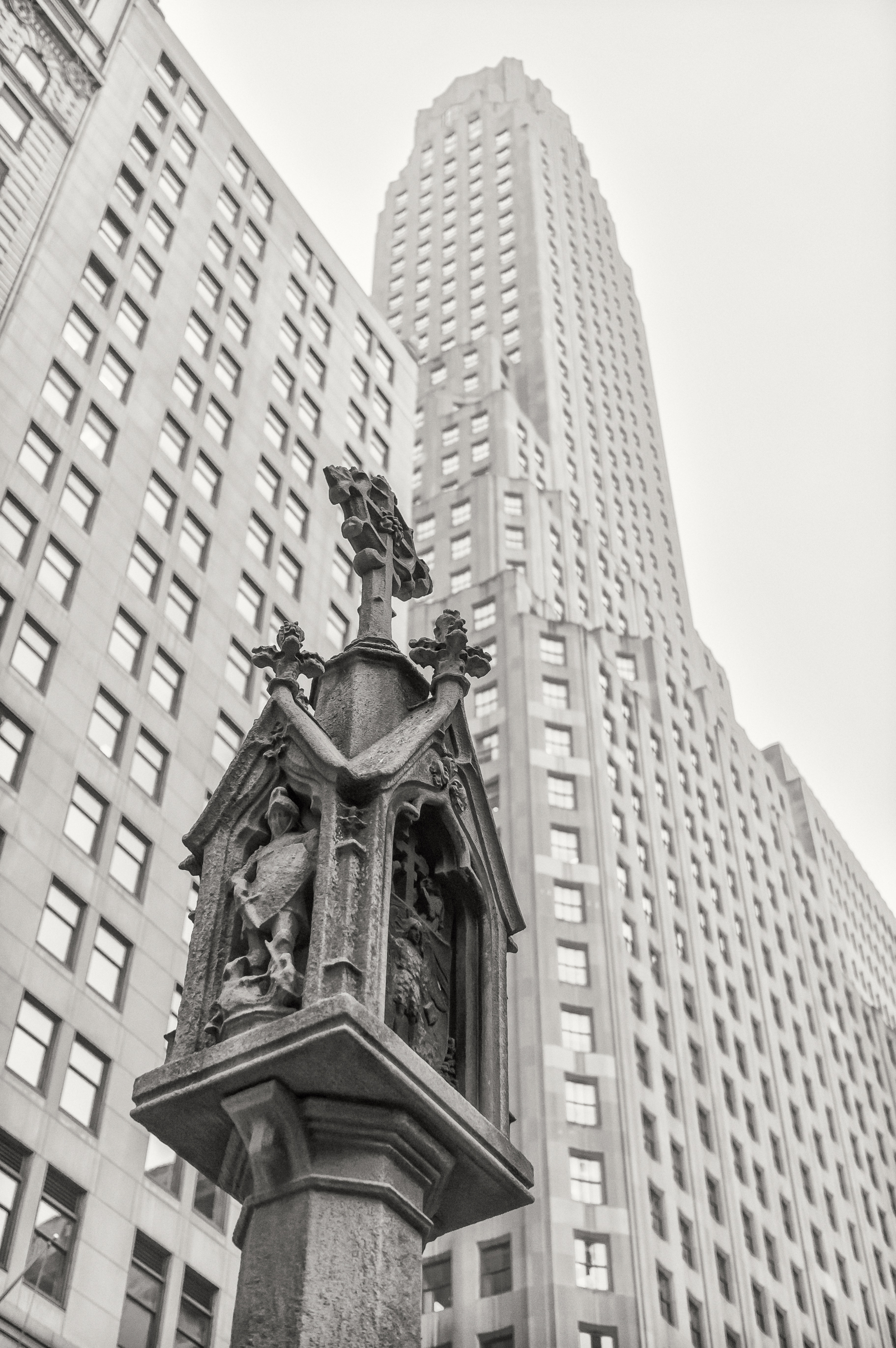
The first place I went to was Trinity Church. I really makes you remember that this was once the original New York City settlement. This is the third church at this location. The first was built in 1698 and was destroyed in the great NY first of 1776. The second was consecrated in 1790 and was torn down in 1838-39 after being damaged by strong storms. This one was built in 1846. Located right at the end of Wall Street it contrasts strongly with all of the downtown skyscrapers, in this picture the new World Trade Center buildings constructed to replace the twin towers destroyed during the 9/11 attacks.


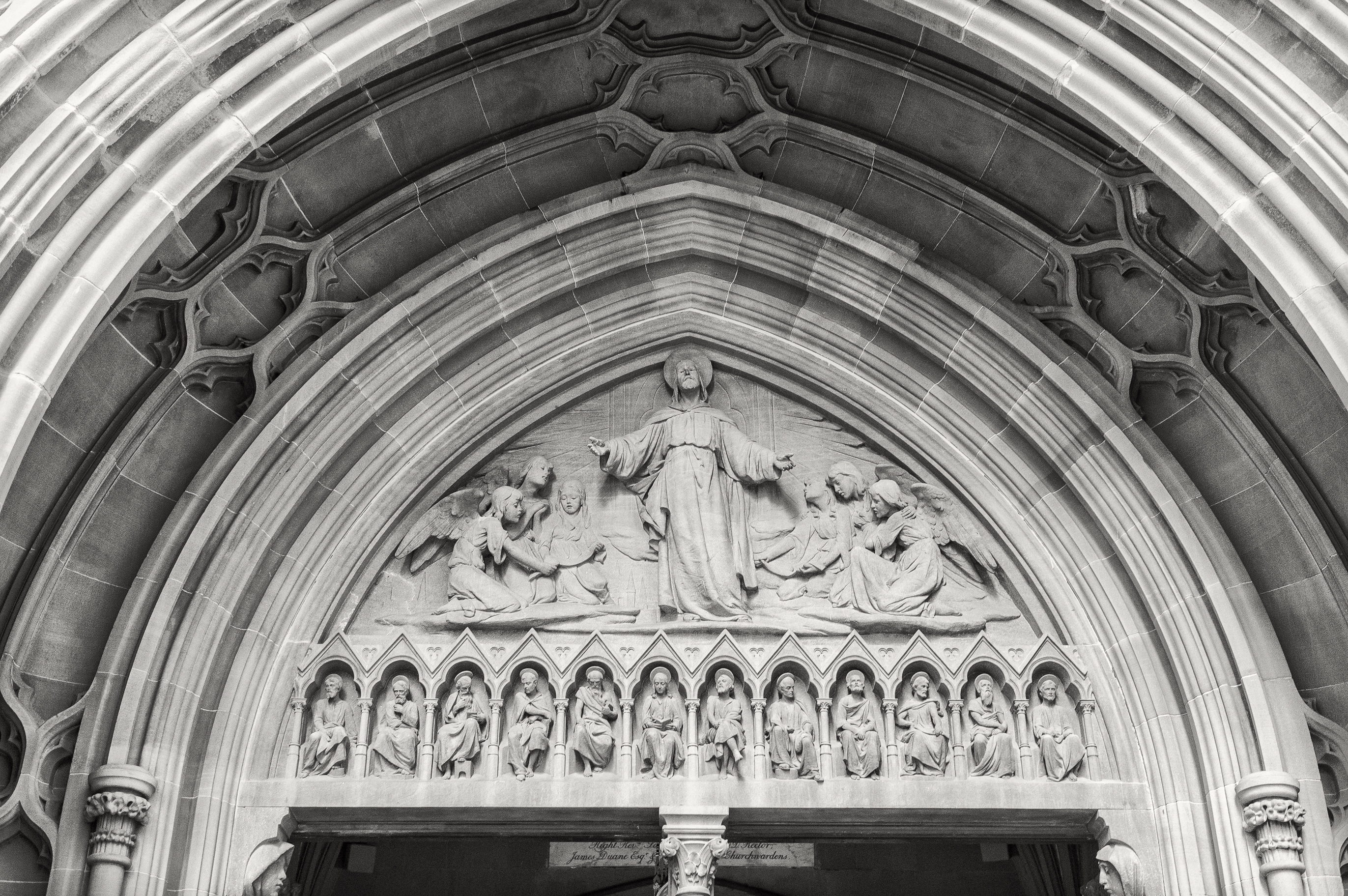
The fourteen-foot bronze doors at the front entrance, completed in 1894, are topped by a 4-foot tympanum with Christ rising above his twelve apostles


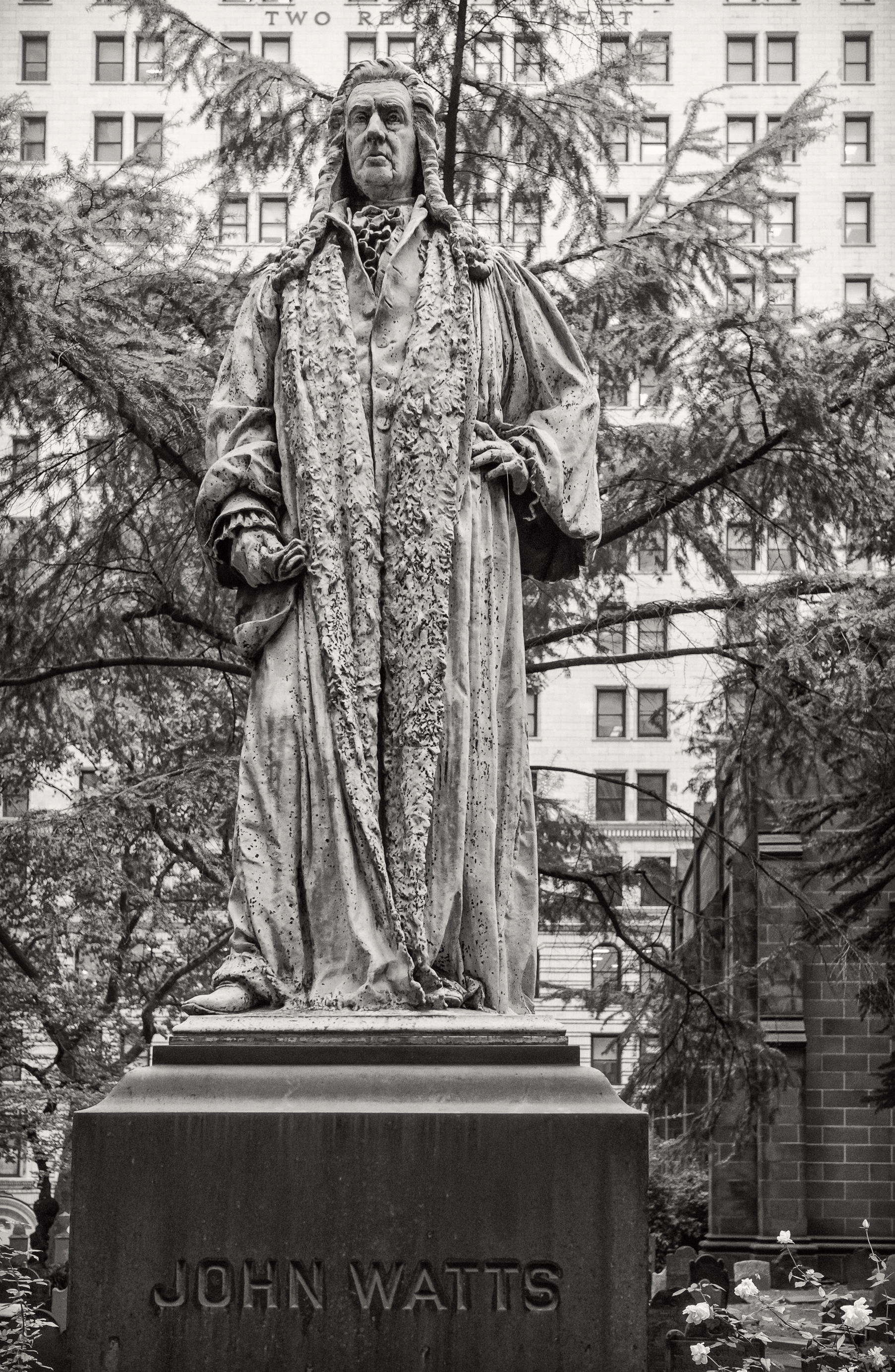
John Watts, a lawyer and politician who represented New York in the US House of Representatives. An impressive figure.


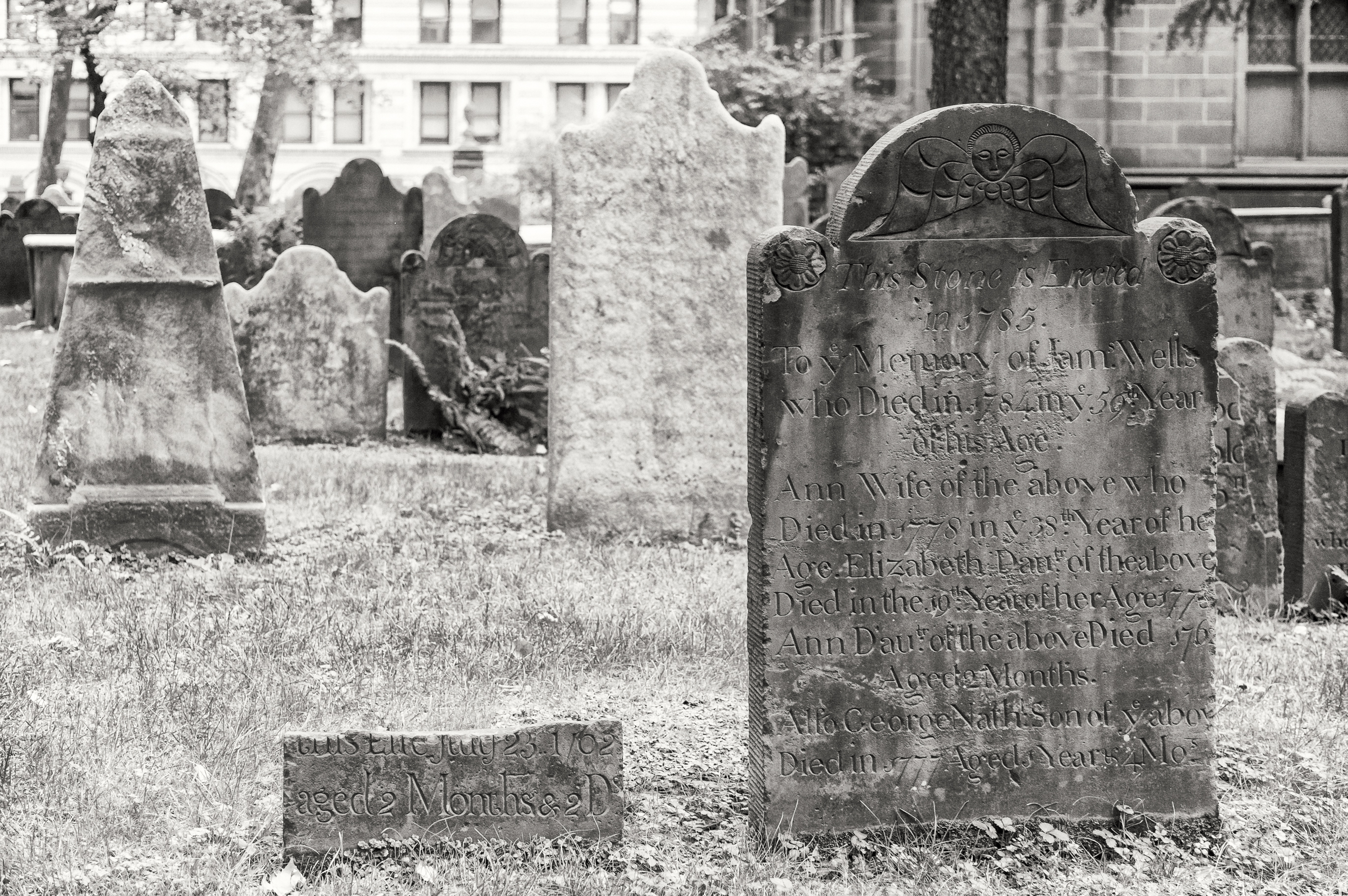
Gravestones


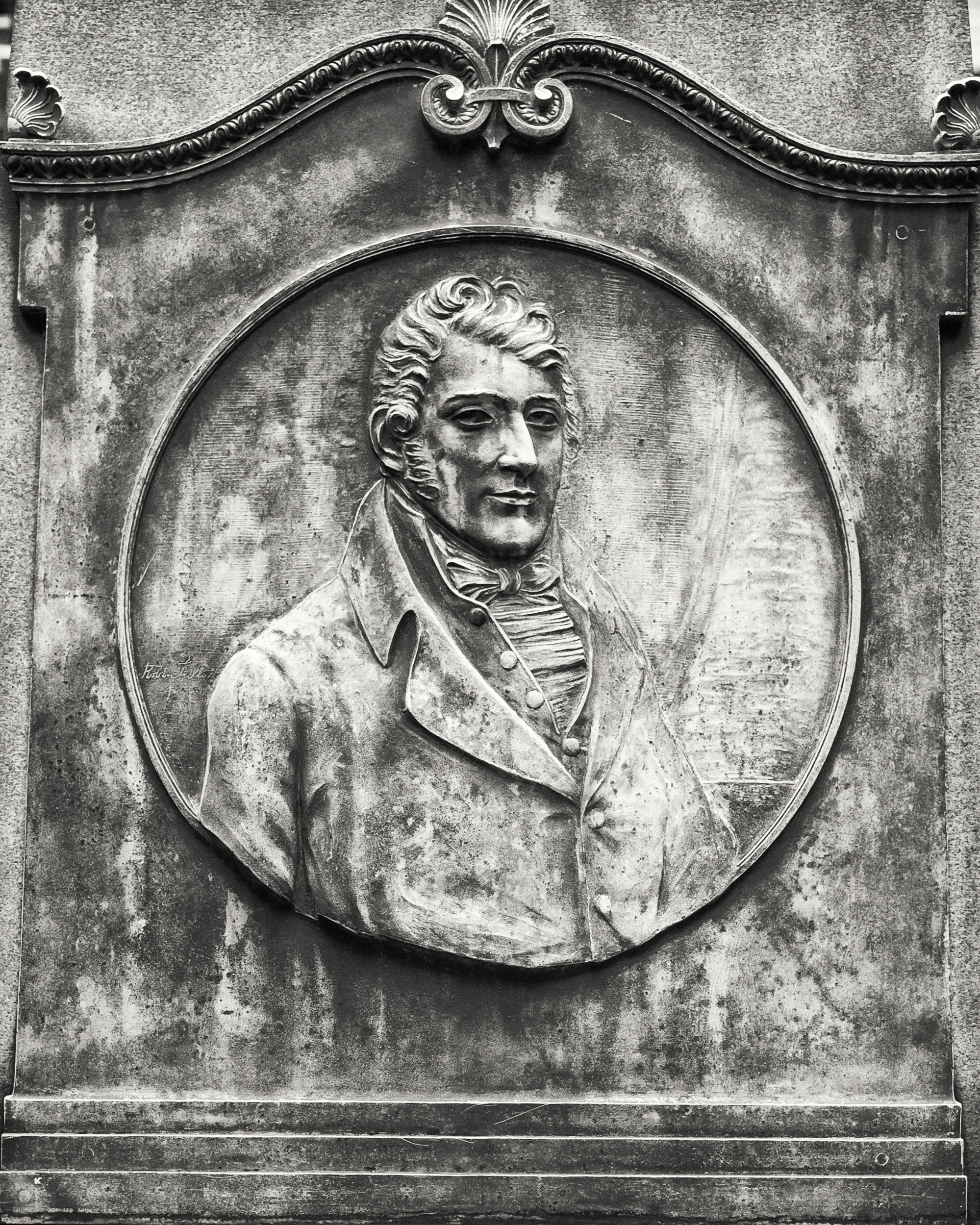
Robert Fulton. Wikipedia describes Robert Fulton as follows:

Robert Fulton (November 14, 1765 – February 24, 1815) was an American engineer and inventor who is widely credited with developing the first commercially successful steamboat. In 1800, he was commissioned by Napoleon Bonaparte to design the Nautilus, which was the first practical submarine in history.[1] He is also credited with inventing some of the world’s earliest naval torpedoes for use by the British Navy


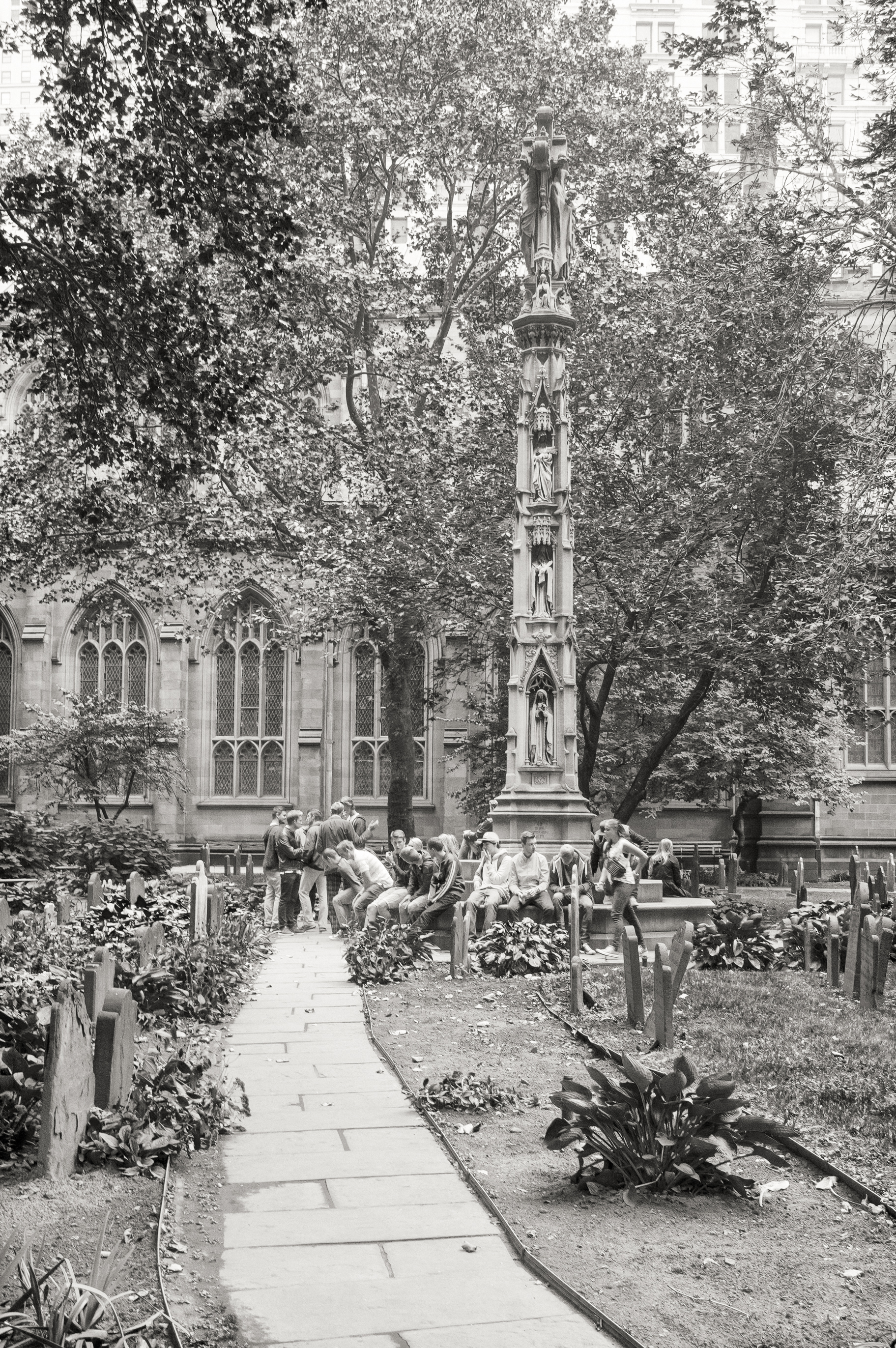
Path to a monument. I have so far been unable to discover exactly what this monument commemorates. While I was there a group of people was clustered around the base. Someone, presumably a guide, was talking. Most of “listeners” were young and were almost all texting on their phones. I guess they weren’t much interested in what the guide was saying.


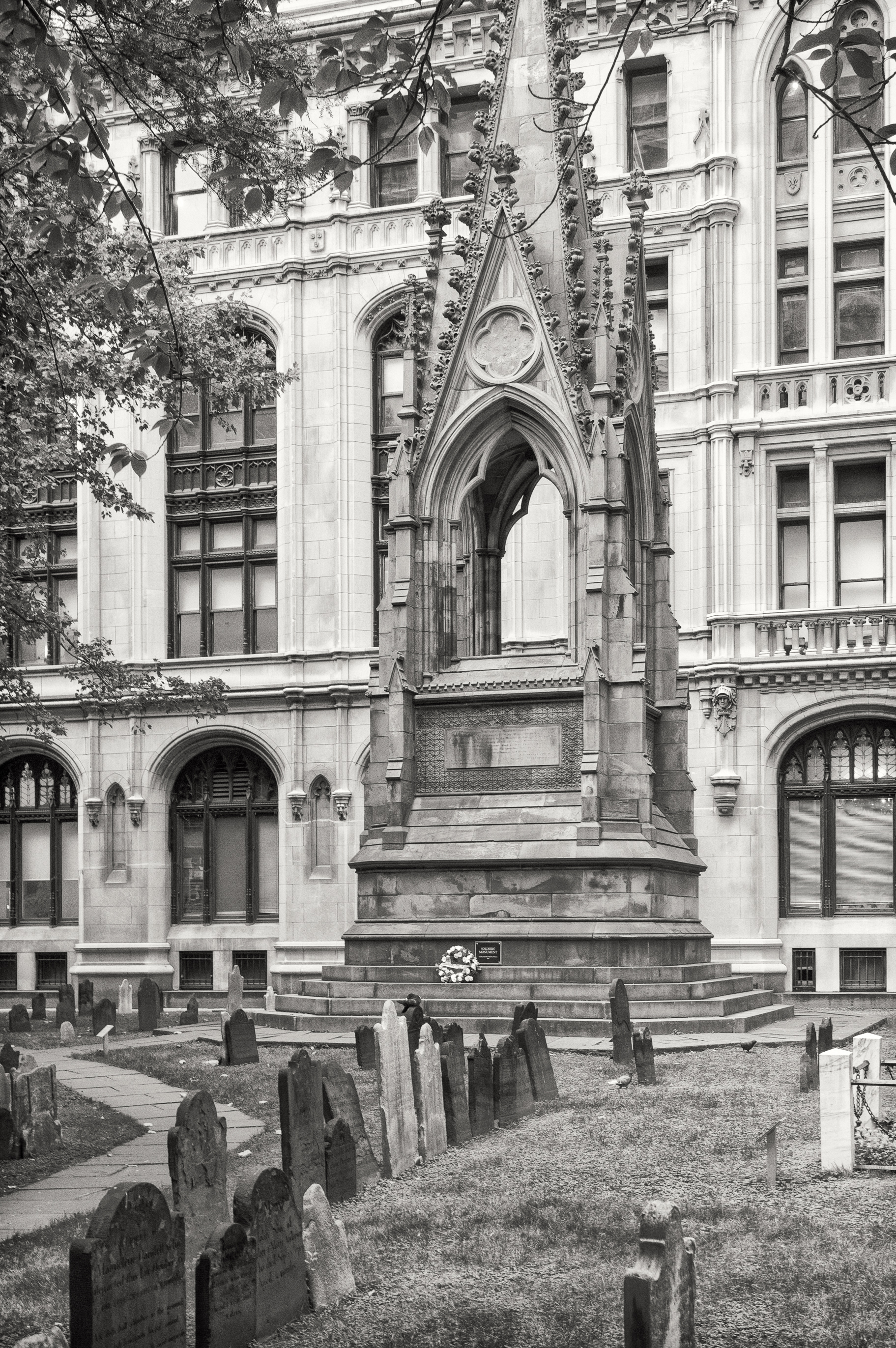
Soldier’s Monument. Commemorates heroes of the Revolutionary War.


The old and the (somewhat) newer


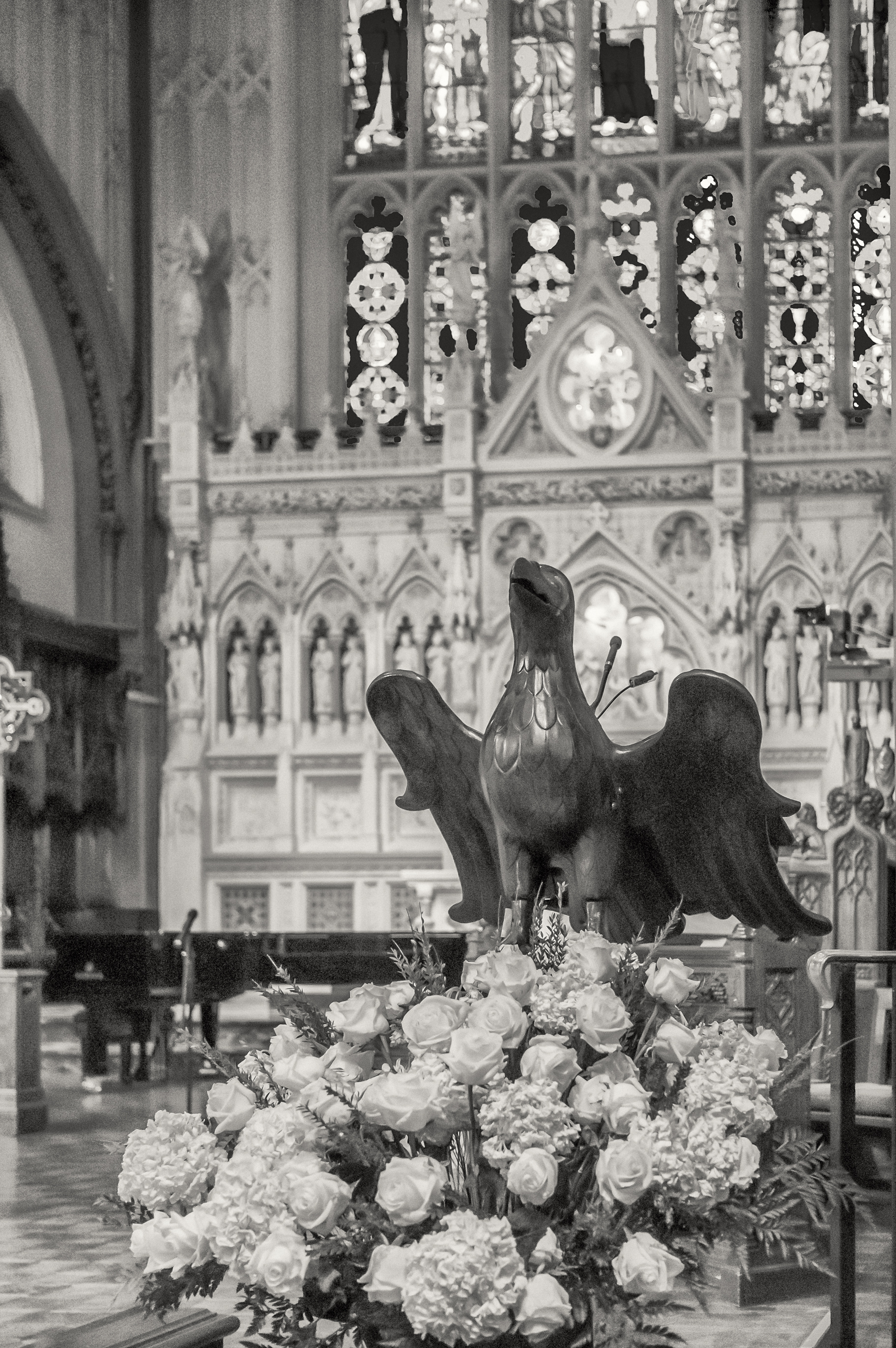
Interior


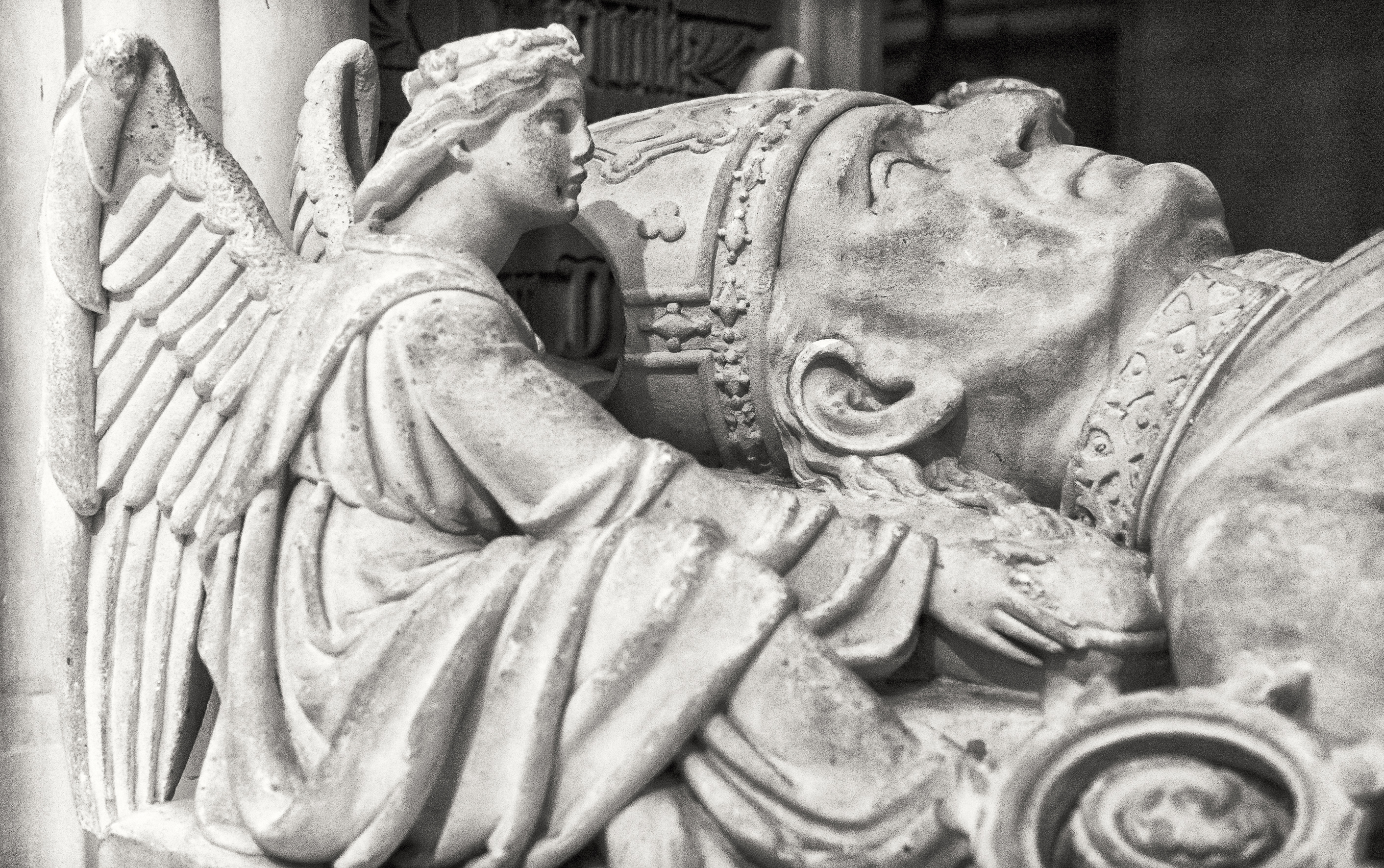
Detail from the cenotaph of Rt. Rev. Benjamin T. Onderank, the fourth (Episcopalian) Bishop of New York

Light Patterns

We have some large windows in our living room and the house is situated so that, on sunny days, the light streams in.  We got some blinds to save my wife’s plants from the bright sunlight.

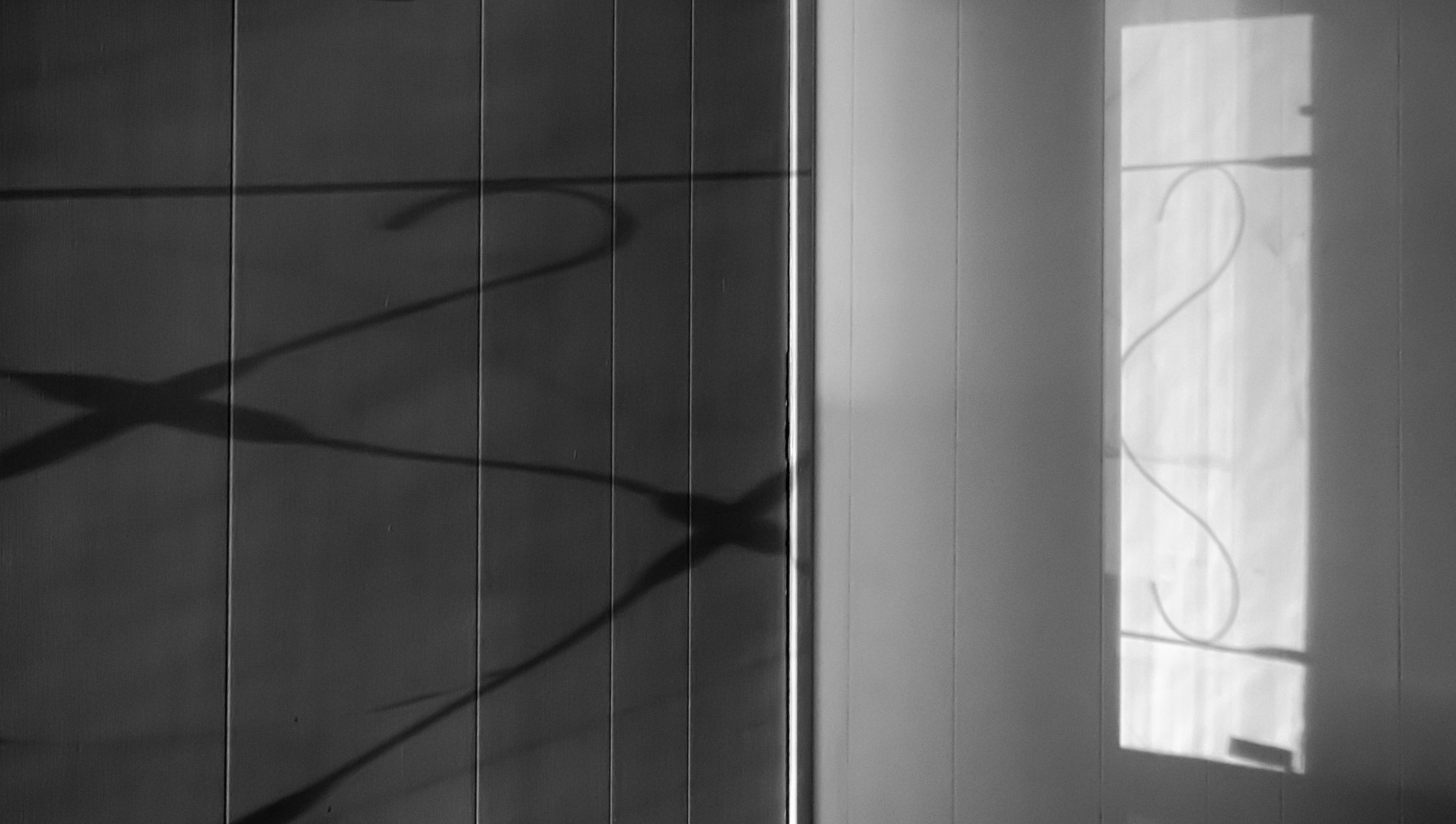
I was sitting in our “breakfast nook” one morning drinking my coffee when I noticed these patterns caused by the sun shining through leaves on our trees.

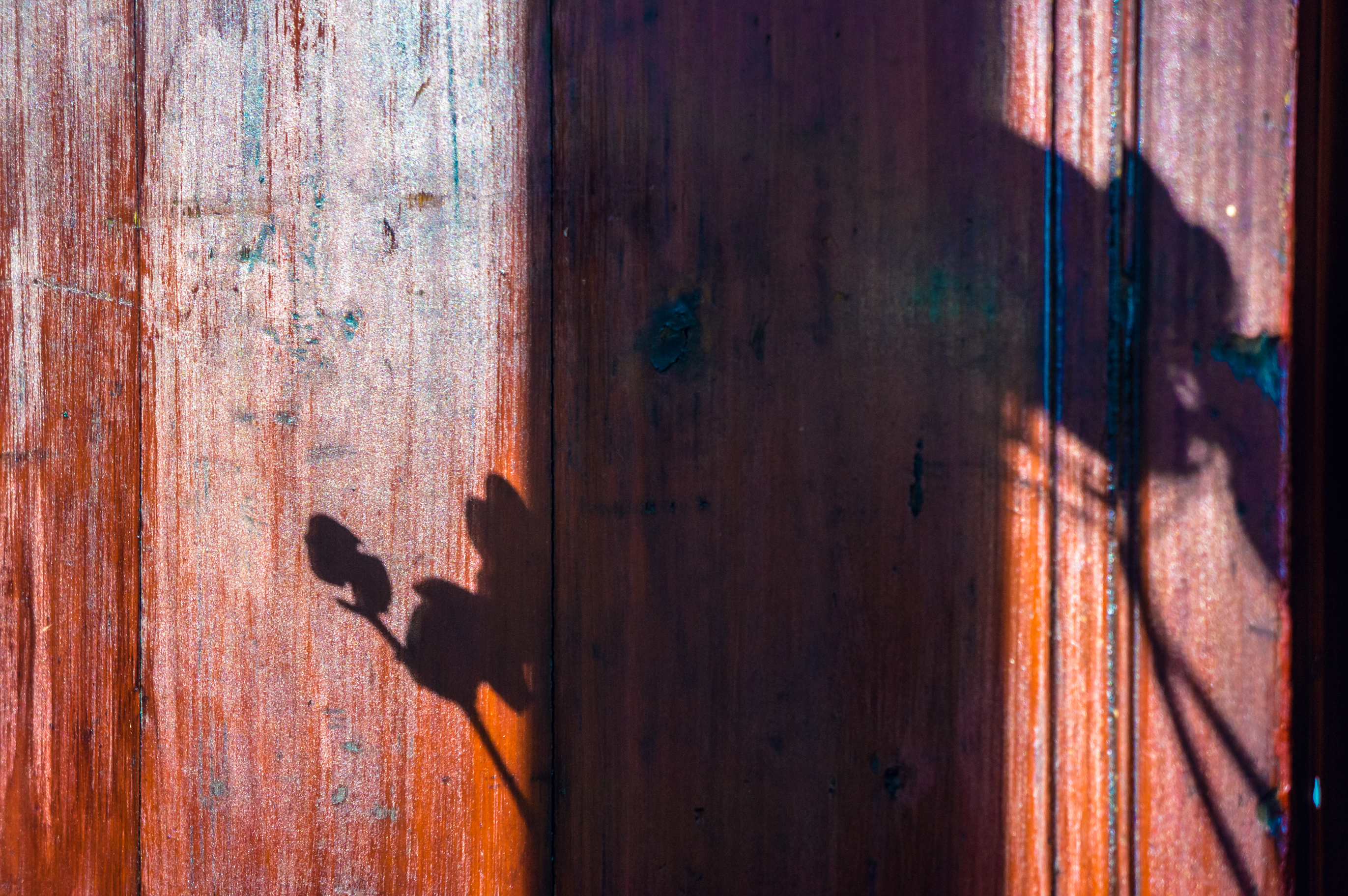
A few days later I was sitting in the same location and noticed the light shining through another window and creating shadows of orchids on an antique red chinese cabinet.