Photogrammar and the Farm Security Administration Photographic Archive

Walker Evans. Sharecropper’s family, Hale County, Alabama, 1935

Photogrammar is a web-based platform for organizing, searching, and visualizing the 170,000 photographs from 1935 to 1945 created by the United States Farm Security Administration and Office of War Information (FSA-OWI).

Start exploring »

via Photogrammar.


The Farm Security Administration—Office of War Information (FSA-OWI) produced some of the most iconic images of the Great Depression and World War II and included photographers such as Dorothea Lange, Walker Evans, and Arthur Rothstein who shaped the visual culture of the era both in its moment and in American memory. Unit photographers were sent across the country. The negatives were sent to Washington, DC. The growing collection came to be known as “The File.” With the United State’s entry into WWII, the unit moved into the Office of War Information and the collection became known as the FSA-OWI File.

Of the 170,000 photographs in the collection, approximately 88,000 were printed and placed in the filing cabinets of the FSA-OWI. 77,000 photographs were printed by Stryker’s division and 11,000 prints collected from other sources. Paul Vanderbilt joined the FSA-OWI in 1942 and created a new organizing system for the collection. He developed the Lot Number system and Classification Tags system, which users can search the collection by on Photogrammar. In addition, the collection grew and now includes six different collections.
Tree Bark

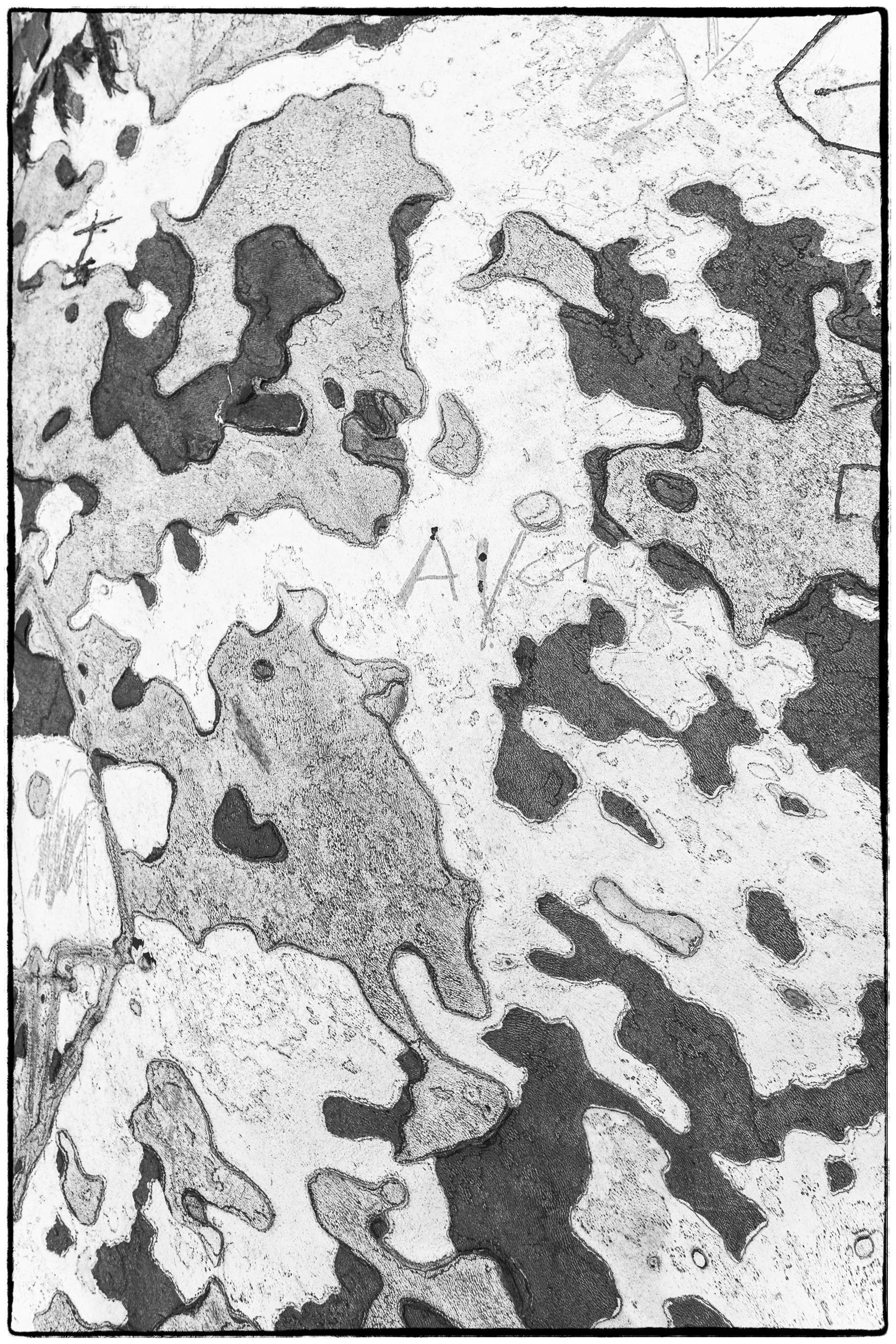
There are many lovely old trees at Rockwood Hall including a beautiful old (more than 100 years) London Plane Tree. I’ve tried to get a picture of it but somehow I’m never successful. Sometimes the light’s not right. Sometimes I can’t find the right angle. This time I thought I’d get in closer to show the wonderful bark. I hate it that people can’t seem to resist adding graffiti – despite the fact that there’s a quite large sign advising them not to do so.

Paul Strand: Under the Darkcloth

I just watched this absorbing documentary on Paul Strand. I’ve always been a fan of Strand’s work- particularly the abstracts and the work in New England. It was interesting to see how he switched from still photography to movie making and then back again. I also found it fascinating that towards the end of his life when he was no longer very mobile he started to photograph things closer to home – in his own garden. He was so passionate about his photography that during a period when he had vision problems he would have his wife (who was also a photographer) print his pictures while he continually asked her questions. “What do you see in the top left of the picture?” etc.

Early on in the documentary there’s a statement that the photographer must “have something to say”. I hear this a lot and I think it tends to reflect the view of those involved in social documentary photography. Why does a photograph have to have something to say? Do Van Gogh’s sunflowers have something to say? Monet’s garden? I’ve nothing against having something to say, but I don’t see why all photographs have to conform to that model.

A documentary about Paul Strand, one of the greatest photographers of the 20th century.

via Paul Strand: Under the Darkcloth, Part 1 of 6 – YouTube.

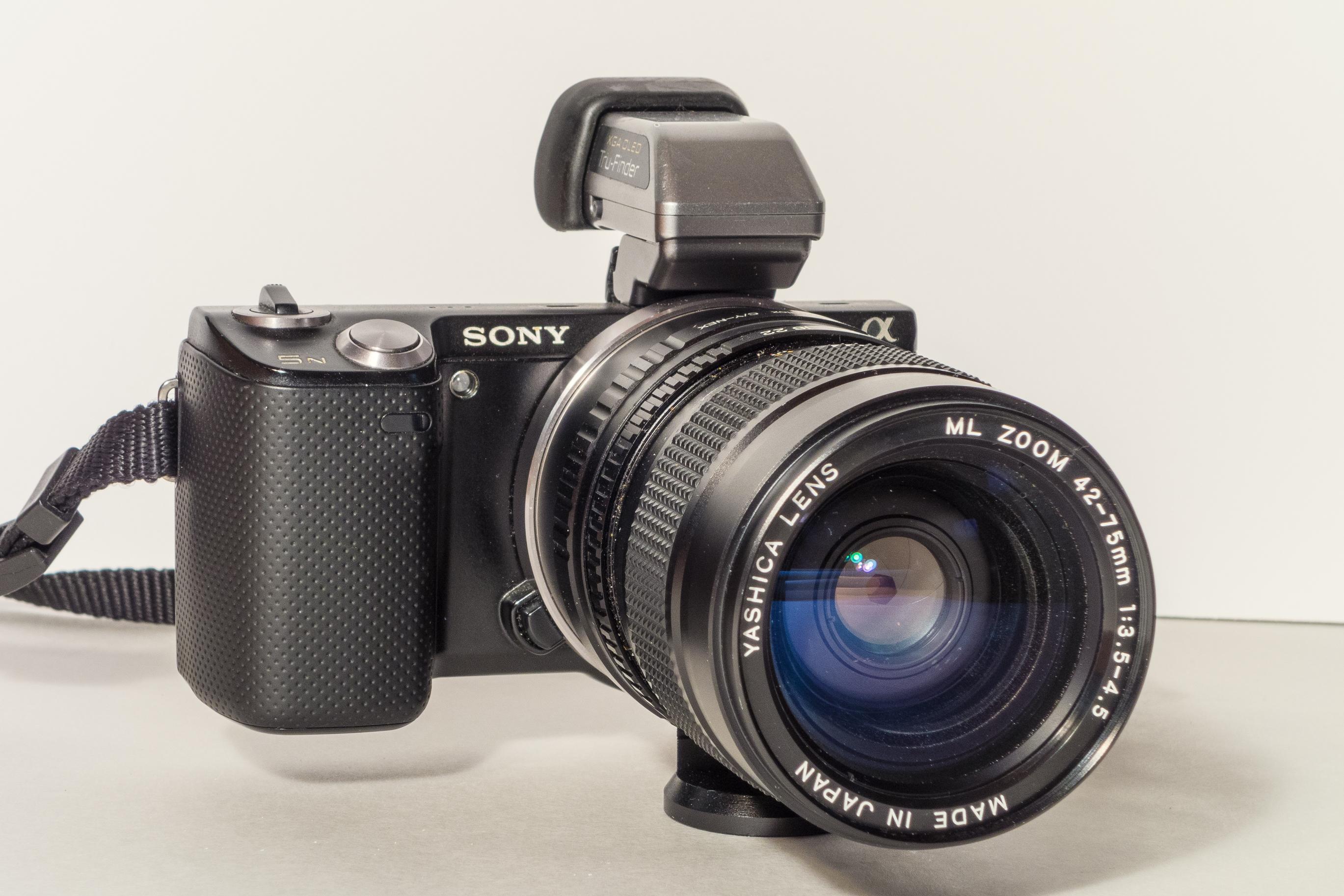
Yashica 42-75mm f3.5-4.5

The lens on my Sony Nex 5N.

I was reading something on one of the web forums (I don’t remember what) and this lens came up with generally positive reviews. I saw one going for very little money and thought about buying it. However, something stopped me. Then a little later I was going through some of my earlier purchases and I came across a Yashica FX-3 with three lenses (and a bunch of other goodies) that I’d bought for, as I recall, $26. And lo and behold one of the lenses was the 42-75mm f3.5-4.5. Sometimes when I’m looking for a lens it’s cheaper to buy the lens and the body together rather than buying the lens separately. In this case I was looking for a Yashica body and wasn’t paying much attention to the lenses. So I almost bought a lens I already had.

I decided to try it. Unfortunately my time was limited so I ended taking pictures of the usual suspects: things in our garden – mostly flowers.

It’s fairly small, but solid lens and fits nicely on the Nex 5N. It’s a little heavy though. I like the colors and it also seems to be quite sharp especially when stopped down a little. The only slight problem I had was with flare when pointed in the direction of a strong light source. I imagine a hood would help.

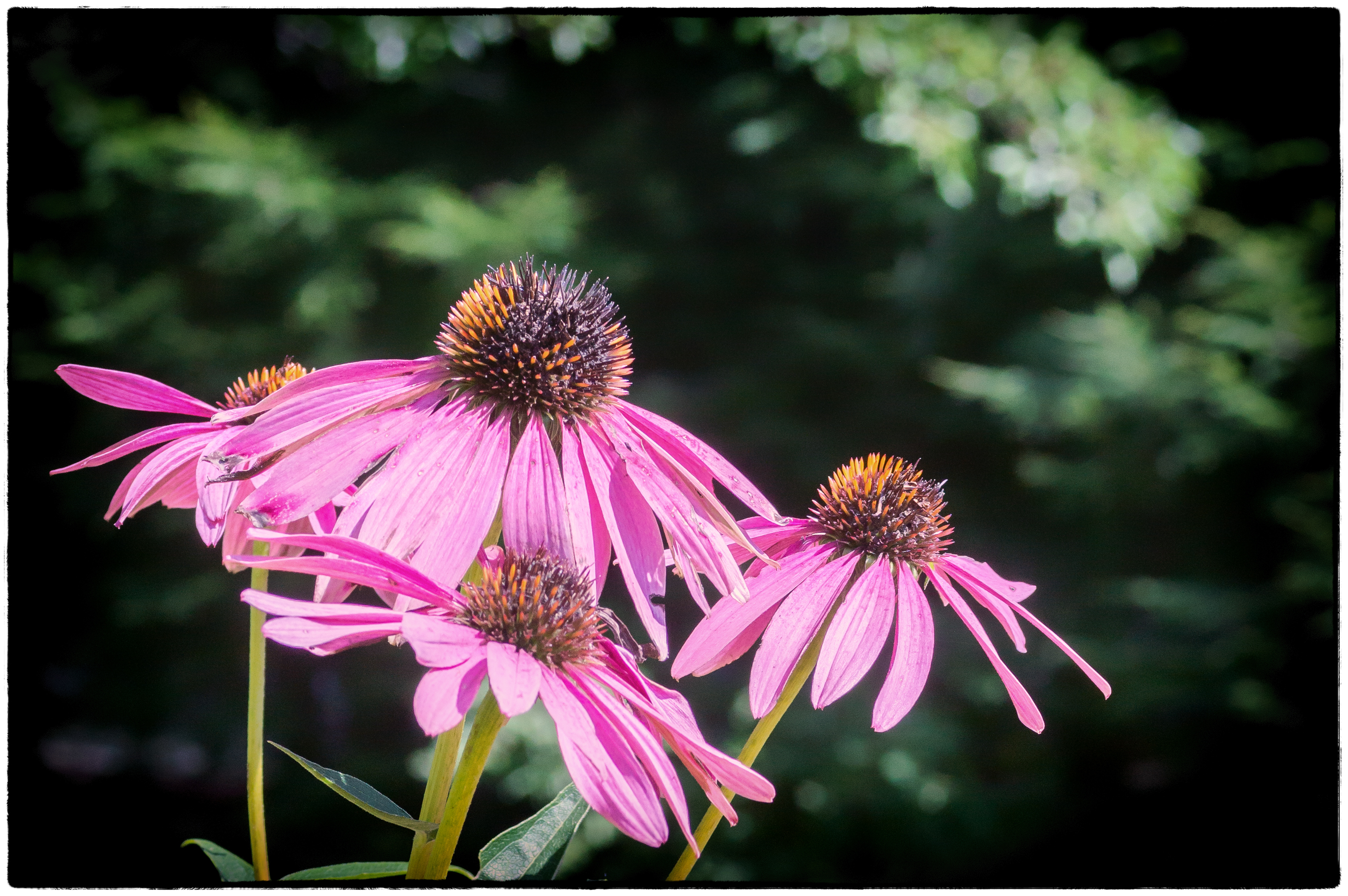
Purple Cornflower.

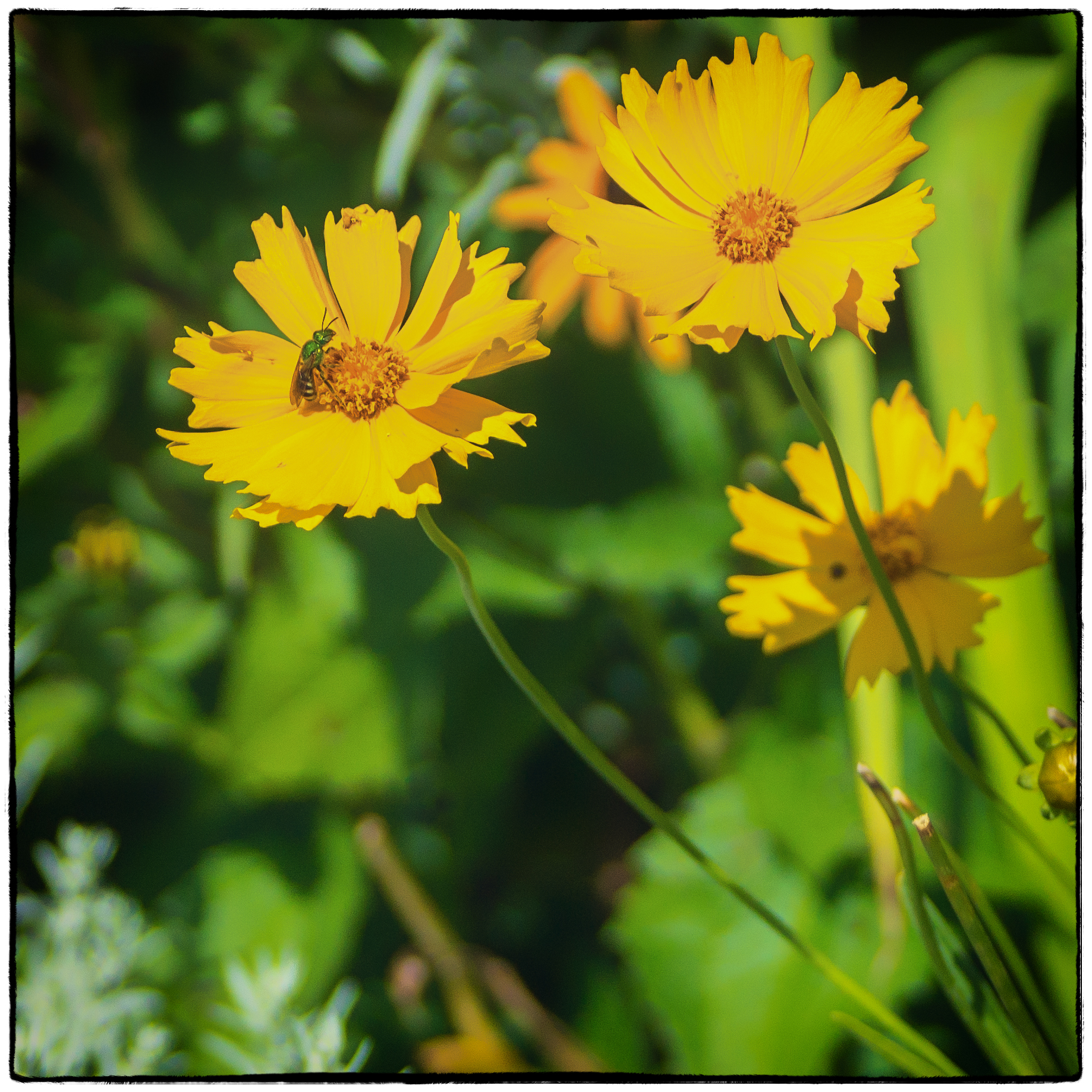
Coreopsis with bug.

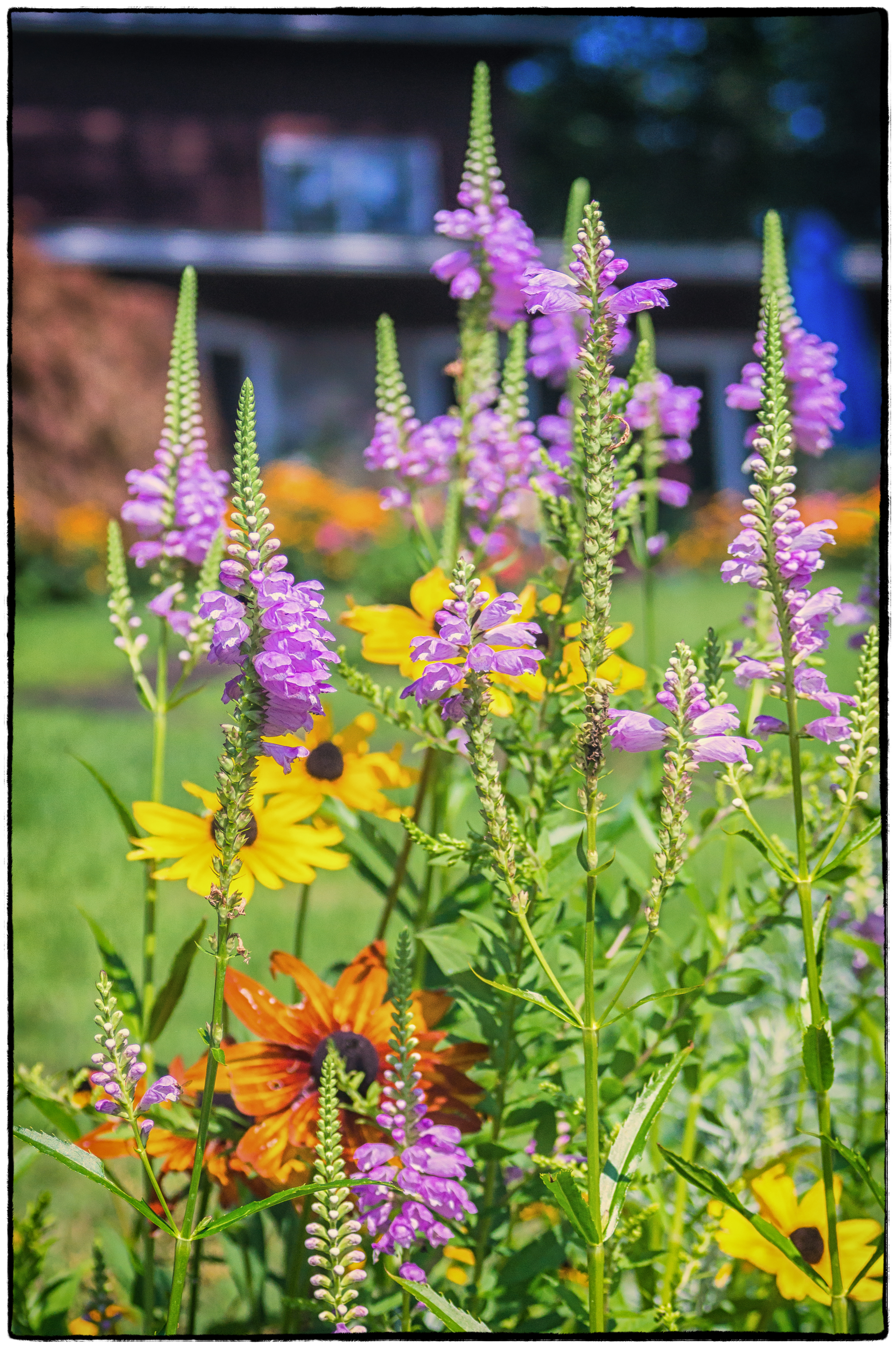
Obedient plants (mostly).

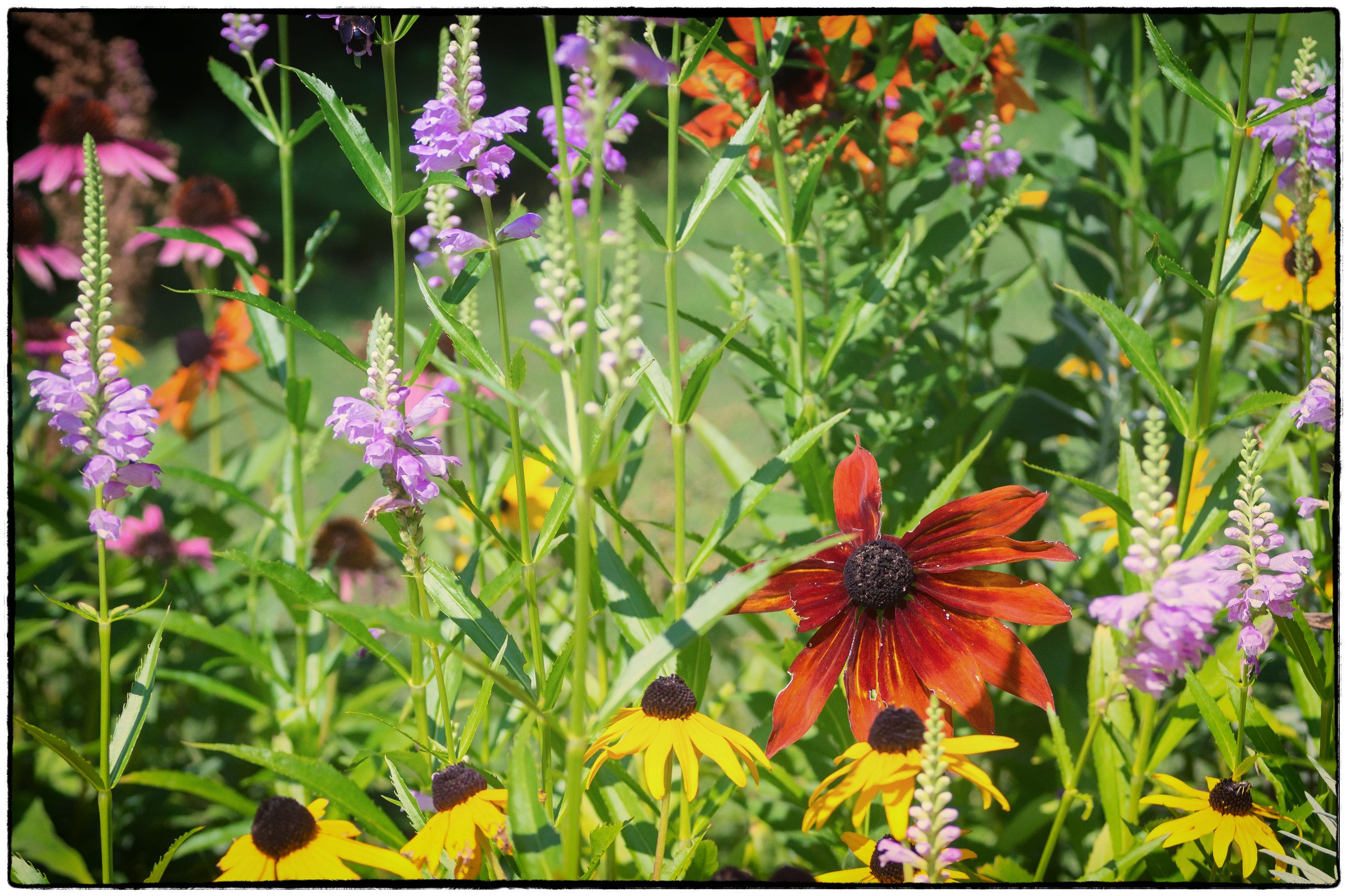
Mixture of flowers.

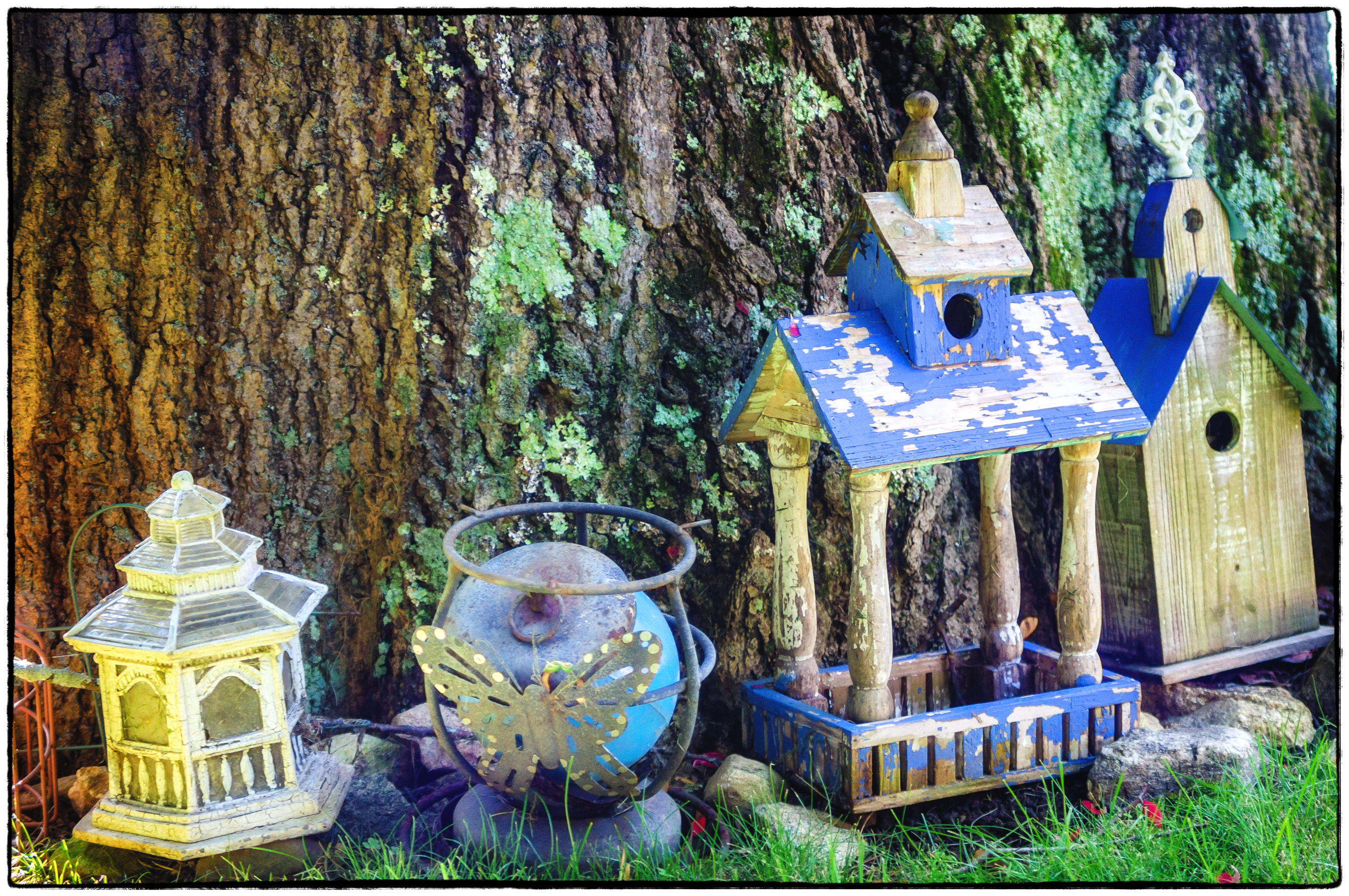
Bird Houses.

Other pictures taken with this lens can be found here:

Old Waterworks at Pocantico Lake
Boat in the Mist

A Walk to Rockwood Hall

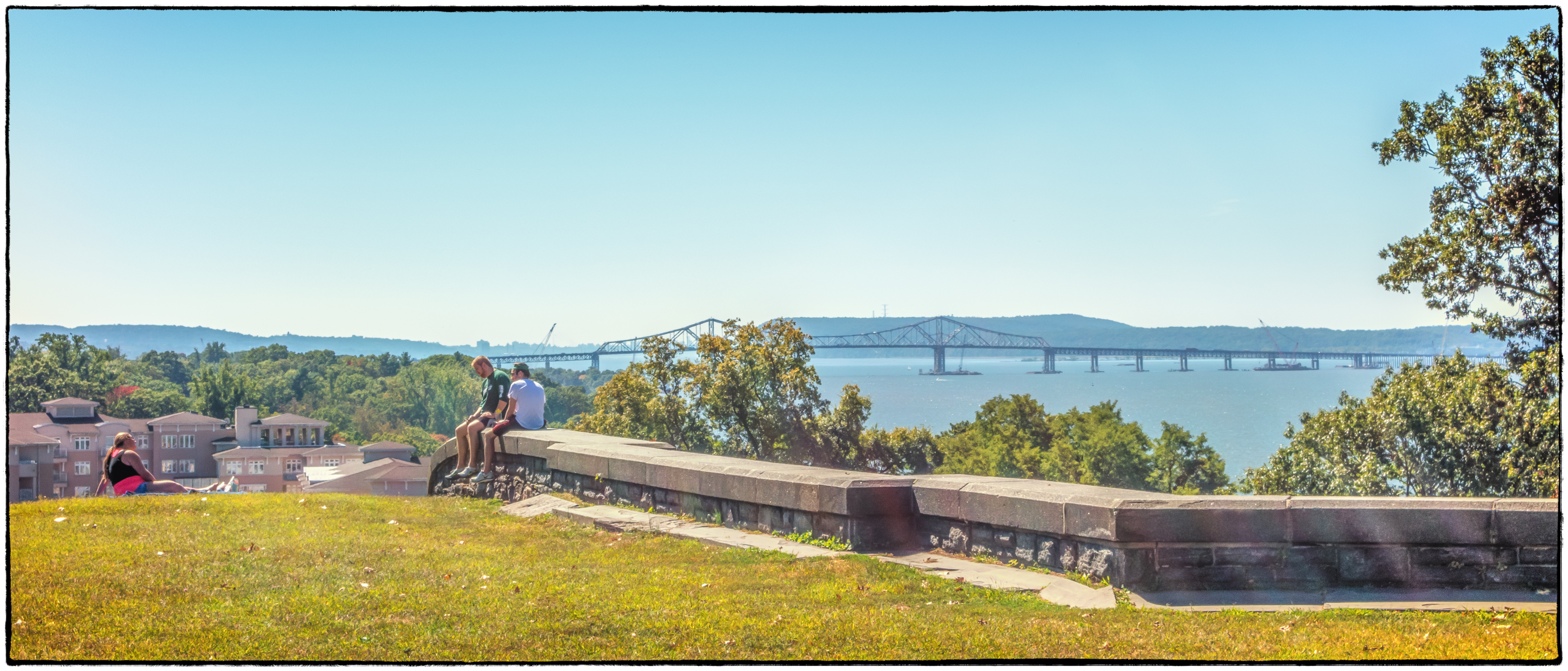
View of the Hudson from the site of the former Rockefeller Mansion. Tappan Zee bridge in the background.

Back down in Westchester County. I had a bad experience earlier in the week. We went for a walk at Wonder Lake. It would have been a very nice walk except that we didn’t make it to the lake. I tripped over a tree root, fell and hit my nose on another root. There was blood everywhere. The worst of it was that I was in the middle of the woods and it took me about thirty minutes to get back to the car. By then the bleeding had more or less stopped. I’d also broken my glasses: one of the side arms came off, but luckily the lenses were intact so I was still able to use them. I thought at first that I’d broken my nose, but apparently not. Just another large cut – one of many I’ve accumulated over the years.

So today I decided to go somewhere flatter, less covered in roots and stones. Rockwood Hall seemed to fit the bill. We walked down the Old Croton Aqueduct and then turned off towards the Hudson and the site of the former Rockerfeller Mansion. Little now remains: just the foundations (with a great view of the Hudson) and a number of impressive trees.

Nice walk – about two hours in all.

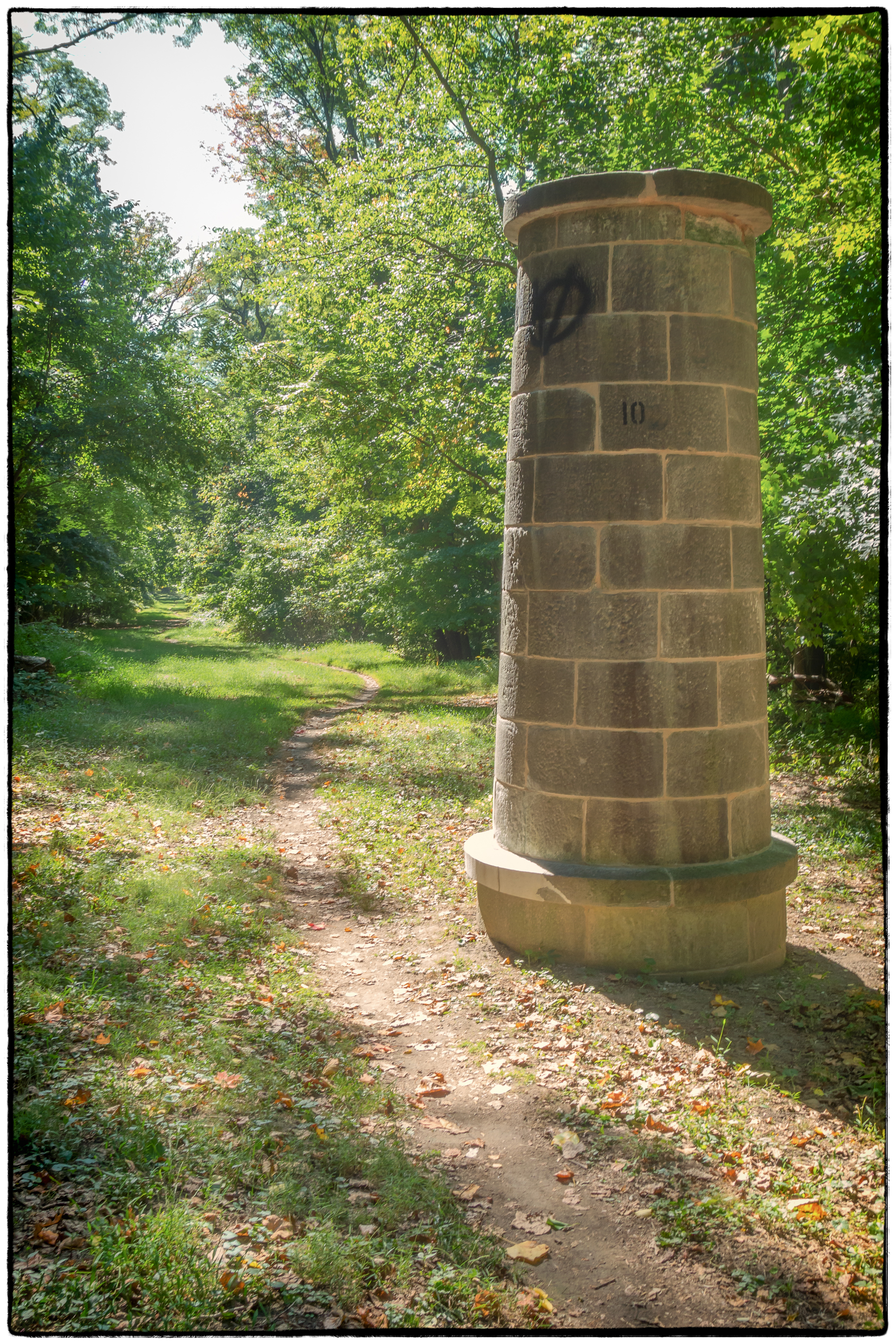
Ventilator on the Old Croton Aqueduct

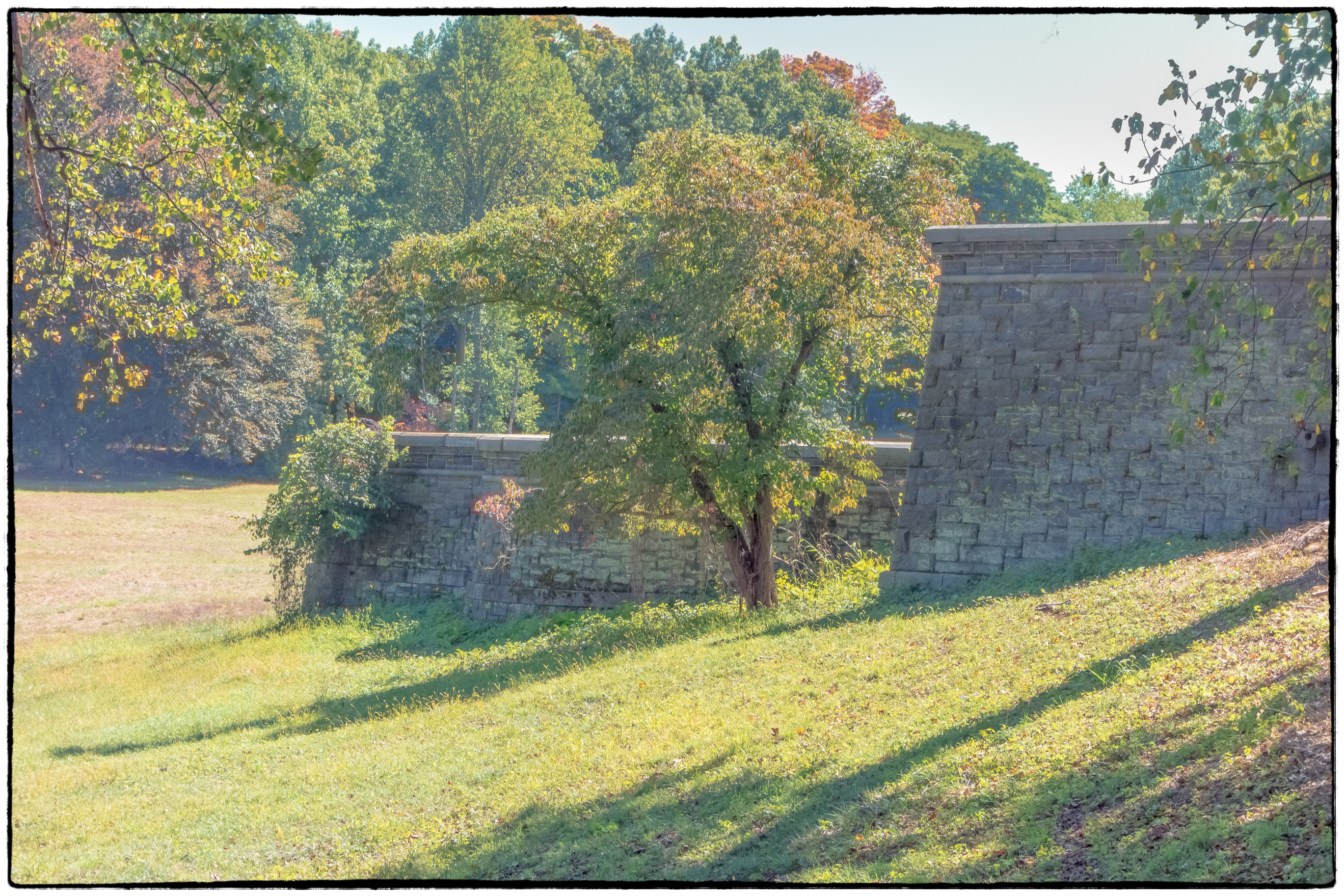
Approaching the mansion foundations.

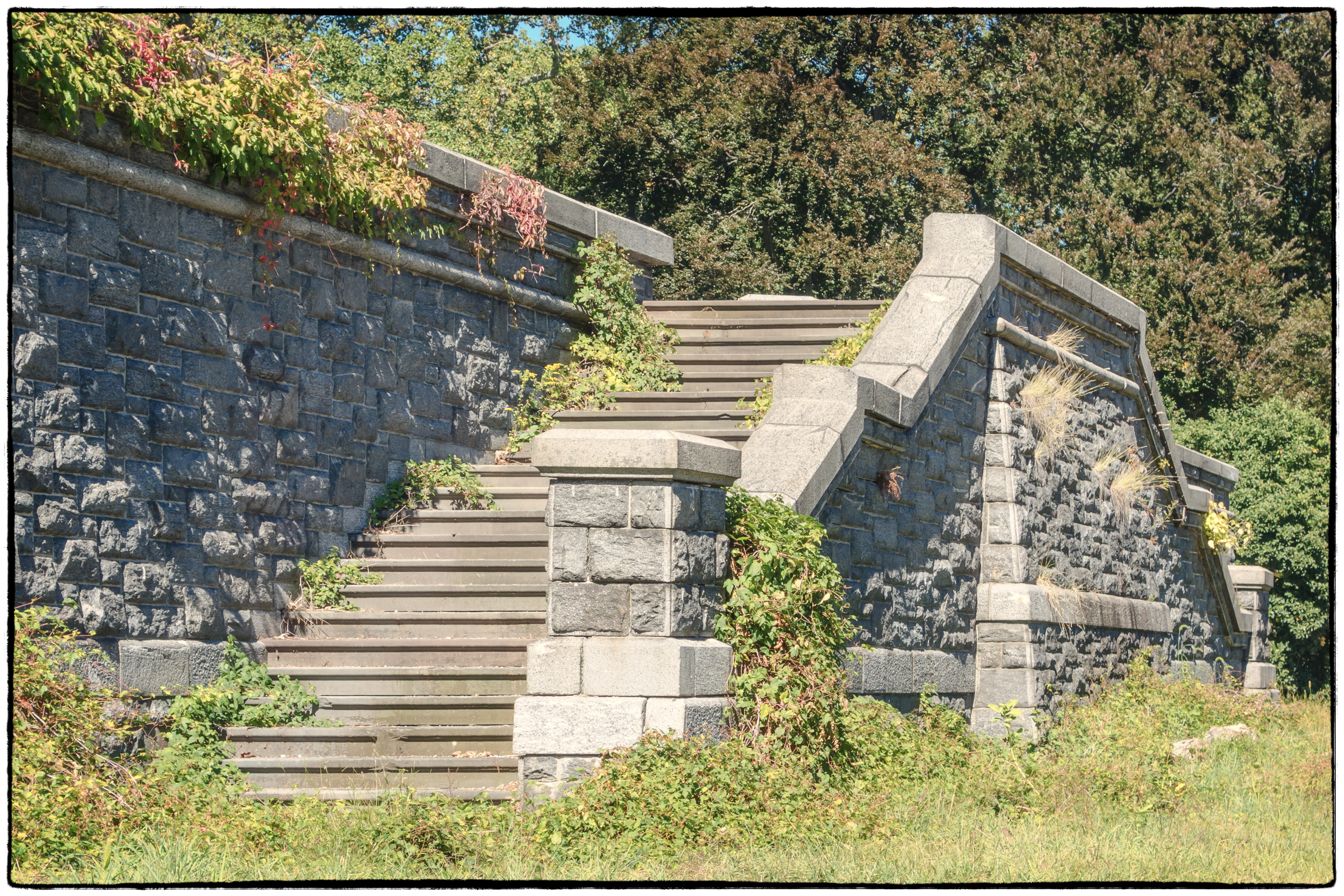
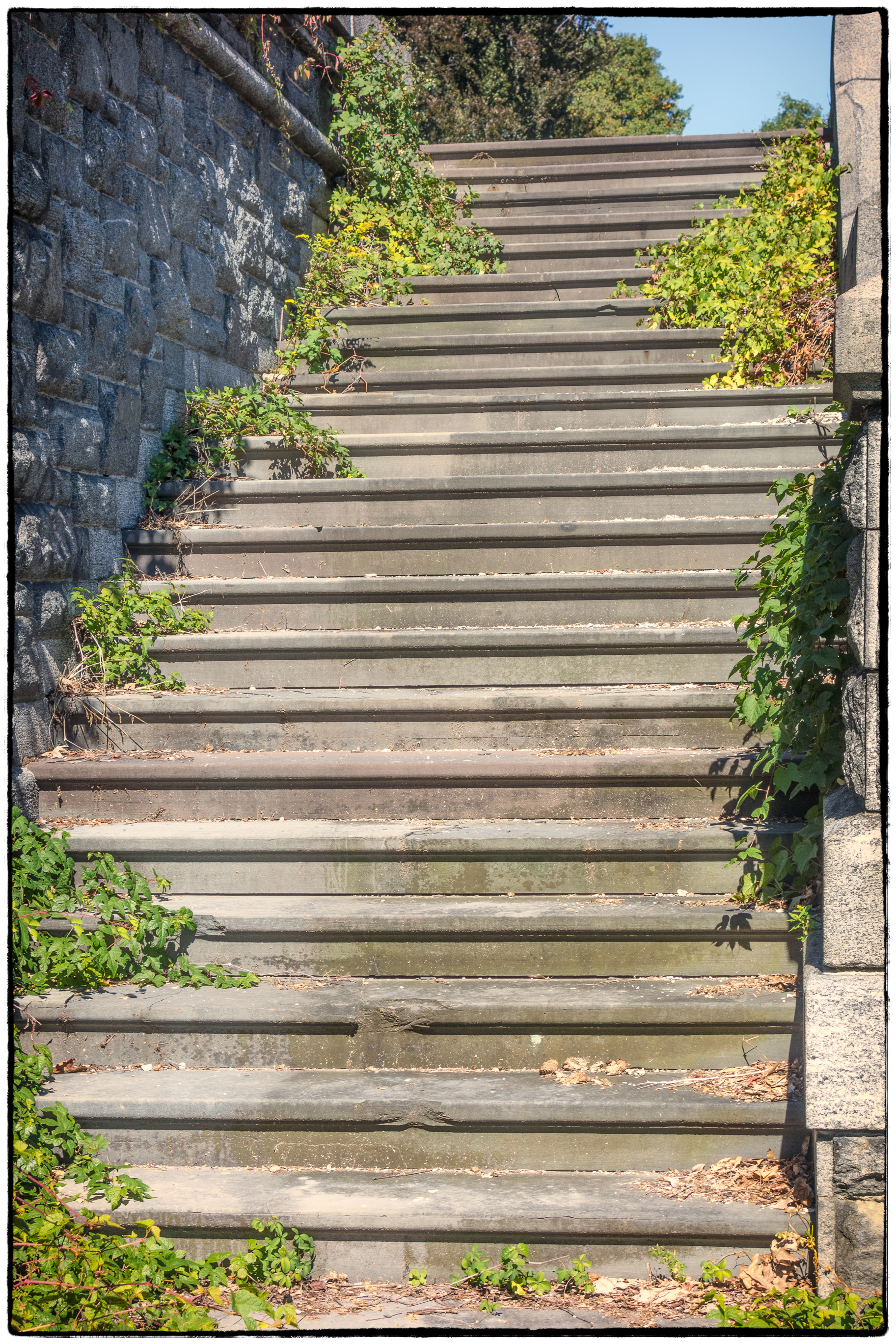
Old staircase.

Staircase to nowhere.