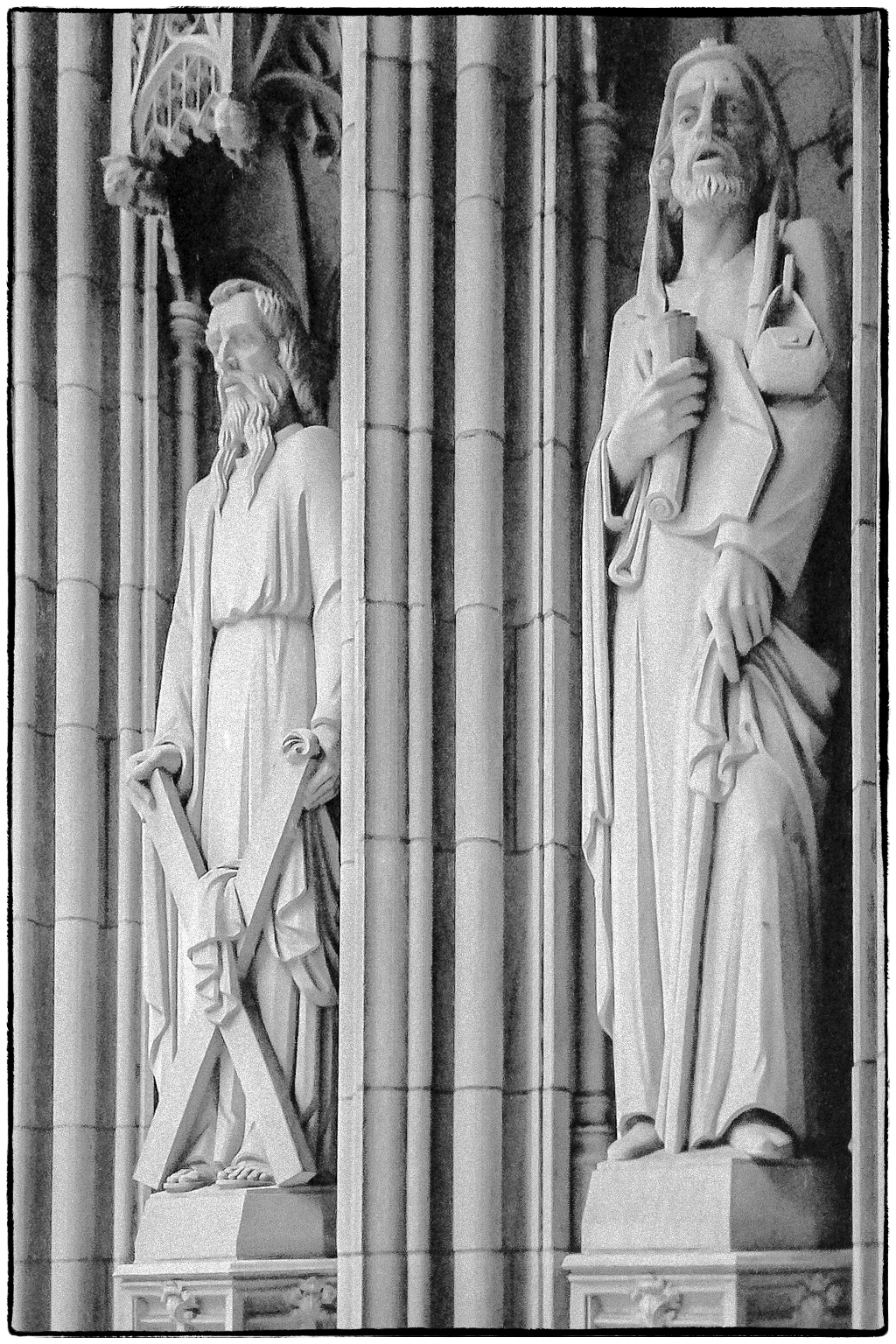
Taken at St. Thomas Episcopal Church, New York City with an Olympus Stylus Epic (also known as the μ[mju:]-II: a 35mm point and shoot camera from the late 1990s.
Back to film: Olympus Stylus Epic
And
Photographs and thoughts on photography and camera collecting

Taken at St. Thomas Episcopal Church, New York City with an Olympus Stylus Epic (also known as the μ[mju:]-II: a 35mm point and shoot camera from the late 1990s.
Back to film: Olympus Stylus Epic
And

I liked the way that the trees receded into the distance and the textures of the bark and the seed pods (if that’s what they are) on the ground.
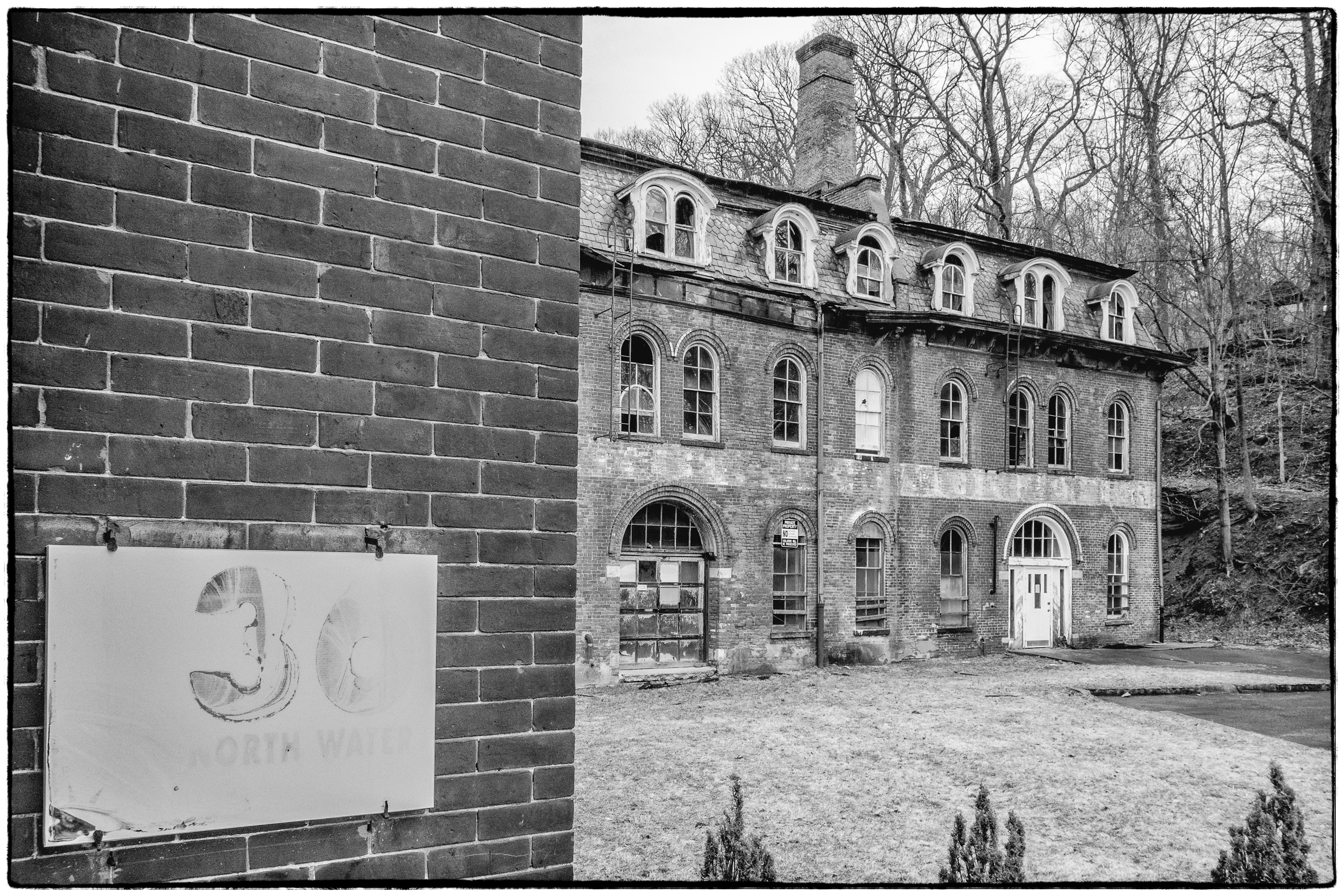
I’m glad I took some pictures about a year ago (March 30 2014) of this magnificent old factory building in Ossining, NY as it’s now mostly gone. It’s the old Brandreth Pill Factory and it had been placed on the National Register of Historic Places in 1980. I just now read that the entire west facade of the building (as seen in the photograph above) has now been demolished. Apparently this was done illegally, without the permits required by the town and without the town’s knowledge. The owner of the building maintains that they had a permit, but the town considered that permit to have expired. The town has stopped further demolition and parts of the building still stand, but it’s hard to see how anything can be recovered.
For the full story see: Historic Ossining pill factory illegally razed
Although I hate to see buildings like this demolished, I believe in this case the situation has been complicated because of the buildings physical location. There had apparently been prior agreements to renovate the existing structure, but after three tropical storms (most notably Sandy) changes in flood plain regulations would have required raising the building by several feet, which may not have been an economically viable proposition.
I came across this short piece on one of my favourite photographers: Josef Sudek on the great Art of Photography website.
I love Sudek’s photographs, particularly those that can be characterized as neo-romantic. Maybe this is not so surprising as I’m also very fond of Gustav Mahler and Richard Strauss music. I know that it’s not popular to like ‘pictorialist’ photographs nowadays, but I find that I do. I find Sudek’s photographs to be particularly atmospheric, especially those of the interior of St. Vitus Cathedral in Prague such as the example below:

Sudek: St. Vitus Cathedral Under Construction. Via “From My Window”: The Late Work of André Kertész and Josef Sudek
I’m also impressed by his series of panoramic photographs.
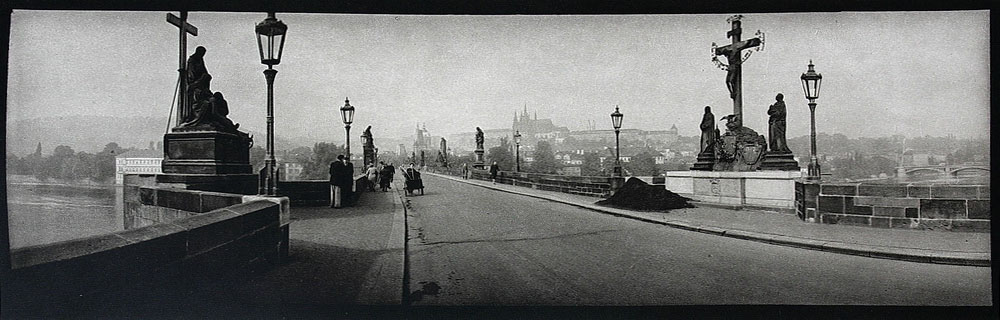
Charles Bridge, Prague. Josef Sudek via ‘What is a Film Camera’
Finally apart from the qaulity of his work I find his personal story inspiring. He lost an arm in World War I, but this didn’t stop him from taking photographs, and those days we’re not taking about cameras of the size we mostly use today. We’re talking about something much, much larger (see below). Talk about refusing to let a disability get you down.

Josef Sudek with his large format camera. Via “From My Window”: The Late Work of André Kertész and Josef Sudek
A number of the images in this post are linked to a very interesting article: “From My Window”: The Late Work of André Kertész and Josef Sudek.
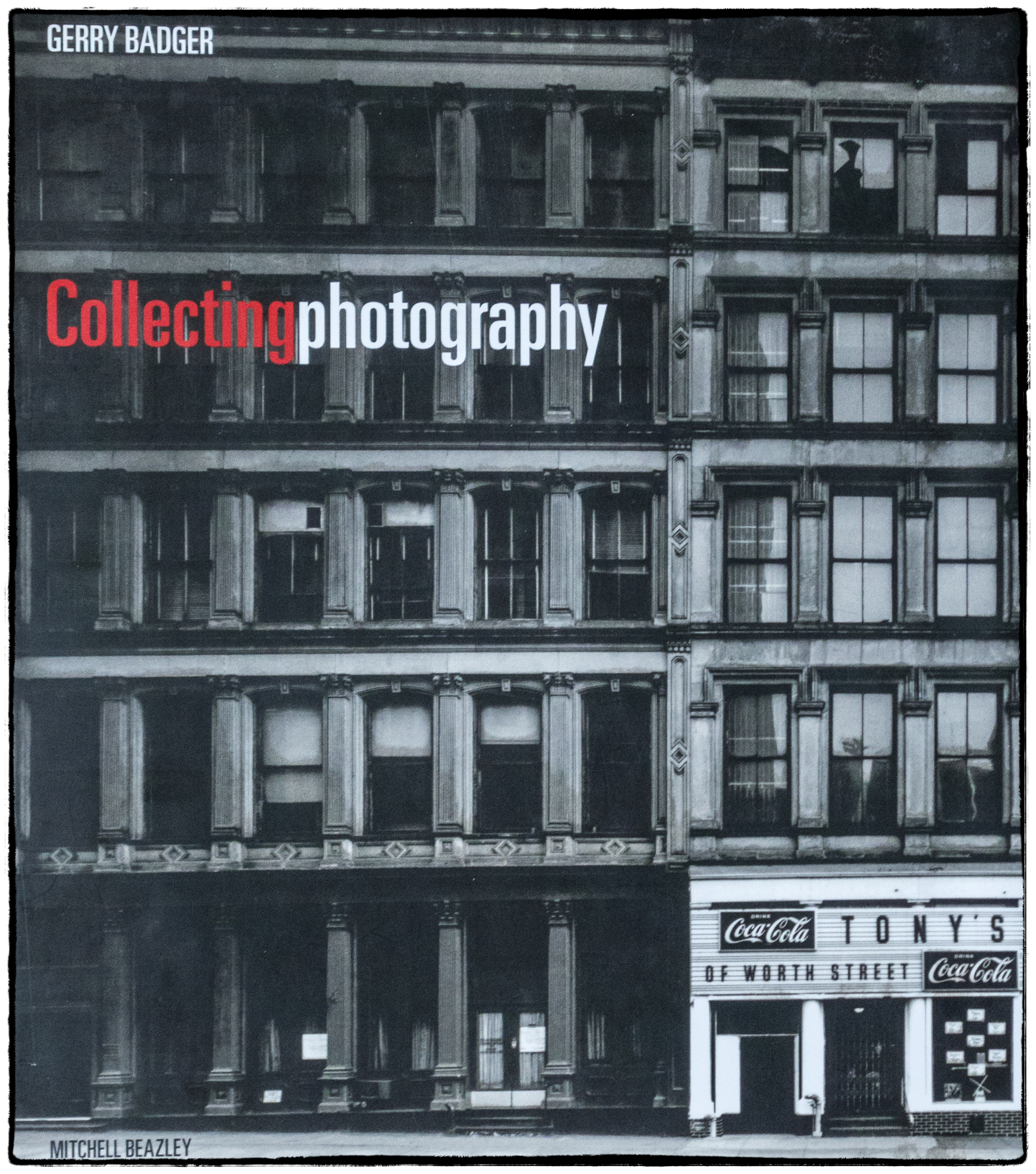
I’ve been thinking of starting collection of photographs for a while, but I didn’t really know where to start. So I picked up this book: Collecting Photography by Gerry Badger, second hand – cost about $8.00. It’s a nice hardback book in pretty good condition and I found it very useful.
The book is divided into two parts: the first part contains the introduction and five chapters dealing with the following topics:
The Art of Photography – deals with photography as an art form and discusses which photographs can be considered to be art, and which not as a guide to deciding which photographs might be worthy of collection. It ultimately concludes with the statement: “For even the most experienced professionals, an emotional response is a more accurate guide than a purely intellectual one, though one’s considered intellectual response is also important. But first of all, look for pictures that hit you in the gut, that ‘go against the grain’, because that is where the art of photography most properly resides.”
Building a Collection – Suggests several areas for collecting e.g. by subject; genre; process; school or historical period; quality; photographer or any combination of the above. Also covers collecting as an investment and concludes with the following guidelines (particularly for investors): Buy the best you can afford; Pay particular attention to condition; Check an images provenance; Avoid restored prints; Consider subject matter; Avoid ephemeral market trends; and Take the long view.
The Photographic Print – Covers issues and problems related to prints including Original prints; Vintage Prints; Later prints; Different print editions including limited editions; Print sizes. I must admit that I hadn’t realized that there were so many issues associated with prints.
Buying and Selling Photographs. Covers different places (and issues associated with each of them) to acquire pictures: Gallery or Dealer; Auctions; From a photographer; Photofairs; The Internet; Photographic archive or library. Also covers selling photographs – apparently not likely to be as fulfilling as buying. The problem of fakes and forgeries is also discussed although it’s apparently not as big a problem as you might think.
Displaying and Caring for Photographs – very useful tips on how to take care of your collection including handling; light; heat and humidity; and chemical pollution. Also deals with issues specific to colour and digital prints and includes sections on storing photographs; restoration (don’t unless you really have to and then have a professional do it); framing and record keeping.
The second part consists of a number of appendices:
An extensive Chronology covering the history of photography.
A glossary (I found the descriptions of photographic processes to be very informative).
A lengthy (almost 30 page) listing of key photographers including, for each, their nationality; dates of birth and death; subject matter they covered; types of media they used; and estimated price ranges for their work.
A listing of galleries and dealers with contact information.
A Bibliography subdivided by subject: General histories; Photography in the 19th century; Photography in the 20th Century; Books on collecting photographs; Books on Museum Collections; Books on private and corporate photographic collections; Books on photographic books; Technical books.
The book is also lavishly illustrated with many beautiful photographs, many of which I was not familiar with. Each one has a short caption with information related to collecting. For example a full page photograph of Edward Weston’s famous pepper is captioned with “Edward Weston. Pepper No. 30, 1931. Silver Gelatin Print. Private Collection. One of the icons of modern photography, which is available printed by Weston’s son, Cole for $2,500.
I enjoyed this book a great deal, but it’s worth mentioning a couple of caveats. First the book was published in 2006 and much has no doubt changed in the field since then, although I imaging basic principles will remain the same. Second I think it’s all probably a bit much for the type of collection I might build (i.e. inexpensive photographs which catch my attention). I’m not likely (at least not at the moment) to spend thousands of dollars on a photograph and consequently some of the issues related to taking care of the collection would be overkill. Having said this, however, I know from my camera collecting that once the ‘bug’ bites you can take off in unforeseen directions.