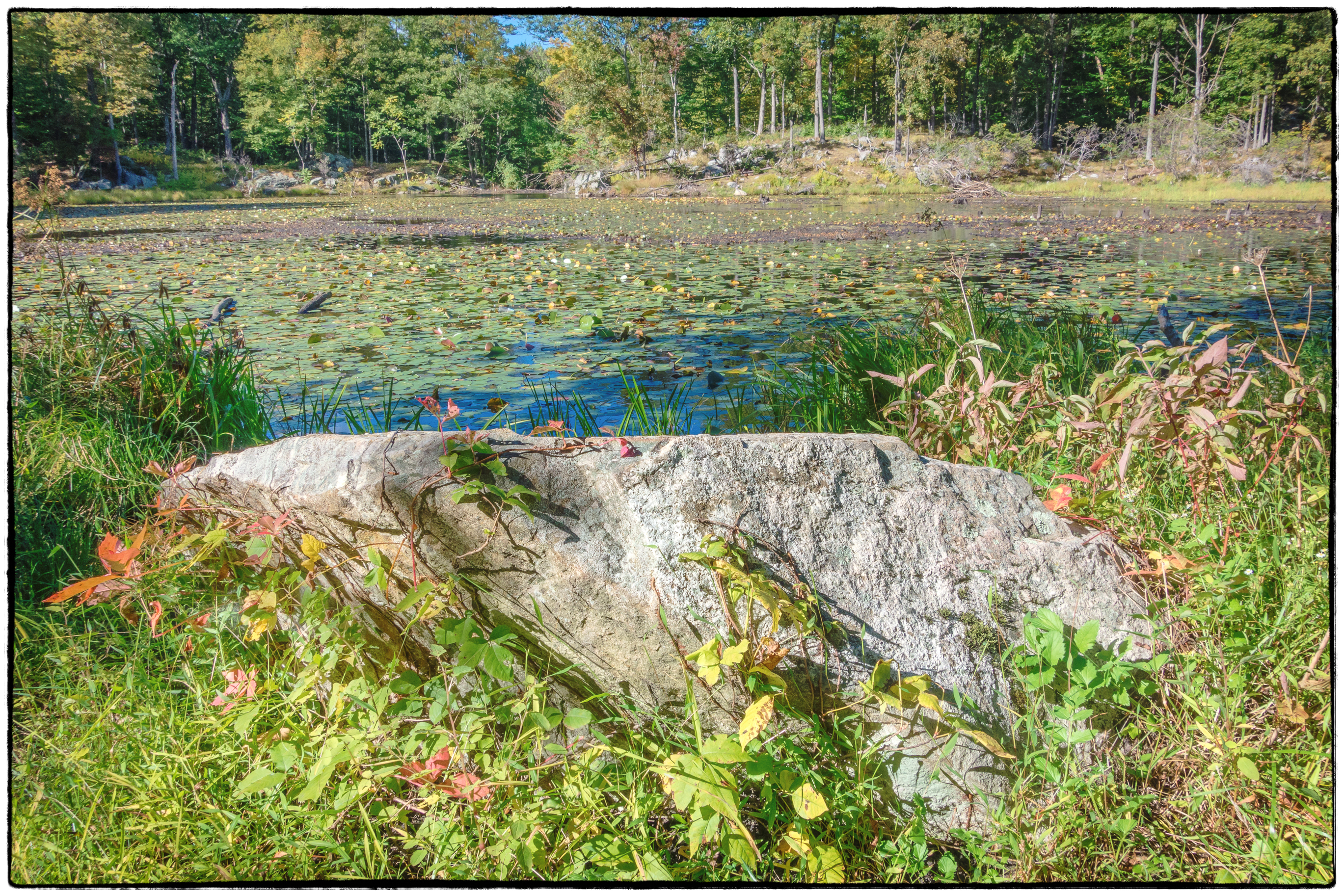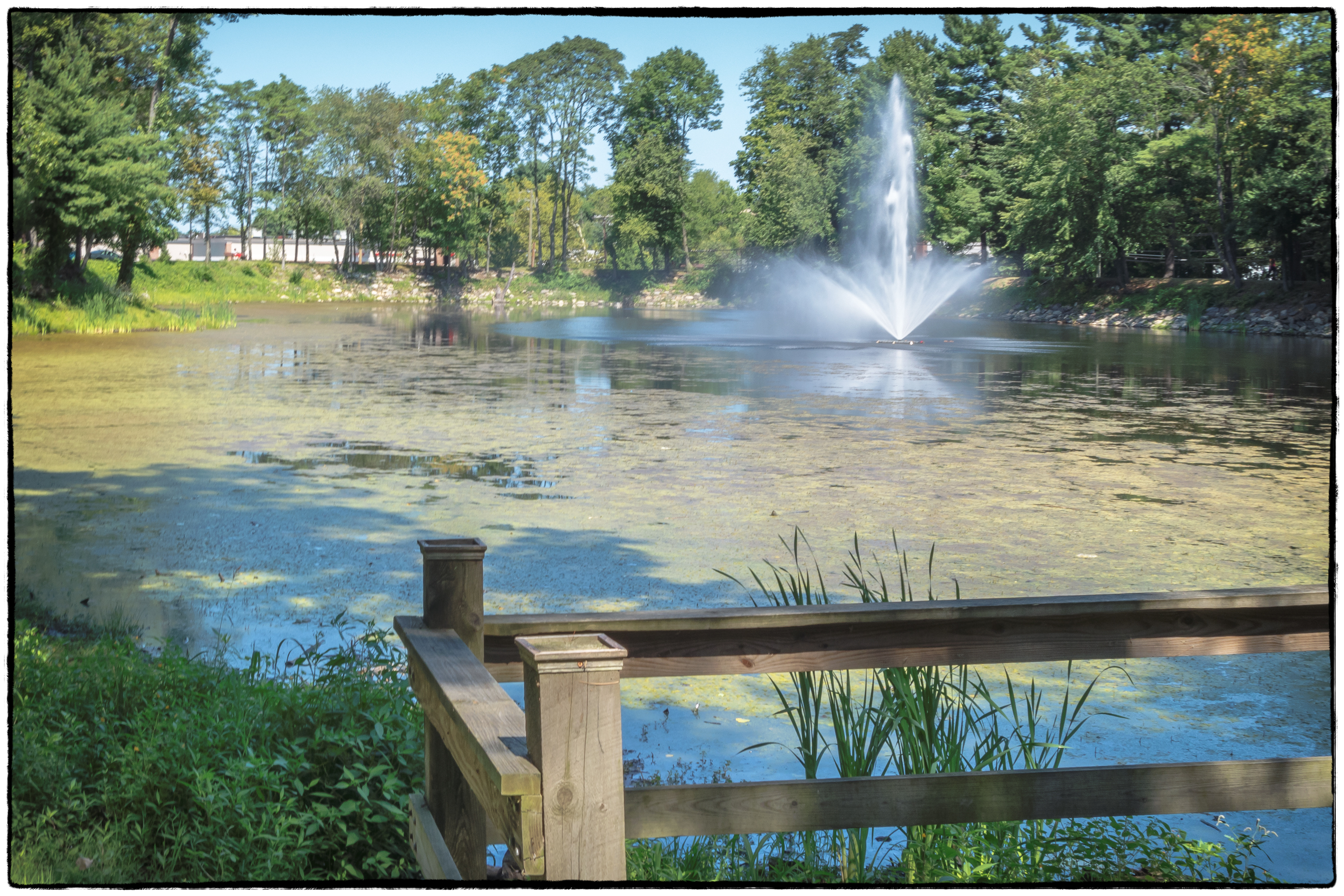
The pictures are not so great, but in trying to find out more about this little park I found some interesting local history and a link to a recent TV show.
The park is very near to our house in Briarcliff Manor and it’s usually cleared of snow pretty quickly in Winter so it’s one of the few places I can easily walk our (small) dog in that season. I’ve often walked the dog there and never really thought much about the park’s origins. I didn’t even know it’s name.
Apparently for a long time it wasn’t even a park and didn’t really have a name. One source referred to it as “an old, overgrown algae-covered man-made pond near the Chilmark Shopping Center known simply as The Reservoir”. This is pretty much the way it was when we arrived in Briarcliff Manor in 1998. By that time it was no longer being used as reservoir and had been replaced by some large, bright blue water tanks with graffiti all over them. It’s raised several feet above Pleasantville Road and, to be honest I didn’t even know it was there.
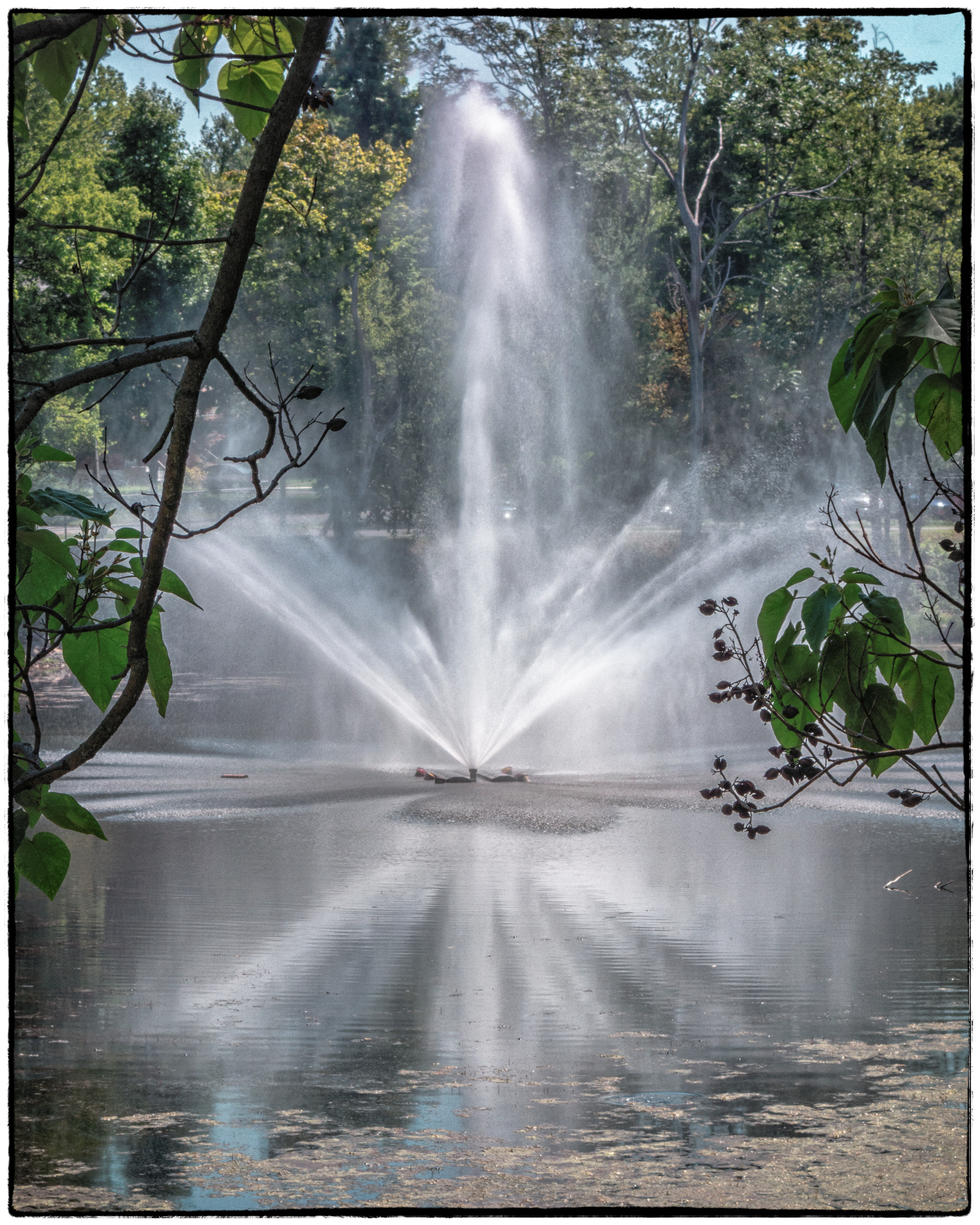
Then some time in the early 2000s it was all cleaned up and a walking/running path running around the pond was built – three times around equals one mile. The water tanks were painted dark green and are much less noticeable now. The fountain seen in the picture was also installed and benches and picnic tables sprinkled around the area. It’s really quite pleasant now. The dogs love it and it doesn’t seem to bother them that they’re going round and round in circles. It even has a name now: The Richard Wishnie Park, name after a former county legislature.
Once upon a time, however this was the village water supply. At one end of the pond is a brick structure. I’d seen it and always thought it was a storage shed of some kind. It turns out that it’s actually the old pump house. A plaque on the side (which I’d never noticed) reads “Intermediate Service Reservoir. Sing Sing Water Works. Constructed 1869.” The New York Real Estate Blog (also the source for the quote above) states:
As the stone says, Ossining used to be known as Sing Sing, an Anglicization of Sint Sinck, the aboriginal natives of the area. To differentiate the village from Sing Sing Prison, the name evolved to Ossingsing and then Ossining. Ossining High’s mascot was the Indian for many years to honor the Sint Sinck, but political correctness ended the Indian mascot. The neighborhood across Pleasantville Road from the Reservoir is known informally as the Indian Village, as the streets are all Native American names, such as Mohawk, Pocantico and Iroquois.
I’ve never watched the TV series “Mad Men”, but I gather that some major characters live in Ossining and that this park is even mentioned in one episode. A post on the Westchester Real Estate Blog says: “This past weekend’s chapter had Betty meeting with an adviser to the governor about the “Pleasantville Road Reservoir” and the plans to erect a 3 million gallon water tower to replace it”.