Avery Cemetery

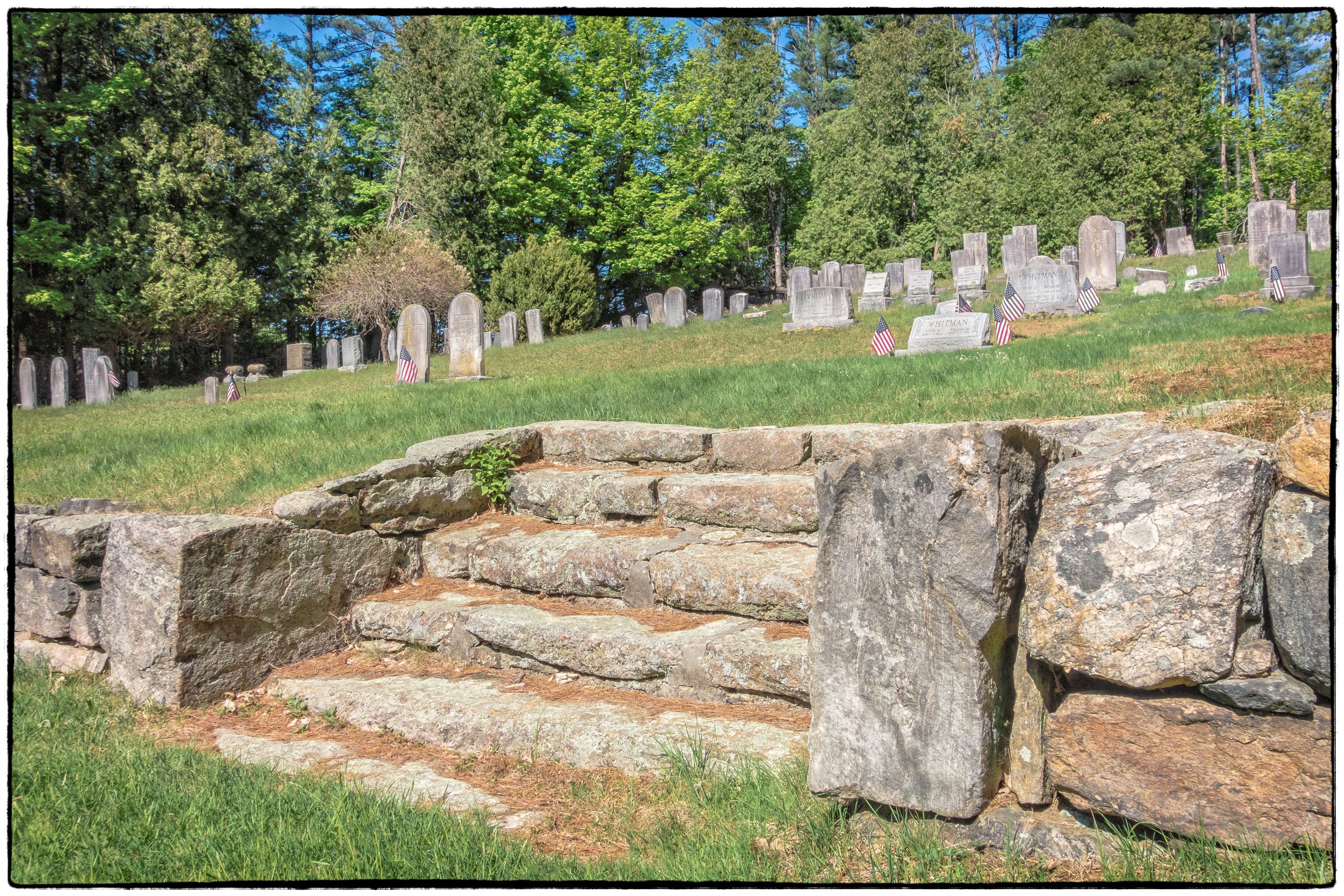
I’d taken the dog for a walk at the Ward Pound Ridge Reservation. After exploring the park for a while I was returning to the car when, looking at the map, I noticed a symbol marked ‘cemetery’. I’m fond of old cemeteries so even though I was hot and tired I made a short side trip to take a look.

A nearby panel says:

This cemetery was inventoried in 2009 by Garrett Kennedy as part of his Eagle Project. The earliest inventory on record was done in 1941 by Mrs. Sterling B. Jordan and Mrs. Frank W. Seth. In 1942 there were 187 head stones, in 2009 there were 183 headstones that could be inventoried. There were many that could only be identified by the information in the 1941 census.

The oldest head stone dates from 1790 and the most recent from 1986. 46 of the headstones are from the Avery family…33 of the headstones were considered to be in Excellent condition; 57 good; 51 fair; 32 poor; and 10 illegible.
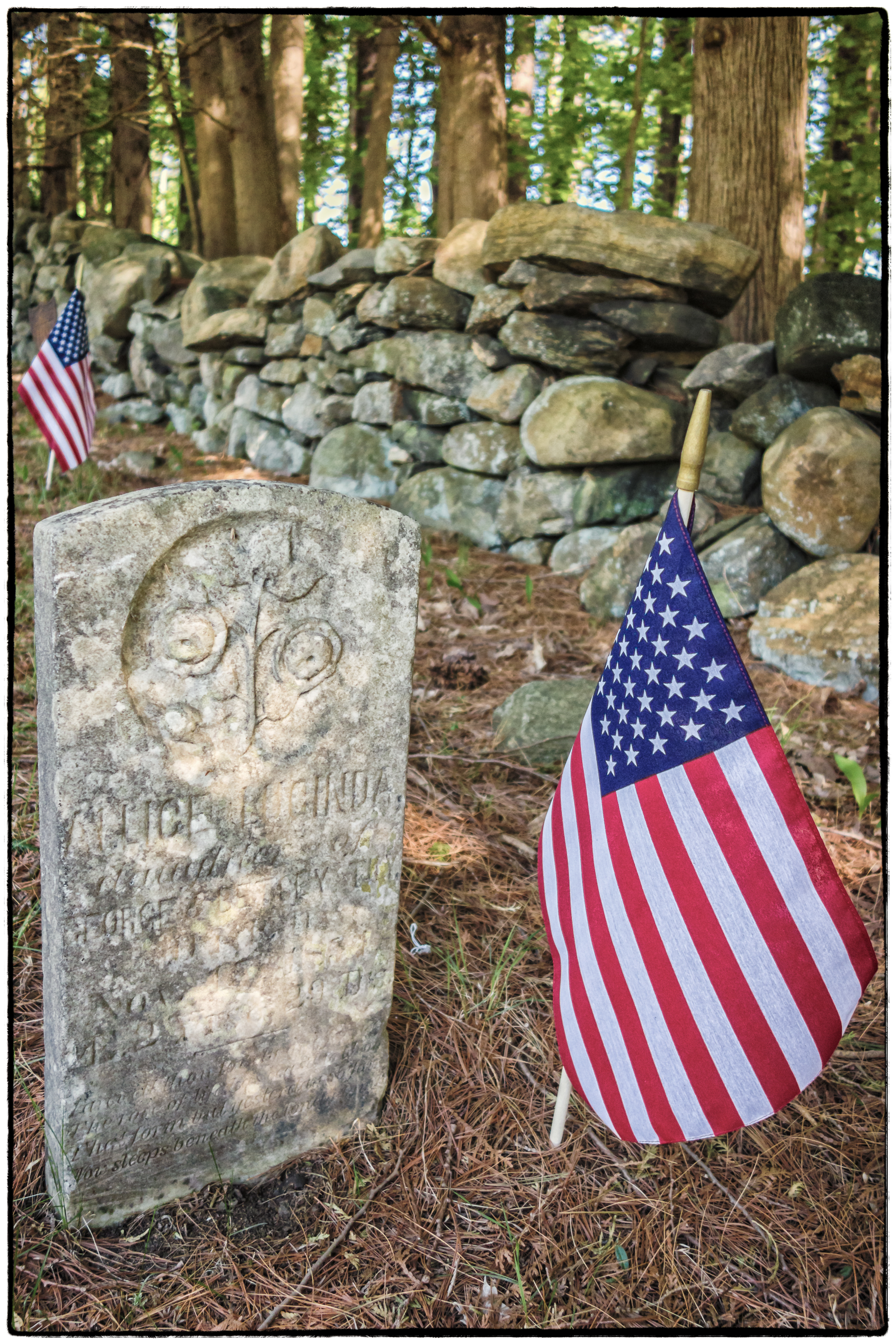
Headstone with flags.

According to Lewisboro Ghosts: Strange Tales and Scary Sightings, November 15, 2007, by Maureen Koehl there is a story associated with the cemetery

…The tale unfolds on a cold winter’s night sometime after the Civil War. Along the road from Cross River to Boutonville stood the home of a poor tenant farmer whose name has long been forgotten. He was a widower with four young children. The war had not been kind to farmers in the area and this farmer struggled to keep his small family fed and clothed. Furnishings in the farmhouse were sparse. To keep warm the children often bedded down close to the hearth of the large kitchen fireplace.

On this particular evening, with a lusty wind blowing outside, the father set his children before the brightly burning hearth in his cold farmhouse, tucked them in with quilts and good night kisses and set out on the two-mile walk to one of the taverns in Cross River village – a journey he often took. The evening passed in friendly conversation with other farmers and travelers around the cheery tavern hearthside.

Meanwhile, the children slept until suddenly, a malevolent gust of wind howled down the chimney, flames licked at the quilts covering the children and in the blink of an eye the room was filled with fire and smoke.

The hours passed quickly and another round had been sent for when the tavern door burst open and a neighbor stumbled in screaming that the farmer’s house was on fire.

“My children! My children!” the farmer cried in horror as he raced from the tavern and headed in a stupor for his home. With no neighbors nearby, the sad old house burned to the ground and the children perished before the distraught dad could reach them.

Overcome with grief, the farmer searched the fire scene, but the children were not to be found. Kind neighbors buried the poor little bodies under the spreading limbs of the huge, welcoming oak tree. This tree, the Boutonville Oak, is still standing not far from the old Route 124 entrance to Ward Pound Ridge Reservation.

Residents of the reservation claim they have seen the father searching the fields and the stones of Avery Cemetery at the western end of the park for the graves of his four children. One park ranger saw the orange glow of the lantern following the road to the small cemetery. He watched as the light seemed to swing to and fro as if a man were carrying it as he walked. Once he even followed the light toward the cemetery, but as he reached the steps into the burial ground the light disappeared.

As far as we know, the distraught father has never found the graves of his children. In fact, no one has discovered the grave markers, but the tale persists and the sight of his single swinging lantern has been seen crossing the fields within the last five or ten years.
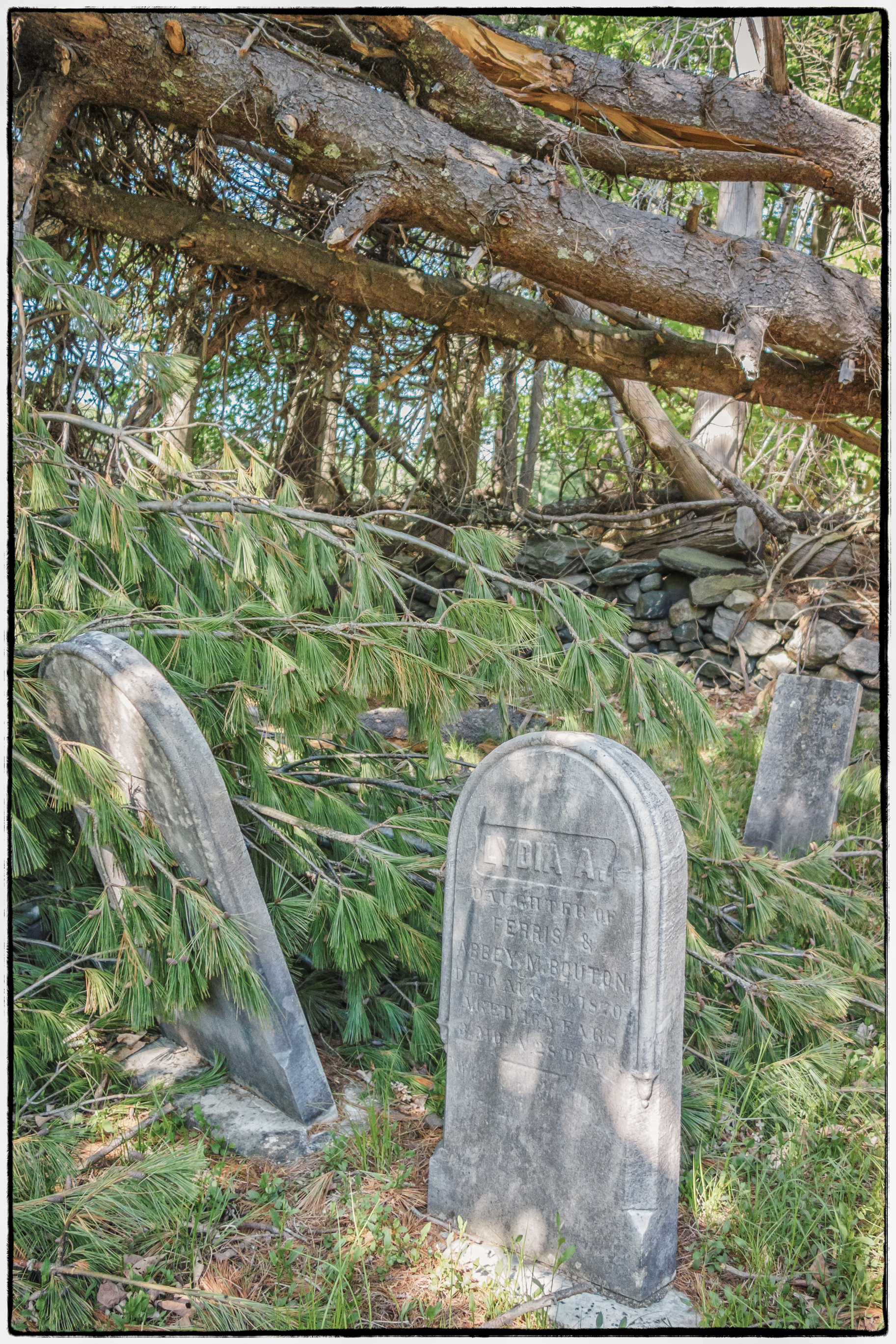
Headstones and downed trees.
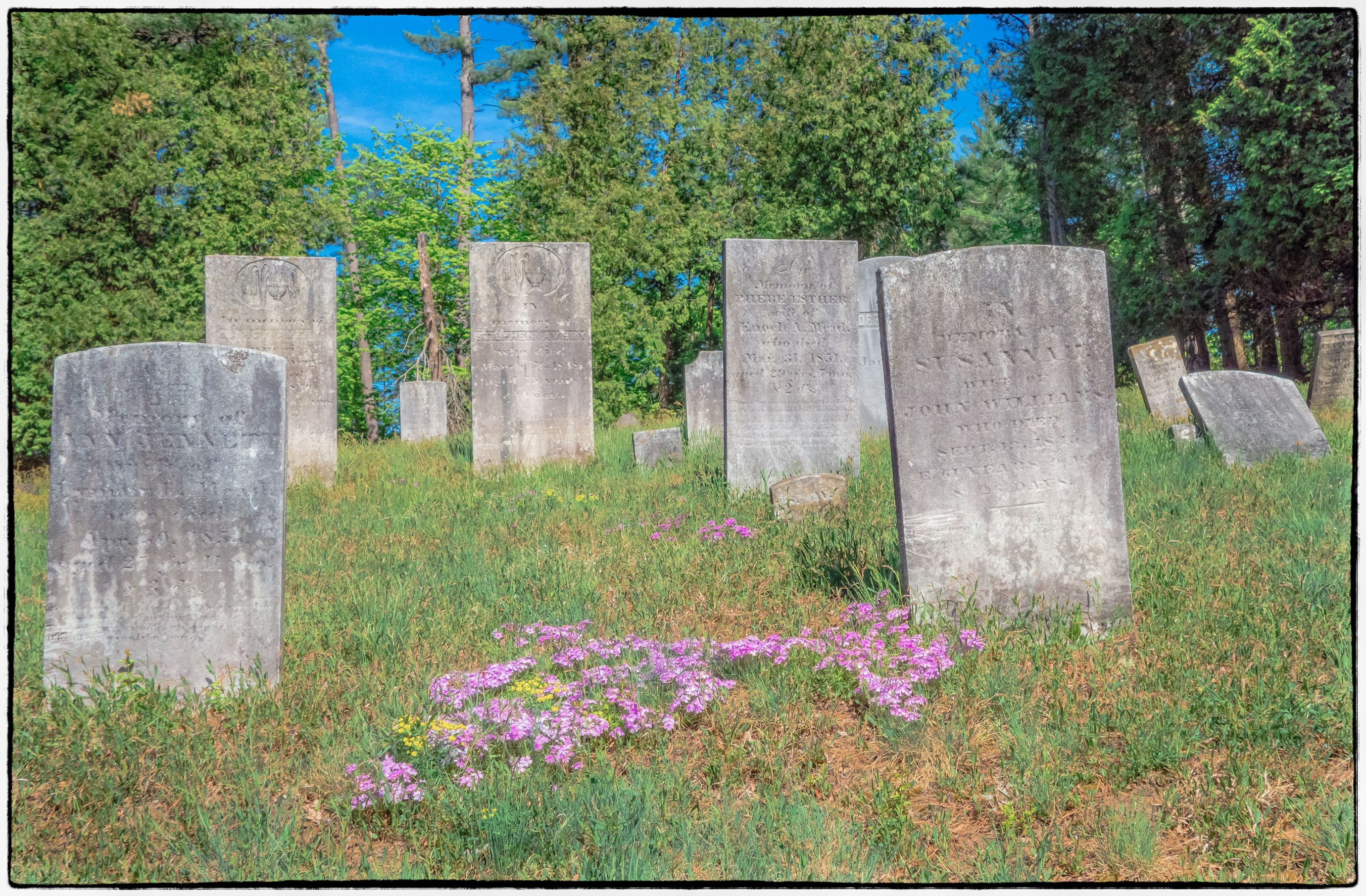
Headstones and flowers

Still life with toes

Incredible though it may seem for someone living in Putnam County, NY this offering at the base of a statue was seen at a nearby Buddhist Monastery. What caught my attention was the contrast between the essentially monochromatic statue and the bright colors of the fruit; and the contrast between the smoothness of the fruit an the rough texture of the statue.

Bannerman’s Island

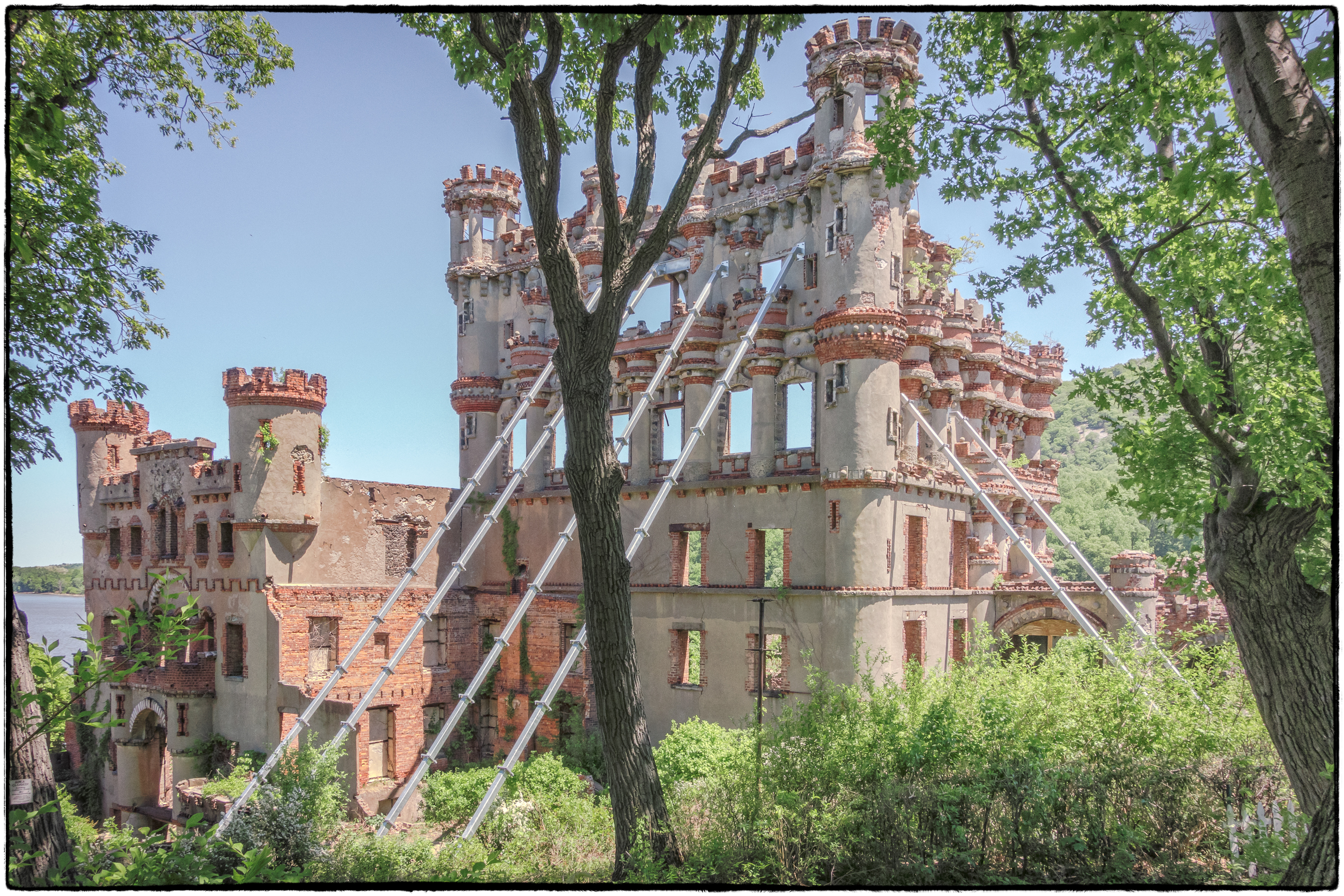
I’ve taken pictures of Bannerman’s Island from afar – from both the west shore and the east shore of the Hudson. I finally decided to see it up close and took the tour – the island is about a 25 minute boat ride from Beacon, NY and the tour leaves from right next to the Beacon Metro-North station. Although there’s not a lot to see on the island, what there is is interesting and you won’t find anything like it anywhere else in the lower hudson valley. So to me the tour was worth it. The guides give lengthy descriptions of the history of the island, of Francis Bannerman and over the castle like buildings (actually they are arsenals). I’m sure I would have been more interested in the descriptions had I not recently attended a presentation on Bannerman’s Island at the Briarcliff Manor Historical Society

Crumbling arsenal buildings. Note the metal buttresses. About 40-50 percent of the arsenal buildings have collapsed in recent years.

According to “Scots and Scots Descendant in America. D. MacDougall. New York, April 10, 1917. Part V – Biographies“:

FRANCIS BANNERMAN, the noted merchant and authority on war weapons, is the sixth Frank from the first Frank Bannerman, standard-bearer of the Glencoe MacDonalds, who escaped the massacre of 1692 by sailing to the Irish coast. His descendants remained in Antrim for 150 years, intermarrying with Scottish settlers. In 1845, Mr. Bannerman’s father removed to Dundee, Scotland, where Francis VI was born, March 24, 1851. He came with his parents to the United States in 1854 and has resided in Brooklyn since 1856. The eldest son in each generation is always named Frank. The surname originated at Bannockburn, where an ancestor rescued the clan pennant, whereupon Bruce cut off the streamer from the Royal ensign and conferred upon him the honour of “bannerman.”

Young Francis left school at ten, when in 1861 his father went to the war. He secured employment in a lawyer’s office at two dollars a week, each morning, before going to the law-office, supplying with newspapers the officers of the warships anchored off the Brooklyn Navy Yard, near his home. Summer evenings, after work hours, he dragged the river with a grapple for bits of chain and rope, which he sold to junkmen. When his father returned disabled, he became a dealer in the material the boy collected, with a storehouse at 18 Little Street, also attending the Navy auctions, and later established a ship-chandlery business at 14 Atlantic Avenue. Frank went back to school for a time and won the scholarship for Cornell University, but could not accept owing to his father’s war disability requiring his assistance in carrying on the business.

Read More

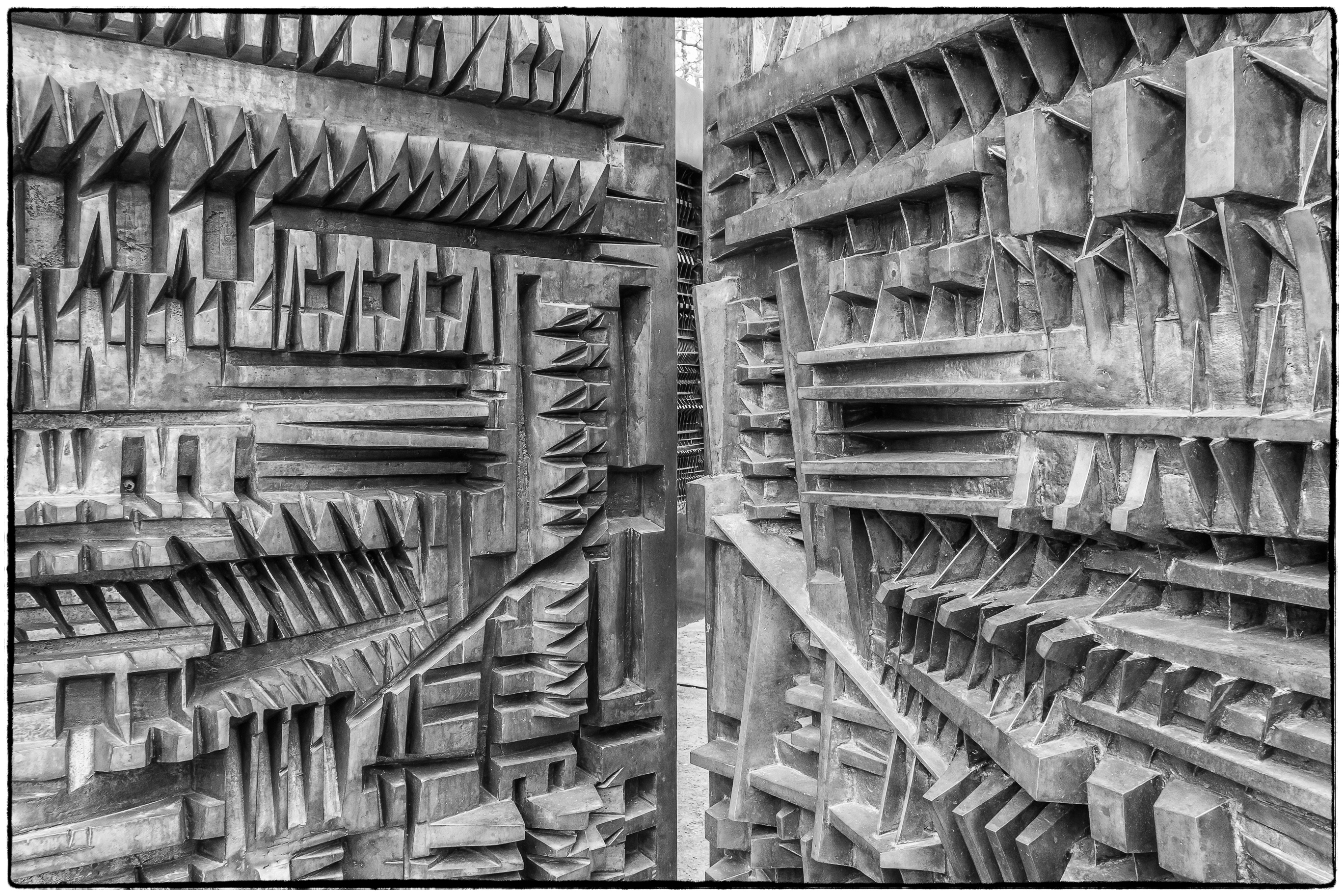
The Pietrarubbia Group

A large-scale work by Italian sculptor Arnaldo Pomodoro. According to the MuseumPublicity website:

Pomodoro has described The Pietrarubbia Group as “a vision of an archaic settlement.” With its visual references to ancient burial traditions and hieroglyphics, the work commemorates the history and crumbling beauty of the nearly abandoned village for which it is named.

The Pietrarubbia Group comprises a patio upon which stand two grand, slab-like bronze doors that visitors can move, providing access to the work’s interior. Expansive areas of the doors and the wall beyond them are incised with patterns that resemble ancient signs or writing, giving symbolic voice to the forgotten society that once occupied Pietrarubbia. A somber line from a poem by Eugenio Montale, Lo sai: debbo riperderti e non passo (“You know: I must lose you again, and I cannot”) is inscribed on the reverse side of one of the doors.