Glenclyffe 3 – An historic trail

On my earlier walk into Glenclyffe (see Glenclyffe 1 – all that remains of the original mansion and Glenclyffe 2 – Monastery of Mary Immaculate) I walked up to the former monastery, continued on to the former Hamilton Fish house, and then kept going until I reached what was labelled on the map as ‘historic overlook’. Although trees pretty much obscured the view I could see that it ‘overlooked’ the Hudson. However, I had no idea why it was ‘historic’. We had plans for the evening and I was already running late. So I turned around and retraced my steps back to Garrison Station.

I’d seen from the trail map that the trail continued along what was referred to as ‘Benedict Arnold Escape Route’. For years I’ve been fascinated by Benedict Arnold so I returned a few days later. This time rather than starting from Garrison station I started from Route 9D (turn into the entrance to the Garrison Institute and the parking is a little way down on the right). After crossing the grassy area on the opposite side from the parking I found the trail on the other side. After walking for a couple of minutes I came across an information kiosk, which explained what was ‘historic’ about the ‘overlook’:

This walking path follows the historic Beverly Dock Road, which from 1756 until 1892 linked the Robinson House (which formerly stood on a site 600 feet to the south of this spot, on the east side of what is now Route 9D) to a landing dock on the Hudson River, originally called Robinson’s Landing, and later Beverly Dock. On the morning of September 25, 1780, Major General Benedict Arnold, who had established his headquarters in the Robinson House upon taking command of West Point and its dependencies the month before, awaited the arrival for breakfast of General George Washington and his staff (including Brigadier General Henry Knox, Major General, the Marquis, de Lafayette, Lieutenant Colonel Jean Baptise de Gouvion, and Lieutenant Colonel Alexander Hamilton), returning to the Main Army from a secret conference in Hartford with their counterparts of the French Expeditionary Army. Washington, deciding to inspect the North and South Redoubts (whose ruined ramparts and batteries remain on the high ridge visible from this spot a mile to the northeast) before proceeding to the Robinson House, sent Lafayette’s aide de camp Major James McHenry and Knox’s aide captain Samuel Shaw ahead to ask Mrs Peggy Arnold (Margaret Shippen) not to wait breakfast. While Arnold was taking breakfast with Washington’s messengers, a messenger arrived from the front lines with a dispatch informing Arnold of the capture of a “John Anderson” in possession of documents detailing the defects of the defenses of West Point – a man whom Arnold knew in fact to be Major John Andre, General Sir Henry Clinton’s spymaster and co-conspirator in Arnold’s plan to surrender West Point to the British. Knowing that his on arrest would be certain upon Washington’s arrival at the Robinson House some minutes hence, Arnold excused himself from this guests, took hasty leave of his young wife and baby, fled by horse down Beverly Dock Road and ordered his commandant’s barge standing ready at Robinson’s Landing to take him eighteen miles downriver, where he boarded the British warship HMS Vulture, which lay waiting Andre’s overdue return.

It was only in the late afternoon of September 25 that a separate dispatch concerning Anderson’s arrest and true identity finally caught up to Washington at the Robinson House and disclosed Arnold’s treason. Deeply shocked that his most trusted general had come so close to delivering the British not only the key to America’s defense but also the person of the Commander in Chief, Washington ordered the heights above the Robinson House heavily reinforced and the entire Highlands Department put on war alert. Popular indignation at the disclosure of treachery in the highest ranks of the Revolution, combined with widespread gratitude that the enemies designs had been frustrated, stiffened the resolve of the fledgling to persevere to victory.

Fascinating stuff. The historic overlook clearly has a view toward where Beverly Dock once stood. Coincidentally we had tickets to see ‘Spamilton‘, a parody of the Broadway mega hit ‘Hamilton‘ about the same Lieutenant Colonel Alexander Hamilton mentioned above.
Glenclyffe 2 – Monastery of Mary Immaculate

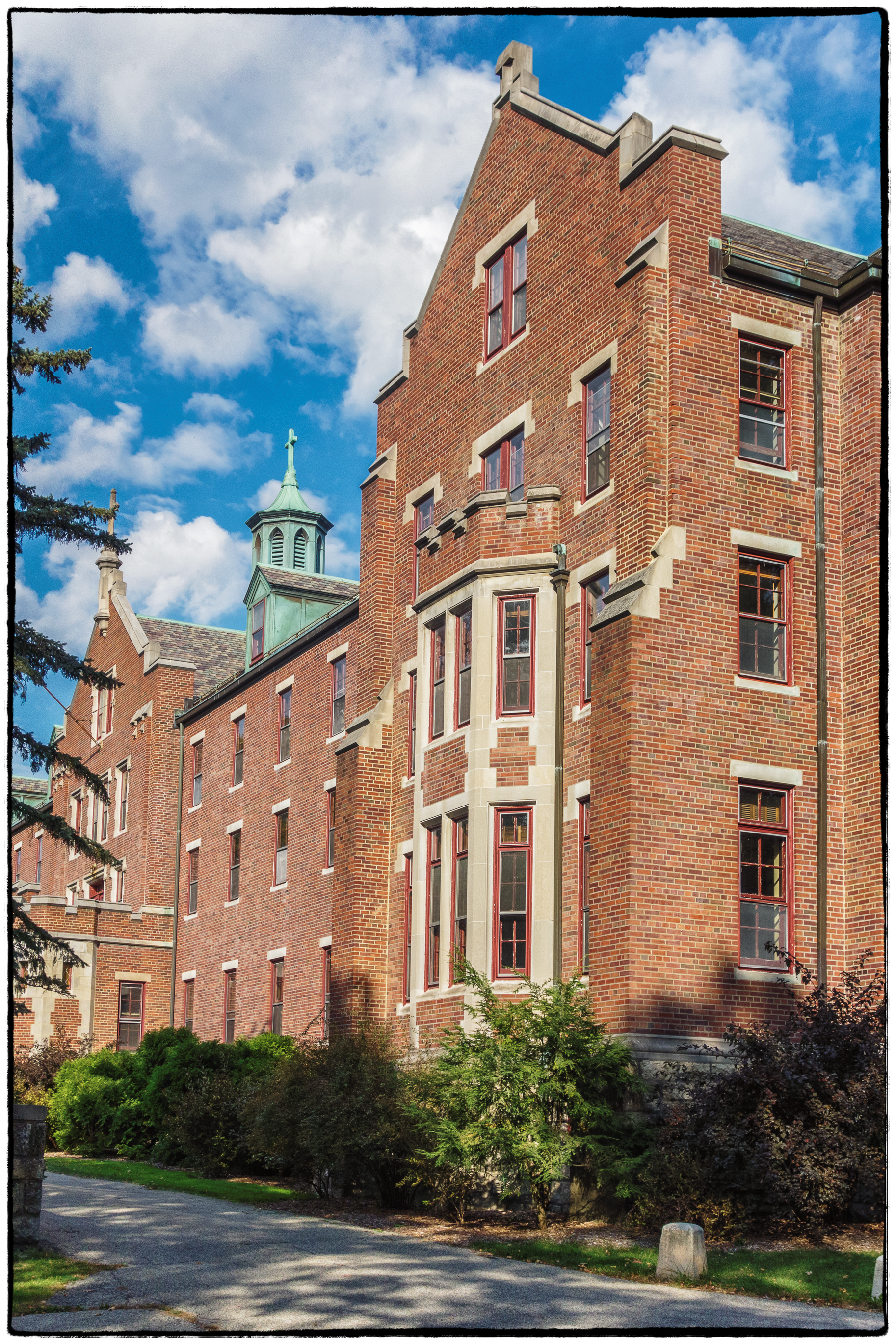
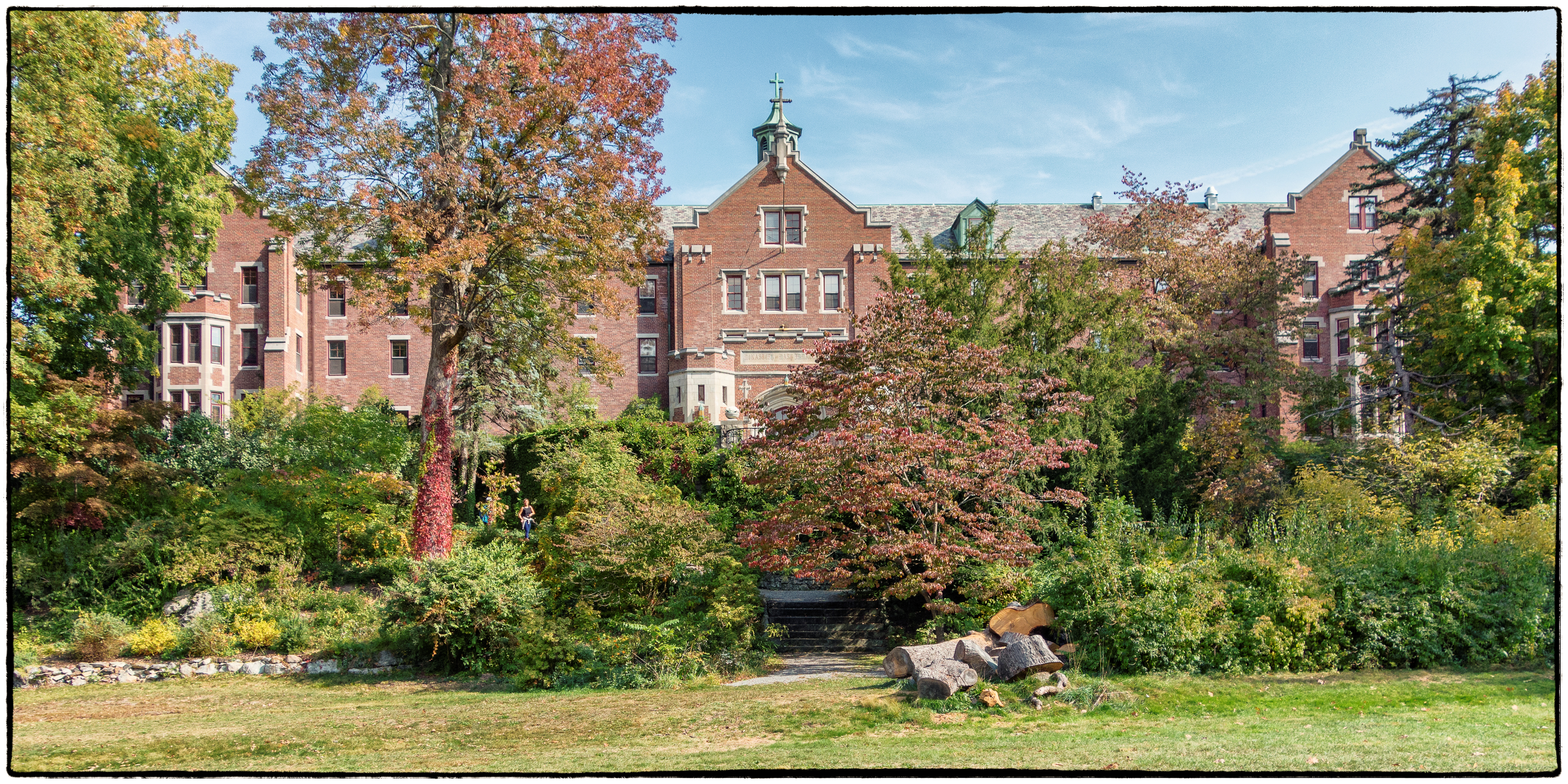
Now the Garrison Institute this is by far the largest and most impressive building on Glenclyffe, the former estate of Hamilton Fish. It’s hard to do it justice. To see it in its full glory you really have to see it from the air as in the picture on the ‘Facility and Grounds‘ page of the institute’s website.

According to From a Brother:

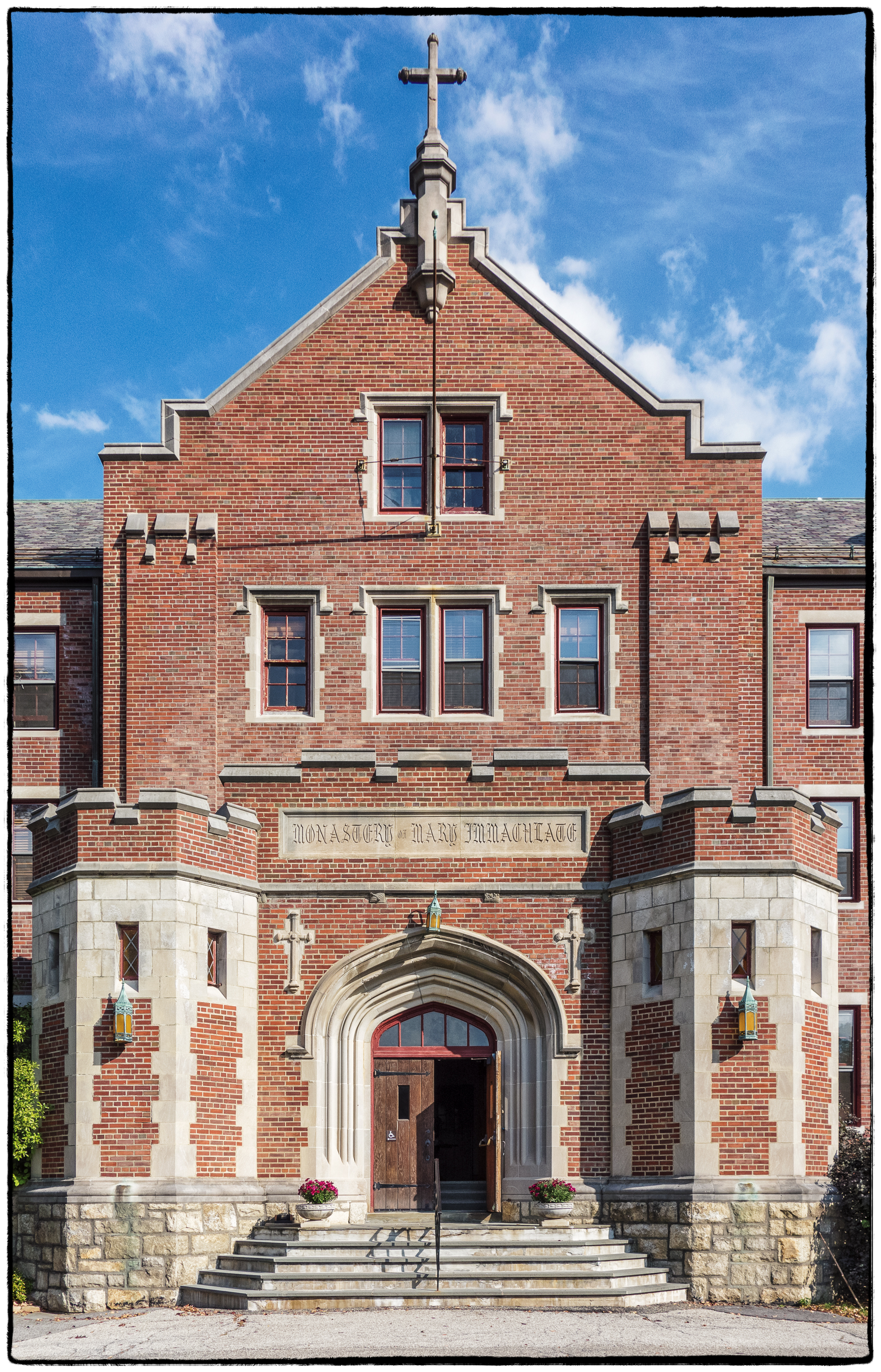
The Capuchins acquired Glenclyffe, the former estate of Hamilton Fish, who was governor of New York and also U.S. Secretary of State under President Ulysses S. Grant. On these grounds were built a minor seminary, which was a high school that prepared boys who were considering priesthood or religious life for the rigors of theological education. Also, a group of Third Order Franciscans — men and women who promised to live according to the way of St. Francis without formally entering religious life — built a villa on the grounds. Finally, there was the house of formation itself. It was known as the Monastery of Mary Immaculate, and it was built in 1932 for the purpose of theological instruction. The brothers would study, work, and reside there for four years until they completed their oral examination in theology.

The monastery had the capacity to shelter about 120 persons. At its peak, the monastery housed about 80 friars in formation. As vocations to religious life declined, the province had no alternative but to close the monastery in the 1970s and move its post-novitiate formation into more economical quarters. At present the post novices, who number about 10 to 12 in any given year, live in Boston in the neighborhood of Jamaica Plain, and they attend classes in theology and philosophy at Boston College, Emmanuel College, and St. John’s Seminary.

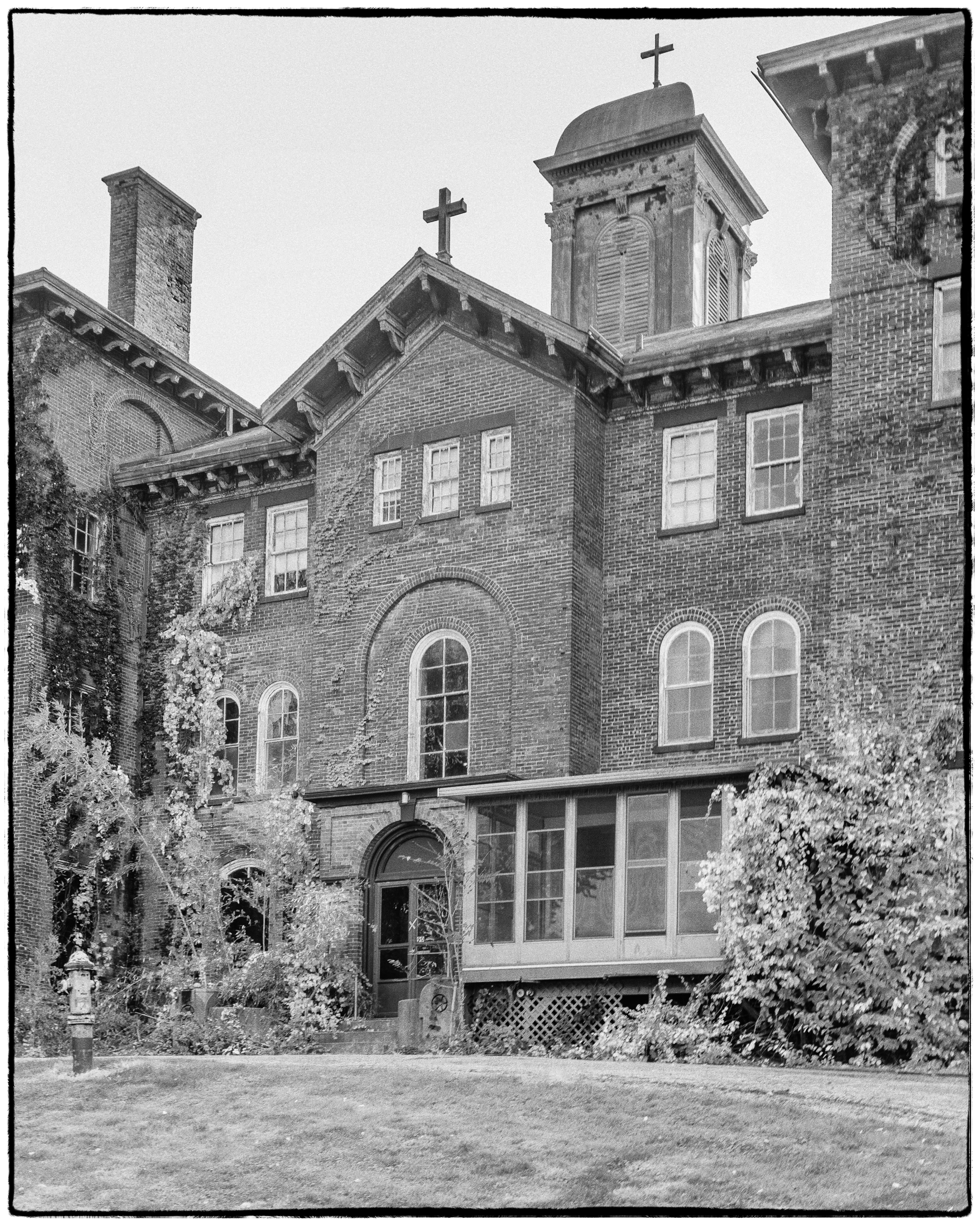
Entrance

View from the side.

Glenclyffe 1 – all that remains of the original mansion

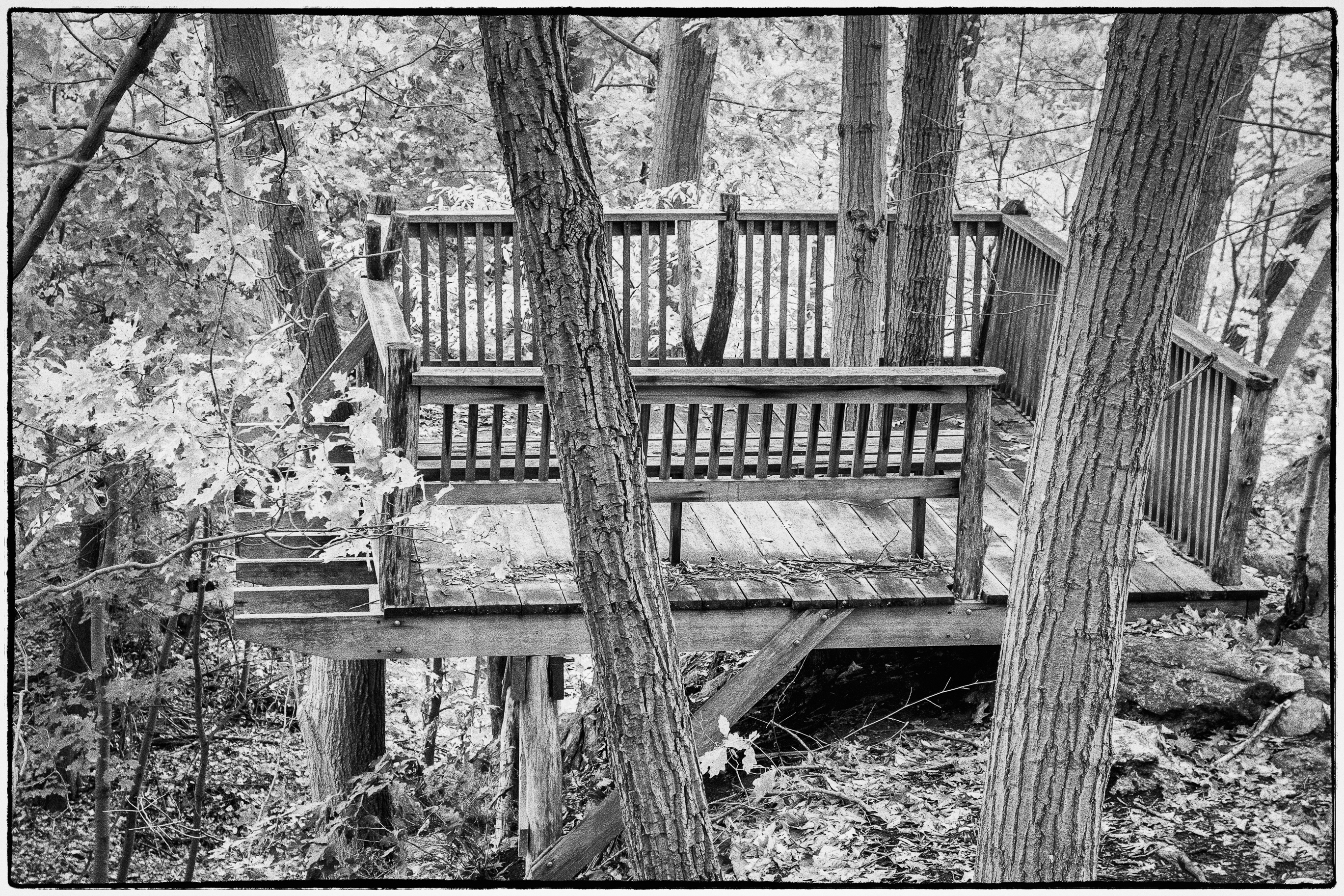
I had done part of this walk before. Starting from Garrison Metro North Station (on weekends the parking is free) I followed the first part of the trail and then turned right, passing over the railway lines to explore Arden Point.. I knew that a trail also carried on straight ahead, but it was a hot day and I was tired so I decided to return to the car. This time I was going to skip the Arden Point part and go straight ahead and see what I could find. I was expecting to discover a fairly pleasant, if ordinary walk through the woods overlooking the Hudson. While I certainly got that I was surprised to come across a lot more: impressive buildings; a wooden gazebo; an historic overlook; crosses in the woods and more. Unknown to me I’d come across the former home of Hamilton Fish, 26th US Secretary of Stare (under Ulysses S. Grant); US Senator from NY; and 16th Governor of New York.

According to The Gilded Age Era website:

In 1861 Governor Hamilton Fish bought a large plot of land in Garrison New York and constructed a large imposing estate at a cost of $30,000 for him and his family. The home, which he named “Glenclyffe”, was considerably large for $30,000 and had 5 bedrooms, 6 bathrooms, 3 servant’s rooms, a library, drawing room, dining room, billiard room, den, morning room and a boudoir. The property had a large green house, stables, expansive gardens, gate house and spectacular views of the Hudson.

After leaving the Grant Cabinet, Fish settled down at “Glenclyffe” until his death in 1893, afterward it passed to his son Stuyvesant Fish and his wife Marion “Mamie”. Mamie felt that she could not live in such a small home (almost 16,000 square ft was what she considered small), so Mamie had a large addition built to the left of the house that doubled the size of the original house making it a total of 32,000 square ft. The new addition included a new kitchen, service pantry, servant’s rooms, expanded dining room, sun room and morning room. Mamie also had the back of the house expanded so she could expand the drawing room and stair hall. Where the old kitchen and servants rooms were Mamie had constructed a large ballroom with decorative oak paneling. Every single room except the library was redone and the den was moved upstairs. The new home now had 15 bedrooms, 13 bathrooms, 15 servant’s rooms and stables able to accommodate 25 carriages.

Subsequently the property was acquired by the Capuchin Order. A magnificent new building called The Monastery of Mary Immaculate and the former Fish mansion was converted into a nunnery and school and now lies empty.

Eventually the property was acquired by the Open Space Institute and is now the Garrison Institute.

The above picture shows the original mansion, now virtually unrecognizable as a result of the extensive renovations.

William Eggleston exhibition in New York City

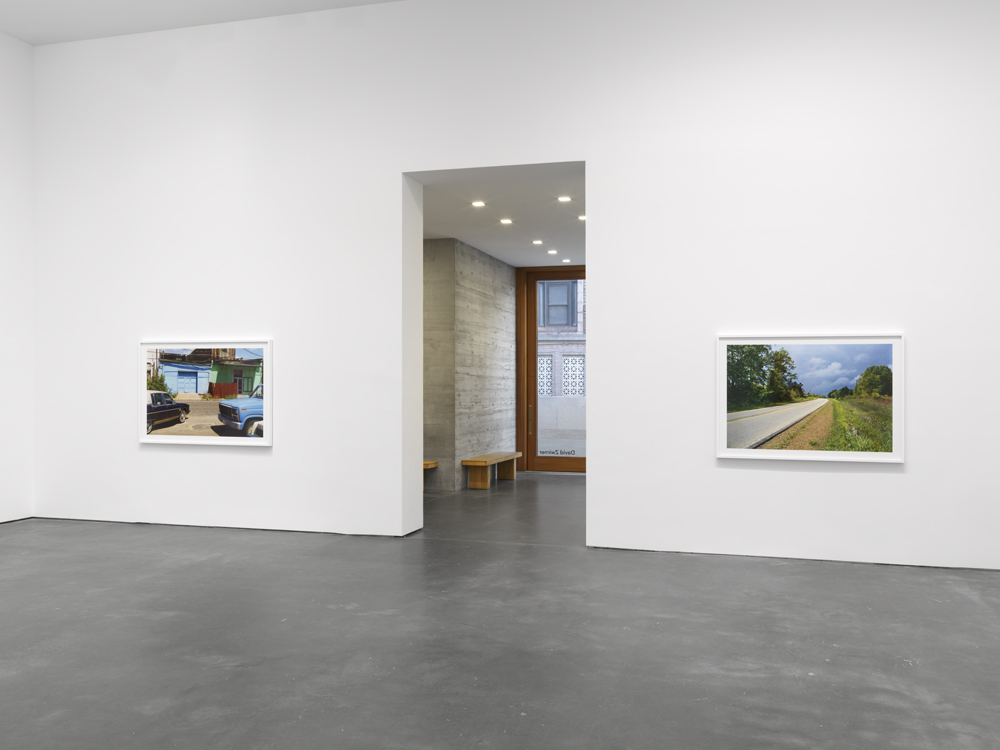
Above: Untitled from The Democratic Forest, c. 1983-1986. Pigment print, 44 x 60 inches (111.8 x 152.4 cm)

At the David Zwirner gallery:

Over the course of nearly six decades, William Eggleston—often referred to as the “father of color photography”—has established a singular pictorial style that deftly combines vernacular subject matter with an innate and sophisticated understanding of color, form, and composition.

Eggleston has said, “I am at war with the obvious.” His photographs transform the ordinary into distinctive, poetic images that eschew fixed meaning. Though criticized at the time, his now legendary 1976 solo exhibition, organized by the visionary curator John Szarkowski at The Museum of Modern Art, New York—the first presentation of color photography at the museum—heralded an important moment in the medium’s acceptance within the art-historical canon and solidified Eggleston’s position in the pantheon of the greats alongside Henri Cartier-Bresson, Robert Frank, and Walker Evans.

Published on the occasion of David Zwirner’s New York exhibition of selections from The Democratic Forest in the fall of 2016, this new catalogue highlights over sixty exceptional images from Eggleston’s epic project. His photography is “democratic” in its resistance to hierarchy where, as noted by the artist, “no particular subject is more or less important than another.”

Featuring original scholarship by Alexander Nemerov, this notable presentation of The Democratic Forest provides historical context for a monumental body of work, while offering newcomers a foothold in Eggleston’s photographic practice.

Source: The Democratic Forest » David Zwirner

There’s also an accompanying book: William Eggleston: The Democratic Forest, Selected Works.

Election 2016

It’s finally over! After a year and a half of some of the worst invective I’ve ever encountered in my 30+ years living in the US. By the end it had really worn me down.

I struggled to come up with a photograph to illustrate this post and then one day while walking along the lake I came across this combination of Trump/Pence campaign paraphernalia, a US flag and a couple of other somewhat tattered flags. I think it’s the only example still up around the lake. I don’t know the owner of the house, but since one of the signs reads “Veterans for Trump” and one of the worn flags is a US Marine Corps flag, I’m guessing that he’s a veteran.

I think that many felt the need for change. The system hasn’t been working for them and inequality in the US has been getting worse and worse. I knew it was bad, but until recently I hadn’t realized just how much wealth was concentrated in the hands of such a small group of people. Also the political game-playing in Washington had lead to an almost a complete paralysis in government. Democrats missed this entirely. We were only to willing to type Trump supporters as under-educated, racist, mysoginistic, rednecks. Maybe a small number of them are, but not the 60+ million who voted for him. Many who voted for him didn’t seem to like him that much, but they liked Hillary Clinton less. To them Trump represented change and Clinton represented status quo and the status quo was not longer acceptable to them.

So now we will have President Trump. Things are what they are. At the moment the Presidency, the House, the Senate, and soon I imagine the Supreme Court are all Republican dominated. This represents an incredible opportunity for Trump to achieve some tangible results. We now have to give him a chance to do so.

Many said that he would never be the nominee of a major political party. He was. Many said that he’d never be elected President. He was. Many said women would not vote for him. They did. Many said minorities would never vote for him. They did. Many are now saying that he’ll be the worst President in history. Maybe he’ll surprise us again?