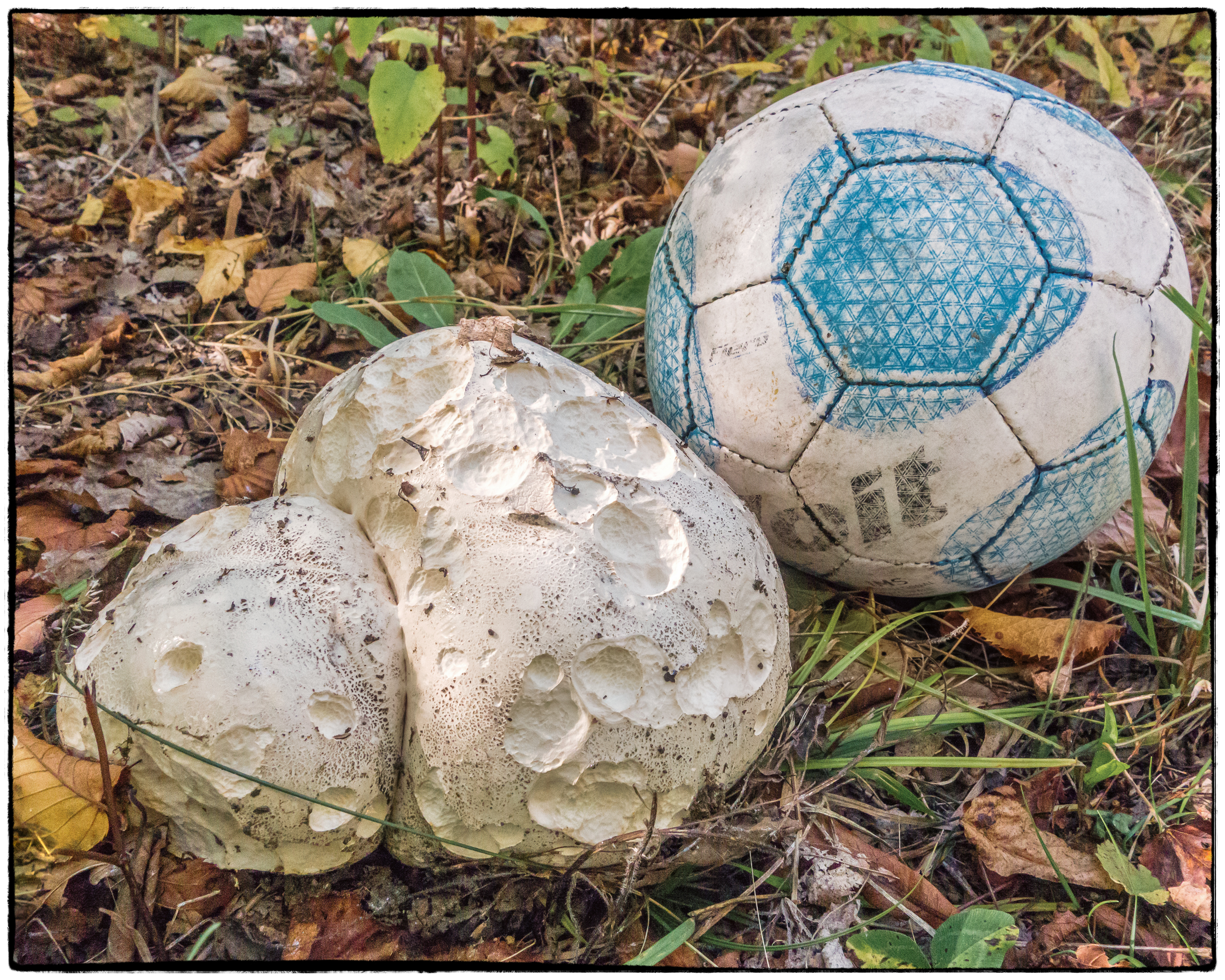
I was just completing a walk when I noticed what I at first took for two balls, one on each side of the trail. One was clearly a soccer ball and the other looked to me like a somewhat deflated beach ball. As I got closer, however, I noticed the one of them was not a ball but a large puffball fungus. I moved the soccer ball closer to the fungus so I could take this picture to show their relative sizes. It was a pretty big fungus!
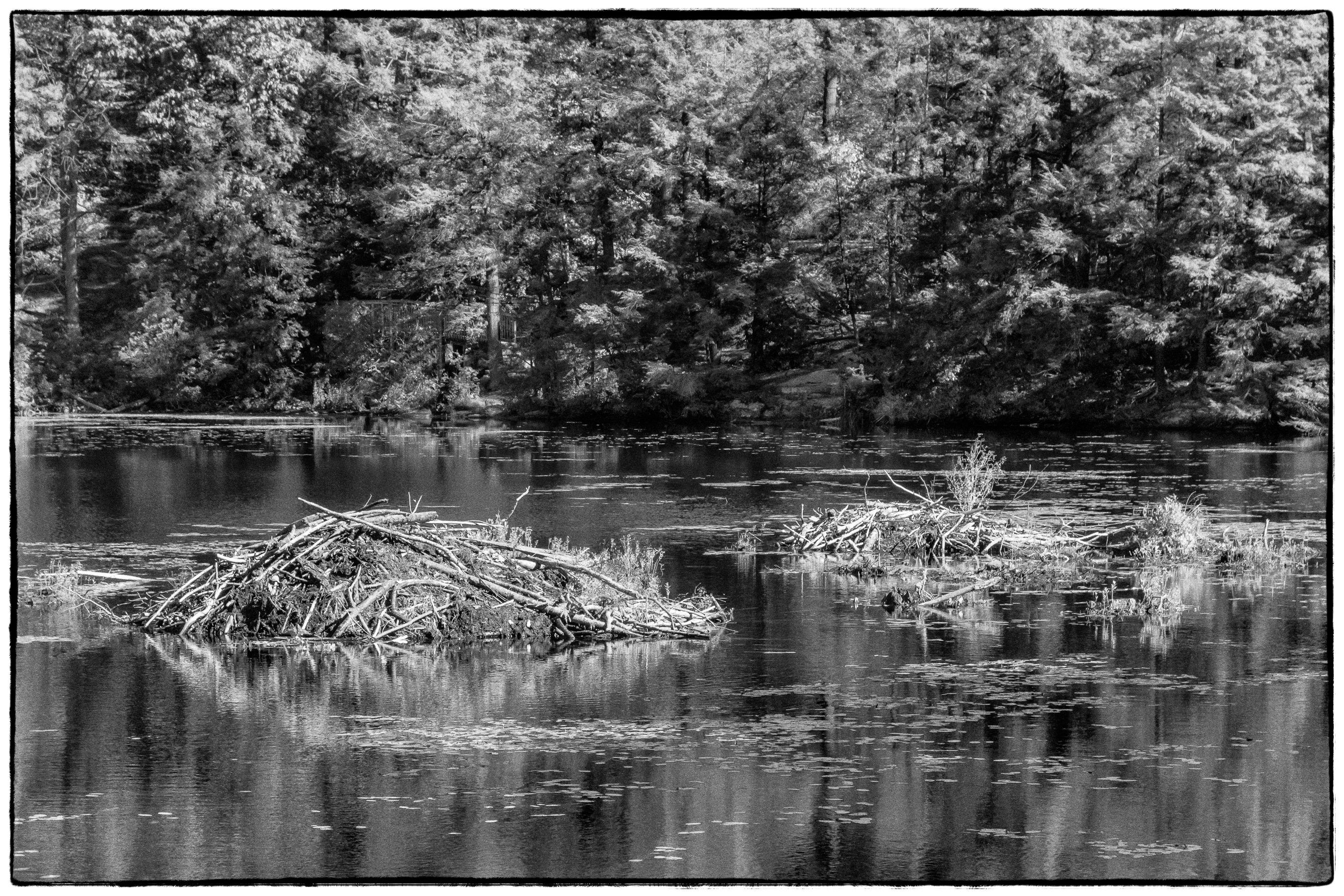
Beaver lodge on Pelton Pond
Unfortunately the Beavers seem to have disappeared. I used to see signs of Beaver activity in the form of recently chewed/downed trees. However, I haven’t seen any such activity for over a year. Maybe they’ve upgraded and moved on to larger premises.
According to Beavers, Wetlands and Wildlife beavers stay in the same wetland until the food runs out: “Beavers are vegetarians that often prefer to eat herbaceous plants, such as clover, grasses, raspberry canes and aquatic vegetation, instead of the green bark, leaves and twigs of fast growing trees, such as aspen and willows. Beaver can survive on the tubers of water lilies.They may take years or even decades”. They go on to say that beaver migrate:
By water or land, and if by land, this is where much mortality occurs from predators, such as coyotes, and accidents. They have been known to travel tens of miles. The two-year-olds usually leave home to find their own territory, and create new ponds by daming streams. At the same time, they often dig a burrow in the side of a bank, lay sticks on top and then burrow upward to start a lodge. As they build up the dam to increase the water level, the lodge becomes surrounded by water. If the waterway is a river they may just build a bank burrow.
Still life in blue and white
My wife collects blue and white stuff. We have lots of it. It’s probably what people remark on the most when they come to the house.
One morning, around 8:00am I was sitting in the living room drinking my coffee when I noticed that the light coming through the living room windows was particularly impressive. It was illuminating this group of objects on the shelf in front of our fireplace.
If this picture is successful I suspect that it’s because of the splash of orange that contrasts so starkly with the dominating blue and white. What are these orange things? I’ve never noticed them before. When did they arrive? I’ll have to ask my wife.
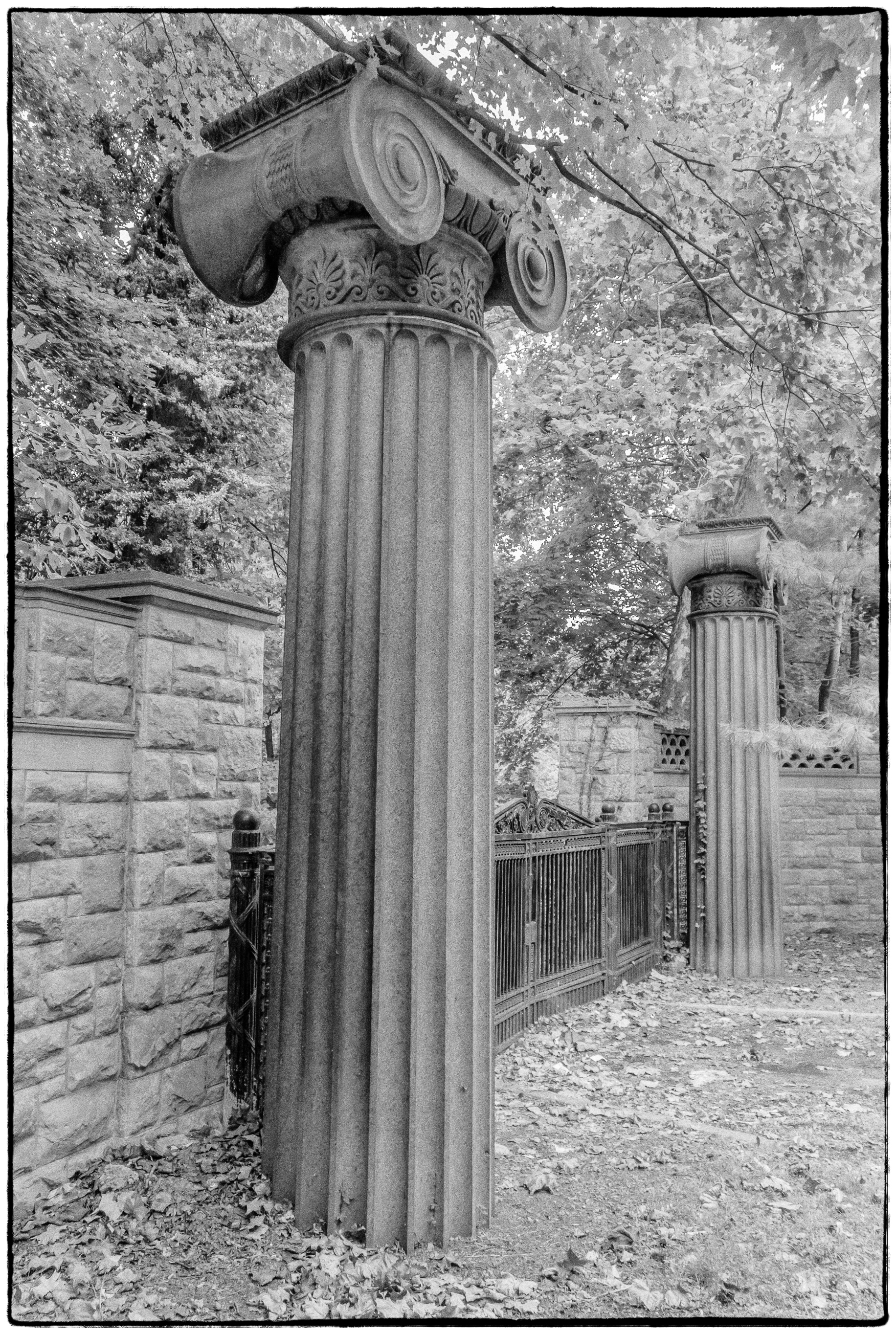
Enormous columns on Route 9 in Briarcliff Manor
I’ve been living in Briarcliff Manor for about 18 years and noticed these two huge, fluted Ionic columns almost as soon as we arrived. However, until now I had never taken a picture of them.
If you’re travelling north on Route 9 from Tarrytown, just before you reach the intersection with Scarborough road you’ll see them on the left side of the road.
They frame the former main entrance to the Vanderlip mansion: Beechwood.
According to Wikipedia Frank Arthur Vanderlip, Sr. (November 17, 1864 – June 30, 1937) was:
… an American banker and journalist. He was president of the National City Bank of New York (now Citibank) from 1909 to 1919, and was Assistant Secretary of the Treasury from 1897 to 1901. Vanderlip is known for his part in founding the Federal Reserve System, and for founding the first Montessori school in the UNited States, the Scarborough School and the group of communities in Palos Verdes, California.
Born in rural Illinois, Vanderlip worked in farms and factories until beginning a career in journalism in 1885. His efforts in financial journalism led him to become Assistant Secretary of the Treasury until the National City Bank hired him. While president of the bank, Vanderlip worked with the Jekyll Island group to develop a federal reserve; Vanderlip’s later proposals also influenced the creation of the Federal Reserve System in 1913. His later life was focused towards developing Palos Verdes and creating the Scarborough School at his estate, Beechwood, in Briarcliff Manor, New York, as well as gentrifying the hamlet of Sparta nearby. In addition, he helped found and was the first president of Sleepy Hollow Country Club. Vanderlip died in 1937 in New York Hospital, after weeks of treatment there.
It goes on to say that:
In 1907, while Vanderlip was vice president of the First National City Bank (later Citibank), he had two columns from the headquarters 55 Wall Street shipped to Beechwood (55 Wall Street was being remodeled and the columns were re-spaced, with two left over). He had the columns placed two-thirds above ground in Beechwood’s entranceway off of Albany Post Road (now U.S. Route 9), an entrance which was later closed due to increasing traffic volume on Route 9 (the current entrance is off Scarborough Station Road).
The former entrance was designed by William Welles Bosworth

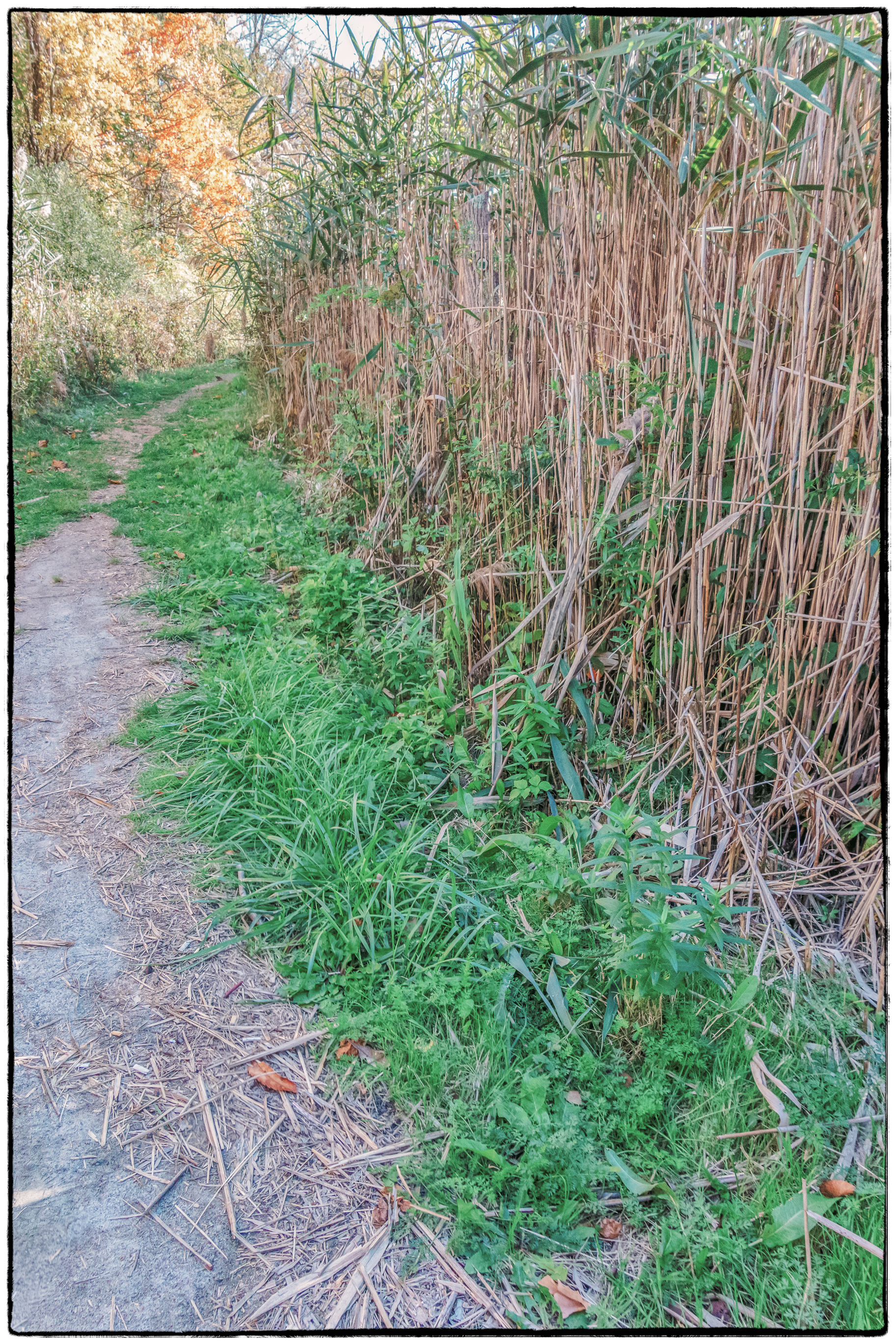
Fred Dill Wildlife Sanctuary 6: Bamboo grove
I’ve always though of bamboo as a tropical plant. So I’m constantly surprised when I come across extensive bamboo plantings, which clearly survive the harsh winters in the Hudson Valley.
As you enter the Fred Dill Wildlife Sanctuary from the Fair Street side you encounter this long row of bamboo. Obviously it does well in our climate.