PIC – Photographers’ Identities Catalog

The New York Public Library has come up with an interesting new tool:

Photographers’ Identities Catalog (PIC) is an experimental interface to a collection of biographical data describing photographers, studios, manufacturers, and others involved in the production of photographic images. Consisting of names, nationalities, dates, locations and more, PIC is a vast and growing resource for the historian, student, genealogist, or any lover of photography’s history. The information has been culled from trusted biographical dictionaries, catalogs and databases, and from extensive original research by NYPL Photography Collection staff.

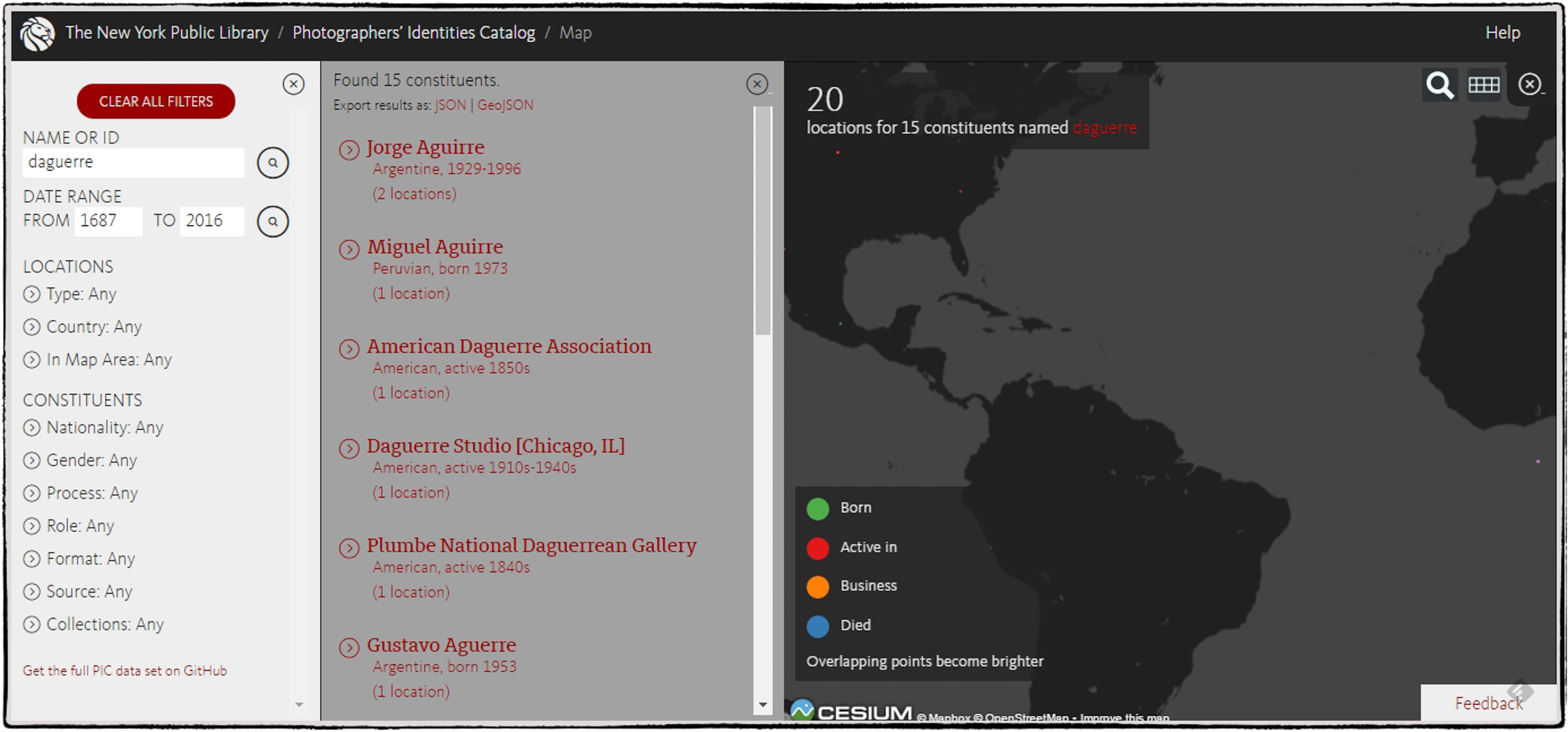
The interface allows you to filter according to a number a criteria: Name or ID; Date Range (year); Location (Type e.g. birth; Country or Geographical Area; In Map Area); Nationality; Gender; Process (e.g. Autochrome); Role (e.g. Collector or Dealer); Format (e.g. Panoramic Photographs); Source; Collections.

Once you’ve applied your filters you then get a list of results (since the system uses a “fuzzy search” algorithm you usually get more than you really want. For example, setting the name filter to ‘Daguerre’ produces ‘Aguirre’, ‘Aguerre’, and Ministere de la Guerre’ as well. The ‘Daguerre’ I was looking for was 9th in the list.

I’m a fan of Joseph Sudek so I thought I’d see if I could find him with some general criteria and not using his name. I imagined that I only knew that he was male; from somewhere in Eastern Europe; and was known for panoramic photographs (among other things). So I set up the filters: Gender – Male; Country – There was no Eastern Europe so I had to select Europe instead; Format – Panoramic Photographs. Unfortunately my attempt was not successful. His name did not appear on the results list.

The map takes up a lot of screen space and I’m not entirely sure how useful it is. This may well be because of my ignorance of how it’s supposed to work however.
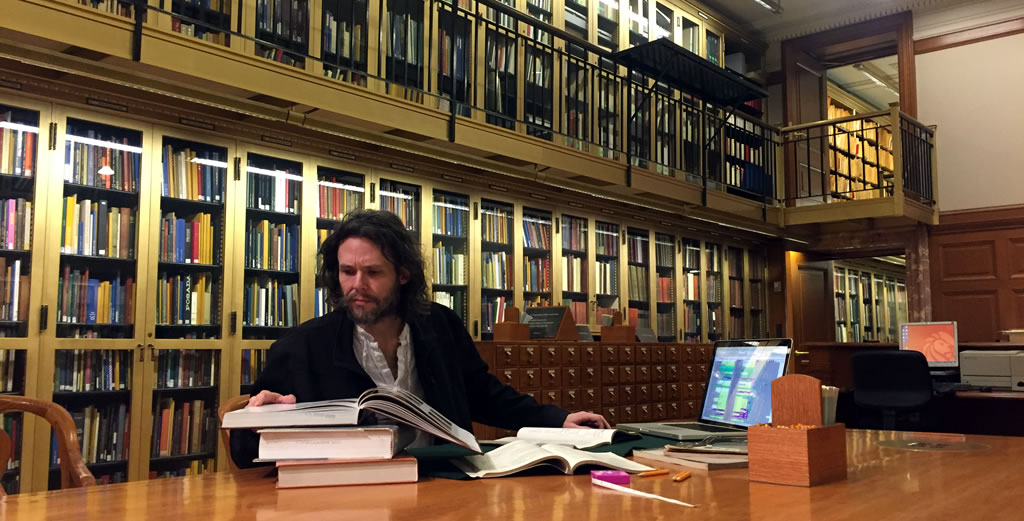
David Lowe, Photography Specialist at the New York Public Library, and the primary editor of PIC, in the Photography Room.

So many thanks to the New York Public Library for such a useful tool. Over time I’m sure it will become even more useful in terms of additional content and system improvements. One of the FAQs is: “I have information PIC lacks, or I’ve spotted an error. How do I contribute or request a correction?” The answer is “Please let us know! Use the feedback link in the bottom right of the map. It is helpful if you include the Record ID number to identify the photographer in question. That ID can be found after the Name, Nationality and Dates of the constituent.”
Source: PIC – Photographers’ Identities Catalog

Lunch at Rockefeller Center

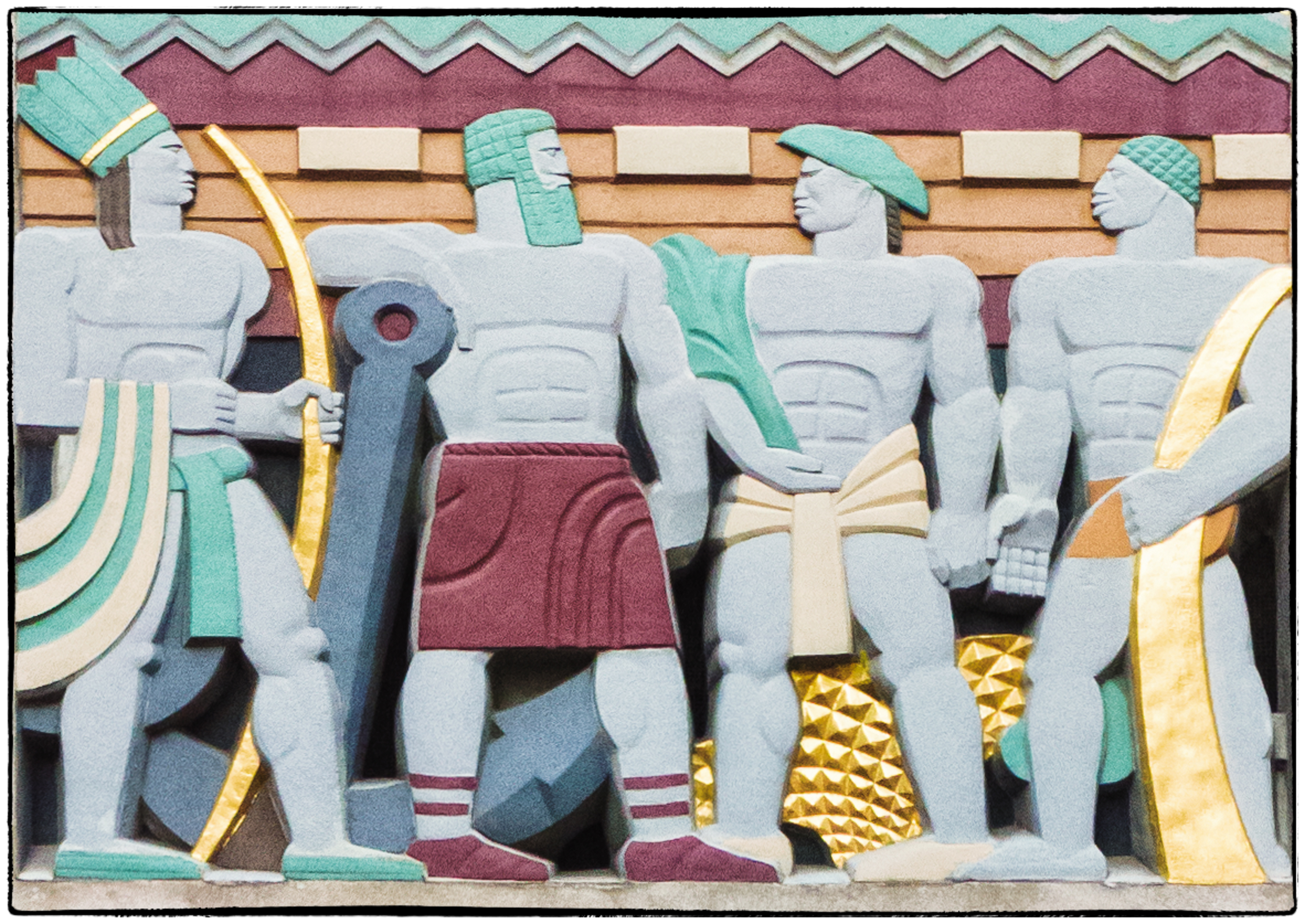
Figures depicting the races of mankind: red, white, yellow and black.

We recently went into New York City to have lunch at the Brasserie Ruhlmann with our visiting son-in-law, and to pass to him some Christmas gifts for the family. The food at the restaurant was excellent, but the place itself was packed – maybe not too much of a surprise. We were after all at Rockefeller Center shortly before Christmas.

As we were leaving I noticed the lovely art deco facade of the building: The International Building. According to an entry in Flickr:

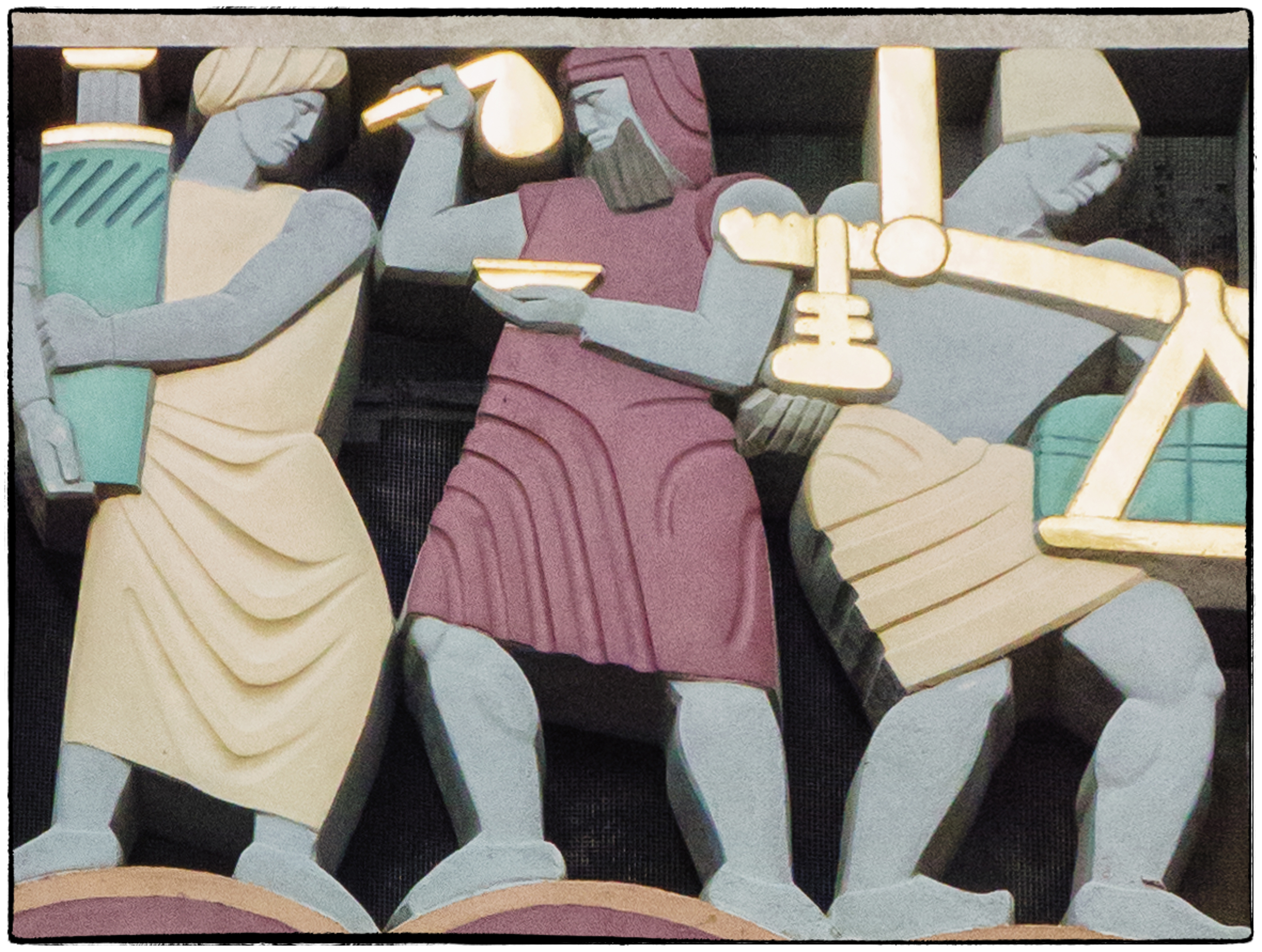
Lee Lawrie‘s The Story of Mankind, a massive carved limestone Art Deco sculptural grill has adroned the entrance to the International Building at 29 West 50th Street, since its installtion in September 1937. Serving a dual purpose–chronicling the progress of mankind, as well as symbolizing the purpose of the International Building, Lawrie divided the screen into fifteen small rectangular spaces contained carved images he called “hieroglyphs.”

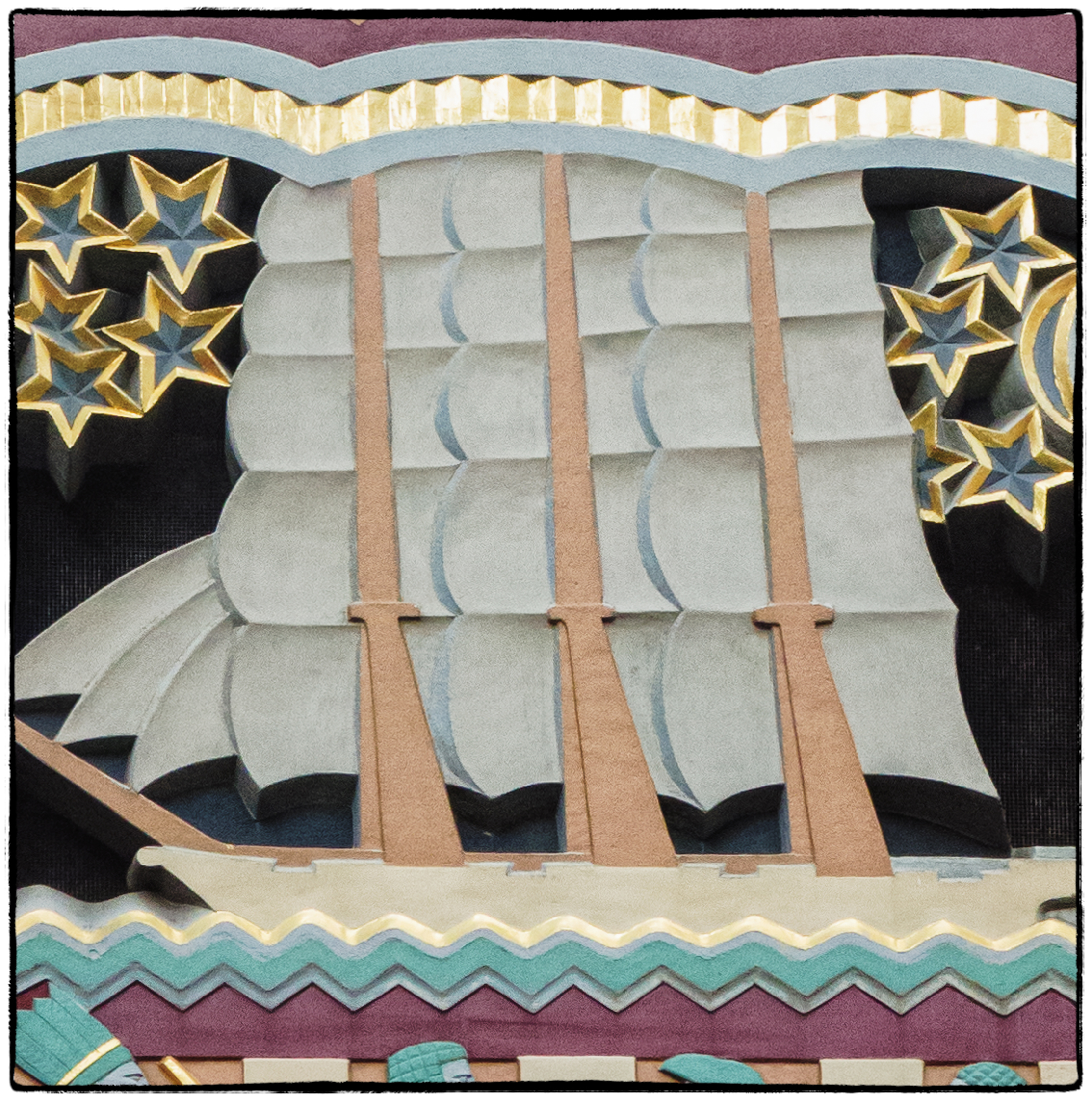
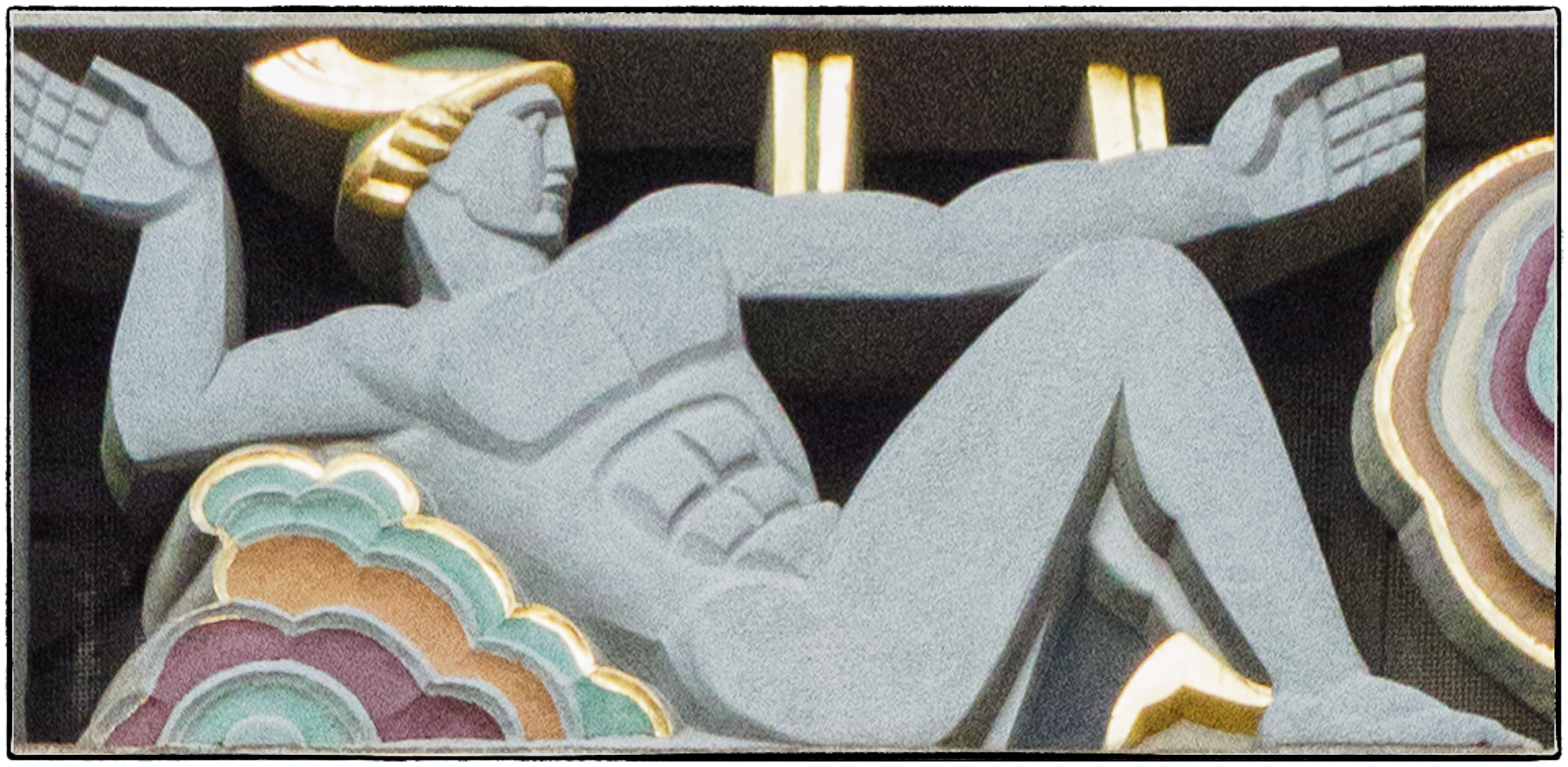
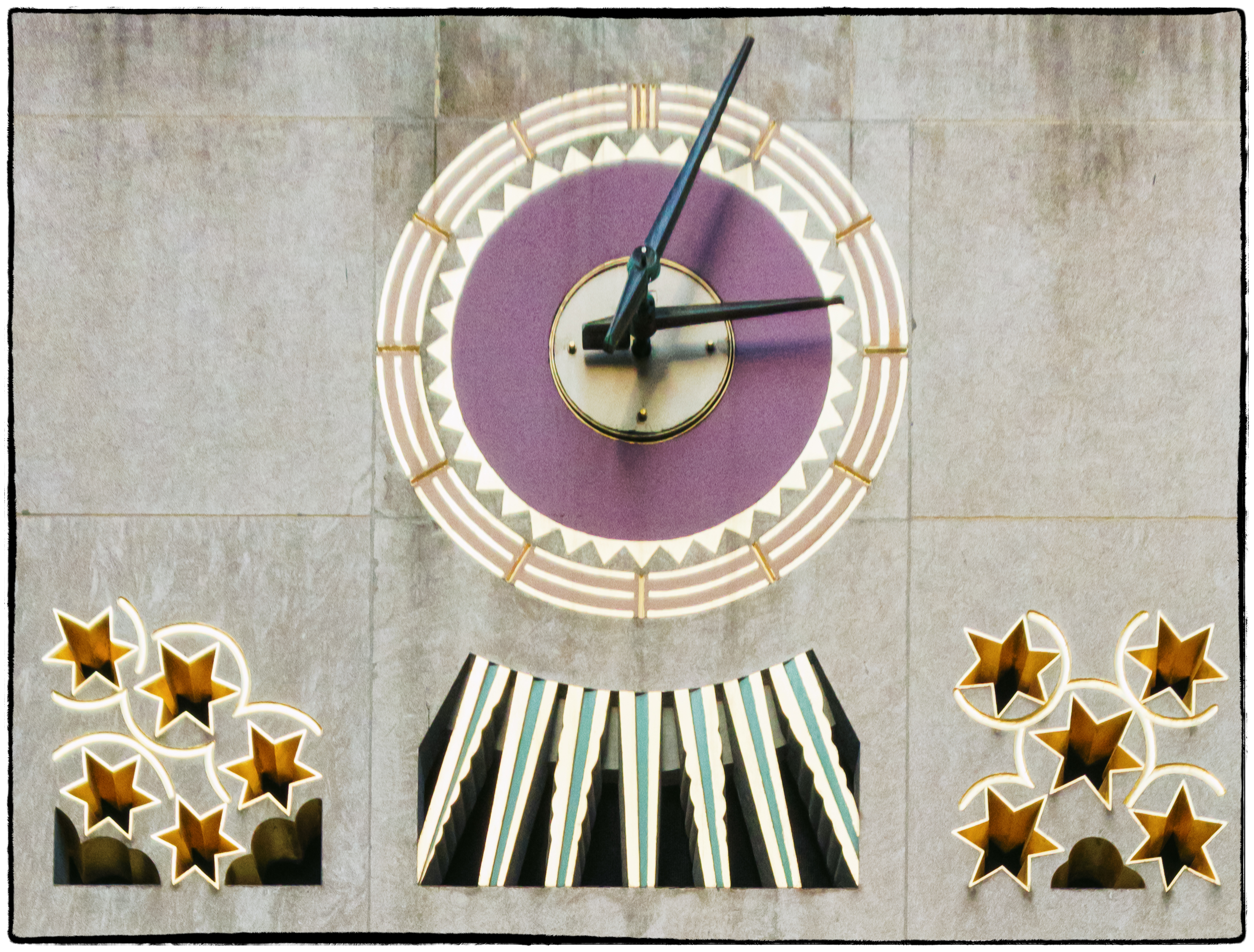
The “story” begins at the bottom center, with four sterotypical figures depicting the races of mankind: red, white, yellow and black. Directly above them is a sailing ship symbolizing international trade. Above that are three male figures representing art, science and industry. And above that is the mythological messenger god, Mercury, symbolizing communication and trade. At the top, the earth is represented by a clock and its rays. It is flanked by the two hempispheres, represented by the Big Dipper and the Southern Cross. The regions are represented by a seagull and whale’s fluke for the North, palm trees for the South, a mosque for the East, and an Aztec temple for the West. A Norman tower represents agrarianism, and three smokestacks represent the new industrial age. The kingdoms of the world are represented by a lion, and the republics are represented by an eagle.

Rene Chambellan worked with Larie to create the model, and Leon V. Solon design the coloration. German-born Lee Lawrie was well known as an architectural sculptor. His work can be found at St. Thomas Church and throughout Rockefeller Center: Wisdom, flanked on the left by Light and on the right by Sound at 30 Rockefeller Plaza; Winged Mercury and Heraldic Lions at the British Empire Building; Fleur-de-lis and Seeds of Good Citizenship at La Maison Française; Progress at One Rockefeller Plaza; Saint Francis of Assisi, Swords into Plowshares, Columbia Greeting a Woman, Boatman, Fourteen coats of Arms, Corncucopia of Plenty, and most famously, Atlas at the International building.

Earth represented by a clock and its rays

Figures representing art, science and industry

Sailing ship symbolizing international trade

Mythological messenger god, Mercury, symbolizing communication and trade

Eighteen Arhats: My personal favorite – Mahakappina Thera

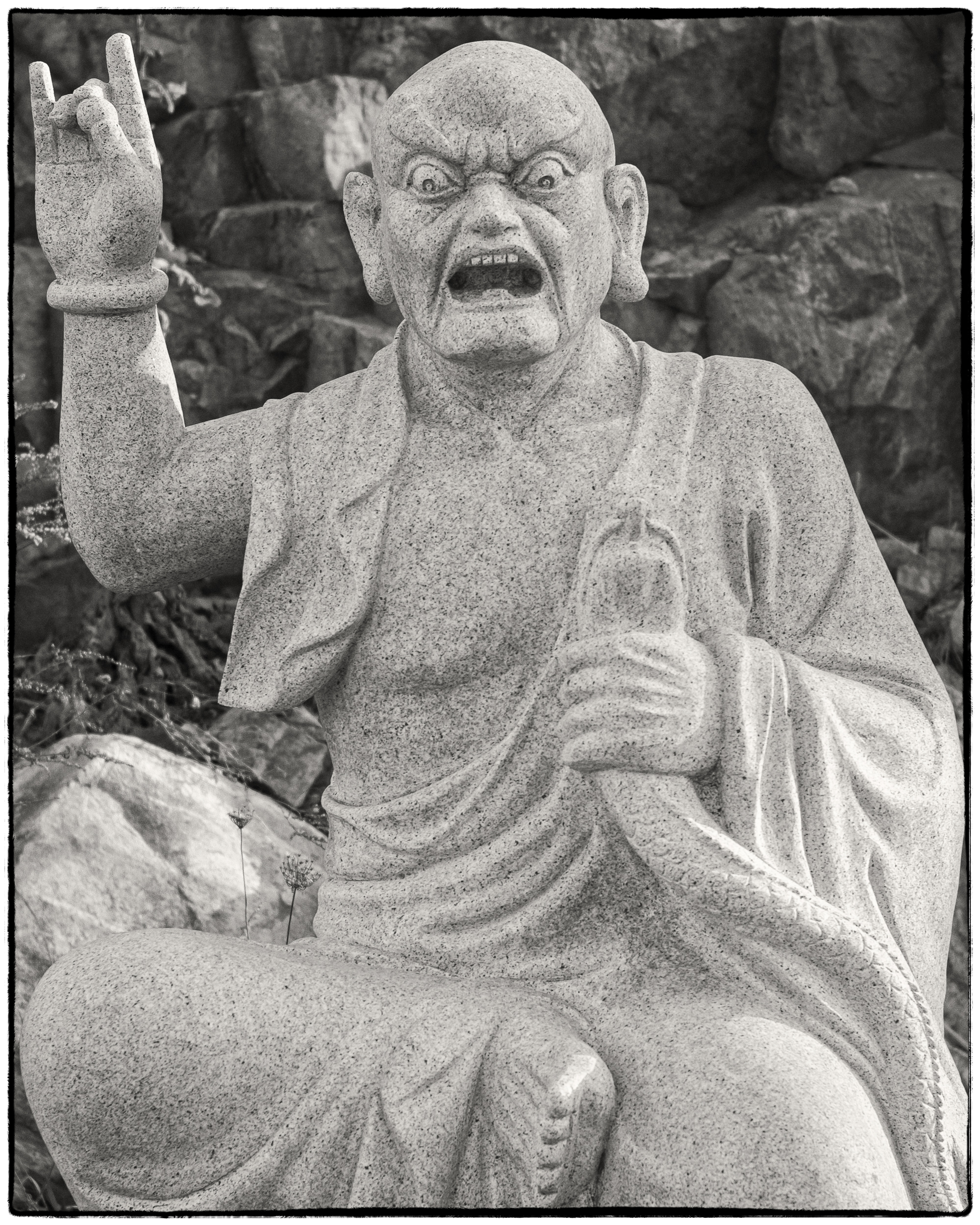
I thought I’d include one of the pictures at a larger size. This one is my personal favorite (which is a pity because it’s also the least sharp. Either I missed the focus or there’s a little camera shake. I’ll have to go back and try again, but probably not before next year as the monastery closes between January 1 and March 31):

Mahakappina Thera. The Buddha declared Mahakappina was the ablest in admonishing monks. He was a king prior to set out to seek the Buddha’s teaching. He who was older than the Buddha often dwelled in the bliss of jhana, and was skillful to instruct others by his preaching.

Whoever produced this statue certainly caught the ‘admonishing’ part. You’ve got to love the facial expression and the raised finger.

The Dhammapada: Verses and Stories provides additional detail on the story of Mahakappina:

The Story of Thera Mahakappina

While residing at the Jetavana monastery, the Buddha uttered Verse (79) of this book, with reference to Thera Mahakappina.

Mahakappina was king of Kukkutavati. He had a queen named Anoja; he also had one thousand ministers to help him rule the country. One day, the king accompanied by those one thousand ministers, was out in the park. There, they met some merchants from Savatthi. On learning about the Buddha, the Dhamma, and the Samgha from these merchants the king and his ministers immediately set out for Savatthi.

On that day, when the Buddha surveyed the world with his supernormal power, he saw in his vision, Mahakappina and his ministers coming towards Savatthi. He also knew that they were due for arahatship. The Buddha went to a place one hundred and twenty yojanas away from Savatthi to meet them. There, he waited for them under a banyan tree on the bank of the river Candabhaga. King Mahakappina and his ministers came to the place where the Buddha was waiting for them. When they saw the Buddha, with six-coloured rays radiating from his body, they approached the Buddha and paid homage to him. The Buddha then delivered a discourse to them. After listening to the discourse the king and all his ministers attained Sotapatti Fruition, and they asked the Buddha to permit them to join the Order. The Buddha, reflecting on their past and finding that they had made offerings of yellow robes in a past existence, said to them, “Ehi bhikkhu”, and they all became bhikkhus.

Meanwhile, Queen Anoja, learning about the king’s departure for Savatthi, sent for the wives of the one thousand ministers, and together with them followed the king’s trail. They too came to the place where the Buddha was and seeing the Buddha with a halo of six colours, paid homage to him. All this time, the Buddha by exercising his supernormal power had made the king and his ministers invisible so that their wives did not see them. The queen therefore enquired where the king and his ministers were. The Buddha told the queen and her party to wait for a while and that the king would soon come with his ministers. The Buddha then delivered another discourse; at the end of this discourse the king and his ministers attained arahatship; the queen and the wives of the ministers attained Sotapatti Fruition. At that instant, the queen and her party saw the newly admitted bhikkhus and recognized them as their former husbands.

The ladies also asked permission from the Buddha to enter the Order of Bhikkhunis; so they were directed to go ahead to Savatthi. There they entered the Order and very soon they also attained arahatship. The Buddha then returned to the Jetavana monastery accompanied by one thousand bhikkhus.

At the Jetavana monastery, Thera Mahakappina while resting during the night or during the day would often say, “Oh, what happiness!” (Aho Sukham). The bhikkhus, hearing him saying this so many times a day told the Buddha about it. To them the Buddha replied, “My son Kappina having had the taste of the Dhamma lives happily with a serene mind; he is saying these words of exultation repeatedly with reference to Nibbana.”

Then the Buddha spoke in verse as follows:

Verse 79: He who drinks in the Dhamma lives happily with a serene mind; the wise man always takes delight in the Dhamma (Bodhipakkhiya Dhamma) expounded by the Noble Ones (ariyas).

Eighteen Arhats: Right Side

The second (and final) grouping: statues from the right side of the walkway.

10. Culapanthaka Thera. Culapanthaka was skilled in liberation from mind. He was born a dull person, could not even recite one verse of the teaching He got rid of the impurities of lust and other defilements and attained arahantship after wiping his face with a piece of cloth.

11. Mahakotthita Thera. Mahakotthita ranked the foremost in the logical analysis. Being born in a rich family, after hearing the Buddha’s sermon he was ordained to be a bhikkhu (monk). He who often explained the Dhamma appeared in many sutras.

12. Mahakappina Thera. The Buddha declared Mahakappina was the ablest in admonishing monks. He was a king prior to set out to seek the Buddha’s teaching. He who was older than the Buddha often dwelled in the bliss of jhana, and was skillful to instruct others by his preaching.

13. Kaludayi Thera. Kaludayi was declared pre-eminent among those who gladdened the clans. Being the Buddha’s former playmate he requested the father of the Buddha, King Suddhodana’s invitation of the Buddha back to his home country.

14. Nanda Thera. Nanda, a half brother of the Buddha, was pre-eminent for subduring the five senses. Upon hearing the teaching of the Buddha first he practiced for being with nymphs in heaven but later renounces his desires and attained arahantship.

15. Sariputta Thera. Sariputta, one of the two chief disciples of the Buddha was foremost in wisdom. He not only excelled in comprehending the Dhamma, but also in expounding it. He was called “General of the Dhamma” by the Buddha and greatly contributed to the Abhidhamma

16. Moggallana Thera. Moggallana was one of the two chief disciples of the Buddha, along was foremost in supernatural power. He was well known for his ability to use his power of mind reading to provide proper advice to his students. Moggallana along with Sariputta were declared to be the ideal disciples.

17. Mahakaccana Thera. Mahakaccana, a sone of a highly respected chaplain was praised by the Buddha as the master of doctrinal exposition. By the end of hearing a sermon given by the Buddha he attained arahantship.

18. Kondanna Thera. Kondanna, the first arahant, once was a renowned royal scholar who unequivocally predicted upon the birth of Prince Siddhartha that the prince would become an enlightened Buddha. he was the first to comprehend the Dhamma in the first sermon.

Eighteen Arhats: Left Side

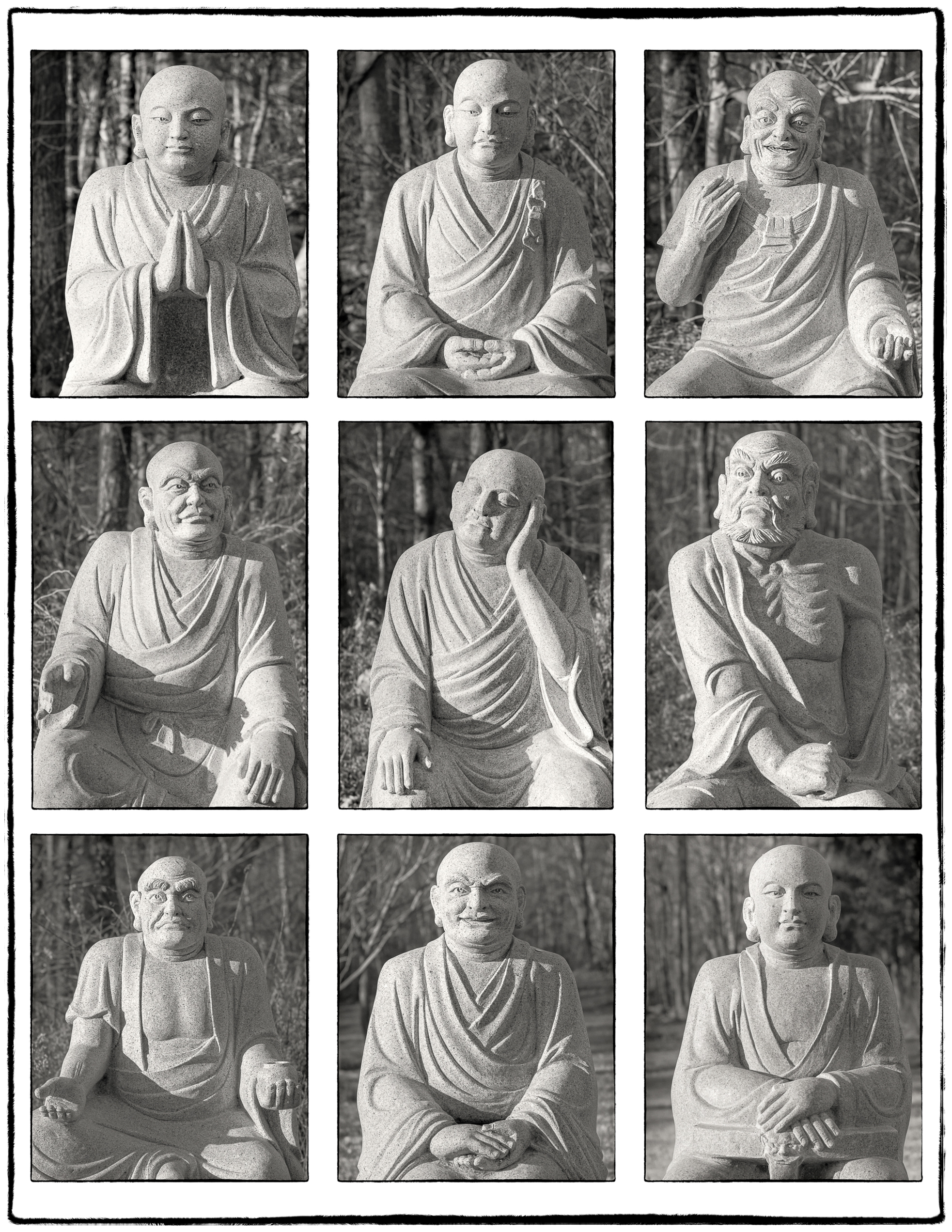
As mentioned in an earlier post (see: Eighteen Arhats: Overview) I took pictures of each of the eighteen statues beside the walkway to the Great Buddha hall at Chuang Yen monastery.

Now I have eighteen pictures. How do I present them in this blog? Clearly one post with 18 pictures would be too much. The statues are conveniently organized into two groups: a group of 9 statues on each side of the walkway. Still too much for one post! Maybe I should break it into groups of three statues per post: 6 posts in all. I didn’t like this idea much. It seemed to break the groupings unnaturally.

I finally came to the image you see above: a single image containing all of the statues from one side of the walkway. This is not ideal as each of the individual pictures is rather small. Maybe one day (when I’ve figured out how to do it and have the energy) I’ll treat each of the images as a thumbnail with a link to the larger image.

The text below provides the descriptions from the plaques at the base of each statue (tortured English and all). Read left to right, top to bottom.

1. Pindola Bharadvaja Thera. Pindola Bharadvaja, a son of the chaplain for a royal family was declared by the Buddha as chief of the ‘lion roarers’. He indulged himself with gastronomic pleasure before attaining the arahantship by conquering his intemperance in diet.

2. Rahula Thera. Rahula, the son of the Prince Siddhartha, respected as the foremost in inconspicuous practice. He became a novice monk at age seven under the guidance of Sariputta and Moggallana, and attained arahantship at the age of eighteen.

3. Gavampati Thera. Gavampati, a son of renowned family joined the community at age of seven. When the Buddha visited where he lived, a river rose at night and there was great dismay. He stemmed the flood by his supernatural power.

4. Punna Mantaniputta Thera. Punna Mantaniputta excelled in expounding the Dhamma and was an excellent example with a mission and desire to serve others. In spite of the fierce and rough environment he went back to his native land and propagated the Dhamma to his people.

5. Anuruddha Thera. Anuruddha, a cousin of the Buddha and one of the five head disciples of the Buddha. He ranked foremost amongst those who had obtained the divine eyes. Being an affectionate and loyal monk he was foremost in consoling the monks with divine eyes.

6. Bakkula Thera. Bakkula was freed from disease and the foremost in good health. As a descendant of a prominent governmental administrator he enjoyed a prosperous life before he heard of the Buddha sermon, renounced the world and attained arahantship at the age of eighty.

7. Upali Thera. Upali was declared by the Buddha to be the most proficient of those who were learned in the Vinaya (Discipline Code). Being born as an outcaste he was a barber who once cut the Buddha’s hair. He also showed every concern for the sick of the monks in the community.

8. Revata Thera. The Buddha declared Revata, the younger brother of Sariputta, to be the foremost among forest dwellers, and pre-eminent in concentration state (jhana). He renounced the worldly life by realizing the impermanence of human body.

9. Subhuti Thera. The Buddha praised Subhuti as the foremost in realizing the nature of emptiness (Sunnata) and pre-eminent in compassion. He appears in most of the Mahayana sutras explaining the concept of the perfection of wisdom.