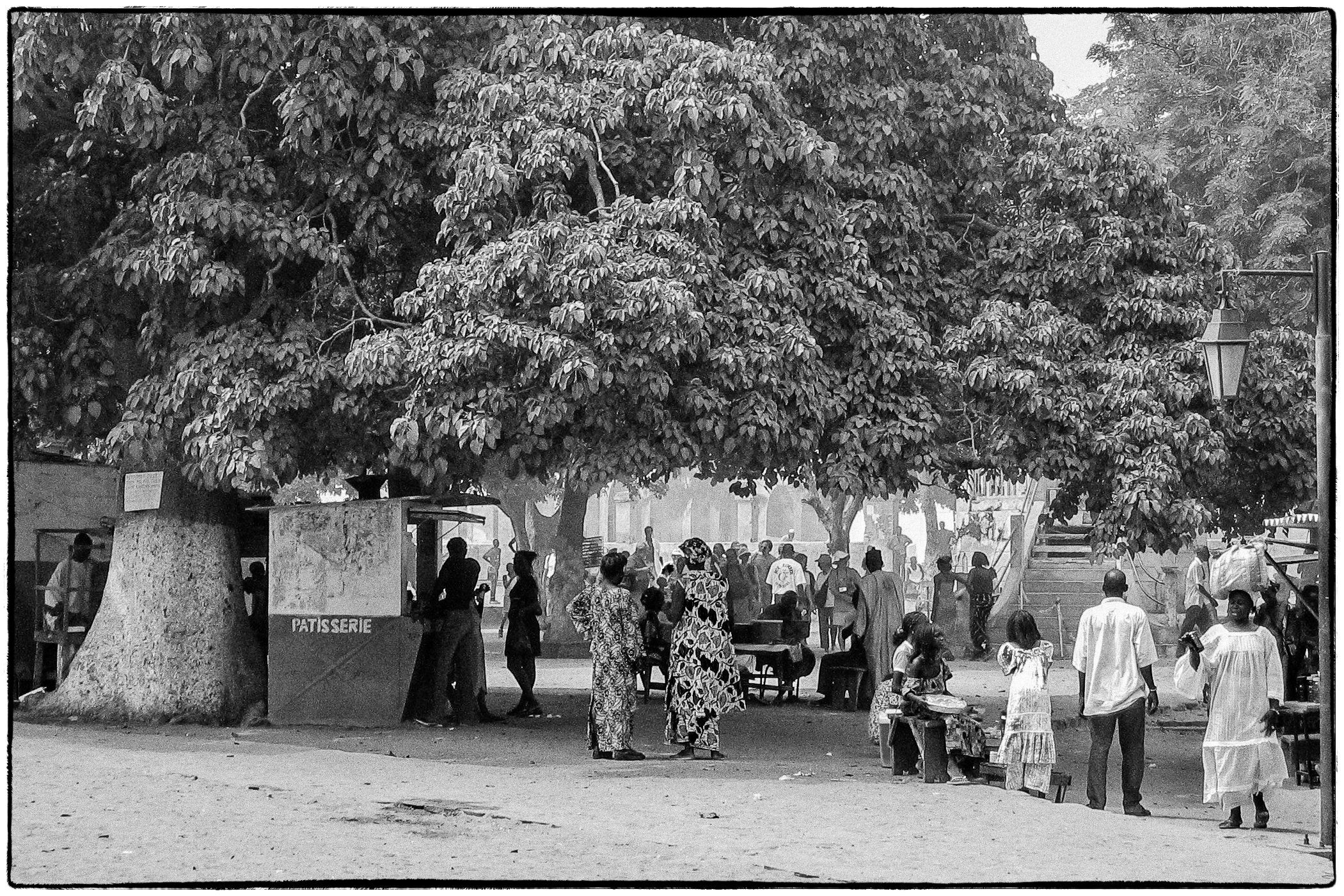
Taken on Gorée Island, off Dakar, Senegal in October, 2003.
Photographs and thoughts on photography and camera collecting

Taken on Gorée Island, off Dakar, Senegal in October, 2003.

In December 2005 we celebrated our 25th wedding anniversary on the island of Maui in the Hawaiian Islands. As soon as we stepped off the plane a hard to describe sense of calm descended on me and persisted for the entire time we were there (we returned the following year and it happened again). It really is such a lovely place and this was certainly one of the best vacations we’ve had. I would consider moving to Maui if I thought we could afford it.
The island in the background is (I think) Lanai.
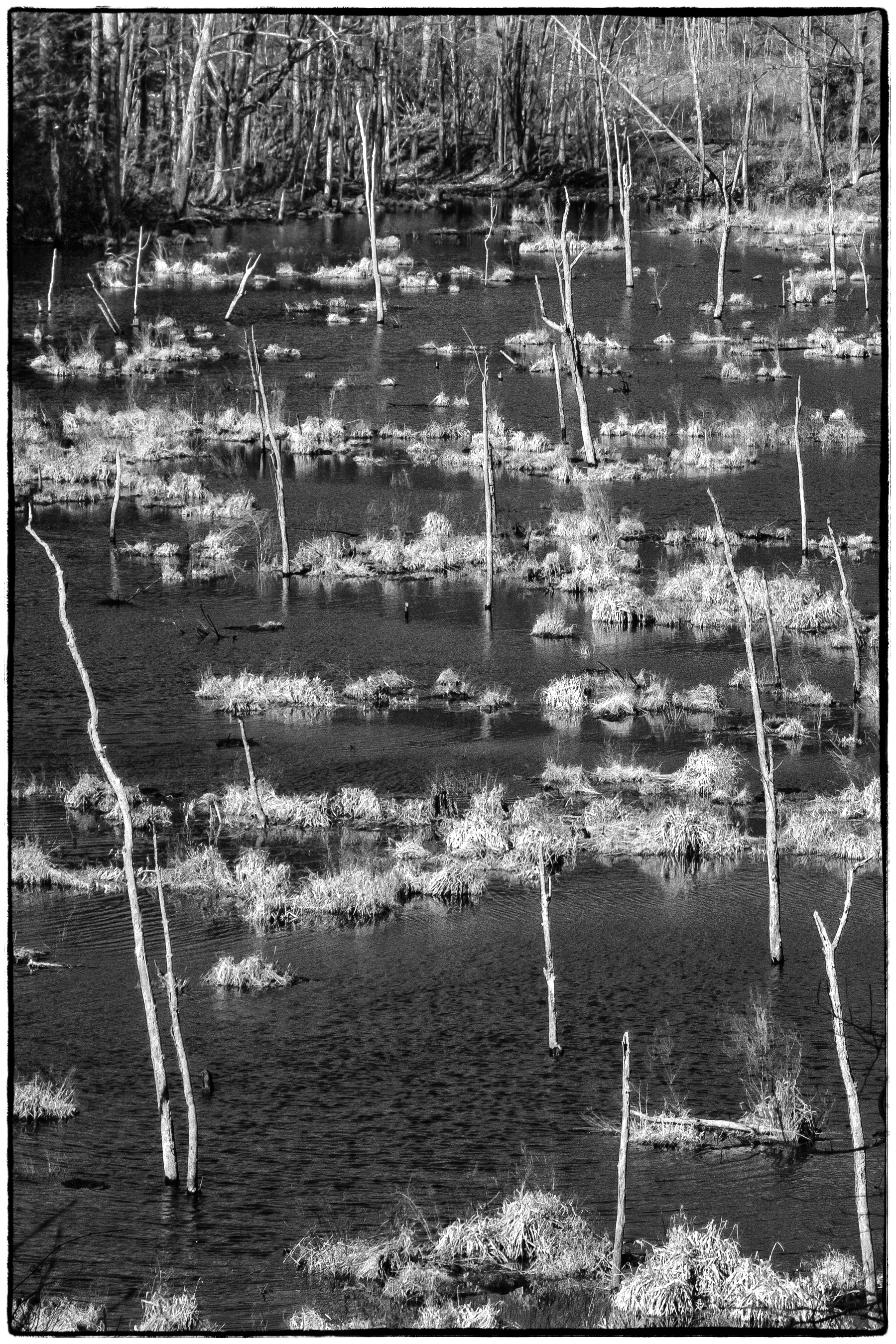
After I’d taken this picture I browsed around on the internet to find out what this body of wetland actually was. I couldn’t find a name for it, but in my search I discovered that there’s a difference between a marsh and a swamp, something I’d never given much thought to before.
This particular stretch of wetland was billed as a marsh. But is it? It seems the difference is largely the presence of trees that can thrive with their roots in water such as mangrove, cypress and cedar i.e. a swamp has them and a marsh doesn’t. At first I thought this was a swamp because it had trees. But looking at it more closely I see that ‘had’ is the operative word. All the trees I can see in the water are dead. They weren’t adapted to survive in water. So I guess it is a marsh after all.
In fact it’s worse than I thought. I looked further and came across this four part classification for wetlands:
Marsh. Marshes are fed by groundwater or surface water. Marshes are dominated by soft-stemmed vegetation. Marshes are pH neutral and, therefore, are abundant with plants and animals. Marshes can be freshwater or saltwater, tidal or inland. Other common names for marshes may include: prairie potholes, wet meadows, vernal ponds.
Swamp. Swamps are dominated by woody-plants that can tolerate a rich, organic soil covered in standing water. This may include trees such as cypress, cedar, or mangrove. Swamps may also be dominated by shrubs such as the buttonbush. Swamps are fed by groundwater of surface water.
Fen. Fens are peat-forming wetlands and are fed by nearby drainage, such as streams or rivers. Fens are high in nutrients with low acidic water. Fens are characterized by grasses, wildflowers and sedges. Often parallel fens adjacent to one another will eventually create a bog.
Bog. Bogs are fed by precipitation and do not receive water from nearby runoff, such as streams or rivers. Bogs are dominated by a spongy peat deposit and the floor is usually covered in sphagnum moss. Bogs have acidic water and are low in nutrients making them a difficult place for plants to thrive.
Beach Chair Scientist. A quick lesson in wetland ecology.
This is all getting a bit complicated for me so I’m going to stick with marsh.
When I think of swamps I think of the southern US so it occurred to me that perhaps swamps are more of a southern rather than northern phenomenon. So I looked further and to my surprise found this: “The Great Swamp in eastern Putnam and Dutchess counties is one of the largest wetlands in the U.S. State of New York. It turns out that this is about a 30 minute drive from where I live. You learn something new all the time!
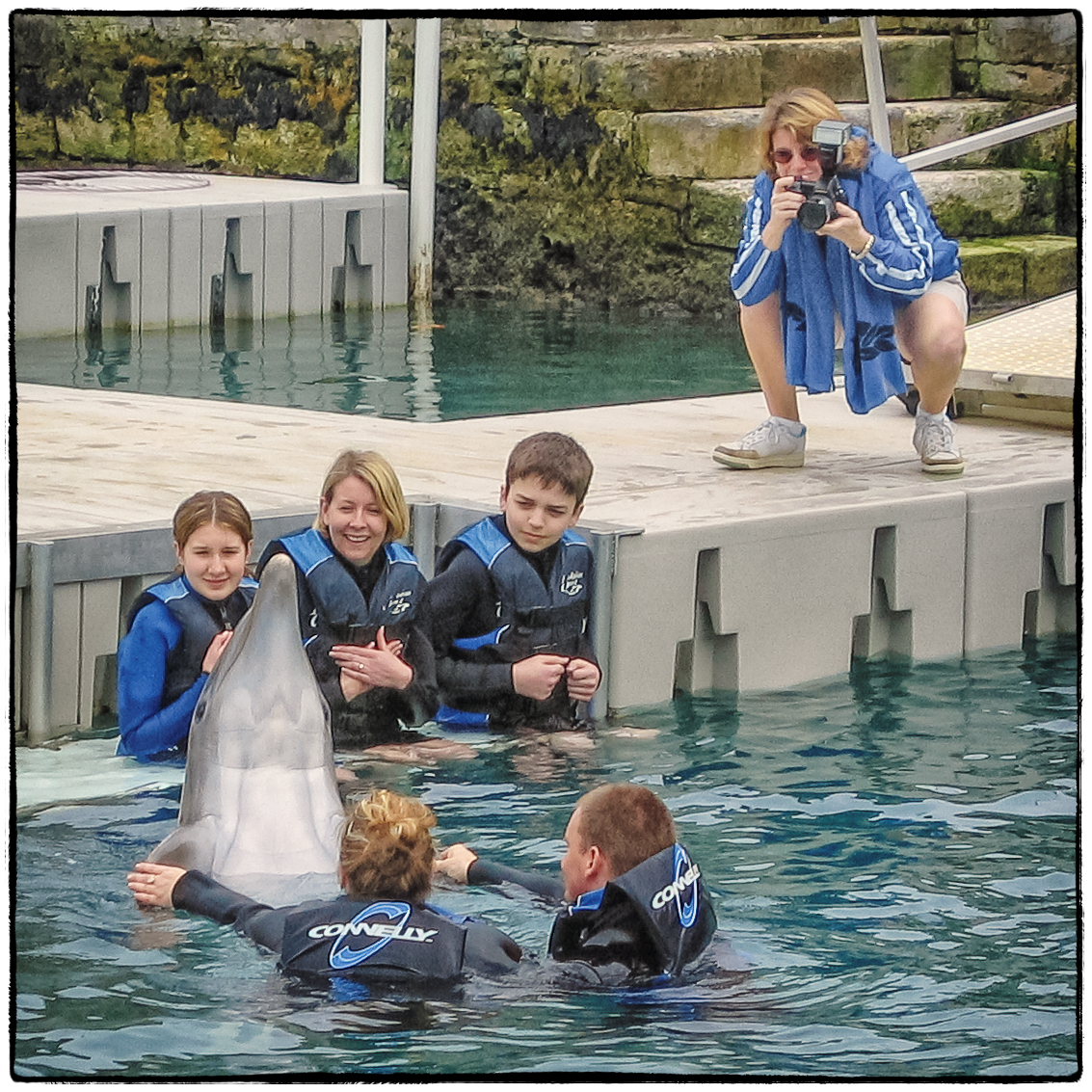
Taken on my wife’s birthday in 2005 during a very pleasant vacation in Bermuda. This was during the period where I’d soured on photography and was basically just taking travel and family snaps. The camera I was using at that time was Canon Powershot S-50 – one of the few cameras I’ve ever gotten rid of (I gave it to my grandson).
Still just because I was taking throwaway pictures doesn’t necessarily mean that they were all bad. I quite like this one: the upright dolphin; the faces of the people in the water; and the photographer taking their picture.

According to the nearby sign:
The Moore Family
Descendants of Clement C. Moore, Author of a “A Visit from St. Nicholas“.
The Moore family resided in Ossining from about 1839 until the early years of this century. They were descendants of Clement Clark Moore, the well-kown scholar and writer who lived from 1779 to 1863.
The family resided in one of Ossining’s oldest houses, located near the river in the Brayton Park area. The house, known as “Moorehaven”, ws built around 1740 by a Dutch family named Auser, original settlers in the area. It was the scene of a Revolutionary War skirmish between an American raiding party returning from behind British lines, and a British detachment that had pursued them from the Bronx.
Clement Moore, although a visitor to Ossining, was not known to have resided here other than for brief visits. His principal home was in the Chelsea section of Manhattan where he wrote his immortal “A Visit from St. Nicholas” for his children’s Christmas celebration in 1882. The now famous poem was published the next year. Mr. Moore lter resided for many years in Newport, Rhode Island. He is not buried in Dale Cemetery.
The Moore family were prominent Ossining residents. They were members of Trinity Church and donated the clock and chimes to the church in 1894.
For some reason this plot made me think of the inscription on another Moore grave – This one in Boothill Graveyard, Tombstone, Arizona.
HERE
LIES
Lester Moore,
FOUR SLUGS
FROM A 44
NO LES
NO MORE