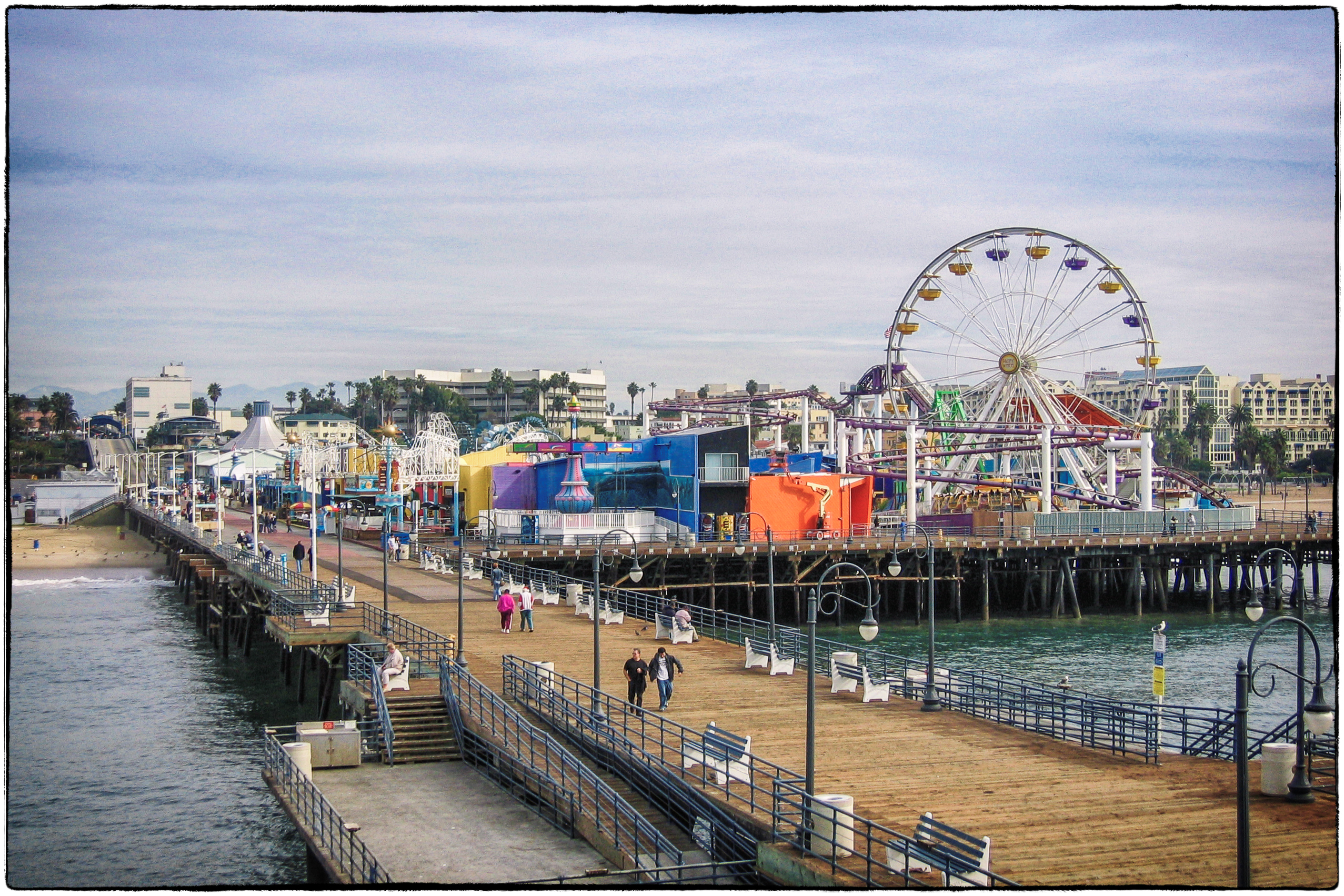
The pier at Santa Monica

Taken Christmas Eve, 2003. We’d been to California before (most of my wifes’ brothers live there), but not for a while. This time all of them would be there, as would my mother-in-law. This would be the first time in a while that the entire family would be getting together.

Before we met up we had some time to look around. When we’d been to LA before I hadn’t liked it too much. I fell in love with Santa Monica though. We ate at a nice restaurant near the entrance to the pier (you can just see it in the picture: a greyish, modern building to the right of the pier where it meets the road). Then we walked around the pier for a bit.

We were all supposed to meet for dinner the following day: Christmas Day. We assumed that one of the brothers living in LA would organize the dinner, but it none of them had so we quickly called around and made a reservation somewhere. However, as we were walking around the pier we noticed a Mexican Restaurant at the very tip and went in to ask if they were open on Christmas Day. They were – so we changed the reservation. Perfect we thought. Nice weather. Nice location. What more could you ask.

My mother-in-law was 80 years old at the time. On Christmas Day the weather turned bad: much colder and very rainy and as can be seen from the picture it was a fairly long walk from the entrance to the pier to the restaurant (from where this picture was taken).

We arrived first and I remember watching my mother-in-law (with a couple of my wifes’ brothers) walking slowly down the pier under an umbrella in the driving rain. When she eventually arrived she said: “Who chose this place?”.

We enjoyed the meal though. And it was great to see everyone again.

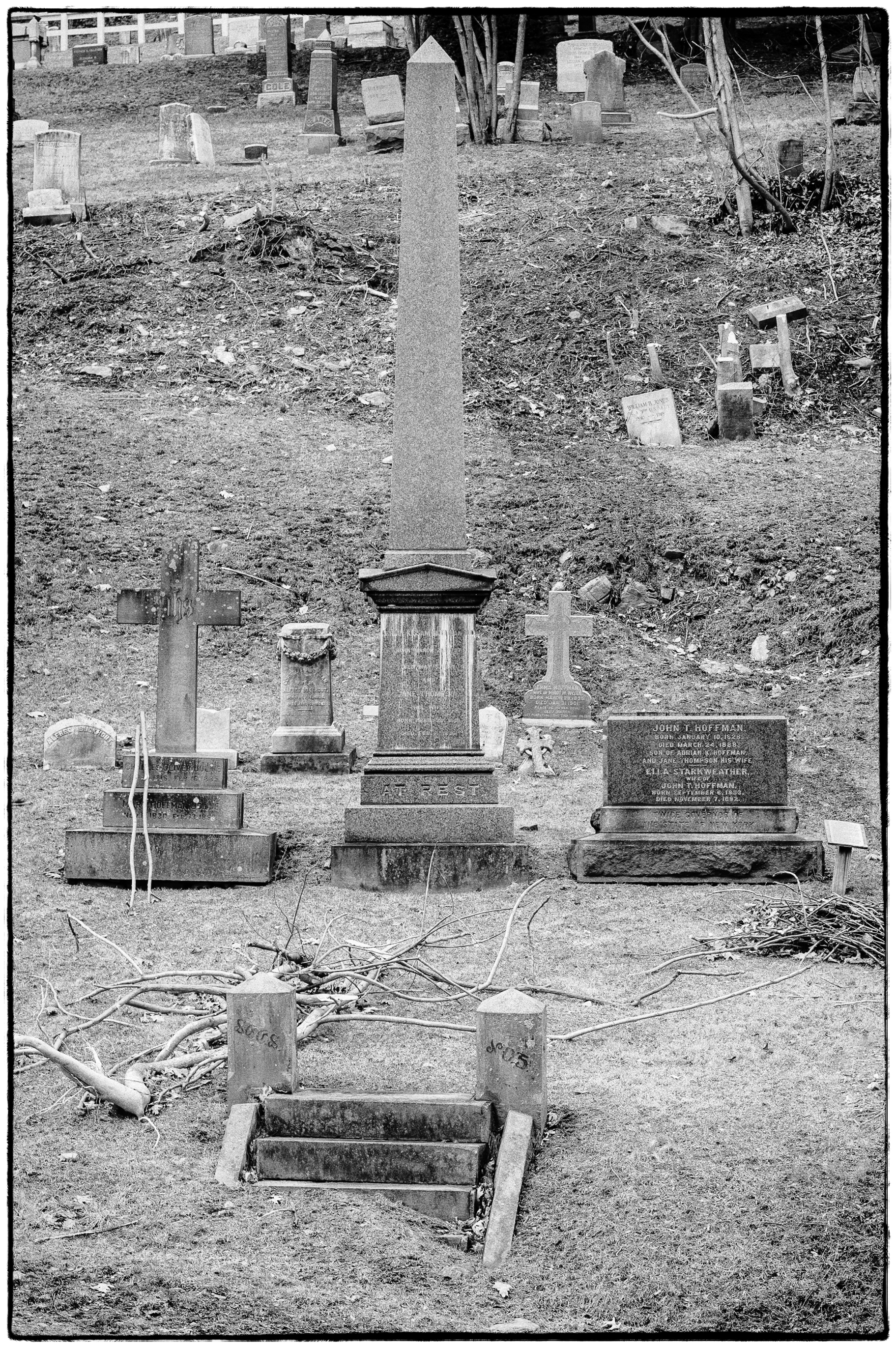
Hoffmann family plot

According to Wikipedia:

John Thompson Hoffman (January 10, 1828 – March 24, 1888) was the 23rd Governor of New York (1869–72). He was also Recorder of New York City (1861–65) and the 78th Mayor of New York City (1866–68). Connections to the Tweed Ring ruined his political career, in spite of the absence of evidence to show personal involvement in corrupt activities. He is to date the last New York City mayor elected Governor of New York.

I found it strange that Mr. Hoffmann is not listed under “Dale Cemetery Historical Residents“. He was, after all, Governor of one of the largest state’s in the US – fourth in terms of population. Maybe it’s because of the allegations (unproven) of corruption?

I took the picture from some distance away in order to get the whole family plot in. When I took it I assumed that the former Governor, and I imagine most prominent member of the family, would have the largest memorial. This, however, is not the case. The large obelisk is actually a memorial to Adrian Kissam Hoffmann, the Governor’s father. The Governor’s grave marker is the small, black tombstone to the right.

Curiously the date I’m posting this (March 24) marks the 128th anniversary of his death in Wiesbaden, Germany at the age of 60.

RIP American Idol

In an earlier post (A pleasant surprise) I mentioned a trail marked with a horseshoe. If, from the parking area, you choose not to go along this trail there is another alternative: an old woods road that once went in one direction (now blocked by the Taconic State Parkway) towards Stillwater Lake and in the other direction off into the woods to who knows where. UPDATE: I’ve just discovered that this old woods road is called Dicktown Road and the, and the trail with the white horseshoe make up the Dicktown loop. Follow the horseshoe trail and it will eventually take you to Route 301. Follow Dicktown Road east and it will eventually take you to Richardsville Road).

I followed this road today and as I did I recalled taking (in March 2013) this picture of a discarded drum. I was intrigued because it seemed such an odd object to find in the middle of the woods. It’s still there but is now virtually unrecognizable.

American Idol ends on April 7 2016. My wife likes this type of show: American Idol; The Voice; America’s Got Talent; So you think you can dance; Dancing with the Stars etc. I’ve never been a fan.

I seems to me that this old picture would be a fitting tribute to American Idol’s imminent demise.

Do we (I) take too many photographs?

Too many pictures?

Interesting article. Well worth reading. I tend to subscribe to the view expressed in a comment by Anthony Shaughnessy:

I’ve got 104 pictures in the galleries of my main site. That’s about 7.4 pictures per year I’ve been active.On the other hand, blogs are a great way to do something with the large numbers of pictures one takes. You can tell the story of the day’s shoot with a selection of a dozen-ish pictures from that day, even if they don’t all make the cut into your main portfolio. Reading down the months and years of your blog is then a story in itself with the photos making the story.

Source: The Online Photographer: What’s the Purpose of Taking More Photographs?

I tend to take as many pictures as I can, delete a lot of them and then spend time processing those that remain. I post some (few) to Facebook; some to Flickr; and most to this blog. The blog helps me keep a sort of illustrated diary of what I’m doing and helps me to keep up the discipline of taking pictures. Recently I’ve been feeling that I take too many pictures – but I don’t think that’s the problem. The problem is that I show them all on the blog. I think that what I need to do is to revise the blog so the diary aspect is downplayed and a set of portfolios (of pictures I really like) is more prominent.

I also liked this from Petapixel:

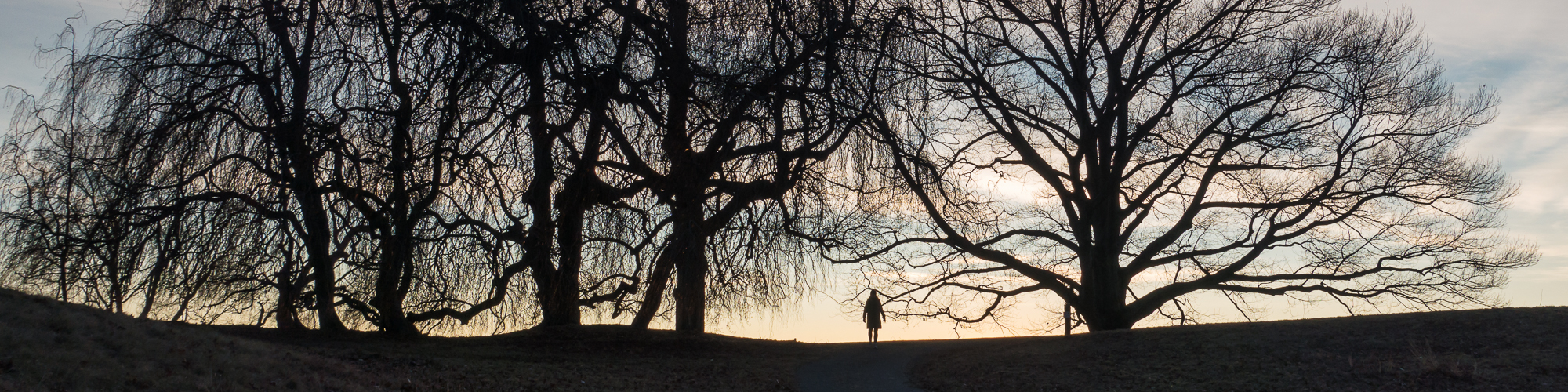
In closing, I want to take you to Switzerland where I also teach. Imagine a mountain before you. You see its peak and want to climb up to the top. It is your life’s goal. Start by standing back far enough to confirm it is really there, then head straight for it knowing it will disappear from sight for most of your life as you climb and meander the hidden forest trails that lift you ever higher even as many sections force you to drop down into the mountainside pockets of disappointment or even despair, but you will be climbing soon enough and always headed toward your goal.

There will be those special occasions — and may there be many of them — when the fruits of your labors are suddenly made visible, to be celebrated, when you will again see the peak, only closer now, giving you confidence to step forward ever more briskly and bravely.

At one point the tree line will thin out the way hair on the top of an old man begins to bald away, but the air will be clear and the path sure.

At the top you will delight in what you have accomplished. You look around you and see just how far you have come. But then your turn around and as you do you become aware of mountain peaks far higher than what you had ever dreamed of, peaks that from the distance when you first looked up were not even there, completely hidden from your view.

And now, there they are, huge peaks but your climbing days are done.

You have three choices: You can look up with raging jealousy and end your days in sadness and regret. Or you can look down at all the distance you climbed, become arrogant about every step you took and not have many friends with whom to share your closing days.

Or you can skim the horizon and take in the gorgeous sweep of the panorama before you. If you can do that you will know peace and rare humility.

We do not have to be number one in this world. We only have to be number one to ourselves. There is a special peace that comes with such humility. When you reach this peak in life, you’ve reached the highest mountain peak of them all.

The Helsinki Bus Station by Arno Rafael Minkkinen on Petapixel.
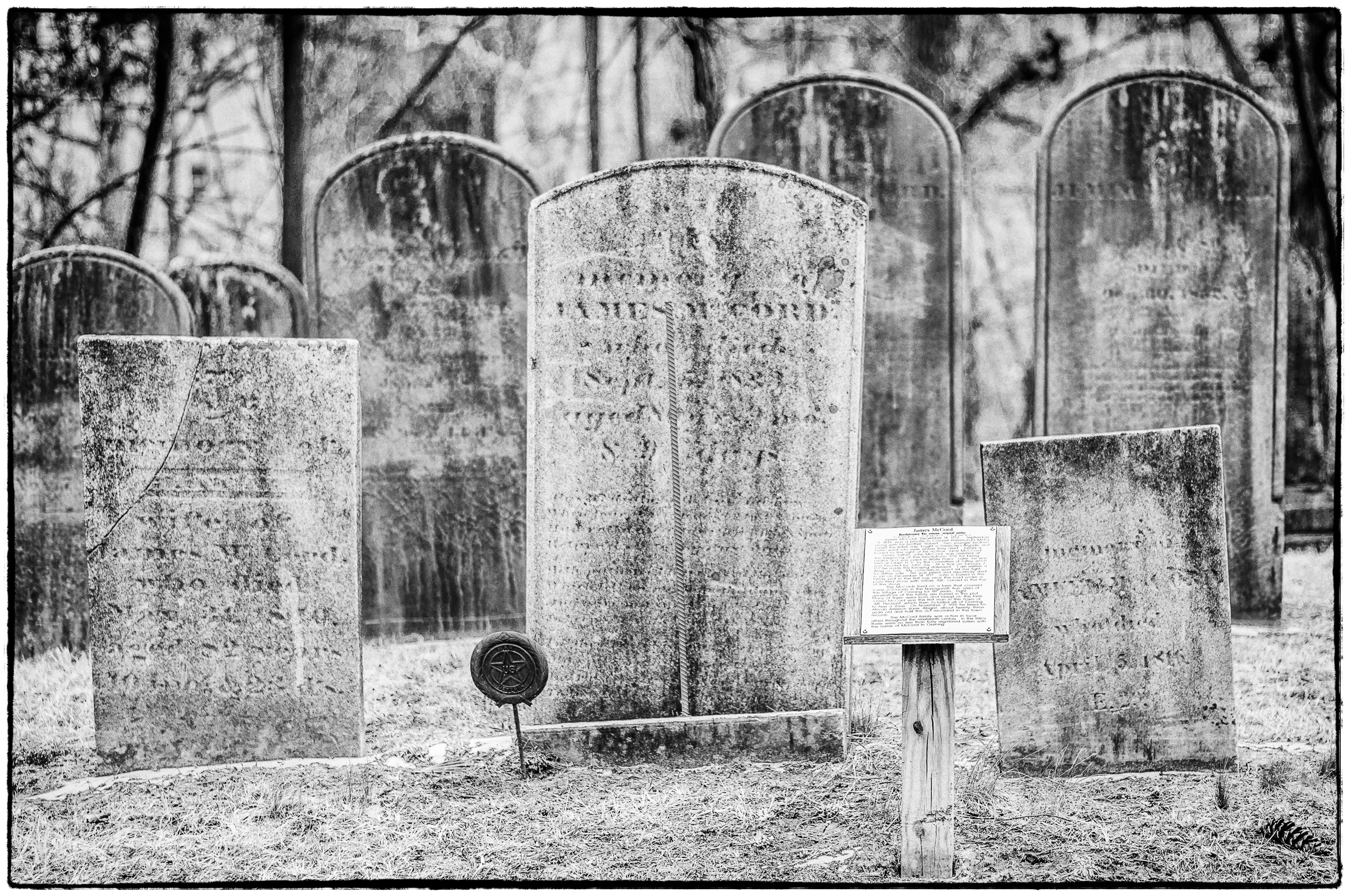
McCord family plot

The nearby sign reads:

James McCord

Revolutionary War veteran, original settler.

James McCord. December 14, 1752 – September 5, 1833 was a private in Colonel Hammond‘s Militia along with his brother, Robert. Two younger brothers joined the British side, fought in Delancey’s Brigade and laster (sic – probably later) went into exile where they died. James is buried to the right of his mother, Jane McCord.

James’ father, John McCord was arrested at the beginning of the Revolution in 1776 for being neutral and was jailed in White Plains. later, he was tried at Fishkill, N.Y. by the Committee of Saftey (sic) which was headed by John Jay. At is (sic) trial on January 2, 1777 he made the following statement: “I am neither a Whig or Tory. My conscience won’t let me fight for either side”. He was jailed and reportedly died in jail on December 14, 1777. John is buried in the family plot in the first row near the road under a plain field stone with initials JMC carved in the top stone.

The McCords lived on a farm that covered some 200 acres in the Narraganstt Ave. area of the Village of Ossining for for 187 years. Eight generations of the family are buried in this plot. Many of them were born and raised on the farm.

James McCord was the first man in the Town of Mt. Pleasant, which then included all of Ossining, to free a slave. On November 2, 1795 he freed his African American slave, Abigail, about twenty -three years old and had this act recorded in the town records.

The McCord family was active in local affairs throughout the nineteenth century. In the 1880’s there were no less than forty registered voters with the name McCord in Ossining.

I think I have to comment on some of the typos in some (not all) of these signs. Here are just a few examples (from this and earlier posts):

laster – later?
is – his?
saftey – safety?
ploe – pole?
reliabkle – reliable?
amiril – admiral?
artical – article?
expedtion – expedition?
lauditory – laudatory?

Would it have been so difficult to have proofread them before they were printed.