According to Wikipedia:
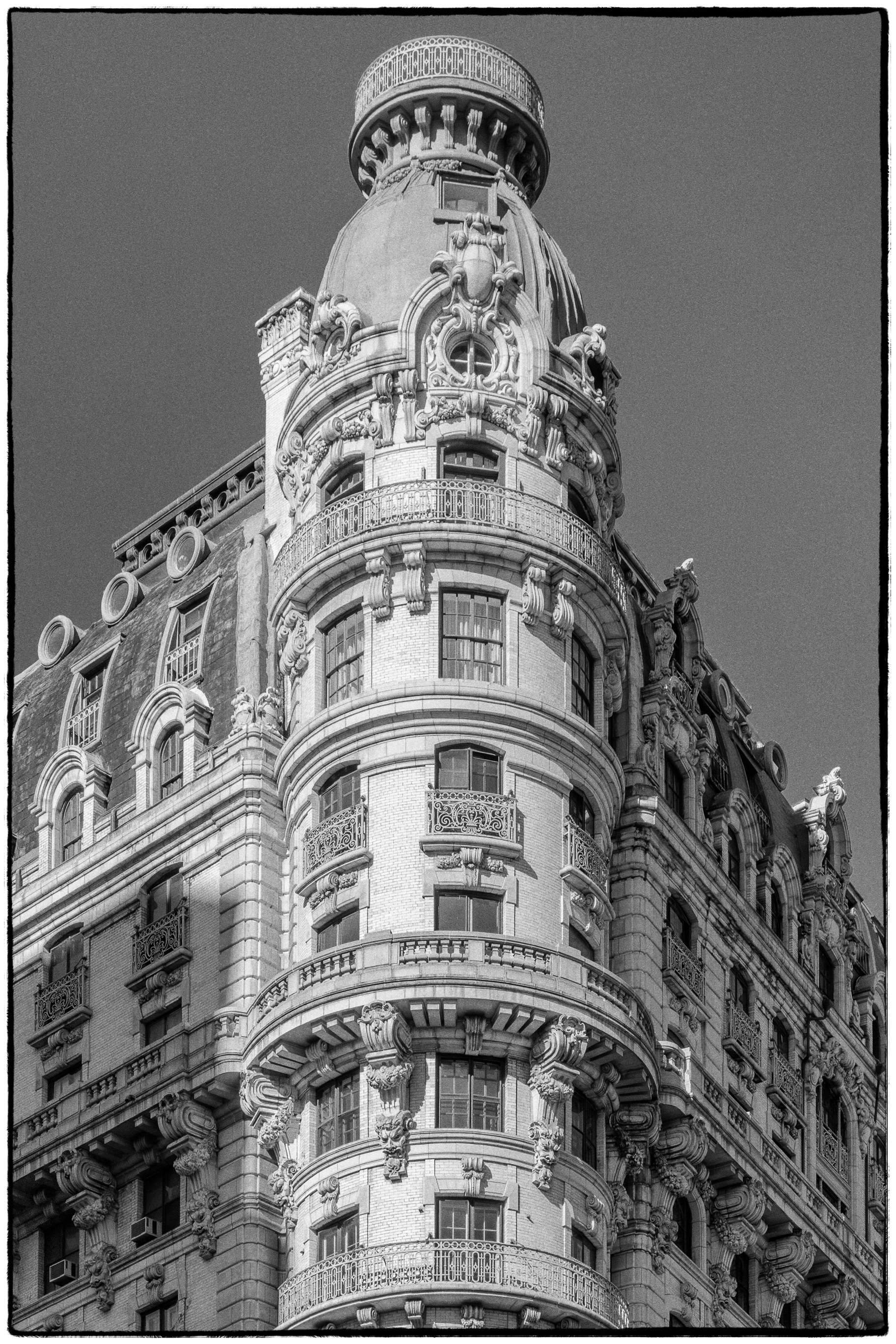
The Ansonia is a building on the Upper West Side of New York City, located at 2109 Broadway, between West 73rd and West 74th Streets. It was originally built as a residential hotel by William Earle Dodge Stokes, the Phelps-Dodge copper heir and share holder in the Ansonia Clock Company, and it was named for his grandfather, the industrialist Anson Greene Phelps. In 1899, Stokes commissioned architect Paul E. Duboy (1857–1907) to build the grandest hotel in Manhattan.
Stokes would list himself as “architect-in-chief” for the project and hired Duboy, a sculptor who designed and made the ornamental sculptures on the Soldiers’ and Sailors’ Monument, to draw up the plans. New Orleans architect Martin Shepard served as draftsman and assistant superintendent of construction on the project. A contractor sued Stokes in 1907, but he would defend himself, explaining that Duboy was in an insane asylum in Paris and should not have been making commitments in Stokes’s name concerning the hotel.
In what might be the earliest harbinger of the current developments in urban farming, Stokes established a small farm on the roof of the hotel.Stokes had a Utopian vision for the Ansonia—that it could be self-sufficient, or at least contribute to its own support—which led to perhaps the strangest New York apartment amenity ever. “The farm on the roof,” Weddie Stokes wrote years later, “included about 500 chickens, many ducks, about six goats and a small bear.” Every day, a bellhop delivered free fresh eggs to all the tenants, and any surplus was sold cheaply to the public in the basement arcade. Not much about this feature charmed the city fathers, however, and in 1907, the Department of Health shut down the farm in the sky.
It’s certainly a very impressive building. This picture captures some of the ornate decoration on the building, but what it misses is the sheer size of it. It’s massive. In the picture you see only one corner of a building which covers an entire city block!