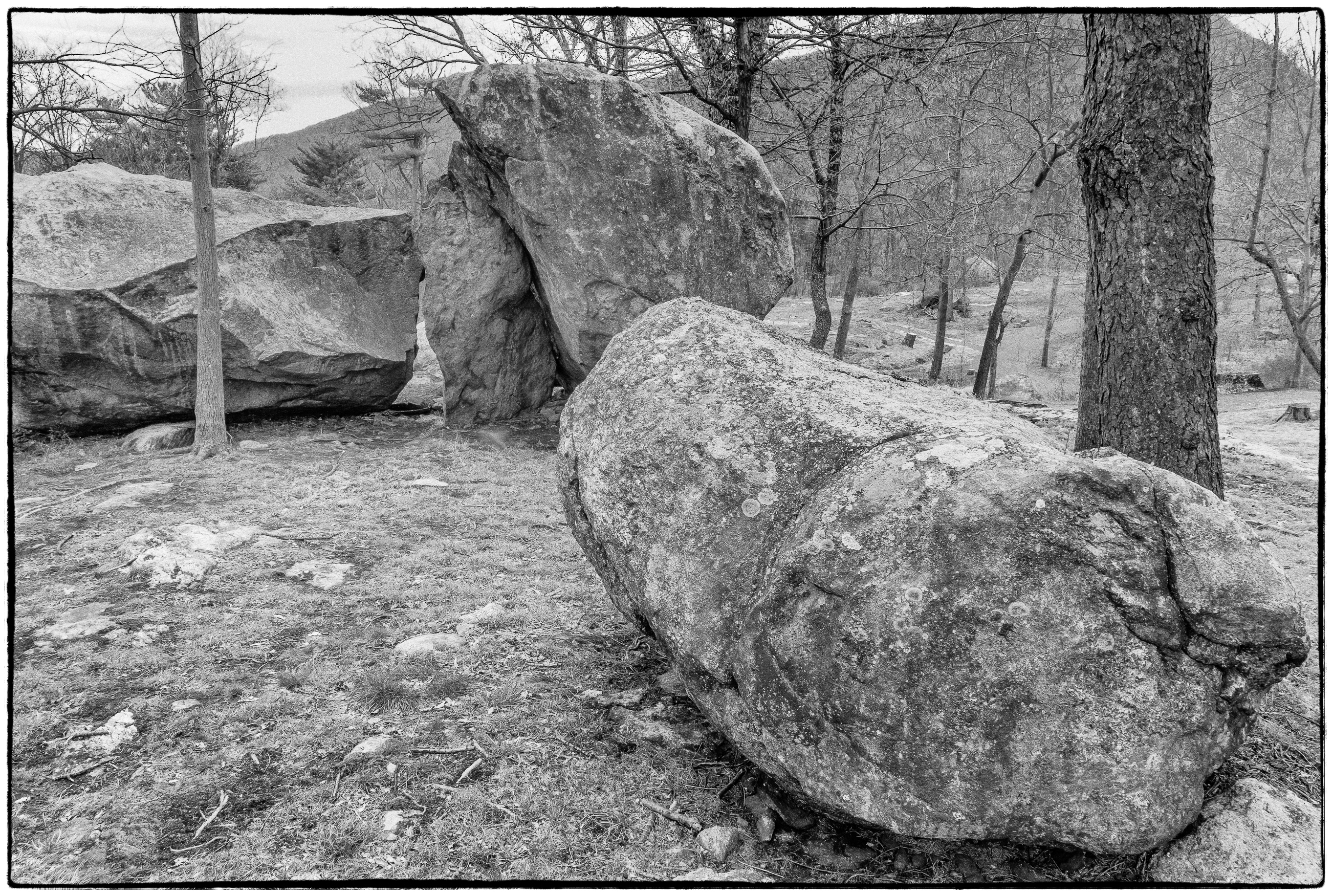
I came across these large, impressive boulders between the Barracks and the North Redoubt.
Photographs and thoughts on photography and camera collecting

I came across these large, impressive boulders between the Barracks and the North Redoubt.
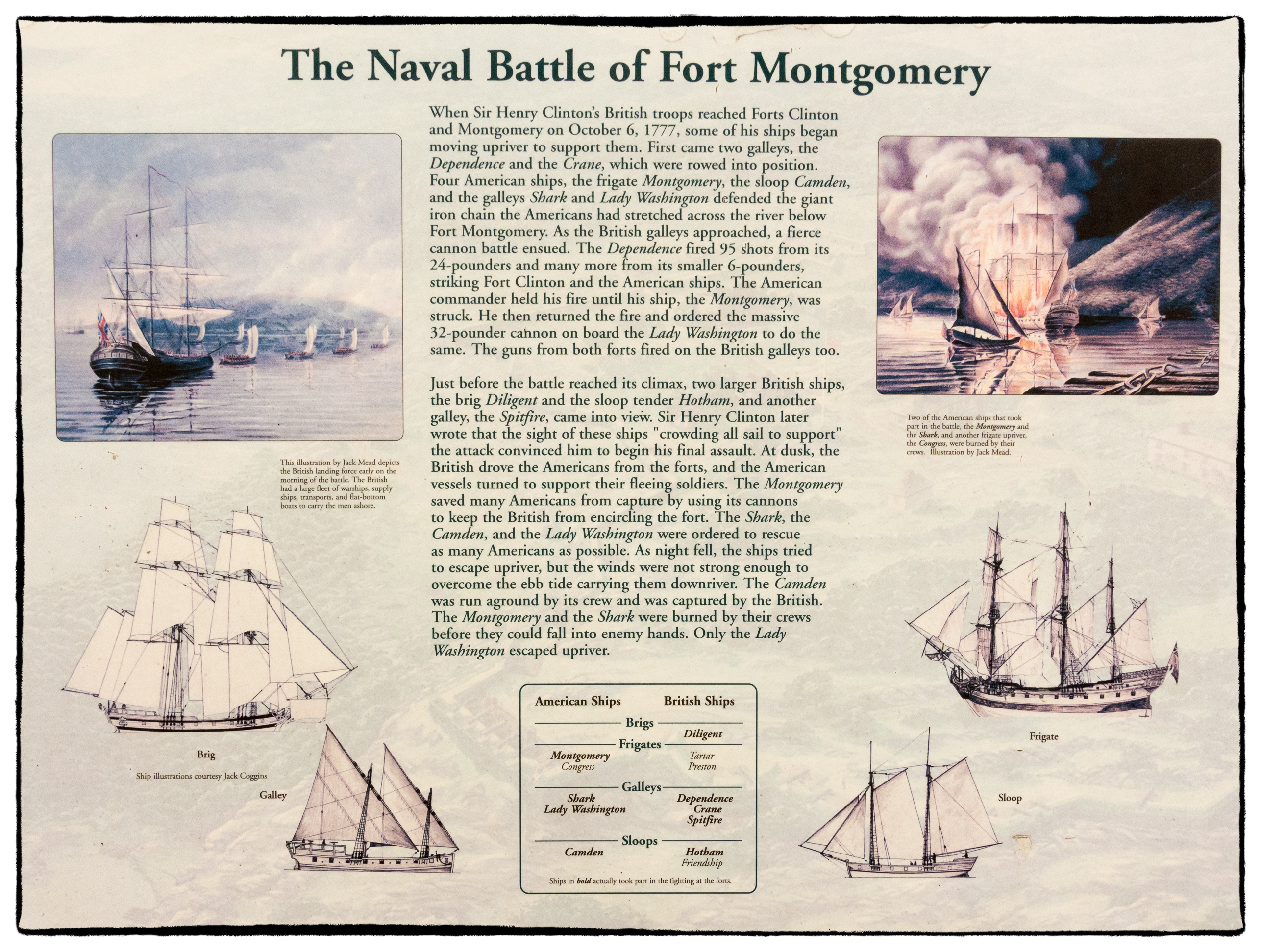
I usually illustrate this posts with pictures I’ve taken. However, you can’t really take a picture of an event that took place 240 years ago, so I’m forced to take a picture of the information board that explains what happened. I’ve quoted liberally from these boards in other posts, so it is perhaps appropriate that I show what one of them looks like.
When Sir Henry Clinton’s British troops reached Forts Clinton and Montgomery on October 6, 1777, some of his ships began moving upriver to support them. First came two galleys, the Dependence and the Crane, which were rowed into position. Four American ships, the frigate Montgomery, the sloop Camden, and the galleys Shark and Lady Washington defended the giant iron chain the Americans had stretched across the river below Fort Montgomery. As the British galleys approached, a fierce cannon battle ensued. The Dependence fired 95 shots from its 24-pounders and many more from its smaller 6-pounders, striking Fort Clinton and the American ships. The American commander held his fire until his ship, the Montgomery, was struck. He then returned the fire and ordered the massive 32-pounder cannon on board the Lady Washington to do the same. The guns from both forts fired on the British galleys too.
Just before the battle reached its climax, two larger British ships, the brig Diligent and the sloop tender Hotham, and another galley, the Spitfire, came into view. Sir Henry Clinton later wrote that the sight of these ships “crowding all sail to support” the attack convinced him to begin his final assault. At dusk, the British drove the Americans from the forts, and the American vessels turned to support their fleeing soldiers. The Montgomery saved many Americans from capture by using its cannons to keep the British from encircling the fort. The Shark, the Camden, and the Lady Washington were ordered to rescue as many Americans as possible. As night fell, the ships tried to escape upriver, but the winds were not strong enough to overcome the ebb tide carrying them downriver. The Camden was run aground by its crew and was captured by the British. The Montgomery and the Shark were burned by their crews before they could fall into enemy hands. Only the Lady Washington escaped upriver.
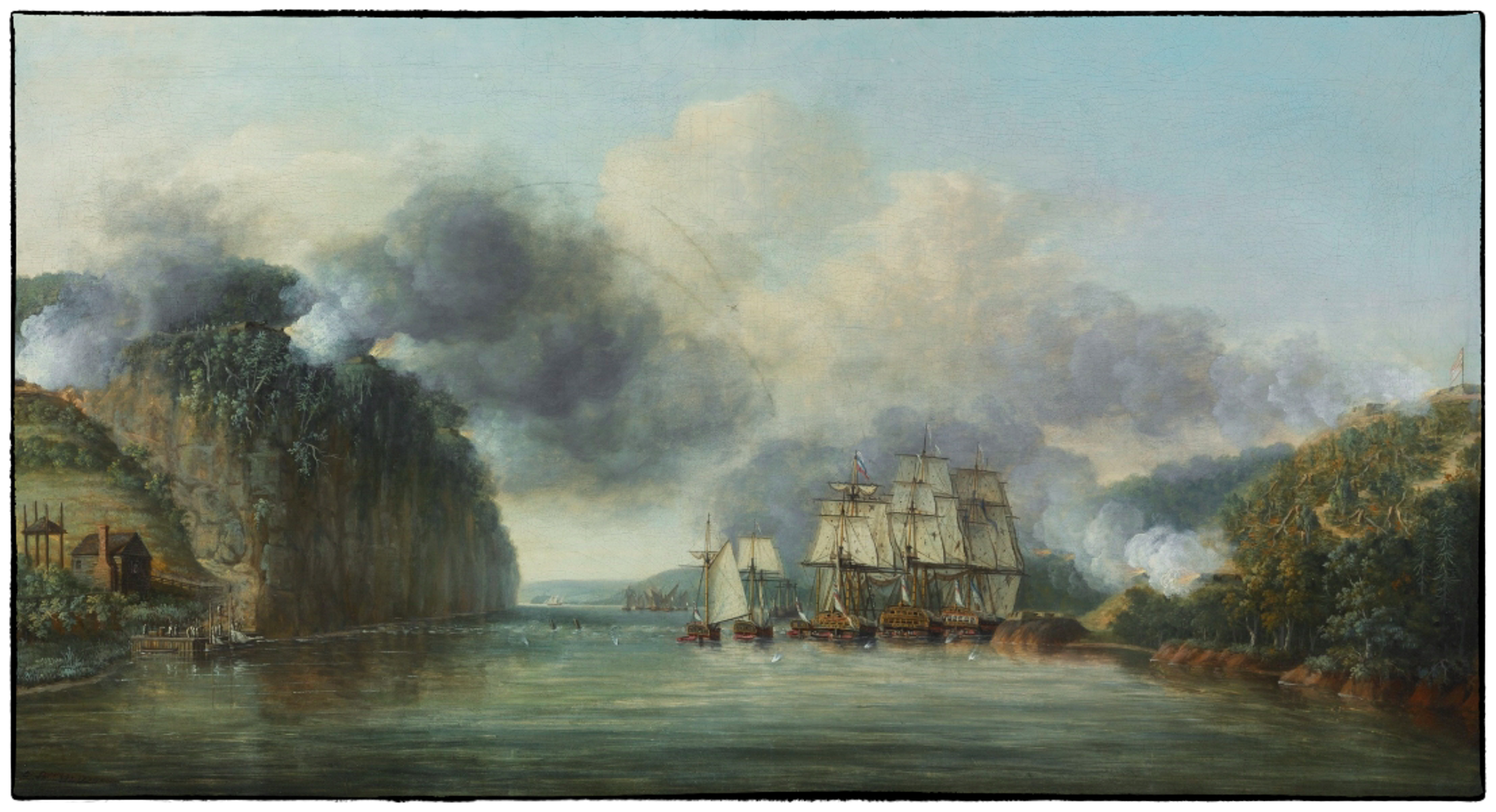
I looked for something to show what the actual battle was like, but I was unable to find anything suitable. The painting below shows another battle on the River Hudson during the Revolutionary war, but farther south and from a slightly earlier time period. It’s by Dominic Serres, R.A. (Auch 1722 – 1793 London) and depicts: “His Majesty’s ships Phoenix, Roebuck and Tartar (which also took part in the engagement at Fort Montgomery), accompanied by three smaller vessels, forcing their way through the Cheval-de-Frise on the Hudson River between Forts Washington and lee, New York, 9 October 1776. I imagine that the naval battle at Fort Montgomery was somewhat similar.
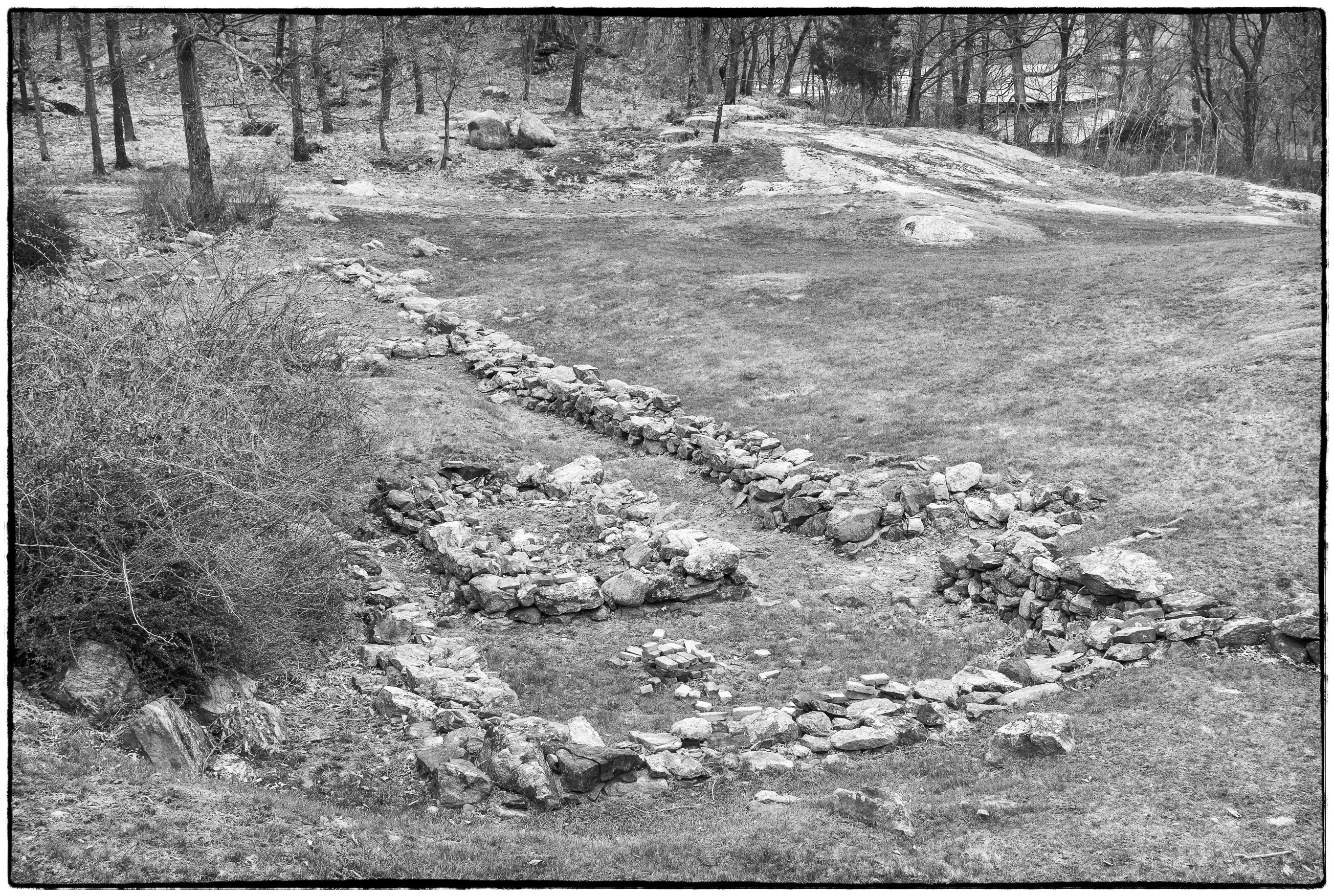
According to a nearby information board:
The long foundation to the left (see picture above) was a barracks for enlisted men. The short foundation on the right (picture below) housed the fort’s senior officers and served as a commissary for storing food provisions. Items stored here were controlled and carefully guarded. Archaeology suggests that only the northern half of the cellar had a fireplace and may have been where the officers’ servants lived.
Construction was virtually constant during the 18 months Fort Montgomery was occupied. The Enlisted Men’s Barracks was one of the first two buildings erected in the fort. It was followed by other buildings, gun platforms, earthworks, and the construction of Fort Clinton across the creek.
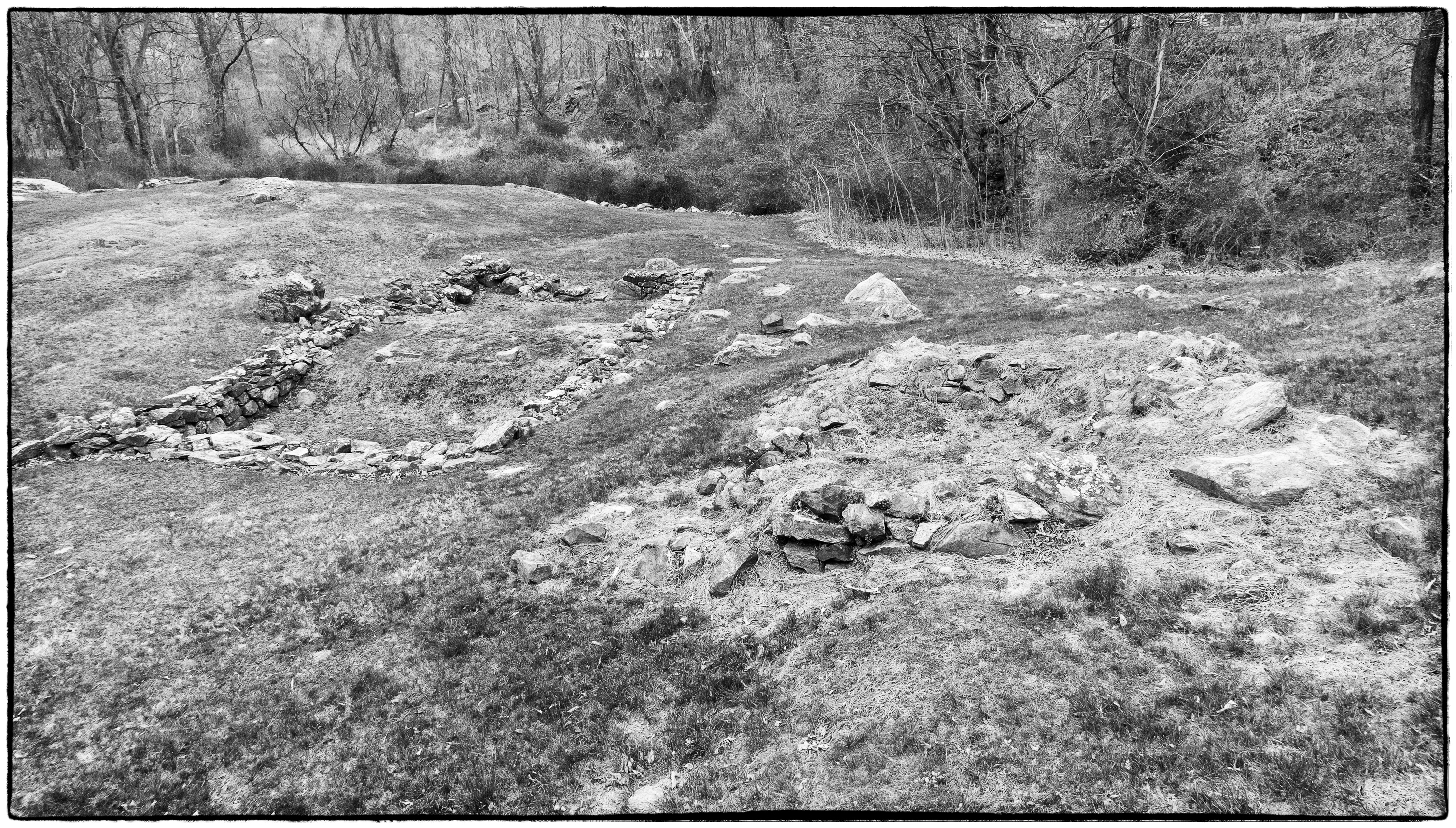
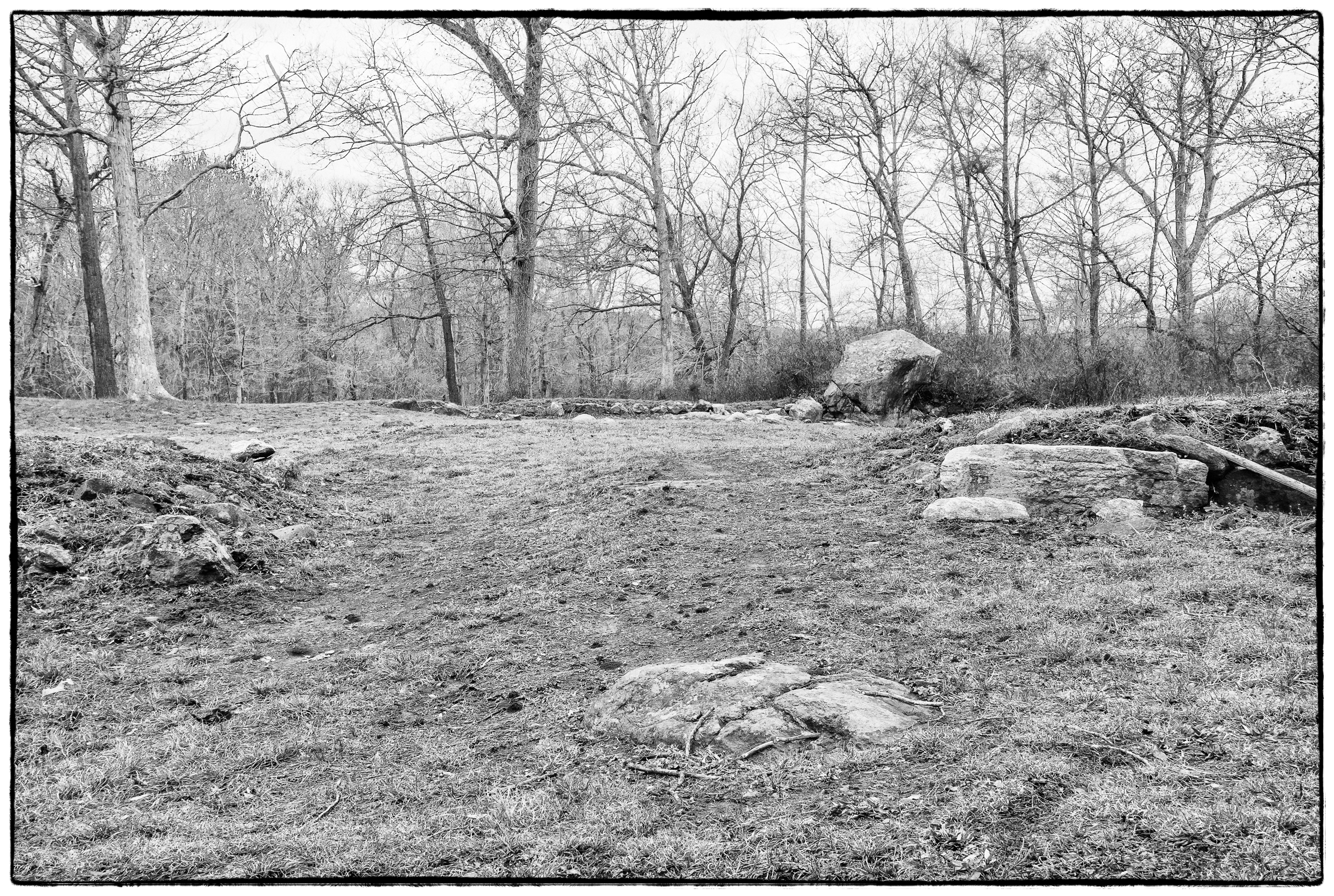
There’s not much to see here nowadays, but this was once the site of the North Redbout.
According to a nearby information board:
Brigadier General George Clinton, the Governor of New York State, commanded Fort Montgomery during the battle of October 6, 1777. Aware the British were approaching, he ordered some of his men to take a 3-pounder cannon down the western road leading to the fort to slow the enemy. The Americans temporarily stopped the 900 advancing British and Loyalist soldiers under the command of Lieutenant Colonel Mungo Campbell, but were eventually forced to abandon their gun and return to the fort.
Governor Clinton ordered his undermanned garrison into the fort’s three redoubts, or strong points. British skirmishers approached keeping up a constant fire. After being driven back, the British sent a flag to the fort seeking the Americans’ surrender. When the Americans refused, the British resumed the battle and after several attacks, finally drove the Americans from the redoubts.
As Governor Clinton was rallying his men to continue the fight, a roaring cheer went up from Fort Clinton, proclaiming its capture by the British. Governor Clinton and more than half of the Americans escaped from Fort Montgomery, taking advantage of the battle’s haze and the growing darkness. By nightfall, the British controlled both forts and the Battle of Fort Montgomery was over. All subsequent testimonies by the officers agreed that the soldiers had fought bravely, but that there had not been enough men to defend the forts adequately.
…
The term redoubt at Fort Montgomery means a strong point in the fort’s walls. There were three redoubts at Fort Montgomery, including the North Redoubt, which you see here. Two of the redoubt’s walls projected out from the fort so that enemies approaching the walls of the fort would be exposed to cannon and musket fire from the redoubt. About 15 feet outside the redoubt was a two-foot deep ditch, which would have slowed an approaching enemy.
The lower portions of the redoubt’s walls were formed of earth faced with stones. Assuming the redoubt was built like other sections of the fort, the upper part of the redoubt’s walls were faced with bundles of saplings, called fascines. Around the inside of the redoubt’s walls there was a banquette, or firing step, that soldiers could stand on to fire over the wall. The redoubt probably contained a few 6- or 12-pounder cannons. Archaeologists found evidence of charred wood in the “point” of the redoubt, which was probably the remains of a cannon platform. The presence of pothooks, a fork, bottle glass, ceramics, teapots, and bone scraps suggests that soldiers gathered here to eat and socialize.
According to the Revolutionary War 101 site:
Lt. Col. Mungo Campbell and several British regulars approach the fort with a flag of truce indicating that they wish to avoid `further effusion of blood.’ Clinton sends Lt. Col. William S. Livingston to meet the enemy. The British officer requests that the patriots surrender. They are promised that no harm would come to them. Livingston, in turn, invites Campbell to surrender and promises him and his men good treatment. Fuming at this audacity, the British resume the fight. British ships working against an ebb tide attack the forts and American vessels. A steady volley ensues with each side receiving a share of the bombardment. British officers Campbell and Vaughan close in on all sides of the twin forts. Leading his men into battle, Campbell is killed in a violent attack on the North Redoubt of Fort Montgomery. Vaughan’s horse is shot from under him as he rides into battle at Fort Clinton.
After a fierce battle lasting until dark, the British pushed the courageous Americans from the forts at the points of their bayonets. The defenders are overpowered by sheer numbers and the British gain possession of Forts Montgomery and Clinton. American casualties numbered about 350 killed, wounded and captured, while the British paid a price of at least 190 killed and wounded. Those who were not killed or did not escape are shipped to the infamous Sugar House Prisons in New York City and then onto British “hell ships” (prison ships) in the harbor. A “return,” or report of prisoners, is sent to communities in the Highlands to inform families of their loved ones’ capture. It is up to the families to send provisions lest the prisoners starve. Countless patriots perish on the prison ships.
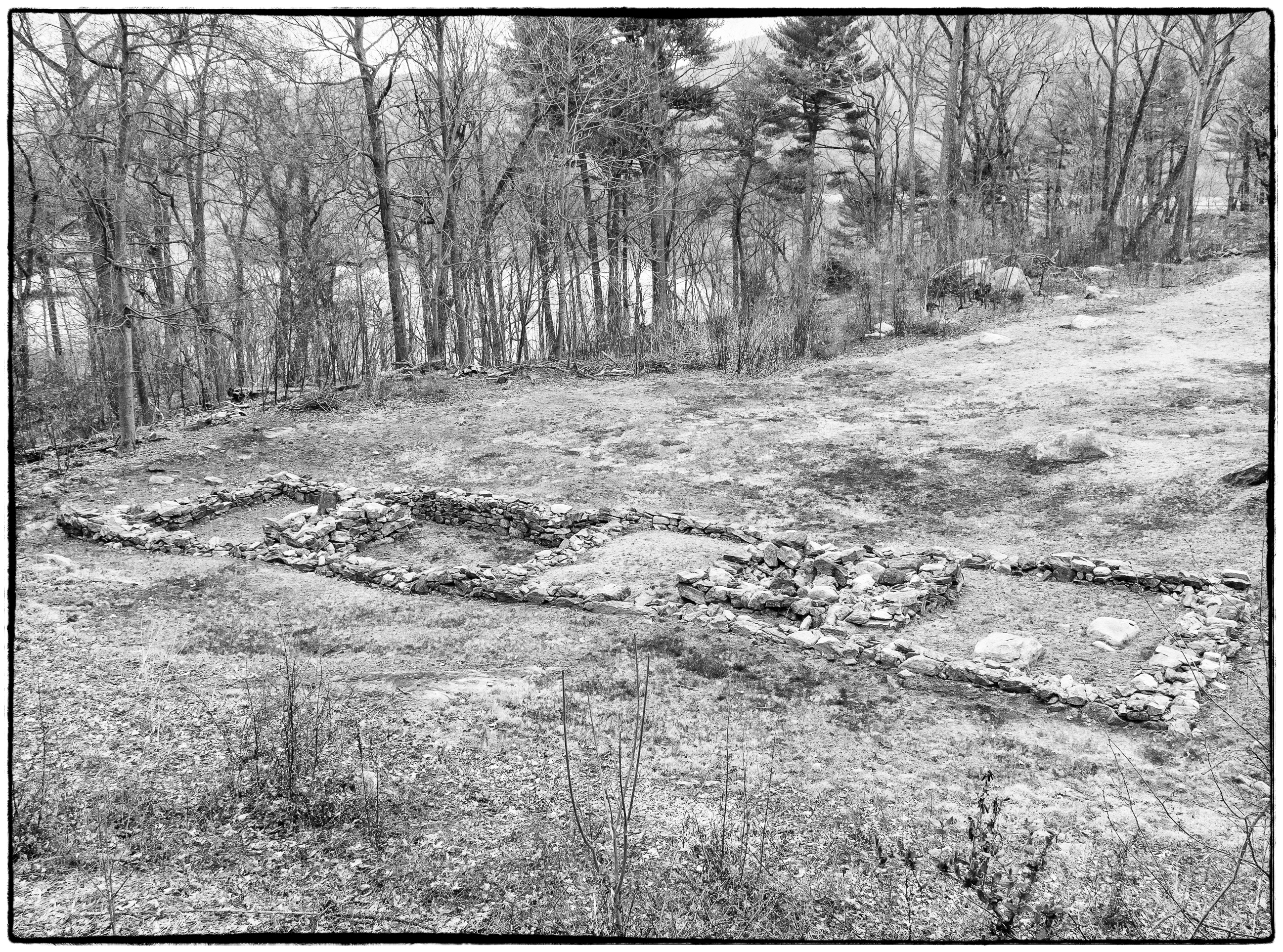
According to a nearby information board:
You are looking at the foundation of a barracks built in the summer of 1776. This was probably a two-story building with a cellar under the northern half. Artifacts recovered from the site tell us a lot about the soldiers who lived here. In the 18th century, shoe buckles, brass and silver buttons, cuff links, glass tableware, tea services and flatware were symbols of elevated social status. The large quantity of these items recovered from all the barracks excavated at Fort Montgomery challenges traditional assumptions that these soldiers were poor and unsophisticated.
An abundance of cattle, pig, sheep, chicken, duck, pigeon, and fish bones was found in a large trash dump just outside the building’s west wall, indicating that the soldiers were generally well-supplied with meat. The animals were probably butchered on site and the meat cooked in soups and stews that were eaten from bowls using large pewter spoons. The scarcity of bones and other debris inside the barracks suggests that the soldiers regularly cleaned the building.