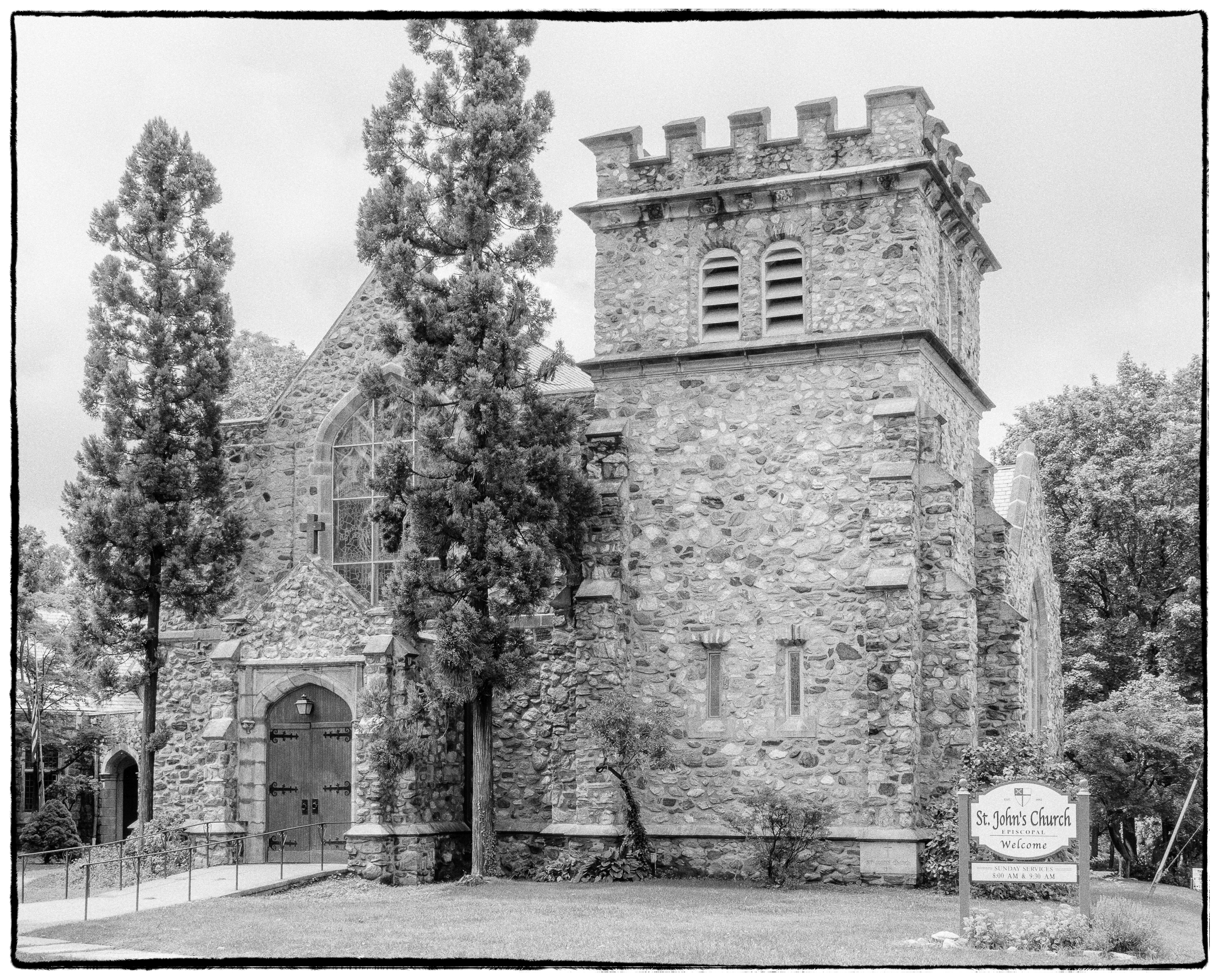
A Walk Around Pleasantville – St. John’s Episcopal Church

According to the History Section of the church’s website:

St. John’s Church has been a part of the Pleasantville community since 1853 when it was established as a mission church of Grace Church in White Plains. The Reverend Robert W. Harris, Rector of Grace Church, was the Priest-in-Charge. Services were held in a schoolhouse in the Old Village until 1885.

In that same year the congregation occupied a new sanctuary on Bedford Rd. which served as it’s home until the present building was occupied in 1912 under the rectorate of the Reverend Dr. Stephen Holmes. The old building now serves as the Pleasantville Community Synagogue.

To meet the demands of a growing church community, the parish hall was added on at a cost of $52,000. Built of native stone with a roof of Vermont slate, it was completed in 1929 under the rectorate of the Reverend Emmons Parkman Burrill. In 1972 the classroom and office wing was completed.

The present Rectory of St. John’s dates back to 1785 and is the oldest house in Pleasantville. It was purchased in 1920 from Miss Caroline Choate who had acquired and lovingly restored the property the year before. The historic integrity of the Rectory as a pre-Revolutionary building has been respected whenever possible while still allowing for modern conveniences necessary for comfortable daily life.

A notable characteristic of St. John’s is the tenure of service of its Rectors. Since 1881 the rectorage has been held by seven Priests, whose average tenure has been 19 years. The Reverend Emmons Parkman Burrill served for 30 years; the Reverends Stephen Homes and Bradford W. Ketchum, for 25 years. The Reverend Lloyd H. Uyeki served for 10 years; The Reverent Phillip Carr-Harris for 19 years until 2004. Father John Edwards served for 4 years, from 2006-2010, and our current Priest, Mother Mary B. Gregorius joined us in August 2012. Our parish site exists to meet the needs of its members, and to help those members in times of hardship.

The church has filed a National Register of Historic Places Registration Form, which contains a wealth of additional information, including some fascinating historical photgraphs. Definitely worth reading.

Taken with a Sony RX100 M3.

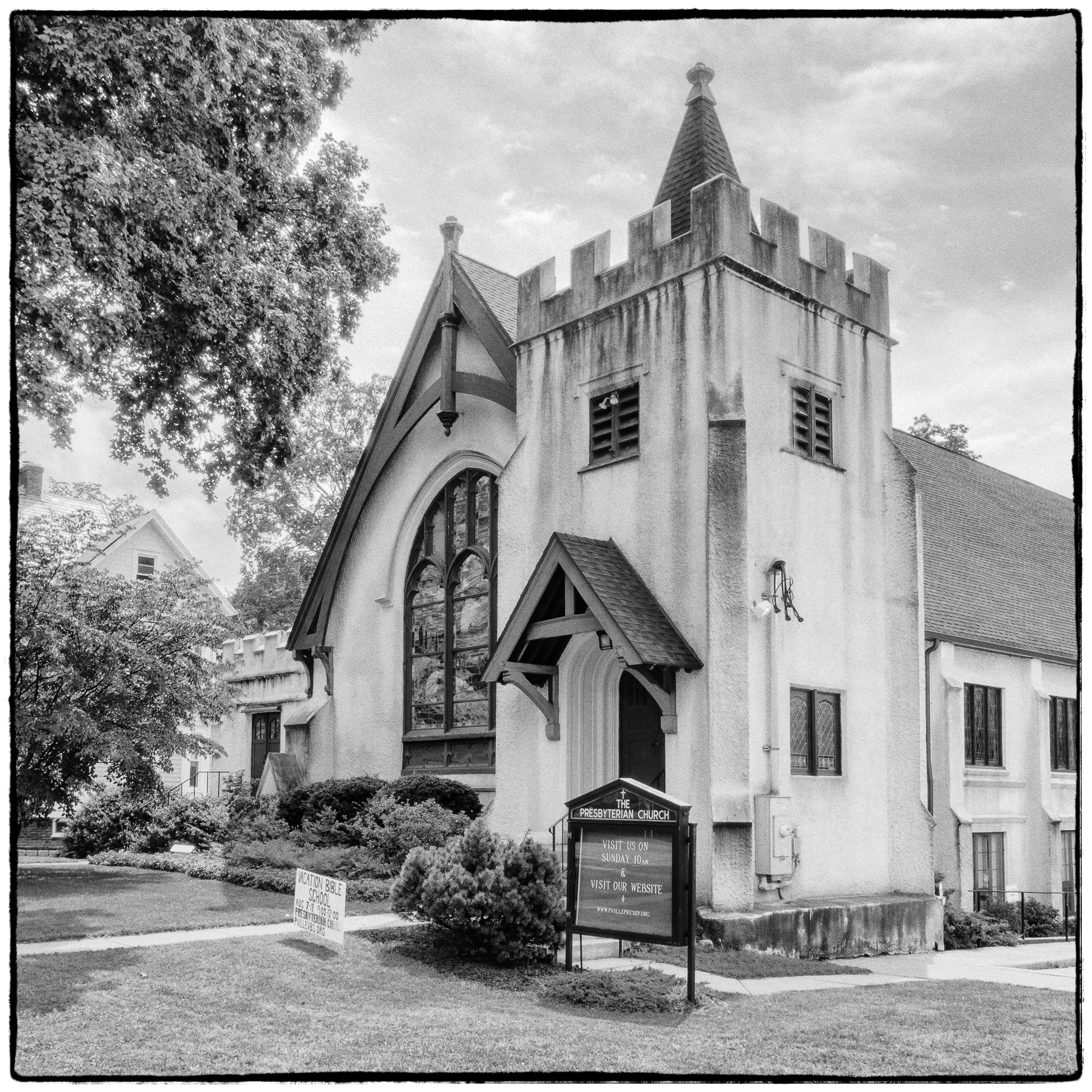
A Walk Around Pleasantville – Presbyterian Church

An interesting looking building. A single paragraph (on the ‘Who Are We?’ page of the church’s website) describes it’s history as follows:

Pleasantville Presbyterian Church was organized by thirteen men and women on January 18, 1880. Services were held for a time in Sunset Hall, over John Thorn’s livery stable on Wheeler Avenue. The Cornerstone of our church was laid on November 2, 1880 on property that was part of a farm owned by D.D. Earle. The building was first used for public worship on July 17, 1881. The Church has been rebuilt and enlarged three times. In 1923, the orientation of the sanctuary went from the eastern side of the building to the present day southern side. We especially hope that you love our stained glass window as much as we do. Be sure to notice how beautiful it looks from the inside!

Taken with a Sony RX100 M3.

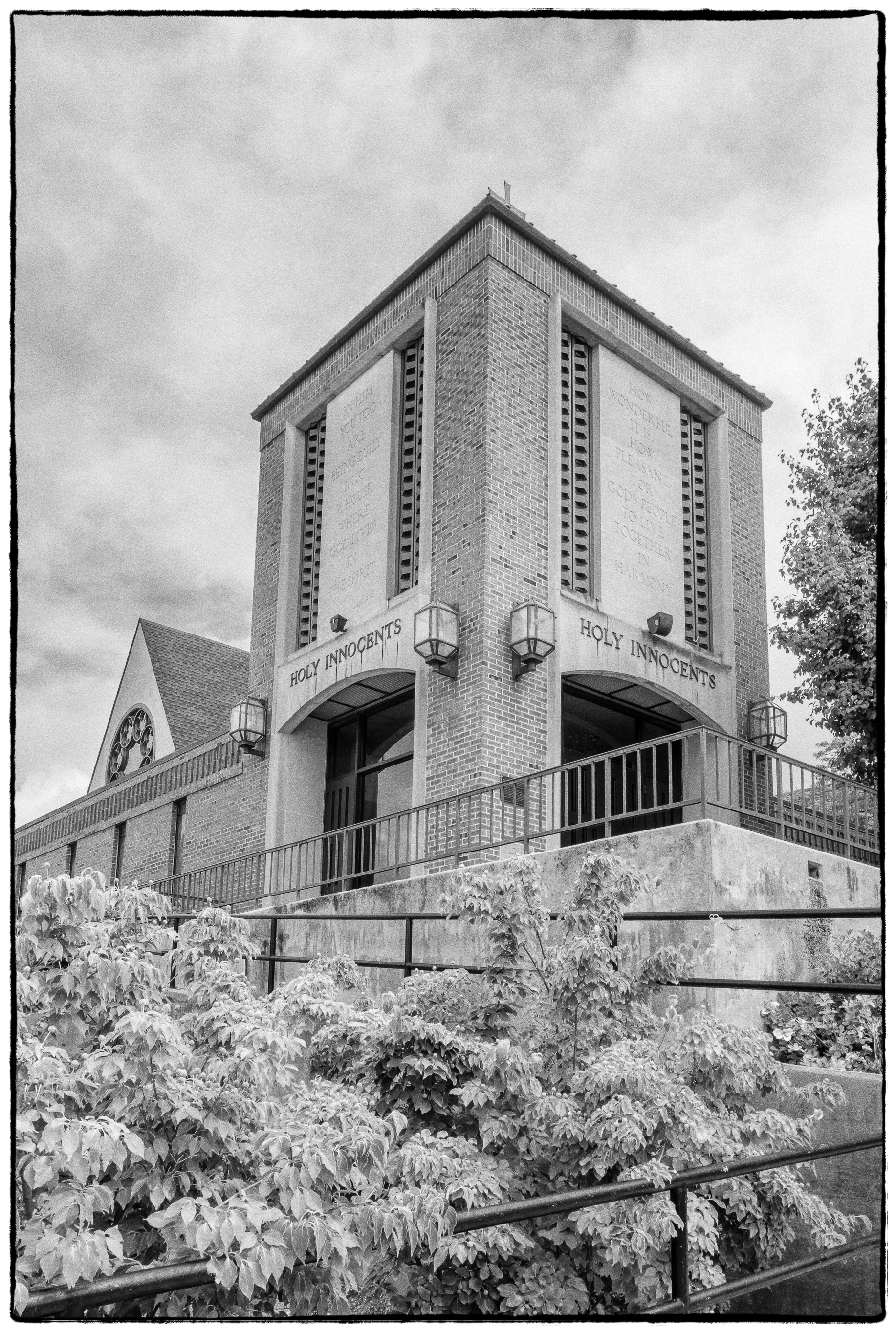
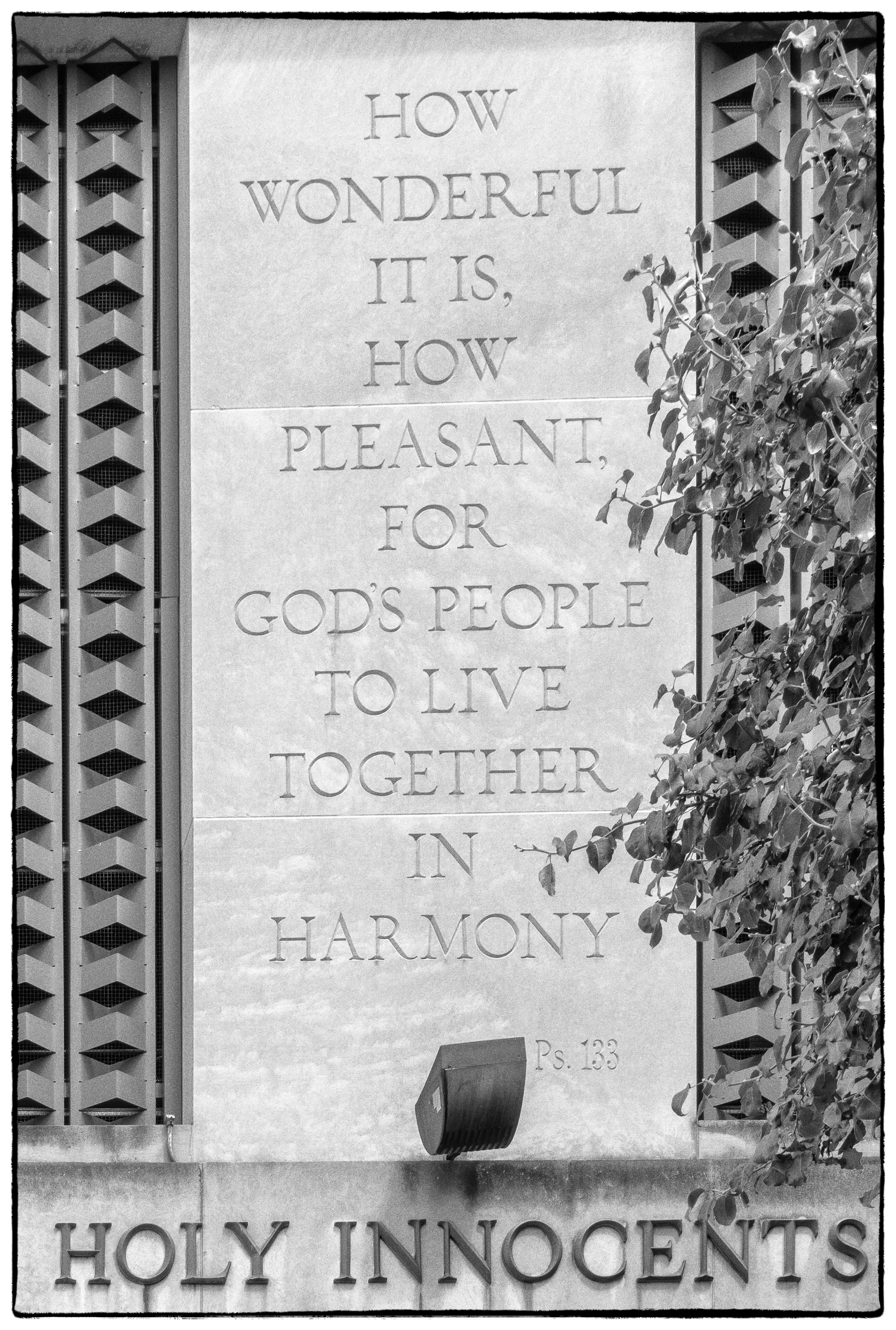
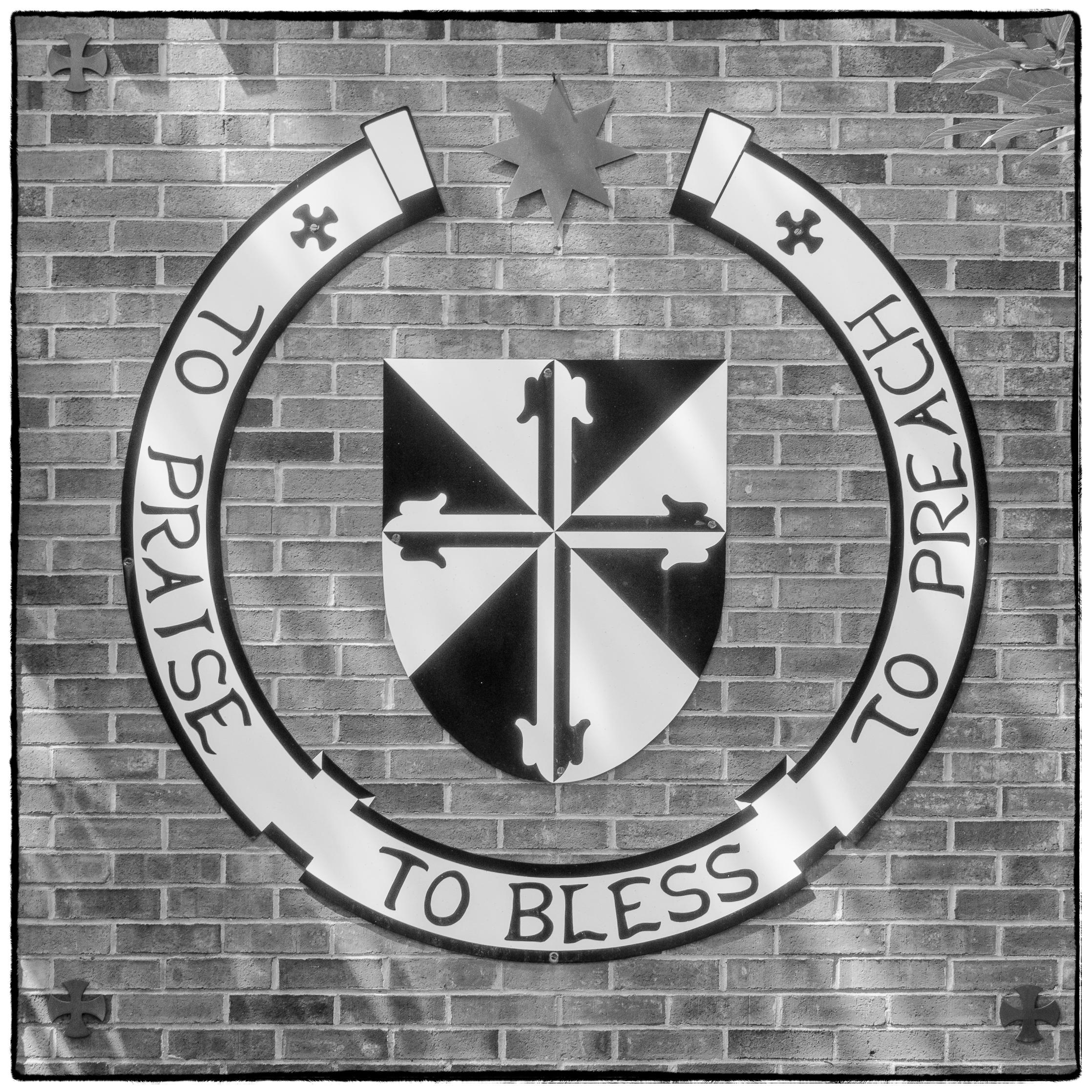
A Walk Around Pleasantville – Holy Innocents Catholic Church

According to a History section on the church’s website:

In 1875, with the Catholic population growing in Pleasantville, Samuel Shapter, a New York distiller, donated the property at the corner of Bedford Road and Tompkins Avenue to be used for a church. His only stipulation: it had to be named “Church of the Holy Innocents.” One year later the new church was dedicated as a mission out of Mount Kisco. It took until 1894, when it was clear of debt, for Holy Innocents to gain parish status.

From 1897 to 1915, priests from the Dominican Province of Lyons served Holy Innocents Parish. It was during this time that the first steps to provide Catholic school education were made. Father Regis Gerest started holding classes around the dining room table in the rectory. As the number of students grew, two Dominican sisters came to teach and the school moved to Harold Wright’s home at Bedford Road and Ashland Avenue. In 1900 the school, known as St Thomas School, moved to a house donated by George Mackey. It was located on Tompkins Avenue at the rear of the rectory. With the addition of a few room, it served as both convent and school for almost ten years.

As the new mission church was being born, All Souls Cemetery on Marble Avenue was evolving as a final resting place for area Catholics. According to a cemetery deed, the Archdiocese of New York purchased the property from the Roselle family in 1882 and Holy Innocents immediately began to use the land as a burial site. However, further research discloses two date discrepancies. First, a gravestone has an 1877 inscription. Second, the sign at the entrance to the cemetery indicates it was established in 1861. Back then the land belonged to a local resident, Isaac Thorn. Despite extensive research by parishioners, the disparity between the dates remains an unresolved puzzle.

On February 12, 1912, most of the Church and the entire rectory were destroyed by fire. However, from out of the ashes, came a “season of rebirth.” A new Tudor style church and rectory was designed to accommodate a burgeoning parish. The bell from the original church was salvaged and placed in the new building to signal parishioners to worship.

An important change occurred in 1915 when the French Dominicans were replaced by Dominicans of the New York Province. One French Dominican remained, Fr. Mercier. He gave informal religious instruction and celebrated Mass for the growing Italian population which had begun settling in Pleasantville during the early 1900’s. During World War I, Fr. Mercier was detained in Italy. He prayed to Our Lady of Pompeii and promised to build a chapel in her name if he could be allowed to return to America. In 1928, Father Mercier stood before Our Lady of Pompeii as its doors opened for the first time.

Following World War II the parish expanded and once again St. Thomas School outgrew its quarters. In 1955 the school moved to a modern facility at the corner of Great Oak Lane and Bedford Road where it would function until decreased enrollment caused it to close in 1972. For the next fifteen years, it would provide a home for the CCD program and other parish functions until it was sold to the Girl Scouts of America in 1985.

Toward the end of the 1970’s, the Parish Council Planning Committee was asked to assess the need for repairs on all parish buildings. An architect’s report indicated that major work was necessary and that there were structural and electrical problems in the church edifice. After painstaking analysis, the decision was made in 1982 to build a new church, educational and meeting facility on the site of the existing church and the rectory was to be renovated.

In November, 1985, the official period of transition began. When the Girl Scouts purchased the school building they agreed to permit the parish to use the gymnasium for Mass pending the completion of the new church. As the old building was dismantled certain furnishings were preserved: the altar table, the stained glass windows, the stations of the cross and the bell which was part of the first church. Construction proceeded rapidly and on October 2, 1987 the religious education wing was opened and a few weeks later the first Masses were held in the new church.

All the prior planning and research was reflected in the end result. The new church was a brilliant combination of past and present. A soaring roof line and modern circular design created an open, contemporary atmosphere. The stained glass windows from the old church were carefully incorporated into the new frame. The large rose window had found its new home amidst the rafters. The revered altar and tabernacle from the old building were polished as good as new to serve as the altar of reservation at the rear of the church. The stations of the cross were also restored and took their place in their new home. The bell purchased in 1898 was again calling all to come and share in the family of the church.

In 2003 Holy Innocents embarked on an ambitious program to renovate and improve our facilities once again. The number of students in our Religious Education program had increased by 75% since the construction of the original Religious Education wing. A two story addition was added providing new classrooms and meeting space. Our Lady of Pompeii was in need of repairs including restoration of the bell tower and updating of the social hall and church. To accommodate the overflow at many of our Masses, a retractable wall was installed separating the Social Hall and Holy Innocents Church and a new sound system was added. The rectory was also updated with new windows and carpeting.

Taken with a Sony RX100 M3.

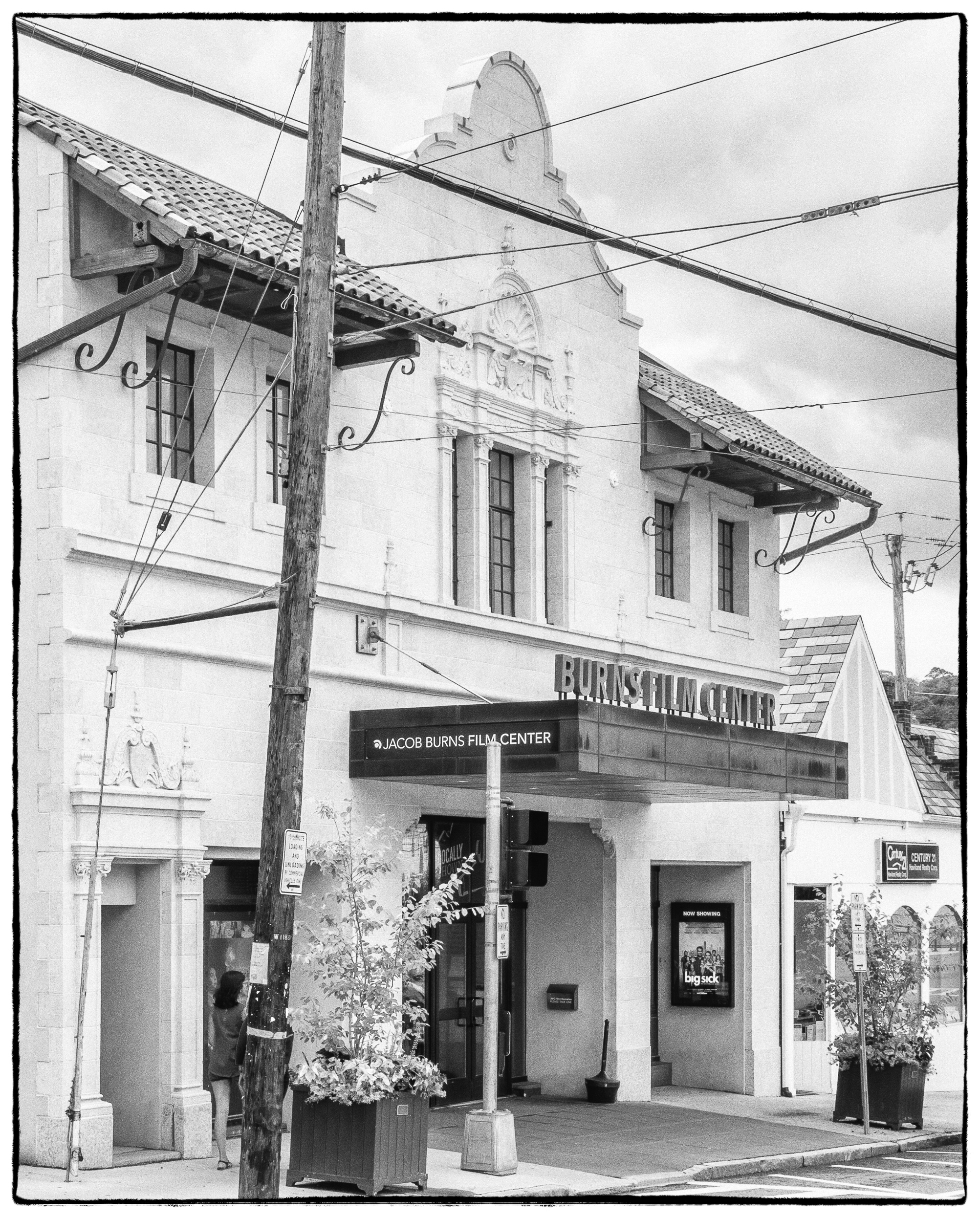
A Walk Around Pleasantville – Jacob Burns Film Center

Above – The original building.

According to a History section on the center’s website:

Back in 1998, Pleasantville resident Steve Apkon had a vision of a cultural arts and education center inspired by the power of film. Steve and Lisa Apkon purchased the village’s old Rome Theater and, along with Sabrina Coughlin, brought together a group of community members to help bring their dream to life. The 1925 Rome Theater, a beautiful Spanish mission–style historic landmark, was one of the first movie theaters in the area. “The Show Place of Westchester County,” according to the New York Times, it was a working cinema until 1987, when competition with nearby multiplexes forced it to close its doors. Steve, Lisa, and Sabrina formed a nonprofit organization (originally known as The Friends of the Rome Theater), purchased the lot adjacent to the Rome, and launched a $5 million capital campaign to build the JBFC. Brian Ackerman, an expert on art house cinema, joined the JBFC team in 1998 as an advisor in planning and developing the theaters. In 2001 he became its first and only Programming Director. Early on, the campaign received a $1.5 million grant from the Jacob Burns Foundation. The Jacob Burns Film Center received its name in honor of this leadership gift.

The JBFC Theater, with three screens, opened its doors to the public in June 2001. Since then, more than two million people have seen over 5,400 films from around the globe. From the beginning, our pioneering education programs were grounded in 21st-century literacy skills, essential for a generation growing up in a world in which fluency with media and technology is increasingly crucial.

The demand for these programs led to the $20 million Campaign for 21st Century Education to build the Media Arts Lab and further curriculum development. Launched in November 2006, the campaign was successfully completed in December 2008. The Media Arts Lab opened in Jan. 2009.

Another educational initiative, the Fellowship for International Understanding Through Film, was launched with a $1 million planning grant from the late Kathryn W. Davis, a well-known philanthropist, and JBFC supporter. The fellowship program uses film, visual media, and the Internet to create a global community through cross-cultural understanding. The grant was also used to purchase a home at 5 Grant St. in Pleasantville for filmmakers from the international community. The Residence for International Filmmakers, adjacent to the Media Arts Lab, is the third building on the JBFC campus.

In March 2015, in direct response to appeals from our community, the Jacob Burns Film Center began the next step in its evolution by opening two new theaters on the third floor of the Theater complex. The Adam R. Rose and Peter R. McQuillan Theater is the most intimate of our five venues. Along with an updated gallery space, this new construction reflects the success of Phase One of the Building on Success, Fulfilling a Promise to Our Community campaign. Phase Two is slated to be complete in 2016.

From a group of individuals with a dream, the Jacob Burns Film Center has developed into a 47,500 sq. foot, three-building campus located in the heart of Pleasantville, NY.

Below – The Media Arts Lab, which opened in 2009.

Taken with a Sony RX-100 M3.

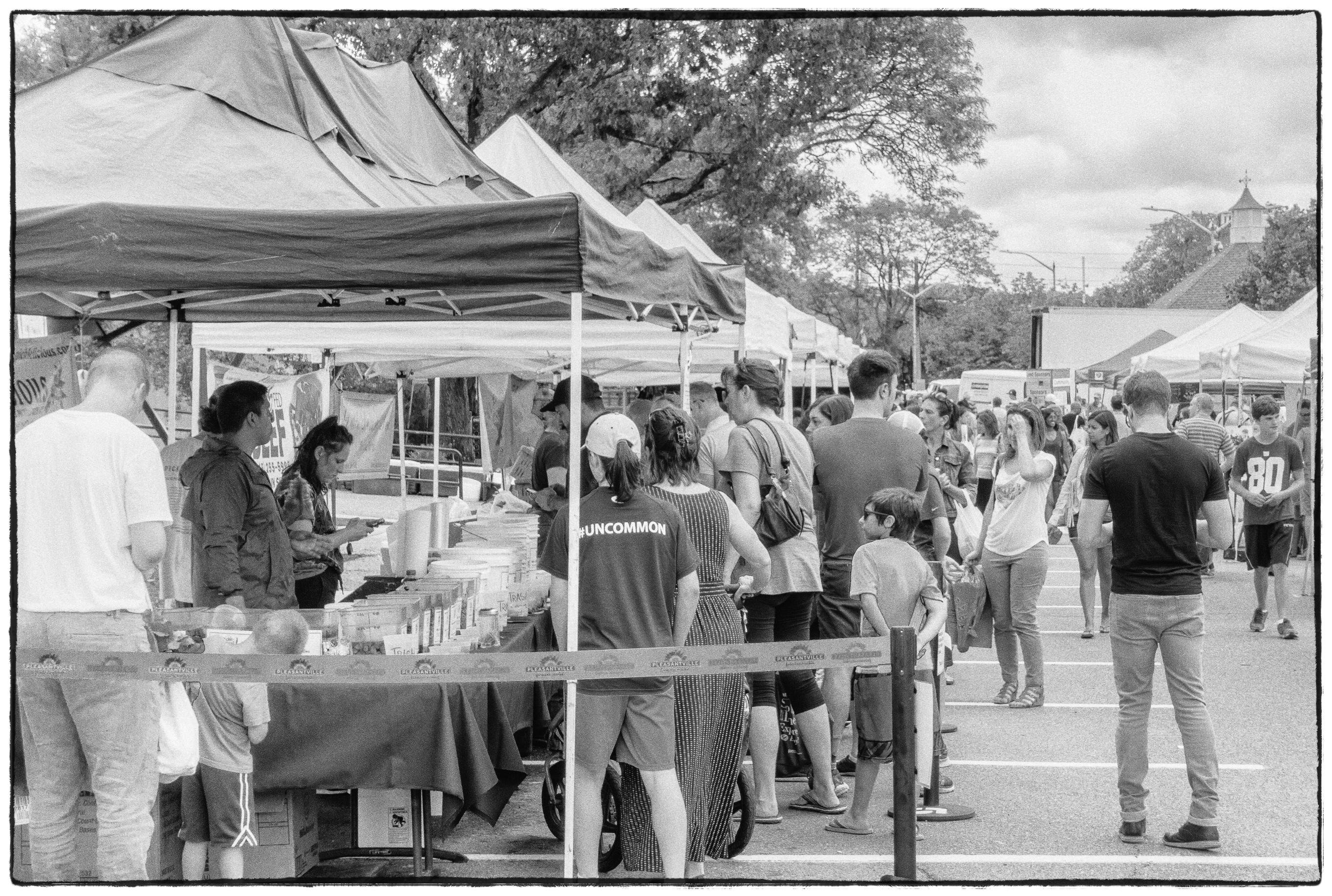
A Walk Around Pleasantville – Farmers Market

Pleasantville is the home of the PleasantVille Farmer’s Market. According to the About Us>Our Story section of the Farmer’s Market website:

IT STARTED WITH A MISSION

In 1998, the Village of Pleasantville commissioned a small, 4-stand farmers market in a tiny lot right in the middle of town, with a few simple goals:

Encourage a healthy community by promoting a sustainable food system with wholesome, locally grown and produced food
Foster a culture of community and pride in our village
Support Pleasantville’s economic development by bringing more visitors and activity to the retail shopping districts, and encouraging visitors to explore the Village’s historical and cultural offerings
Over the years, our downtown grew stronger, and our market grew with it, moving to a long, narrow patch of land next to the Metro-North train station, where people could drive up, grab their favorite goods from the dozen-or-so stands and be on their way.

But we saw even more potential.

Inspired by community events like Pleasantville Day, and taking cues from some of the most successful markets in the country, we moved our Market into the Memorial Plaza lot, creating a walking plaza, closed to cars, doubling the number of stands, adding weekly live music, weekly kids’ events, more chef demos, and a large, shaded seating area.

Today, our Market is run by a small but enthusiastic group of volunteers who love our Village, believe in supporting local farmers and local business, enjoy enhancing people’s understanding of health and sustainability, and take pride in creating a sense of community that you’d be hard-pressed to find anywhere else.

The Pleasantville Farmers Market attracts thousands of people each Saturday, making it one of the biggest, most vibrant markets in Westchester County. About half of our patrons come from outside our village, so it’s where Pleasantville—and much of the county—starts its weekend. Mission accomplished.

The Pleasantville Farmer’s Market has been voted, for the fourth year in a row (2014, 2015, 2016, 2017) BEST OF WESTCHESTER by the readers of Westchester Magazine.

Impressive thought it may be, the market did not allow dogs so I was unable to take a look around. Too bad!

Taken with a Sony RX100 M3