Geneva – Parc des Bastions, Reformation Wall, Eight Bas Reliefs

The remainder of the wall is taken up with numerous inscriptions and bas-reliefs, including the eight below (mostly translated from the original French).

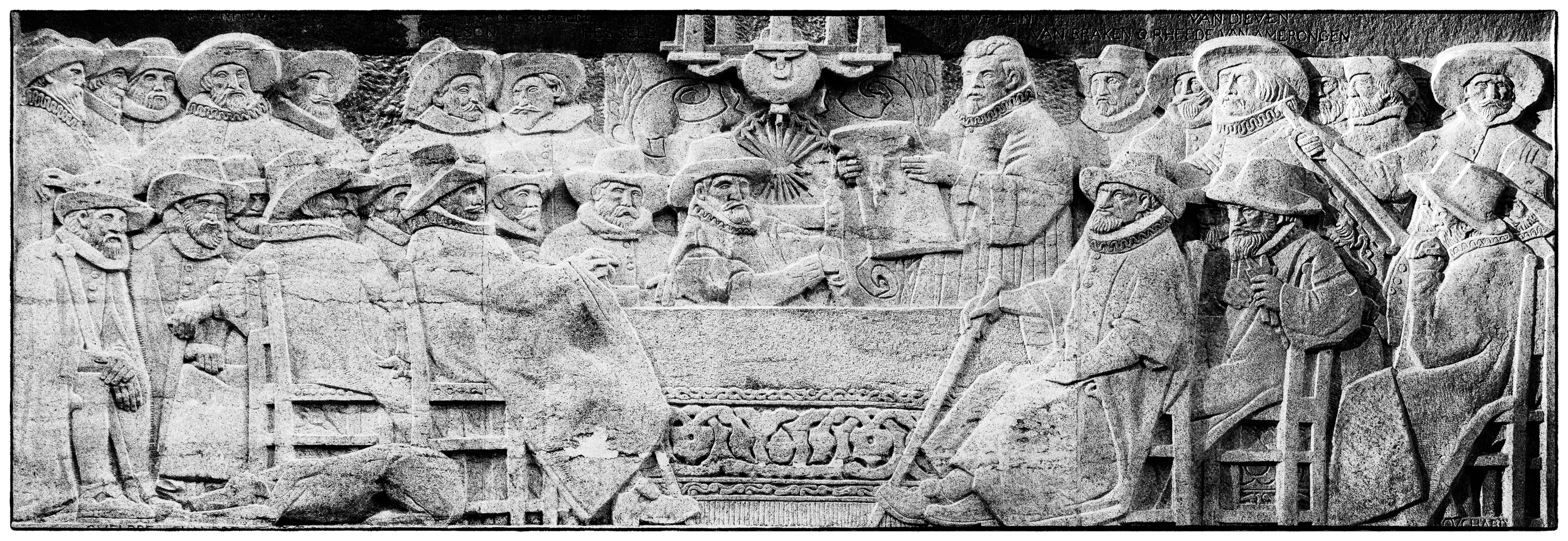
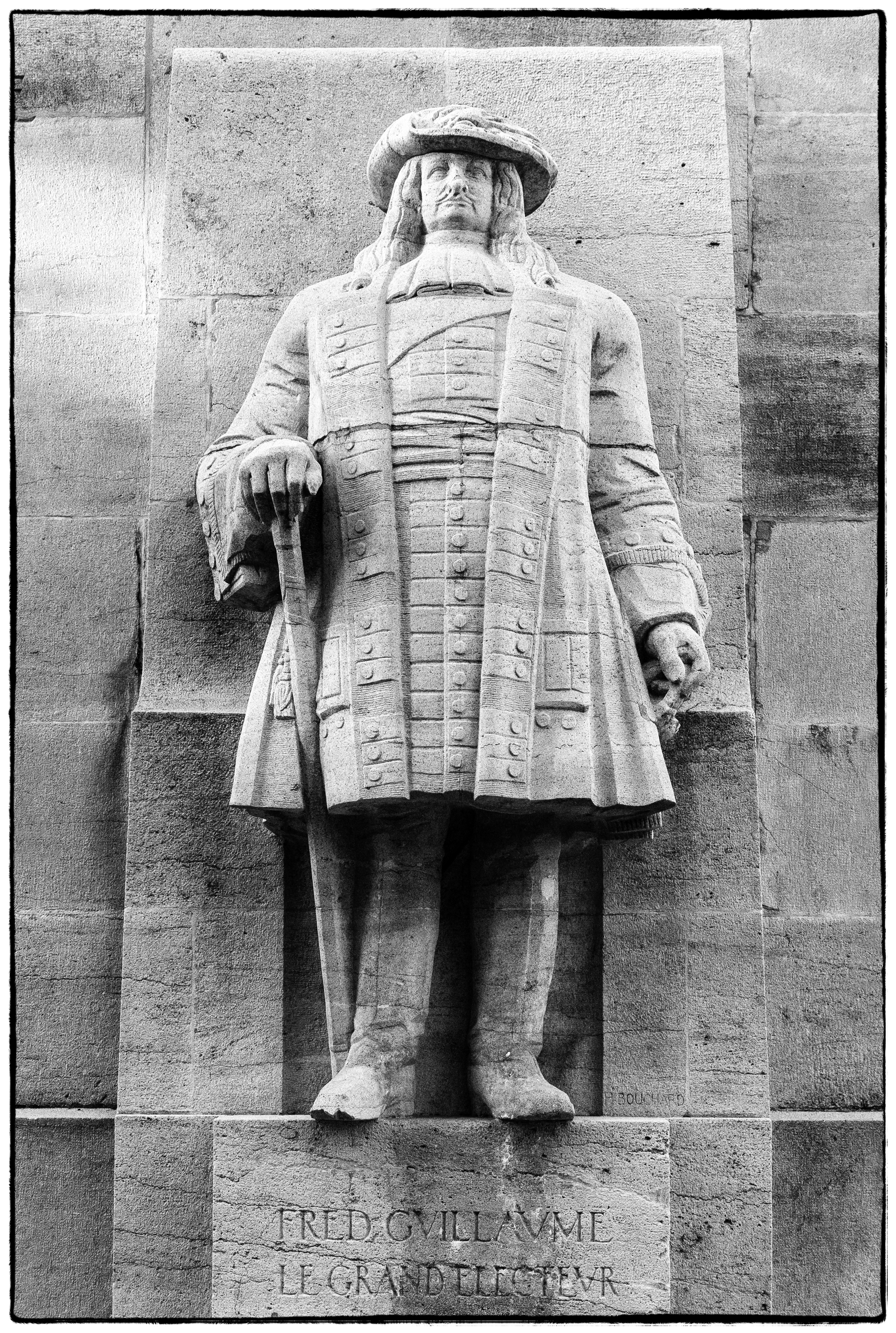
Above: Frederick William Elector of Brandenburg and Duke of Prussia creator of the Brandenburg Tolerance Edict giving equal rights to Lutherans and Calvinists and the Potsdam Edict giving safety of passage to Brandenburg-Prussia to Huguenots after the Revocation of the Edict of Nantes (1620-1688).

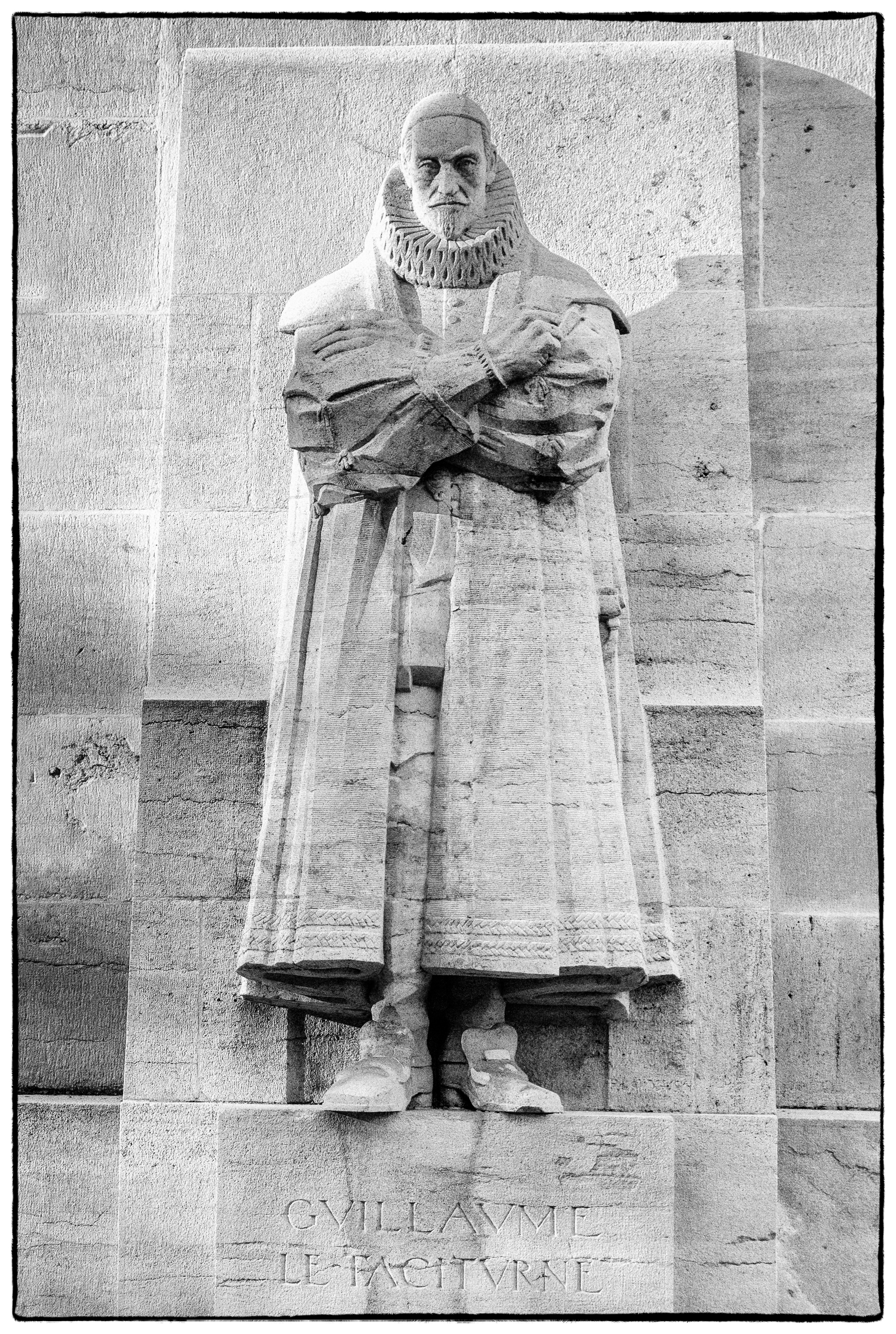
William 1 of Orange, or the silent became the main leader of the Dutch revolt against the Spanish that commenced the Eighty Years War (1568–1648). The formal declaration of independence of the northern Low Countries from the Spanish king was signed on 26 July 1581.

King Henry IV (of Navarre) signing the Edict of Nantes (1598), which ended the Wars of Religion in France.

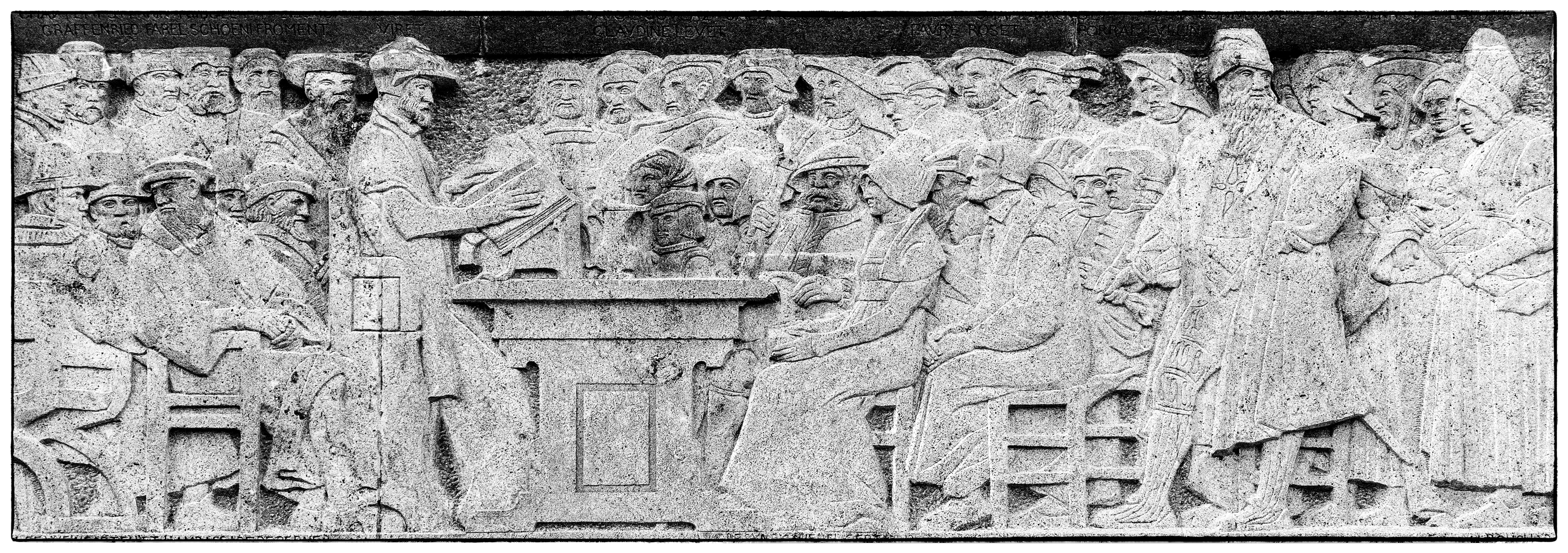
Preaching of the Reformation to the people of Geneva in the presence of envoys from Bern. Above is an inscription of the Lord’s Prayer in French.

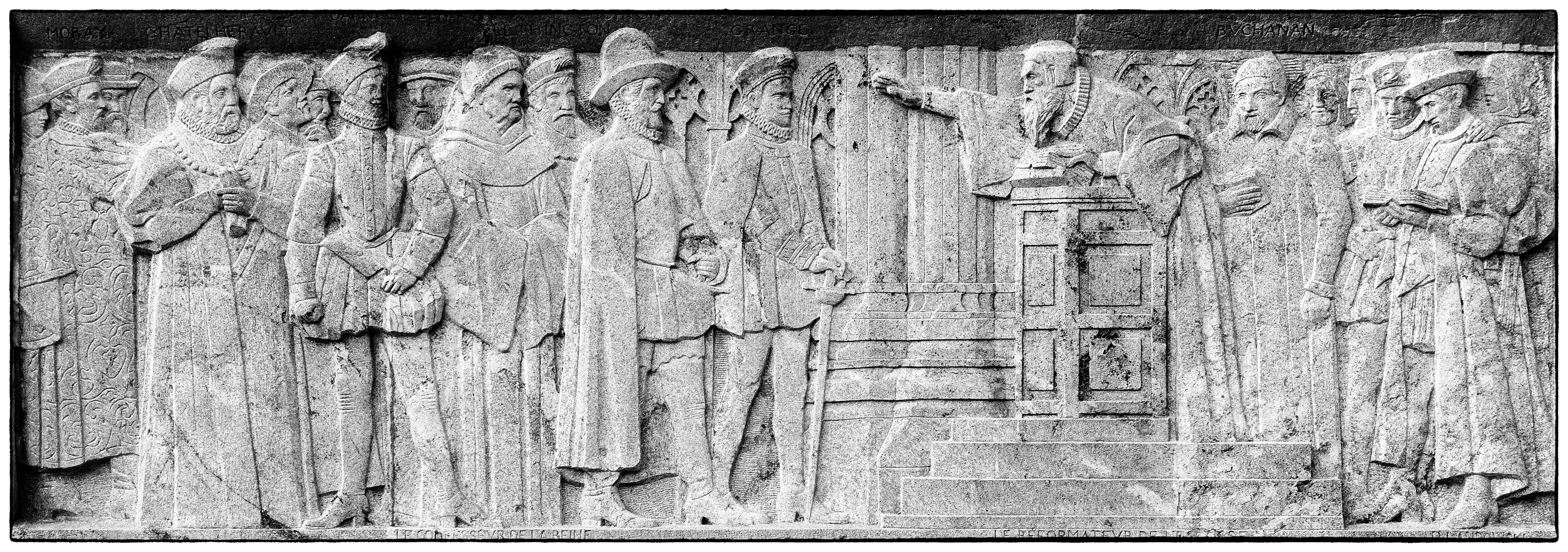
John Knox preaching against Queen Mary Stuart from his pulpit in St Giles Cathedral, Edinburgh. Above is an inscription of the Lord’s Prayer in English.

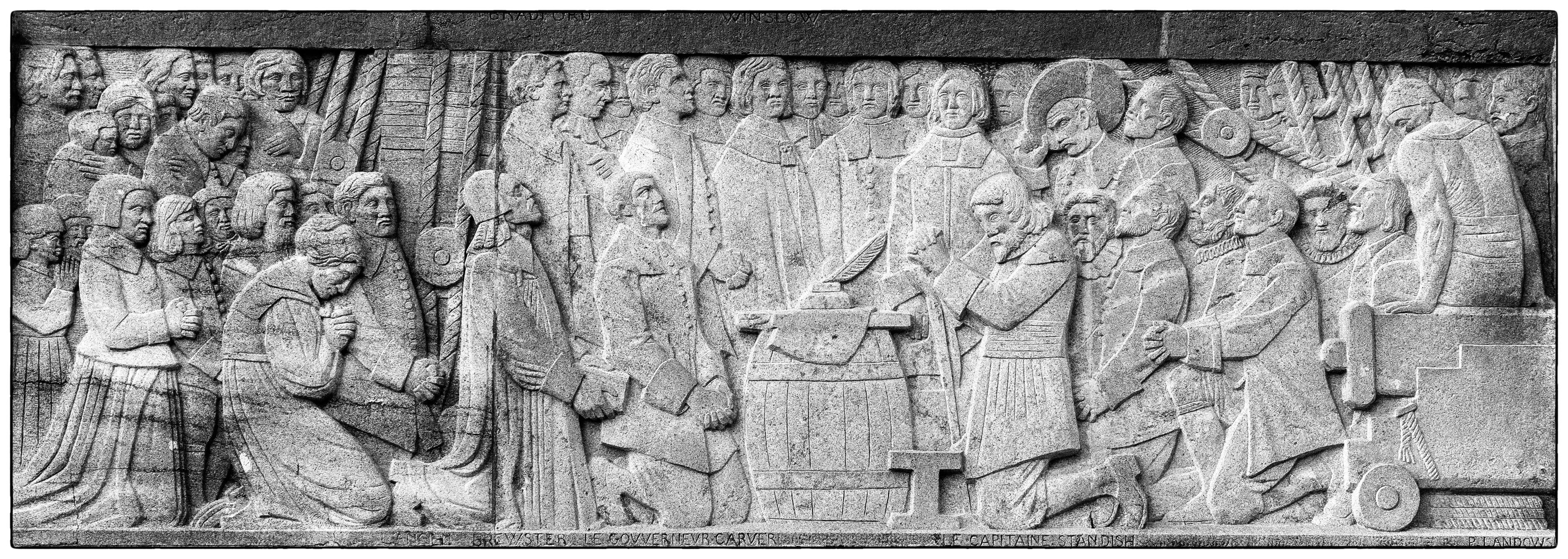
Roger Williams and the Pilgrim Fathers praying on the Mayflower as it sails to America. Above is an inscription of the Mayflower Compact (1620).

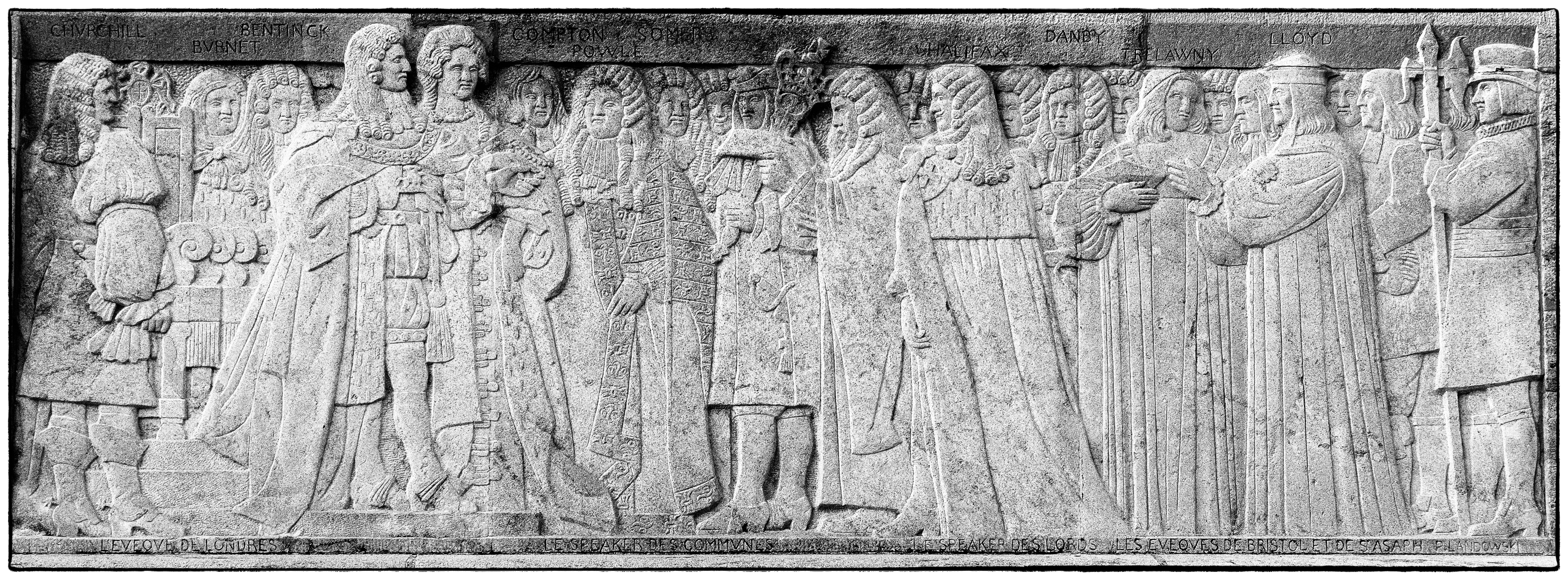
The British Parliament presenting the Bill of Rights, an act declaring the rights and liberties of the subjects, also the settling the succession of the crown, to William and Mary, Prince and Princess of Orange in 1689.

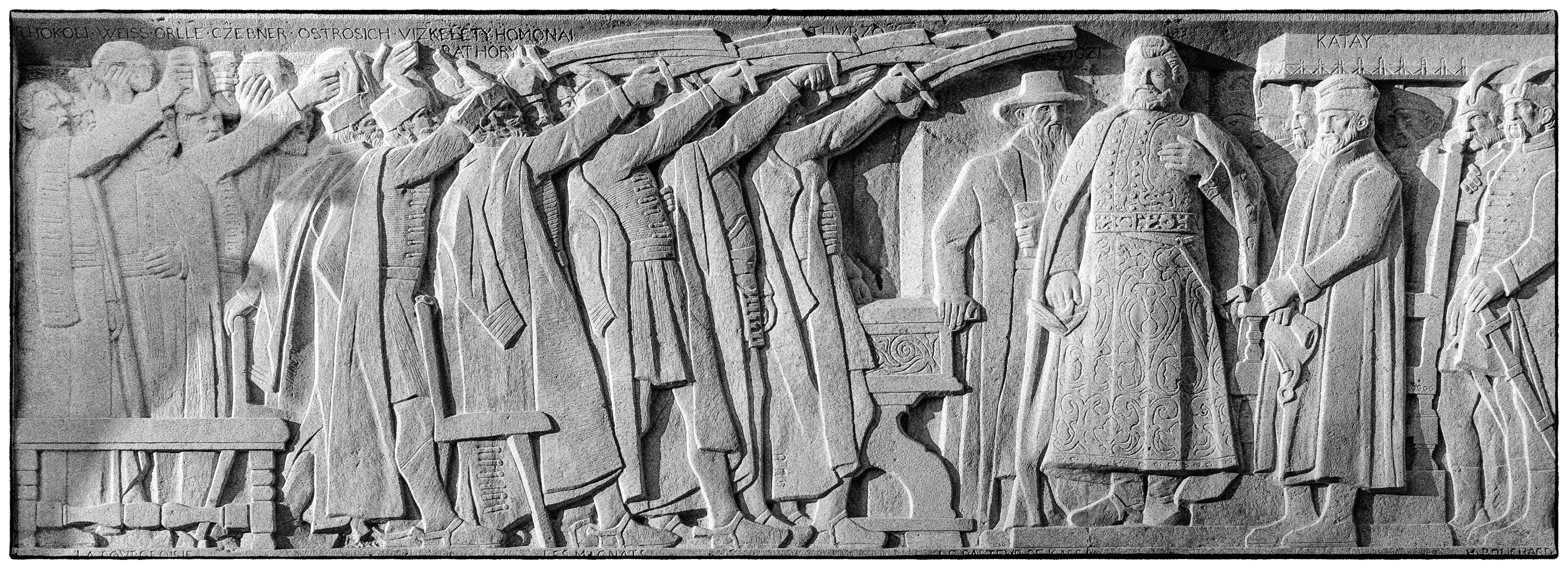
Bocskay saluted for achieving victory

Pictures taken with a Sony RX100 M3

Geneva – Parc des Bastions, Reformation Wall, Six Lesser Giants of the Reformation

These statues presumably represent six lesser luminaries of the Reformation – their statues are a mere 3 meters tall as opposed to the 5m of the main group. They’re arranged into two groups, one to the left of the main group and one to the right. Each group consists of three statues.

Left Group

Frederick William of Brandenburg (1620 – 1688)

William the Silent (1533 – 1584)

Gaspard de Coligny (1519–1572)

Right Group

Roger Williams (1603–1684)

Oliver Cromwell (1599–1658)

Stephen Bocskai (1557–1606)

Taken with a Sony RX100 M3

Geneva – Parc des Bastions, Reformation Wall, Four Giants of the Reformation

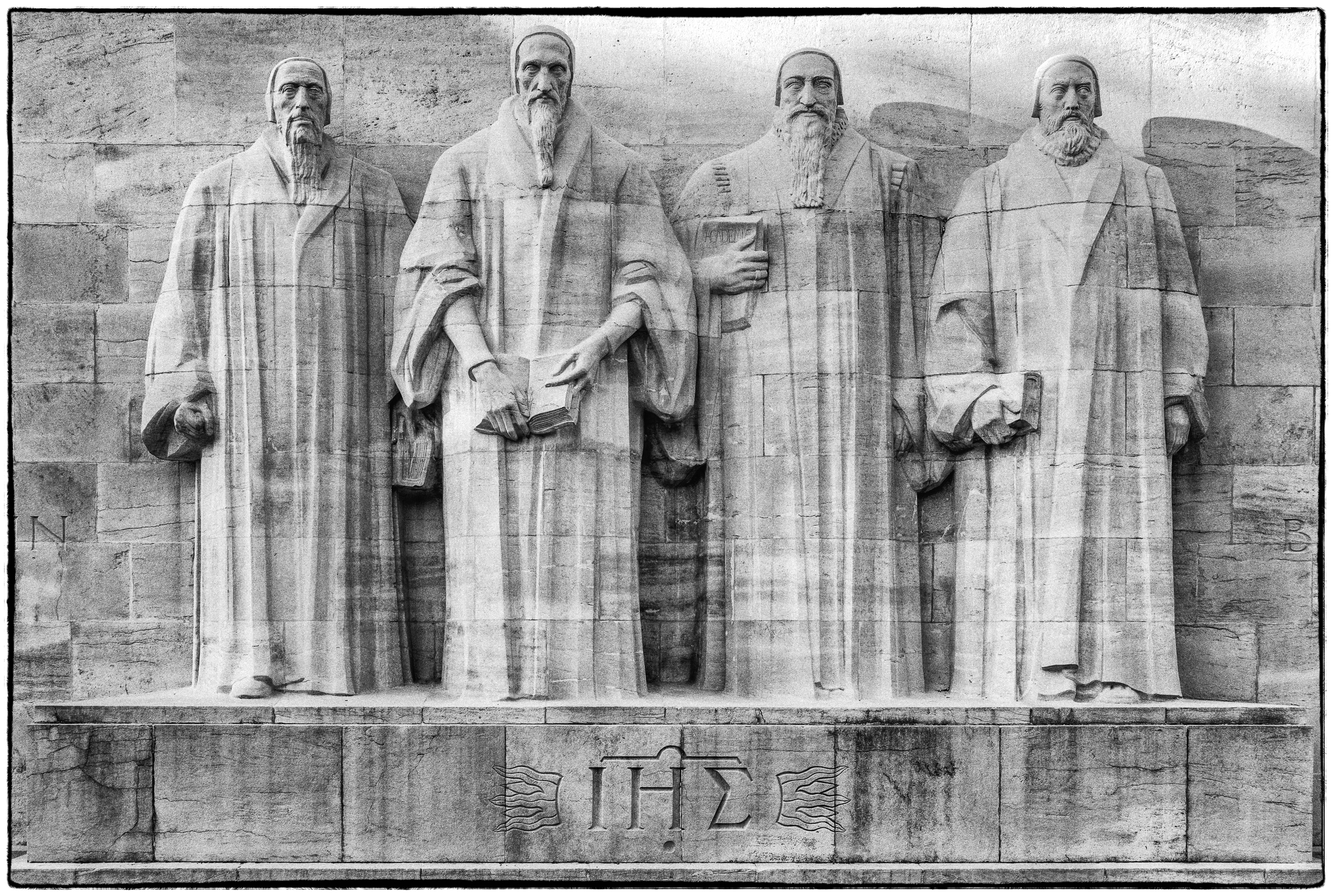
The main feature of the Parc des Bastions is, of course, the famous Reformation Wall (full name: International Monument to the Reformation). It’s sheer size makes it difficult to cover it in a single photograph. A few numbers: the wall is 100 meters long; the statues in the main group are 5 meters tall; and the statues in the secondary groupings are three meters tall.

According to Wikipedia:

The International Monument to the Reformation (French: Monument international de la Réformation, German: Internationales Reformationsdenkmal), usually known as the Reformation Wall, is a monument in Geneva, Switzerland. It honours many of the main individuals, events, and documents of the Protestant Reformation by depicting them in statues and bas-reliefs.

The Wall is in the grounds of the University of Geneva, which was founded by John Calvin, and was built to commemorate the 400th anniversary of Calvin’s birth and the 350th anniversary of the university’s establishment. It is built into the old city walls of Geneva, and the monument’s location there is designed to represent the fortifications’, and therefore the city of Geneva’s, integral importance to the Reformation.

Inaugurated in 1909, it was the culmination of a contest launched to transform that part of the park. The contest involved 71 proposals from around the world, but was won by four Swiss architects: Charles Dubois, Alphonse Laverrière, Eugène Monod, and Jean Taillens (whose other design came third). The sculptures were then created by two French sculptors: Paul Landowski and Henri Bouchard.

During the Reformation, Geneva was the centre of Calvinism, and its history and heritage since the sixteenth century has been closely linked to that of Protestantism. Due to the close connections to that theology, the individuals most prominently depicted on the Wall were Calvinists; nonetheless, key figures in other theologies are also included…

The photograph above depicts the main grouping: five “giants” (remember they are 5 meters tall) of the Reformation (and a grim looking bunch they are too). From left to right William Farel (1489–1565); John Calvin (1509–1564); Theodore Beza (1519–1605); and John Knox (c.1513–1572)

Apparently Martin Luther and Ulrich Zwingli have significantly less prominent (so much so that I missed them entirely) memorials at the sides of the wall as Calvin had disagreed with them on some points.

Taken with a Sony RX100 M3

Geneva – Parc des Bastions, Eagle Statue

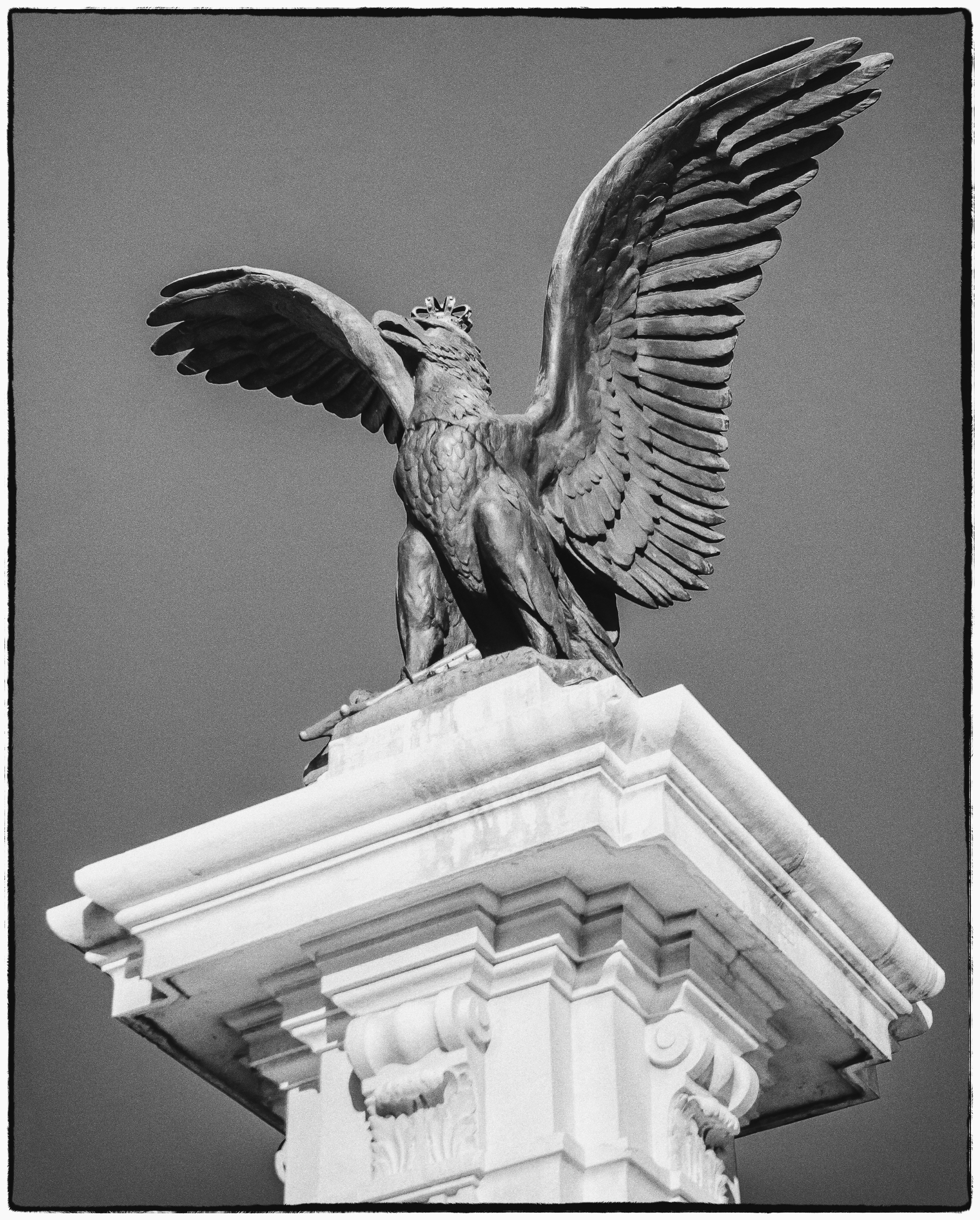
This eagle is one of two such statues standing on columns on either side of the Place Neuve entrance to the Parc des Bastions.

According to the Geneva.info site:

Bastions Parc is famous for the Reformation Wall proudly standing here, big chess boards at the entrance, great restaurant and big playground for a kids. Opposite the reformation wall stands one building of the University of Geneva and it’s public library.

The main entrance to Bastions Park is from Place Neuve. Just behind the big decorated gate are huge black-white boards for playing Chess, Go and Checkers, always full of people immersed in their game, old or young. Behind the game boards is popular Restaurant and several refreshement stalls that will sweeten Your day, and behind the restaurant is hidden big adventurous playground for children with their families, offering the opportunity to spent an afternoon playing.

Parc des Bastions has lot of green lawns, big trees and open air, all making up for a beautiful park. During sunny days many people lay down on the grass or have a picnic here, others read a newspaper or browse the internet sitting on one of many benches. Oftentimes in a summer musical festivals, cultural or other events take place here and it is no rarity to see people walking a slackline sprung between the threes.

Parc Bastions has beautiful peaceful restaurant, located in a construction of former botanical glass house.

While I haven’t been able to discover who was responsible for the creation of this statue, I do know what it symbolizes. If you look closely you can see that the eagle has a crown on its head, and is clutching a key in it’s right talons. According to the Flags of the World website:

Symbolism of the flag

The eagle symbolises loftiness, justice and protection. The key symbolises ecclesiastical rule, treasuries, and responsibility. The arms of Geneva are actually two shields impaled: half the eagle of the Holy Roman Empire, and one of the two keys of St. Peter (the “keys of heaven”).

History of the flag

Geneva is one of the oldest cities in Europe, having been a Celtic capital before its conquest by the Romans in 121 BC. With the advent of Christianity, Geneva became an important and powerful bishopric. St. Peter’s Cathedral still dominates the city. After the fall of Rome, Geneva came first under Frankish control, then Burgundian, and finally the Holy Roman Empire from which the city-state gained sovereignty in 1124. Savoy made repeated attempts to annex the city until 1603 when Bern lifted the last siege. Bern and Fribourg had been allies of Geneva since 1519, and Zurich formed a perpetual alliance in 1584, but the Swiss Catholic cantons blocked Geneva’s attempt to become a full-fledged member of the Confederation. France annexed Geneva in 1793, but it regained its independence in 1813 and became the 22nd member of the restored Swiss Confederation in 1815.

The flag of the old bishopric of Geneva consisted of two gold keys on a red field, the field colour symbolising sovereignty within the Holy Roman Empire (“Blutbanner”). The earliest known example dates from 1293. In the 15th century the imperial eagle was impaled with the keys (obscuring one key and half the eagle), thus demonstrating both the city’s imperial freedom and the bishop’s sovereignty.

The full coat of arms of Geneva consists of the shield surmounted by a crest in the form of half a sun inscribed with the initials “J H S” (Jesus Hominum Salvator), and below a scrolled motto “Post Tenebras Lux” (after the darkness, light). The sun was an symbol of Geneva from earliest times, and the motto was added during the Reformation. The full coat of arms appeared as the central device on Geneva’s flamed war flag of 1815.

With the admission of Geneva in 1815, the modern Swiss Confederation assumed its current geographical shape, and remained at 22 cantons (not counting half-cantons) for the next 164 years.

Taken with a Sony RX100 M3

Geneva – Troinex, Horse Statue

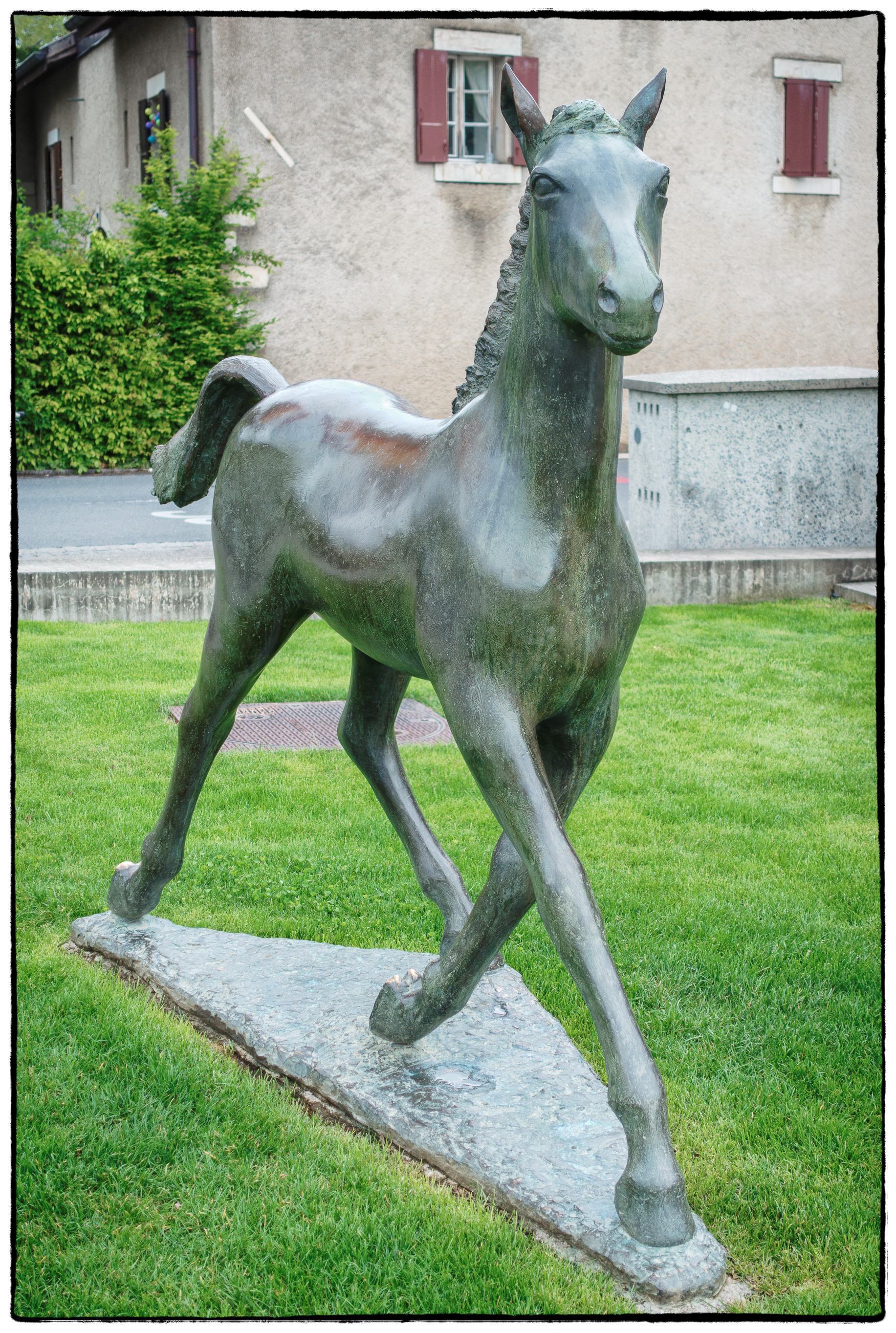
This picture should really be with the other pictures of Troinex that I posted in July. I didn’t post it then because at the time I didn’t have any other information (e.g. who created it; why it was there etc.). However, while trying to find information about the “Petites Amies” statue (See: Geneva – Champel, Parc Bertrand) I realized that one statue was by the same person: Ursula Malbine

Moreover, it seems that 40 of her works were exhibited in Troinex in 2013. During my walk I didn’t see any more (although its certainly possible that I missed them since I didn’t cover the entire village) so I suppose someone must have decided that this one should remain – more or less permanently – while the rest moved on.

Taken with a Sony RX100 M3