Geneva – Mont Salève, A restaurant on top of the world.

In an earlier post (See: Geneva – Mont Salève, Views from on top) you may have noticed that the signpost is labeled “Panorama de l’Observatoire” (Observatory Panorama). I found this odd because there isn’t actually an observatory – just a microwave tower. Oh, and this restaurant called the “Café de l’Observatoire“. Maybe the surrounding area is named after this café?

We had a very nice (and filling) lunch here, in somewhat unassuming but pleasant surroundings. There’s a great view from the terrace, but unfortunately all the tables were taken so we had to eat inside. As I recall I had diots, a sausage from the French region of Savoy (La Savoie) which comes in several varieties. Wikipedia describes them as:

Some diots are eaten cooked, (grilled, boiled or in the traditional manner, with white wine) while some are dried. They may be eaten both cold and hot. When eaten hot they are usually served with boiled potatoes or polenta. When eaten cold they are generally covered with spicy mustard (preferably from Dijon), or they are placed in sandwiches or salads.

I love a good sausage.

And yes, I know the sign in the picture looks blurred, but actually it isn’t. It’s just the way it’s built.

Taken with a Sony RX100 M3

Geneva – Mont Salève, An international traveller

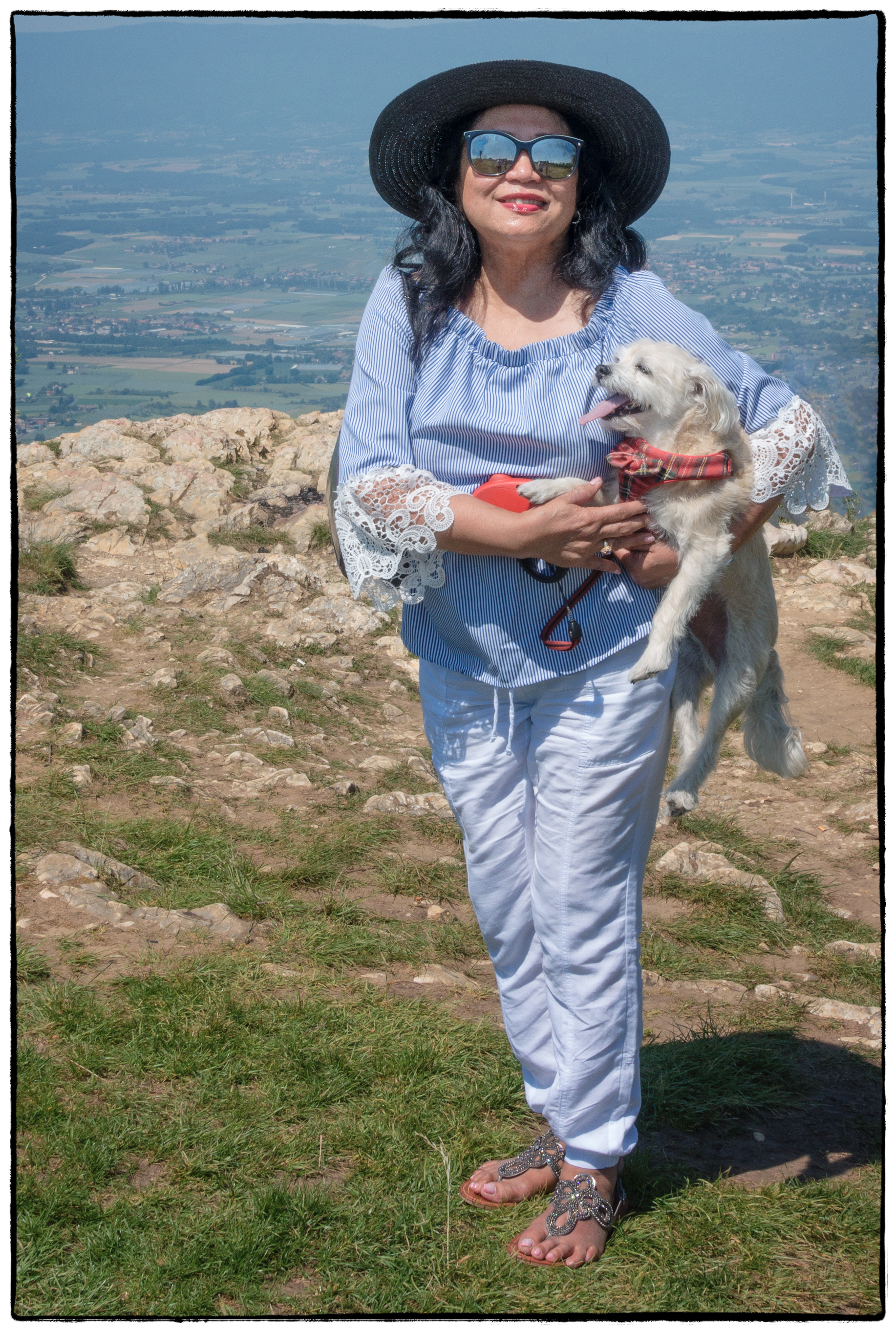
I’m not referring to my wife (who’s been an international traveller for a good number of years), but instead to our dog Harley seen here (with my wife) on top of Mont Salève. He’s now on his third country: the US (his birth place, or at least I assume it is. He was found as a stray and we adopted him. For all I know he might actually have been born in Uzbekistan); Switzerland; and now France.

Taken with a Sony RX100 M3.

Geneva – Mont Salève, Views from on top

As mentioned in the last post (See: Geneva – Mont Salève, A view from below) our first stop was by the Microwave tower where there are some terrific views of the surrounding countryside.

The above picture was taken looking along the Franco-Swiss border vaguely in the direction of Collonges-sous-Salève and St. Julien-en-Genevois.

A signpost indicating some of the hikes up, down and around the Salève. If I’d had more time I would have loved to have tried some of them.

Taken with a Sony RX100 M3.

Geneva – Mont Salève, A view from below

In earlier posts I’ve mentioned that Mont Salève is one of the most prominent sights in Geneva. You can see it from practically everywhere. Interestingly it’s actually in France, just across the border from Geneva, Switzerland.

We’d decided to go for a family day out (unfortunately I don’t remember where we intended to go), but on the way we were driving along near the Franco-Swiss border and decided to go up on top of the Salève instead.

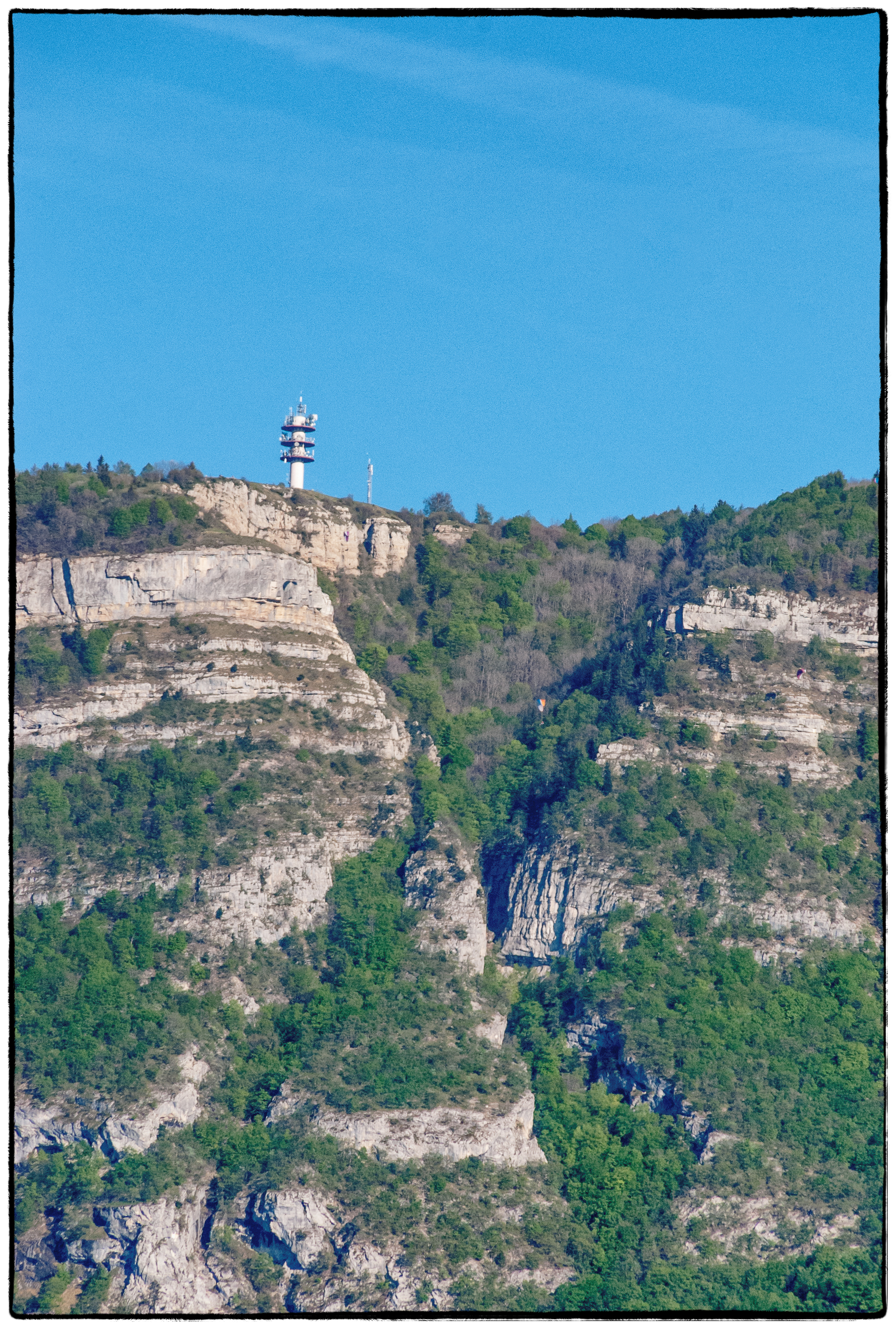
This shot was taken from down near where our daughter lives. The structure on top is, I believe, I microwave repeater tower. As it turned out it was also our first stop (see next few posts).

Picture taken a few days earlier with my Son-in-Law’s Nikon D80 and Sigma 18-200mm f3.5-f6.3 lens

Geneva – Kermesse

It’s now time for some more pictures from our May visit to our old stomping grounds in Geneva, Switzerland.

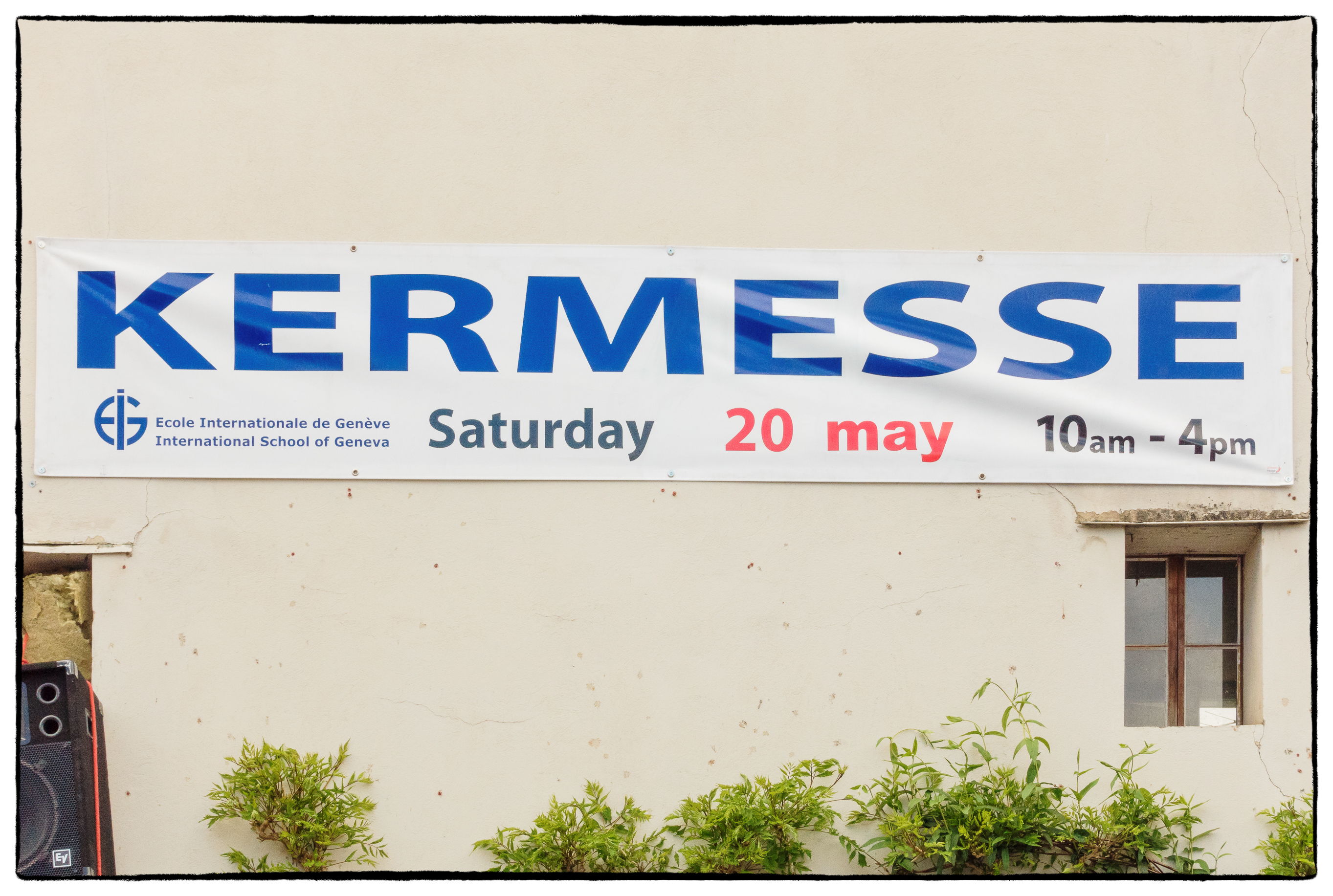
When we lived in Geneva our daughter went to the International School (Ecolint). Every year they hold a “Kermesse”. According to Wikipedia:

Kermesse, or kermis, or kirmess, is a Dutch language term derived from ‘kerk’ (church) and ‘mis’ (mass) that became borrowed in English and French, originally denoting the mass said on the anniversary of the foundation of a church (or the parish) and in honour of the patron. Such celebrations were regularly held in the Low Countries, in Central Europe and also in northern France, and were accompanied by feasting, dancing and sports of all kinds.

This pretty much describes the Ecolint event, but without (as far as I could tell) the religious connotations.

Since we were in Geneva for this year’s Kermesse, off we went.

View of one of the rides with the main school building in the background.

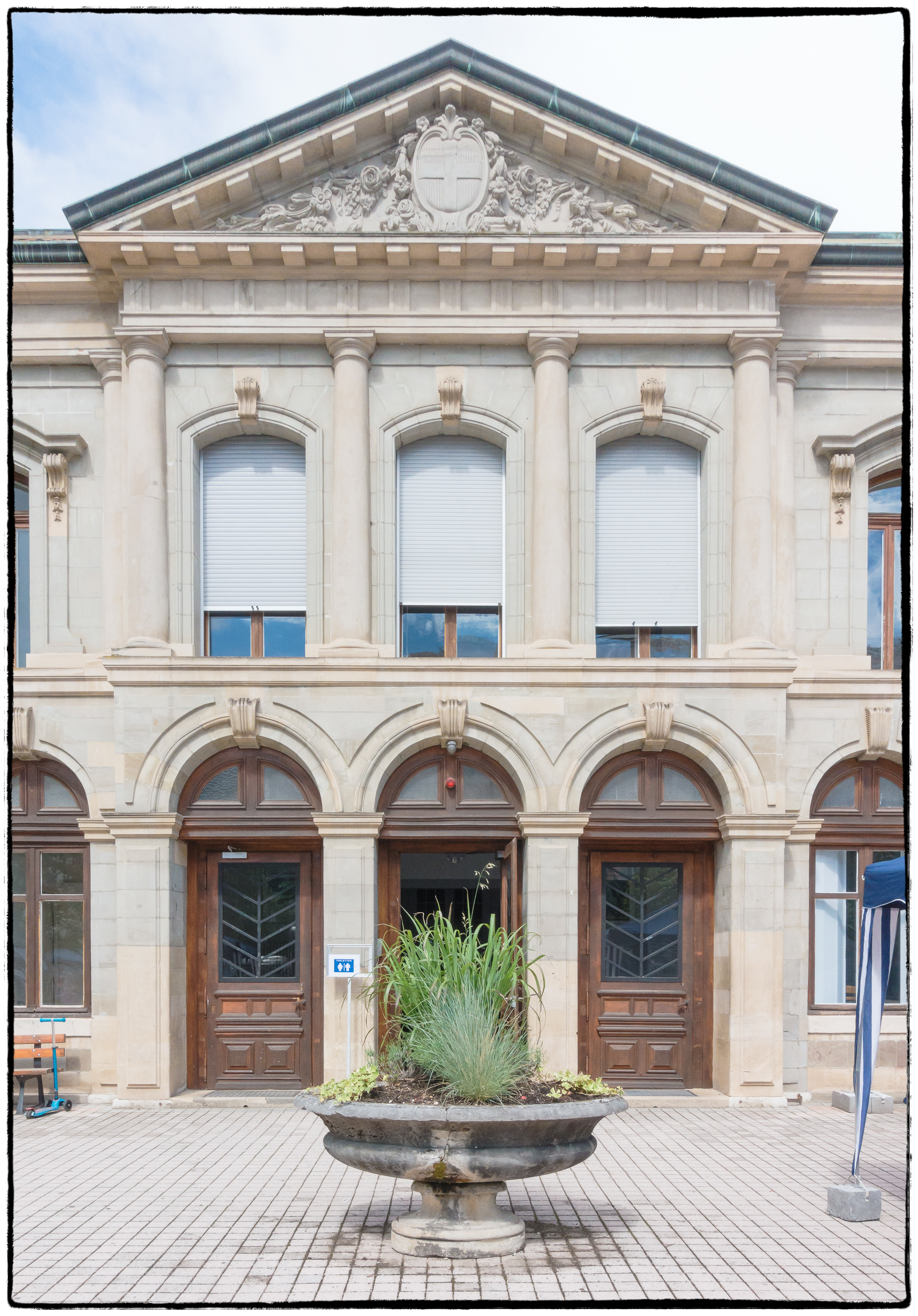
Closer view of the original school building.

Boy in a maze. One of the rides included this maze (for want of a better word). In the side there was a small observation window. I was fascinated by the shapes of the children flashing by the window so I took a few pictures of this boy and combined them.

Girl on a trampoline. She looks as if she’s having a great time.

Another feature of the Kermesse is the food. This is an international school and many countries showcase their native food by setting up food stands. The food is delicious. Not surprisingly this is the Canadian stand.

The UK stand features Pimm’s. The Daily Telegraph describes (and continues by telling the reader how to make one) Pimm’s as follows:

On hot sunny days, there’s no drink the British like to guzzle more than Pimm’s. Seductively tawny in colour, and festively festooned with fruit and sprigs of mint, it’s a drink inextricably connected with the great British summer, especially events like Ascot and Wimbledon. Even if you end up shelling out half your week’s salary for a round, you can’t help but feel a little happier as you take that first refreshing sip.

The birth of the drink was, literally, a fishy business: it was invented by Mr James Pimm, a 19th century London oyster bar owner who decided to offer his clients a “fruit cup” – a mix of spirits, wine, spices and fruit that developed from the popular punch. The drink, which he pushed as an aid to digestion (the Victorians had a commendable desire to believe that alcohol had health benefits), became so popular that Mr Pimm began selling it around the capital for three shillings a bottle, and eventually flogged the entire business in 1865. Various other “cups” such as Pimm’s No 2 (whisky) and Pimm’s No 3 (brandy) followed, though most of them later disappeared off the shelves.

I don’t generally like Pimm’s, but it was very hot that day and I must admit that it tasted good.

Taken with a Sony RX100 M3