Geneva – Troinex, Megaliths

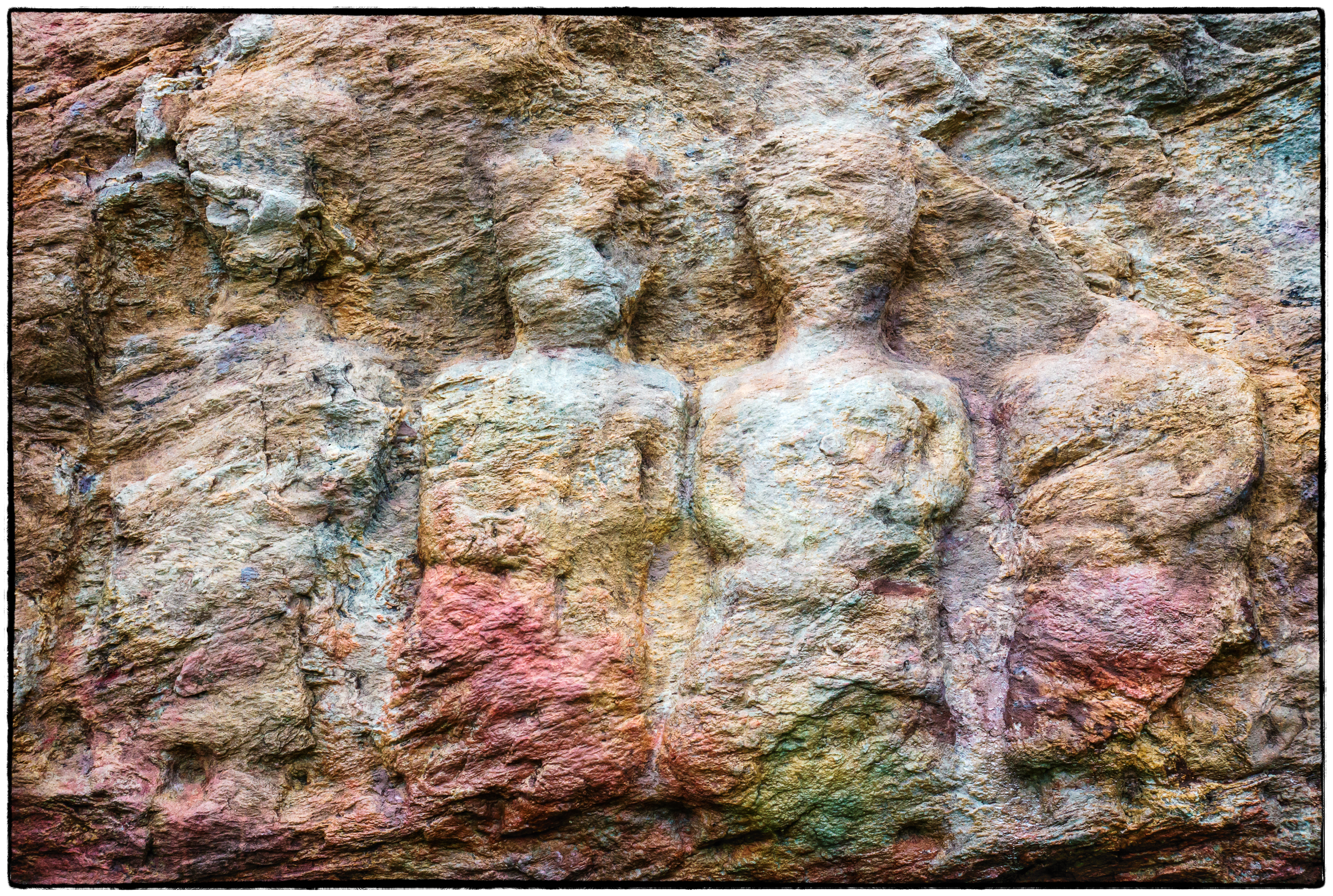
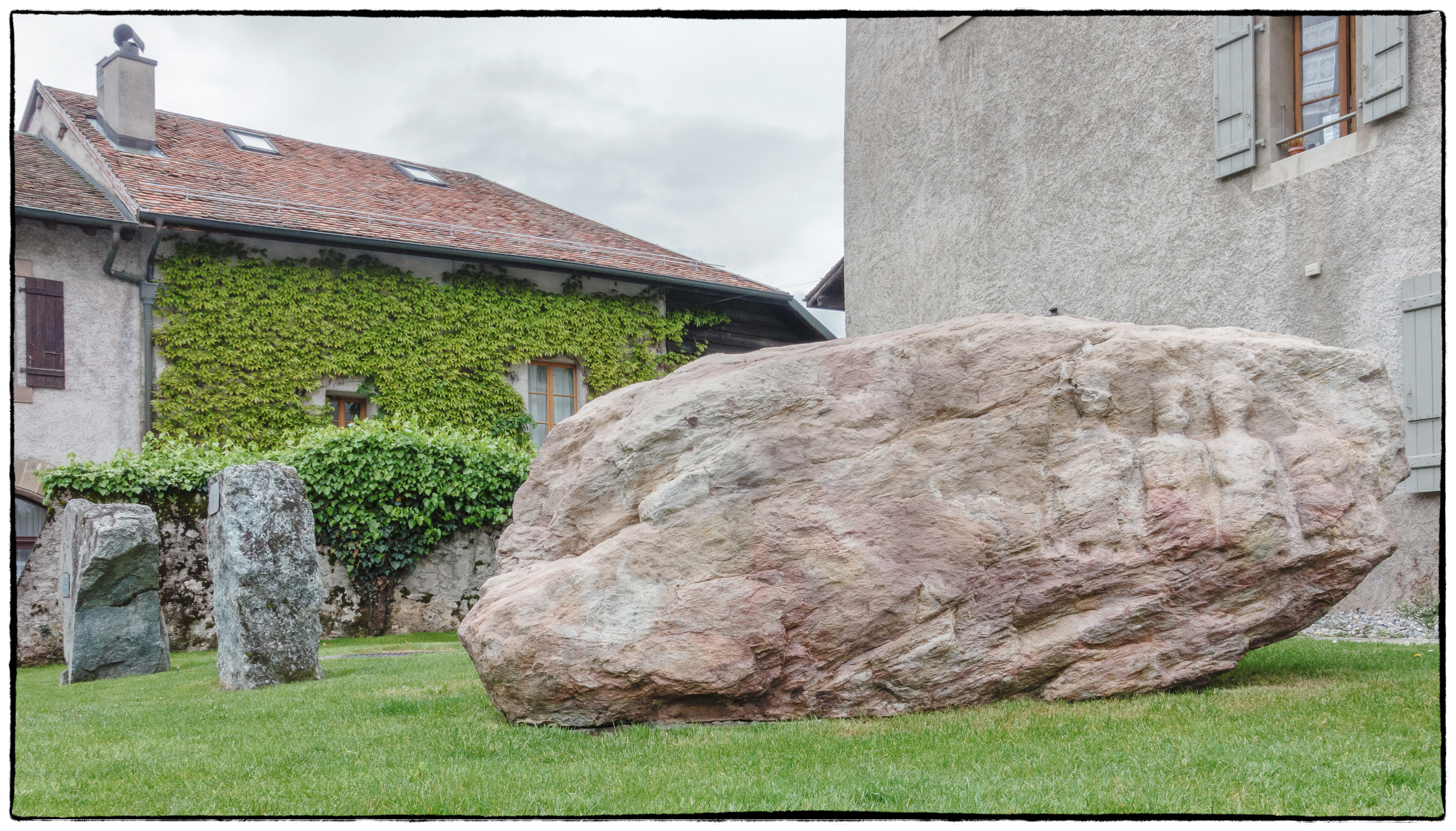
The Merriam-Webster dictionary defines “megalith” as: “a very large usually rough stone used in prehistoric cultures as a monument or building block”. While these stones are fairly large I’m not sure that I would call them “very” large (i.e.in the sense that the stones used at Stonehenge are “very” large). Somehow the word “minilith” comes to mind! At this site there are three largish standing stones (menhirs) and a large boulder carved with four female figures. The latter is a copy of the original (see below):

According to the town’s website (translated from the original French):

It is probable that the neolithic inhabitants of the region lodged in the Salève caves and pruned menhirs. One of these sacred stones was found at the beginning of the 19th century at the top of a mound at the place called Pierre-Grand. On one side are four sculptured female figures, probably dating from the Gallo-Roman period (120 BC to 400 AD), and which are at the origin of her name : The Pierre-aux-Dames. This megalith was classified as a historic monument in 1921 and has been preserved since 1942 at the Museum of Art and History of Geneva. In 1998, the municipality commissioned a large copy of it which can be admired today on the Town Hall Square.

The three small megaliths can be seen on the left.

A fascinating and unexpected find.

Geneva – Troinex, Mairie

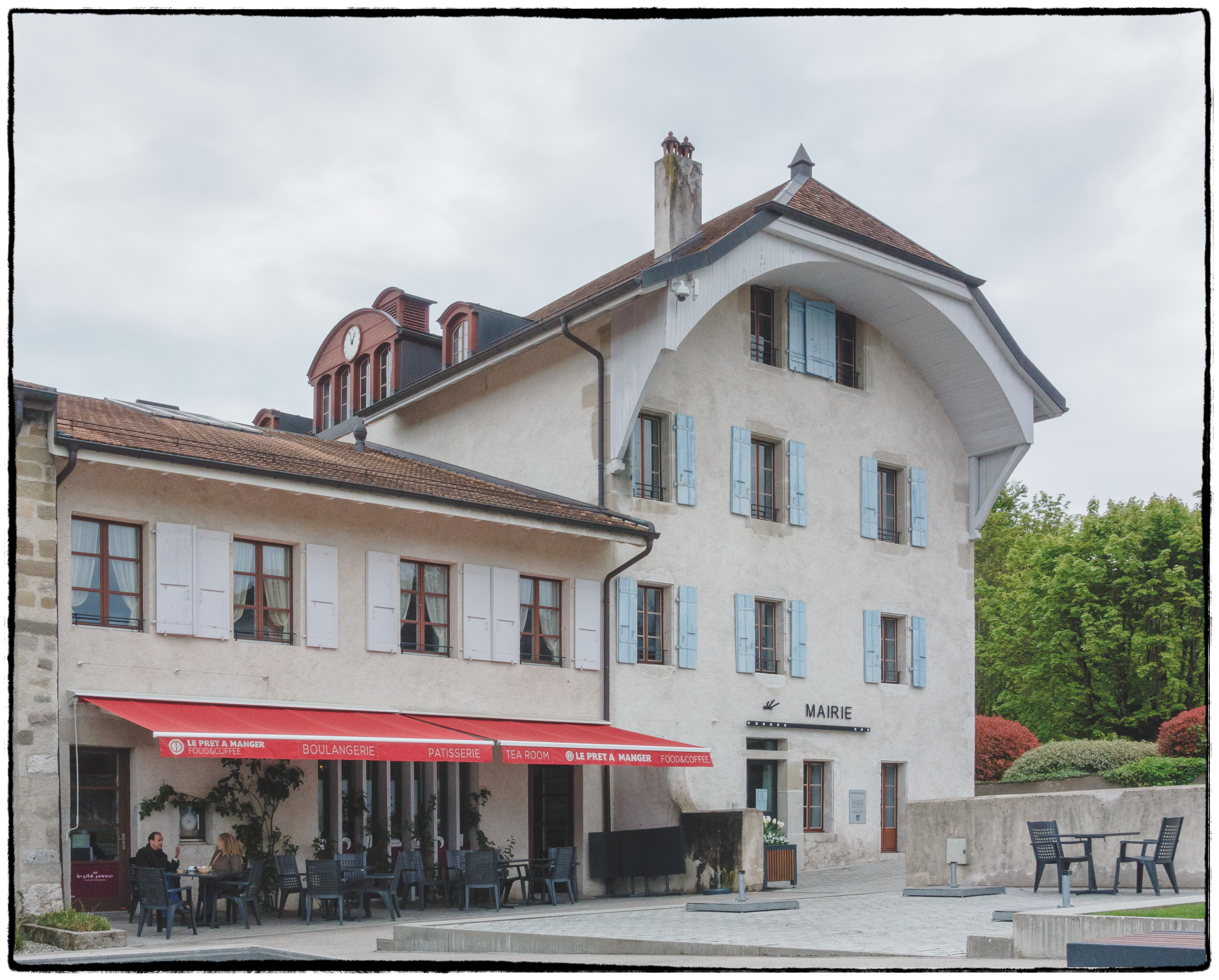
As the awning suggests the building on the left is a “bakery/pastry show/tea room/coffee shop”. The building on the right it the Troinex “Mairie” i.e. Town Hall. It was hot day and I’d been walking for a while so stopping for a cold drink would have been pleasant. In the US (or at least the part where I live) this would have been a problem as I had the dog with me. However, most restaurants/cafes in Geneva let you bring in dogs. Unfortunately I’d forgotten to bring my wallet and so didn’t have any money to buy the drink I badly wanted.

According to the town’s website Troinex has a rich history (translated from the original French):

The name Troinex appears for the first time in the form of Triuniscum, which could derive from the Gallo-Roman name Trionius
 

The Romans also built and lived in Troinex, as some vestiges suggest that there was a “rustica” villa at the “Troinex-Ville”, a large rural farm, surrounded by a few farms, farms and other outbuildings.
 
During the Middle Ages, Troinex depended on the priory of Saint-Victor, with Bossey and Evordes. The influence of Geneva was constant, and remained there against the winds and tides of the seventeenth and eighteenth centuries, during the reconquest of Catholicism under the influence of Francis de Sales.
 
In 1754, Troinex became Savoyard before returning to Geneva in 1815. The treaty of May 30, 1817, was an autonomous municipality which at that time had barely 300 inhabitants.

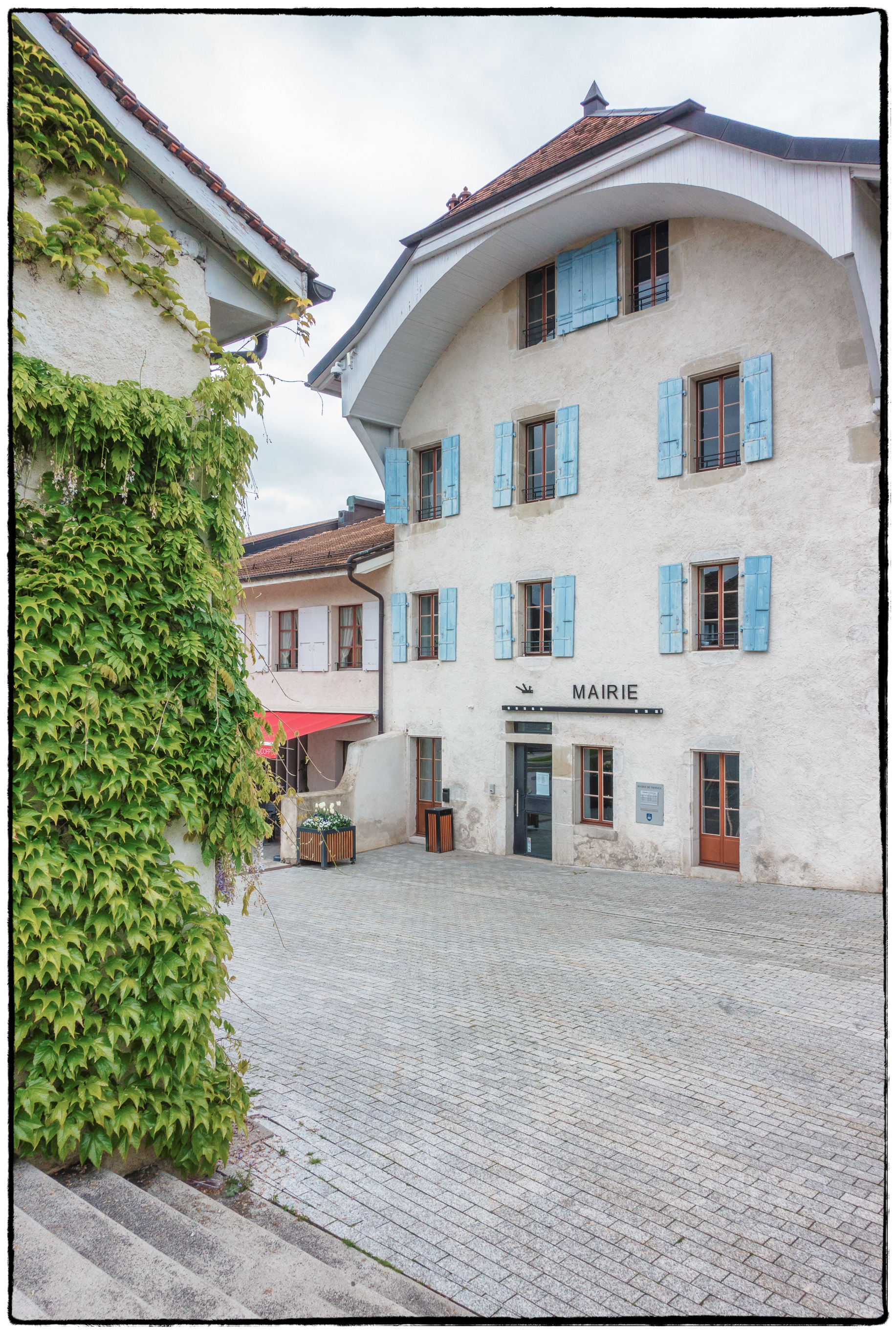
Another view of the Town Hall. I’d heard of such buildings in France being referred to as either “Hotel de Ville” or “Mairie”. I wasn’t sure if there was difference so I looked it up. Apparently “Hotel de Ville” is a much older usage, dating back to the Middle Ages. The term “Mairie” wasn’t used until the late 18th Century. Nowadays “Hotel de Ville” usually refers to such a building in a large town or city, while “Mairie” refers to a building with a similar function, but in a smaller town or village.

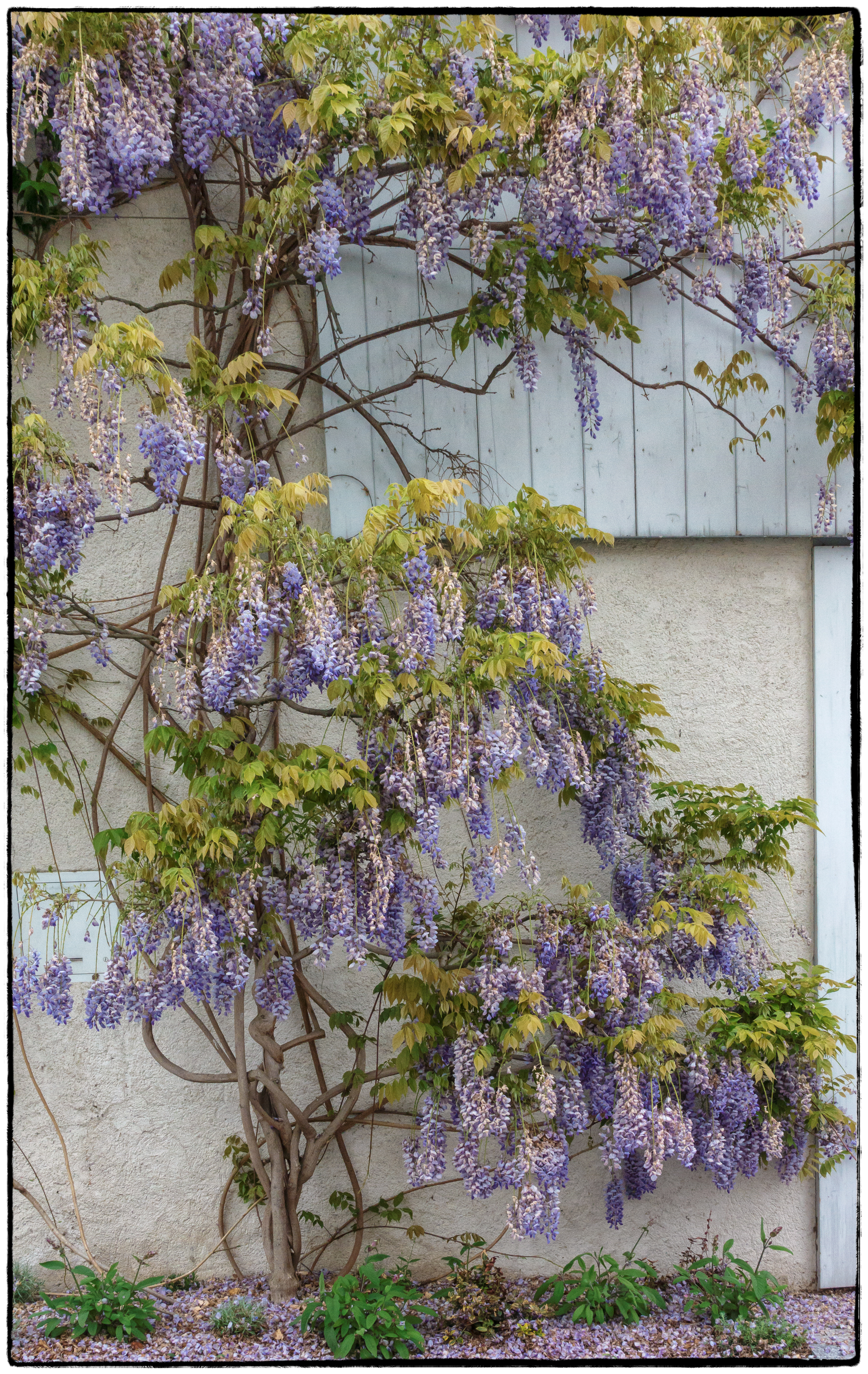
Wisteria growing on one of the Town Hall buildings. It’s very pretty. We have some at our house in Briarcliff Manor. It looks great when it blooms, but if you’re not at all careful it takes over the garden. The roots go very deep into the ground and are almost impossible to remove.

Geneva – Troinex, Armenian Center

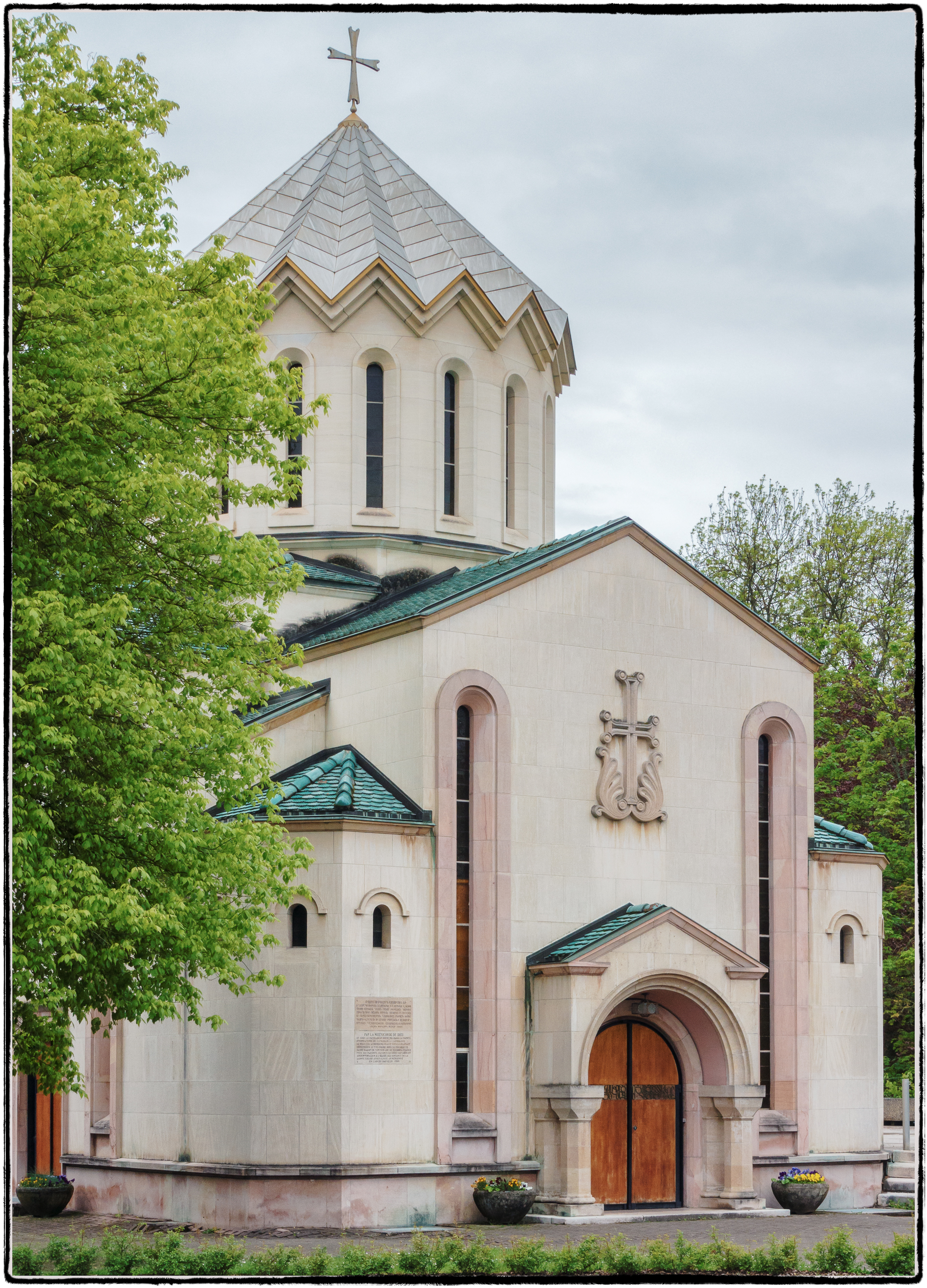
This church stands close to the turning towards the center of Troinex.

According to the church’s website (translated from the original French):

It was at the end of the 19th century that the first Armenian families settled in Switzerland. Fleeing the persecutions of Sultan Abdul Hamid in the Ottoman Empire, these Armenians settled first and foremost in French-speaking Switzerland, especially in Geneva. Later, during the genocide of 1915 and subsequent years, more refugees arrived.

Pastor Kraft-Bonnard created an orphanage in Begnins (VD) in the 1920s, for more than 200 orphans, survivors of the genocide. After finishing their studies, some remained permanently in Switzerland.

At the end of the Second World War, the community in Switzerland was estimated at about 300 people. Since then, this figure has grown steadily. The situation in the Middle East, the Soviet Union and independent Armenia has encouraged many Armenians to emigrate to the West and try to create a safer life for themselves. Switzerland has had its share and it is estimated that today there are about 5,000.

Spread throughout Switzerland, the community has created a number of institutions.The activities were carried out by an umbrella organization called the “Armenian Union of Switzerland (UAS)”, which generally represents the Armenians of French-speaking Switzerland in relation to third parties.

It was almost forty years ago that the Armenian Apostolic Church St Hagop was built at Troinex, near Geneva, today still the only Armenian church in Switzerland. It all began with a large donation from Mr. Hagop Topalian, an Armenian living in Rapallo, Italy.

The community set to work, completed the gift of Mr. Topalian, bought land at Troinex, and built the church. It was consecrated in 1969 to the memory of Mr Topalian’s parents.

The Church building belongs to a foundation created for this purpose, the St Gregory the Illuminator Foundation. The life of the church is managed by the Council of the Armenian Apostolic Church and a permanently appointed priest. The latter also deals with communities located elsewhere in Switzerland.

In the 1980s, as the number of Armenians increased steadily, the St Gregoire Foundation decided to build a Cultural Center on the site of the Church. It took several years to raise the necessary funds and begin construction.

On several occasions the work stopped because of lack of funds and also because the effort of the community had been absorbed by the consequences of the earthquake in Armenia. Later, work resumed and finally, and only in 2006 ended with the laying out of the great hall.

Today, the Center includes:

– a multipurpose hall with 300 seats
– a library of about 3000 volumes
– two large fireplaces
– Various meeting rooms
– a bookstore selling books and various objects from Armenia.

This Center is the main focus of all community activities in Geneva.

In 1985, Mr. Hagop Topalian created a foundation bearing his name. This foundation bought a part of the Armenian Center building and arranged it for its needs. According to the wishes of Mr Topalian, who has since died, the Topalian Foundation runs and finances a school, where Armenian children meet every Wednesday – public school day – during the school year.

The Foundation also finances the kiosk at the Armenian Center in Geneva, as well as the Armenian stand at the Geneva International Book and Press Exhibition every year and the website: www.centre-armenien-geneve.ch

The Foundation has close links with the UGAB (Armenian General Benevolent Union), whose offices in Switzerland are located within its walls.

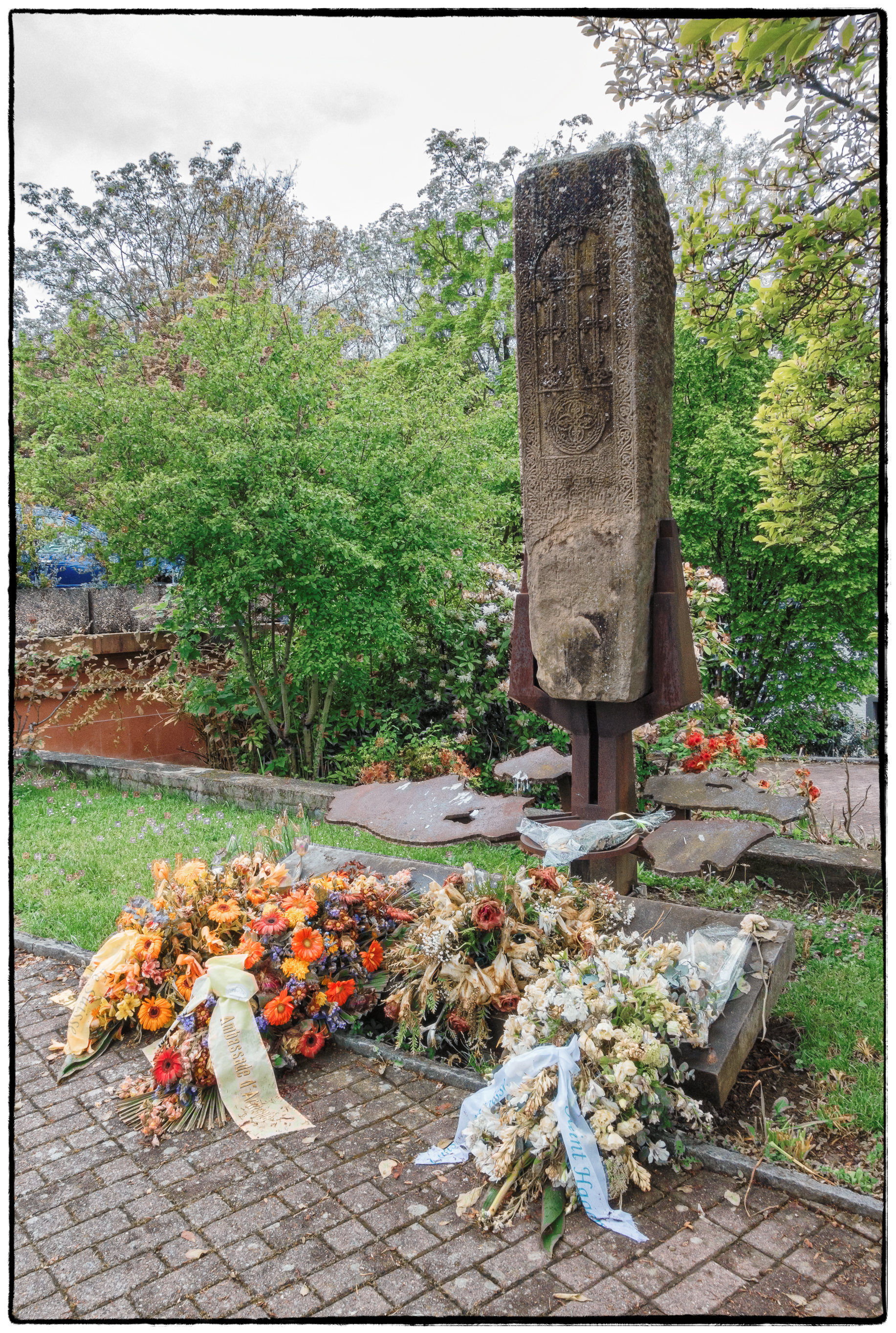
I don’t know what the above is (some kind of memorial?), but I liked the way it looked. It has an interesting shape and the carvings on the upright stone seem old.