New Acquisition – Universal Mercury II CX

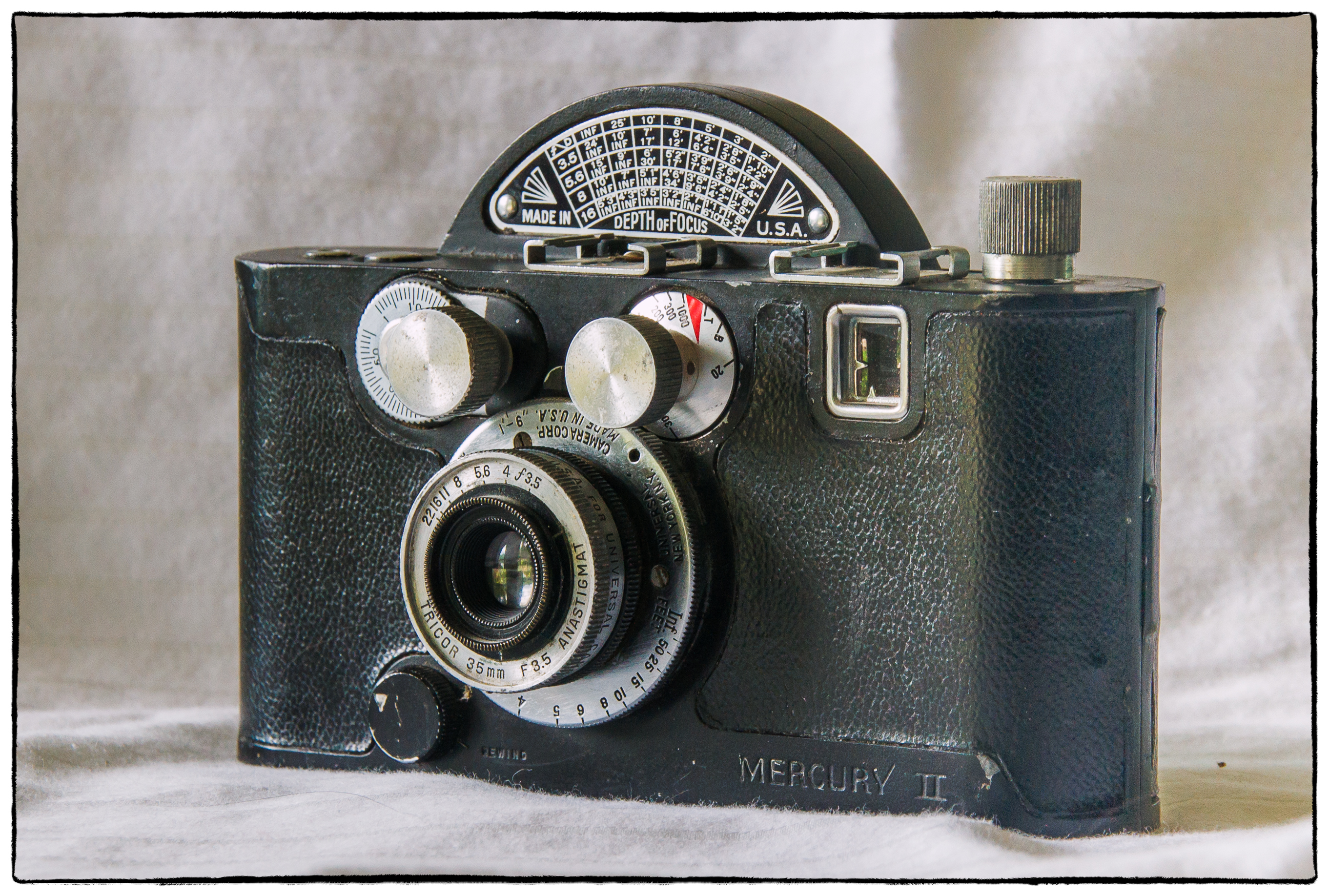
I’d been looking for one of these for a while – either the pre-WWII Mercury (often called Mercury I) or the post war Mercury II. One of the foci of my collection is US 35mm cameras, most of which (with the exception of my beloved Retinas and possibly a few Argus’s) I find to be rather weird and wonderful. When I saw pictures of the Mercury I couldn’t help but notice the large hump on top. For those who don’t already know it’s a rotary focal plane shutter and I’d never seen anything like it. When I came across this one for a reasonable price I just had to have it.

As is often the case Mike Eckman has written one of his excellent reviews (see: Universal Mercury II (1946-48)) on it. He provides a short history of the Universal Camera Corporation, gives his thoughts on the camera, offers some tips regarding repairs and shows some photographs he had taken with the camera.

Since Mike has already provided so much information I’ll limit myself to just a few comments.

First the size of the camera surprised me. This is sometimes the case when you’ve only seen pictures of the camera. I recall seeing an Exacta in a nearby photo shop and thinking that it was much larger than I had thought. I also remember seeing a Kodak Bantam Special in the Kodak Museum in Rochester and thinking that it was much smaller than I expected. In the case of the Mercury it’s a lot smaller than I thought it would be.

Second the camera is black. I think it looks good in black, but I doubt that any Mercury every left the factory like this. All those I’ve seen are chrome. This is without doubt some owners paint job. This is possibly because the finish on the Mercury is generally considered to be pretty dismal. In her superb book: The UniveX Story (more about which in a future post) Cynthia Repinski writes:

Generally speaking, the metal finish on the Mercury II lacked the luster and gleam that characterized the Mercury I. The finish of the Mercury II seemed to become dingy and dull within only a short time. Signs of heavy corrosion are extremely common on Mercy II models today, whereas many of the Mercury I models appear almost like new. Some former Universal engineers recalled the inferior finish of the Mercury II was due to the postwar use of magnesium metal in combination with the aluminum allow normally used in die casting the Mercury housings. Magnesium had become quite popular during WWII and was being readily used by many other manufacturing companies in the post war fabrication of their own products. The aluminum alloy used in the production of the Mercury I camera provided a more gleaming appearance than the combination of aluminium and magnesium used in the production of the Mercury II camera.

When I purchased this camera I had no intention of using it. I’m not a fan of half-frame cameras. I thought that I’d just put it alongside such other gorgeously ugly cameras as the Kodak 35RF (which someone once referred to as a camera “only a mother could love”). However, once I had it in my hands I liked the way it felt. The more I look at it the more I like the way it looks (I no longer consider it to be ugly) and I’d like to try taking pictures with it. Unfortunately I can’t. The shutter works, the aperture works, the viewfinder is OK – but unfortunately the focus is completely frozen. I intend to try to “unstick” it though.
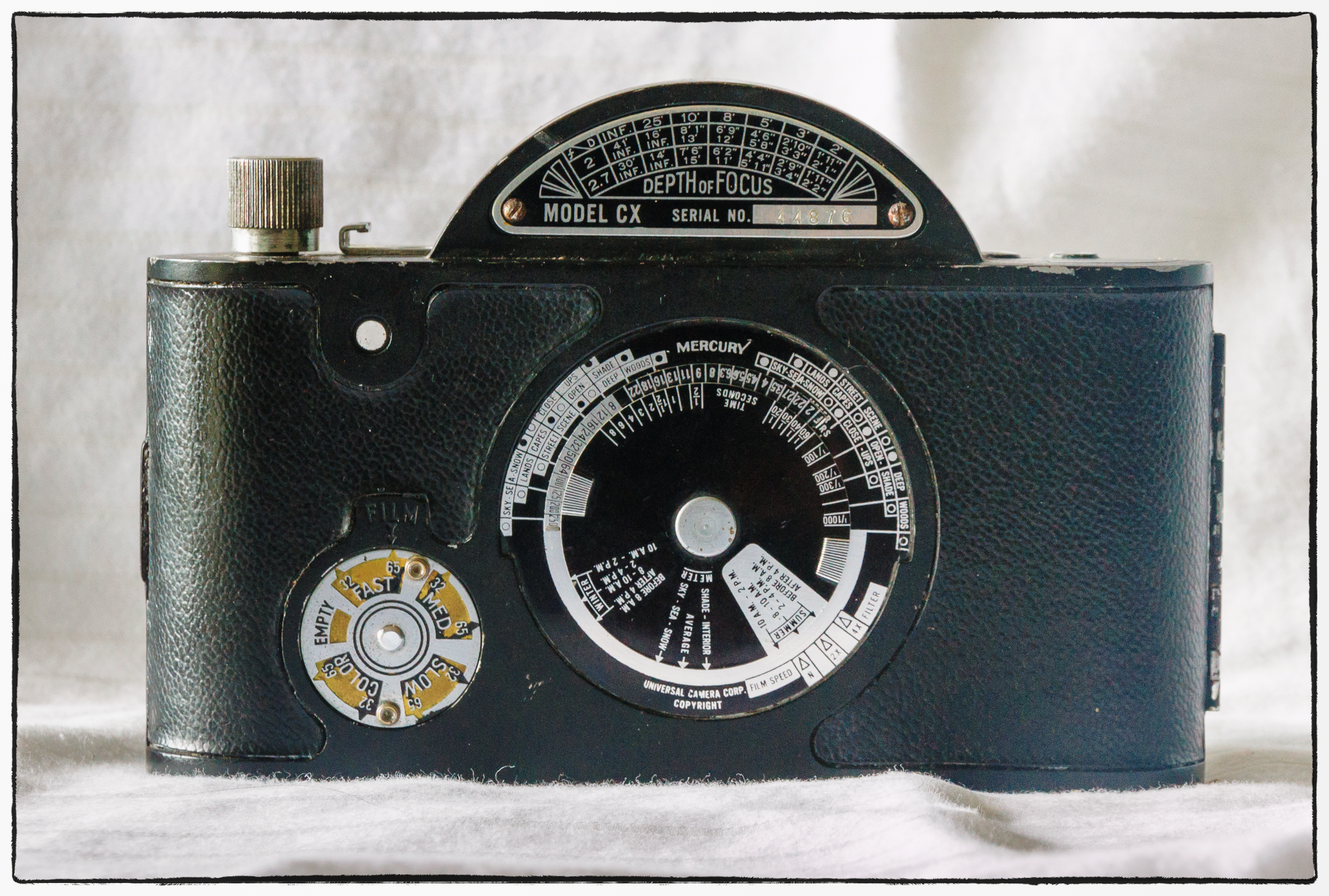
Rear view with the rather complex (I have no idea how it works) exposure calculator.

Another one gone

These two buildings used to stand by the roundabout at the intersection of Red Mill Road and Oregon Road East. One is clearly an old Carvel and I was told by a local resident that the other was a bar, the Westbrook Inn. I posted about them back in 2012 (see: Past and Present – Old and New Carvels). Whatever they once were they’ve now both gone. I passed by today and where they once stood is now an empty lot with signs of recent demolition.

Nothing lasts forever, and I suppose that I should be surprised that they lasted this long. I imagine a Starbucks or something like it will soon rise up to take their place.

To the best of my knowledge the new Carvel mentioned in the earlier post is still there.

Vintage Camera Collectors Group on Facebook

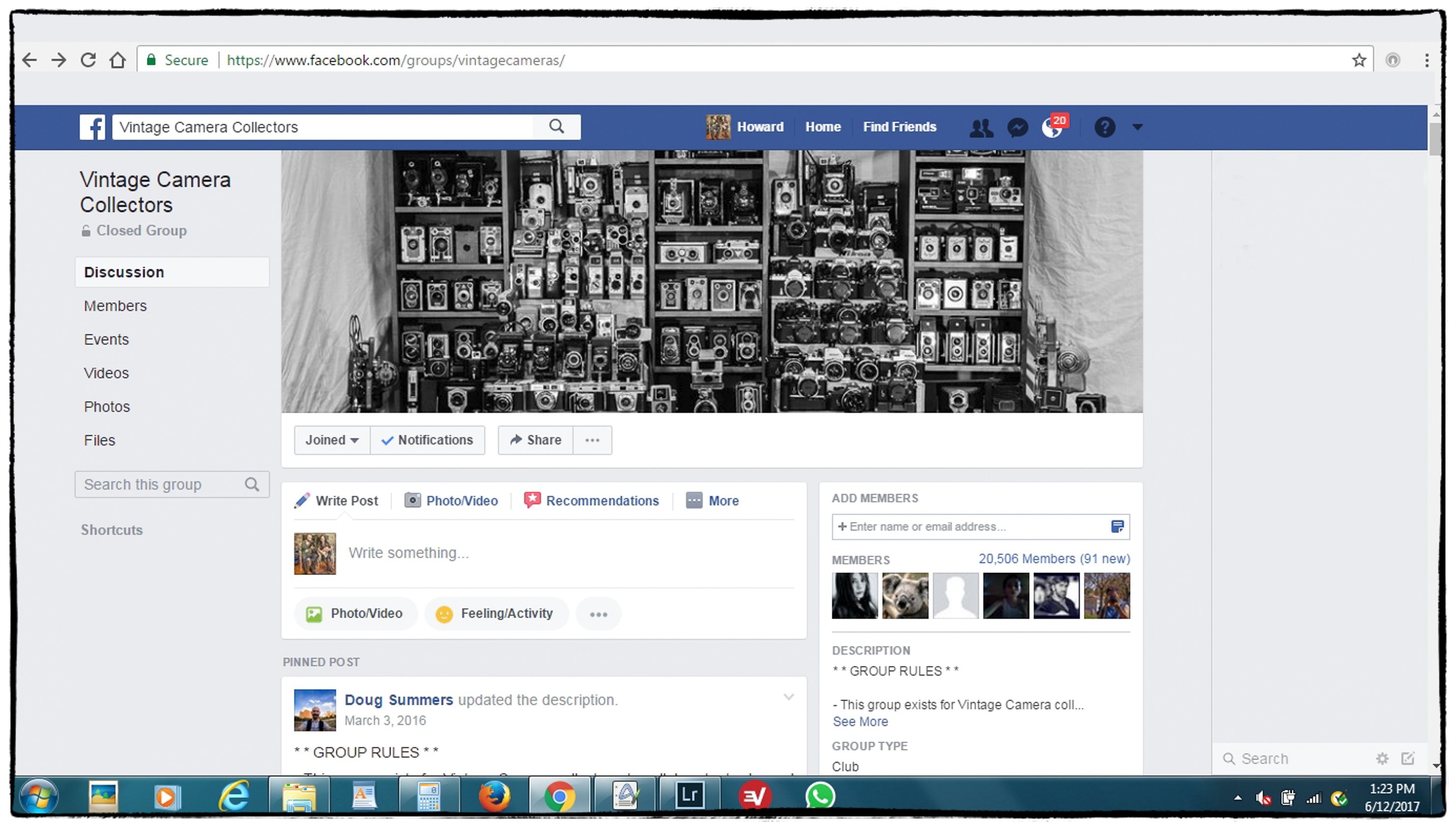
I recently became a member of a Vintage Camera Collectors group on Facebook and so far the experience has been both interesting and informative. The group is closed (i.e. you have to request membership) and very active, with more than 20,000 members and lots of new posts every day. I’m usually something of a “lurker” on groups of this type, but this one has tempted me to contribute both posts and comments.

Members must follow these rules:

– This group exists for Vintage Camera collectors, to collaborate, trade, and share information.
– No Digital Equipment Allowed unless it is regarding using vintage lenses on digital cameras.
– This is NOT a group for showing off your photography however posting a few photos accompanied by the camera that was used is okay. Please no links to Flickr or similar websites.
– Outside links such as eBay or Craigslist are allowed for informational use only and not for selling. We ask that businesses keep self promotion to a minimum

* * SELLING & TRADING RULES * *

– All Sale or Trade posts must include Photos, Price, Description, Location, Condition, & Payment Options. Please upload multiple images to a single post to avoid clutter.
– Keep conversations off the Sale threads. Use PM’s unless there are specific questions regarding the item. Also comment on the main thread and not individual pictures.
– All Sales and Trades are considered private transactions and the Admins and Group hold no liability.
– A suggestion to sellers: Please research a realistic value for your item by doing a search in “Sold Items” on eBay before posting in the group to avoid any negative situations.

– Be Courteous and Respectful. Childish Behavior, Trolls and Troublemakers are not welcome. Admins reserve the right to remove any posts we deem are not in the spirit of the group and up to removal of offending members. Please report Spam and other issues directly to Admins by way of the drop-down arrow. Blocking an Admin will result in removal.

The group can be found at https://www.facebook.com/groups/vintagecameras/

Garden Club Meeting

My wife and I are members of our local garden club, which recently held a presentation on “Birds of the Hudson Valley”. Here two of the participants are watching the presentation. The garden club also has its own closed Facebook Group, but the club’s chairperson didn’t want this picture to be posted.

I wonder why?

Mystery Point – Manitou Station

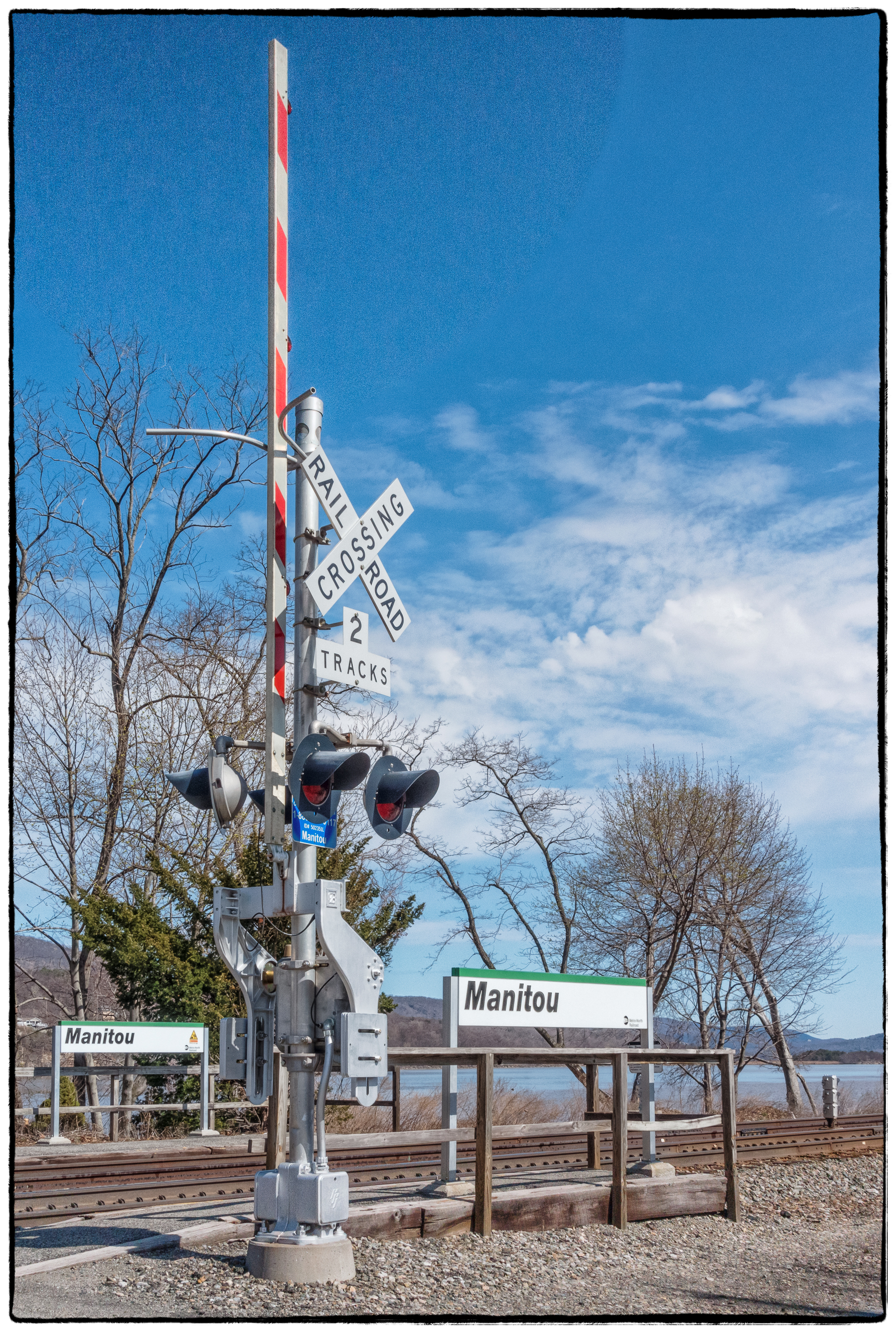
If you follow Mystery Point Road past the ruin mentioned in the previous post you come to Manitou Station.

This has to be the smallest station I’ve ever come across. According to my very approximate measurements the platforms are about 23 feet long.

My first thought was “What famous/powerful person lives here who has enough clout to have a station to himself?” But apparently I thought wrong.

According to Wikipedia:

Manitou /mænɪtoʊ/ is a limited service Metro-North Railroad station. The station is open part-time, serving one peak hour (weekday) train in each direction, and six weekend trains each direction. It serves the residents of that hamlet in the southwestern corner of Philipstown, New York in Putnam County, New York, via the Hudson Line. It is 46 miles (74 km) from Grand Central Terminal and travel time to Grand Central is approximately one hour, 16 minutes.

Manitou is one of three stations – along with Breakneck Ridge on the Hudson Line and Appalachian Trail on the Harlem Line – that receives limited passenger service. Like these stations, it serves mainly hikers visiting nearby state parks in the Hudson Highlands. There is no elevated platform or facilities at the station, one of two on the line adjacent to a grade crossing, are limited to a small shelter with the current schedule posted inside. The station predates the merger of New York Central and Pennsylvania Railroads.