Lasdon Park and Arboretum – Trail of Honor, Merchant Marines Monument

According to lasdontrailofhonor.com:

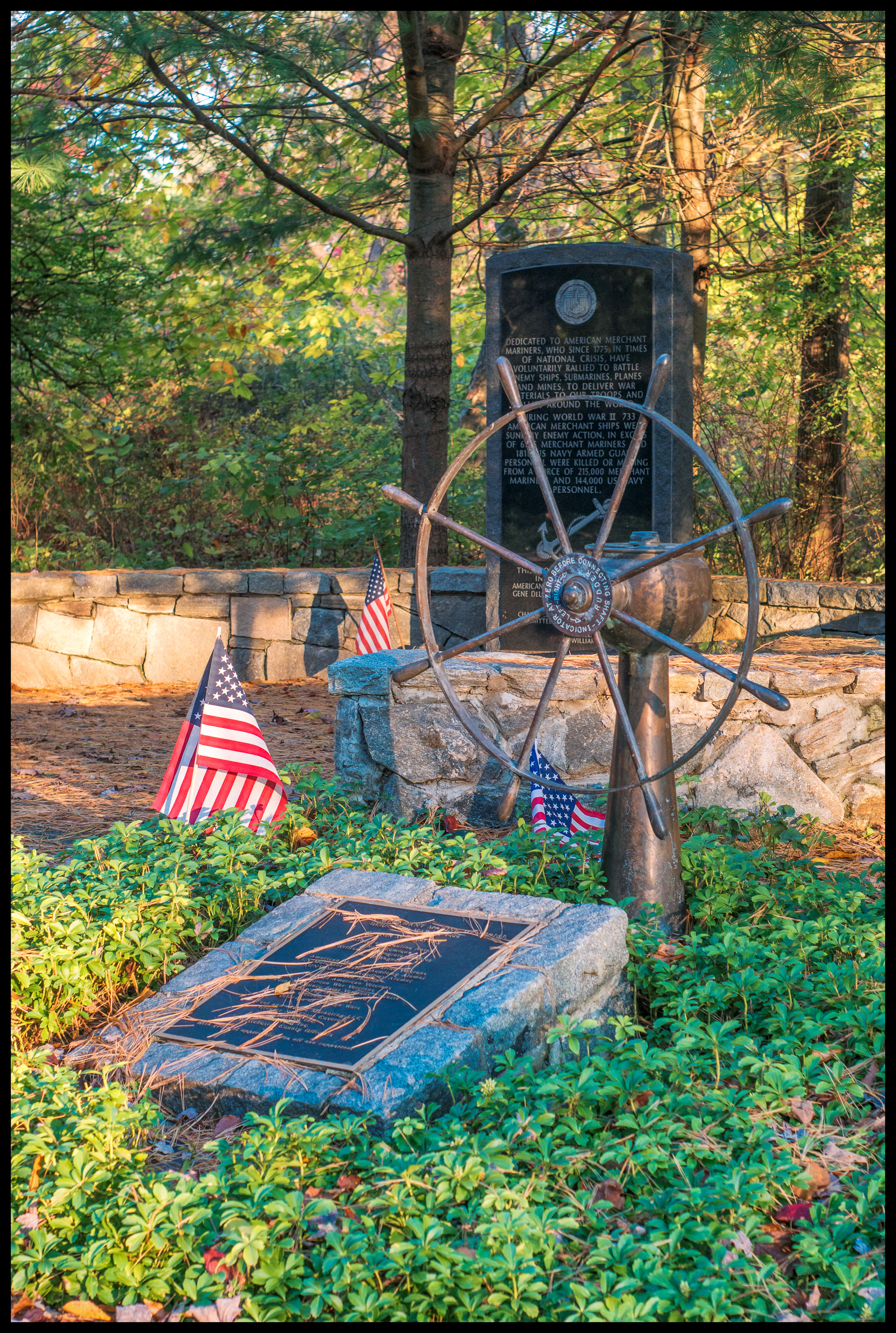
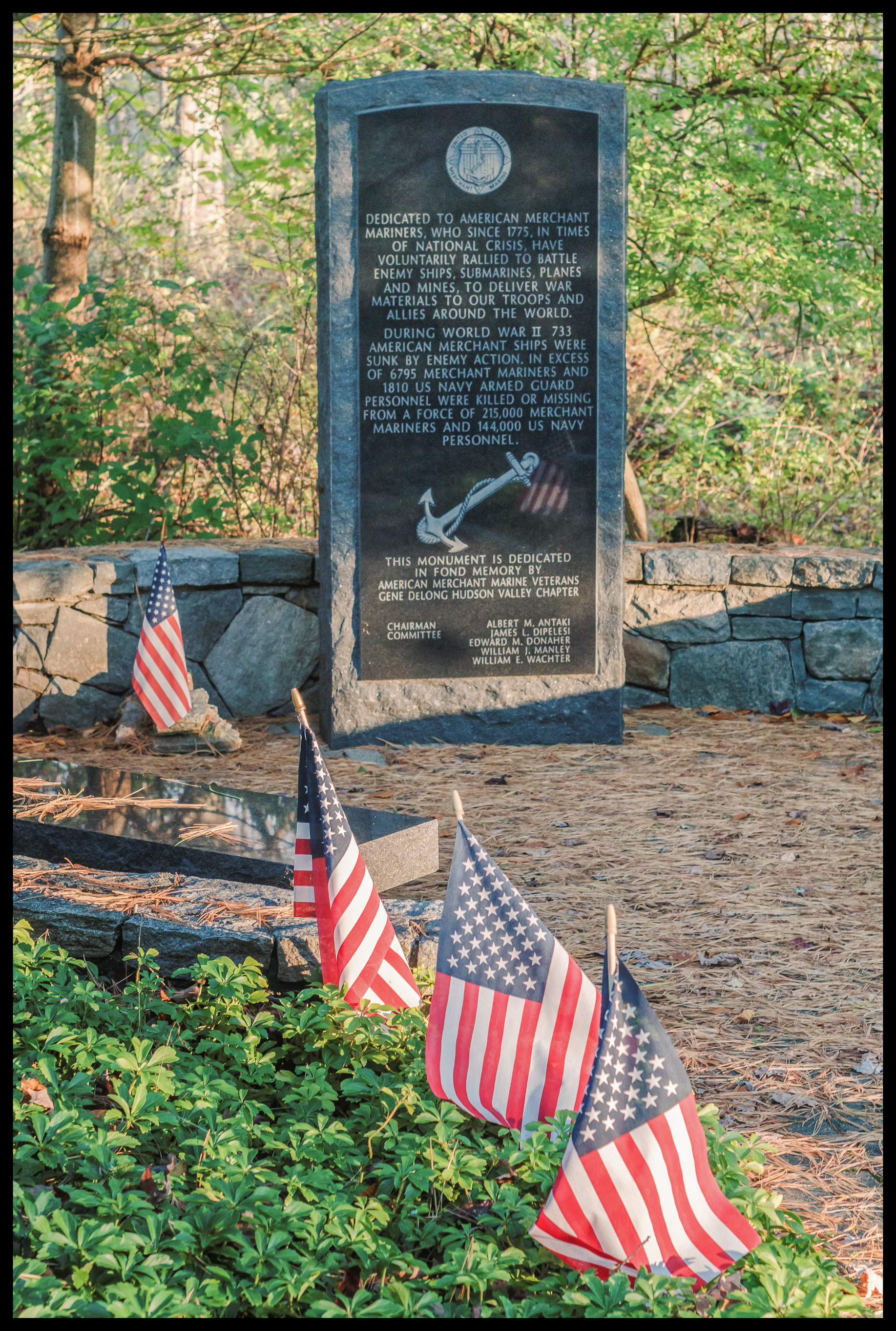
The Merchant Marines monument is the first to present itself on this trail, and recognizes our Nation’s oldest naval division. Its creation dates back to the beginning of the revolution. Originally used by private trading companies, merchant marines were quickly recruited by the continental army after a group of Merchant Marines used a small sloop to defeat a large British ship called the HMS Margaretta. Since then, the Merchant Marines have served in every American conflict, bringing supplies and arms to our troops overseas and defending those valuable cargoes from the beginning to the end of their voyages. Recently they have served on transport ships for our troops in Iraq and defending supply lines headed for our ground troops from dangerous opposition. Their bravery at sea shows the true strength of our naval fleets, and they continue to be an invaluable asset to our military.

Lasdon Park and Arboretum – Trail of Honor, Cannon

I mentioned in an earlier post that I went to Lasdon Park and Arboretum because I’d seen some pictures of the Trail of Honor and wanted to see it for myself.

lasdontrailofhonor.com provides a considerable amount of useful information on the trail including a guided audio tour and a trail map from which the descriptions in the post (and subsequent posts) are taken.

The Veterans Memorial is a pathway, known as The Trail of Honor, and is dedicated to the veterans of Westchester County, from The American Revolution to Desert Storm. On this trail you will walk among the natural surroundings and wildlife featured in Lasdon Park as you journey through our nation’s past. At the entrance to the trail, you are welcomed by the flags of the six branches of the military: the Merchant Marines, Army, Navy, Marines, Coast Guard and Air Force, arranged by date of organization. As you proceed on the path into the woods, you will come across a row of bronze busts, all of which sit atop stone cairns, covered with stones from the 44 towns in Westchester. The busts are copied from similar works done by sculptor and veteran Niels Anderson (excluding the War of 1812, made by Barbara Lepak). Anderson placed these originals on display at Franklin Delano Roosevelt Veteran’s hospital, where he himself was treated. Each portrays a soldier from every American war, from the weathered militiaman of the Revolution to the sand-blown tank driver of Desert Storm.

As you proceed to the Vietnam Veterans Memorial, you will gradually encounter three large bronze statues and a black obelisk, with the Muscoot Reservoir in full view. The statues feature three figures: two soldiers, one cradling the other in his arms, and a nurse rushing to attend to the wounded soldier. Inscribed on the obelisk are the 217 names of the soldiers from Westchester who were lost in the Southeast Asia conflict. Nearby is a piece of black granite inscribed with the names of eight nurses that were killed while serving in Vietnam. Surrounding the obelisk is a path made up of 5,900 paving stones, each one representing ten soldiers who were killed in the Vietnam War. As you continue through the woods, another obelisk will present itself. This monument commemorates the veterans of the Korean War, a war that is regrettably forgotten by many, but holds a special place on this trail.

.This cannon stands at the entrance to the trail. Despite my best efforts I’ve been unable to find out what it is. I even consulted with my friend, a former lieutenant-colonel of artillery in the Australian army, and he was unable to shed any light on it.

Taken with a Sony A77 II and Minolta 50mm f1.7.

Lasdon Park and Arboretum – Conservatory

When I took the above picture I thought that the conservatory had been there since the house was built. In fact it’s almost brand new (opened June, 2017) and hadn’t even existed during my last visit (March, 2015).

I’ll summarize the history of the conservatory with a few extracts from the park’s website:

In 1991, a very dedicated and loving plant pathologist named Ilse Biedermann took her love of horticulture and brought it to Lasdon Park. Devoting herself to helping to develop Lasdon Park & Arboretum during its’ infancy, she founded “The Friends of Lasdon” and her passion was contagious. Her dream was to build a new larger greenhouse to grow plants and educate children in the world of horticulture.

Tragically in 2005 Ilse Biedermann was taken from us in a car accident on the Taconic Parkway. Although we lost Ilse that day her passion remained with us. In 2007 we took up her dream and began a grass roots fundraising campaign with the help of the Friends of Lasdon.

Almost a decade later The Friends of Lasdon has raised over $700,000 through model train shows, concerts, special seasonal events, sponsor pledges and plant sales. Through an exhausting effort, Friends of Lasdon President Michael Katz, the County Executive’s Office, cooperation of the Westchester County Board of Legislators, and countless others, the dream that started with one woman will become a gift for us all.

September 2016. Since June 3, A-Team has been constructing the foundation, retaining wall, mechanical building, installing drainage and radiant heat lines. On September 3 they finished. Sometime in the latter part of September, Rough Brothers will send in their construction team and complete the Conservatory. We expect it to be completed by the end of December.

October 12 2016. Fenton Construction and Ironworkers from NY Local 40 completed the second leg of the Conservatory on October 12.

This involved the steel frame for the building. The work was finished several days ahead of schedule. On October 13 County Executive Rob Astorino will make a public announcement at 1pm regarding this new glasshouse conservatory.

Oct. 14, 2016 – County Executive Robert P. Astorino yesterday joined other county officials and members of the Friends of Lasdon Park organization to mark the completion of the foundation, a major phase in the construction, for the new 2,500 square foot glass house conservatory, at Lasdon Park, Arboretum and Veterans Memorial in Somers.

January 2017. Rough Brothers sent in their team in late 2016 and are just a few weeks away from completing the glass installation, gutters and trim. That will be followed by another team from Rough Brothers to do all the interior work (heat system, fans, environmental controls and mechanicals) and Westfair Electric will be doing the electrical connections.

In early April, A-Team Contracting will return and complete the new patio with Westfair Electric. We are presently working on the fundraiser set for June 14, a ticketed event followed by the public grand opening on June 17.

The first exhibit will be “Tropical Treasures”. Details will be coming out soon on this exhibit and how you can get tickets to the public grand opening.

June 2017. County Executive Rob Astorino performed the ceremonial “Vine” cutting earlier this afternoon at the brand new Lasdon Park Glass House Conservatory.

Taken with a Sony A77 II and Minolta 50mm f1.7.

Lasdon Park and Arboretum – Overview

I’d been to the Lasdon Park and Arboretum a couple of times: once for an antiques fair; and once for a concert. This time I wanted to take a look at something I’d bumped into while browsing the internet: the Trail of Honor.

According to the Park’s website:

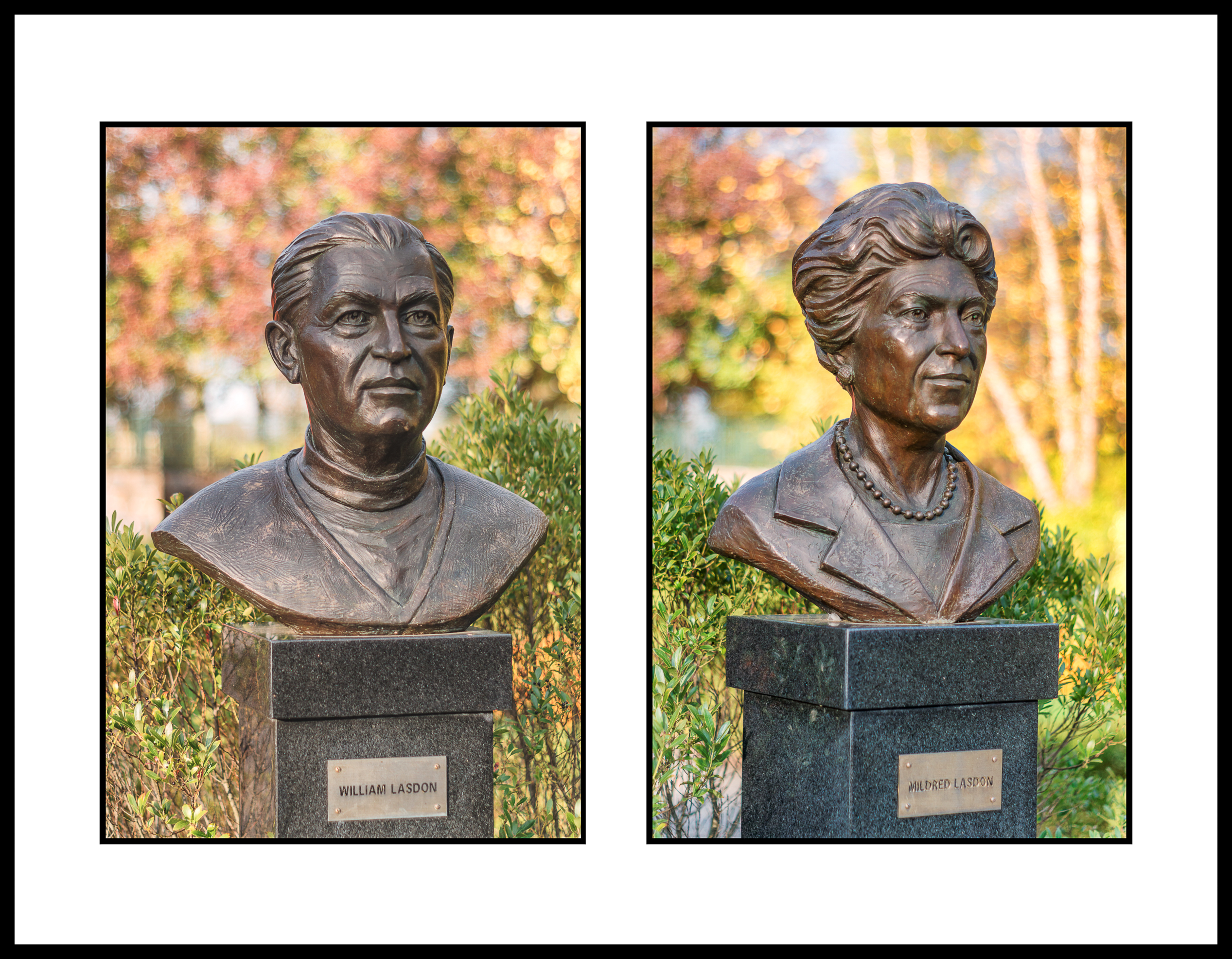
The Lasdon estate, originally called Cobbling Rock Farm, was acquired by William and Mildred Lasdon in 1939. The main house of the estate was built in 1933 by Dr. Voislawsky after the original house was destroyed by a fire. The house is modeled after George Washington’s home in Virginia.

William Lasdon is known for establishing a major pharmaceutical company and for his philanthropist endeavors. The Lasdon estate was simply used as a country retreat. The Lasdon family had great interest in horticulture and loved to travel. Along these travels, they brought back many tree specimens and planted them at the estate.

In 1976, William Lasdon created the Mildred D. Lasdon Bird and Nature Sanctuary. This is a twenty-two acre preserve which was donated to the county. There is an intricate system of trails that run through an array of wildlife habitats. Many different species of birds, and up to twenty different types of warblers can be observed there during migration.

When William Lasdon died in 1986, Westchester County purchased the estate for $4.2 million. Several companies were interested in using the 234 acres to put up condominiums. The county wanted to obtain this land in order to preserve the land and history of the area. For the most part, the formal grounds remain as they were designed initially. Westchester County has been continuously developing and embellishing the collections on the property.

The William and Lasdon Memorial Garden site was donated by their daughter, Mrs. Nanette Laitman. This is the main garden present at the front of the estate. It is a one-acre garden created in memory of Mr. and Mrs. Lasdon.

The two busts (above) of William and Mildred Lasdon stand at the entrance of the Lason Memorial Garden.

The Lasdon Garden Shop.

All pictures in this series taken with a Sony A77 II and Minolta 50mm f1.7.

Thanksgiving at the Castle

This year we decided to go out for Thankgiving and we chose to eat at Equus in the Tarrytown Castle. According to history section of the the castle’s website:

Only thirty minutes north of Manhattan, Castle Hotel & Spa sits majestically atop one of the highest points in Westchester County overlooking the Hudson River (note: you can just see the Hudson behind my wife in the picture below) amid sprawling acres of manicured gardens and grounds. With over 100 years of history, the Castle is undoubtedly a sumptuous escape to the enchanted era of America’s Gilded Age.

The story of the Castle begins shortly before the turn of the 20th century, when General Howard Carroll, a well-respected newspaperman, playwright and businessman, purchased the land as a home for his growing family. “Carrollcliffe” was built in two stages between 1897 and 1910. Working with noted New York architect Henry Kilburn, Carroll actively assisted in planning the Castle in a style reminiscent of Norman fortification in Wales, Scotland and Ireland. The finished castle boasted 45 rooms.

From the beginning, the Oak Room, historic in its own right, served as the family dining room. Legend has it that the room’s wainscoting was brought over to Tarrytown from General Carroll’s house in St. Germain, outside Paris. Louis XIV had presented this house to James II when he fled to France after having been deposed in England. It was in this room that James’ grandson Prince Charles Edward (“Bonnie Prince Charles”) and Angus MacDonald, representing the Scottish highlanders, plotted the unsuccessful uprising of 1745 in the British Isles to overturn the German king and restore the lineage of James II.

Born in Albany, N.Y. in 1854, Howard Carroll was educated in Albany, New York City, Hanover and Gottingen in Germany, and Geneva, Switzerland. His first and longest position was with The New York Times, where he served as the Washington D.C. correspondent, befriending such leaders as Presidents Ulysses S. Grant and James Garfield. After refusing several official appointments in the Chester Arthur administration, Carroll wrote several plays, including The American Countess, which ran for 200 nights on Broadway. He also authored two books.

General and Mrs. Carroll were notable social figures in Westchester County and New York City society. They entertained frequently and on a grand scale resplendent in the tasteful luxuries of the era. During the Hudson-Fulton Tercentennial Celebration of 1909 (commemorating of the 300th anniversary of Henry Hudson’s discovery of the Hudson River and the 100th anniversary of Robert Fulton’s first successful commercial application of the paddle steamer) Carroll, considered a gourmet and connoisseur of rare wines, hosted every officer from the German fleet stationed in the Hudson River region. Included among the invited guests were J.P. Morgan, Andrew Carnegie, foreign dignitaries and ambassadors who viewed the great river regattas from the Castle terrace.

It was said that the size and scope of the gathering convinced the Carrolls’ to expand their castle. A new addition, completed in 1910, provided the Great Hall as the new dining room, an adjacent pantry, a formal ballroom, and additional servants’ quarters, garage and stables. Following General Carroll’s death in 1916, his widow and children, Caramai, Arthur and Lauren, occupied the Castle until 1940, when it was rented for a brief period to a local school. Today, the elegant Ballroom at the Castle is still known as the Caramai Ballroom.

In 1941, Emerson and Ruth Axe bought the Castle and 64 acres of land for $45,000, and turned it into the headquarters of H.W. Axe & Company, an investment counseling firm. Under their ownership, what became known as Axe Castle also was called “High Finance on the Hudson”. As a military man, General Carroll undoubtedly would have approved of the Castle’s use during World War II. The roof and 75-foot tower were partially enclosed, and served as an observation post by the Tarrytown Civil Defense to monitor air traffic in the area.

In 1981, the town of Tarrytown designated The Castle a historic landmark, protecting the outside structure from any alterations in the future. Between 1994 and 1996 the Castle was transformed into a luxury hotel with a gourmet restaurant and meeting and event facilities. The restoration of the Castle’s original suites, which offer spectacular views inside and out, and the creation of the 24-room addition named Carrollcliffe was a salute to its proud heritage.

Taken with a Sony RX100 M3.