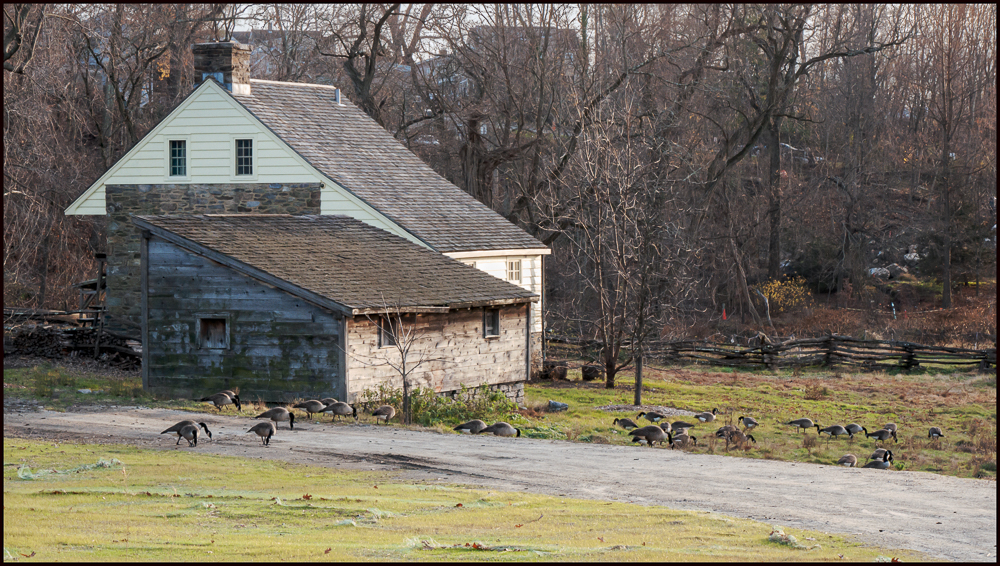
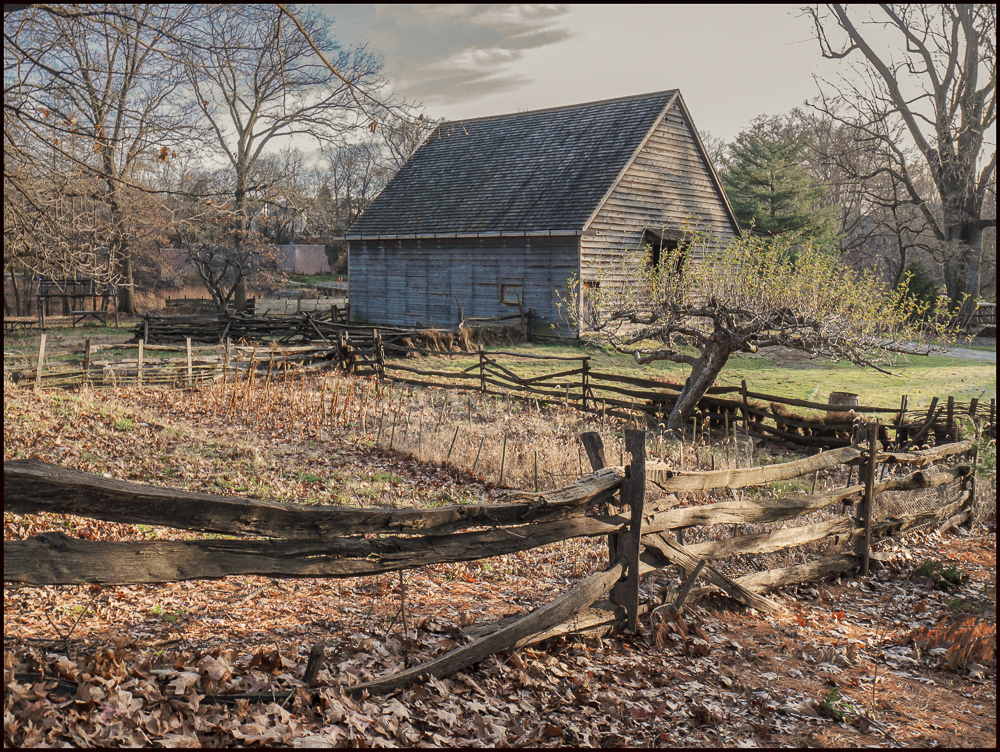
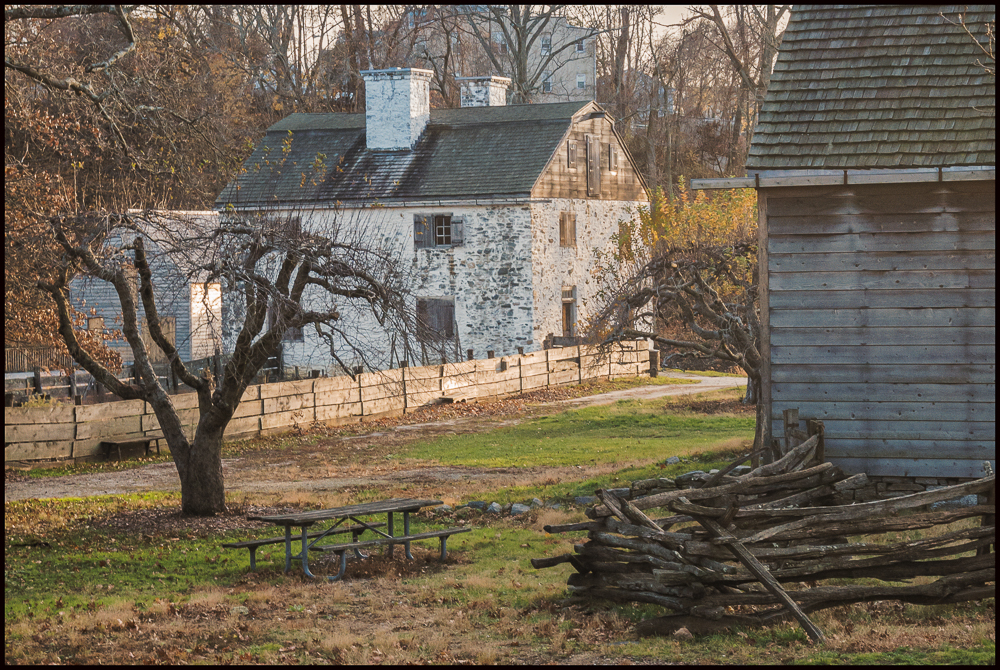
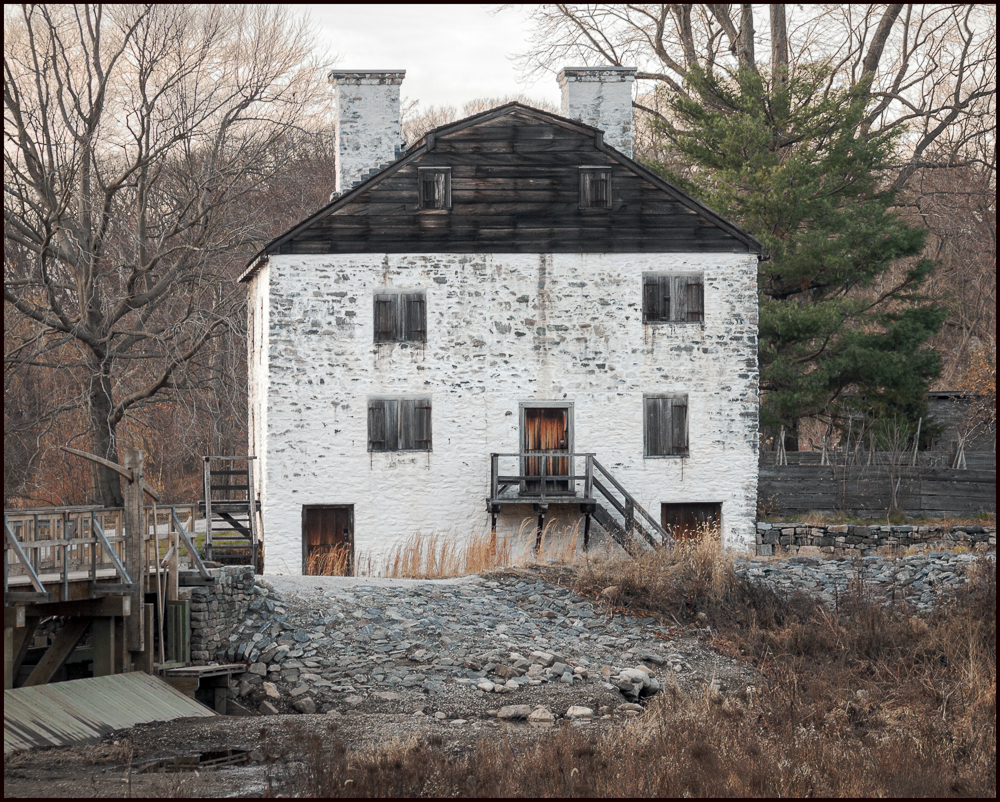
Philipsburg Manor is located in Sleepy Hollow, NY almost directly opposite the Old Dutch Church.
The land that would become Philipsburg Manor was first bought from Adriaen van der Donck, who had been granted a Dutch patroonship in New Netherland before the English takeover in 1664. Frederick Philipse I, Thomas Delavall, and Thomas Lewis purchased the first tracts in 1672 in current-day northern Yonkers. Philipse made several additional purchases between 1680 and 1686 from the Wiechquaeskeck and Sinsink Indian tribes, expanding the property both north and south; he also bought a small plot of land from the Tappans west of the Hudson River.[citation needed] The manor comprised about 52,000 acres (21,000 ha) of land. Philipse also bought out his partners’ stakes during this time.
The estate’s boundaries were the Spuyten Duyvil Creek to the south, the Croton River to the north, the Hudson River to the west, and the Bronx River to the east. Philipse was granted a royal charter in 1693, creating the Manor of Philipsburg and making him first lord of the manor. Along with the three other main manors of the colony—Rensselaerswyck, Cortlandt, and Livingston—Philipsburg created one of the richest and most powerful families in the colony. When Philipse died in 1702, the manor was divided between his son, Adolphus Philipse, and grandson, Frederick Philipse II. Adolphus received the Upper Mills property, which extended from Dobbs Ferry to the Croton River. Frederick II was given the Lower Mills, which included the family seat, Philipse Manor Hall, at the confluence of the then Neperhan River (today’s Saw Mill) and Hudson Rivers; the two parcels were reunited on his uncle’s death. Frederick II’s son, Frederick III, became the third lord of the manor in 1751.
Philipse Manor Hall, the Lower Mills manor house, in today’s Getty Square neighborhood of Yonkers
The Philipses used African slaves to build various structures at the Upper and Lower Mills.[citation needed] The Upper Mills saw the building of two gristmills on the Pocantico River as well as a stone manor house, wharf, cooperage, and bake house. Most of the structures were completed by 1697, including the Old Dutch Church of Sleepy Hollow, now a National Historic Landmark. The Lower Mills saw a gristmill and Philipse Manor Hall built on the north bank of the Neperhan. The Philipses’ aim was to make the manor a center for agriculture, which was achieved.[citation needed]
In the 18th century, tenant farmers moved in from Great Britain, the Netherlands, France, Germany, and elsewhere within North America. By the beginning of the American Revolution in 1776, the population was about 1,000, up from 200 at the time of Frederick I’s death.
Several years into the Revolution Frederick Philipse III, a Loyalist, was attainted for treason along with his family. The manor was confiscated in 1779 and used as collateral to raise funds for the Colonial cause. After the war it was sold at public auction, split between 287 buyers. The largest tract, the (about 750 acres (300 ha)) Upper Mills, was purchased by Gerard Beekman; the lower, including Manor Hall, went to Cornelius Low. That parcel was passed to numerous owners until 1951, when it was acquired by Sleepy Hollow Restorations (now Historic Hudson Valley). Philanthropist John D. Rockefeller Jr. funded the restoration of about 20 acres (8.1 ha), which became today’s Philipsburg Manor historic site. Philipse Manor Hall served as Yonkers City Hall from 1872 until 1908. Both homes became National Historic Landmarks on November 5, 1961 and are now house museums. (Wikipedia)
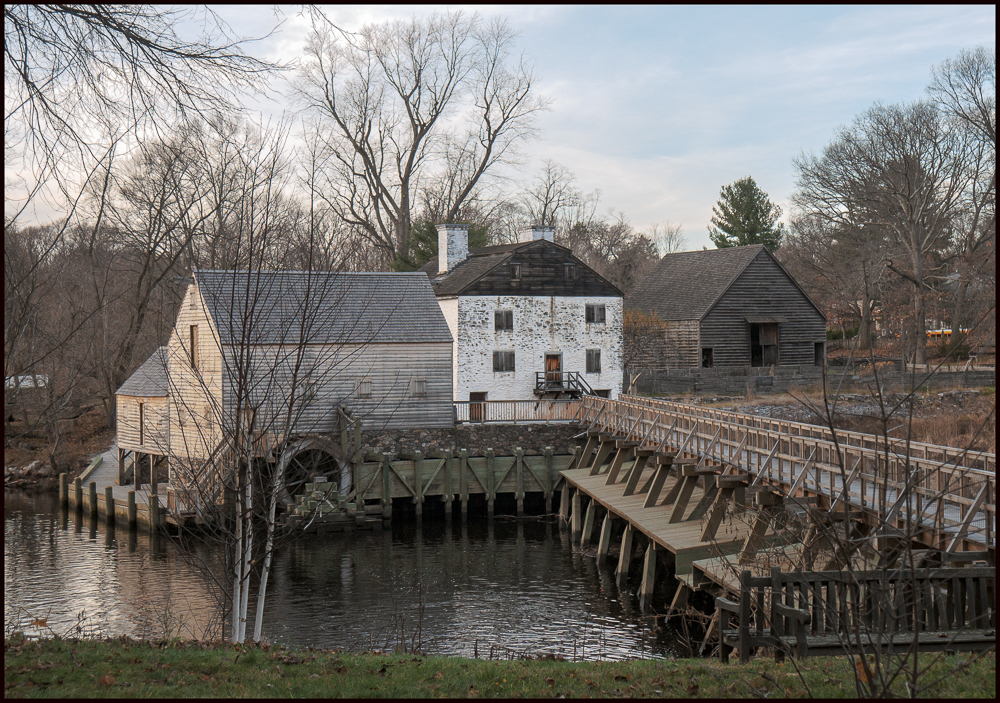
Philipsburg manor features a stone manor house filled with a collection of 17th- and 18th-century period furnishings, a working water-powered grist mill and millpond, an 18th-century barn, a slave garden, and a reconstructed tenant farm house. Costumed interpreters re-enact life in pre-Revolutionary times, doing chores, milking the cows, and grinding grain in the grist mill.
Taken with a Panasonic Lumix GF1, Lumix G Vario 14-42 f3.5-4.6 II and Lumix G Vario 45-150 f4-5.6