A Walk along the Old Croton Aqueduct – Untermyer Gardens, The Temple of Love

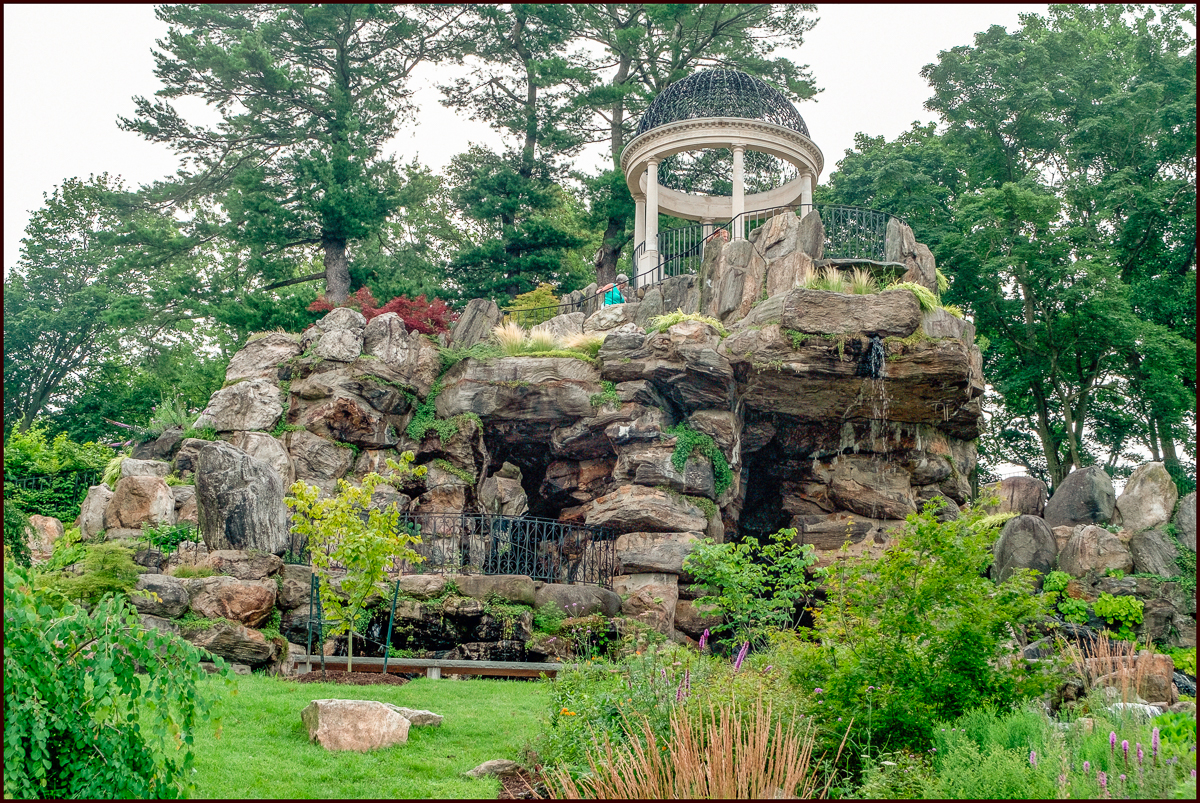
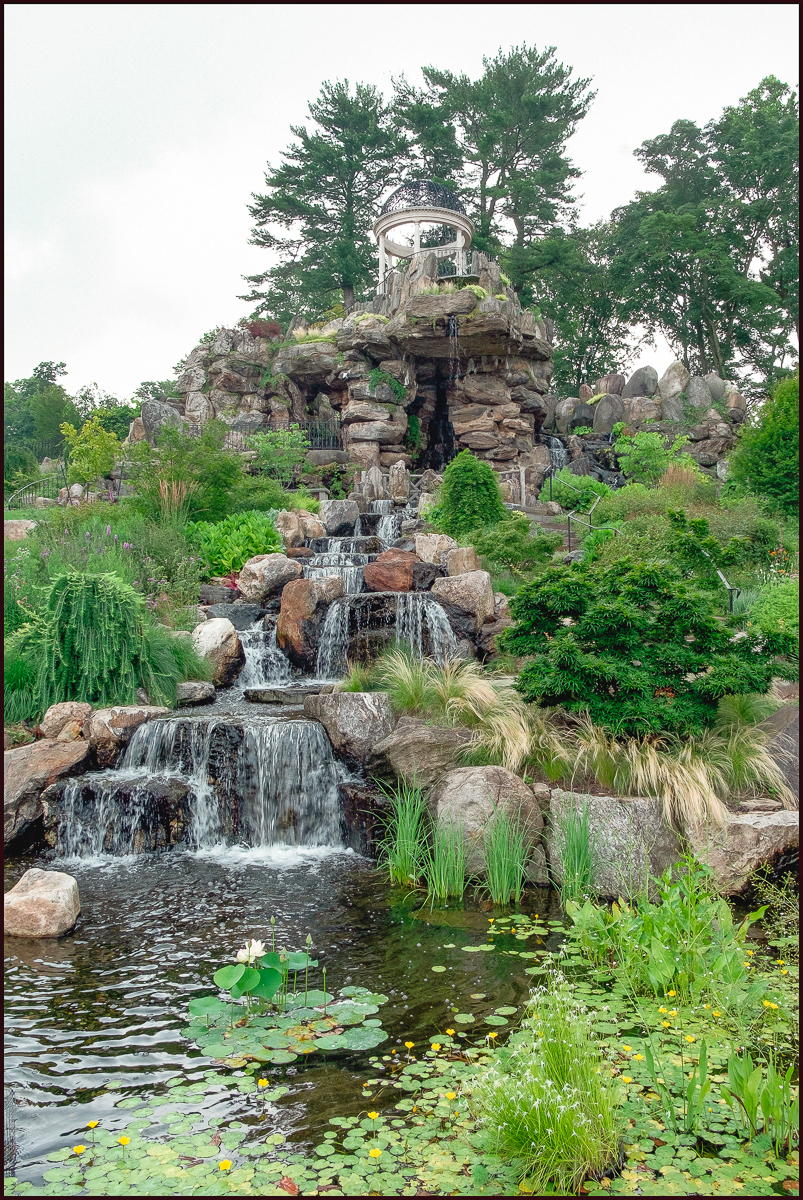
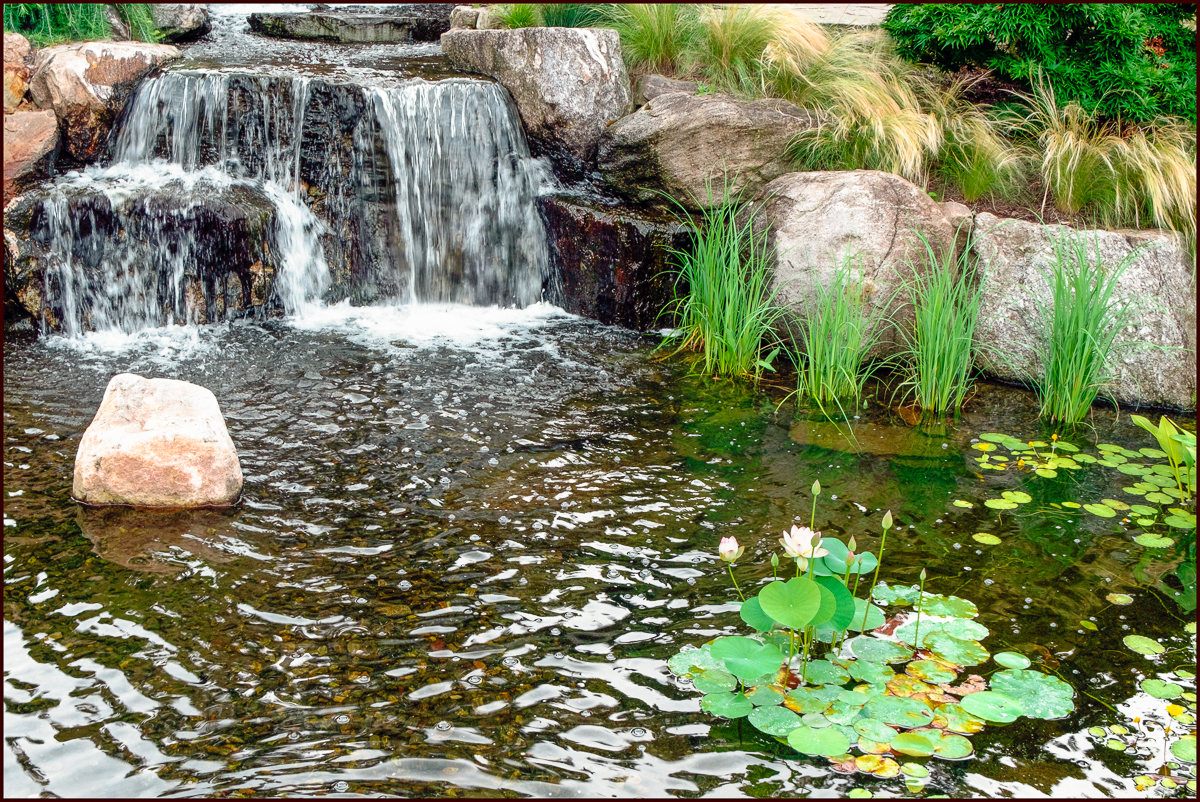
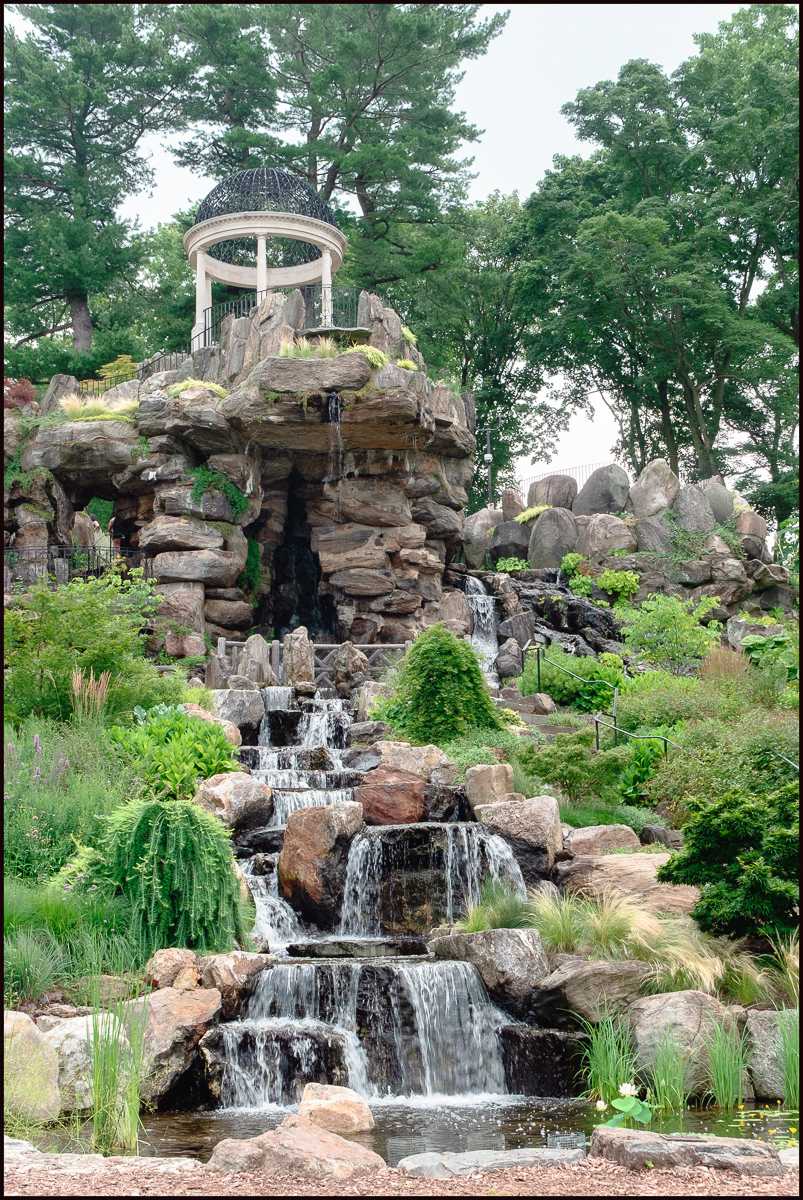
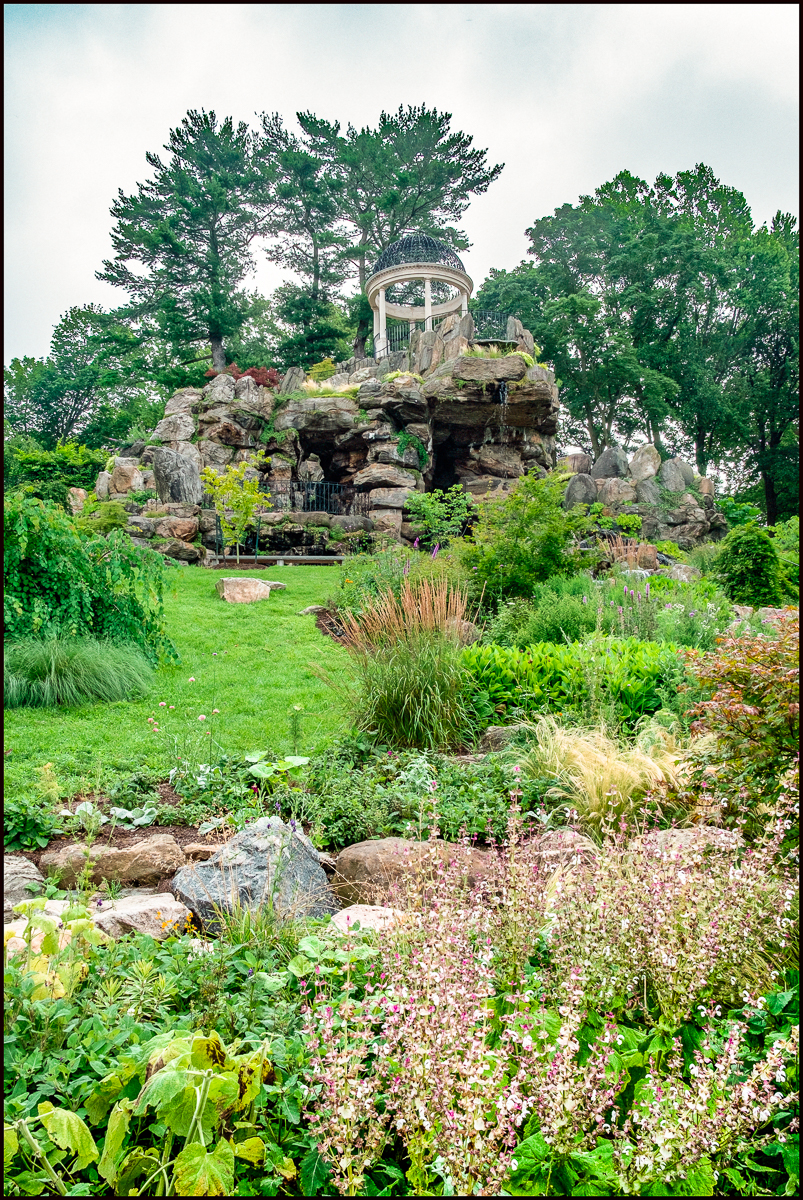
“The Temple of Love overlooks a magnificent view south along the Hudson River and the Palisades. Best viewed from below, it is a stupendous rocky fantasy capped with a round temple. It was the centerpiece of an extended rock garden and was flanked by terraced beds. The outcropping was an elaborate water feature, with water coursing all around it in various waterfalls and ponds. The Temple of Love was created by Carlo Davite, a Genoese stone mason who did work in the Paris Exposition, the St. Louis Exposition and at the Frick Museum.

Many of the rocks are hollowed out to form planters, and in Samuel Untermyer’s time, the entire creation was elaborately planted. There are three bridges in the rough stone and a small seating area with a rough hewn stone bench that can be reached through a rocky tunnel in the folly. An additional monolithic bridge crosses the pool at the base of the Temple of Love”. (Untermyer Gardens Conservancy)


Taken with a Fuji X-E1 and Fuji XC 16-50mm f3.5-5.6 OSS II

A Walk along the Old Croton Aqueduct – Untermyer Gardens, A lion and a unicorn

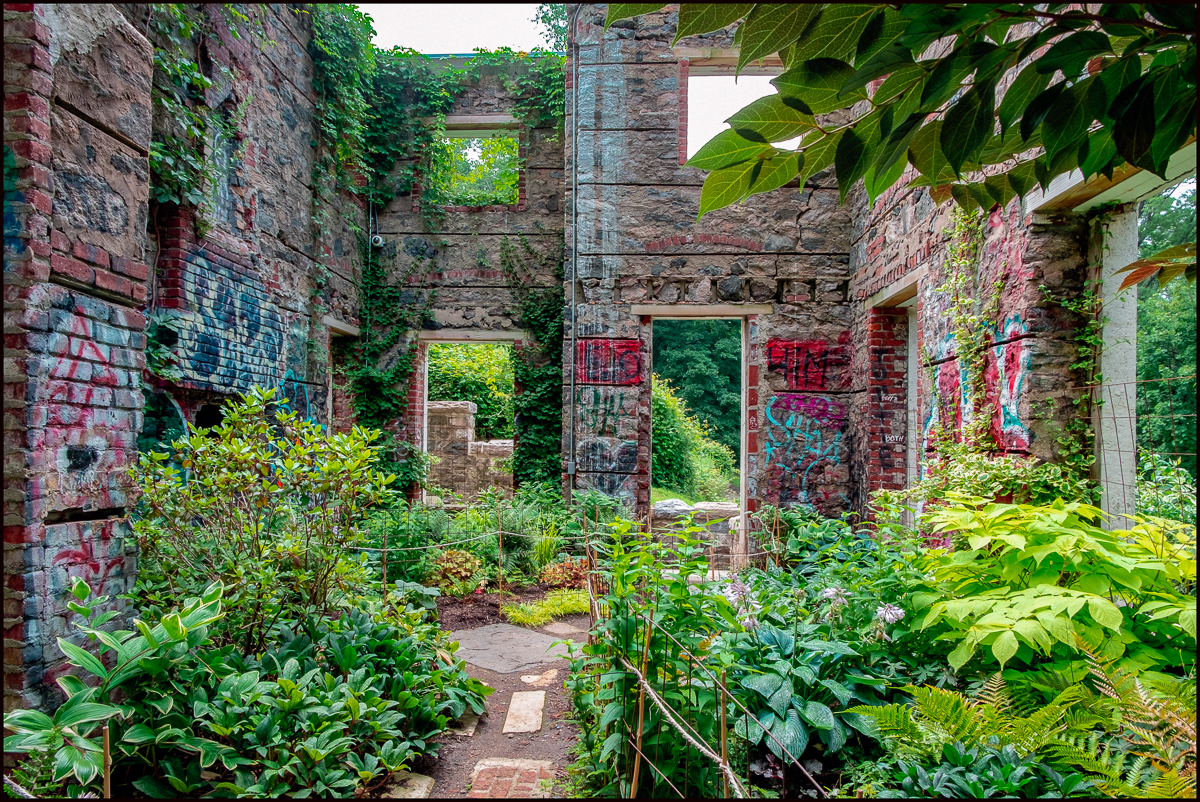
I’ve been to Untermyer a couple of times before, once in 2012 (See: Untermyr Park, Yonkers, NY) and again in 2016 (See the series of posts starting with: Untermyr Gardens Revisited – Overview). The restoration work has made great progress. When I first went quite a lot of structures were virtual ruins, now they’ve mostly been partially or fully restored. Great Work.

For years I’ve been trying to find these two statues. The first time I went I couldn’t find them because I didn’t really know where they were (they’re right at the lowest part of the property where it meets the Old Croton Aqueduct trail). Once I discovered that they were next to the trail I figured I would find them if I walked South on the trail from Tarrytown. Unfortunately my legs gave up before I got to them. I’m glad that I was finally able to get there.

Also in the picture are the deliberately only partially restored Gate House on the left and the overlook from The Vista on the right.

An information board nearby reads:

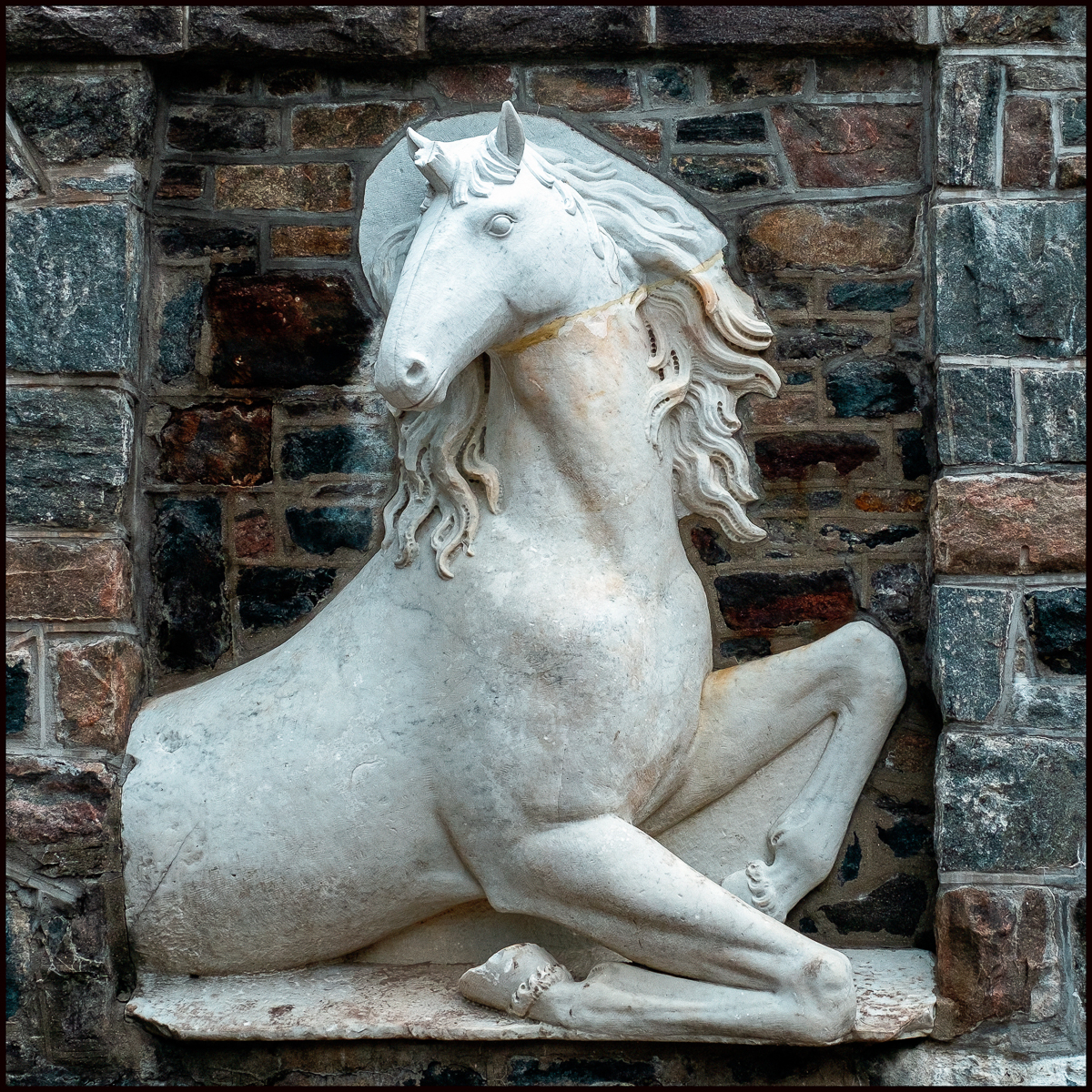
Opposite the gates along the Old Croton Aqueduct are a pair of monumental structures, a lion and a unicorn, symbols of the United Kingdom. From this point the mile-long carriage trail gradually climbs south up the hill past a ruined circular fountain at the lower switchback, past a meadow at the upper switchback, up to the site of the mansion, now demolished [for a glimpse of how it once looked see here. It’s a shame that it’s now gone].

.

Untermyer died in 1940. He had wished to give the gardens to the United States, to New York State or failing that, to the City of Yonkers, but because of the great cost of the upkeep of the gardens, which were not accompanied by an endowment, the bequest was initially refused by all three bodies. Finally, in 1946, 16 acres (6.5 ha) of the land was accepted as a gift by the City of Yonkers, and became a city public park. The mansion itself was eventually torn down.

Because of inadequate funding, much of the property was not maintained; a number of structures gradually fell into disrepair, and parts of the site became overgrown, reverting to woodland. In the 1970s an effort was made to restore the garden by Yonkers Mayor Angelo Martinelli, architect James Piccone and Larry Martin, but the campaign was short-lived and the property deteriorated again. In the 1990s community leaders such as Nortrud Spero and Joe Kozlowski and the Open Space Institute persuaded Mayor Terence Zaleski to purchase more of the original estate’s land with the help of the Trust for Public Land, resulting in the 43 acres (17 ha) of the park today.

Untermyer Park and Gardens was added to the National Register of Historic Places in 1974. Since 2011, the Untermyer Gardens Conservancy, a non-profit organization, has been working on restoring the gardens, in partnership with the Yonkers Parks Department. Grants from New York state of $100,000 in 2005 and $65,000 in 2009 helped to finance the renovation and rehabilitation of the park.(Wikipedia).

For more information on both the gardens as a whole and these statues in particular see “A Forgotten Part of a Once Forgotten Garden” by Barbara Israel. You can see some of the progress achieved here. In the article the unicorn is lacking a head. It has since been replaced as seen in the second picture below.

I’ve recently discovered a darker side to the Untermyr property. During the period when it was virtually abandoned and not maintained it is alleged that it became a base for satanic rituals involving, among others, infamous Son of Sam killer David Berkowitz. For more information see: Ritualistic Sacrifice and the Son of Sam: Satanic Worship in America’s Greatest Forgotten Garden: by Megan Roberts on Atlas Obscura.


First picture Taken with a Taken with a Fuji X-E1 and Fuji XC 16-50mm f3.5-5.6 OSS II and the last two with a and Fuji XF 35mm f1.4 R

A Walk along the Old Croton Aqueduct – Ventilator 18 and its brightly colored stones

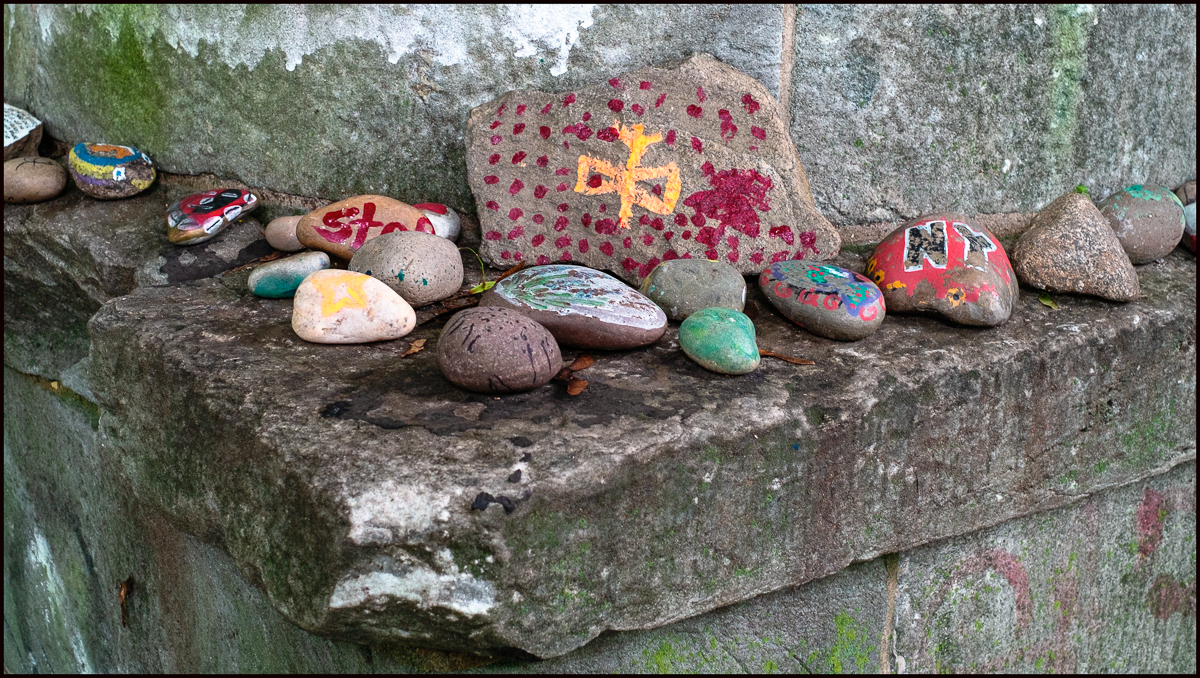
Ventilators, conical stone towers about 20 feet high, were placed about a mile apart along the Aqueduct “to give free circulation of air through the Aqueduct,” in the words of the chief engineer John Jervis. The aqueduct has 21 of these ventilators – this is number 18. Although interesting after a while they all tend to look very much the same… but not this one.

On my walks I’ve passed many of these ventilators, but this one is unique in my experience. Someone (or some people) have placed brightly colored stones around the base. This seems to have happened during the pandemic, possibly to cheer passers-by up. Very nice.


Taken with a Fuji X-E1 and Fuji XF 35mm f1.4 R

A Walk along the Old Croton Aqueduct – The Keepers House, Dobbs Ferry

“During the active days of the Aqueduct, overseers in charge of patrolling and maintaining specific sections of this infrastructure vital to New York City were provided with houses on or near the section of the tunnel for which they were responsible. The only one of these houses that survives in its original location is the classic, brick Italianate-designed structure on the trail at Walnut Street in Dobbs Ferry. The Keeper’s House was built in 1857, and was the home of James Bremner, the principal superintendent of the Aqueduct, north of New York City. The house is a contributing feature of the aqueduct trail, which was designated a National Historic Landmark in 1992.

Last inhabited in 1962, the Keeper’s House was kept on life support through FOCA’s volunteer efforts and emergency repairs by NYS Parks. Its rehabilitation, which began in 2001, was a collaboration that included the Friends of the Old Croton Aqueduct, New York State Office of Parks, Recreation & Historic Preservation and Stephen Tilly, Architect. The shared goal was to apply preservationists’ resourcefulness to return grace and usefulness to a neglected shell. Working diligently to address the project’s unique challenges and striving to meet the highest preservation standards, the team completed the restoration in 2016. Surviving portions of original trim and moldings were refurbished to tell the restoration story. No attempt was made to replicate many missing architectural elements, to reveal the impact of years of use (and neglect) while still displaying the vintage details that affirm the Croton Aqueduct Department’s regard for the superintendent and pride in their history-making enterprise. The successful restoration project was honored at the 2016 New York State Preservation Awards and was the recipient of a 2016 Greater Hudson Heritage Network Award for Excellence”. (Friends of the Old Croton Acqueduct-FOCA).


This interesting building is directly across the street from The Keepers House. I have no idea if it has any historical significance – probably not. I just liked the way it looked.

Taken with a Fuji X-E1 and Fuji XF 35mm f1.4 R