Film Camera 2022 – 1 Moskva 5 – Results

As mentioned in the preceding post I had used this camera before but the results were pretty much a disaster. So how did I do this time?

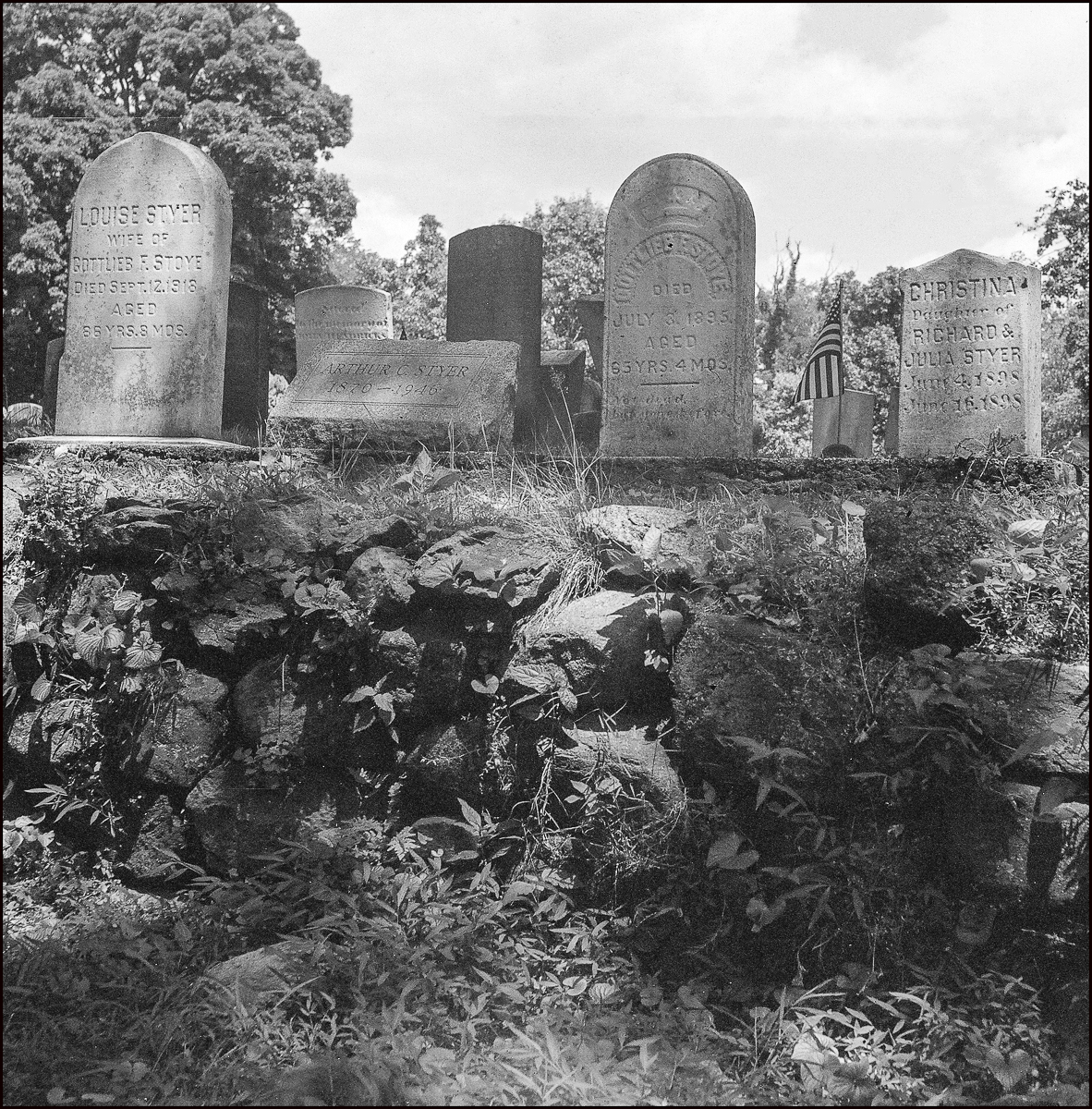
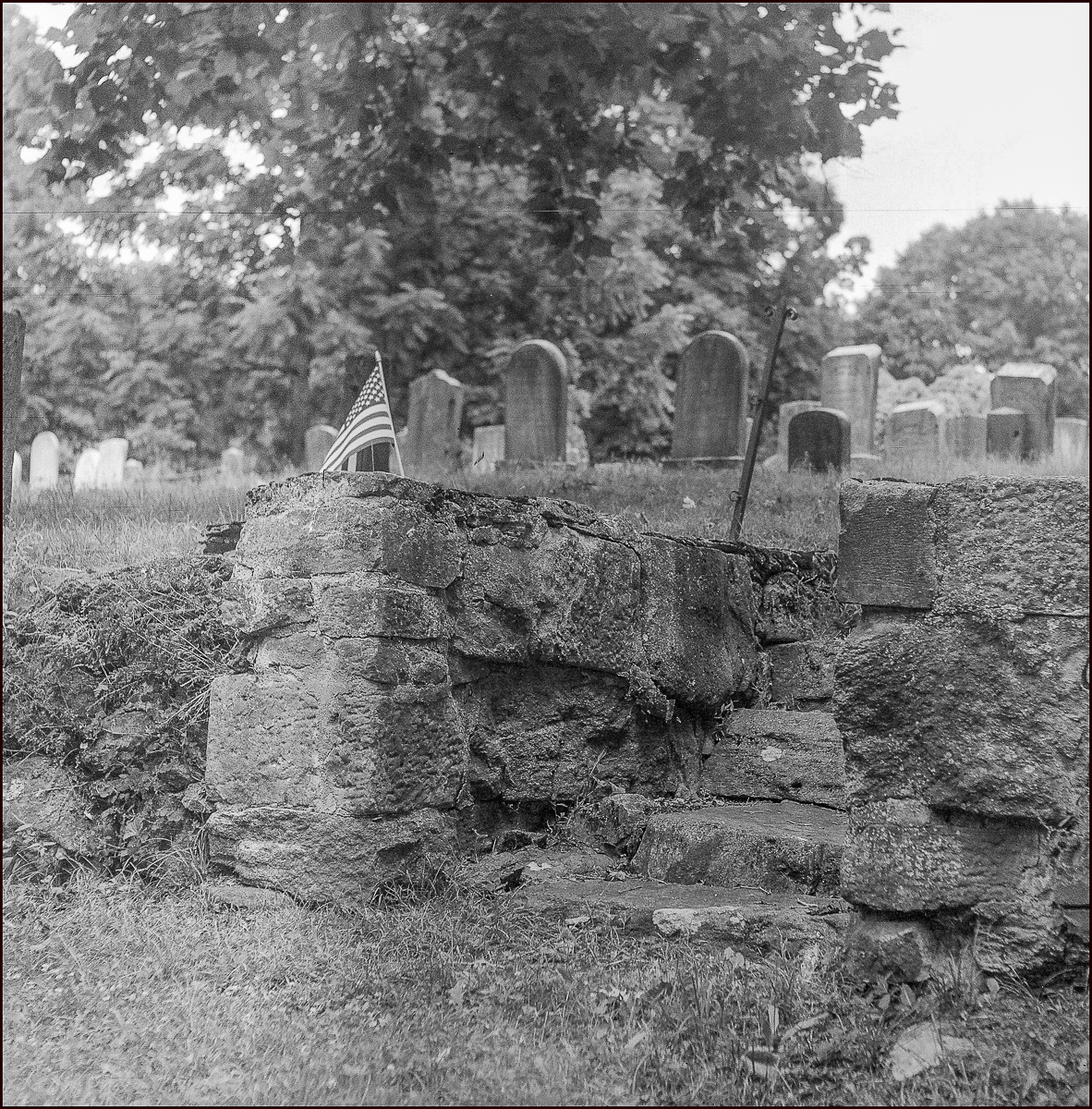
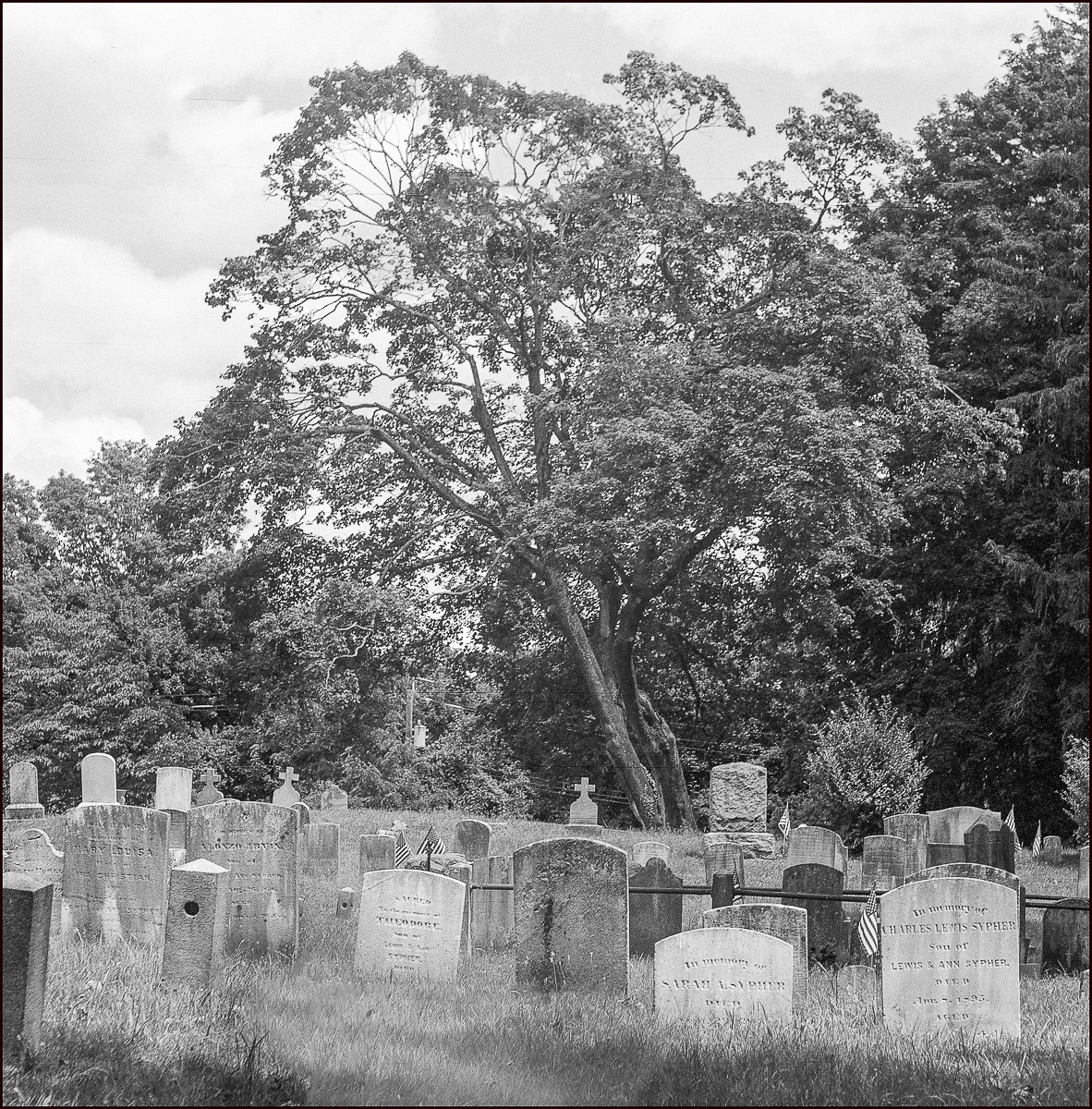
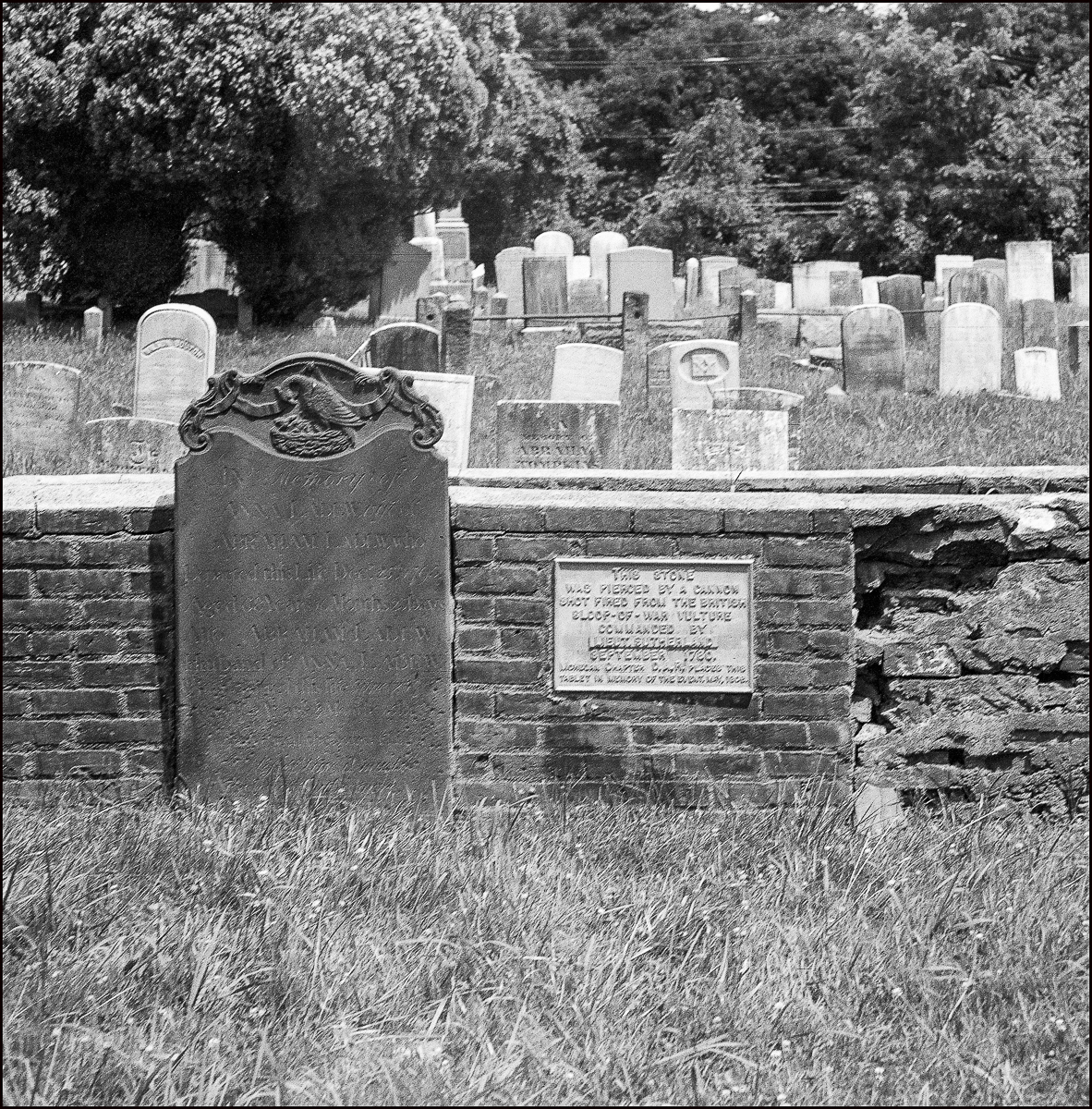
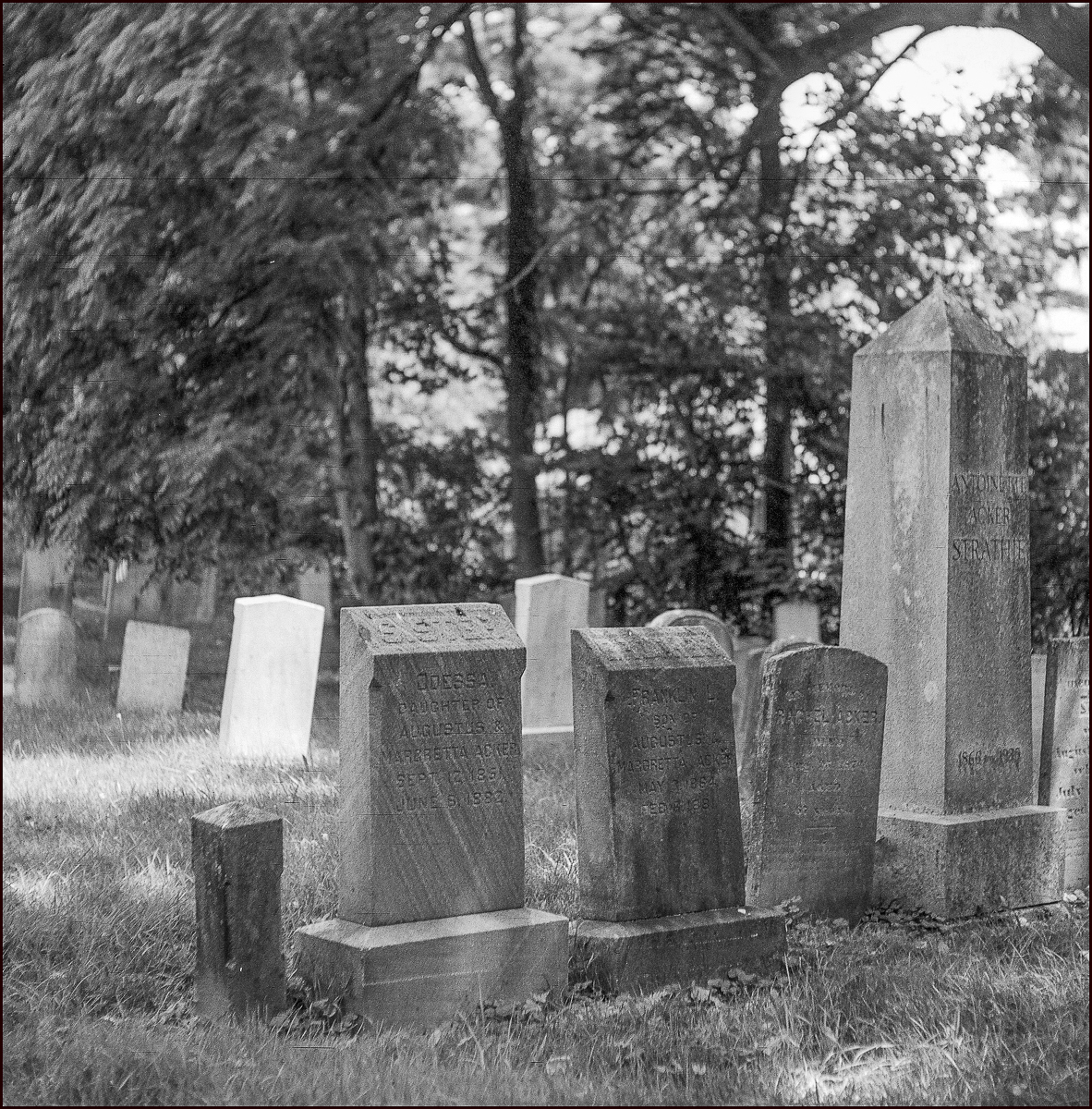
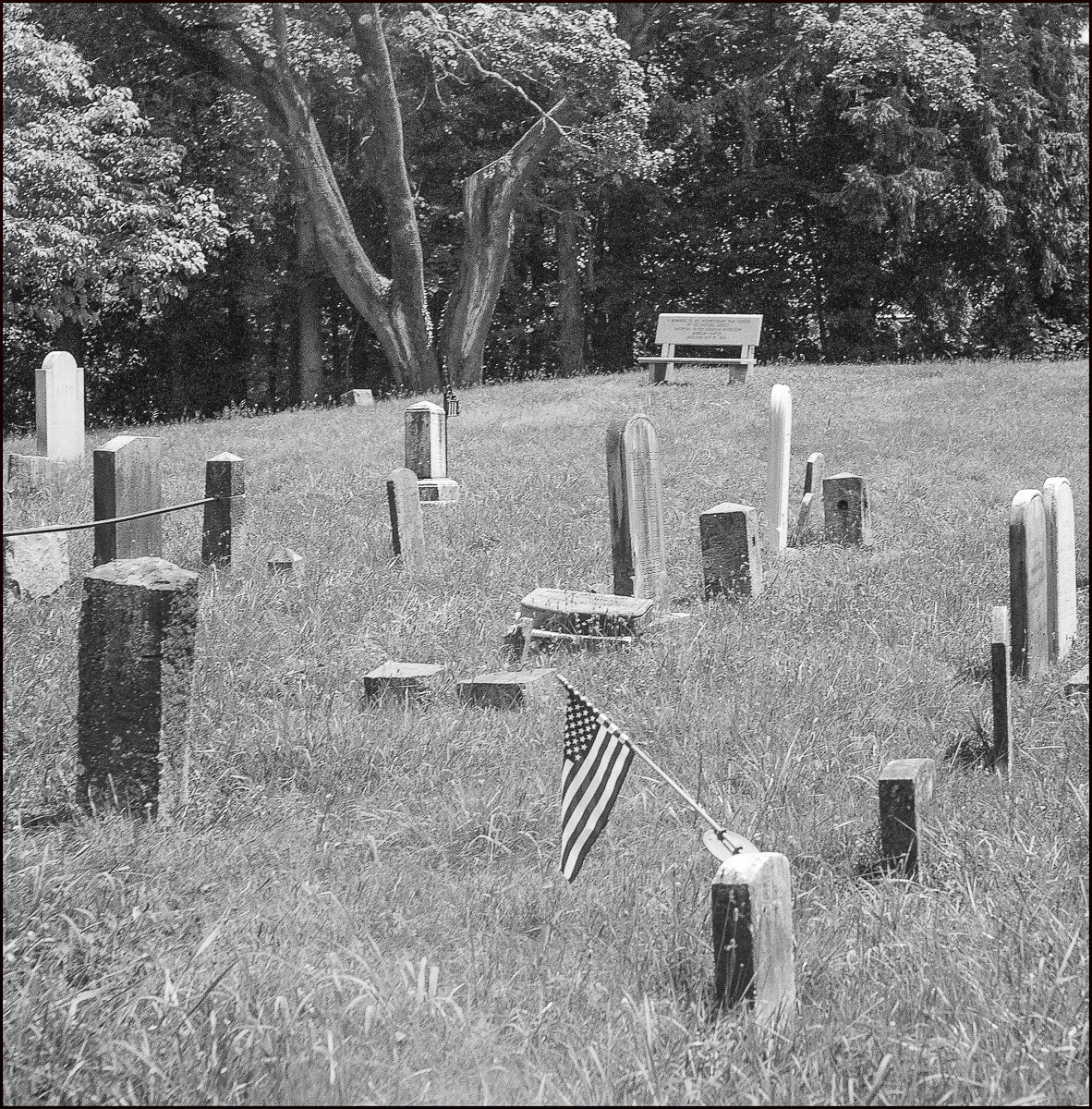
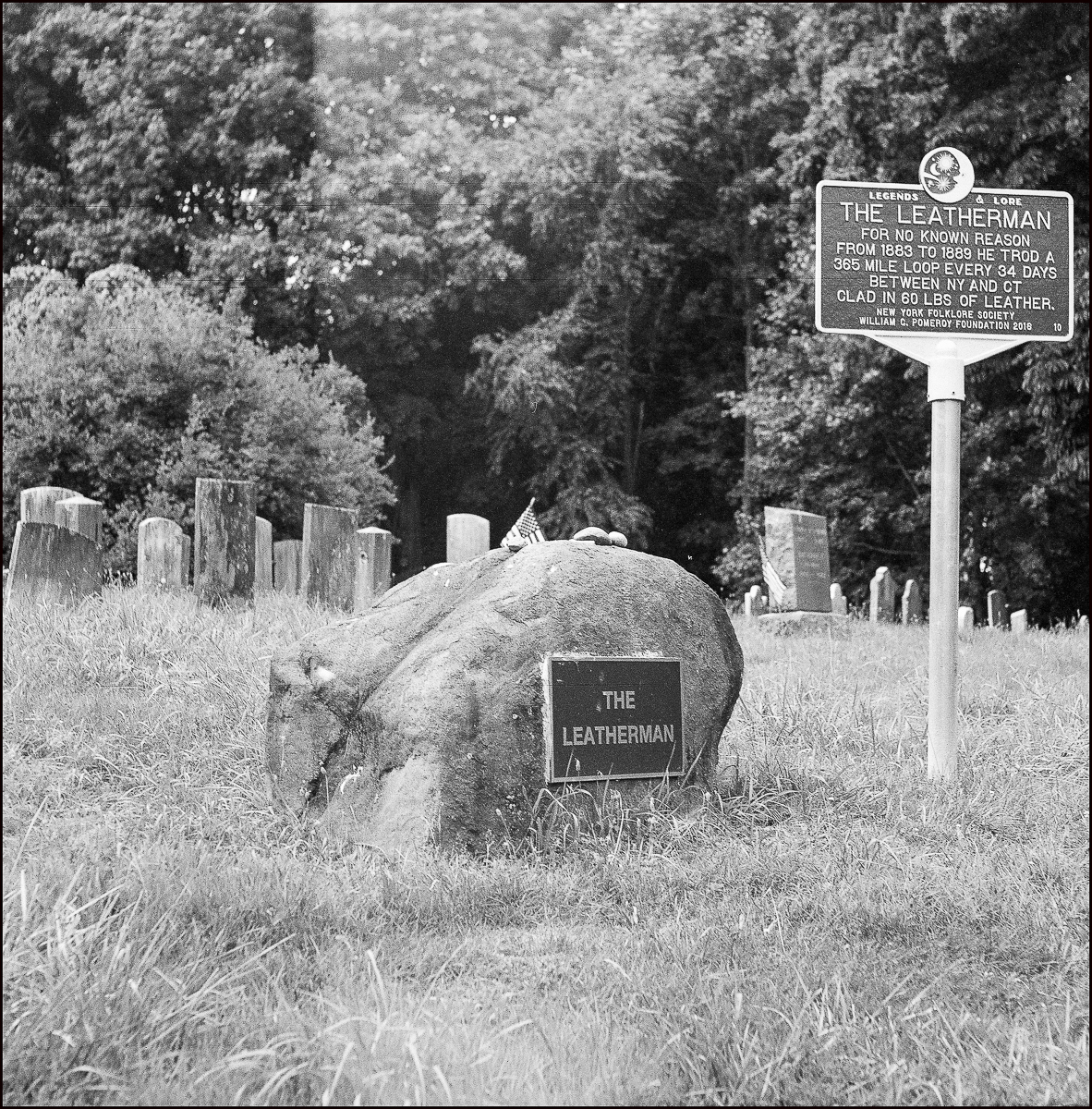
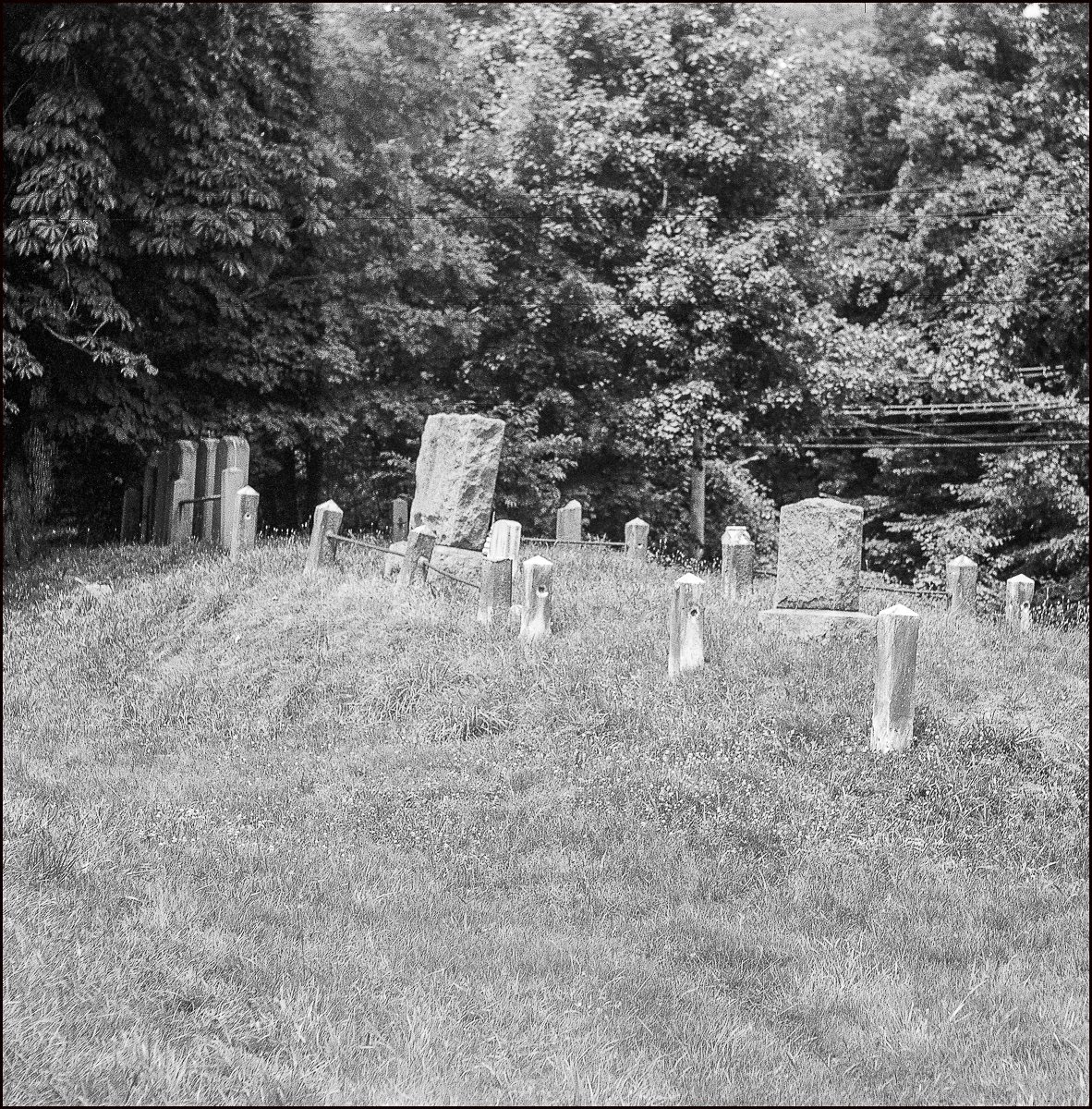
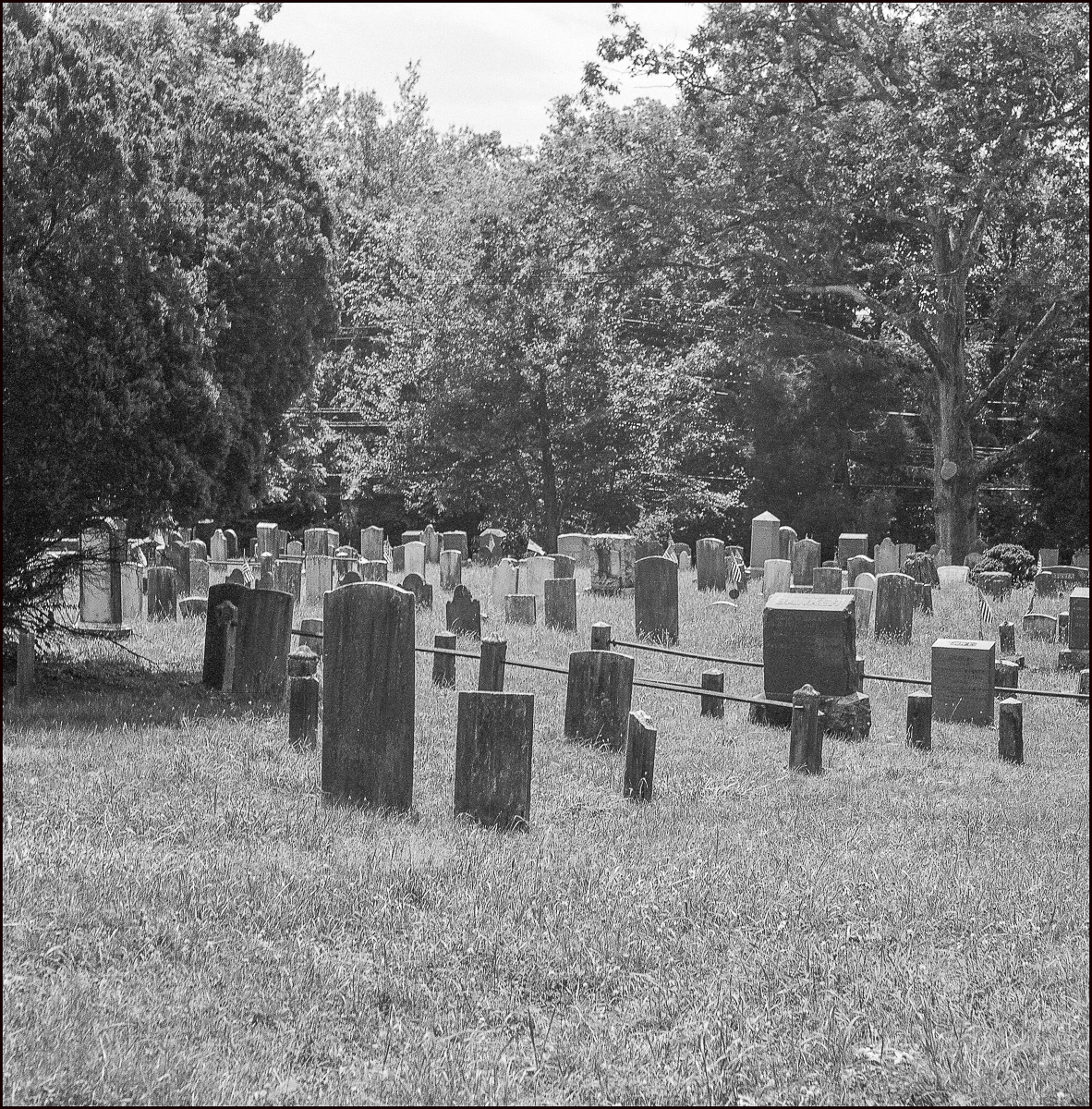
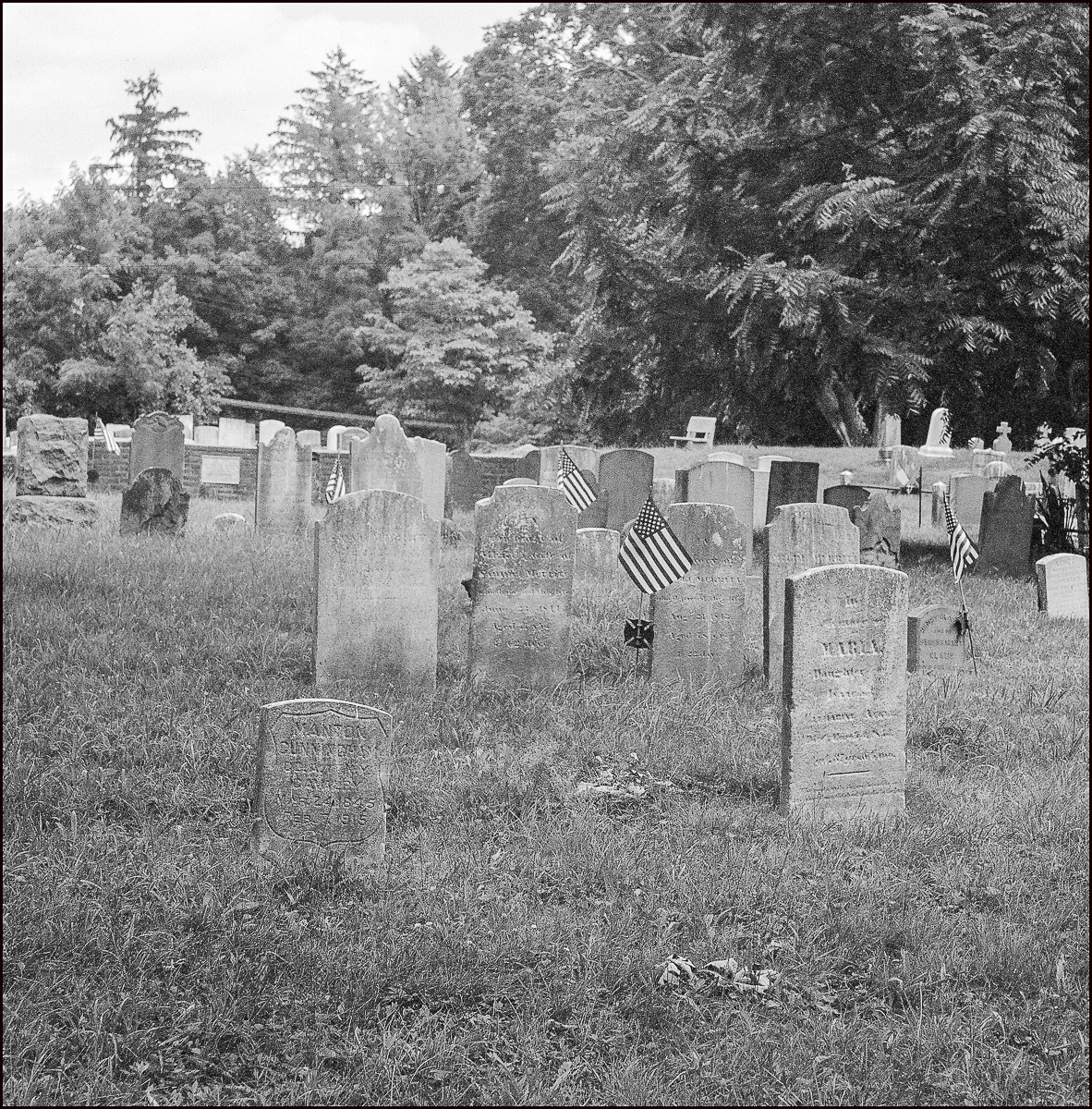
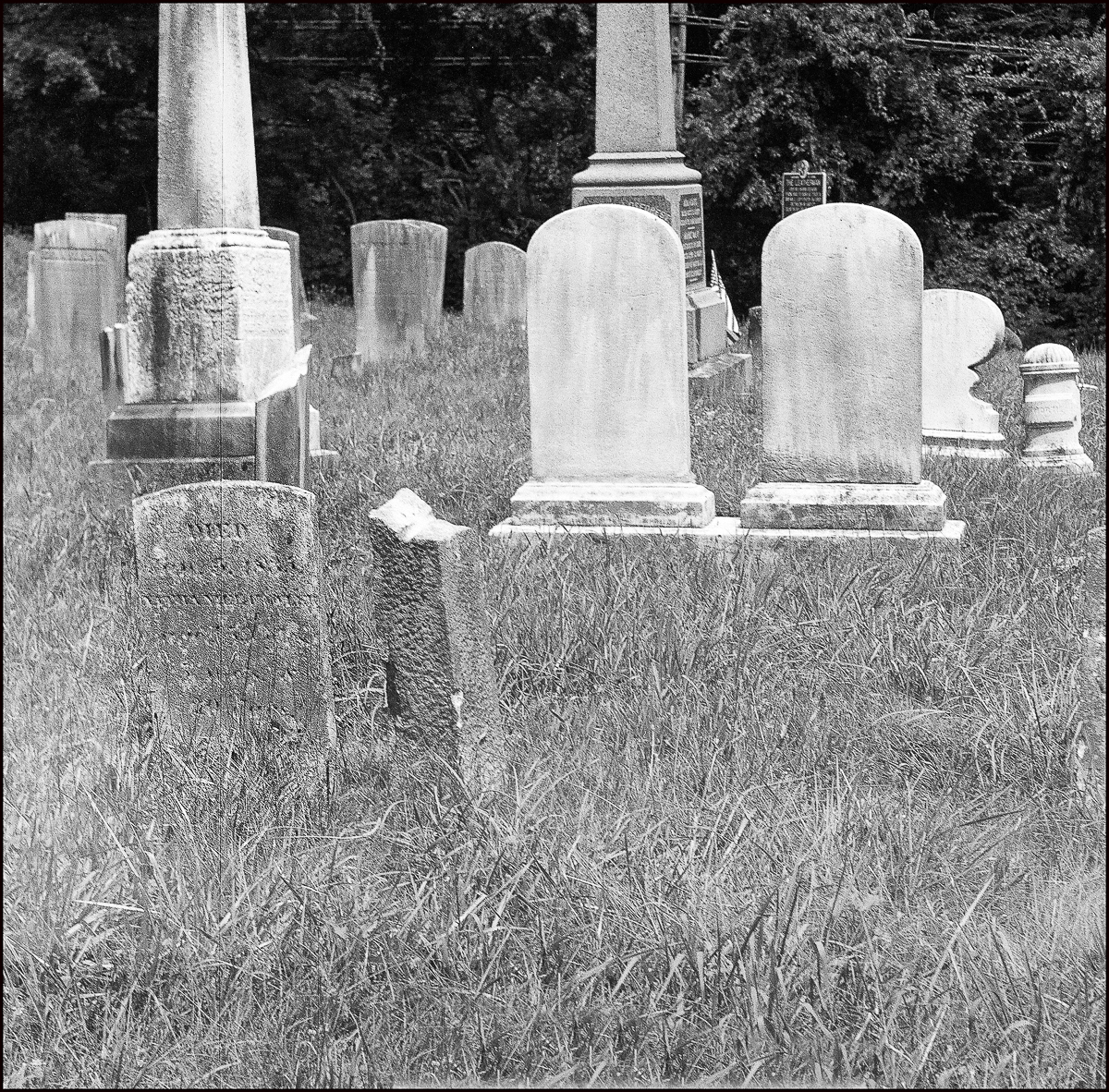
I decided to walk down to nearby Sparta Cemetery to take the pictures. Generally speaking I was satisfied with the results. I only lost one frame, the very first one on the roll. I had loaded the camera some time ago and I knew when I came to use it that I’d lost that first frame, but I can’t remember why. The other 11 frames were decently exposed despite the fact that I couldn’t remember what film I’d put in the camera. I figured that it would be either ISO 100 or ISO 400 and decided to expose at ISO 200. It turned out that it was Kodak T-Max 100 but I guess there’s enough exposure latitude that even though I was one stop off it didn’t cause much of a problem. Focusing using the small rangefinder window was difficult, but the rangefinder seemed to work well.

There were a couple of issues with the camera, however. First, there were some scratches on some of the negatives. Nothing too drastic but still…There was also a slight light leak on some of the frames. But not all, which made me wonder if it was instead flare or some kind of reflection from something I was carrying. Again nothing too serious.

The worst thing about using this camera was definitely it’s ergonomics. I find it very difficult to hold. I just didn’t know where to put my hands. The focusing rings are right at the front of the bellows requiring me to hold the camera with one hand (already difficult for me) and try to focus using the other one. I suspect that the camera was designed to be used on a tripod, where with both hands free such adjustments would have been easier. The camera has separate viewfinder and rangefinder windows, which I suppose is about par for the course in cameras from this period. The rangefinder is particularly “squinty”. It works, but it’s hardly a pleasurable experience. I found framing subjects accurately using the viewfinder to be difficult, at least in 6×6 format (although when I used the camera before in 6×9 format I don’t recall that this was a problem.

I also find that I don’t instinctively relate to the 6×6 format – at least not at the moment. Maybe with more practice I could get more comfortable with it.

So at the end of the day I don’t see me using this camera very much. I could fix or live with the scratches and the light leak/flare, but I just don’t enjoy using it. So my quest to find a medium format camera that I would really enjoy using continues.


Film Camera 2022 – 1 Moskva 5

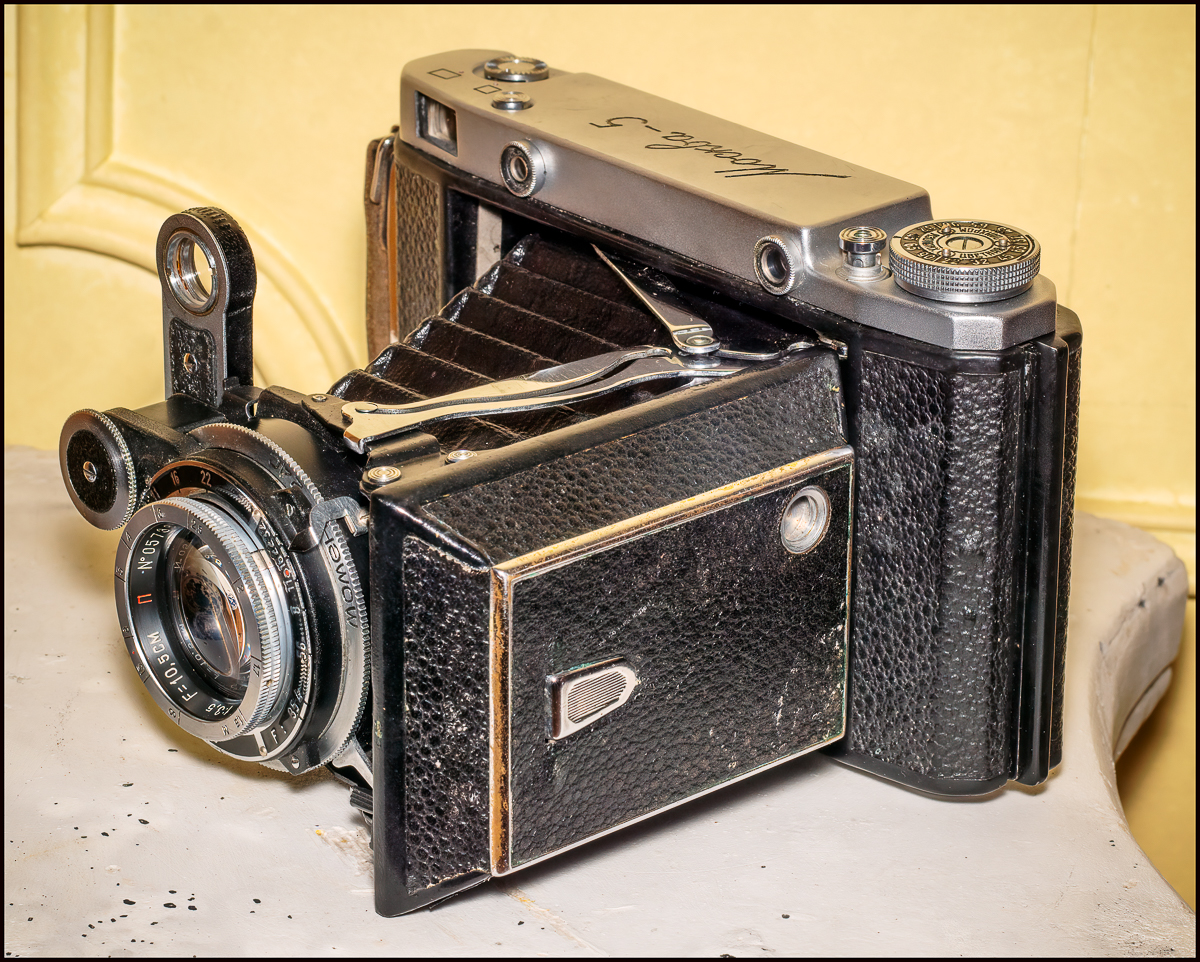
I haven’t done any film photography for quite some time so I thought I’d start again. The camera I chose was the Moskva 5.

According to Camerapedia:

The Moskva-5 (MOCKBA-5 in cyrillic) is a medium format rangefinder folding camera made by KMZ and produced between 1956-60.

Its main difference from Moskva-4 is added selftimer.

Earlier models of the Moskva were copies of the Zeiss Ikon Super Ikonta C. Unlike earlier models, this model is a Zeiss Super Ikonta adapted form, rather than a clone and unlike the Super Ikonta, its solid top plate has a built-in rangefinder and a dual-format viewfinder. Moskva-5 is the latest model in a series of cameras Moskva brand. Main difference from Moskva-4 is added self timer. The Moskva-5 was undoubtedly designed as an expensive professional camera, and not as an amateur model. It was built in an age (1956–1960) when 35mm photography was already suppressing 120-film, and only professionals still insisted on using the larger format. Its dual-format characteristics, rangefinder and excellent lens and finish indicate professional use also. Apparently these cameras were used until very late (the 1980’s?) by Moscow street photographers.

There are 2 types and 2 sub-types of the Moskva-5.

The back of the camera showing the year of production (1958), two red windows for 6×6 and 6×9 numbering, the rangefinder window (left) and the separate viewfinder window (right). The symbol to the left of the serial number is the Krasnogorsk company logo.

Dual Format

Super Ikontas were made either for the 6×9 or 6×4.5 format. The Moskva-5 is a 6×6 and 6×9 camera. Since it has a fixed 105mm Industar lens, at 6×6 you have a mild tele at your disposal. To use the 6×6 size, you need to set the viewfinder to the square format. there is a lever to select the right window so you can see the numbering on the film back. The pressure plate does not need to be removed. The 6×9 red window is now blocked, so there’s no room for confusion.

As a last step, the 6×6 mask has to be inserted. The camera locks right into its holes. Close the camera and you’re ready to shoot.

Operation

The Moment 24c is a leaf shutter with speeds of B, 1 to 1/250s. To fire it, the film needs to be transported or the release button will be blocked, indicated by a red window on the top plate. The shutter isn’t set by advancing the film; it has to be cocked at the lens by a lever. To take a picture, press the button on the left of the camera top. The button on the right is for unlocking the front plate when the camera is collapsed. Before folding the camera, you shouldn’t forget to push down the lever with the glass window.

Specifications

Lens: Industar-24 (И-24) 110mm f/3.5 four elements in three groups
Aperture: f/3.5 – f/32 setting: lever and scale on the lens
Focus range: 1.5-15m + inf
Focusing: by a thumb lever, fixed onto the lens-shutter barrel plate,rotates wedge-shaped prisms in its window, turning the knob to focus rotates the glass, thus adjusts the rangefinder images that must be matched, the rangefinder window on the middle of the top plate sees this prisms apparatus window directly, (prisms assembly is rotatable 180 degrees to the right for the bellows closing) with no mechanical linkage between the lens and the body. Focusing is possibleby directly rotating the front lens element also.
Shutter: Moment-24S (Mомент-24C) leaf shutter, speeds 1-1/250 +B; setting ring and scale on the lens-shutter barrel
Cocking lever: on the lens-shutter barrel, not depends the winding
Shutter release: left side of the top plate, beside the winding knob, releasing is also possible by a knob on the right front side of the struts. To fire the shutter, the film needs to be transported, if not, the release button will be blocked, a double exposure locking mechanismindicated by a small window beside the winding knob, before winding it is white and the shutter release is blocked and after winding it is red and shutter release works
Winding knob: left side of the top plate
Viewfinder:coupled rangefinder and dual-format separate viewfinder for larger field of view, separate windows and eye-pieces. The two rangefinder windows are 6.5 cm apart (very long) for accurate focusing. Frame view changes according to the frame size adjustment lever that points the engravings, a square (6×6) and a rectangle (6×9), on the right of the top plate, this thumb lever moves a sliding frame in the viewfinder
Memory dial: on the winding knob, you can set three film types, and with each film type, four film speeds : (in cyrilic) Tsvetnaya (colour film): 22, 32, 45, 65 GOST, Panchrom (b/w film): 32, 45, 65, 90, Izopanch (b/w film): 32, 45, 65, 90
Bellows opening button: on the right of the top plate; closing: simultaneously pressing to the two struts’ back arms
Flash PC socket: X sync, on the shutter
Self timer: knob on top of the shutter
Back cover: removable, a lever in it for controlling 6×6 and 6×9 frame red window’s lids, opens by a latch on the right side of the camera
Two red window on the back cover w/ built in lids, right lower side one is for 6×9
Engravings in the back cover: Сделано в СССР (Sdelano v SSSR = Made in USSR)
Engravings on the top plate: Mockba -5 (hand writing style), and on the back of the top plate: KMZ logo and the serial number
Serial no. the first two digit show the production year
Leather hand grip
Two tripod sockets, 3/8″, on the bottom plate and on the front cover
Body: made by injection molding, weight: 867g

According to the serial number this particular camera was made in 1957, which makes it nearly as old as I am. I used it once before, but because of my lack of familiarity with the camera I messed everything up (See: Film Camera 2019/10 Moskva 5 – Results for the whole sorry story). On that occasion I used the camera in 6×9 format. This time I decided to try it in 6×6 format.

For a more thorough review see here.

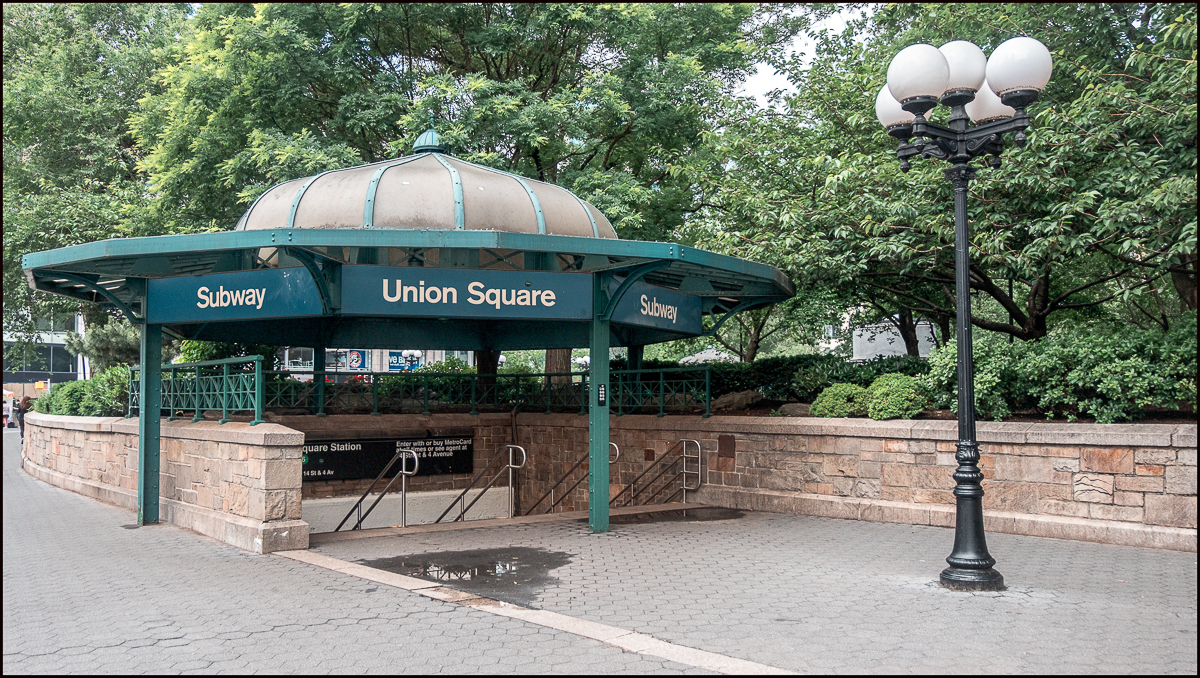
In Manhattan. Union Square Subway Station

According to Wikipedia:

The 14th Street–Union Square station is a New York City Subway station complex shared by the BMT Broadway Line, the BMT Canarsie Line and the IRT Lexington Avenue Line. It is located at the intersection of Fourth Avenue and 14th Street, underneath Union Square in Manhattan. The complex sits on the border of several neighborhoods, including the East Village to the southeast, Greenwich Village to the south and southwest, Chelsea to the northwest, and both the Flatiron District and Gramercy Park to the north and northeast. The 14th Street–Union Square station is served by the 4, 6, L, N, and Q trains at all times; the 5 and R trains at all times except late nights; the W train on weekdays; and ⟨6⟩ train weekdays in the peak direction.

The Lexington Avenue Line platforms were built for the Interborough Rapid Transit Company (IRT) as an express station on the city’s first subway line, which was approved in 1900. The station opened on October 27, 1904, as one of the original 28 stations of the New York City Subway. As part of the Dual Contracts, the Broadway Line platforms opened in 1917 and the Canarsie Line platform opened in 1924. Several modifications have been made to the stations over the years, and they were combined on July 1, 1948. The complex was renovated in the 1990s and was placed on the National Register of Historic Places in 2005.

The Lexington Avenue Line station has two abandoned side platforms, two island platforms, and four tracks, while the parallel Broadway Line station has two island platforms and four tracks. The Canarsie Line station, crossing under both of the other stations, has one island platform and two tracks. Numerous elevators make most of the complex compliant with the Americans with Disabilities Act of 1990 (ADA). The Lexington Avenue Line station, serving the 4, ​5, ​6, and <6> trains, is not ADA-accessible. In 2016, over 34 million passengers entered this station, making it the fourth-busiest station in the system

I didn’t know any of this. I just liked the way it looked, a bit like the Art Nouveau stations of the Paris Métro, and certainly a cut above the usual utilitarian look of other NY subway stations.

Taken with a Fuji X-E3 and Fuji XC 16-50mm f3.5-5.6 OSS II

In Manhattan. A few statues.

During my walk along Lexington and Third avenues I came across a number of statues.

Above: The statue of Edwin Booth in Gramercy Park, erected in 1918, is one of the most notable features of the Park. The Shakespearean actor, who is seen depicted as Hamlet, was one of the most celebrated actors of the 19th century. His achievements, however, were overshadowed by his brother John Wilkes Booth, who assassinated President Abraham Lincoln in 1865. Decades following the incident, Edwin Booth founded the Players Club, on Gramercy Park South, as a place for actors and other creatives to congregate. Every year, on November 13th (Booth’s birthday), members of the club place a wreath on the statue. Incidentally it’s impossible to get closer to the statue than this as Gramercy Park is private (one of only two in New York City, the other one being Sunnyside Gardens Park in Queens) and only people residing around the park who pay an annual fee have a key.


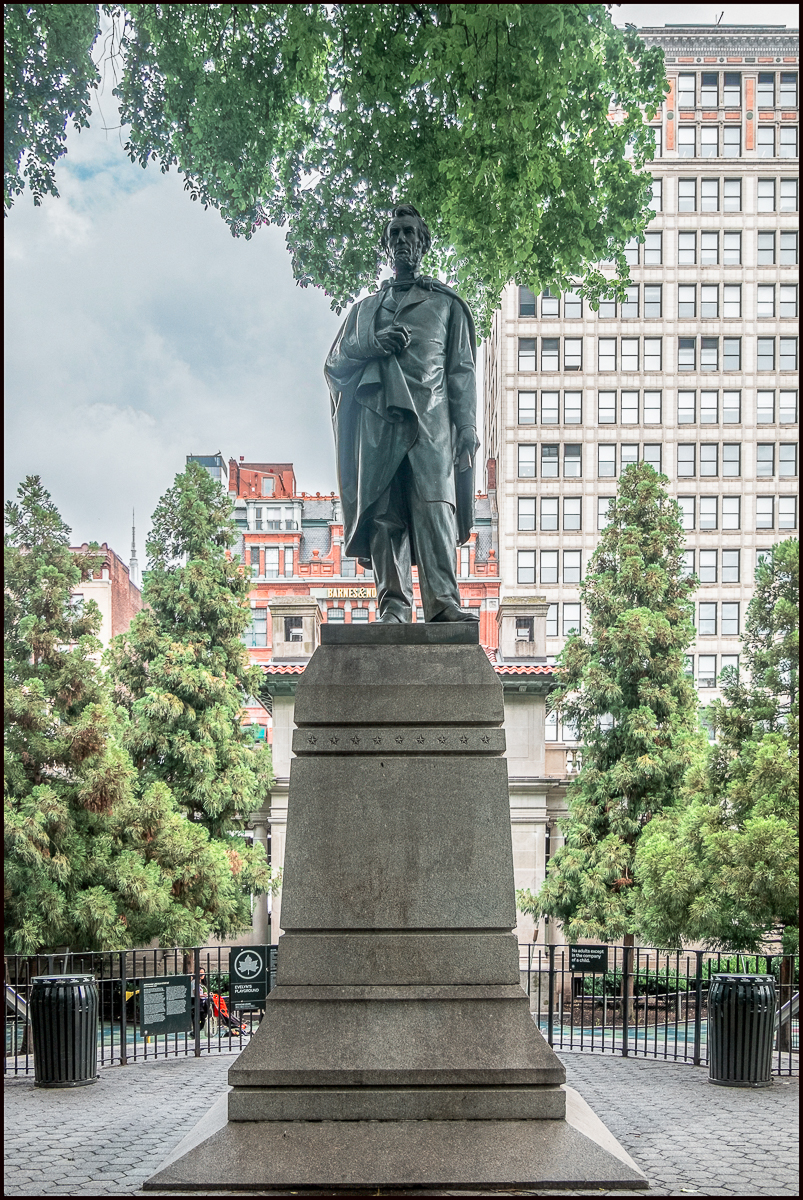
As the statue above was the brother of Abraham Lincoln’s assassin it is perhaps appropriate that the next one should be a picture of Lincoln himself. One of three sculptural renditions of Abraham Lincoln (1809–1865) in New York City’s parks, this larger-than-life bronze by Henry Kirke Brown (1814–1886) stands vigil on a busy crossroads at the north end of Union Square Park.


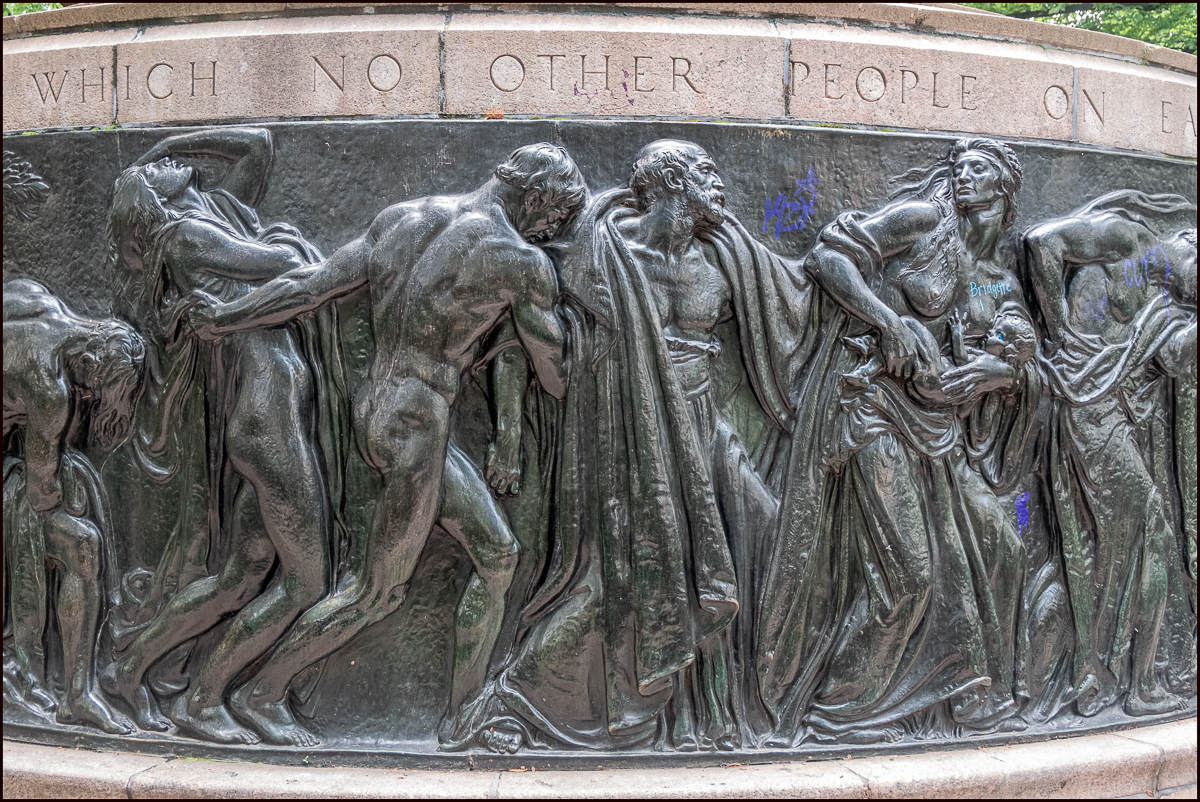
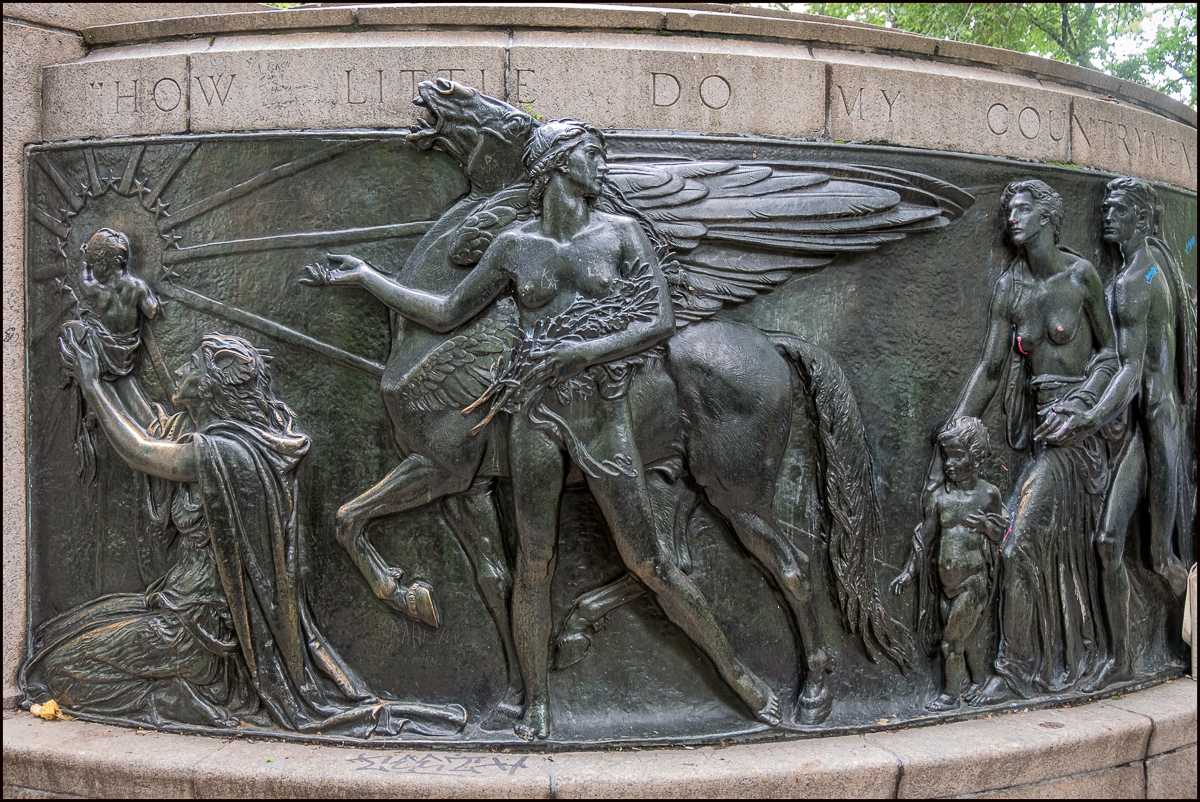
This and the next picture depict details of the frieze around the base of the Murphy Memorial Flagpole. The intricate bas-reliefs and plaques were completed in 1926 by sculptor Anthony De Francisci (1887–1964), and feature a procession of allegorical figures representing democracy and tyranny, the text of the Declaration of Independence, and emblems from the original 13 colonies. The enormous flagpole, said to be one of the largest in New York State, is capped with a gilded sunburst.

The Independence Flagstaff was a gift of the Tammany Society, and replaced a flagstaff built during the tenure of Tammany president Charles F. Murphy (1858–1924), a boss in the infamous political machine. After Murphy’s death, Tammany supporters wanted to dedicate this bigger and better flagstaff to Murphy. Public sentiment prevented honoring a symbol of Tammany corruption in a manner commensurate with Lincoln and Washington at Union Square Park, and by the time the Murphy Flagpole was dedicated on July 4, 1930, to commemorate the 150th anniversary of the Declaration of Independence, it was referred to as the Independence Flagstaff. The flagstaff has been restored extensively through the years, most recently in 1987 when the stone pedestal was renovated and the flagpole reinstalled.


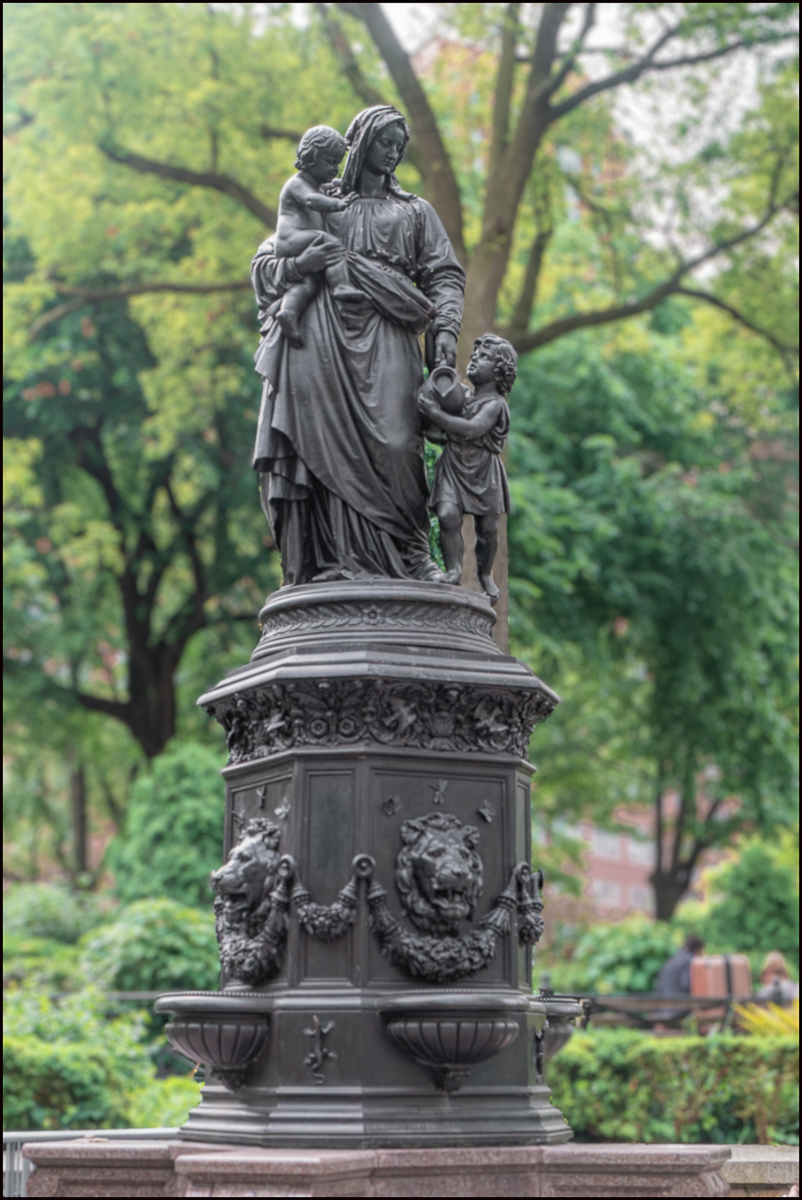
The James Fountain. The Fountain was sculpted by Karl Adolph Dondorff and was dedicated in 1881. Daniel James donated the Fountain to serve as a cure for alcoholism. It was one of a number of temperance fountains that were constructed in the city because temperance advocates believed that clean water could cure the affliction of alcohol. Tin cups, that have since been lost to time, were chained to the fountain for people to use.


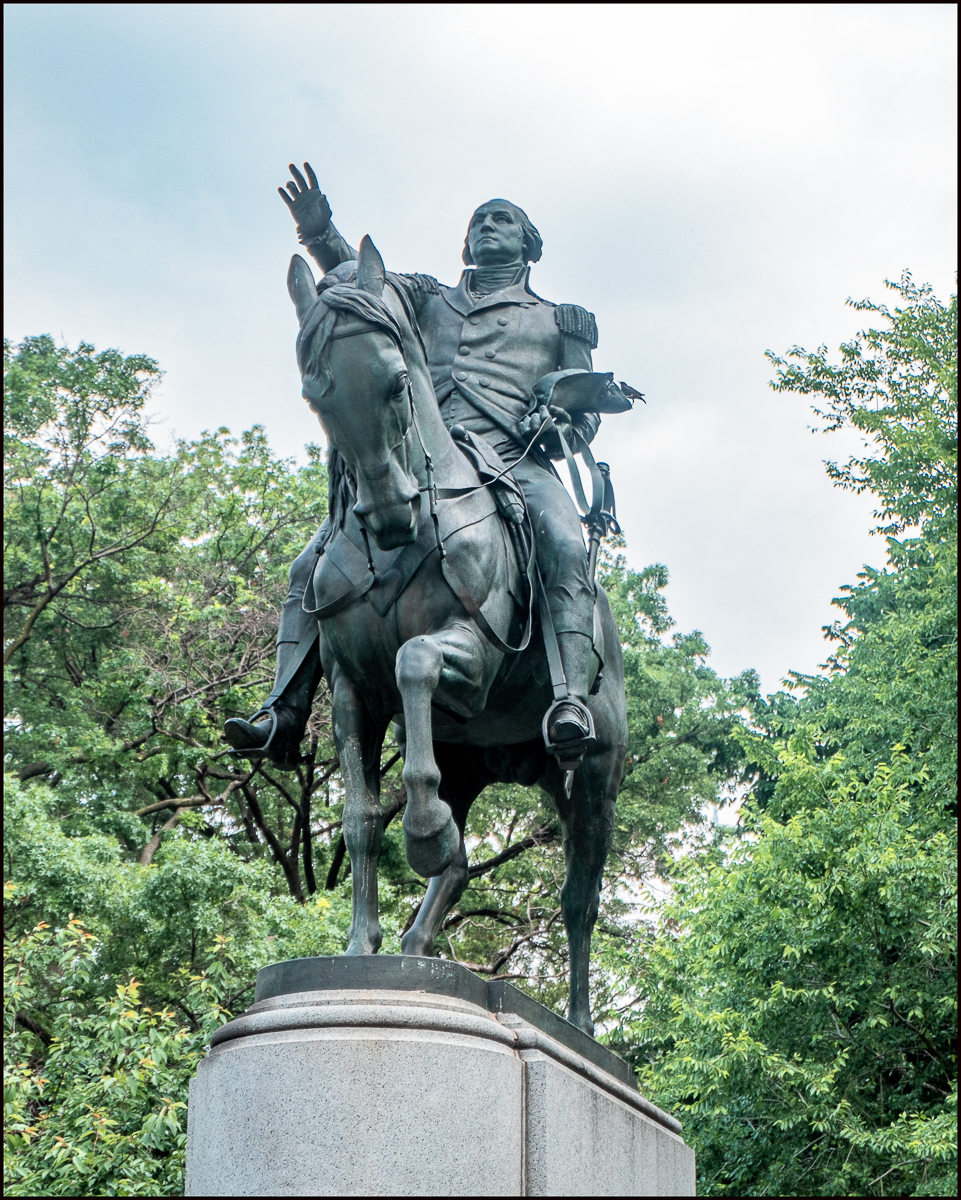
Equestrian statue of George Washington. Washington is depicted reclaiming the city from the British on November, 25, 1783, Evacuation Day (the day the British evacuated the last of their troops from New York City). The statue was dedicated on July 4, 1856, and is the oldest statue owned by the New York City Parks Department. It was sculpted by Henry Kirke Brown and John Quincy Adams Ward and the base was designed by Richard Upjohn. The placement of the statue was an homage to an 1873 event in Union Square honoring Washington’s leadership in the Revolution. Apparently there are also statues of Gandhi and the Marquis De Lafayette in Union Square Park, but I must have missed them.

I came across this statue on Irving Place. It had no identifying marks and for a while I was mystified.

According to Wikipedia:

The East 17th Street/Irving Place Historic District is a small historic district located primarily on East 17th Street between Union Square East and Irving Place in the Union Square neighborhood of Manhattan, New York City. It was designated by the New York City Landmarks Preservation Commission on June 30, 1988, and encompasses nine mid-19th century rowhouses and apartment buildings on the south side of East 17th Street, from number 104 to number 122, plus one additional building at 47 Irving Place just south of 17th Street.

An unfounded local legend claims that writer Washington Irving, for whom Irving Place is named, lived in the house in the foreground house, 122 East 17th Street, also known as 49 Irving Place; also in the photo is 47 Irving Place.
Most of the houses in the district were built in the aftermath of the opening of Union Square in 1839, after which the area became one of the most sought-after residential districts in the city. The houses were primarily made in the Greek Revival and Italianate styles, while later apartment buildings in the district were in the Renaissance Revival style. By 1938, all the single-family dwellings in the district had been converted into apartment buildings.

One of the most significant structures in the district is 122 East 17th Street, also known as 49 Irving Place, which was built in 1843-44 as one of three Greek Revival row houses, along with 47 Irving Place and another no longer extant. It was extended along 17th Street c.1853-54, at which time Italianate features were added. Additional changes were made c.1868-70. Despite a historical plaque on the 17th Street facade, there is no historical evidence for the local legend that Washington Irving lived in this house, although his nephew, Edgar Irving, did live next door at 120 East 17th Street, and had a son named Washington Irving after the writer. Elsie de Wolfe and Elisabeth Marbury, called by The New York Times the “most fashionable Lesbian couple of Victorian New York” lived here from 1892–1911, and de Wolfe may have been instrumental in spreading the Irving rumor.

Of course the name of the area should have given it away. The bust is of Washington Irving. I could have kicked myself when I finally figured it out. I live quite close to Irvington-on-Hudson (the town is named after the famous author of course) and have recently been there for lunch on the river and to visit the Armour-Stiner house. I’ve been fascinated by Irving’s “Legend of Sleepy Hollow” since I was a child and have frequently visited his house, Sunnyside and his grave in the family plot in Sleepy Hollow Cemetery. I should have known it was Irving.

Taken with a Fuji X-E3 and Fuji XC 16-50mm f3.5-5.6 OSS II