
Scarecrows in Law Park, Briarcliff Manor, NY. Happy Hallowe’en. And Happy Birthday Dad.


Taken with a Sony A7IV and Rokinon/Samyang AF 24-70 f2.8 FE
Photographs and thoughts on photography and camera collecting

Scarecrows in Law Park, Briarcliff Manor, NY. Happy Hallowe’en. And Happy Birthday Dad.
Taken with a Sony A7IV and Rokinon/Samyang AF 24-70 f2.8 FE
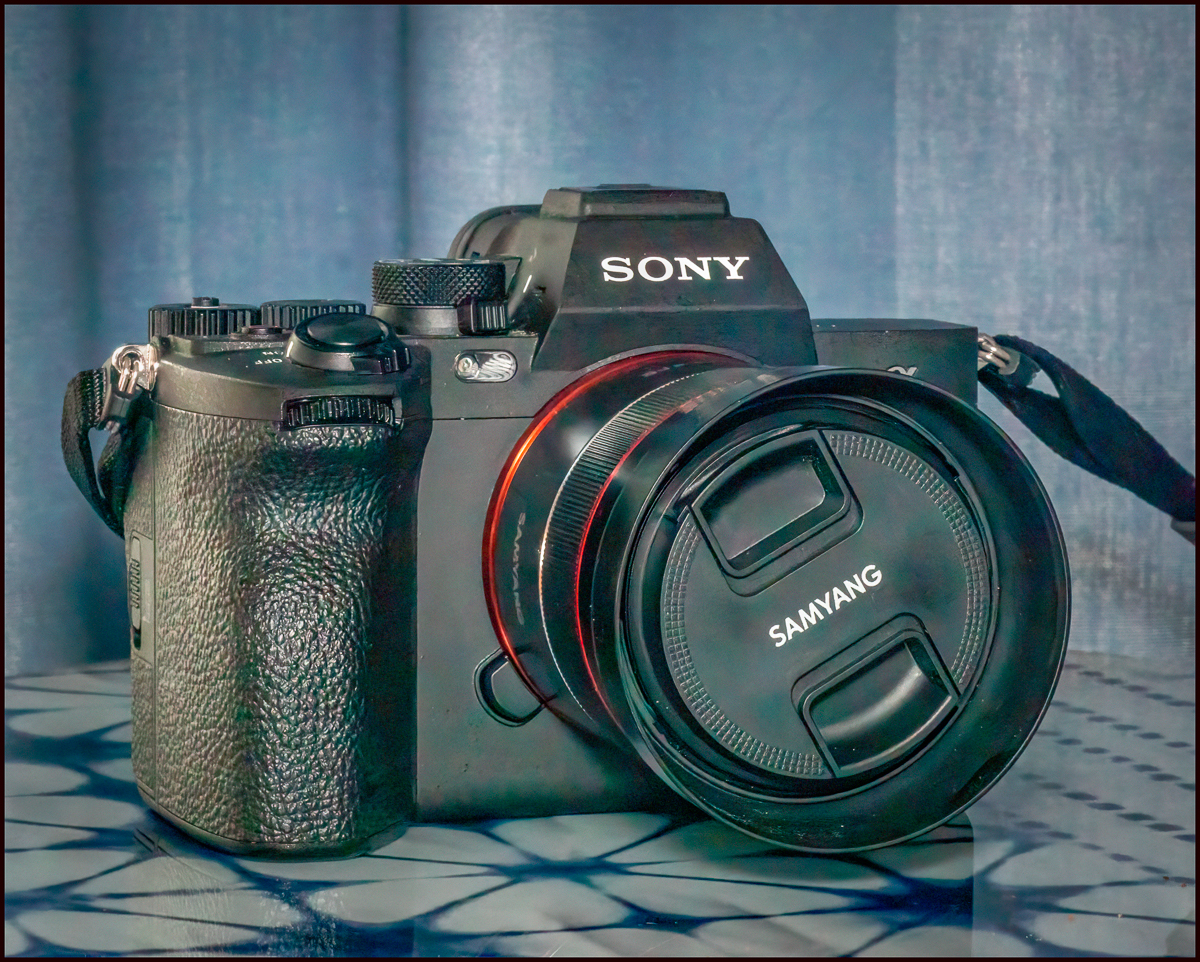
Actually it’s the first brand new camera that I’ve bought in over 10 years. I recently sold some property and I promised myself that after the sale was complete I would treat myself to a new (rather than the used cameras I’ve been buying of late) camera. After my usual tortured selection process I ended up with a Sony A7IV (seen above with a Samyang 45mm f1.8 lens). I bought it soon after it came out in December, 2021.
Camera type: Full-frame mirrorless
Announced: 21st October 2021
Sensor: 33Mp full frame (35.9 x 24.0mm) BSI Exmor R CMOS sensor
Lens mount: FE
Sensitivity range: Stills: ISO 100-51,200 (expandable to ISO 50 to ISO 204,800), Video: ISO ISO 100-51,200 (expandable to ISO 100-102,400)
Still Image format: Jpeg, HEIF, raw (Sony ARW 4.0)
Video format & compression: XAVC S: MPEG-4 AVC/H.264, XAVC HS: MPEG-H HEVC/H.265
4K Video (XAVC HS): 3840 x 2160 (4:2:0, 10bit, NTSC): 60p (150 Mbps / 75 Mbps / 45 Mbps), 24p (100 Mbps / 50 Mbps / 30 Mbps), 3840 x 2160 (4:2:0, 10bit, PAL): 50p (150 Mbps / 75 Mbps / 45 Mbps), 3840 x 2160 (4:2:2, 10bit, NTSC): 60p (200 Mbps / 100 Mbps), 24p (100 Mbps / 50 Mbps), 3840 x 2160 (4:2:2, 10bit, PAL): 50p (200 Mbps / 100 Mbps)
4K Video (XAVC S): 3840 x 2160 (4:2:0, 8bit, NTSC): 60p (150 Mbps), 30p (100 Mbps / 60 Mbps), 24p (100 Mbps / 60 Mbps), 3840 x 2160 (4:2:0, 8bit, PAL): 50p (150 Mbps)5, 25p (100 Mbps / 60 Mbps), 3840 x 2160 (4:2:2, 10bit, NTSC): 60p (200 Mbps)56, 30p (140 Mbps), 24p (100 Mbps), 3840 x 2160 (4:2:2, 10bit, PAL): 50p (200 Mbps)5, 25p (140 Mbps)
4K Video (XAVC S-I): 3840 x 2160 (4:2:2, 10bit, NTSC): 60p (600 Mbps)56, 30p (300 Mbps)6, 24p (240 Mbps), 3840 x 2160 (4:2:2, 10bit, PAL): 50p (500 Mbps)5, 25p (250 Mbps)
Movie functions: Audio Level Display, Audio Rec Level, PAL/NTSC Selector, Proxy Recording (1280 x 720 (Approx. 6 Mbps), 1920 x 1080 (Approx. 9 Mbps), 1920 x 1080 (Approx. 16 Mbps)), TC/UB, Auto Slow Shutter, Gamma Disp. Assist
Autofocus system: Hybrid AF with 759 phase detection points and 425 contrast detection points, Still images: Human (Right/Left Eye Select) / Animal (Right/Left Eye Select) / Bird, Movie: Human (Right/Left Eye Select), sensitive down to -4EV
Maximum continuous shooting rate: 10fps
Viewfinder: 0.5-inch 3,686,400-dot EVF with 100% coverage and up to 0.78x magnification
Screen: 3-inch 1,036,800-dot vari-angletouchscreen
Image stabilisation: 5-axis giving up to 5.5EV compensation
Storage: Dual: 1: SD/SDHC/SDXC (UHS-I/II) & CFexpress Type A slot, 2: SD/SDHC/SDXC (UHS-I/II)
Battery: NP-FZ100 rechargeable Li-ion battery giving 610 images with the screen
Dimensions (WxHxD): 131.3 x 96.4 x 79.8mm / 5 1/4 x 3 7/8 x 3 1/4 inches
Weight (including battery & memory card): 658g / 1 lb 7.3 oz
There’s a good review of it here.
I’m very pleased with my purchase. For some pictures taken with this camera and a variety of lenses see here.
Taken with a Sony A77II and Minolta 50mm f2.8 Macro lens
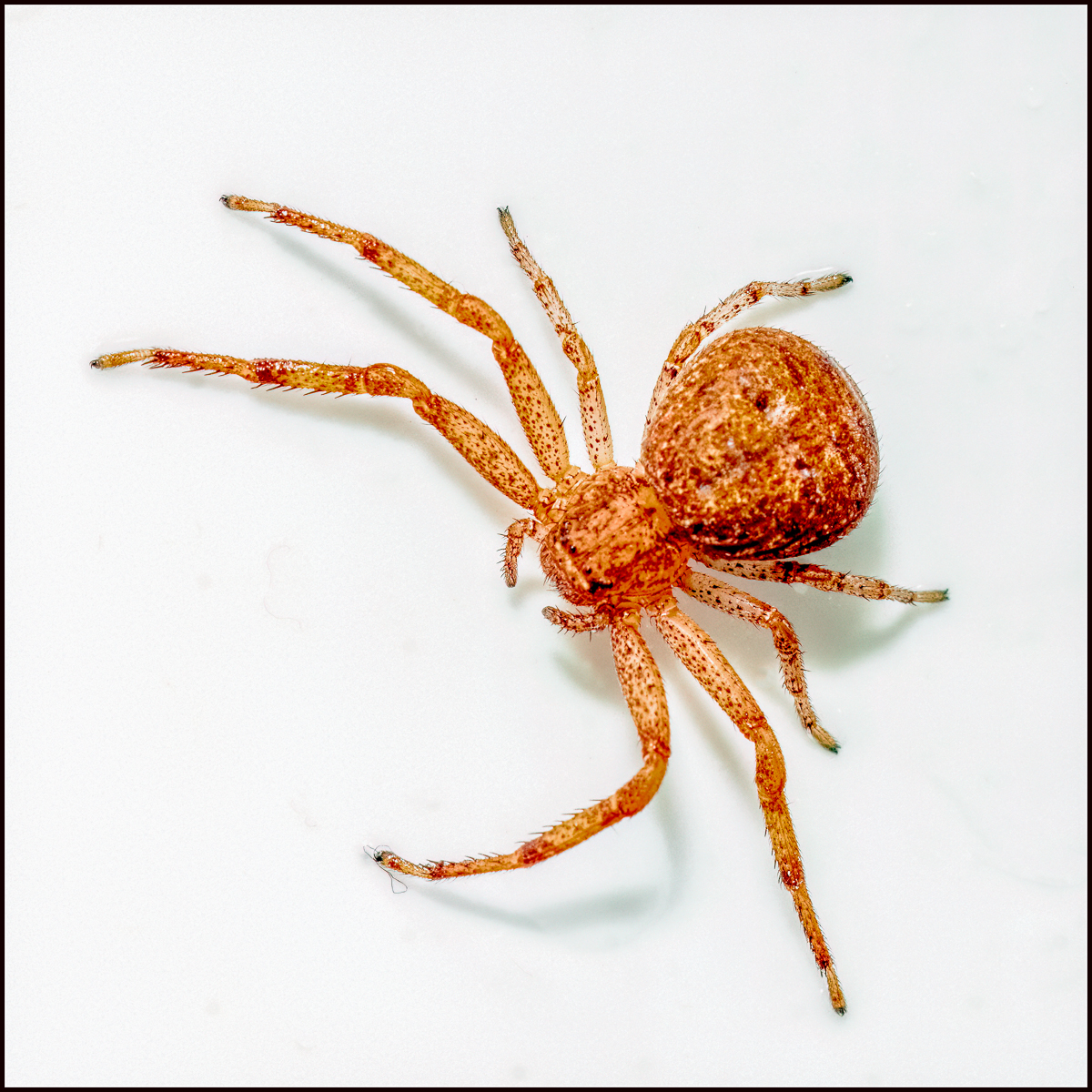
I came across this little beast last weekend. At first I was a little concerned. I thought it was a brown recluse, which would have been a concern because along with the black widows it’s the only seriously venomous spider in the US. I was once bitten by a spider, which produced a painful, necrotic sore that took some time to heal. At the time my wife had been visiting South Africa quite a bit, and I thought that she had perhaps brought back a poisonous spider in her luggage (I found a picture of a South African spider that looked very much like the one that had bitten me). I have since begun to wonder if it might not have a been a brown recluse.
However, on further consideration I no longer think the spider above is a brown recluse. It doesn’t seem to have the typical brown recluse markings on the dorsal side of its cephalothorax: a black line coming from it that looks like a violin with the neck of the violin pointing to the rear of the spider, resulting in the nicknames fiddleback spider, brown fiddler, or violin spider. And the eyes don’t look right for a brown recluse. Also the abdomen of a brown recluse looks longer, almost tubular where this one has a more globe like abdomen.
I don’t really know what it is. Maybe a common house spider? Or some kind of orb weaver?
Taken with a Sony A77II and Minolta 50mm f2.8 Macro lens
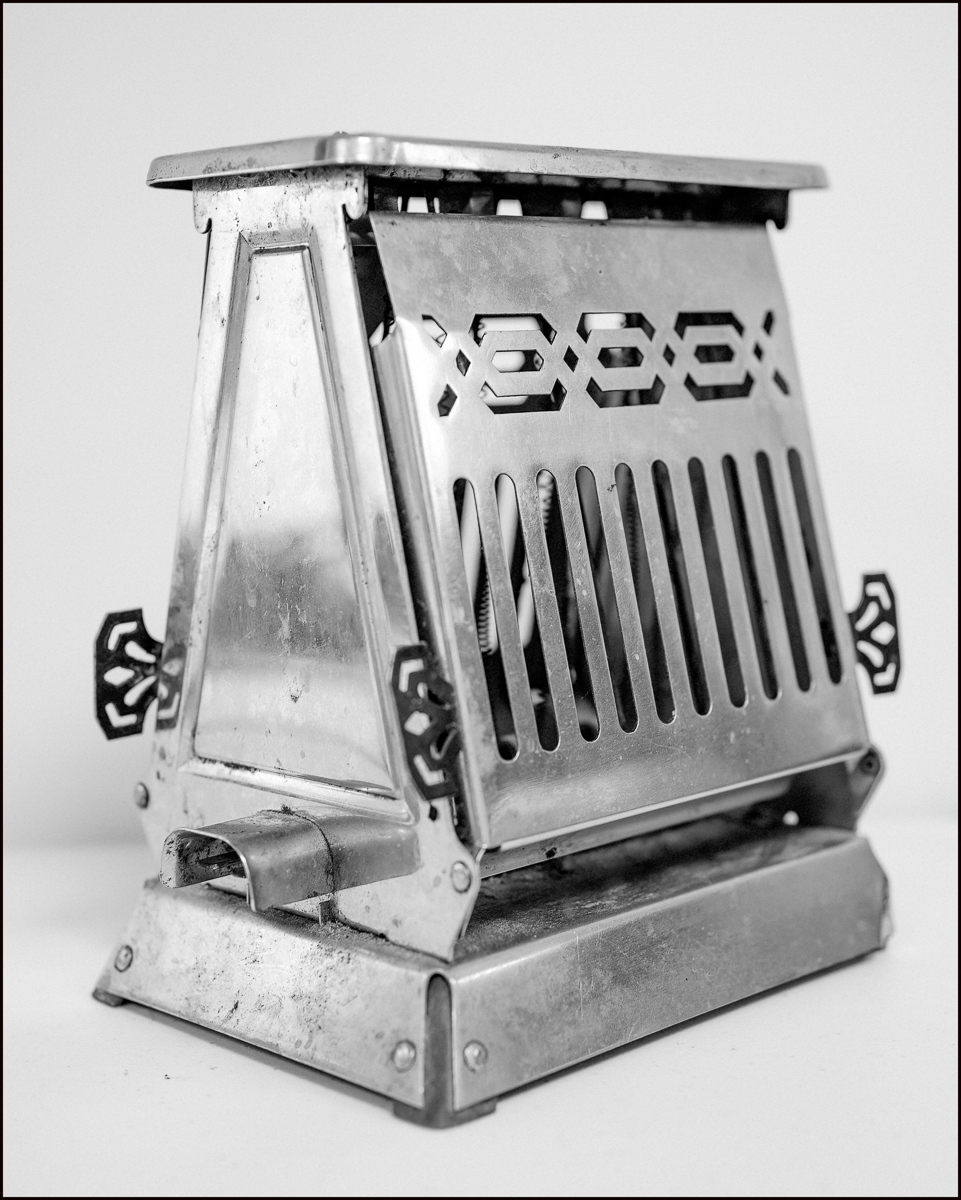
An old toaster belonging to a friend.
Taken with a Sony A7IV and Samyang 45mm f1.8
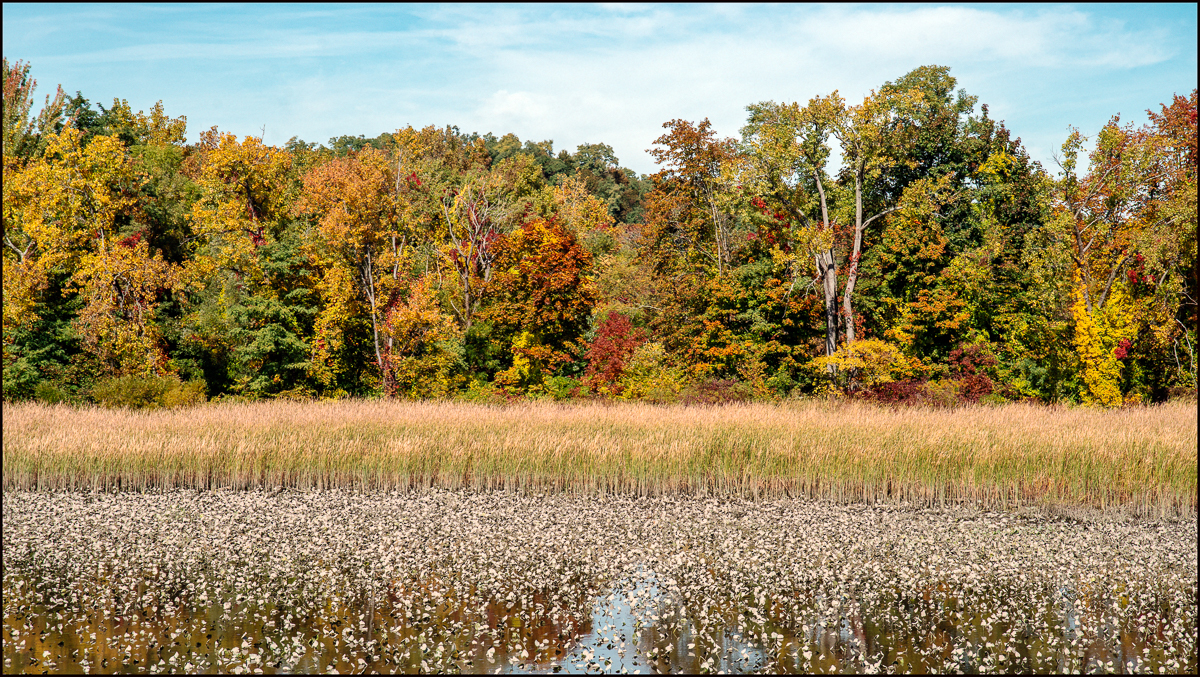
Along Esopus Creek, “…a 65.4-mile-long (105.3 km) tributary of the Hudson River that drains the east-central Catskill Mountains in the U.S. state of New York. From its source at Winnisook Lake on the slopes of Slide Mountain, the Catskills’ highest peak, it flows across Ulster County to the Hudson at Saugerties. Many tributaries extend its watershed into neighboring Greene County and a small portion of Delaware County. Midway along its length, it is impounded at Olive Bridge to create Ashokan Reservoir, the first of several built in the Catskills as part of New York City’s water supply system. Its own flow is supplemented 13 miles (21 km) above the reservoir by the Shandaken Tunnel, which carries water from the city’s Schoharie Reservoir into the creek.
The creek, originally known by the Native Americans in the area as Atkarkaton or Atkankarten and by Dutch settlers as the “Esopus Kill”, takes its name from the Esopus tribe of the Lenape, who were living around the lower Esopus when the Dutch first explored and settled the Hudson Valley in the early 17th century. The creek’s wide valley made it an ideal trading route for the Esopus and other Lenape who harvested the beaver pelts the European traders desired. Later, under the English, it became the beginning point for contentious land claims in the mountains. After independence, the Esopus corridor became the main route into the Catskills, first by road then later by the Ulster and Delaware Railroad, for forest-product industries like logging, tanning and charcoal making. Those industries declined in the late 19th century, shortly before the creation of the Forest Preserve and the Catskill Park made the region more attractive for resorts and recreation, particularly trout fishing. The renewed Esopus also attracted the attention of fast-growing New York City, which was able to acquire land and build the reservoir and tunnel after overcoming local political opposition.
The reservoir divides the creek into an upper stretch, mostly a wild mountain stream, and a lower stretch closer to the Hudson that gradually becomes more estuarine. Above the reservoir, its water quality is closely monitored, not only for its role in the city’s water supply but to preserve its local economic importance as a recreational resource. As the upper Esopus is one of the most productive trout streams in the Northeast, fly fishermen come in great numbers to take trout from its relatively accessible banks. Canoeists and kayakers have been drawn to its whitewater, which has also spawned a busy local tubing industry in the summer months. The lower Esopus is mainly an aesthetic and ecological resource, although the estuary at Saugerties is a popular bass fishery.
The Esopus’s role in the state and regional economy has led to a concentrated effort to protect and manage it, particularly on the upper stretch. The interests of the various stakeholders have not always converged, particularly where it concerns the city’s management of its water needs. Turbidity created by discharges from the Shandaken Tunnel after a 1996 flood led to a successful lawsuit against the city and a state regulation; downstream of the reservoir the city has been criticized for contributing to flooding problems by releasing too much water during heavy rainstorms since Hurricane Irene in 2011. Boaters and anglers have also clashed, and invasive species are beginning to enter the upper creek as well.” (Wikipedia).
Taken with a Sony A7IV and Rokinon AF 24-70 f2.8 FE