A visit to Sterling Forest – Inside the visitors center

There were a number of models describing the history of Sterling Forest and its mines as well as some iron artifacts found on the property, but I was particularly interested in the stuffed animals, including this eagle and a beaver (there was also a rather nice owl, but I messed up the photograph and so can’t show it here).

You can get a better overview of the interior center from the website of its architect, Hudson Design.

Taken with a Fuji X-E3 and Fuji XC 16-50mm f3.5-5.6 OSS II

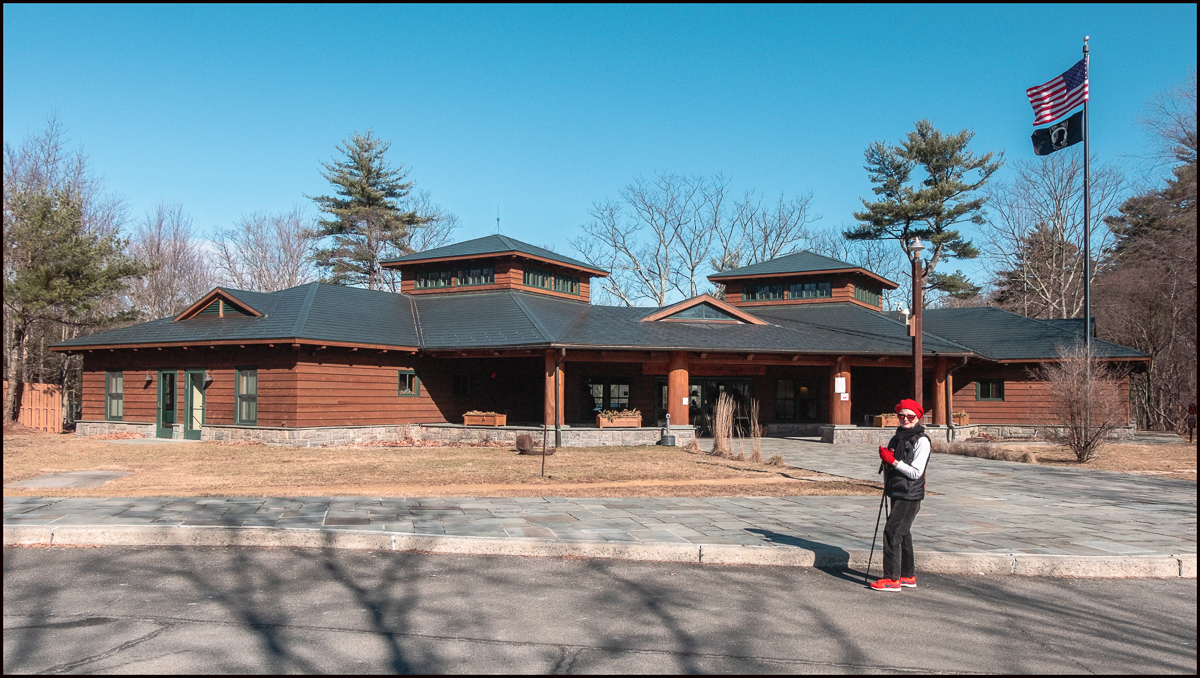
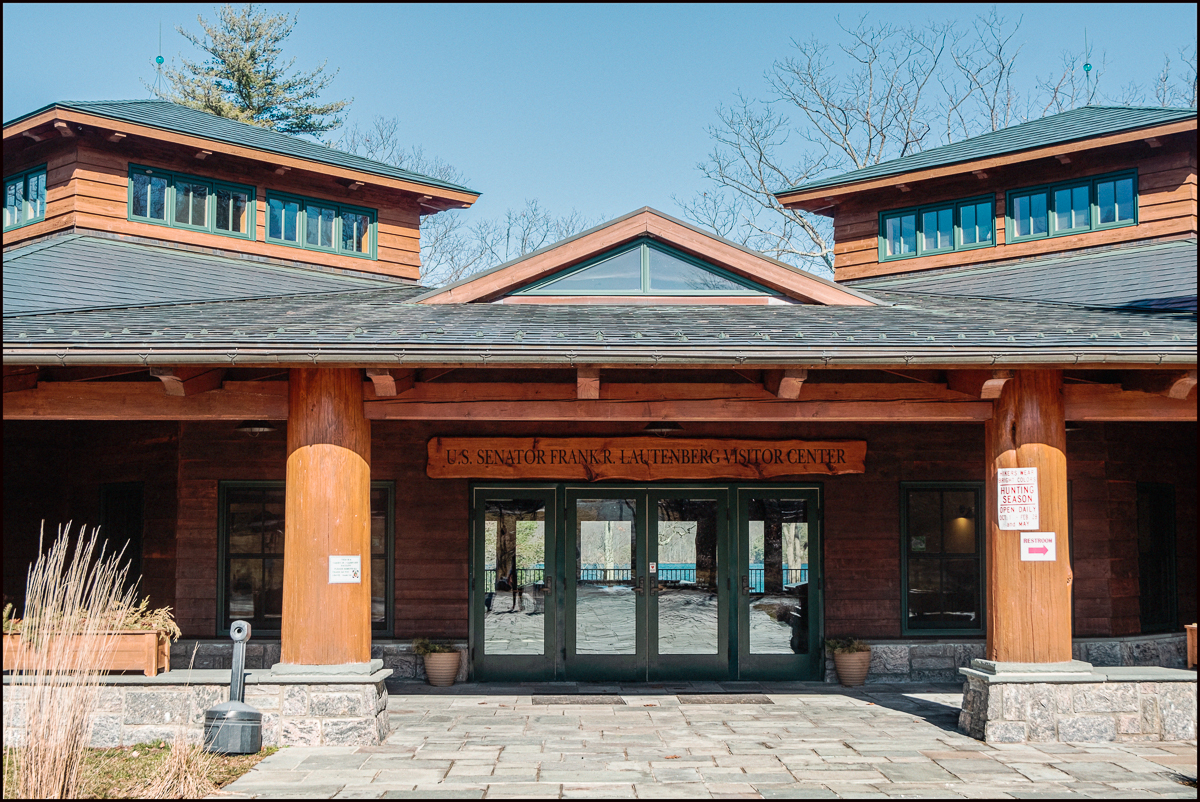
A visit to Sterling Forest – The Visitors Center

Our first stop was at the rather picturesque and rustic visitors center where I picked up my copy of “Doodletown. Hiking Through History in a Vanished Hamlet on the Hudson“.

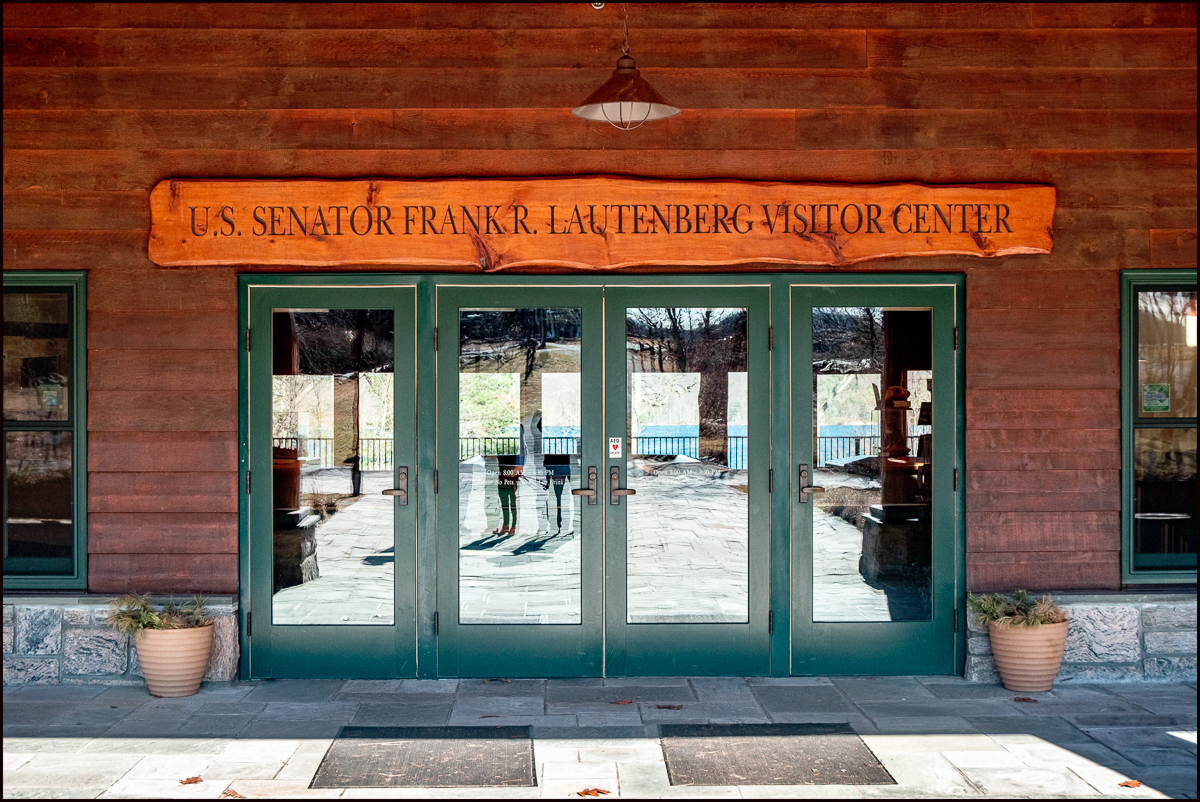
The center is named after former US Senator, Frank Raleigh Lautenberg. It was made possible by a $1.7 million gift from his family that will pave the way for a new visitors center at Sterling Forest State Park. At the time NY Governor George Pataki said of the New Jersey Democrat:

“As a senator, he stood with us in fighting for critical federal aid, And today, he stands with us as a citizen who recognizes that we can expand opportunities for recreation, and conserve precious natural resources, as we also expand economic development.”

The Sterling Forest Visitor Center serves as the gateway to a 15,800 acre wildlife preserve, an historic iron mine and foundry site and the largest bloc of unbroken deep forest habitat in the Hudson Valley region. The design program for the Visitor Center building called for a form and material palette reminiscent of State Park structures built in the 1930’s and consistent with Park Agency goals for resource conservation and responsible environmental design.

The building was sited at the head of a ravine emptying into the south shore of Sterling Lake. This location enabled the design team to include ground floor auditorium functions and ample archive storage areas while maintaining the “low slung” character of a rustic shelter. As you walk through the building to the Observation Deck, the grade drops providing a commanding, panoramic view of the lake. The floor plan offers the visitor unimpeded access to the Exhibit Hall and other public areas in full view of the receptionist. Administrative and educational functions occupy two wings extending east and west from the Lobby, to allow for future expansions.(From the Hudson Design Website who I assume were the architects of the Visitors Center.


Taken with a Fuji X-E3 and Fuji XC 16-50mm f3.5-5.6 OSS II

A visit to Sterling Forest – Overview

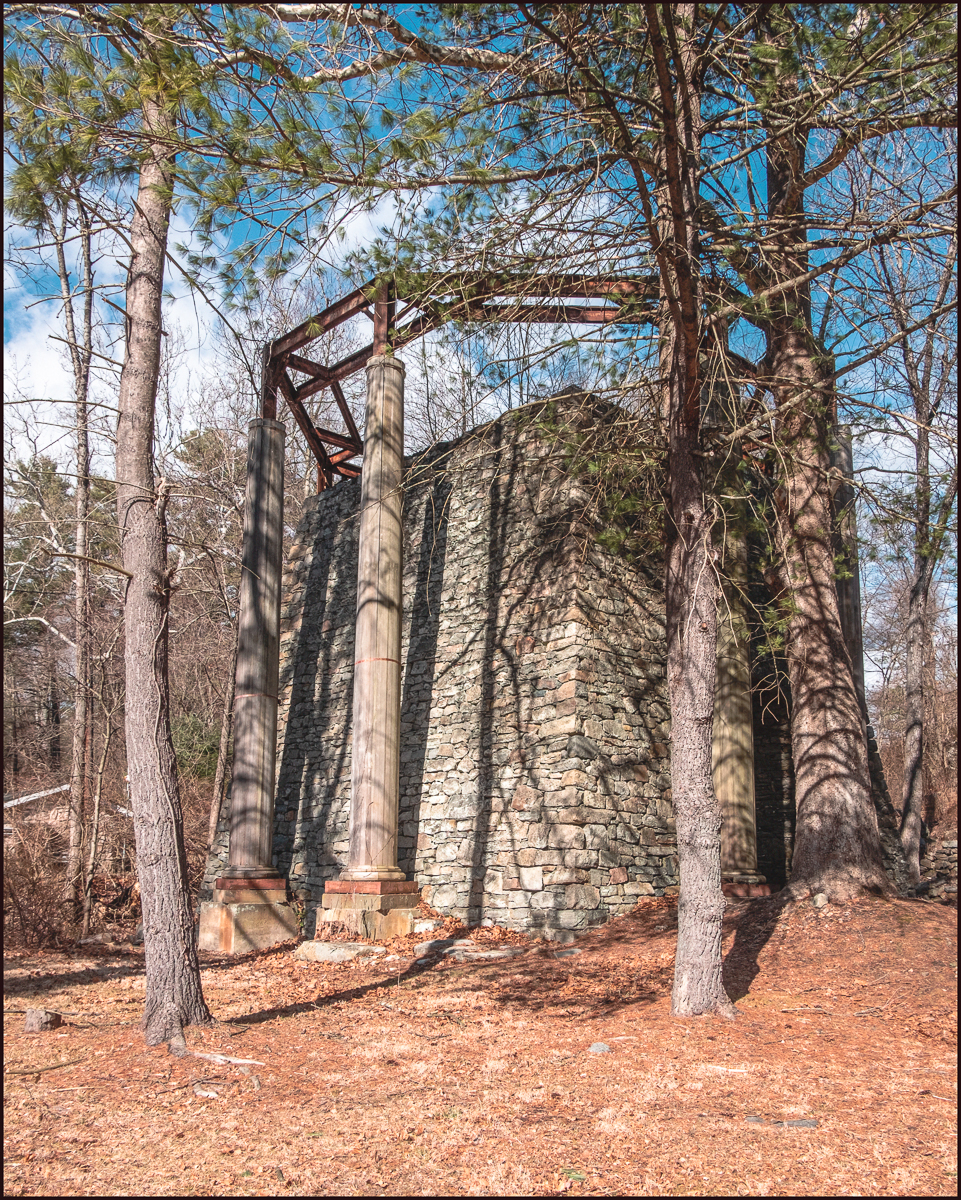
In an earlier post I mentioned that we (i.e. the Briarcliff Manor Historical Society) had organized a presentation on “The Chain that Saved the Colonies”. Much of the presentation focused on where this famous chain was created: Sterling Forest, NY. – specifically the Lakeville Ironworks section. On on a very pleasant, sunny day in February we decided to go and take a look.

Sterling Forest State Park is the site of the former community of Lakeville, the heart of the Sterling Ironworks in the Ramapo Highlands of New York and New Jersey. The first organized iron mining and processing operations in North America were conducted in the Highlands beginning in the early 1700s. Lakeville was a thriving community numbering up to 500 people at times, housing the miners and furnace and forge workers that toiled in the Sterling group of mines converting ore into iron and steel products for the home and farm. Lakeville iron processing was carried on until early in the 20th century and while the mines and furnaces no longer operate, the sense of its rich historical legacy is evoked by walking the remains of the community that lie about us. (Lakeville Ironworks Trail Brochure)

Above the famous Sterling Forest Furnace Number 2.

Taken with a Fuji X-E3 and Fuji XC 16-50mm f3.5-5.6 OSS II

Doodletown

I usually post about books on or about photographers and photography. This is not one of those books. It does, however, have some wonderful historic photographs.

Doodletown was an isolated hamlet in the Town of Stony Point, Rockland County, New York, United States. Purchased by the Palisades Interstate Park Commission during the 1960s, it is now part of Bear Mountain State Park and a popular destination for hikers, birdwatchers, botanists, and local historians. It is located north of Jones Point, west of Iona Island, and southeast of Orange County. The former settlement is now a ghost town. Members of the first family to settle in Doodletown during the 18th century, Huguenots whose last name was anglicized to “June”, were also the last to leave it in the 1960s. (Wikipedia)

I’ve been there a couple of times and on one occasion took some pictures:

A Walk to Doodletown – Doodletown Overview
A Walk to Doodletown – The 1776 Trail
A Walk to Doodletown – Reservoir
A Walk to Doodletown – June Cemetery
A Walk to Doodletown – There’s still life in Doddletown

The problem with Doodletown is that there’s actually not a lot to see. Apart from a couple of cemeteries (one of them still active), mostly just the foundations of long gone buildings. At some point an attempt was made to erect information boards describing some of the former buildings, but (at least while I was there) the effects of time, weather and maybe vandalism made it difficult, and in some cases, impossible to read them. I came away wanting to know more about the history of the hamlet and its buildings.

Enter Elizabeth “Perk” Stalter and her wonderful book: “Doodletown. Hiking Through History in a Vanished Hamlet on the Hudson.”

The book is divided into two parts. The first: “Did Doodletown Disappear?” largely covers the history of the hamlet from its earliest days, through the Revolutionary War period, the good times of considerable growth with new roads, new churches, new job opportunities for the inhabitants. This section also describes what it was like to live in Doodletown, describing the community and its social life; schools; shopping; law enforcement; fire protection; banking; medical services; the effects of storms and snake attacks etc. She also describes with some sadness the eventual decline of Doodletown and its assimilation into the Bear Mountain State Park. This section of the book concludes with the following:

I sincerely hope that this book will help to show your mind’s eye what our community looked like – and that it will also help you to conclude that, indeed, Doodle town did not disappear! Welcome to Doodletown!

Interesting though Part 1 was, what really attracted me to the book was Part 2: A Hiking Guide to Doodletown today. The highlight of this section are the descriptions (69 of them accompanied by photographs showing what they looked like) of all of the former buildings. This was what I had been looking for.

The book is lavishly illustrated with maps, drawings and especially photographs.

Ms. Stalter lived in Doodletown from 1950 to 1958 and her love for the community clearly comes through.

A great book. I really enjoyed. Now I’ll have to go back to Doodletown.

Hudson View 2

Another view of the Hudson River taken at the same time and place as the one in the earlier post (See: Hudson View 1) but this time facing in the opposite direction: North looking towards Croton Point (on the right) and Rockland Lake State Park and High Tor State Park (on the left).

Taken with a Sony RX100 M3