A Visit to Boston – Day Two – Bus Tour Continued – on the bus

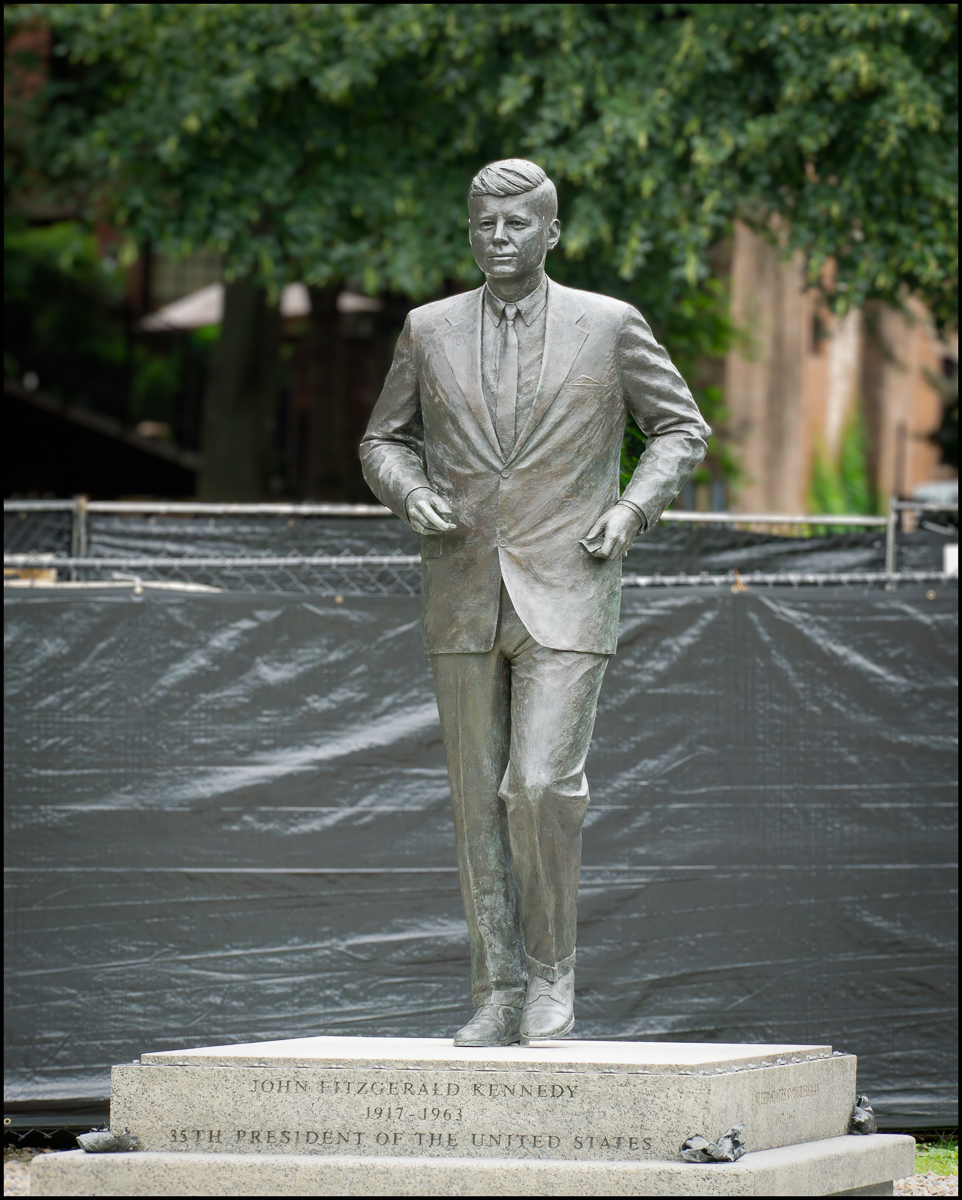
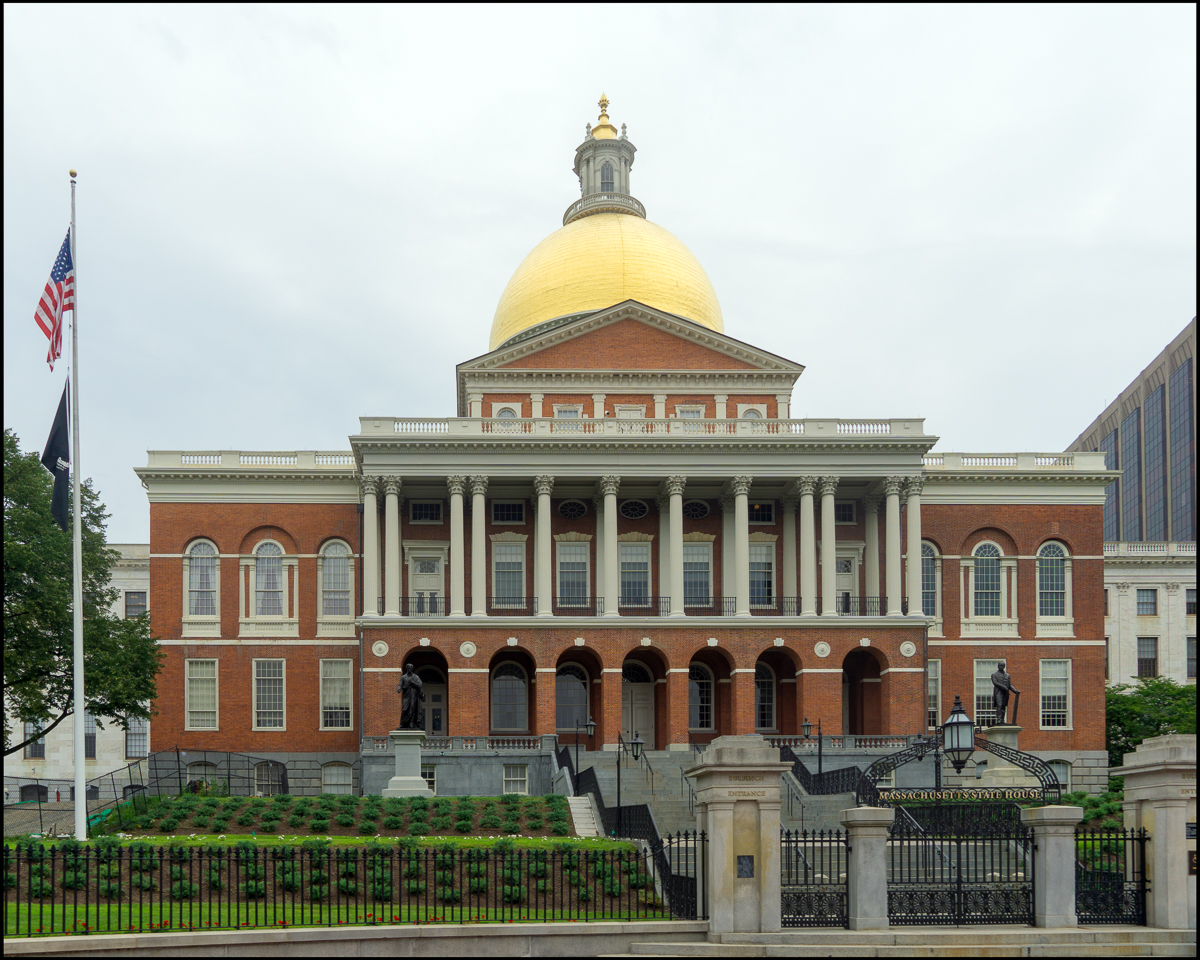
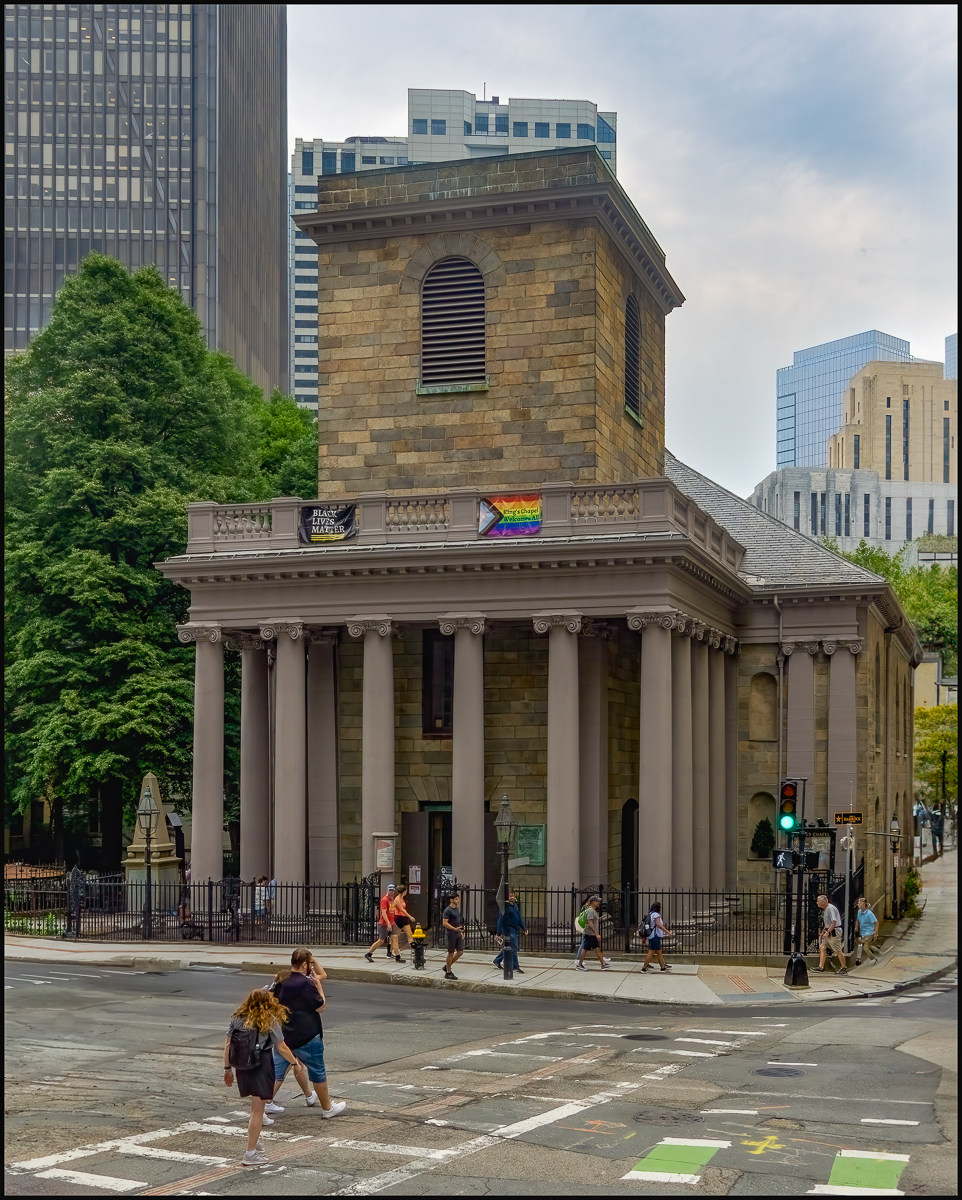
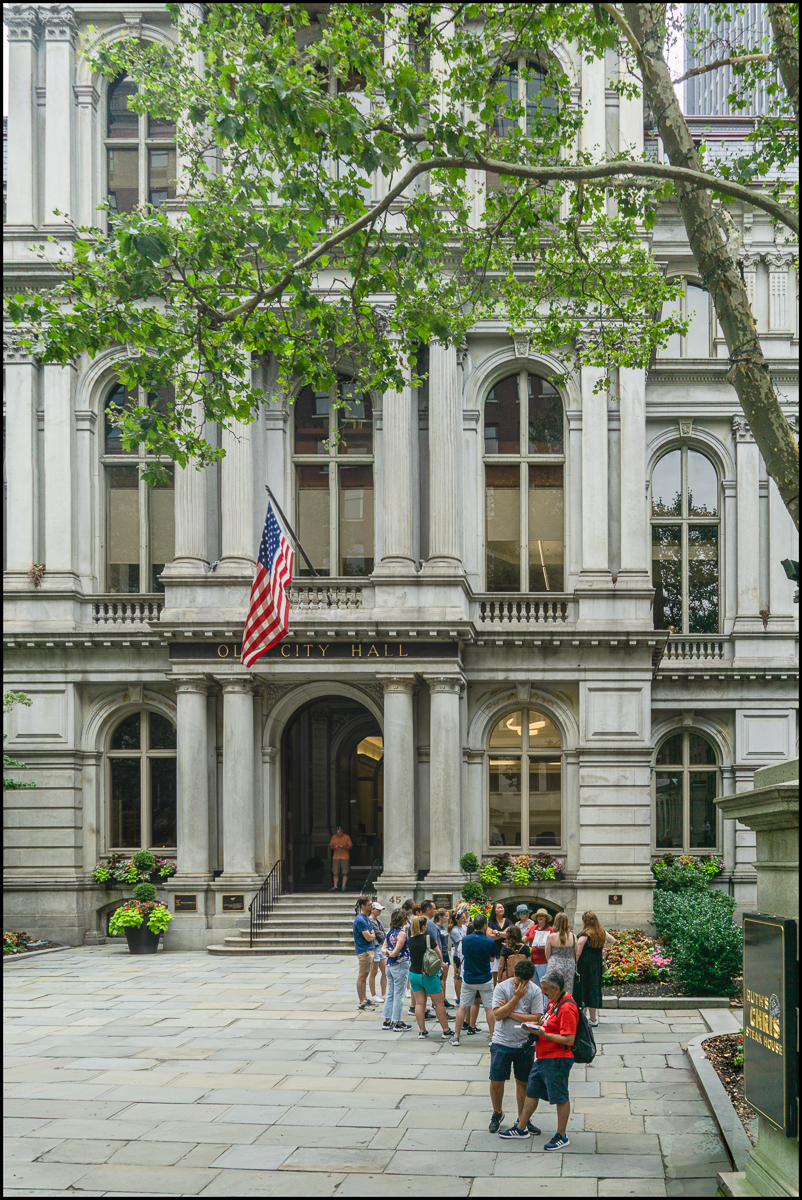
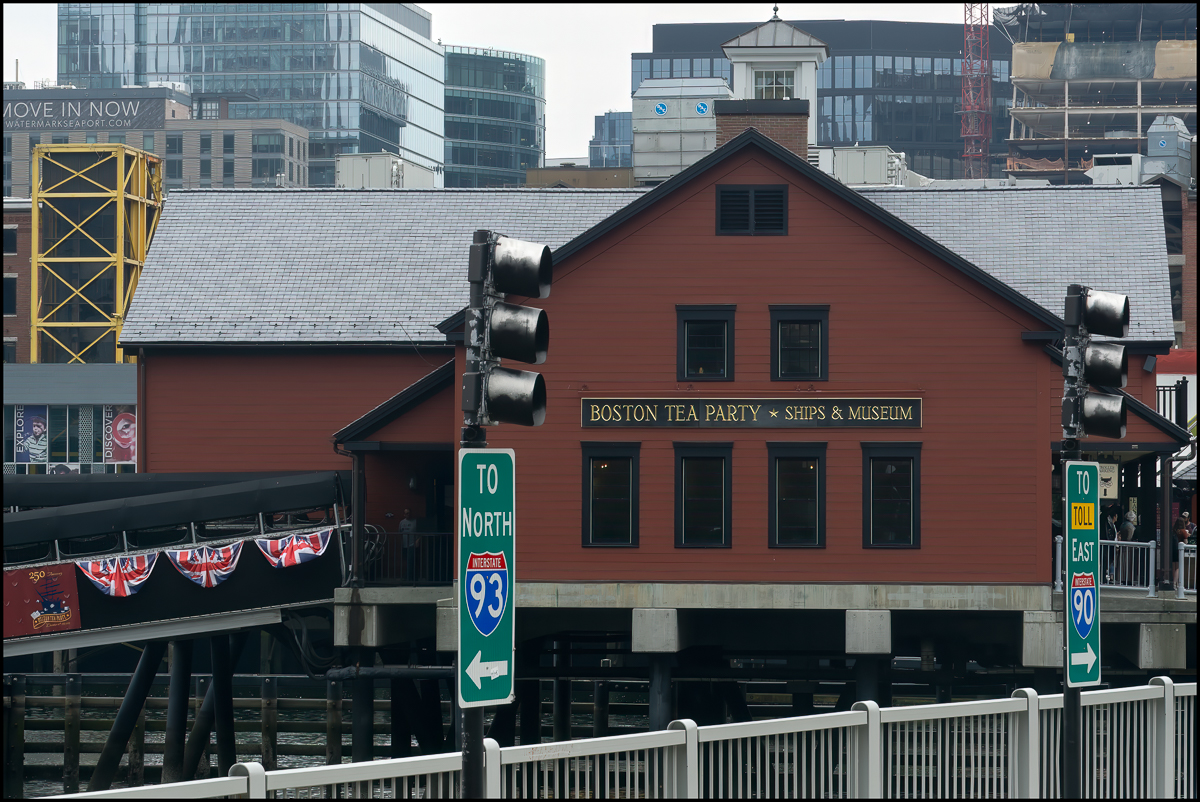
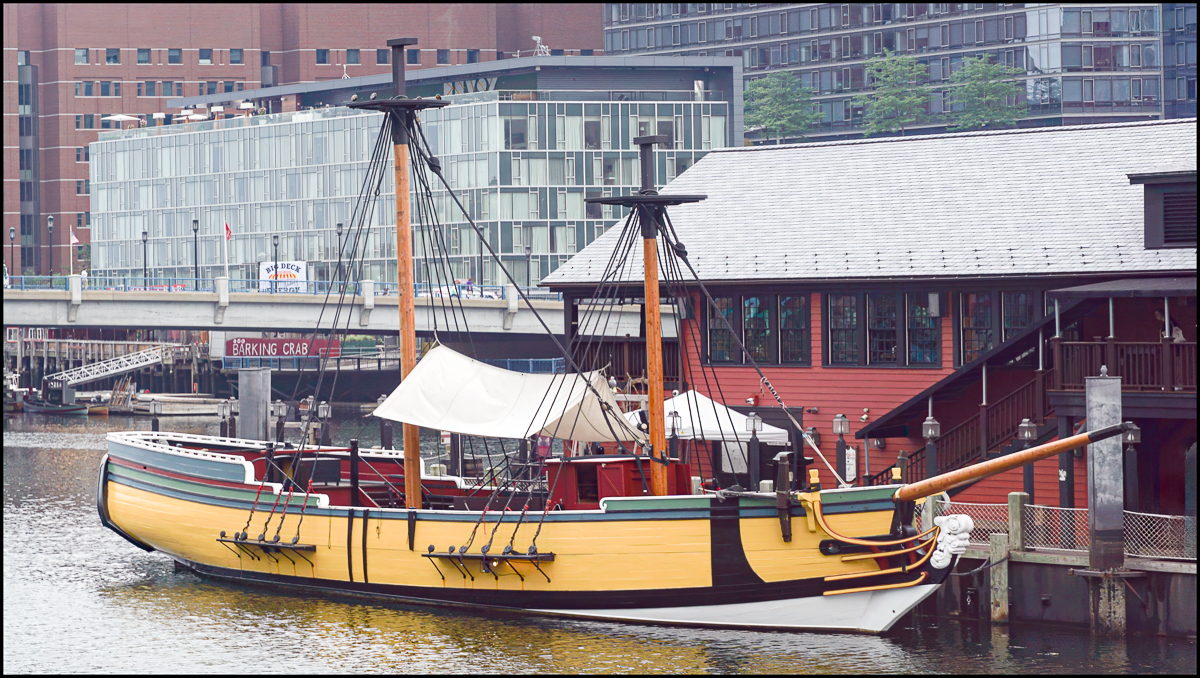
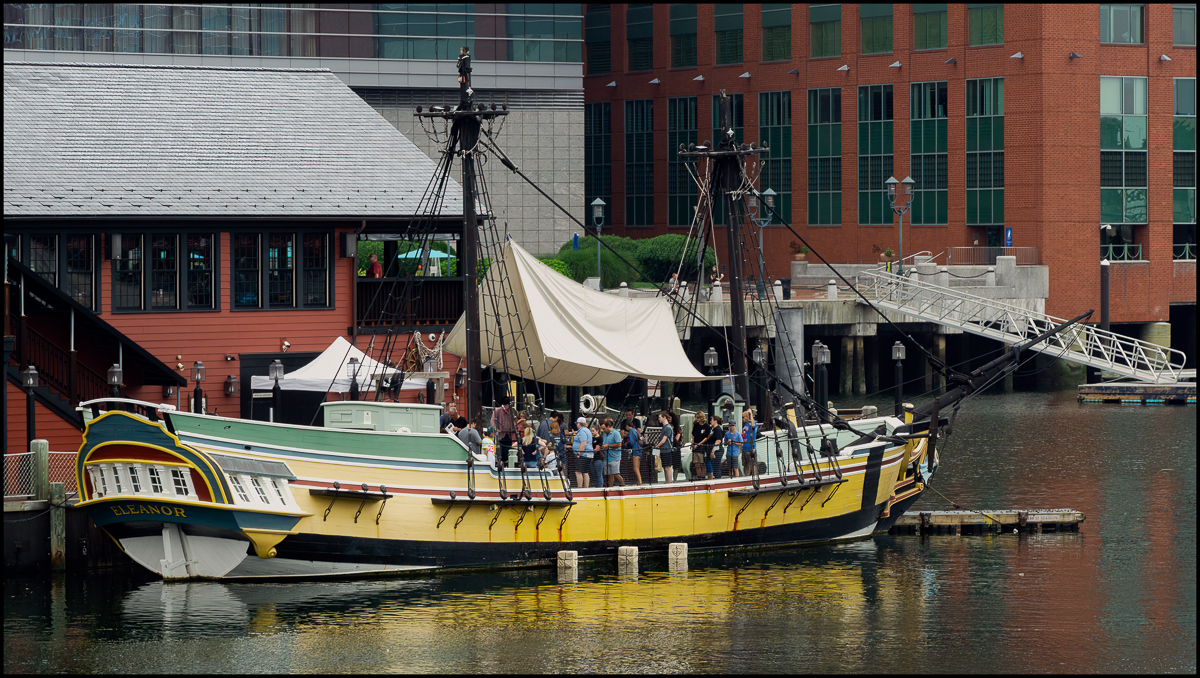
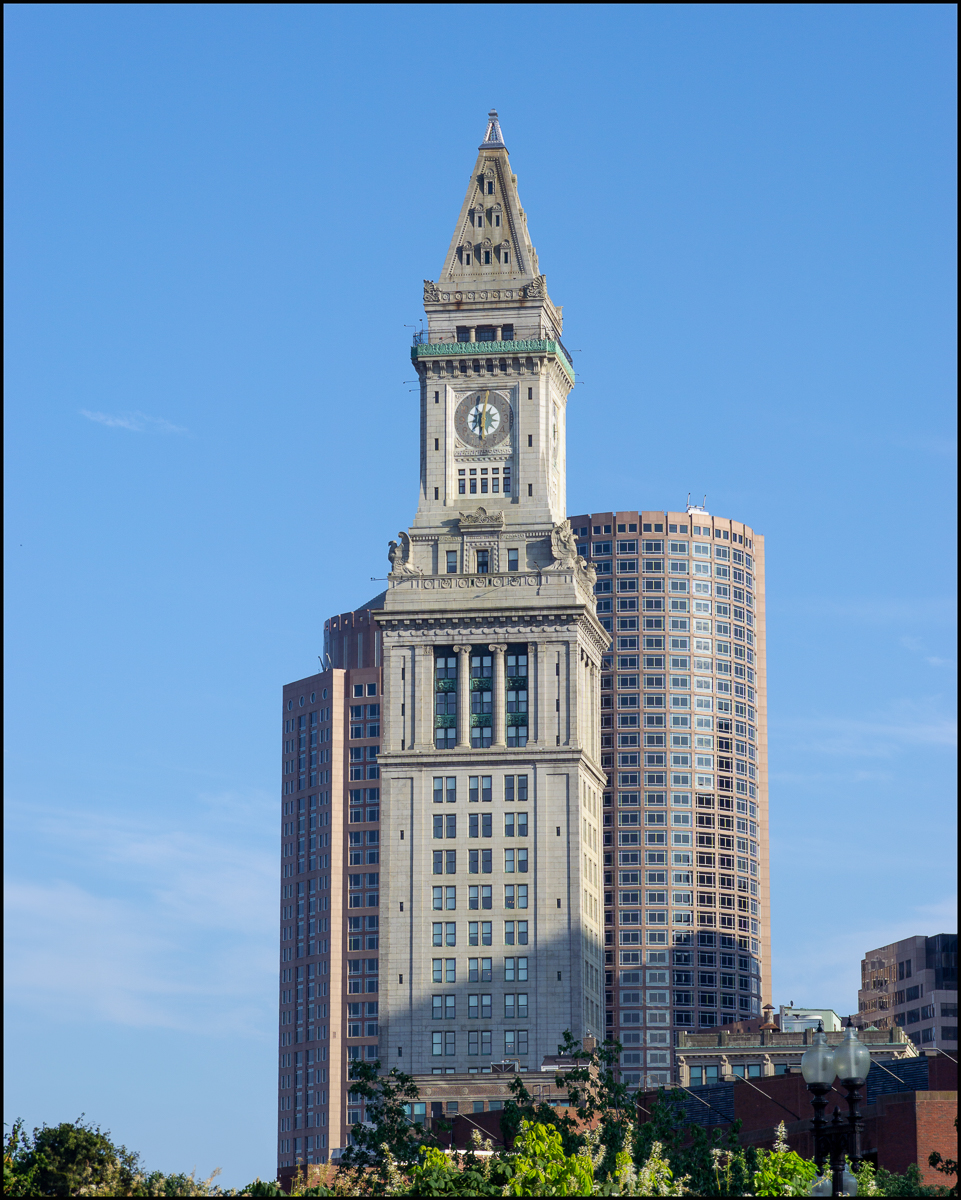
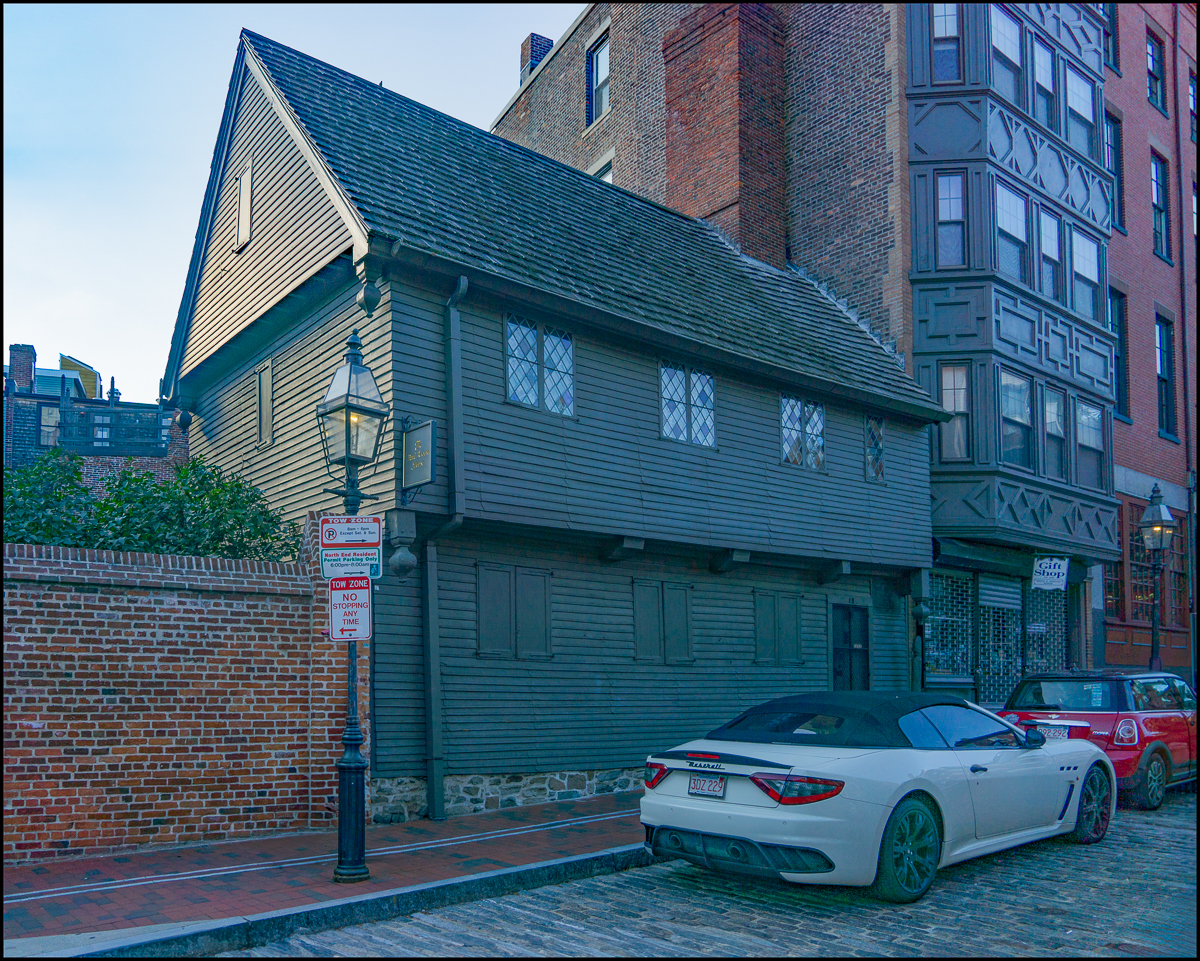
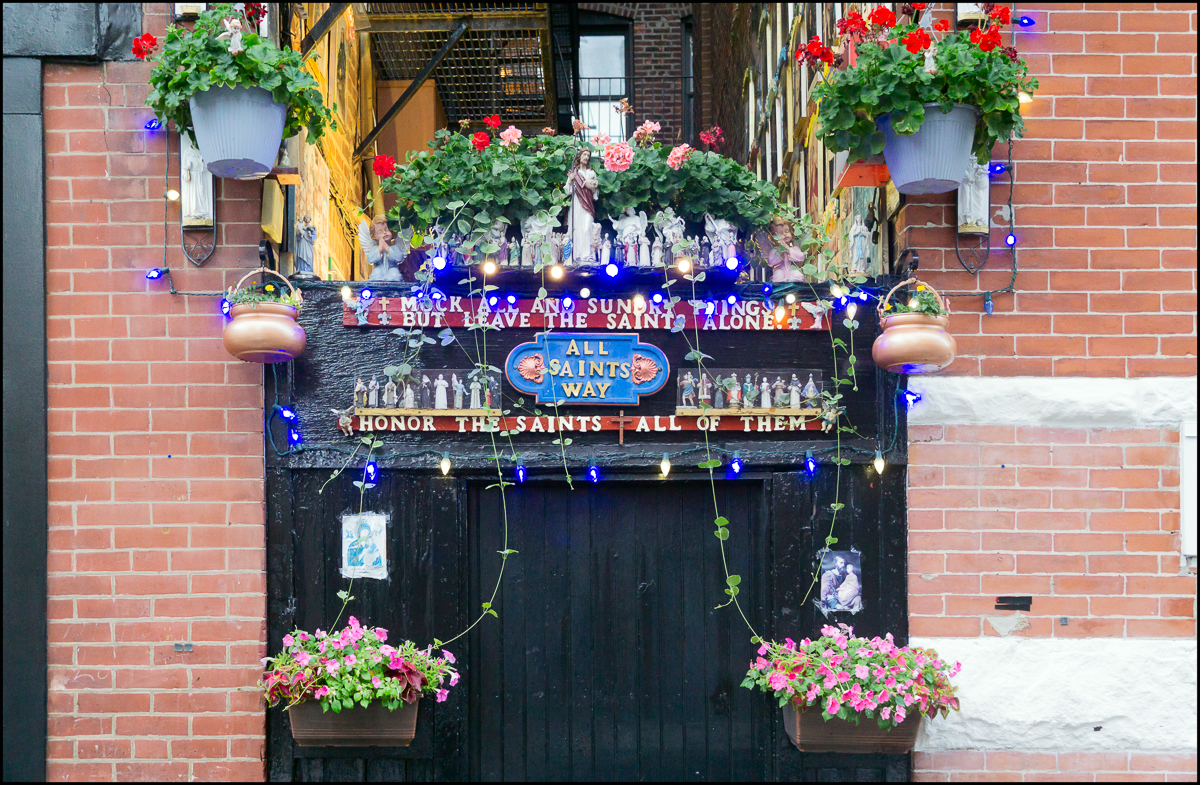
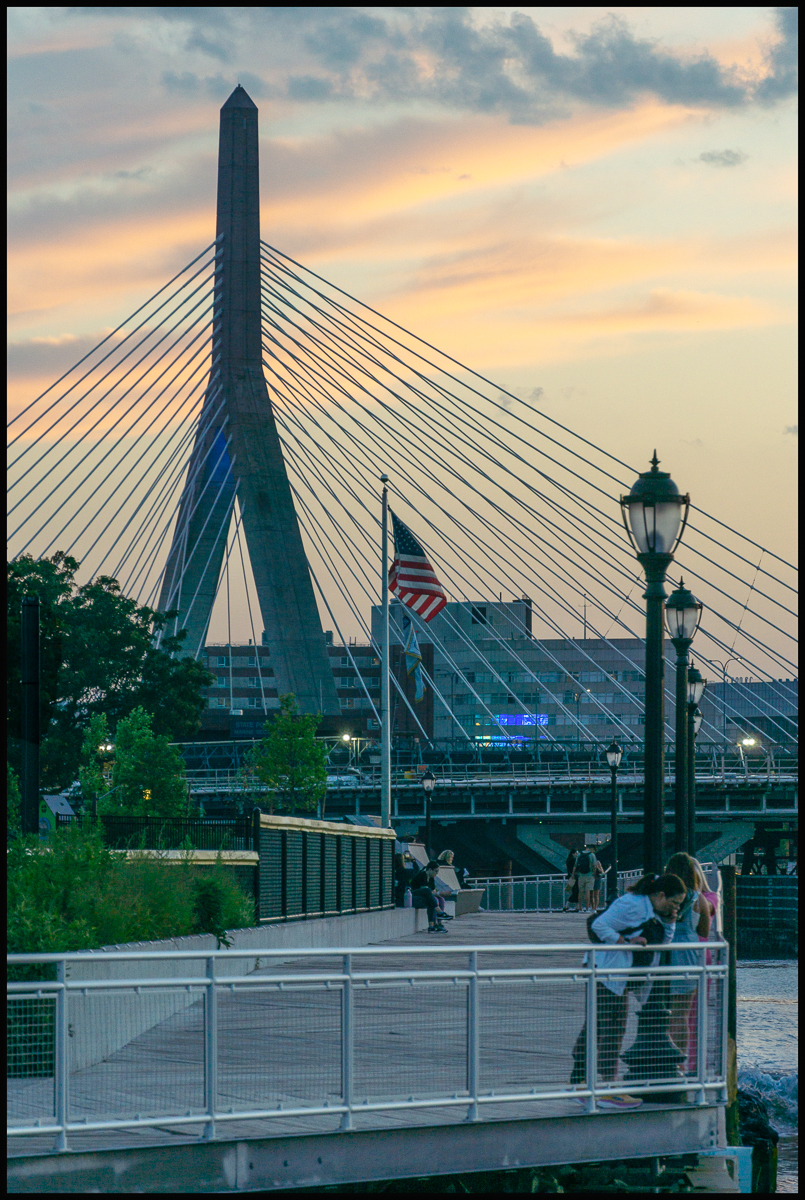
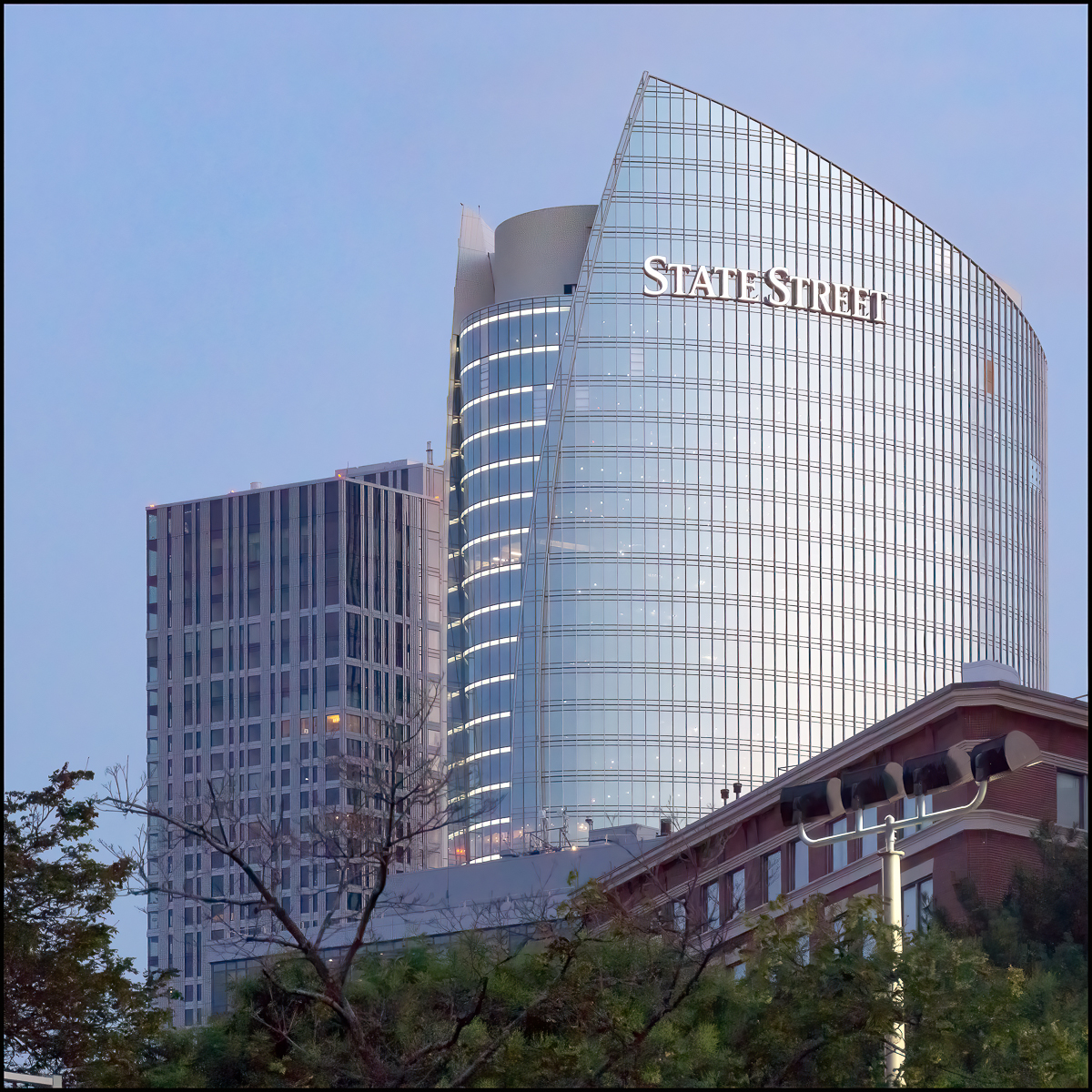
And off we went on the bus tour. It was quite difficult to take pictures from the moving bus. Add to that that the driver/guide seemed more interested in telling jokes than telling us much about the things we were seeing and I didn’t take many pictures. I only vaguely remember what he was saying so at the moment I don’t have much to say about the pictures. If I get a chance, I’ll look them up and add some captions/descriptions.


Taken with a Sony A6000 and 18-135mm f3.5-5.6 OSS.

A Visit to Boston – Day Two – Bus Tour

This was our only full day in Boston, so we decided to take a bus tour. We caught the bus opposite our hotel, and just in front of the Boston Garden.

The Boston Garden was an arena in Boston, Massachusetts. Designed by boxing promoter Tex Rickard, who also built the third iteration of New York’s Madison Square Garden, it opened on November 17, 1928, as “Boston Madison Square Garden” (later shortened to just “Boston Garden”) and outlived its original namesake by 30 years. It was above North Station, a train station which was originally a hub for the Boston and Maine Railroad and is now a hub for MBTA Commuter Rail and Amtrak trains.

The Garden hosted home games for the Boston Bruins of the National Hockey League (NHL) and the Boston Celtics of the National Basketball Association (NBA), as well as rock concerts, amateur sports, boxing and professional wrestling matches, circuses, and ice shows. It was also used as an exposition hall for political rallies such as the speech by John F. Kennedy in November 1960. Boston Garden was demolished in 1998, three years after the completion of its successor arena, TD Garden.(Wikipedia).

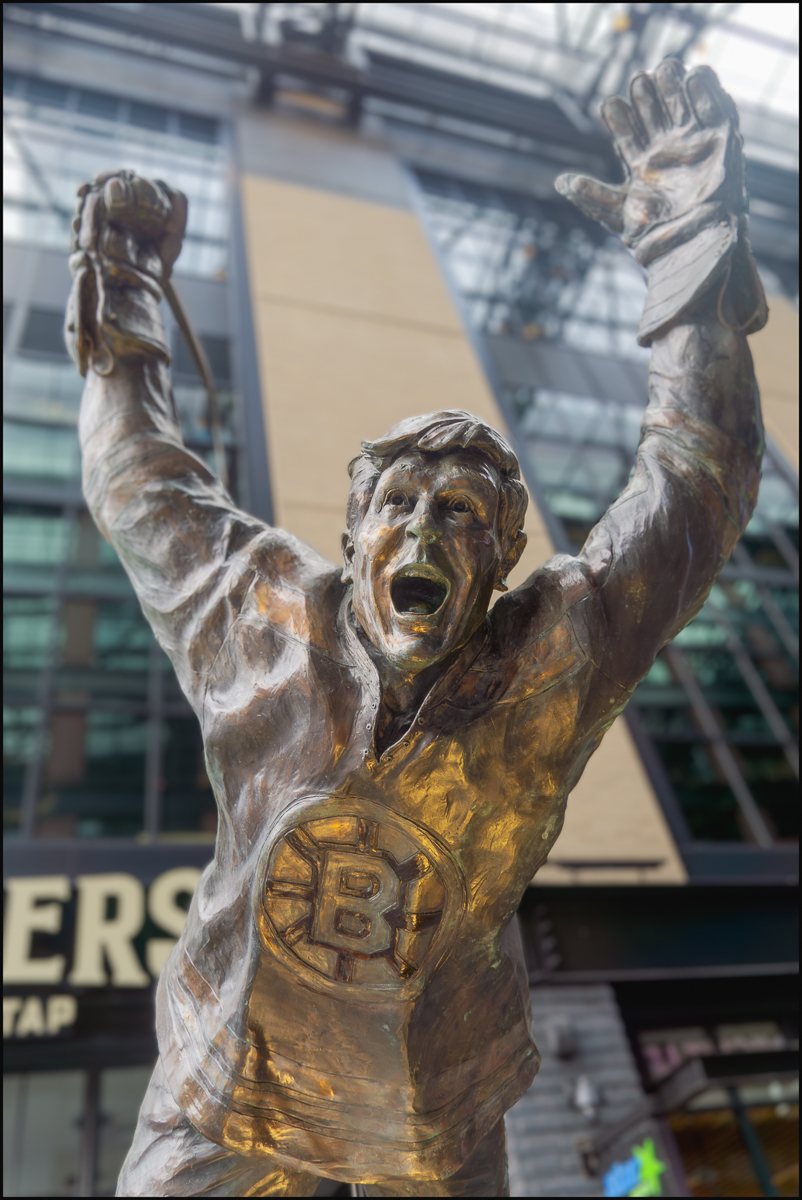
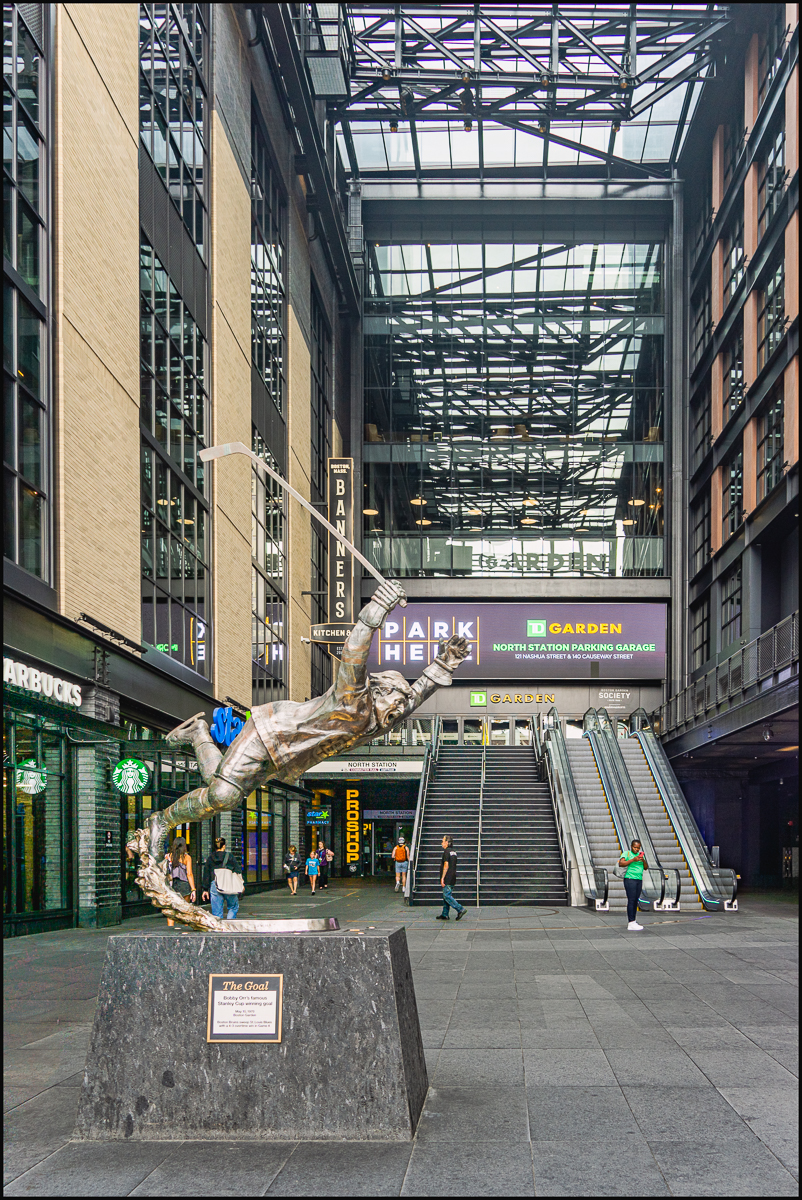
While waiting for the bus I spotted this statue and went over to take some pictures. A sign on the statue read:

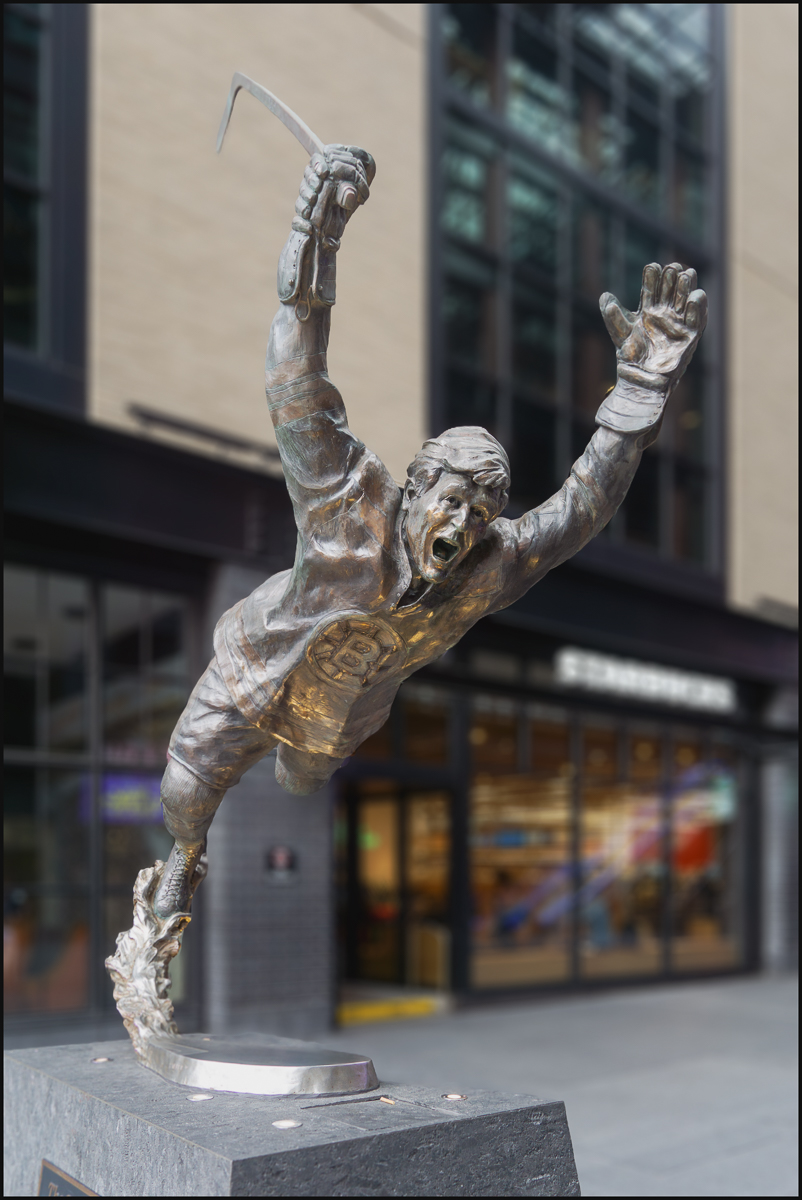
The Goal. Bobby Orr’s famous Stanley Cup winning goal. May 10, 1970, Boston Garden. Boston Bruins sweep St. Louis Blues with a 4-3 overtime win in Game 4.

The “goal” in question was one of the most famous goals scored in hockey history and one that gave Boston its first Stanley Cup since 1941. The goal came from a pass from teammate Derek Sanderson at the 40-second mark of the first overtime period in the fourth game, helping to complete a sweep of the St. Louis Blues. According to Orr:

If it had gone by me, it’s a two-on-one, so I got a little lucky there, but Derek gave me a great pass and when I got the pass I was moving across. As I skated across, Glenn had to move across the crease and had to open his pads a little. I was really trying to get the puck on net, and I did. As I went across, Glenn’s legs opened. I looked back, and I saw it go in, so I jumped.

Orr, tripped after scoring “The Goal”, went flying across the ice. The subsequent photograph by Ray Lussier of a horizontal Orr flying through the air, his arms raised in victory – he had been tripped by Blues’ defenceman Noel Picard after scoring the goal – has become one of the most famous and recognized hockey images of all time—and today is highlighted in the opening sequence of the Canadian Broadcasting Corporation’s Hockey Night in Canada telecasts.

The statue is An 800-pound (360 kg) bronze statue of Bobby Orr. The sculpture was designed by Harry Weber and unveiled on May 10, 2010.


Taken with a Sony A6000 and 18-135mm f3.5-5.6 OSS.

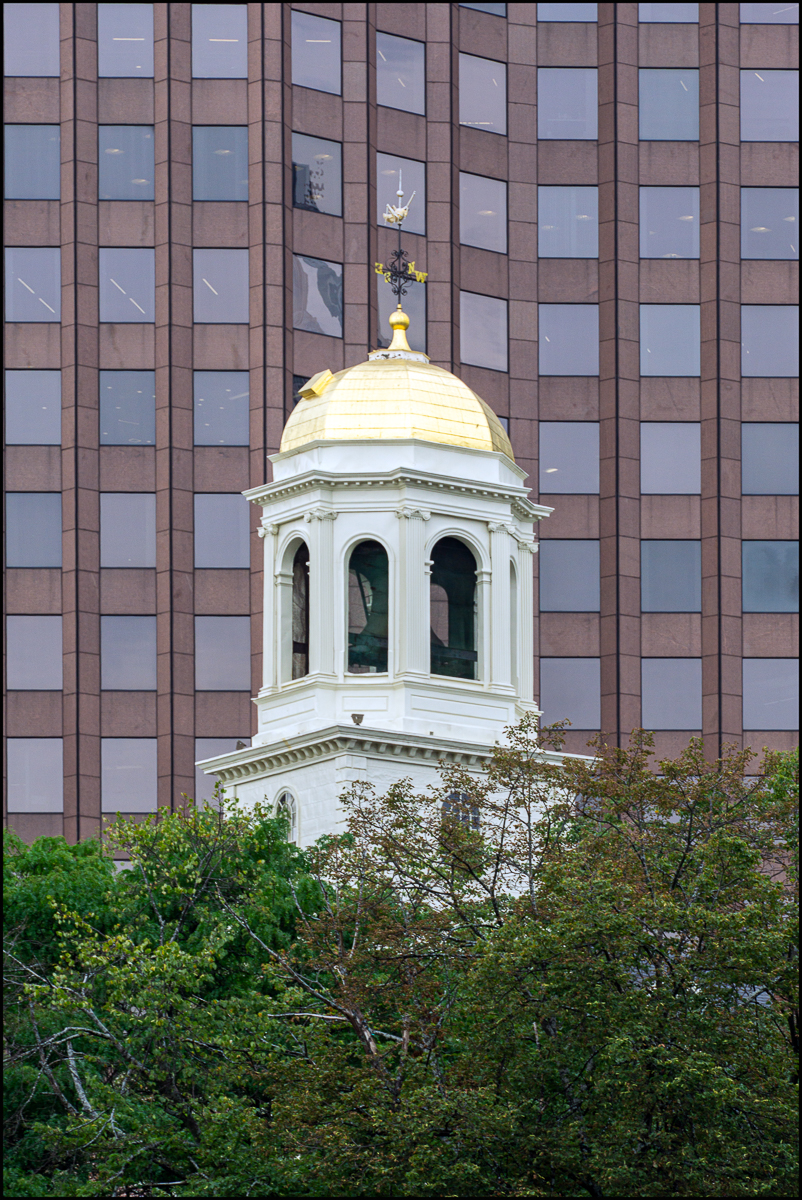
A Visit to Boston – Day One – Around the North End

Some time ago I took the train up to Boston to meet up with some Canadian friends who were visiting there. The hotel we were staying in was in the North End. None of us got there until late afternoon so these pictures were taken in the North End and along the Charles River from then until it started to get dark.


Taken with a Sony A6000 and 18-135mm f3.5-5.6 OSS.
A Jumping Spider

I was sitting, reading on my deck/balcony when this little guy hopped onto the book I was reading. You can see how tiny it was by comparing it to the page number on my book. How do I know it was a jumping spider? Well, it had jumped onto my book and after I picked up the camera to take the picture it jumped from the book onto my camera lens. Pretty impressive!
Taken with a Fuji X-E3 and Sigma 18-50mm f2.8

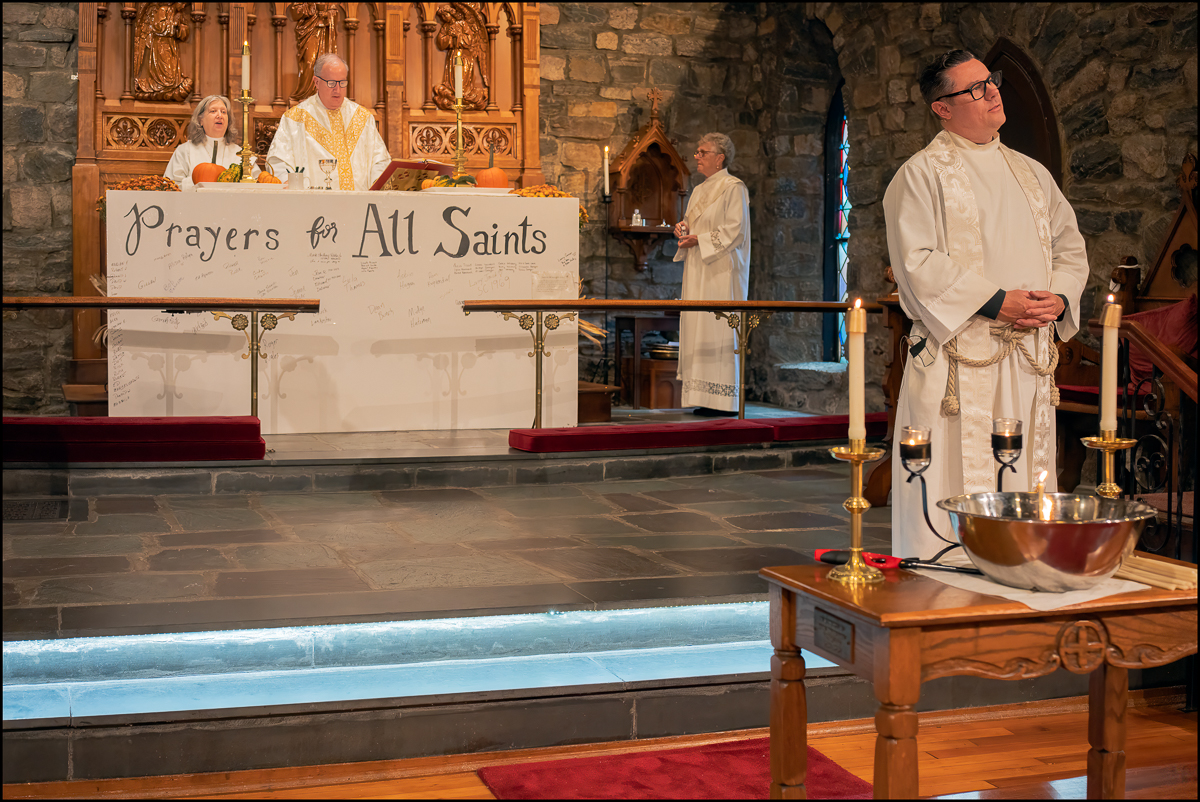
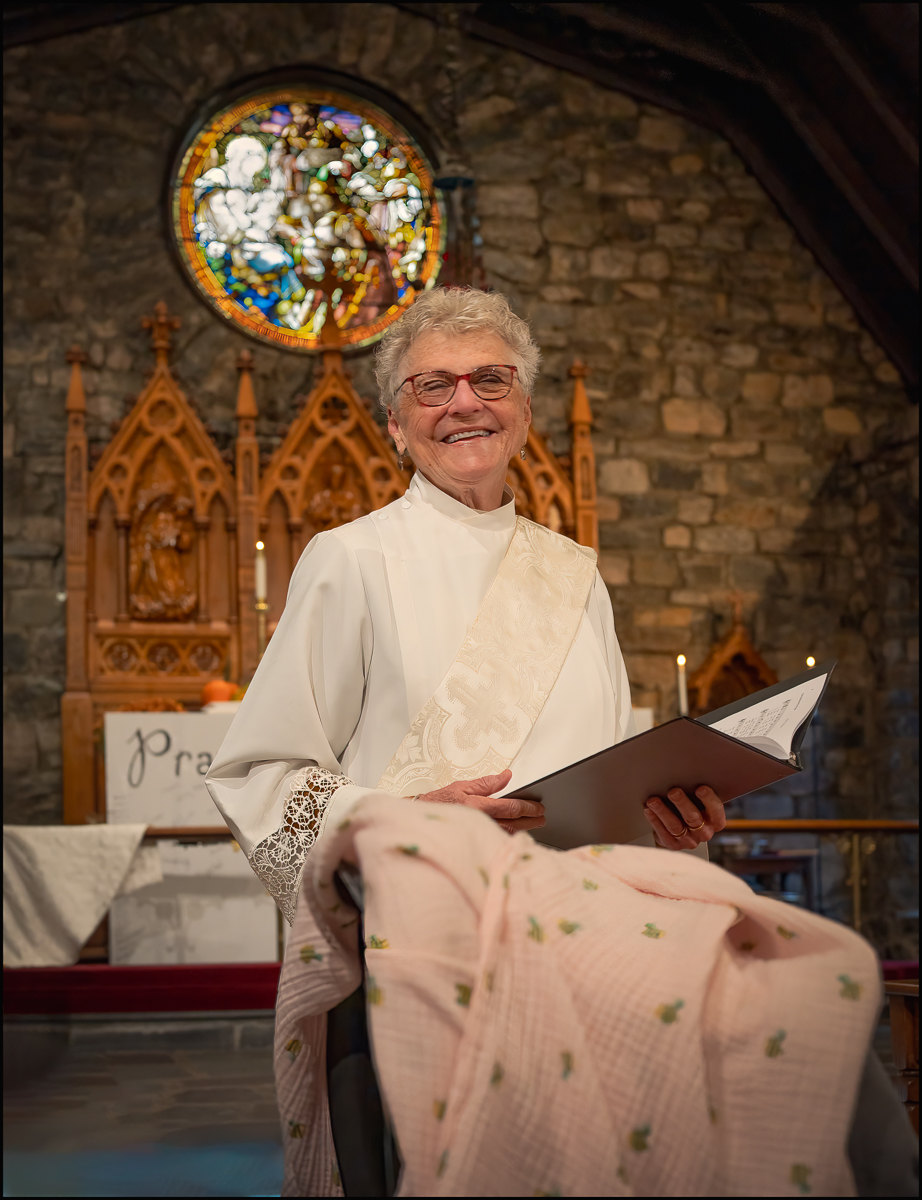
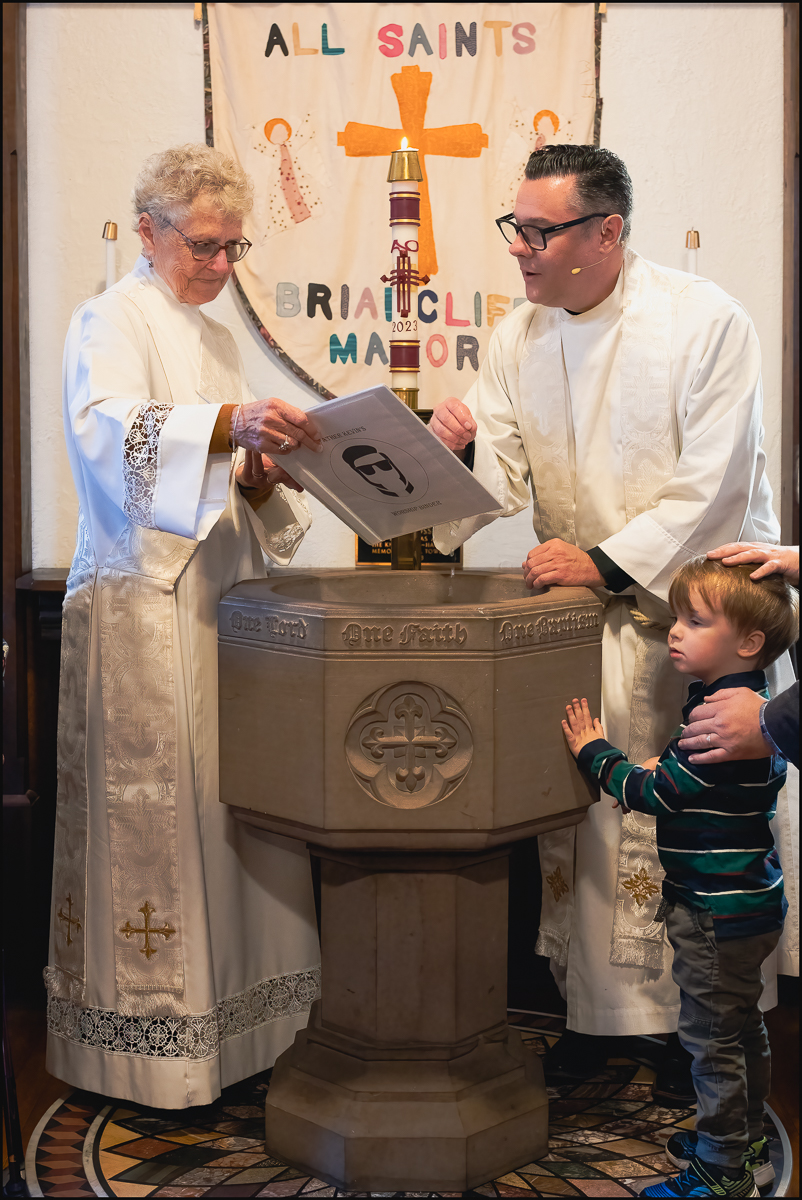
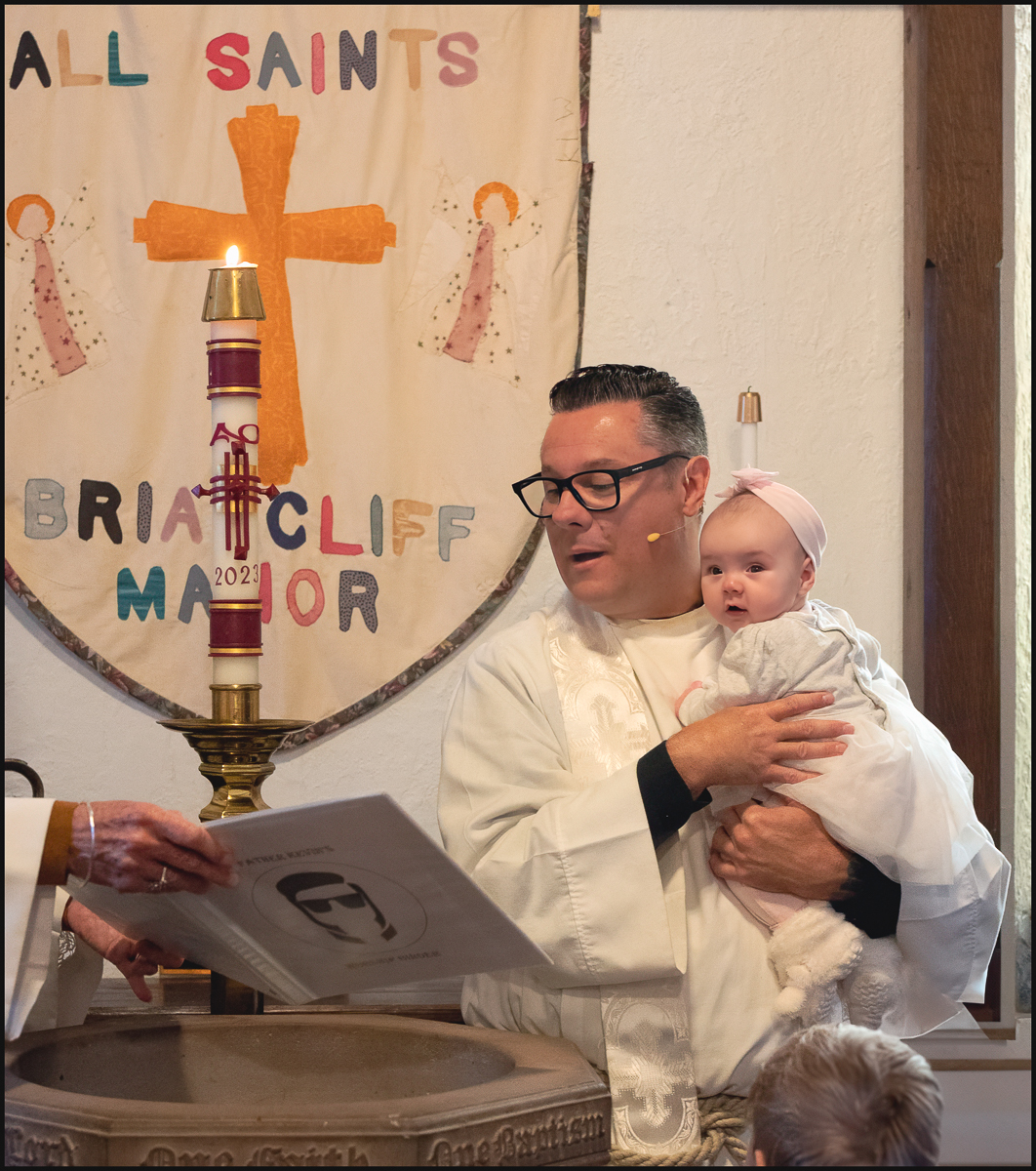
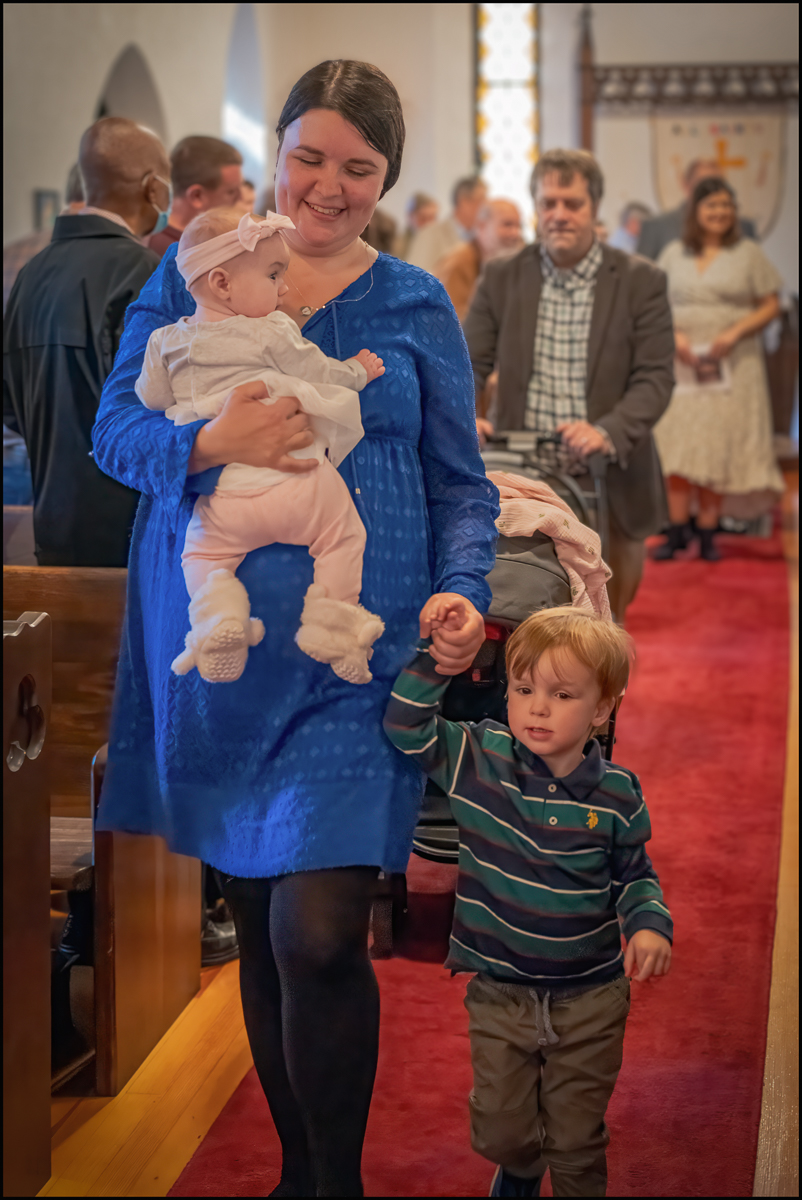
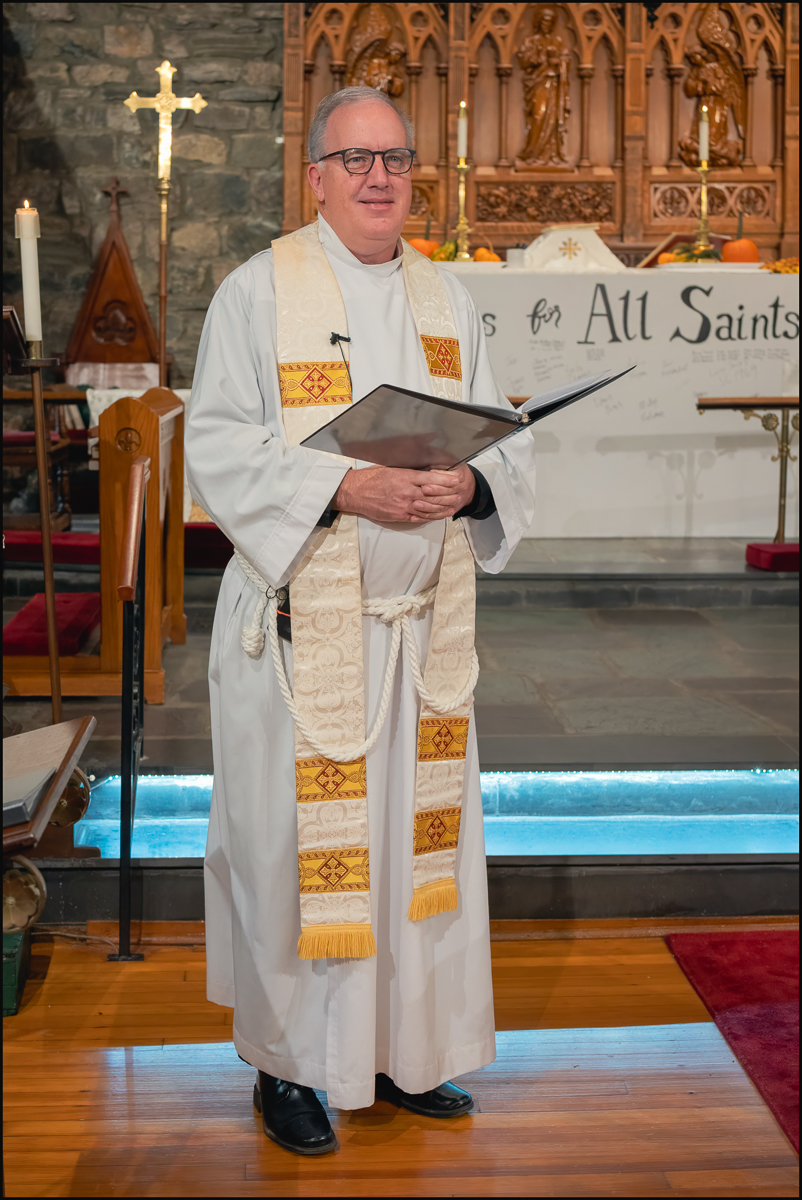
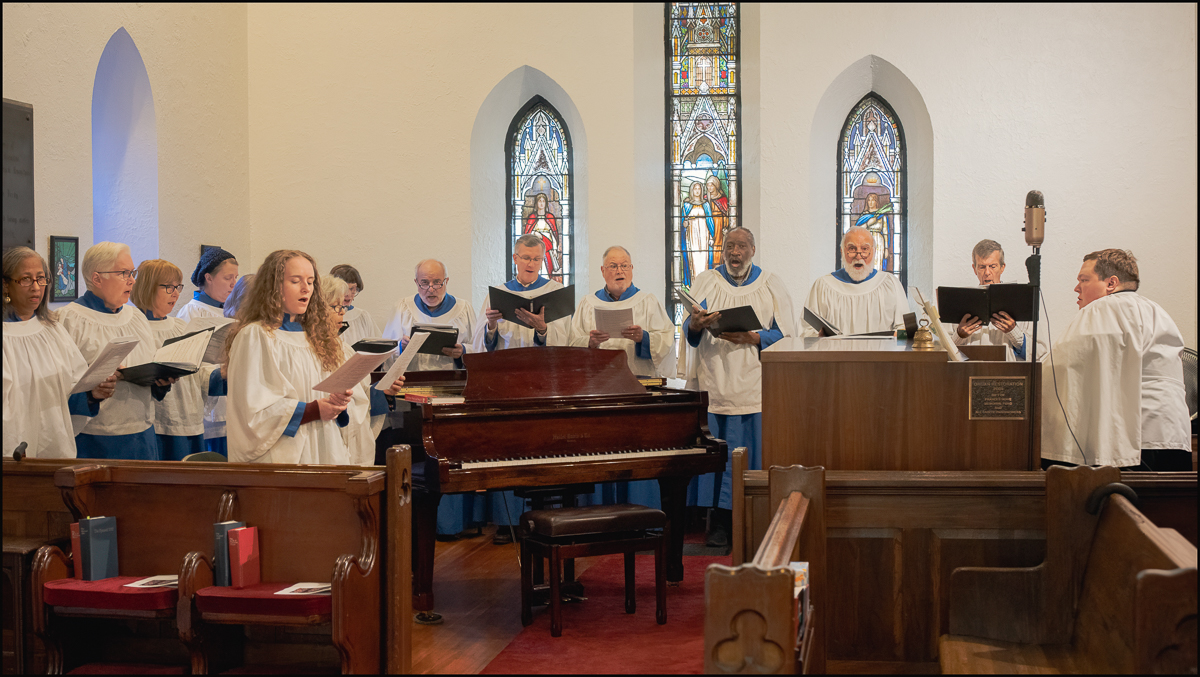
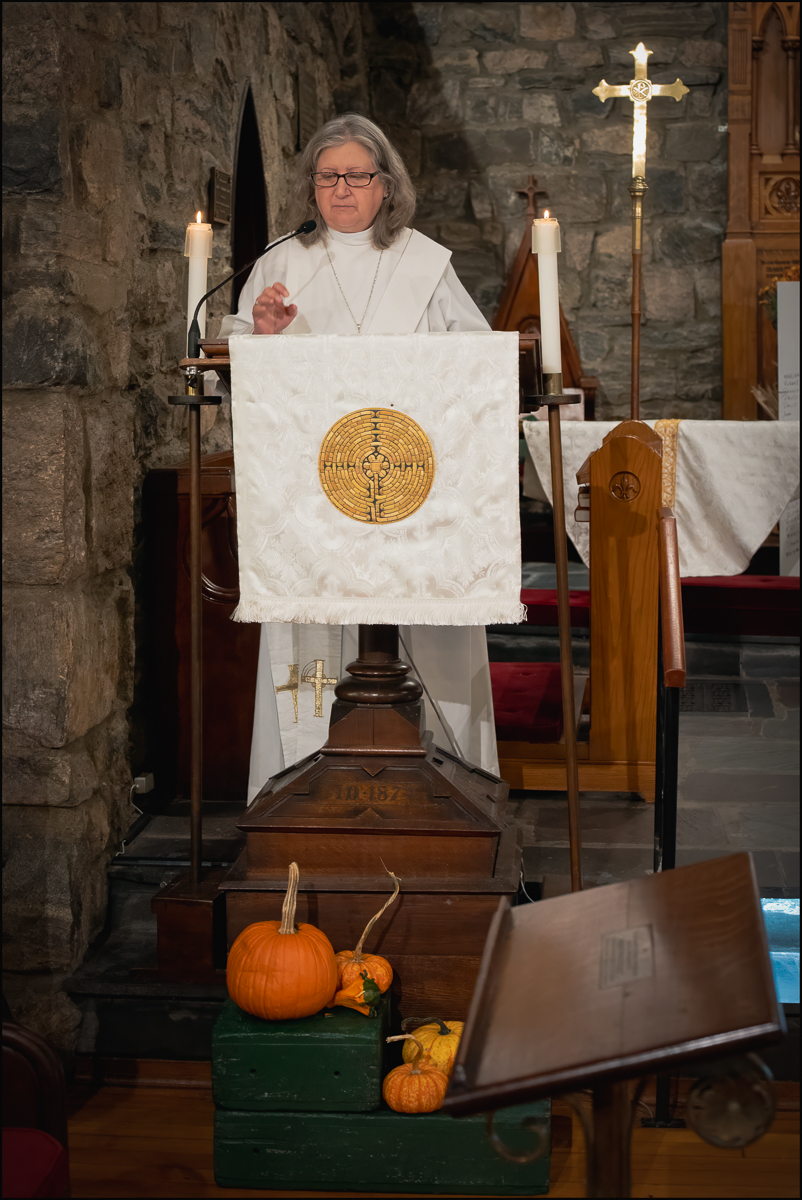
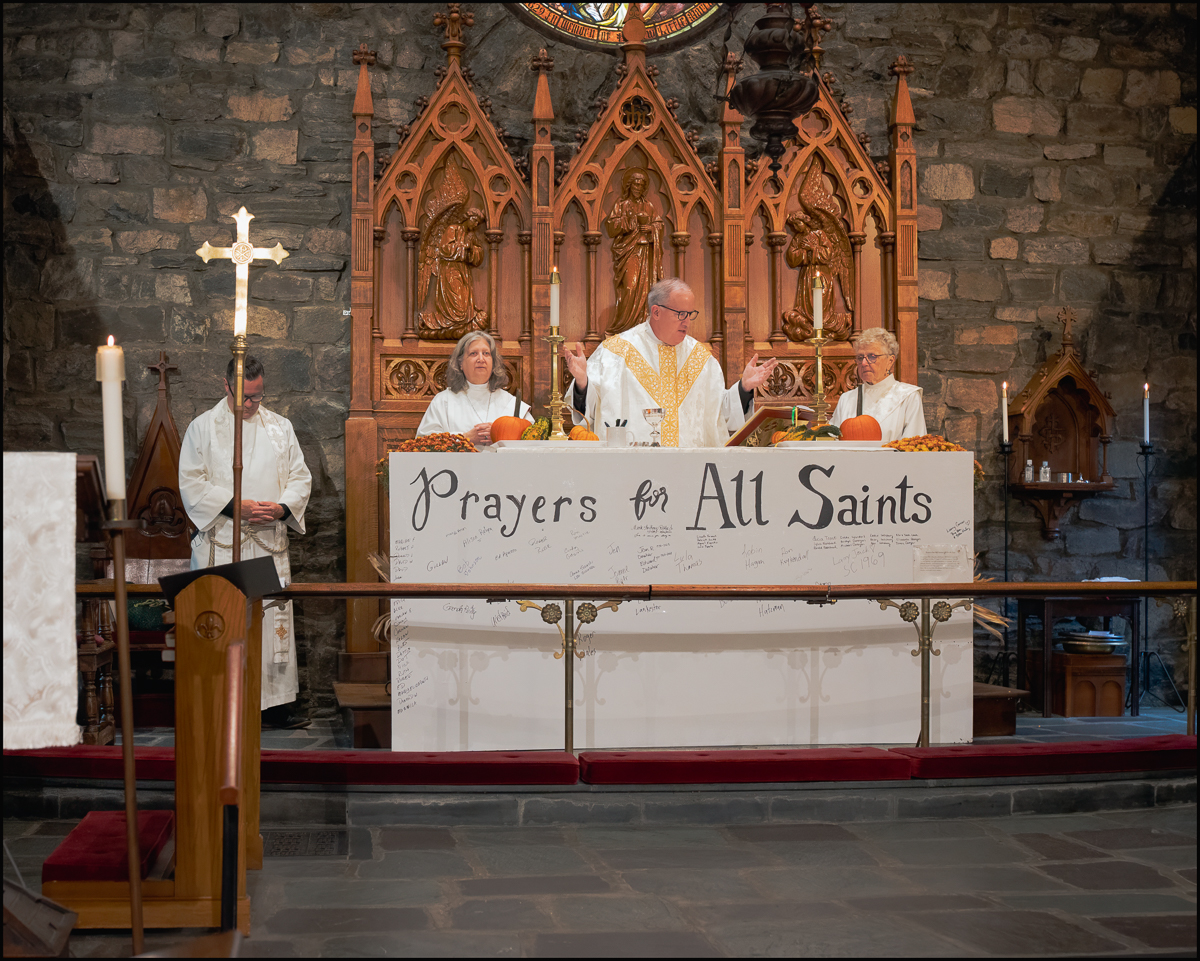
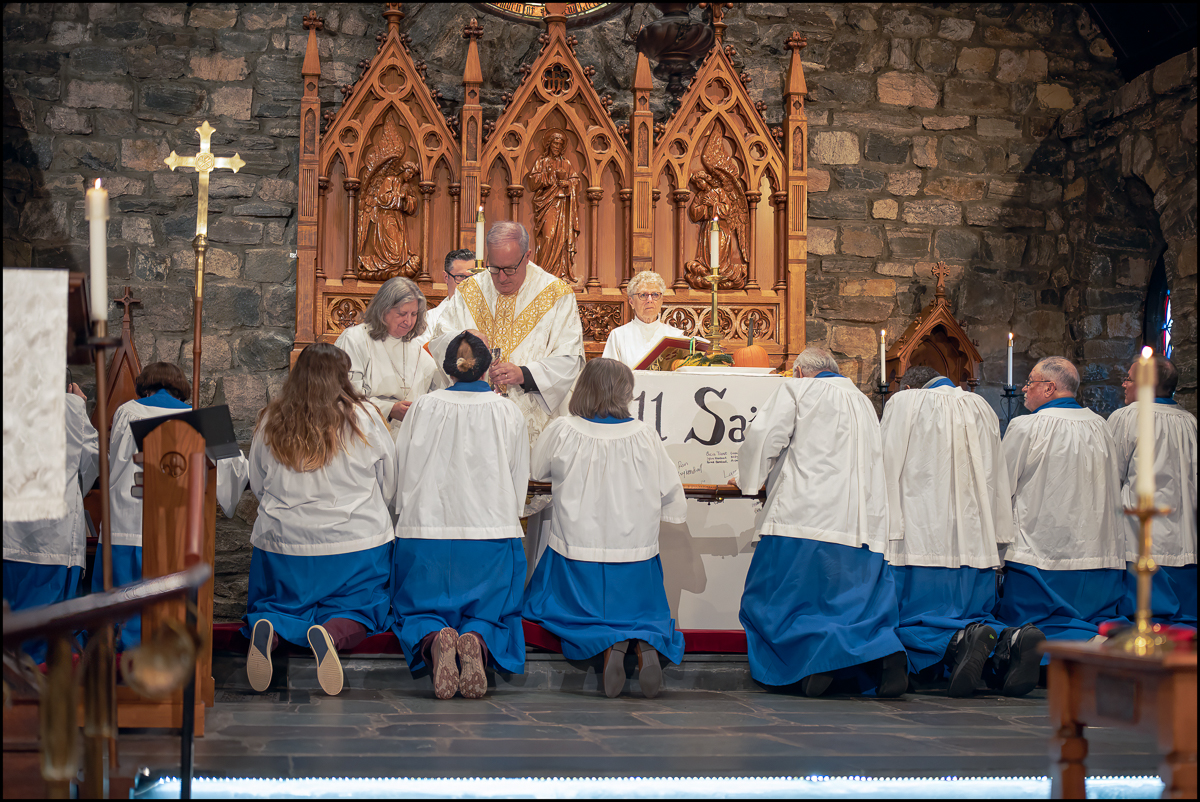
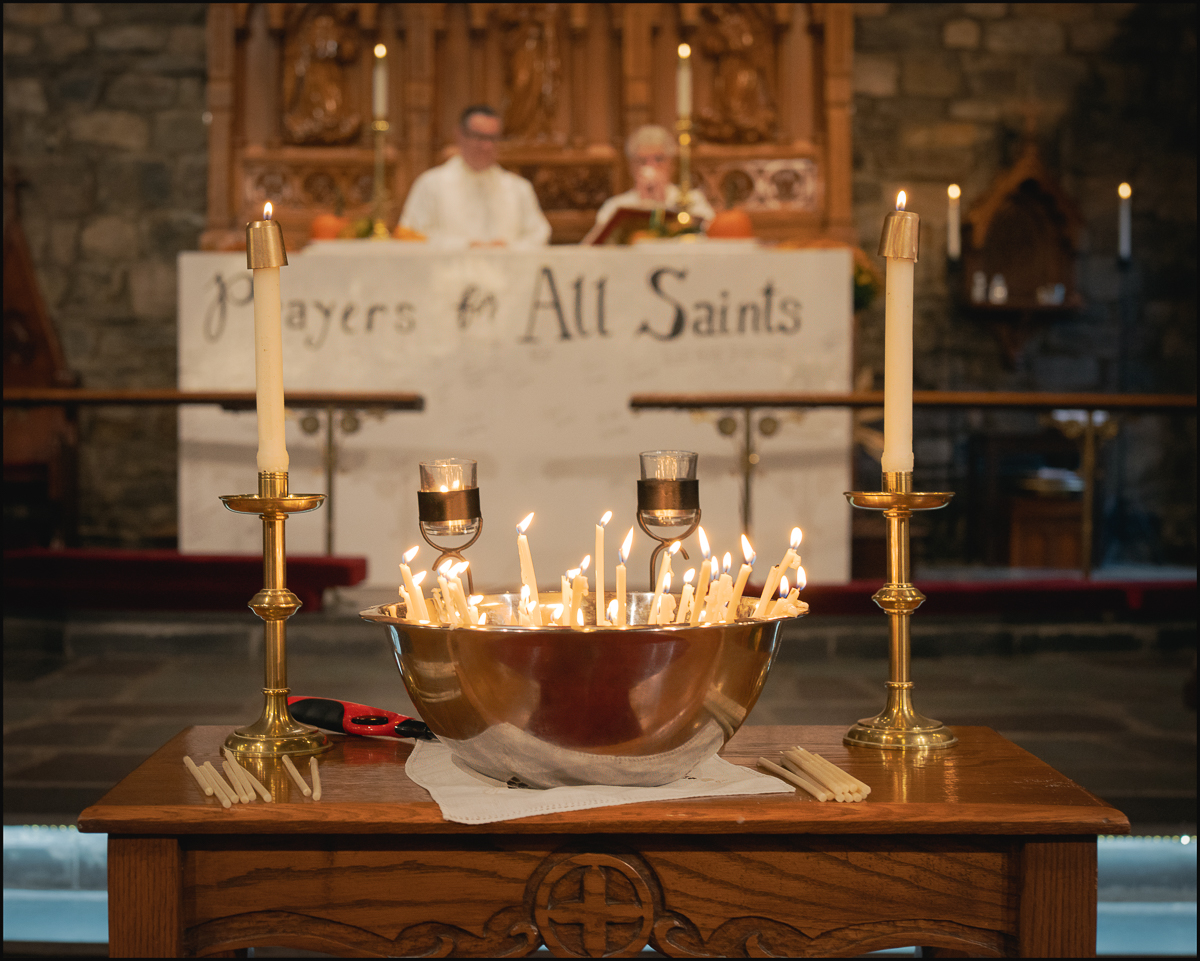
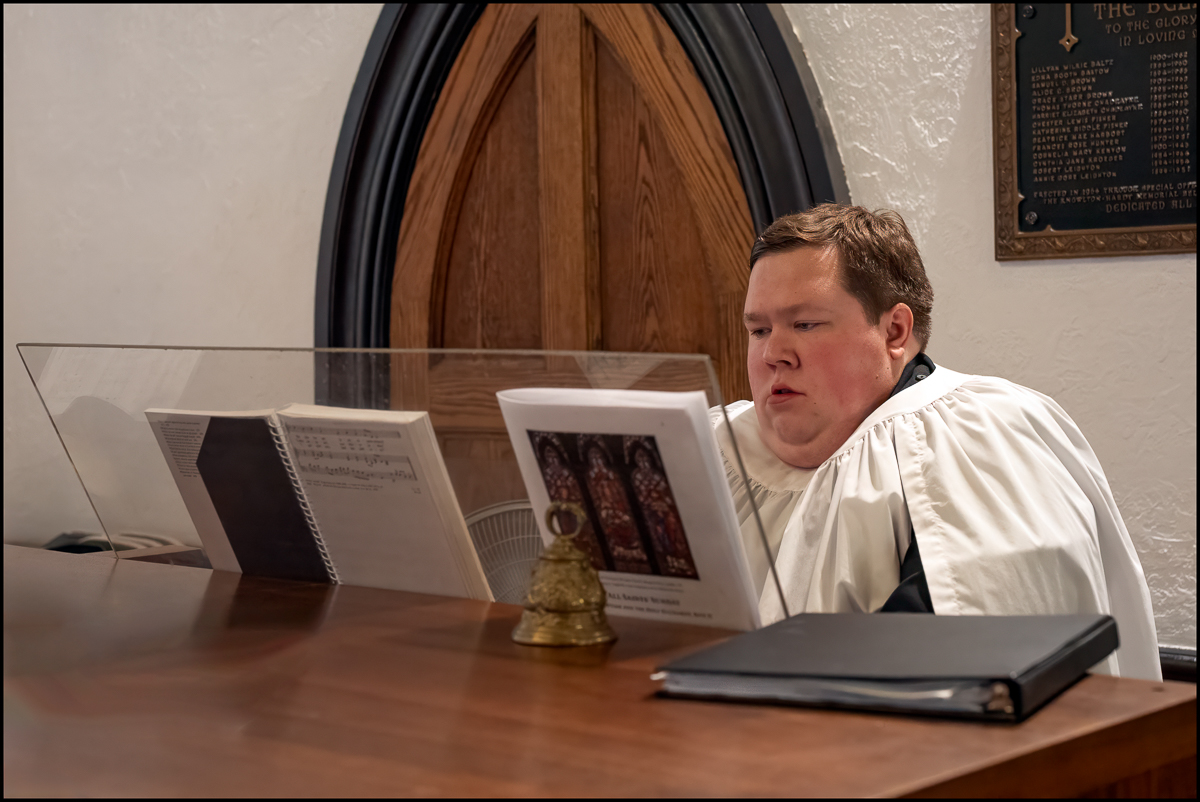
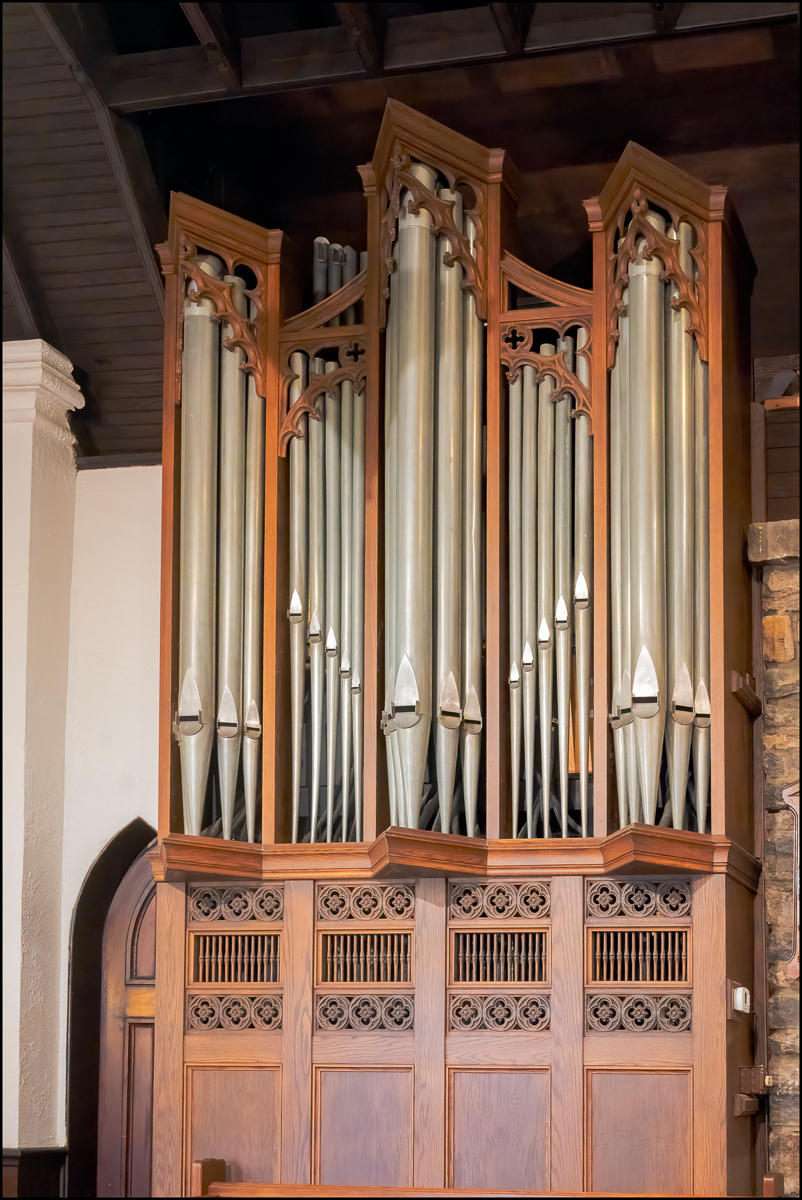
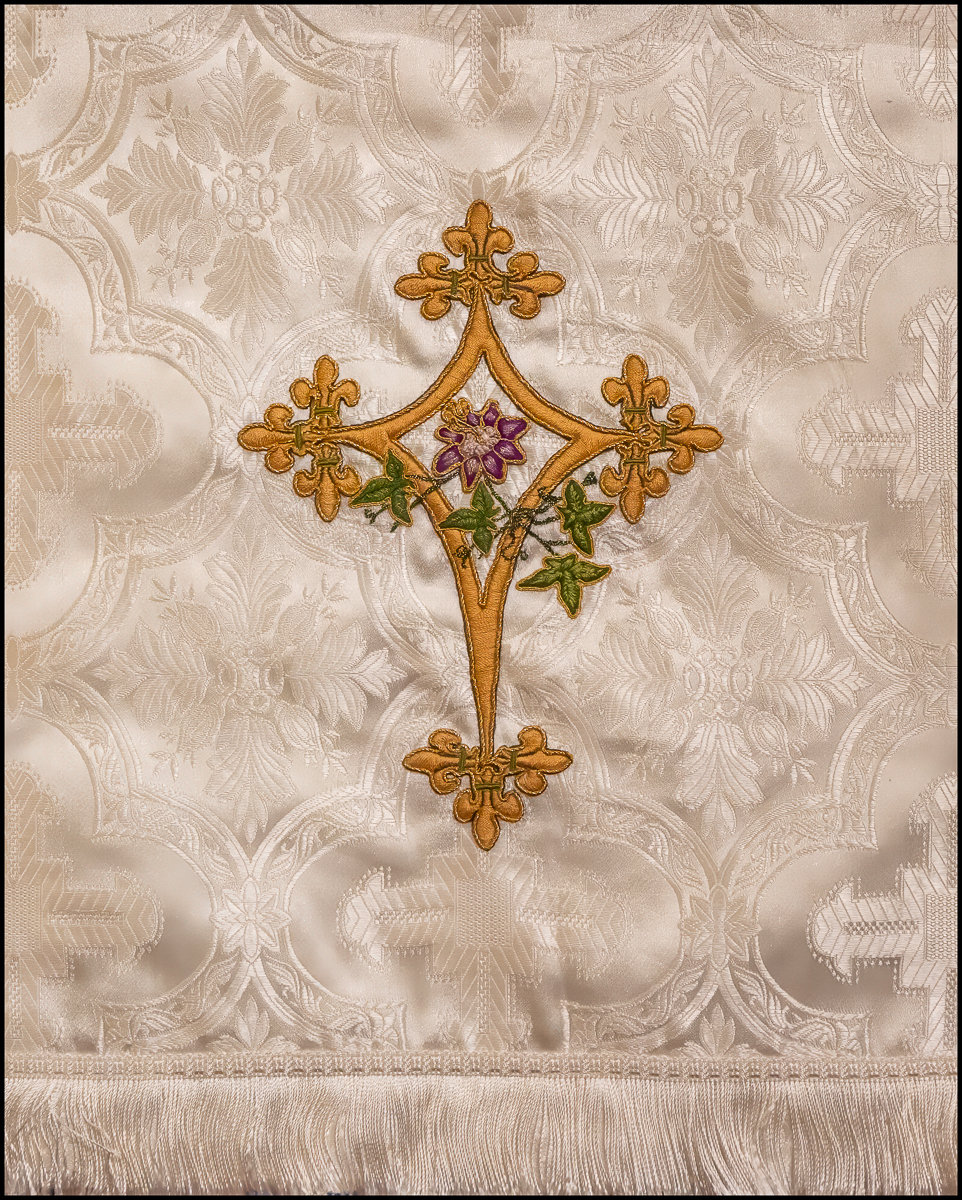
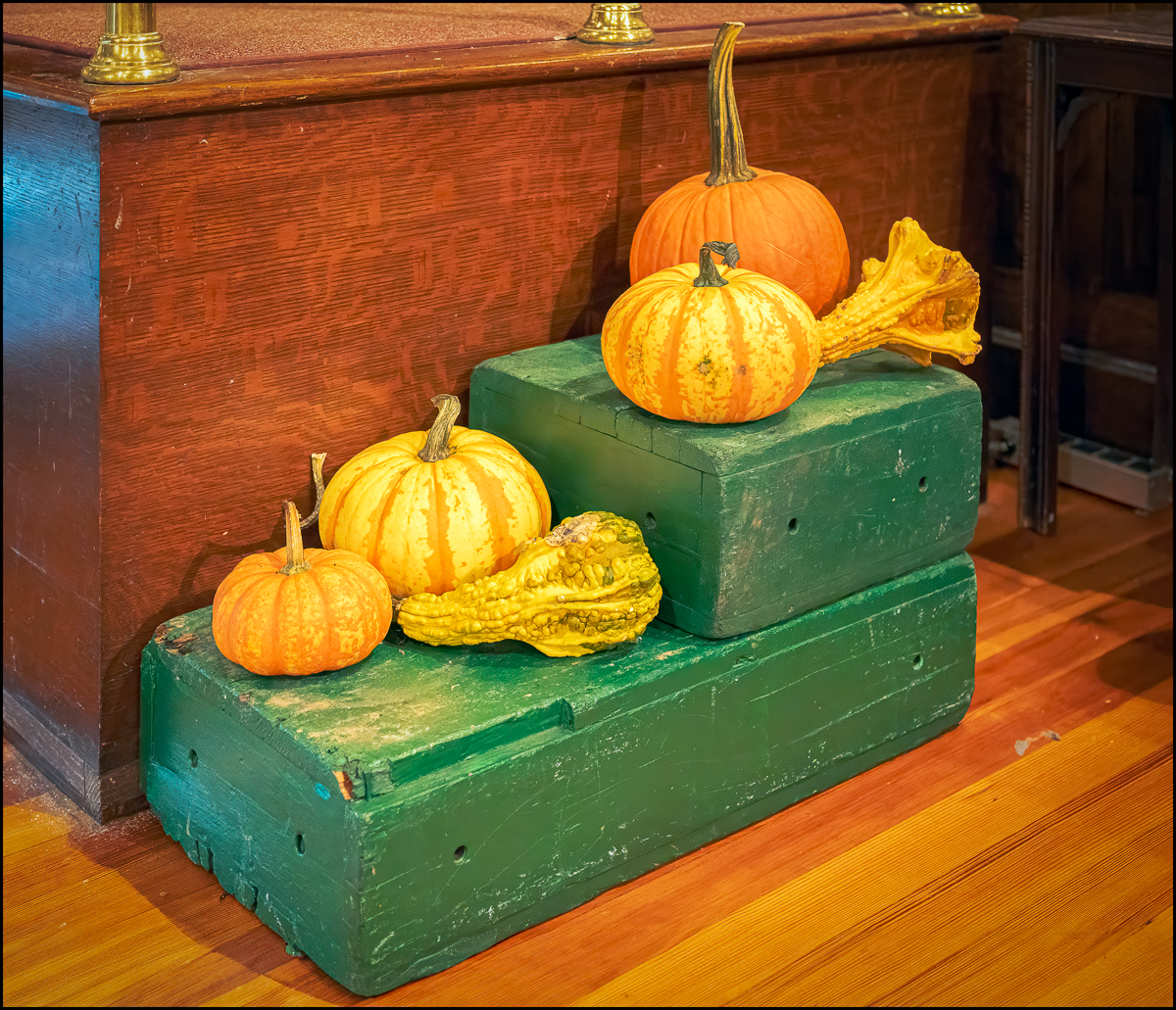
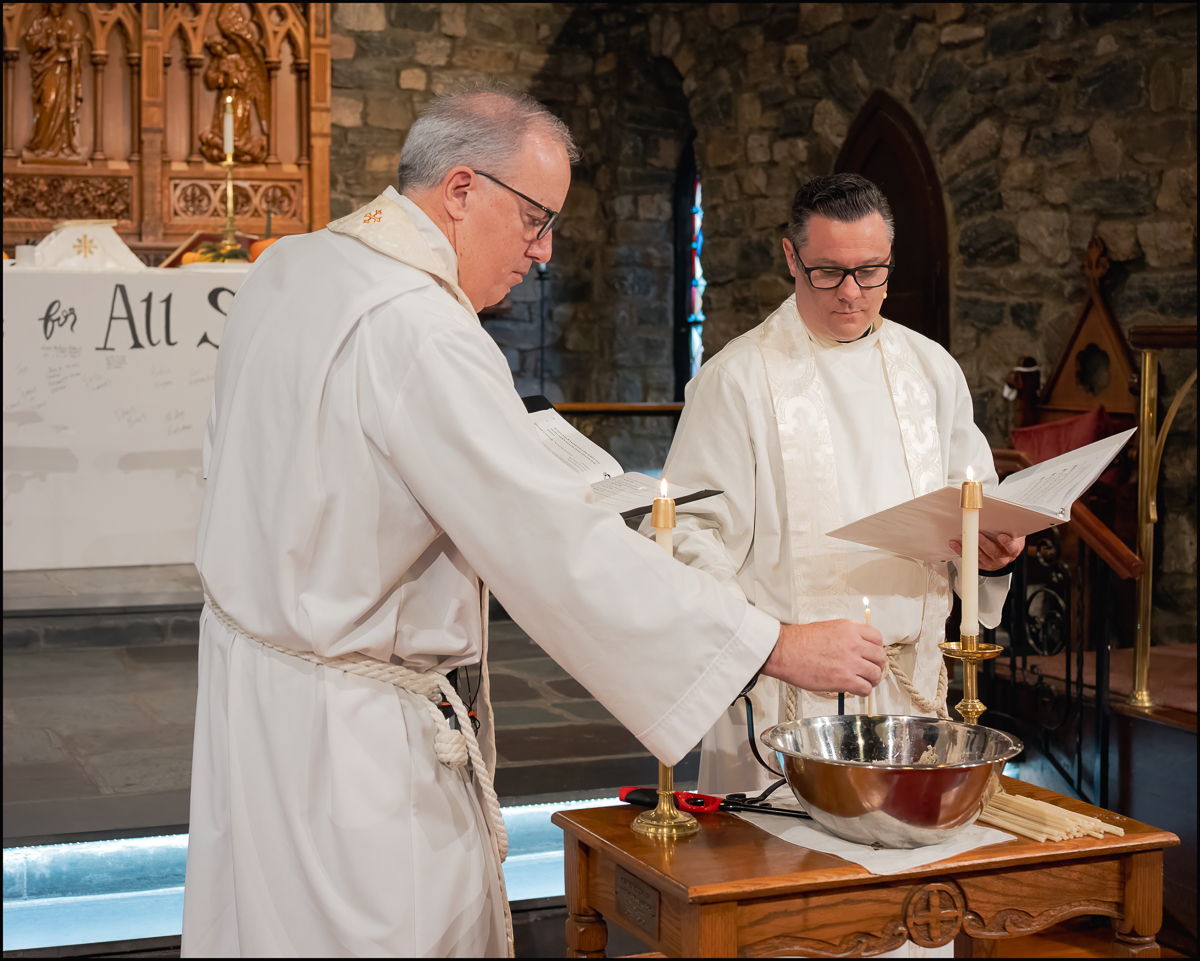
All Saints-Day Service at All-Saints Episcopal Church, Briarcliff Manor

This pleasant old church stands about two blocks away from my house.

All Saints’ Episcopal Church is a historic Episcopal church in Briarcliff Manor, New York. It was added to the National Register of Historic Places in 2002. John David Ogilby, whose summer estate and family home in Ireland were the namesakes of Briarcliff Manor, founded the church in 1854. The church was built on Ogilby’s summer estate in Briarcliff Manor.

Richard Upjohn designed the church building, which was constructed from 1848 to 1854 and expanded in 1911. The church has several memorial windows, including one by John LaFarge and a rose window by Frederick Wilson of Tiffany Studio.

The church’s opening service was held on December 13, 1854, and Ogilby donated the church’s current building and grounds in 1863. He gave the church its first name, “All Saints’ Church, Brier Cliff, Sing Sing, N. Y.”, naming his property Brier Cliff after his family home in Ireland. In 1910, the church building was enlarged to the present cruciform shape, and it was consecrated on November 1, 1911. In 1945, the church purchased property to the north and east of the building; a parish hall was built there in 1949 and dedicated on January 29, 1950.

Notable rectors include Thomas Hazzard and John Adams Howell.) Hazzard was the founder of Hope Farm, and was a football player and coach, as well as a minister, dairy farmer, treasurer, and missionary in Liberia. John Adams Howell invented the Howell torpedo and other naval devices; he was also a rear admiral in the US Navy.

The church building was designed by architect Richard Upjohn and built between 1848 and 1854. The church was modeled on Saint Andrew’s in Bemerton, England, and it is an example of the modest English Gothic parish church popular in the region during the mid-19th century.

The building was originally designed with a simple rectangular nave with a high-pitched slate-covered gable roof and exterior walls of random-coursed granite ashlar in the Gothic Revival style. A transept and enlarged chancel were added in 1911. There is a metal steeple at the gable crossing. Memorial windows include one by John LaFarge (1889) and a rose window “Adoration of the Magi” (1911) by Frederick Wilson of Tiffany Studios. Also on the property is a Stick Style rectory dated to 1883 and an Arts and Crafts-style Old Parish Hall built in 1904. (Wikipedia).

I have been for some time meaning to make a photograph about this church. Over time I’ve taken photographs of the exterior; the interior; the rectory; the gardens; the parish hall etc. I thought I was just about finished when I realized that I didn’t actually have any pictures of people: the congregation and the staff. I went over and spoke to Rev. Kevin Veitinger who invited me to come to the All-Saints Day Service to take some pictures. These are what I came up with.


Taken with a Sony A7IV and Rokinon/Samyang AF 75mm f1.8 FE