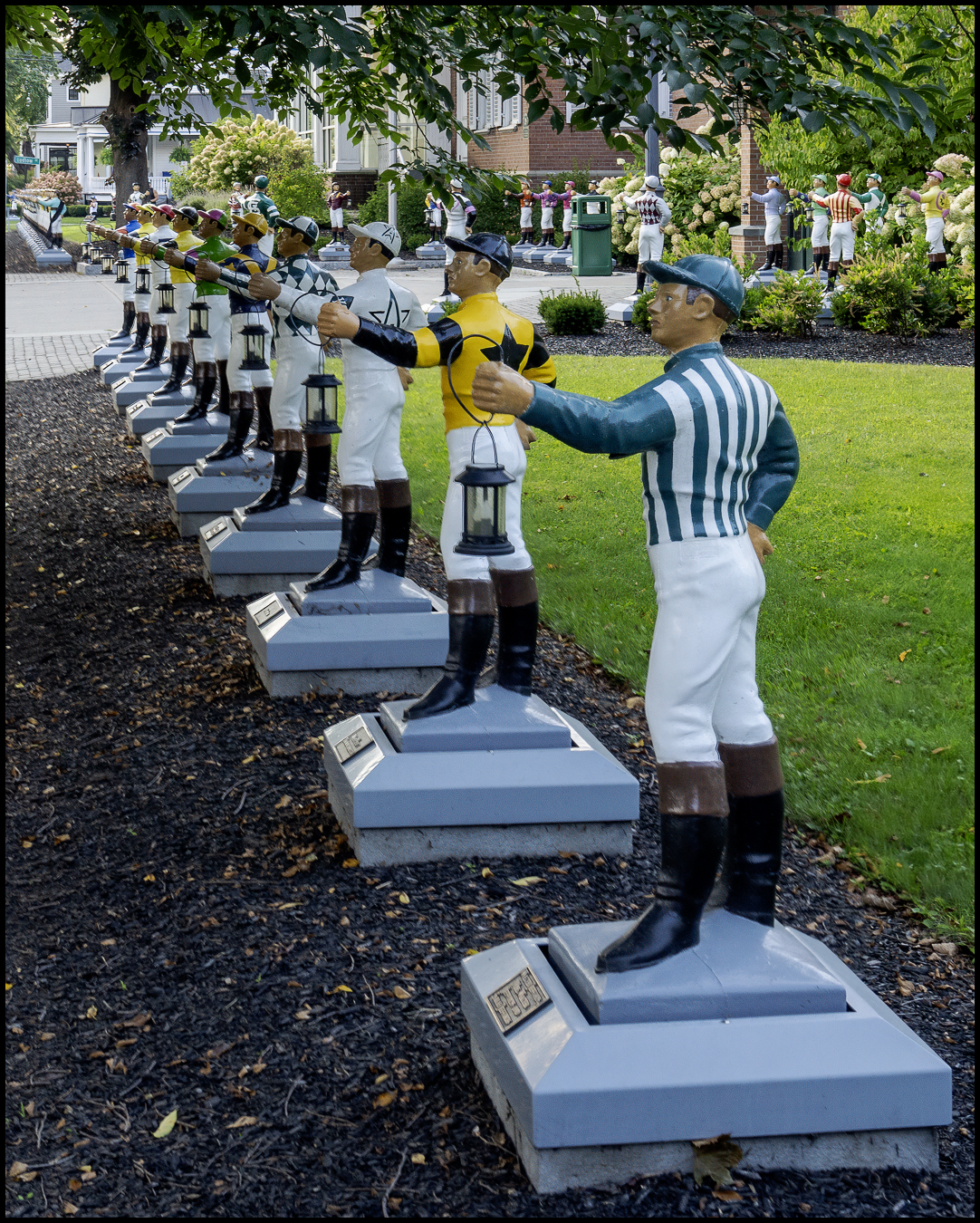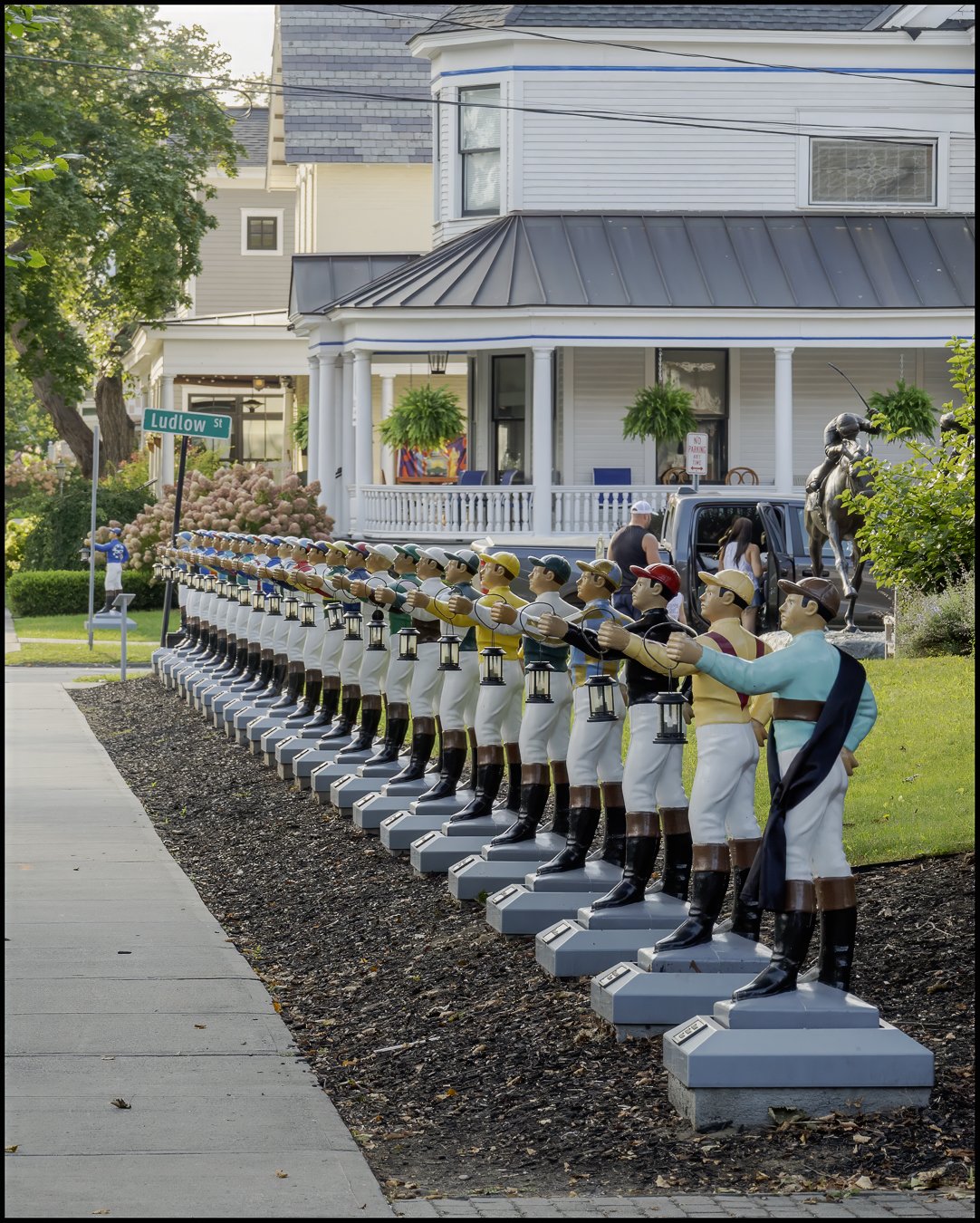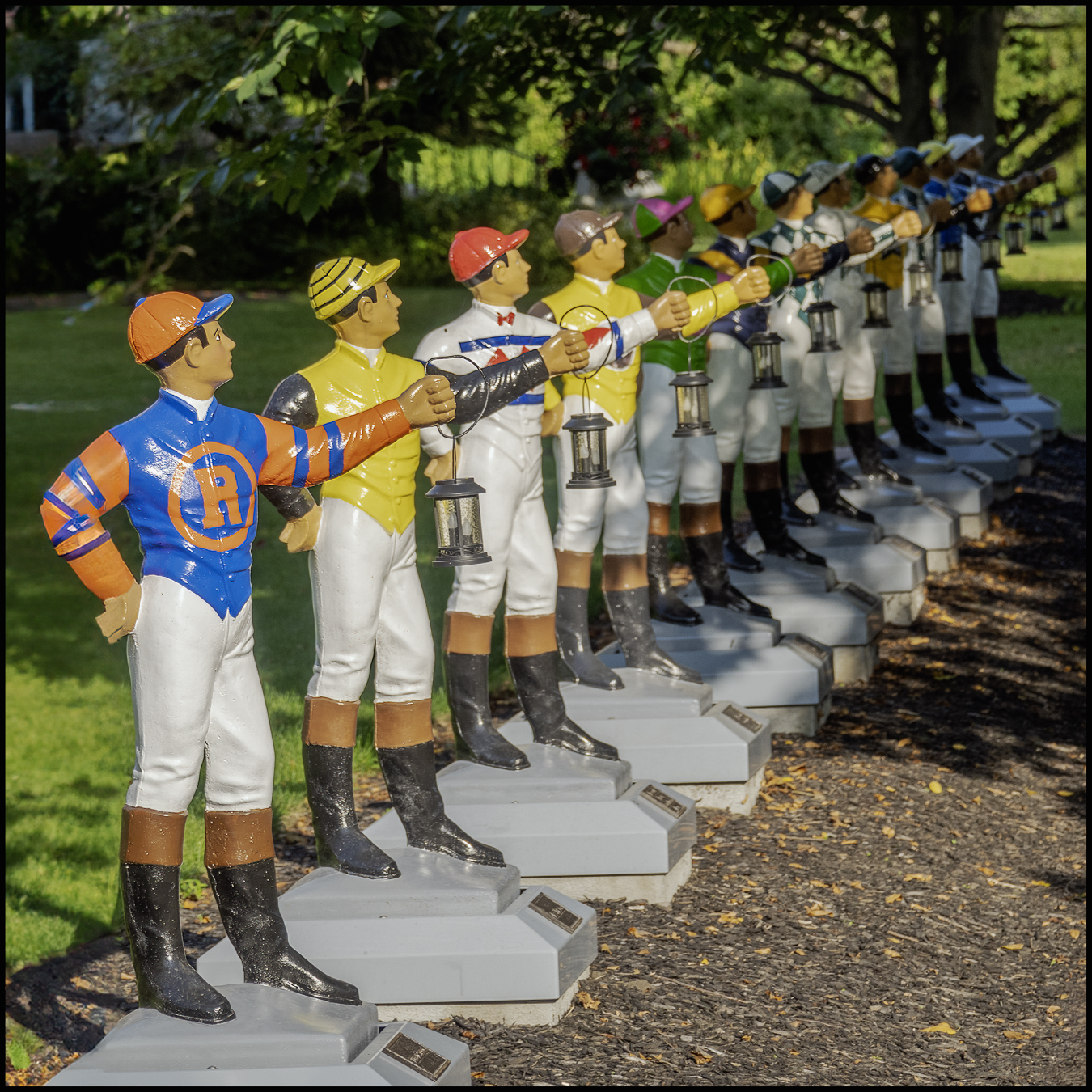
A visit to upstate New York and Vermont – National Museum of Racing and Hall of Fame, Saratoga Springs

According to Wikipedia:

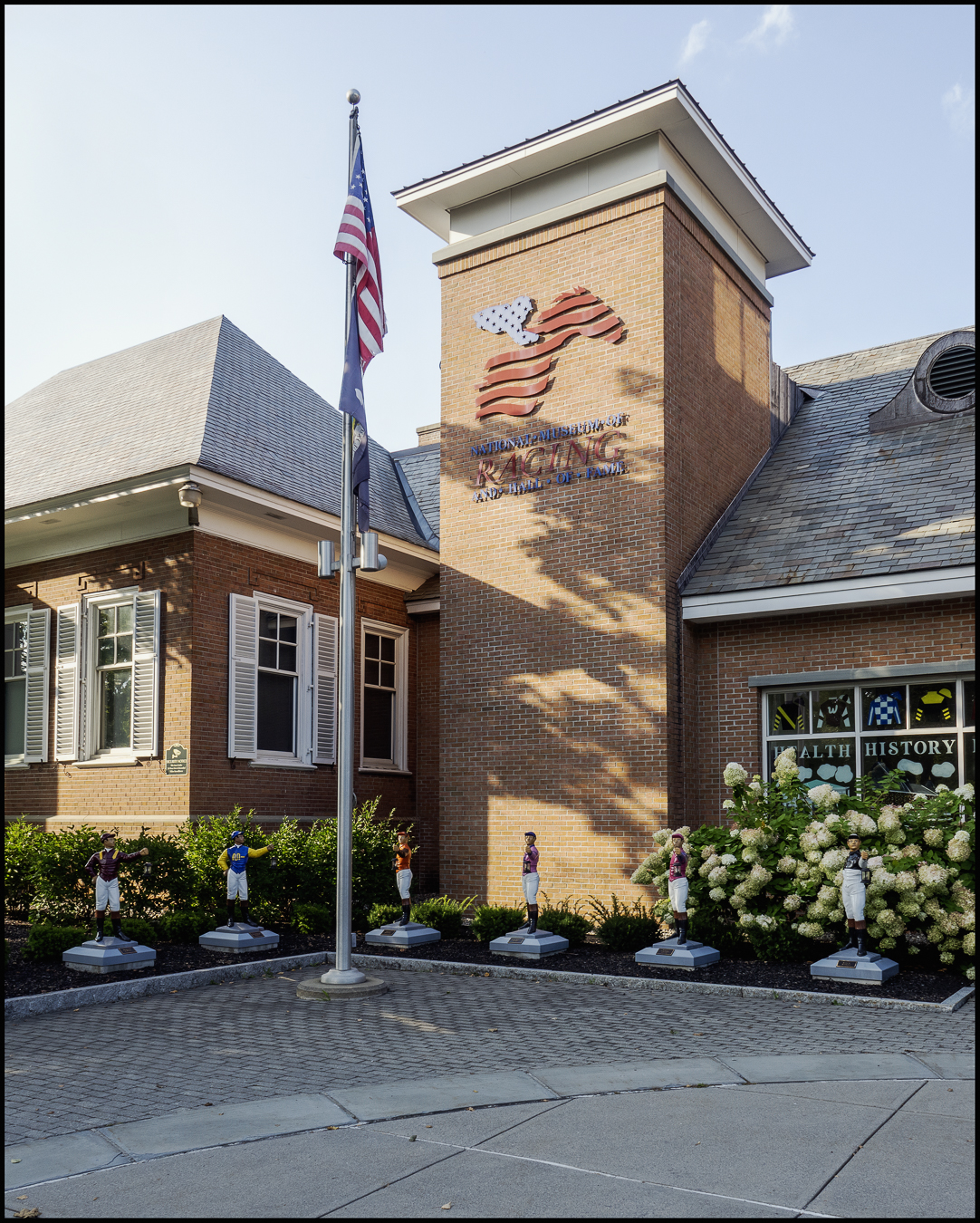
The National Museum of Racing and Hall of Fame was founded in 1950 in Saratoga Springs, New York, to honor the achievements of American Thoroughbred racehorses, jockeys, and trainers. In 1955, the museum moved to its current location on Union Avenue near Saratoga Race Course, at which time inductions into the hall of fame began. Each spring, following the tabulation of the final votes, the announcement of new inductees is made, usually during Kentucky Derby Week in early May. The actual inductions are held in mid-August during the Saratoga race meeting.

The Hall of Fame’s nominating committee selects eight to ten candidates from among the four Contemporary categories (colts and horses, fillies and mares, jockey and trainer) to be presented to the voters. Changes in voting procedures that commenced with the 2010 candidates allow the voters to choose multiple candidates from a single Contemporary category, instead of a single candidate from each of the four Contemporary categories. For example, in 2016, two mares (Rachel Alexandra and Zenyatta) were inducted at the same time.

The museum also houses a large collection of art, artifacts, and memorabilia that document the history of horse racing from the eighteenth century to the present.

History

The National Museum of Racing was founded in 1950, led by Cornelius Vanderbilt Whitney and a group of people interested in thoroughbred racing. The museum first opened its doors in 1951, at which time it occupied a single room in Saratoga’s Canfield Casino. The establishment was supported by the city of Saratoga Springs, which donated $2,500, the Saratoga Racing Association, which donated $5,000, and various patrons of the sport, who also donated various pieces of art and memorabilia. The first item in the museum’s collection was a horseshoe worn by the great Lexington.

In 1955, the museum relocated to its current location on Union Avenue, across the street from the main entrance of the historic Saratoga Racecourse. The museum was relocated to a newly reconstructed building and a thoroughbred racing Hall of Fame was included. Since then, the museum has expanded several times to allow for the display of its extensive art collection and more multimedia displays on the history of the sport.
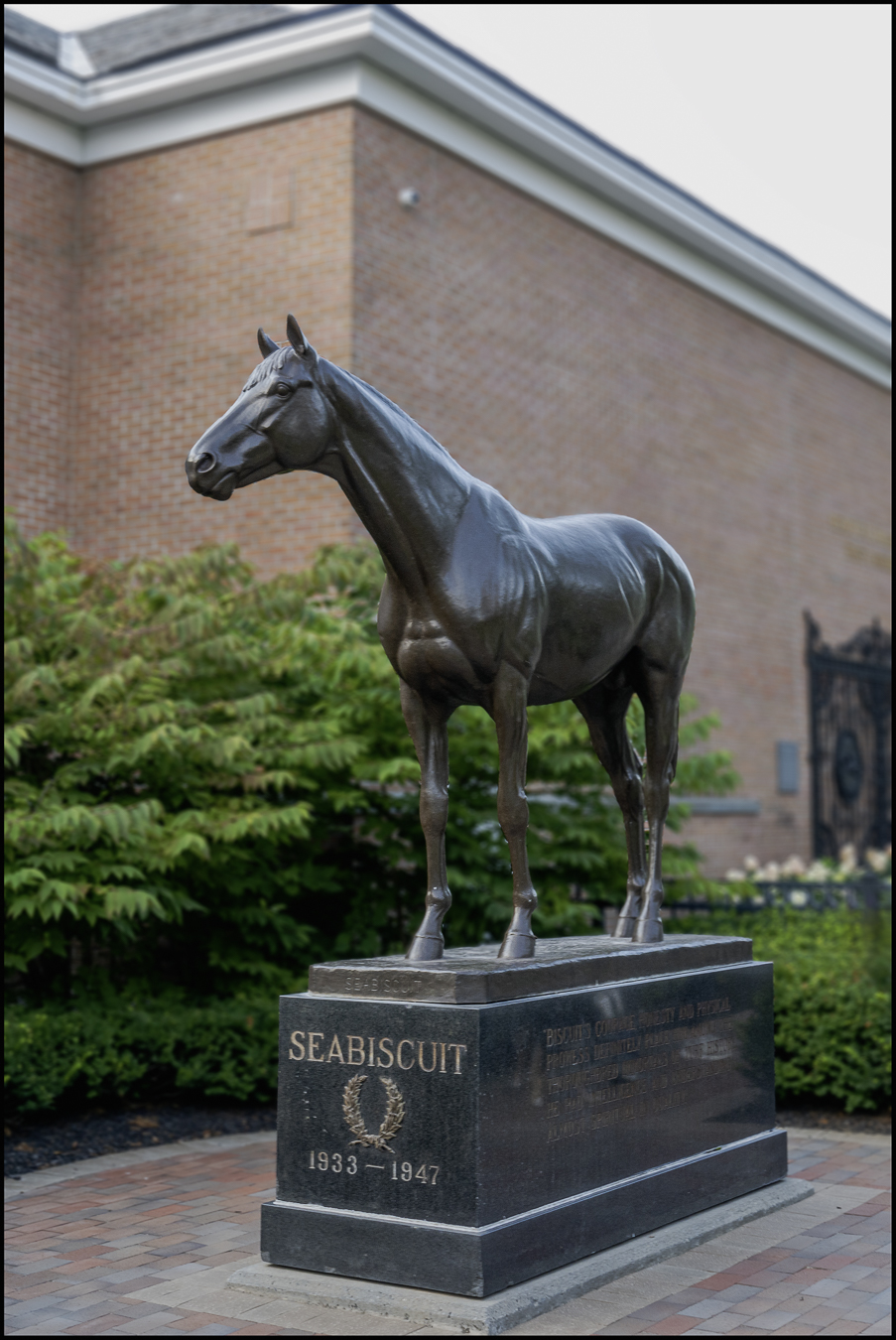

Sea Biscuit, 1933-1947.
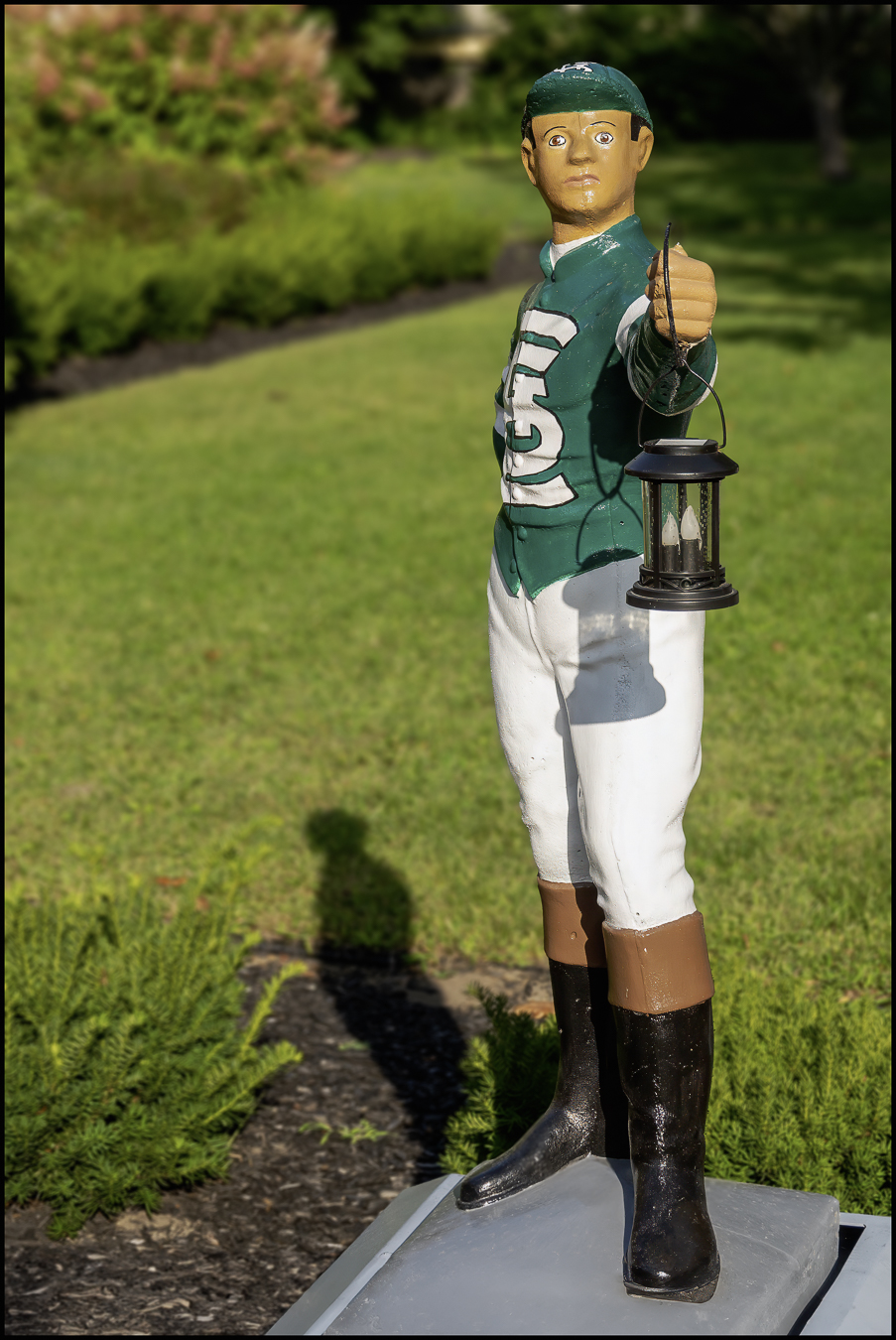


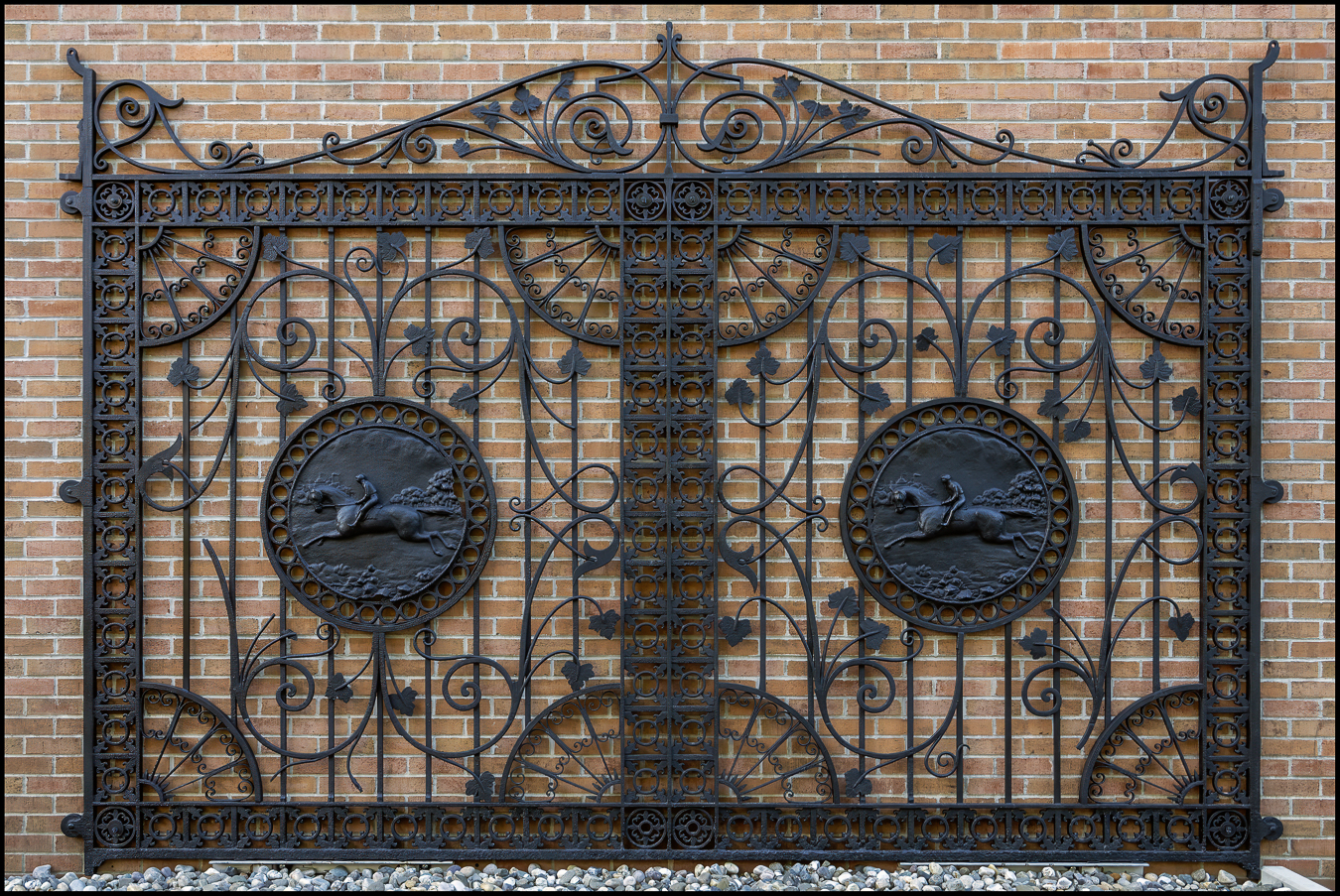
A nearby plaque reads:

Pimlico Race Course Gate
Wrought iron, ca. 1870
9 feet, 5 inches high by 13 feet wide
Gift: Mr. and Mrs. E. Stack Gately

This gate once stood at Pimlico Race
Course near the clubhouse of the
Maryland Jockey Club, which operataed
Pimlico beginning in 1870. Chanins and
pulleys were used to raise and lower
the gate. Removed in 1966 when fire
destroyed the clubhouse, the gate is an
excellent example of mid-nineteenth
century wrought iron craftsmanship

Taken with a Sony RX10 IV
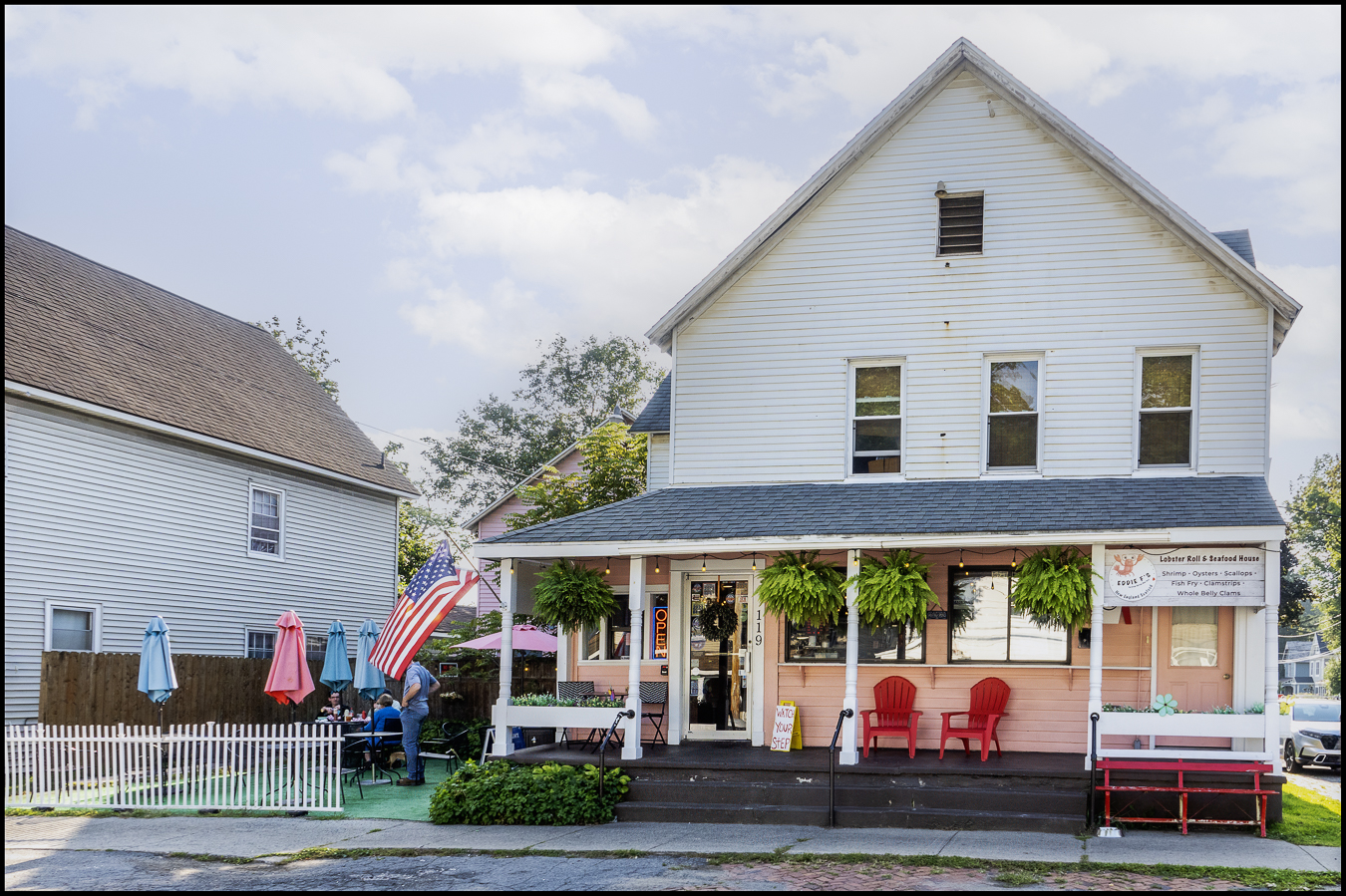
A visit to upstate New York and Vermont – Lunch at Eddie F’s New England Seafood Restaurant in Saratoga Springs

We’d spent most of the day at the Saratoga National Historical Park and we didn’t get back to Saratoga Springs until late afternoon. We were hungry and there were lots of restaurants to choose from. Unfortunately, it was quite difficult to find parking. Thankfully, my friends remembered a restaurant that someone had recommended. It was a little outside the main shopping/eating area so there was a chance that we could find parking. The restaurant is called Eddie F’s New England Seafood Restaurant, and we found parking immediately. There are two locations: Clifton Park and Saratoga Springs. As I’m writing this the website is featuring the Clifton Park location, which is not the one we went to.

One review described the Saratoga Springs location as follows:

Eddie F’s New England Seafood Restaurant serves outstanding seafood dishes, including their signature lobster roll, which is praised for its freshness and flavor. Other favorites include the New England Clam chowder, fish sandwich, lobster Mac and cheese, and shrimp basket. The restaurant offers a fun and welcoming atmosphere, with both indoor and outdoor seating options. The staff is friendly and attentive, and the food is consistently fresh and delicious. This local gem is a must-visit for seafood lovers.


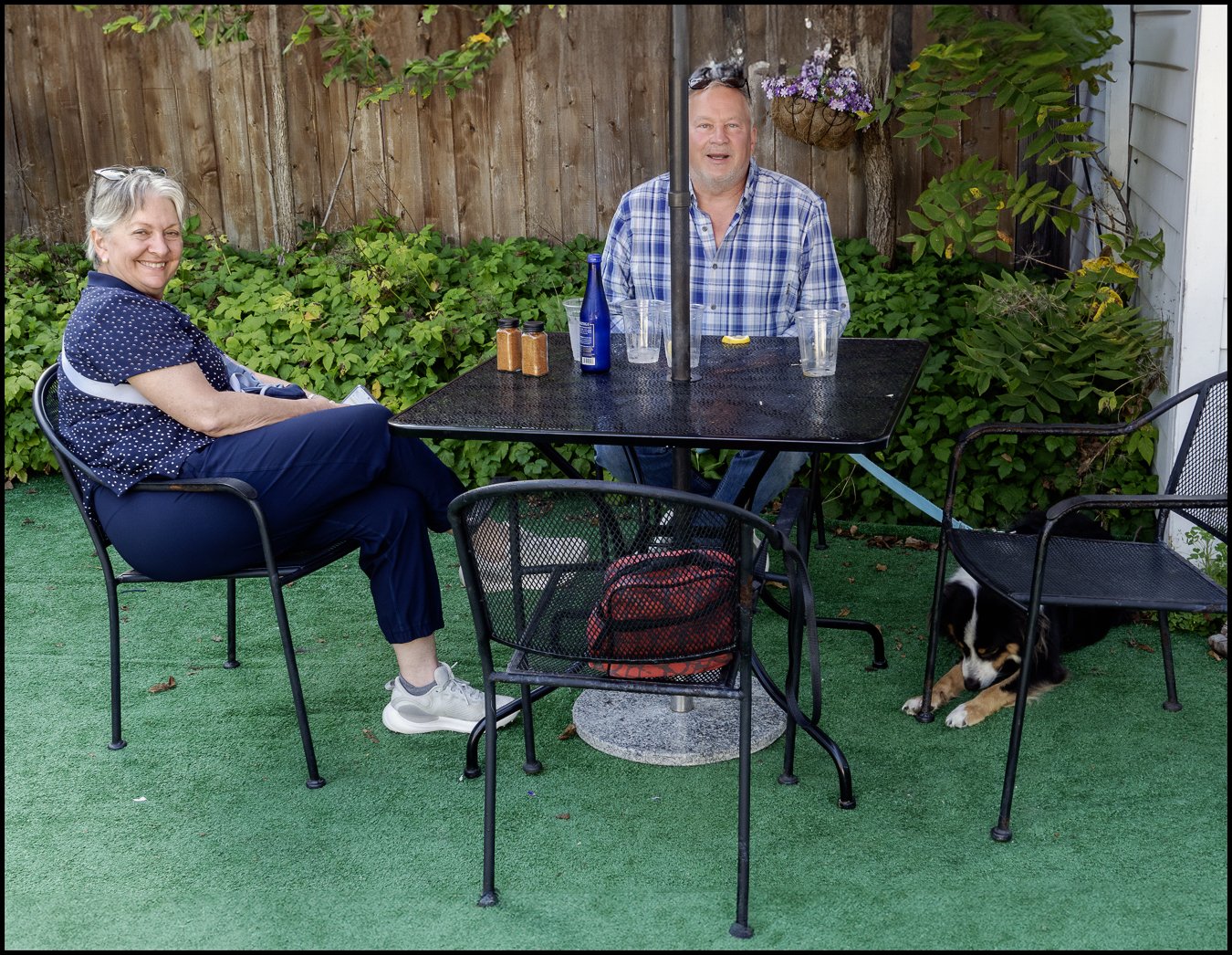
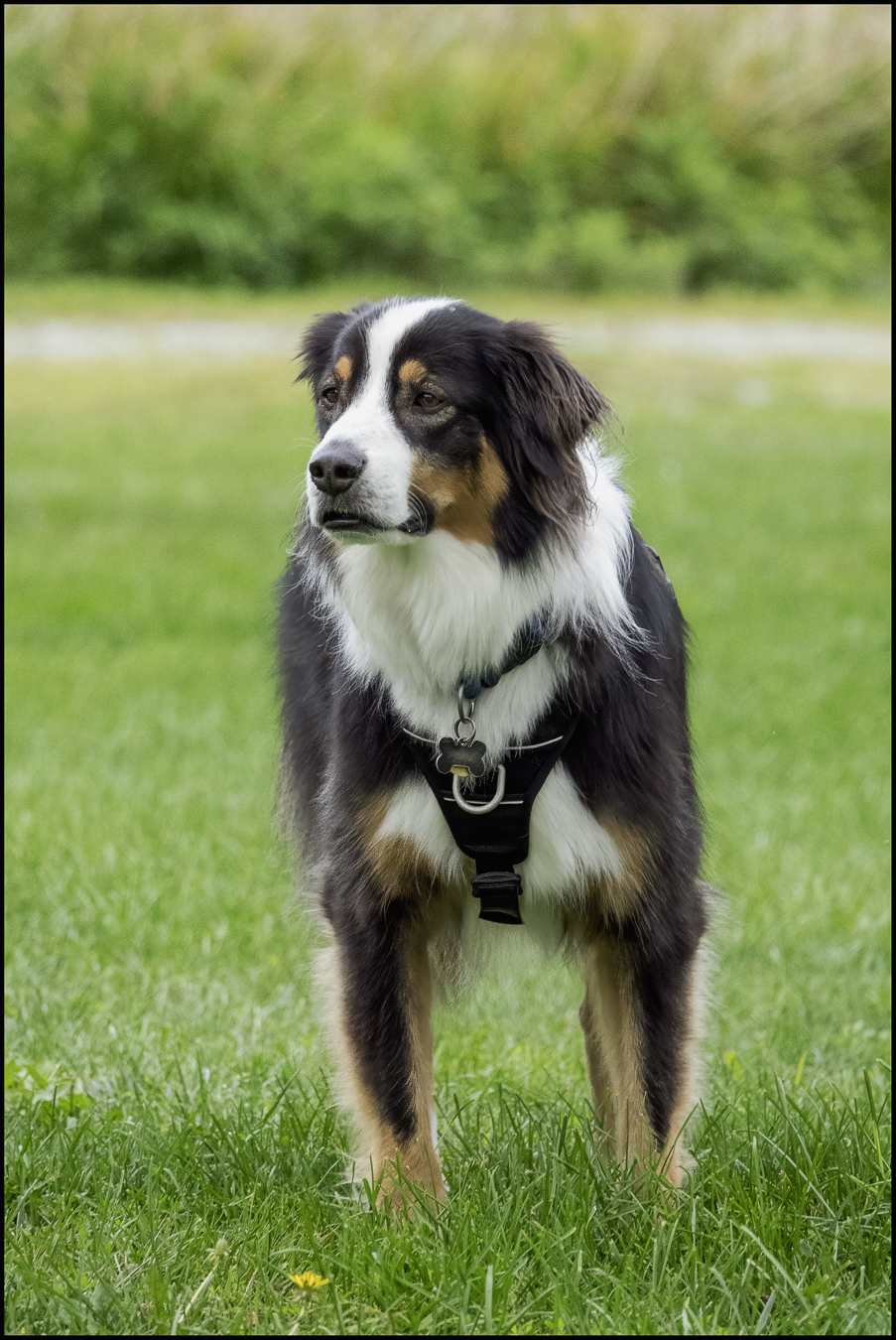
My friends and their dog, Juno.

I enjoyed the food, but by that time I was so hungry I would probably enjoyed have anything.

Taken with a Sony RX10 IV.

A visit to upstate New York and Vermont – Saratoga National Historical Park

The home page of the Park’s website contains the following:

A Crucial American Victory. Here in the autumn of 1777 American forces met, defeated and forced a major British army to surrender. This crucial American victory renewed patriots’ hopes for independence, secured essential foreign recognition and support, and forever changed the face of the world.

I very much agree. After the British defeat at Saratoga the war was no longer about the British vs. the American Patriots. With the entry of the French on the American side it was now the British vs. the Americans, the French, The Spanish, and the Dutch. And it was no longer limited to the East Coast of the US. The British were now fighting a global war.

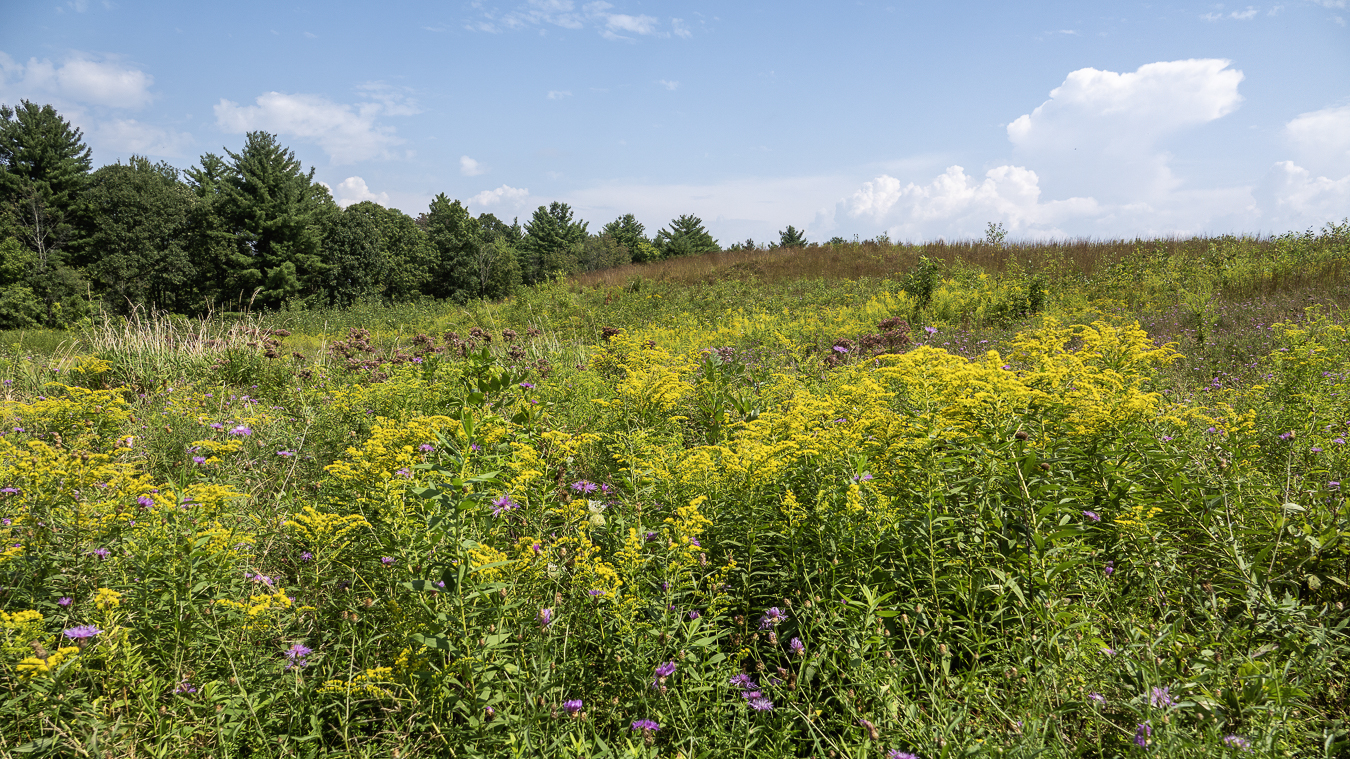
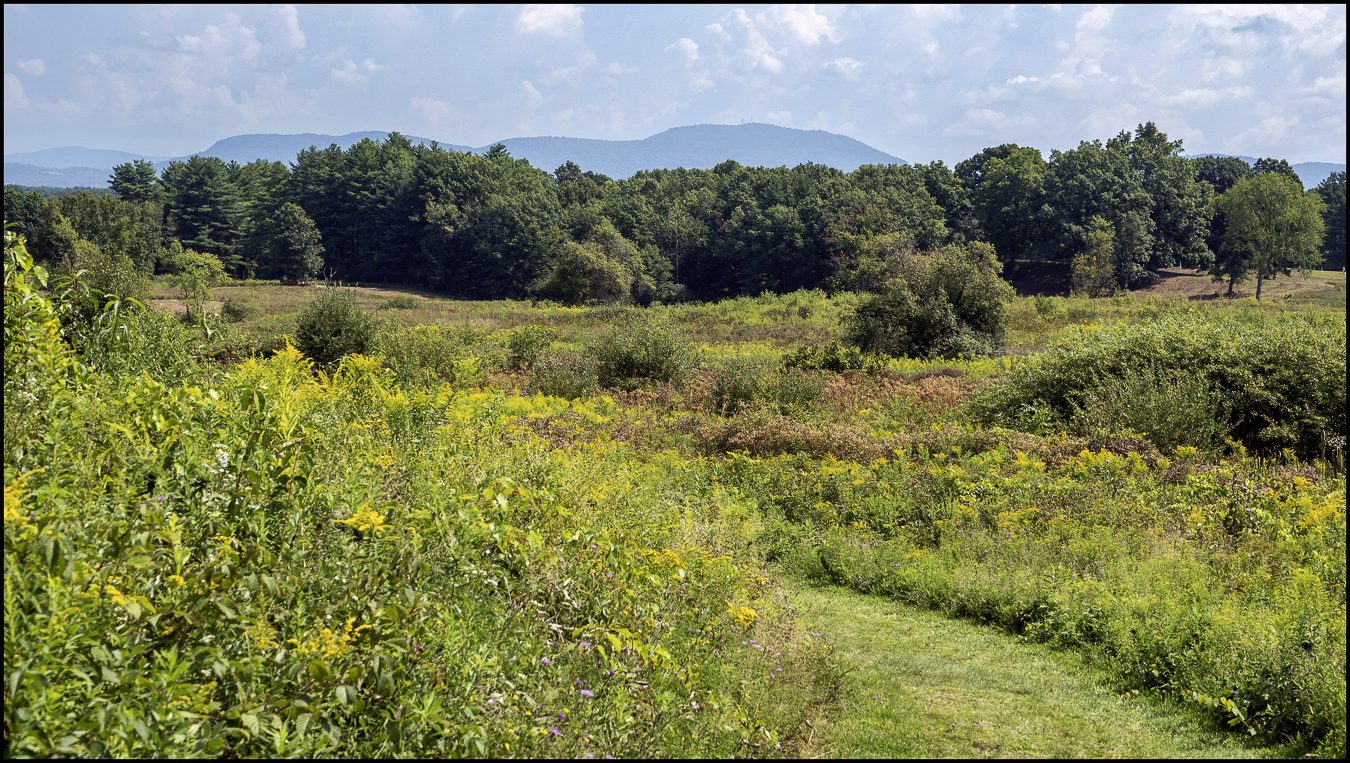
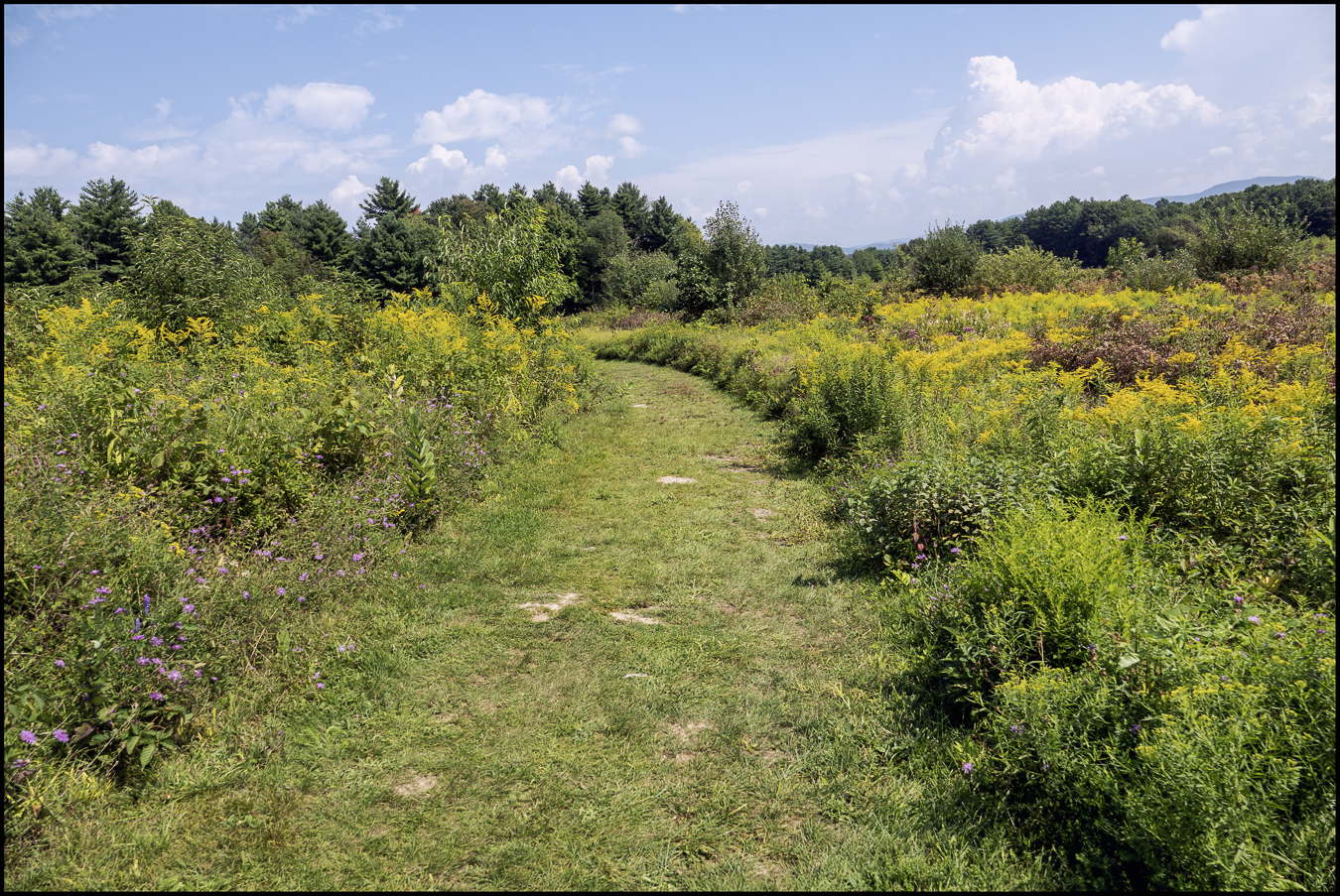
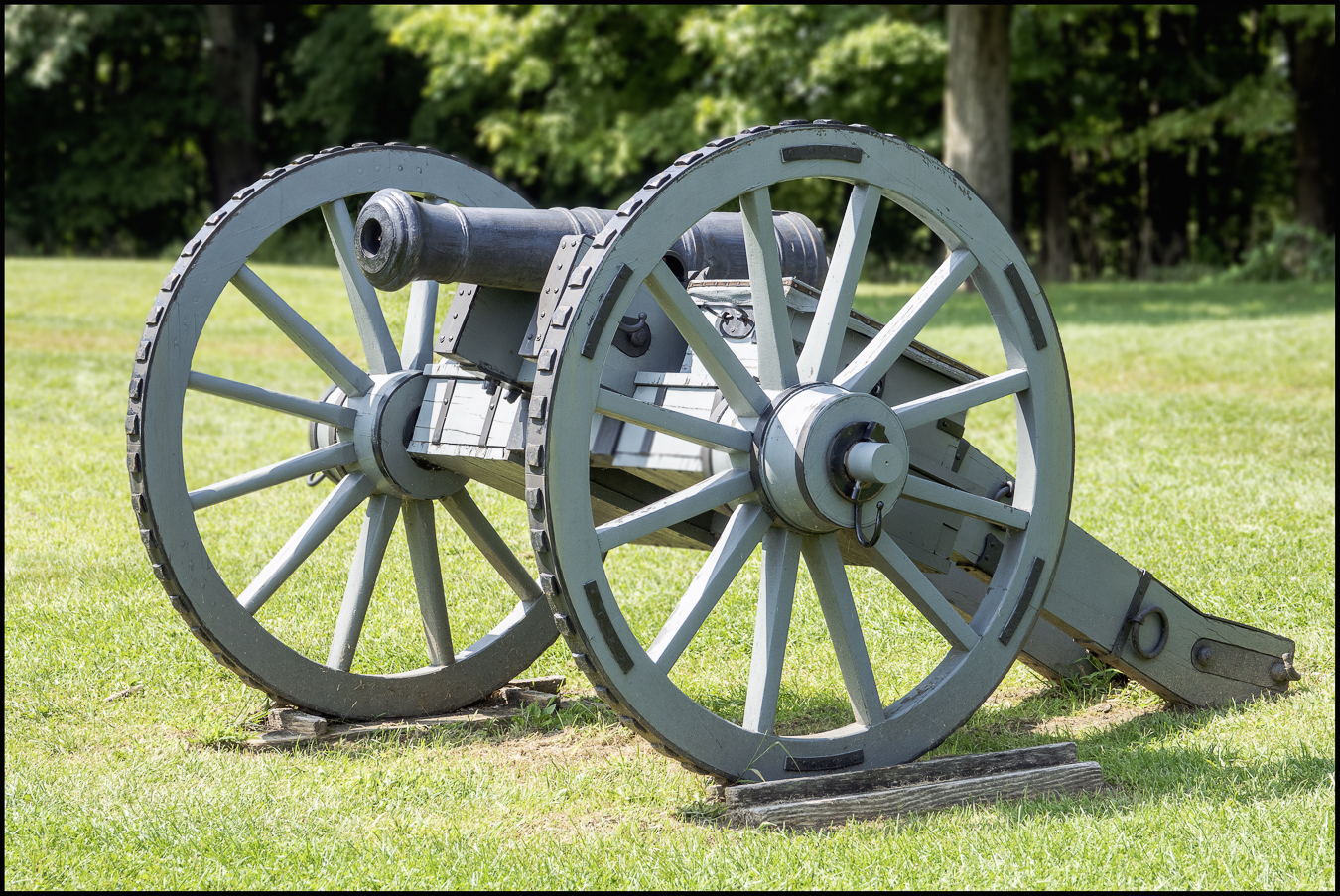
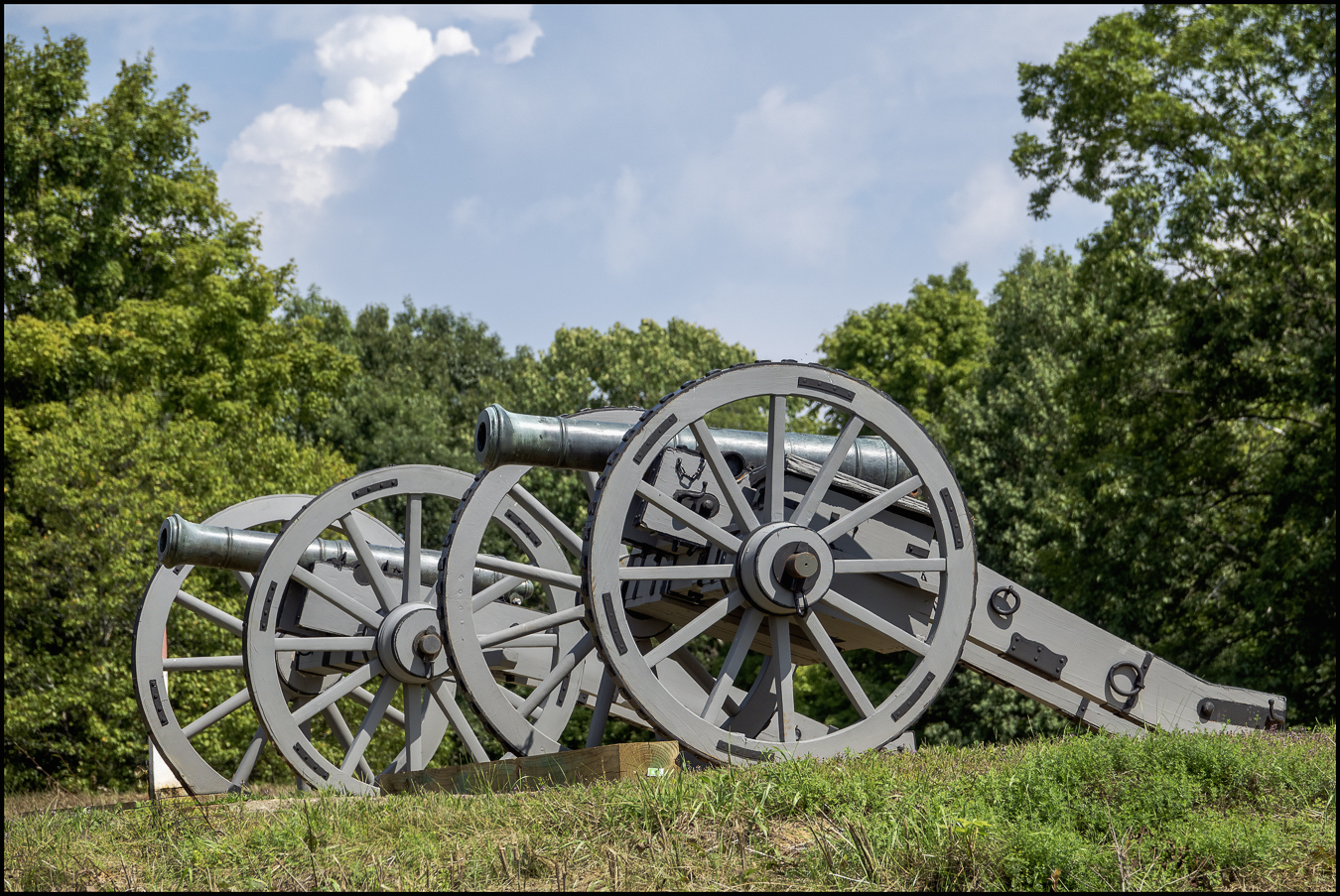
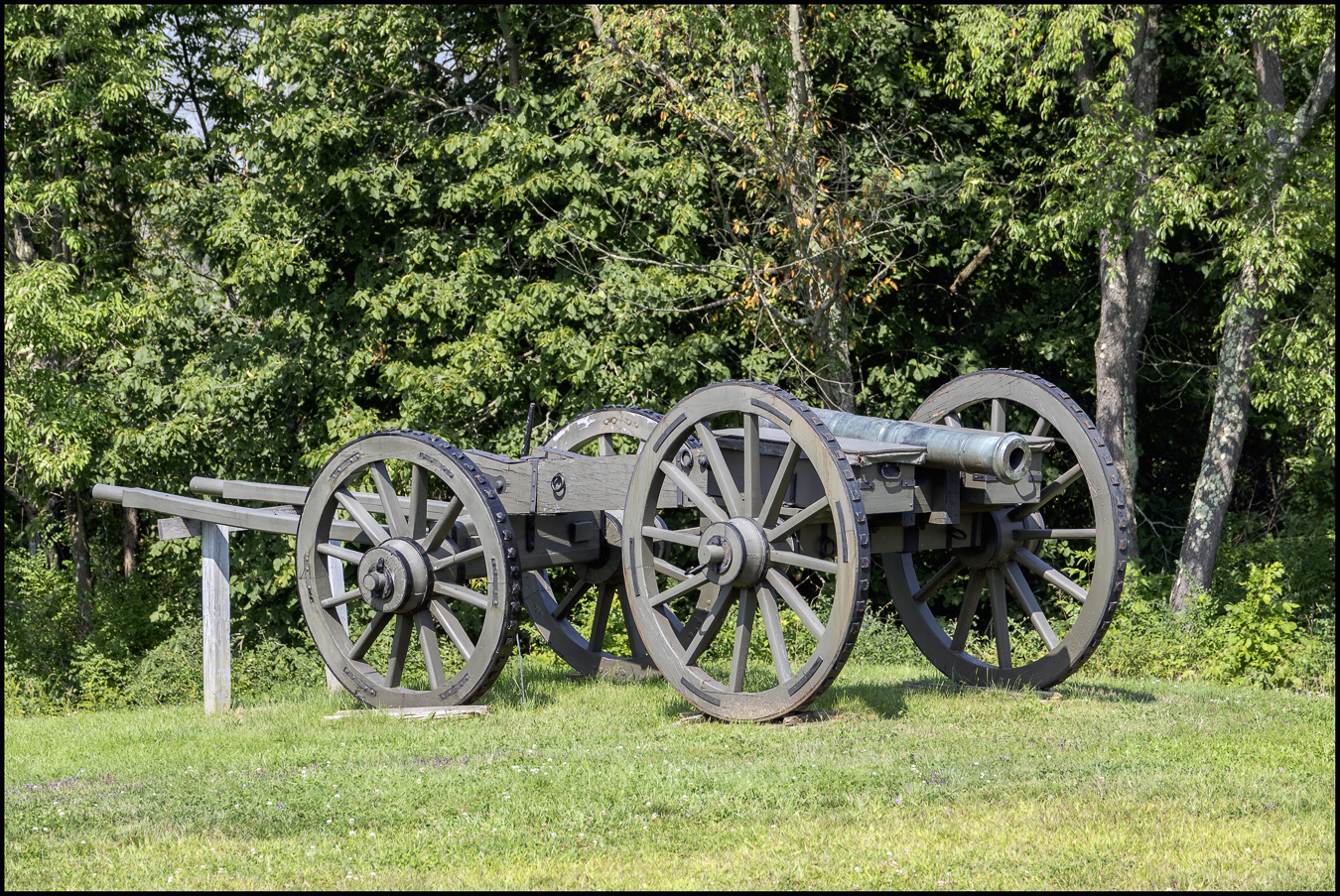
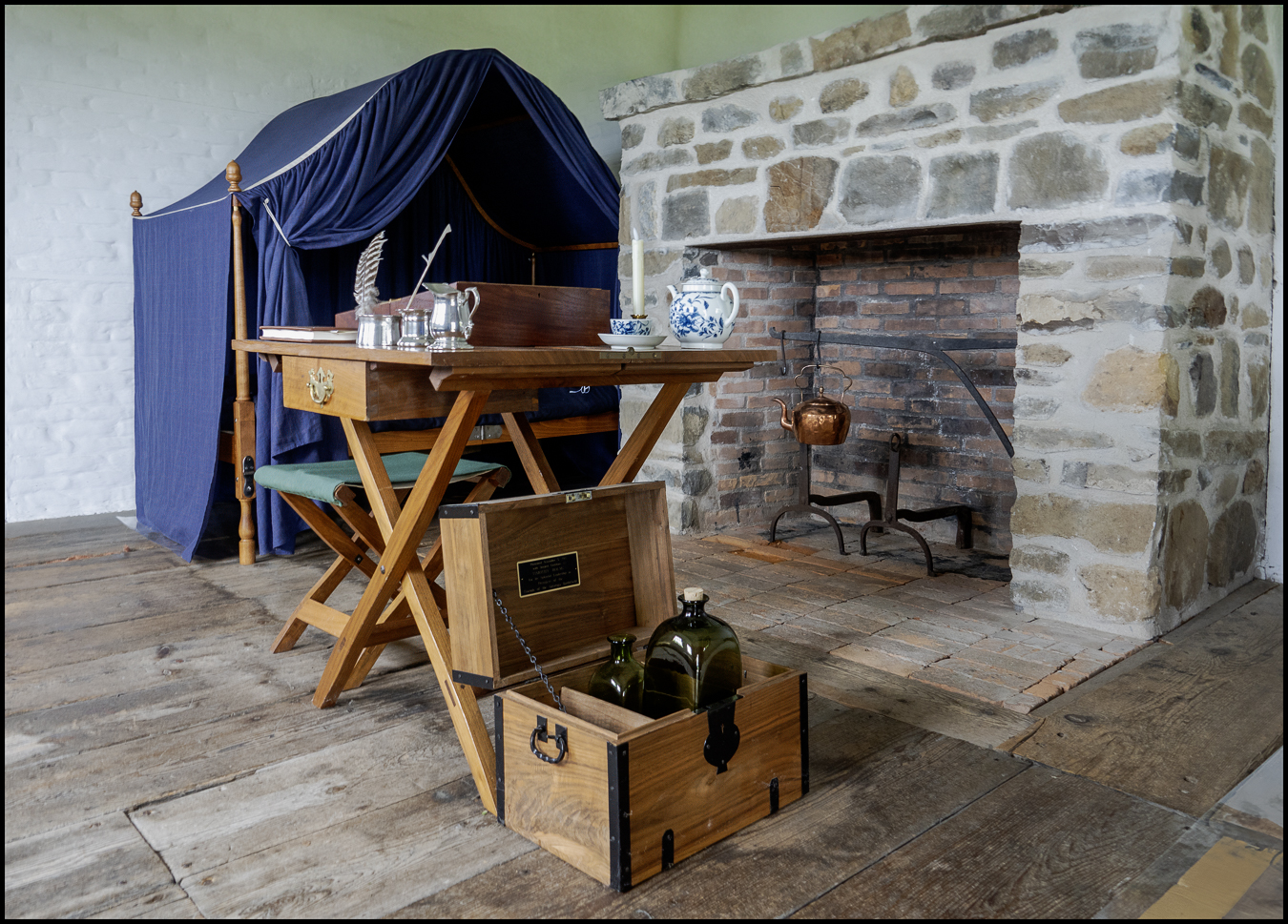
I’d been to the battlefield before. Unfortunately, I chose a very gloomy, rainy day for my visit. The weather was so bad that I just shot around the battlefield and headed off home as quickly as possible. Since that day I’ve always thought that I must have missed a lot. Unfortunately, the truth of the matter is that there isn’t actually much to see. The visitor’s center is somewhat interesting, but other than that there’s just acres and acres of fields (luckily, they were full of flowers, which made them look quite pretty.); a few cannons; a few monuments (not many); and an old farmhouse. It would be a great place to walk your dog.


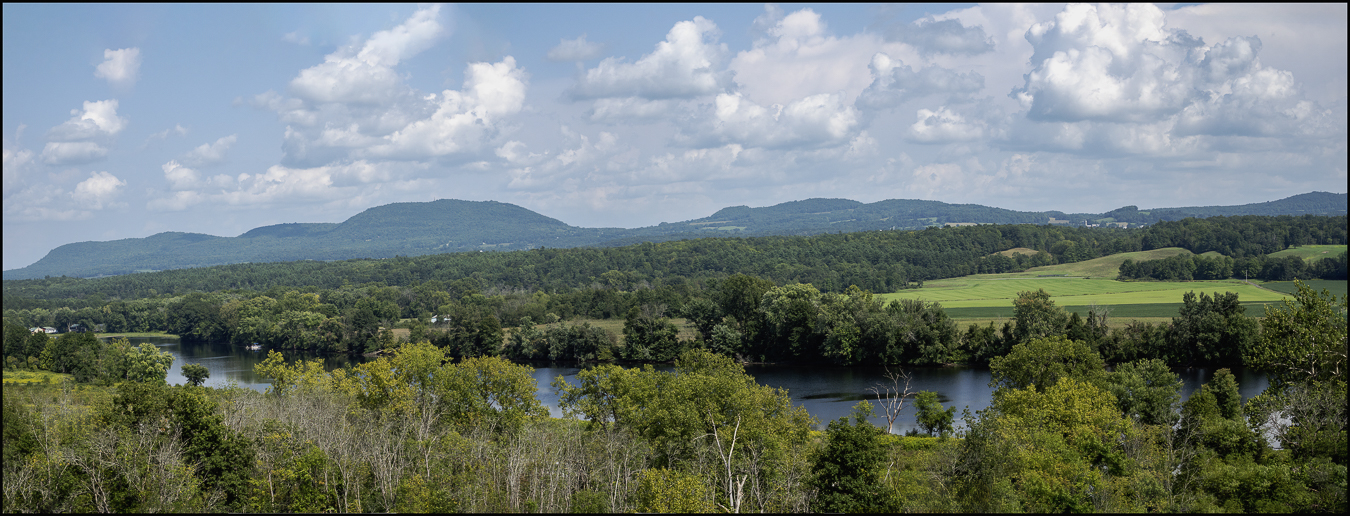
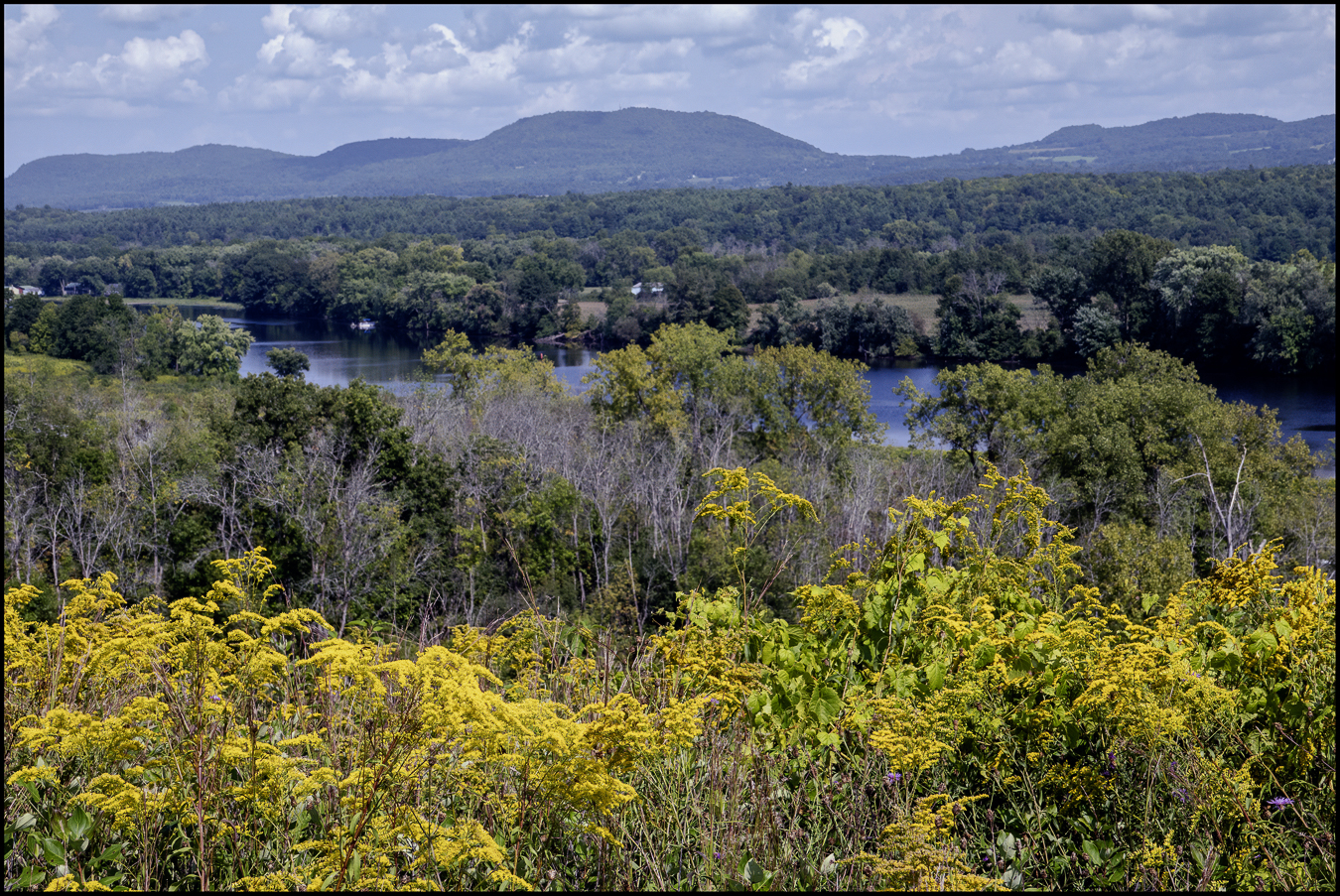
The next two pictures show views of the Hudson.


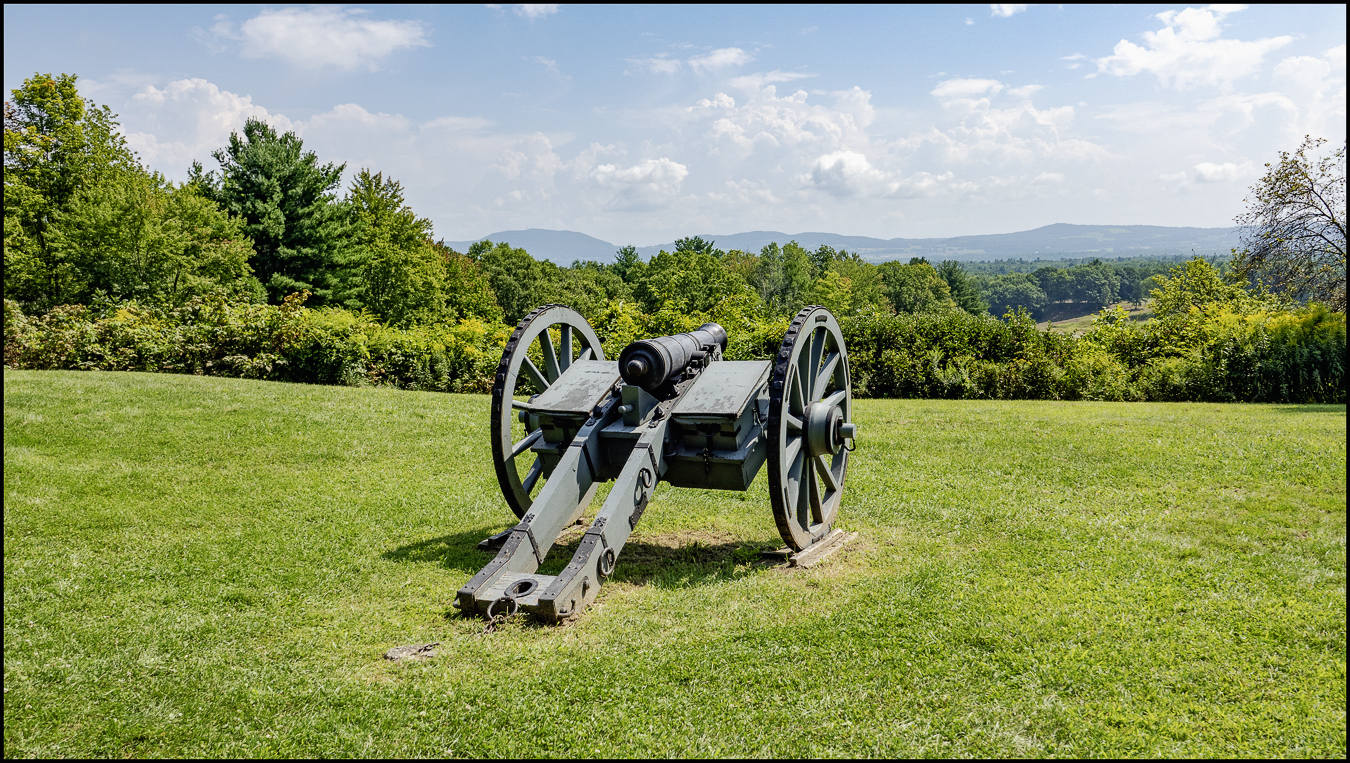
Next four pictures: Cannons


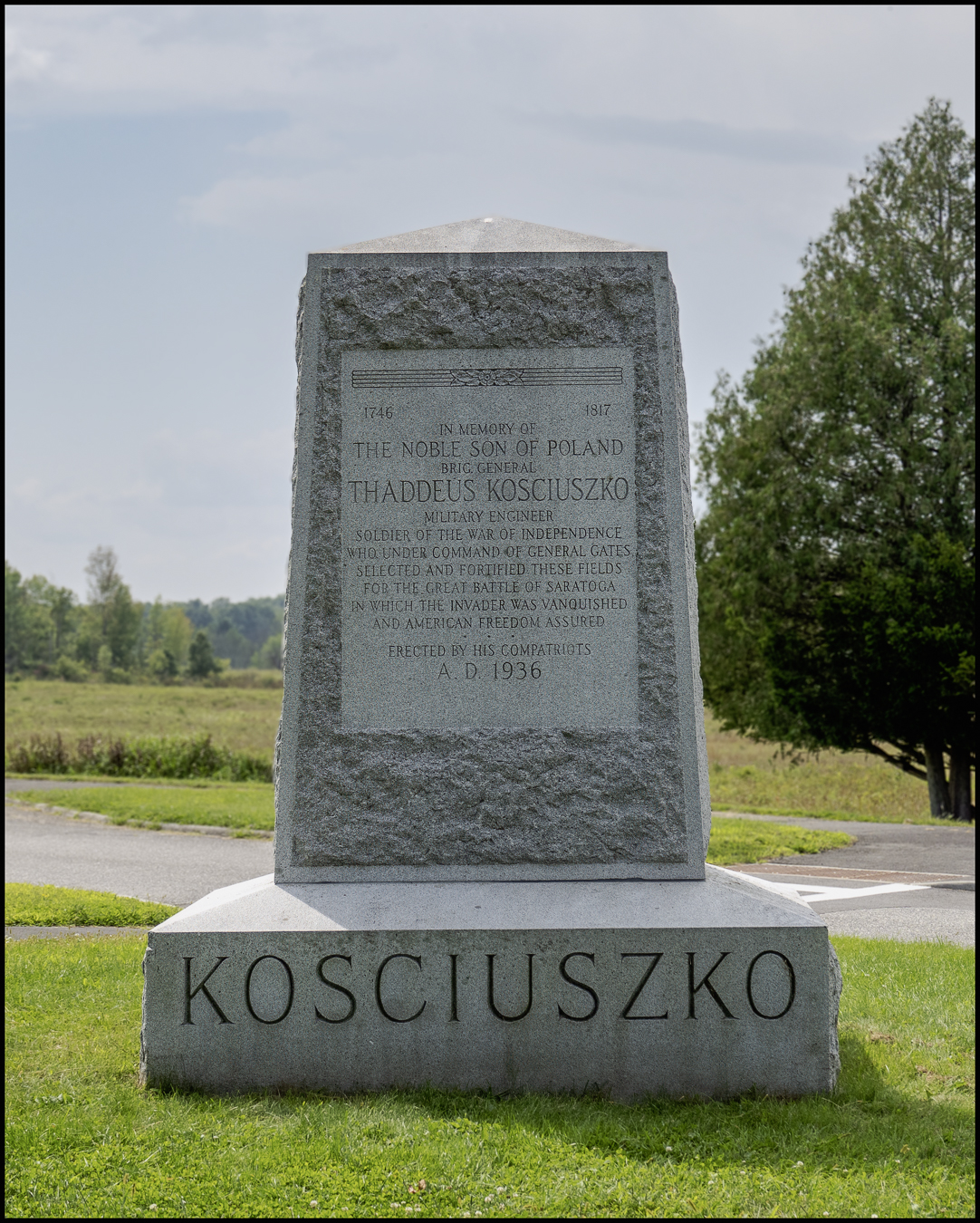
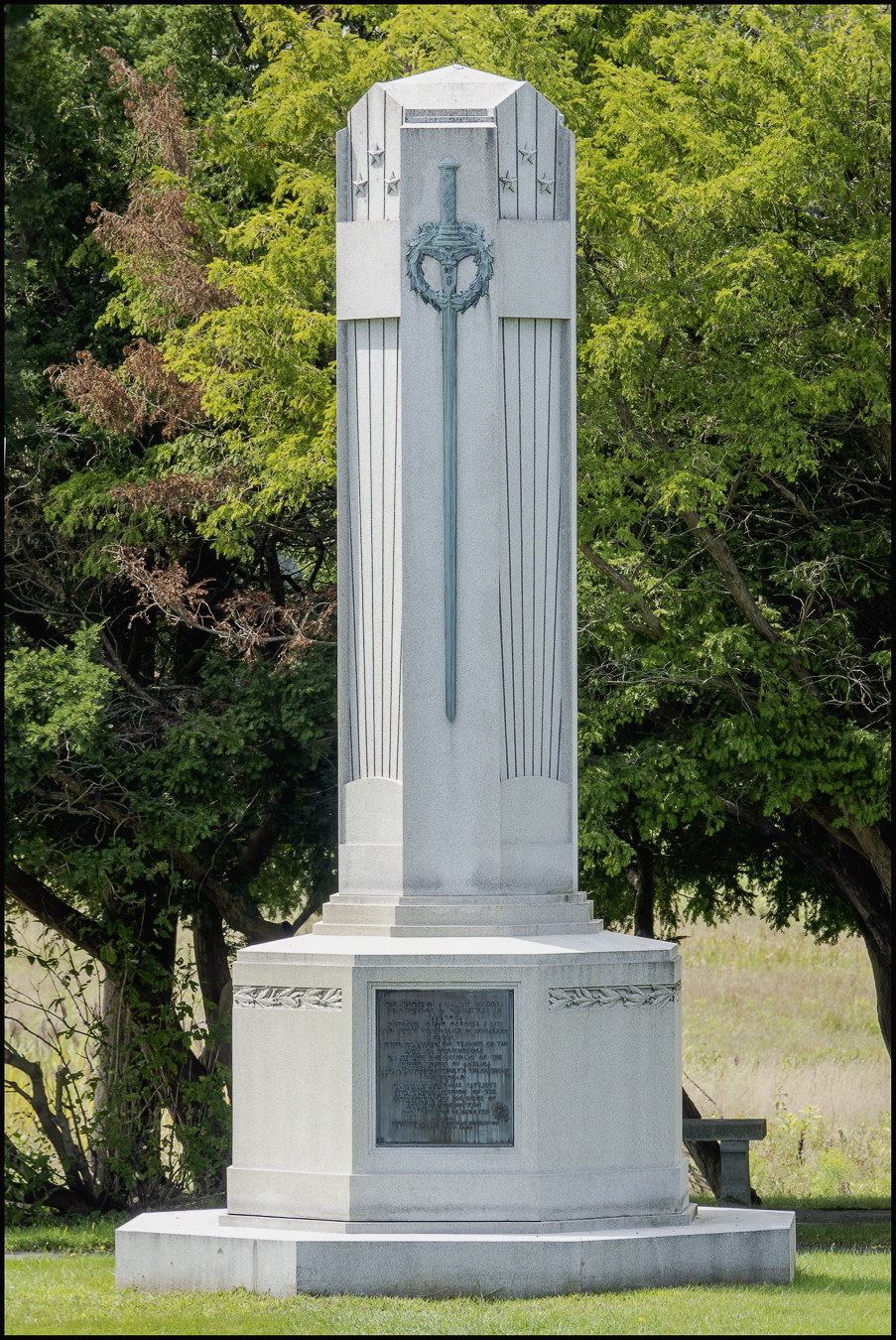
Kosciuszko monument. Tadeusz Kościuszko (born February 4, 1746, Mereczowszczyzna, Poland [now in Belarus]—died October 15, 1817, Solothurn, Switzerland) was a Polish army officer and statesman who gained fame both for his role in the American Revolution and for his leadership of a national insurrection in his homeland. For more information on Kosciuszko see here.


The inscription on the plaque reads:


THE UNKNOWN AMERICAN SOLDIERS
WHO PERISHED IN THE BATTLES OF
SARATOGA
SEPTEMBER 19 AND OCTOBER 7 1777
AND WHO WERE HERE BURIED IN UNMARKED
GRAVES
HELPED TO ASSURE THE TRIUMPH OF THE
WAR OF INDEPENDENCE
TO CREATE THE REPUBLIC OF THE
UNITED STATES OF AMERICA
AND TO ESTABLISH LIBERTY THROUGHOUT
THE WORLD
IN HONOR OF THESE PATRIOTS
AND IN RECOGNITION OF THE
BICENTENNIAL OF THE BIRTH OF
GEORGE WASHINGTON
THIS MEMORIAL IS ERECTED

BY THE
DAUGHTERS OF THE AMERICAN REVOLUTION
OF NEW YORK STATE
1951

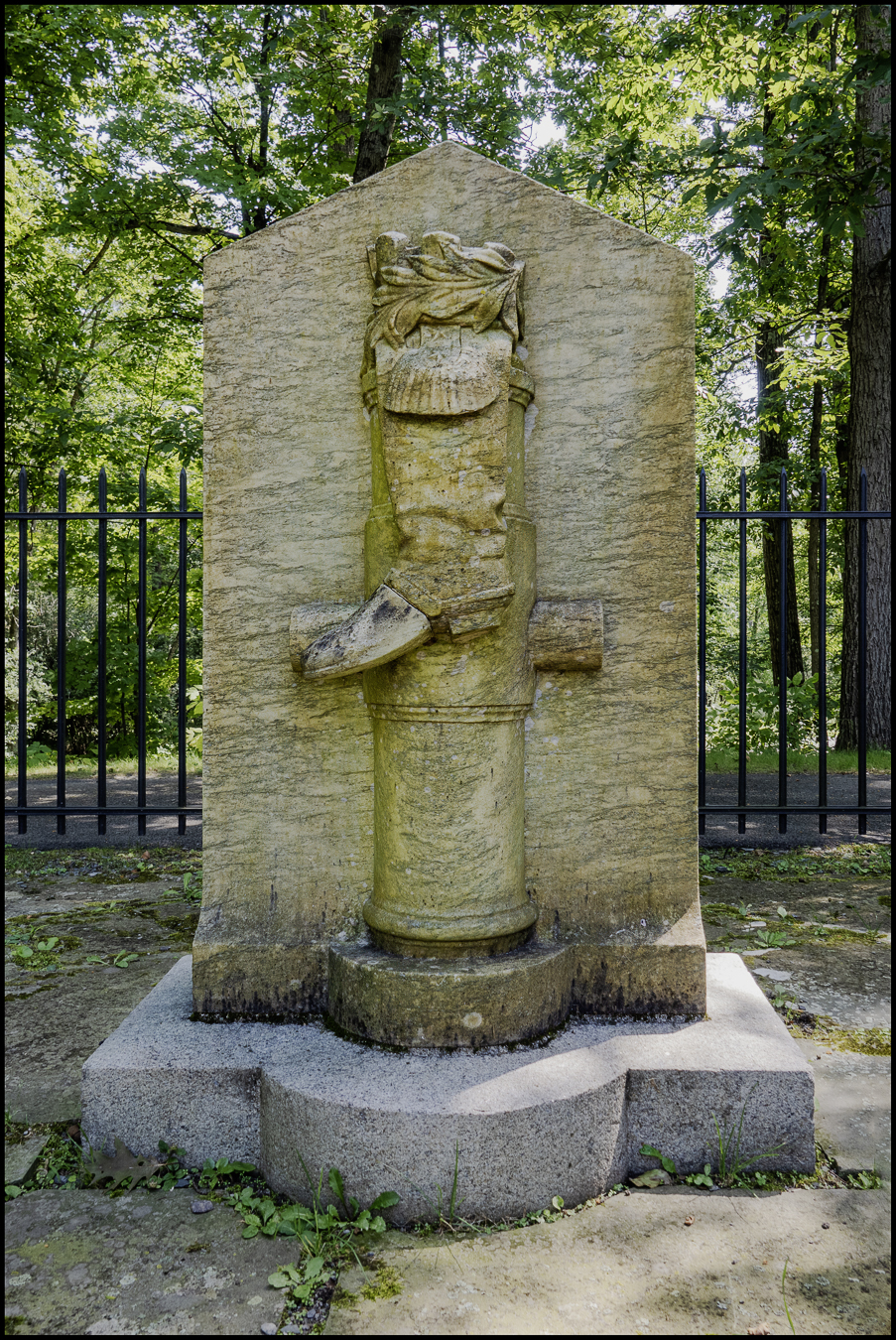
This monument commemorates the actions of a man who was instrumental in the American victory here, but later became a traitor to the United States: the infamous Benedict Arnold. This monument is perhaps the most popular, unique, and controversial monument of the many placed here.

After he was wounded, General Arnold underwent surgery and after months of recuperation was assigned to command the repatriated capital city, Philadelphia, in June 1778. There, Arnold’s resentment of perceived mistreatment boiled over into rage against the United States. He secretly sought British support and shared military intelligence. Exposed as a traitor at West Point in 1780, he escaped.

No one in American history is as vilified for treason as Benedict Arnold. The “Boot Monument” is dedicated to this man who led Americans to victory in the Battles of Saratoga. The monument does not mention Arnold by name, but there are a few intricate details which often go unnoticed by passersby:

  1. A boot and a two-star epaulet are draped over a howitzer barrel to symbolize an individual with the rank of Major General who suffered a wound during a battle in this location.
  2. A Laurel leaf wreath sits atop the howitzer, an emblem which often resonates victory, power, and glory.
  3. The reverse of the monument is inscribed with the following quote: “In memory of the most brilliant soldier of the Continental Army who was desperately wounded on this spot, the sally port of Burgoyne’s great [western] redoubt 7th October 1777 winning for his countrymen the decisive battle of the American Revolution and for himself the rank of Major General.”

Arnold has always been a personal favorite of mine for two reasons: First, if he had died at Saratoga (as he almost did) he would have gone down in history as one of the US’s greatest heroes instead of as probably the country’s greatest villain. Second, I was always fascinated that he was a general on both sides in the same war.

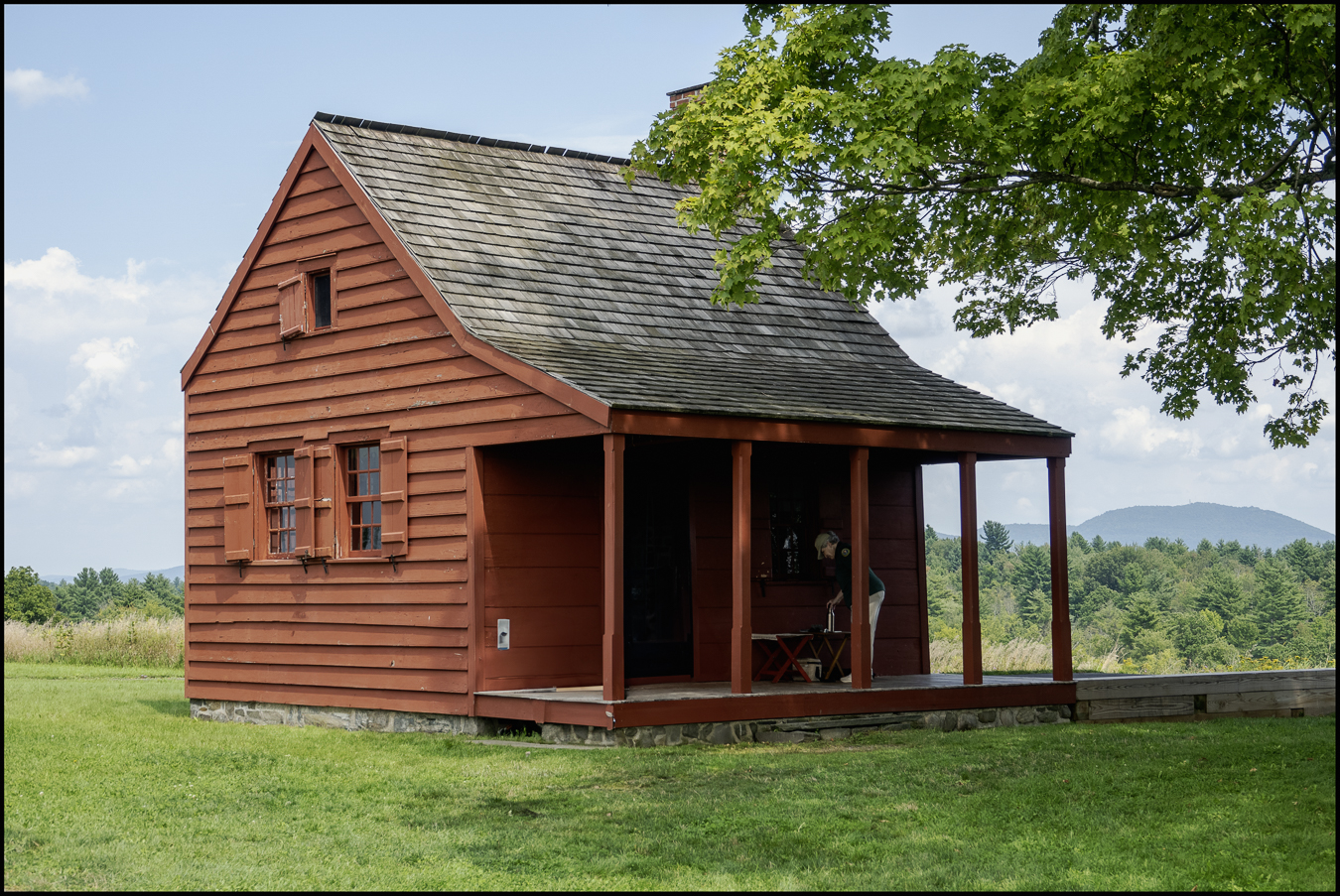
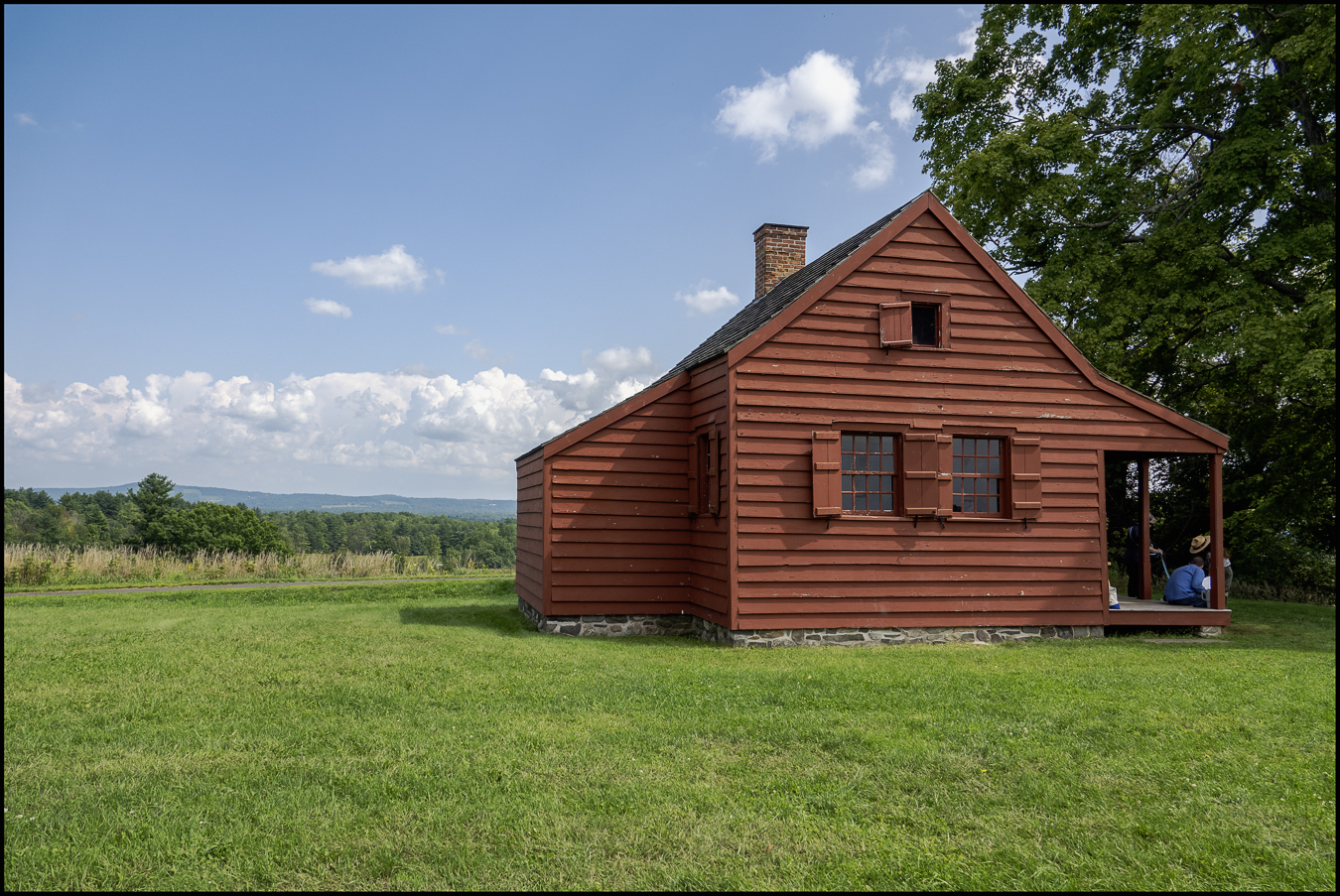
The final pictures below show the Nielson House. The Saratoga National Historical Site describes it as follows:

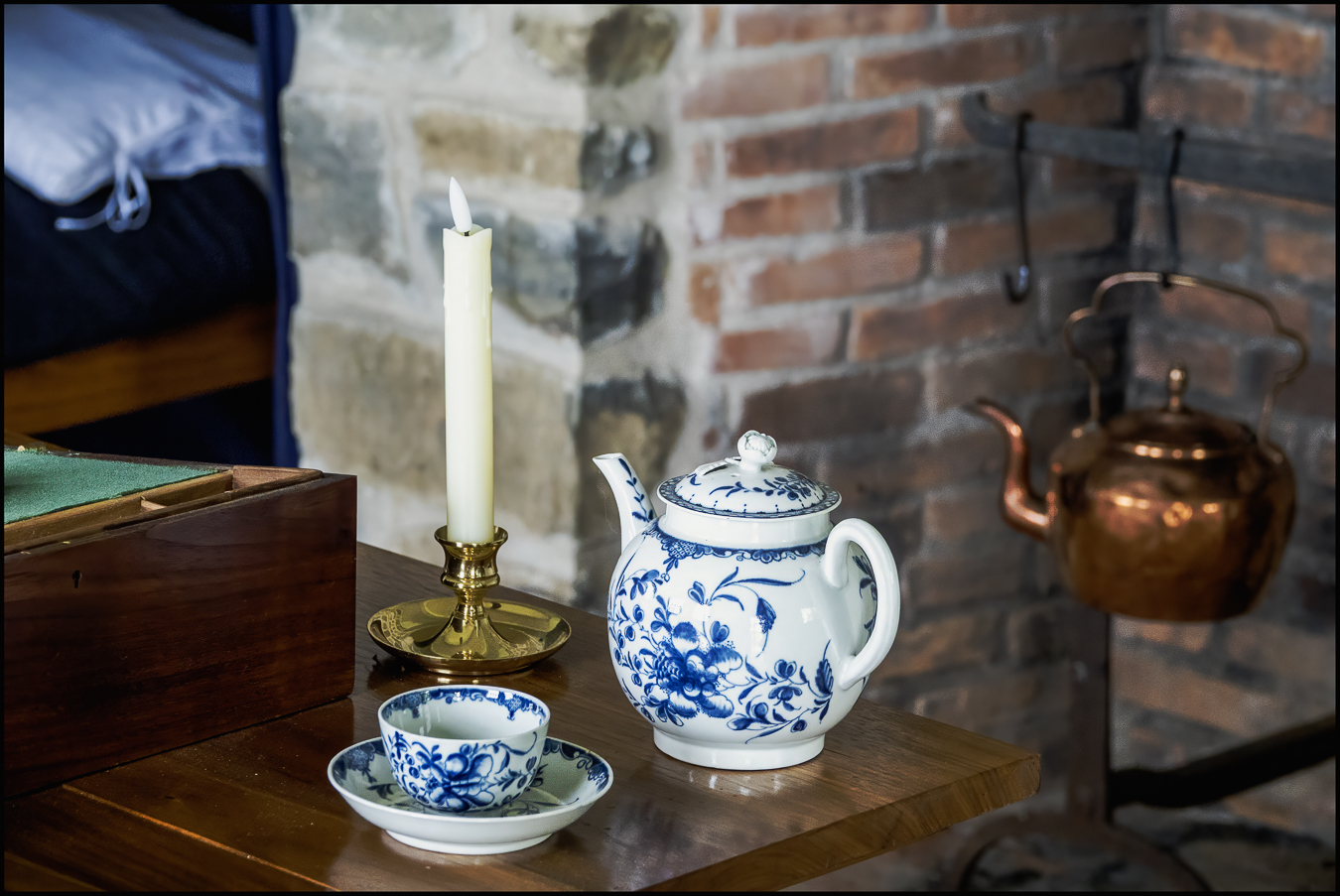
Before and after the Battles of Saratoga John Neilson farmed these heights, located at Stop #2 along the park’s auto tour road. Today his restored home looks much as it did when Generals Arnold and Poor used it for quarters in 1777. This single-room house may be small, but the panoramic view from the porch is larger than life!

The Family. John Neilson (1753-1833) hailed from New Brunswick, New Jersey. Well-practiced at tree cutting and rail splitting, the teenager left his home behind in 1772 and, working his way up the Hudson River, eventually came to Stillwater, New York. There, he went to work for a local farmer, Abner Quitterfield (1732-1784). Two years later, in June 1774, he leased about 150 acres of land out of Great Lot 12 of the Saratoga Patent, from Albany merchant John Bleecker (that same day, Neilson sub-leased 52 acres of it to one Isaac German). Later, he leased about 100 acres in Great Lot 14 from Killian De Ridder, which included the ridge upon which the present house stands.

For more information on the house see here.


And yes, it really does have a terrific view (which I completely failed to capture).

Taken with a Sony RX10 IV.

A visit to upstate New York and Vermont – Juno

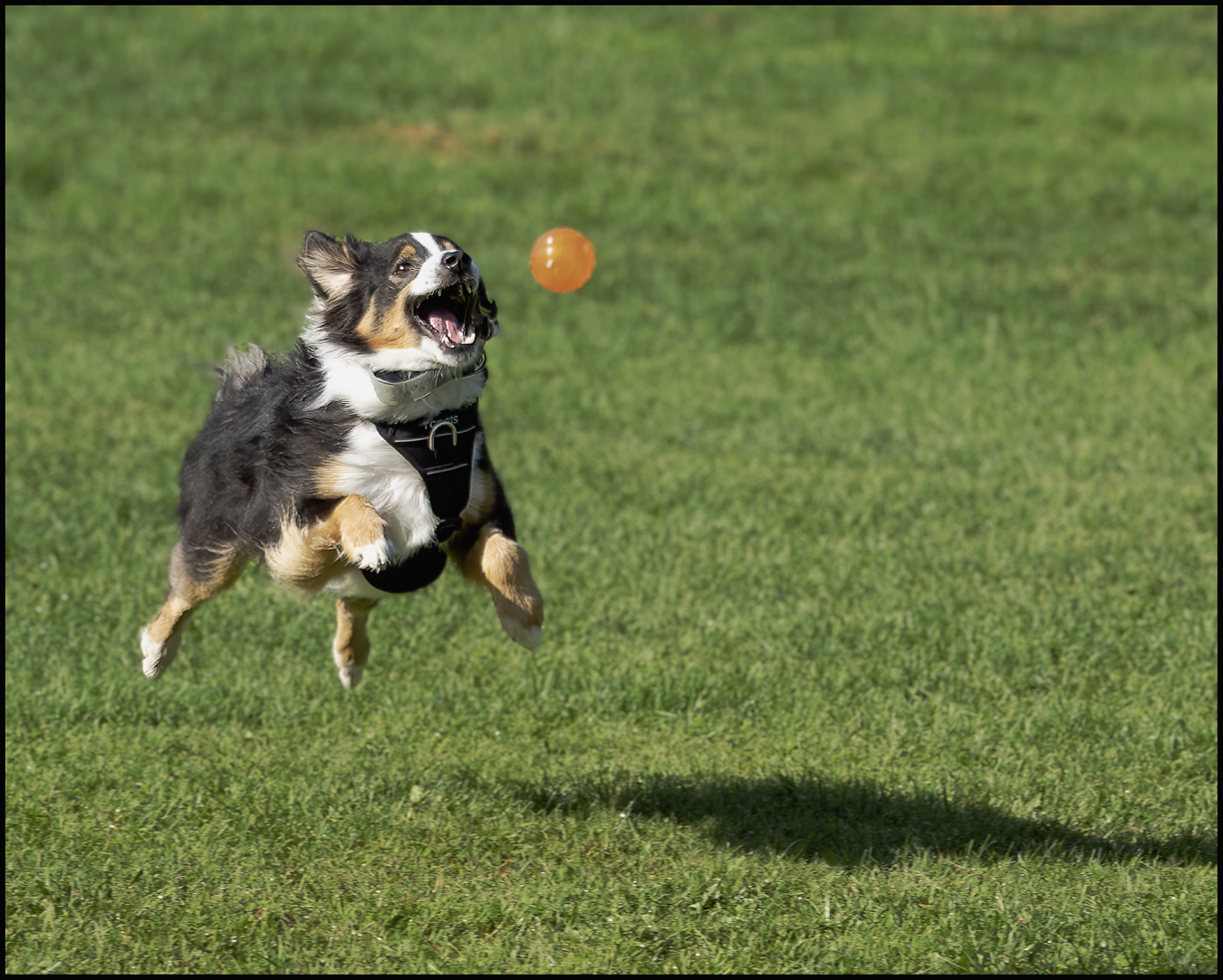
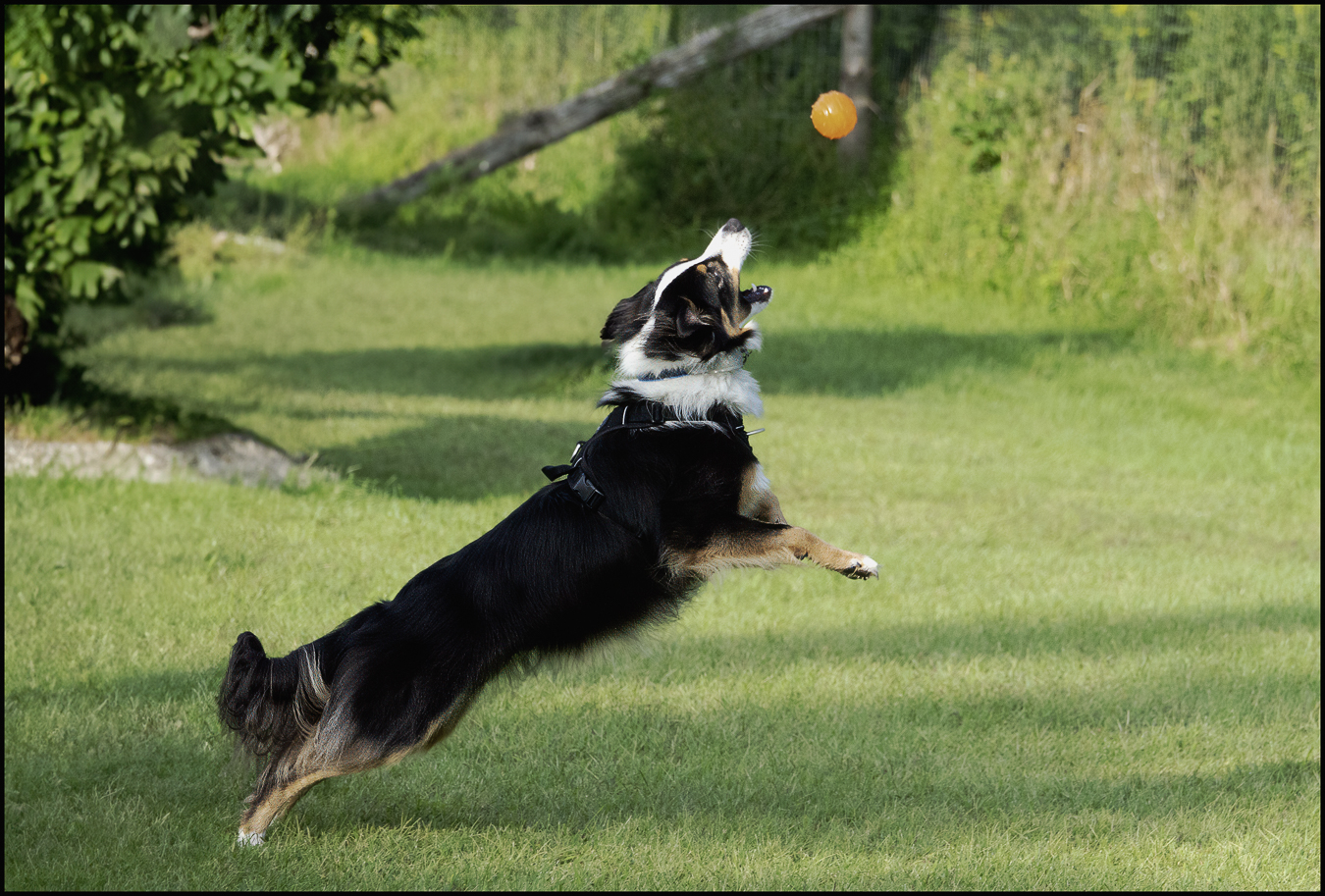
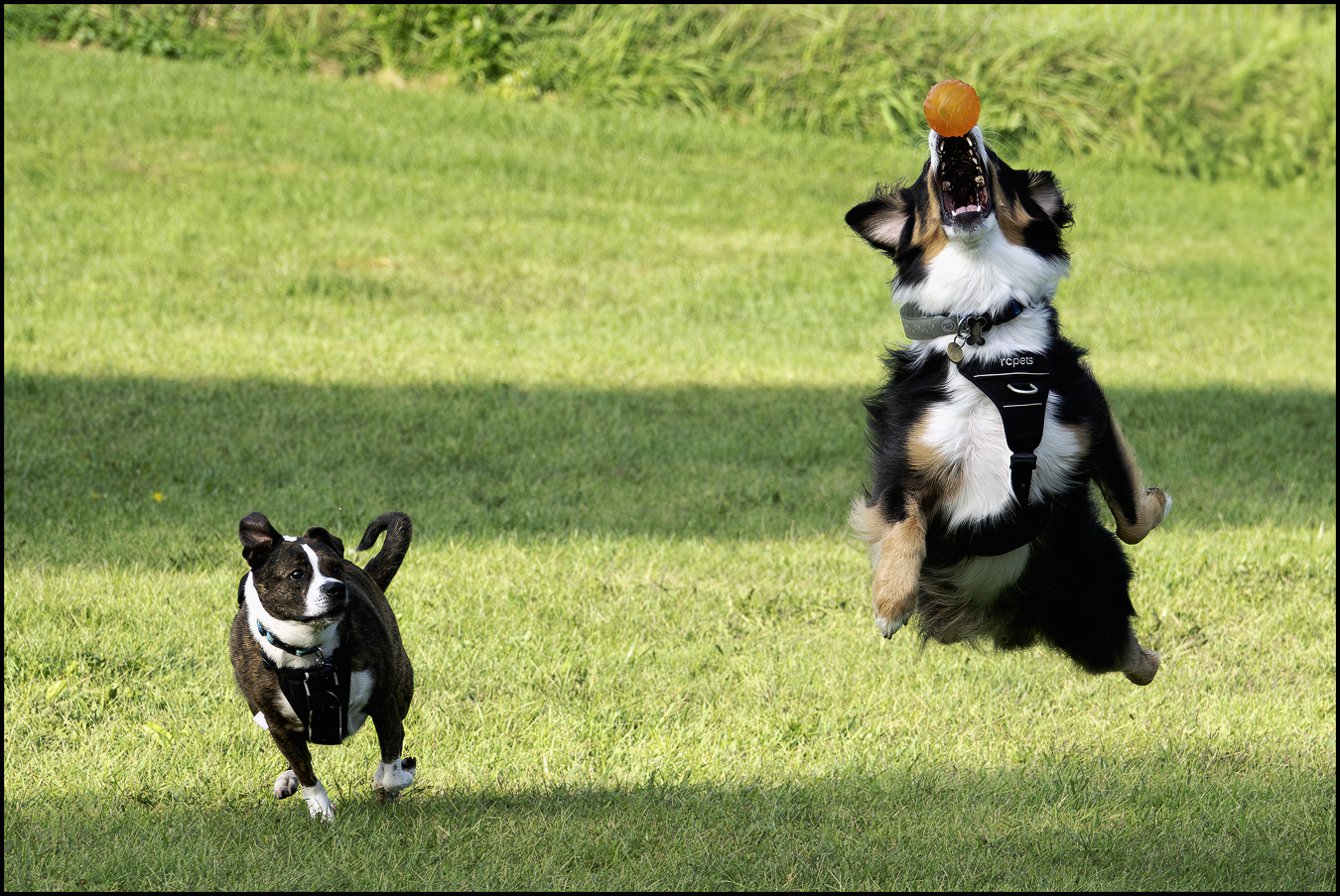
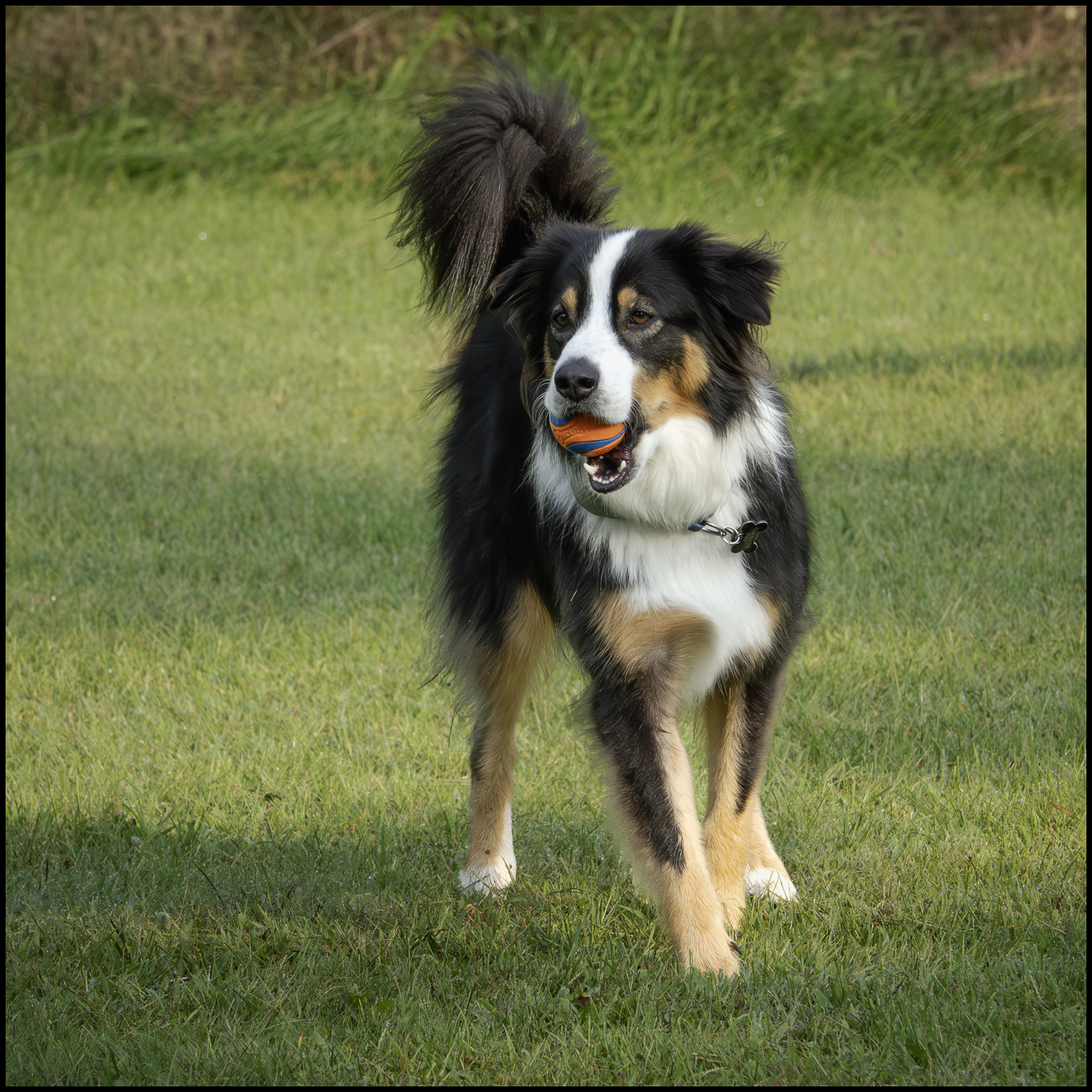
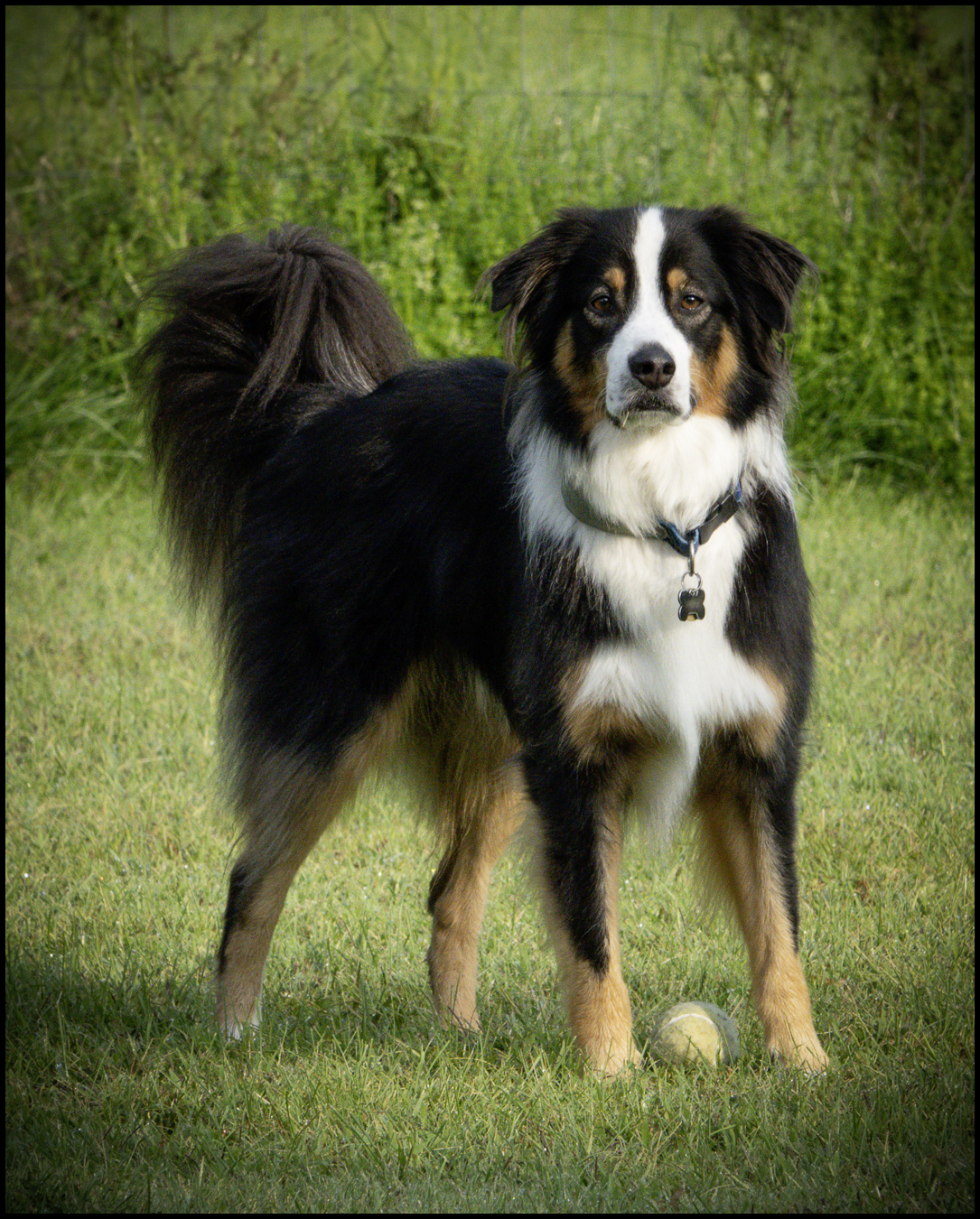
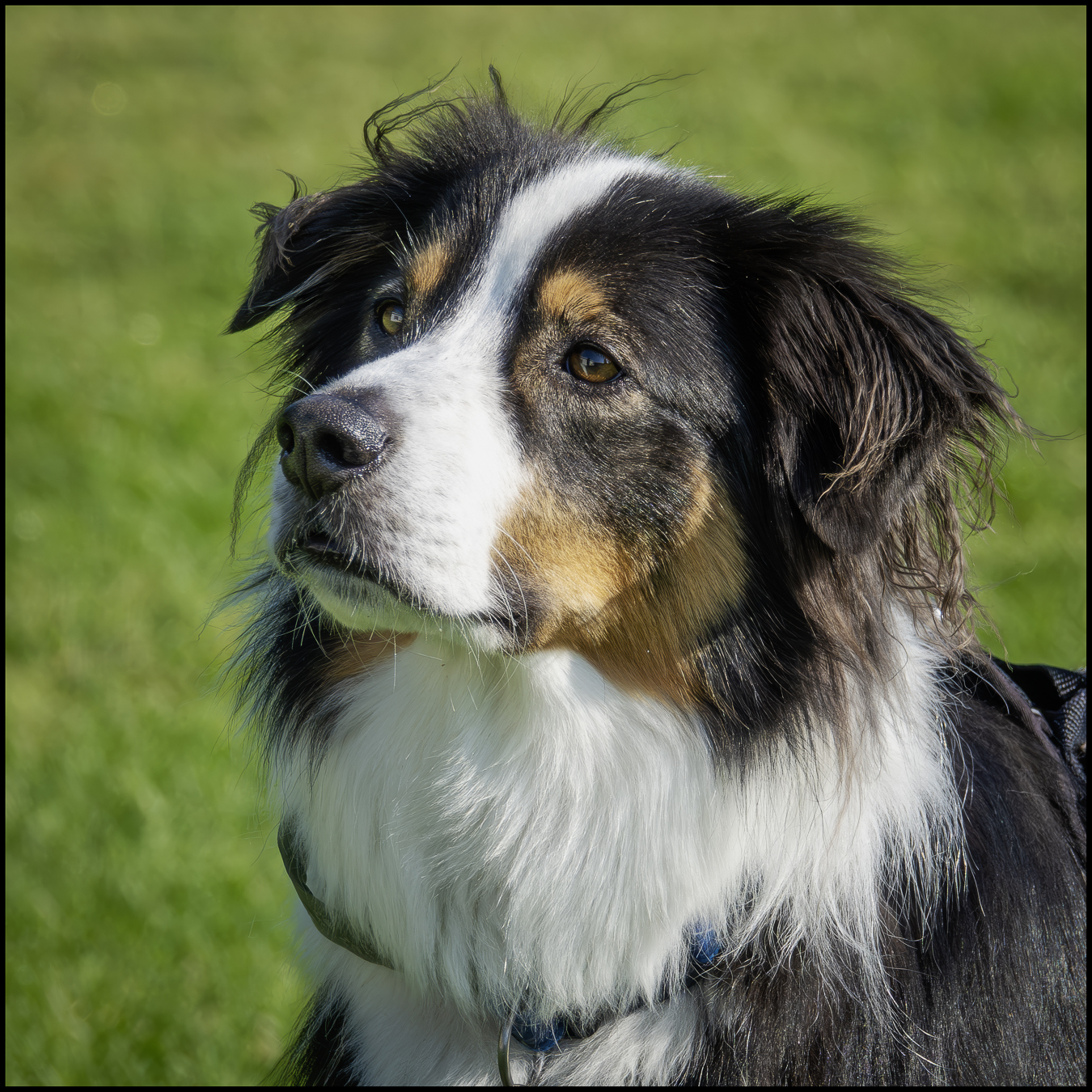
And so, after all of the dog memorabilia in the previous post, we come to a real dog: My friends’ dog, Juno. He’s the reason we were staying at The Paw House in the first place. He’s a lovely dog, I believe an Australian Shepherd. He’s intelligent, active, loyal and playful.

And he loves to chase balls. He’s very good at it. My last couple of dogs also liked to chase balls, but unlike Juno they didn’t realize that, after they caught them, they were supposed to bring them back. Juno understands this very well and always brings back the ball and gives it to you.


Taken with a Sony RX10 IV.

A visit to upstate New York and Vermont – The Paw House Inn and Resort

This was where we actually stayed and, boy was it pet friendly. We stayed in the Inn, and there were another couple of cottages. There was also a building where you could leave your dog if you couldn’t take him/her with you. A large, enclosed area offered ample space where you could play with your dog (and other dogs for that matter.

According to the Inn’s website:

“The Paw House” was built in 1786 by Elijah Smith, the Grandson of Captain John Smith. Through the years the owners of this magnificent farmhouse have maintained much of the original treasures while adding beautiful and special touches of their own.

Among the original, features of the home are its high ceilings, floor-to-ceiling windows, wide planked hardwood floors, and classic crown molding. The interior walls of the living room are the original, exterior barn boards of the multi-generational Smith farm which had stood against the Vermont elements until the early 1960s.

Views from the living room, sitting room and second floor hallway expand into all directions and present breathtaking views of mountains, valleys, and New England countryside.During the time of Elijah Smith, builders utilized marble (which was plentiful in the area) for the foundations of their homes. The Paw House Inn currently rests on the original marble slab that was excavated back in 1700’s.

The entryway of the home features a grand old oak staircase that leads to the Good Dog! and Bad Dog! rooms, and Shakespeare’s Retreat. Adorning the walls of the entryway is an Americana motif that Jen has grown to love. (She wasn’t too crazy about it at first.)

Since 1786, many dogs have lived on the property. Many people claim that the ghosts of bygone spirits roam freely throughout the inn. We’ve seen them too! Don’t be too concerned! As dog lovers themselves, the spirits look out for us and add a beautiful dimension to the property.Classic fixtures, lamps, and accoutrements are presented throughout the home. Given the nature of our clientele (i.e. the four legged kinds that like to wag tails and lift legs), we’ve avoided the temptation to add too many plants and knick-knacks.

Our yard offers many treasures as well. Two-hundred year old lilac bushes surround an outdoor sitting area that overlooks the best darn sledding hill in all of New England. In the spring and summer, our backyard explodes with the color of wild flowers. The tree-line, which represents the boundary of our property, explodes with color in September and October. A running river some 100 yards away can be heard on quiet nights. And, for the dogs Paw House Park is a fenced in agility course that is enjoyed in every season.Enjoy the photos on this page where we’ve tried to represent some of the beauty and rich history of this home. But, as we hope you will see personally, pictures really cannot do justice to the real thing!We look forward to your visit! Please visit us soon!

The current owners (Mitch and Jen) explain how they came to The Paw House:

It all started back in 2001 when the frustration we encountered in our own travels inspired us to create a dog friendly vacation destination that is designed entirely for dog lovers. So we left our jobs in New York City, packed up our two goofy labs, disregarded everyone’s warnings, and created a dream come true – a “dog centric” Vermont getaway with all of the comforts of home, including your dog.

Since 2001 we have had the privilege of sharing the joy that your dogs have brought into our lives. Many of the photos that you will see on our website preserve many happy memories we have collected throughout the years.

Dogs are members of the family and hold a special place in our lives. We invite you to become part of our family by visiting us soon.


The Inn.


The Grounds.


The Breakfast area.


Some of our fellow guests.


Interior shot.


Everywhere you look you see dog-related memorabilia: here a doggy towel holder.


A doggy bell.


A doggy sign.


The picture above and the remainder of the the pictures were taken in our room: Above: doggy ornaments.


Doggy wallpaper.


Above and next two pictures: Doggy knickknacks.


Doggy books.


Doggy soft toys.


Doggy coaster.


And my personal favorite: A doggy shower curtain.

Taken with a Sony RX10 IV.